
Our readers keep the lights on and my morning glass full of iced black tea. As an Amazon Associate, I earn from qualifying purchases.
Specs are compiled from manufacturer listings and verified buyer reviews and can change over time — please confirm the key details on the product page before buying.
Forget clunky helmets for a moment. The real energy in this category is in lightweight glasses that project a massive virtual screen in front of your eyes, letting you watch movies, game, or work anywhere. The hardest part is decoding the jargon and matching a pair to the devices you already own, and that is exactly what this guide is for.
I’m Min — the founder and writer behind Gadgets Feed. This guide is built by comparing the manufacturers’ published specifications and the patterns across verified customer reviews, so you get each pick’s real strengths and trade-offs instead of marketing spin.
Whether you demand a standalone mixed-reality powerhouse or a featherweight monitor for your phone, the right ar headset depends on how you plan to wear it and what you plug it into.
Our Picks at a Glance
How To Choose The Best AR Headset
Before you compare specs, you need to decide which of two very different experiences you actually want. Standalone headsets like the Meta Quest run their own apps without a phone or PC. Smart glasses like the XREAL or VITURE are displays that mirror content from a device you already own, so they are lighter and far more portable.
Clarity Starts with the Panel Inside
The screen technology determines how sharp that giant virtual display looks. Micro-OLED panels deliver the vibrant colors and deep blacks you want for movies, while the resolution, such as 1920×1080 per eye, dictates text sharpness. A higher refresh rate, measured in hertz (Hz), means smoother motion for fast-paced gaming.
Think About What You’ll Plug It Into
Most light-weight AR glasses connect over a USB-C cable and need what is called DisplayPort Alt Mode from your phone, laptop, or handheld. This means your device must have a USB-C port that outputs video. If your phone lacks this, you will need an adapter. Conversely, a standalone headset needs nothing but its own battery to start.
Quick Comparison
| Model | Best For | Display Resolution | Refresh Rate | Field of View | Amazon |
|---|---|---|---|---|---|
| Meta Quest 3S 256GB★ Best Overall | Standalone mixed reality | 2880 x 1600 | 120 Hz | — | Amazon |
| RayNeo Air 4 ProCollector’s Pick | Collector design & HDR | — | 120 Hz | — | Amazon |
| TOZO VIZO Z1Brightest Display | Outdoor brightness | 3840 x 1080 | 120 Hz | 47.5° | Amazon |
| VITURE Luma Pro | Sharp text & productivity | 1200p | 120 Hz | 52° | Amazon |
| Acer AH101 | Budget PC VR entry | 2880 x 1440 | 90 Hz | 100° | Amazon |
| Rokid Max 2 | Travel & screen mirroring | — | 120 Hz | 50° | Amazon |
| XREAL 1S | Native 3DoF spatial viewing | 1920 x 1200 | 120 Hz | 52° | Amazon |
| Meta Quest 3 512GB | Premium standalone graphics | 4K+ | 120 Hz | — | Amazon |
| XREAL One Pro | Wide FOV & Bose audio | FHD | 120 Hz | 57° | Amazon |
| HTC Vive XR Elite | PC VR & MR flexibility | 3840 x 1920 | 90 Hz | 110° | Amazon |
| Oculus Rift S | Legacy PC VR gaming | 1440×1600 | 80 Hz | — | Amazon |
In‑Depth Reviews
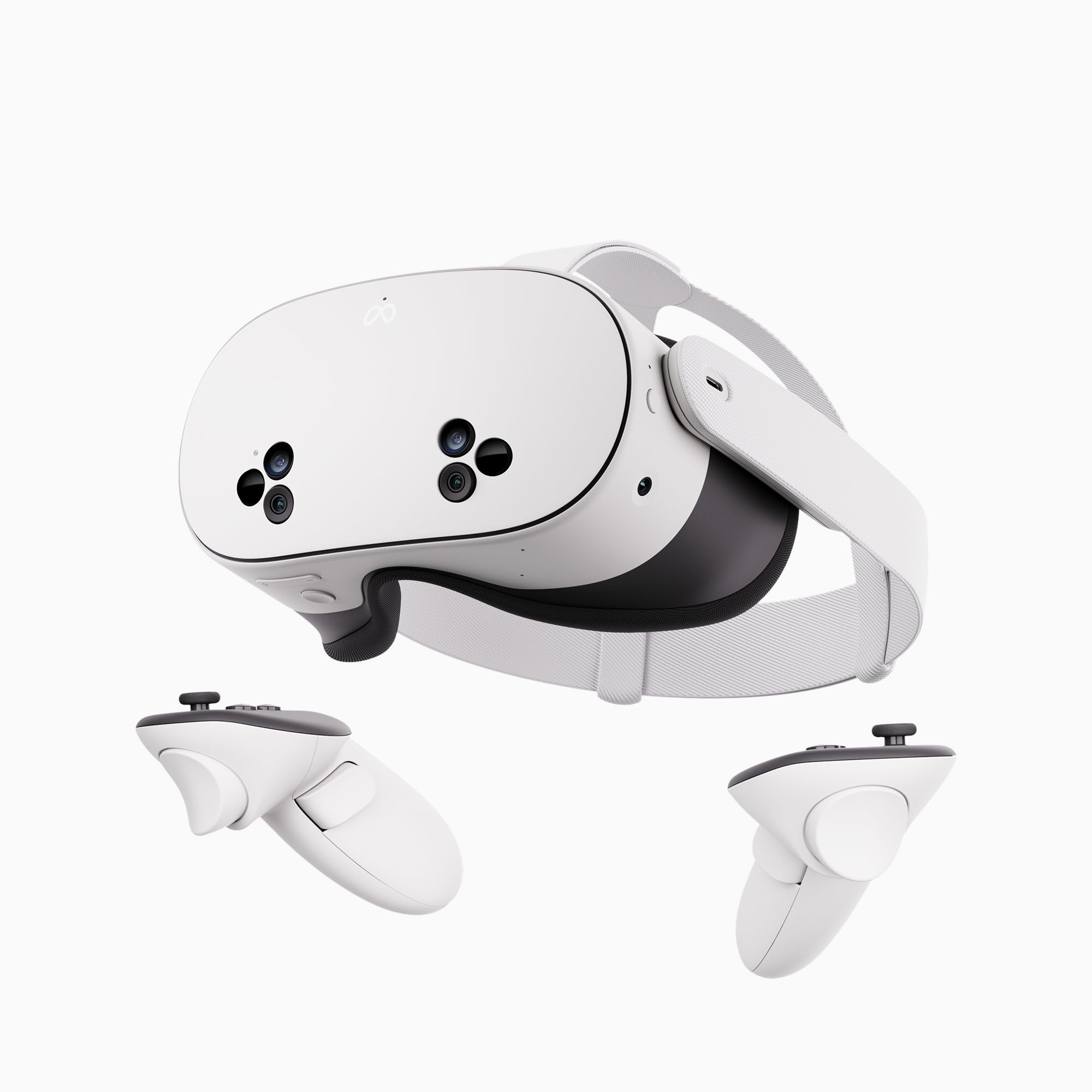
1. Meta Quest 3S 256GB
Our pick — over 4.5★ from 800+ verified ratings; the strongest balance of quality and price.
The all-in-one crowd favorite that needs no phone, PC, or wires to deliver full mixed reality.
This is the most complete packaged deal for anyone who wants the whole AR/VR experience without assembling a kit. It is a standalone headset, meaning it runs its own apps instantly, and its 2880 x 1600 display resolution refreshes at a smooth 120 Hz, so fast motion stays fluid without a computer attached.
The all-in-one package—blending digital objects into your room, streaming live concerts, and casting to a TV—is what wins buyers over. Setup is a few minutes from unboxing, and the motion-sensing controllers track accurately, which the review consensus calls out constantly as a pleasant surprise at this level.
The honest trade-off is the battery. Buyers report around 2-2.5 hours of play on a charge, so marathon sessions will likely require plugging in or planning breaks. It is a renewed premium unit, but the experience feels brand new, with buyers reporting months of flawless use afterward.
What makes it the pick
- Standalone design with no wires, phone, or PC required
- Sharp 2880 x 1600 resolution at a smooth 120 Hz refresh
- Easy setup that has buyers exploring games within minutes
What to plan for
- Battery life is the most-discussed mixed point, at roughly 2-2.5 hours
- Lens resolution gets mixed feedback, so text isn’t universally praised
The short version: The best starting point for a family or first-timer who wants games, media, and mixed reality all in one box.
Think twice if: You want a featherweight display for travel — this is a full headset, not glasses.
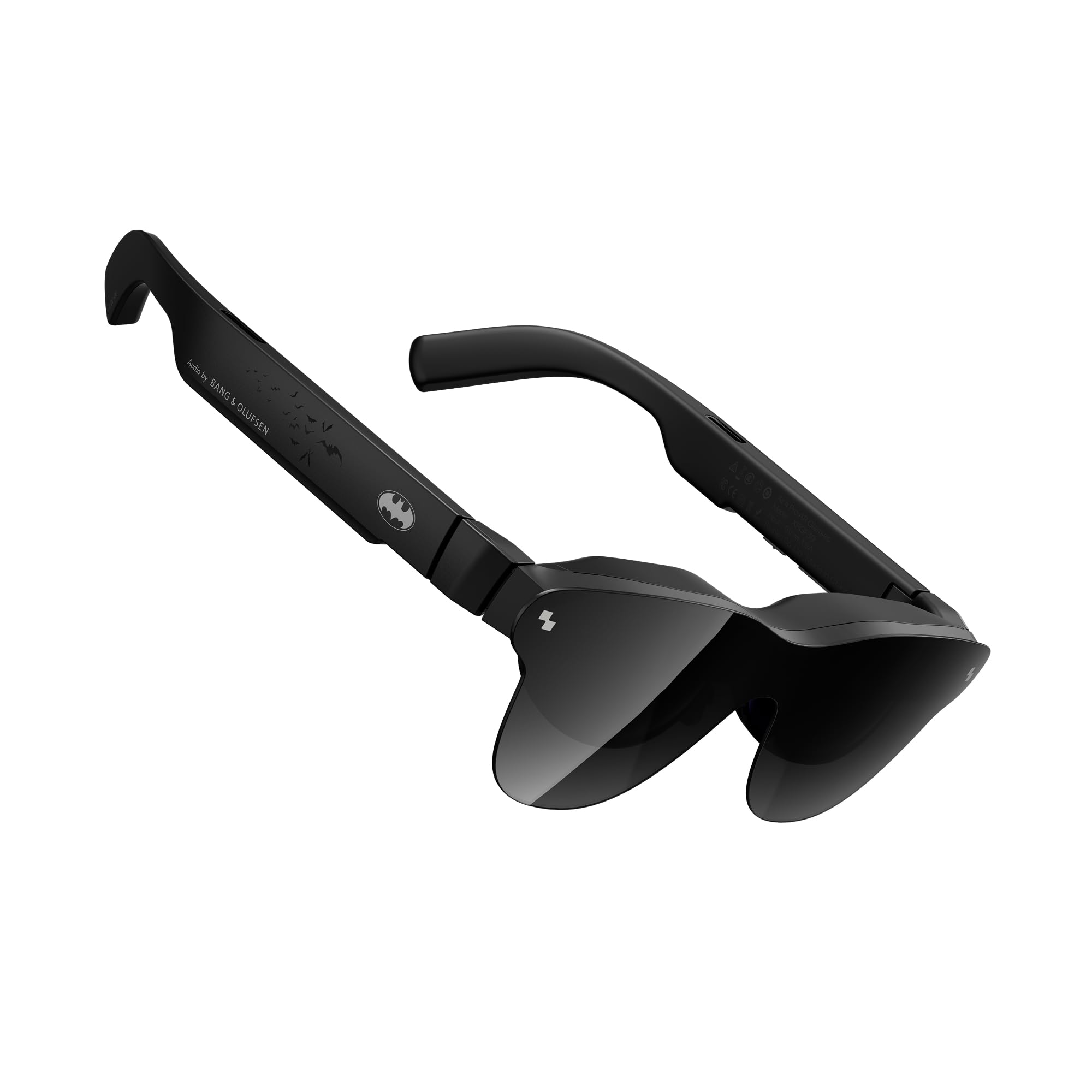
2. RayNeo Air 4 Pro × Batman Limited Edition
A Batman-fan display with HDR10 and a quad-speaker Bang & Olufsen soundstage built for cinematic immersion.
This is the rare pair that turns a personal movie theater into a collector’s item. At just 2.72 ounces, it stays light on your face while a 120 Hz LED display delivers HDR10 with AI-enhanced brightness, so dark scenes keep their detail without washing out. It connects to smartphones, PCs, and gaming consoles over a single USB-C cable.
The standout praise is image quality, driven by AI-powered 1200 nits brightness and the Vision 4000 chip that upscales content to HDR. Audio is handled by a quad-speaker system co-tuned by Bang & Olufsen, creating a 360-degree soundstage that owners say is superb for gaming and drone flying.
The catch is compatibility—the most-discussed mixed point. It plugs into Samsung Dex beautifully and pairs with handhelds like the Legion Go S, but some owners mention it not working with certain other devices. A few also note the brightness is not the absolute highest in dim rooms, though the included sound tubes are a must-have for private listening.
The fan’s call: For comic collectors and movie lovers, the HDR10 performance at this weight is a standout, and as owners put it, “at Prime Day, good value; would rebuy.”
The fit note: If your phone or PC isn’t confirmed compatible, verify your device supports video-over-USB-C before committing.
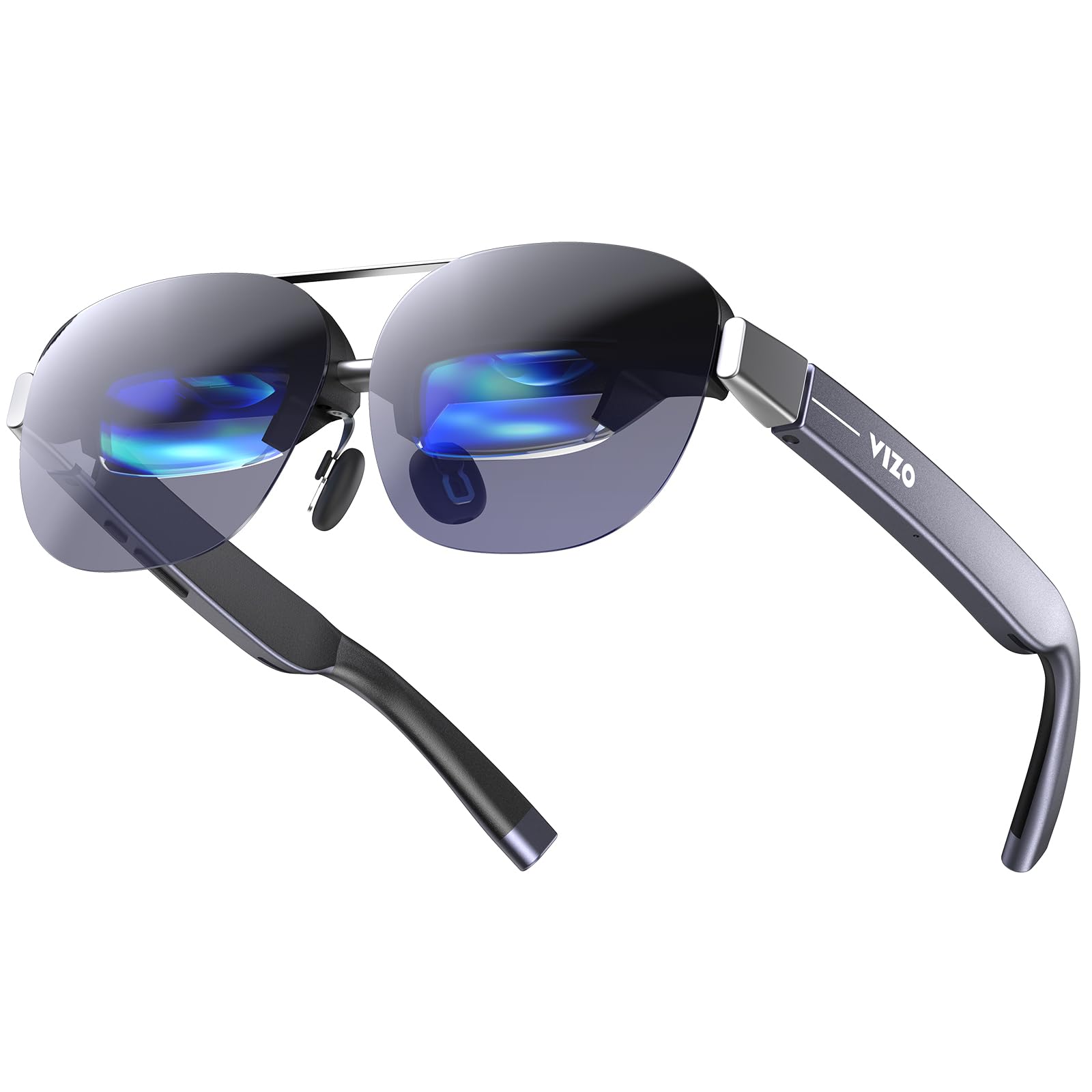
3. TOZO VIZO Z1 AR Glasses
The brightest of the bunch, projecting a 160-inch screen that stays vivid even in direct sunlight.
If you plan to use your AR glasses outside, brightness is the spec that matters most, and this pair leads the category with a comfortable perceived 1800 nits and a peak of 6000 nits. That means no more screen fading under harsh sun — a real-life win for travel and outdoor gaming that most competitors cannot match.
You will barely notice you have it on—at 63 grams, it is the lightest pair here, and owners say they forget they are wearing it after four hours. The 3840 x 1080 display resolution in 3D mode runs at a fluid 120 Hz, so fast action stays smooth, and the 47.5° field of view (how much of your vision the screen fills) gives you a wide, rich window that reviewers praise as feeling like a genuine portable private theater.
There is no lens cover, so light can bleed in from the sides, and the non-adjustable diopters mean you will rely on the clip-on prescription frame for vision correction. Owners also note a slight corner blur, but the crisp center and massive screen size make it an easy recommendation for handheld gaming.
Reach for this if: You game on a Steam Deck or phone outdoors and need a screen that beats the sun.
Look elsewhere if: You need prescription support — you’ll want the separate clip-on lens frame.
4. VITURE Luma Pro XR Glasses
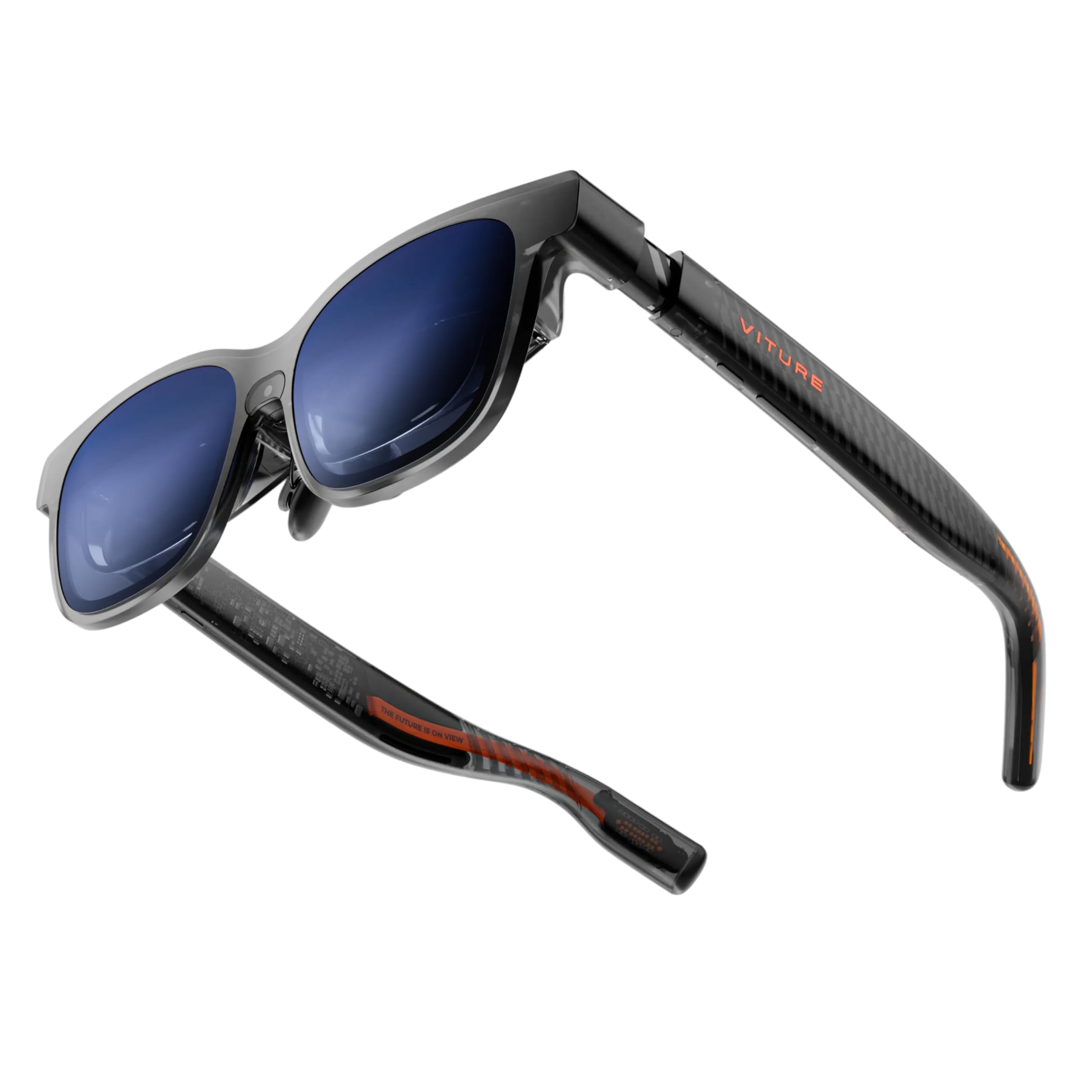
A razor-sharp 152-inch workspace with built-in myopia dials, built for reading text and getting work done.
While most AR glasses chase movie thrills, this pair is tuned for productivity where text sharpness is king. The 1200p resolution on a 52° field of view makes code and documents readable, and customers note the edge-to-edge clarity is a genuine step beyond earlier models. A smooth 120 Hz refresh keeps scrolling and gaming fluid.
If you are nearsighted, the built-in myopia adjustment (a dial that corrects vision up to -4.0 diopters on each lens) means you get a crisp image with no prescription inserts at all. The electrochromic film (a lens that darkens with one tap) also helps you focus even in bright rooms.
Owners compare it favorably to the Meta Quest 3 for media consumption, finding it lighter and clearer for movies. The catch, in a few reviews, is that the perceived screen size is closer to 100 inches than the advertised 152, and the SpaceWalker app’s 3DOF (a tracking mode that follows your head rotation) can feel a bit jittery—so treat this as a brilliant portable monitor, not a VR headset.
Who it’s for: Frequent flyers and remote workers who want a private, sharp multi-screen setup for reading, coding, or editing.
The honest limit: If you have astigmatism, the lack of per-eye correction is the top complaint, so consider that before buying.
5. Acer Windows Mixed Reality Headset

A true budget gateway into PC VR with inside-out camera tracking that needs no base stations.
For PC gamers who want to try VR without the premium price, this Acer headset delivers a 2880 x 1440 resolution across a wide 100° field of view. The display refreshes at 90 Hz over HDMI 2.0, which is smooth enough for most experiences, and the inside-out tracking cameras mean no external sensors cluttering your room.
The headline is value—the most-praised aspect by far. Owners say it competes with rigs that cost far more, and setup is genuinely quick for those with a compatible PC. It runs comfortably even on a 1050Ti, making it accessible to gamers with modest hardware, and it fits over glasses for many users.
The catch is setup pickiness—it needs specific ports and adapters. It needs Bluetooth, a specific USB port, and sometimes an HDMI-to-DisplayPort adapter or a USB 3.0 PCI-e card to work reliably. A few reviewers point out controllers losing tracking, and the foam padding can peel over time, so this is best for a tinkerer who enjoys a bit of configuration.
The deal: The cheapest real path into PC VR if you have a compatible Windows machine and don’t mind setup.
Who should pass: Anyone wanting a plug-and-play experience — this expects a power user.
6. Rokid Max 2 AR Glasses
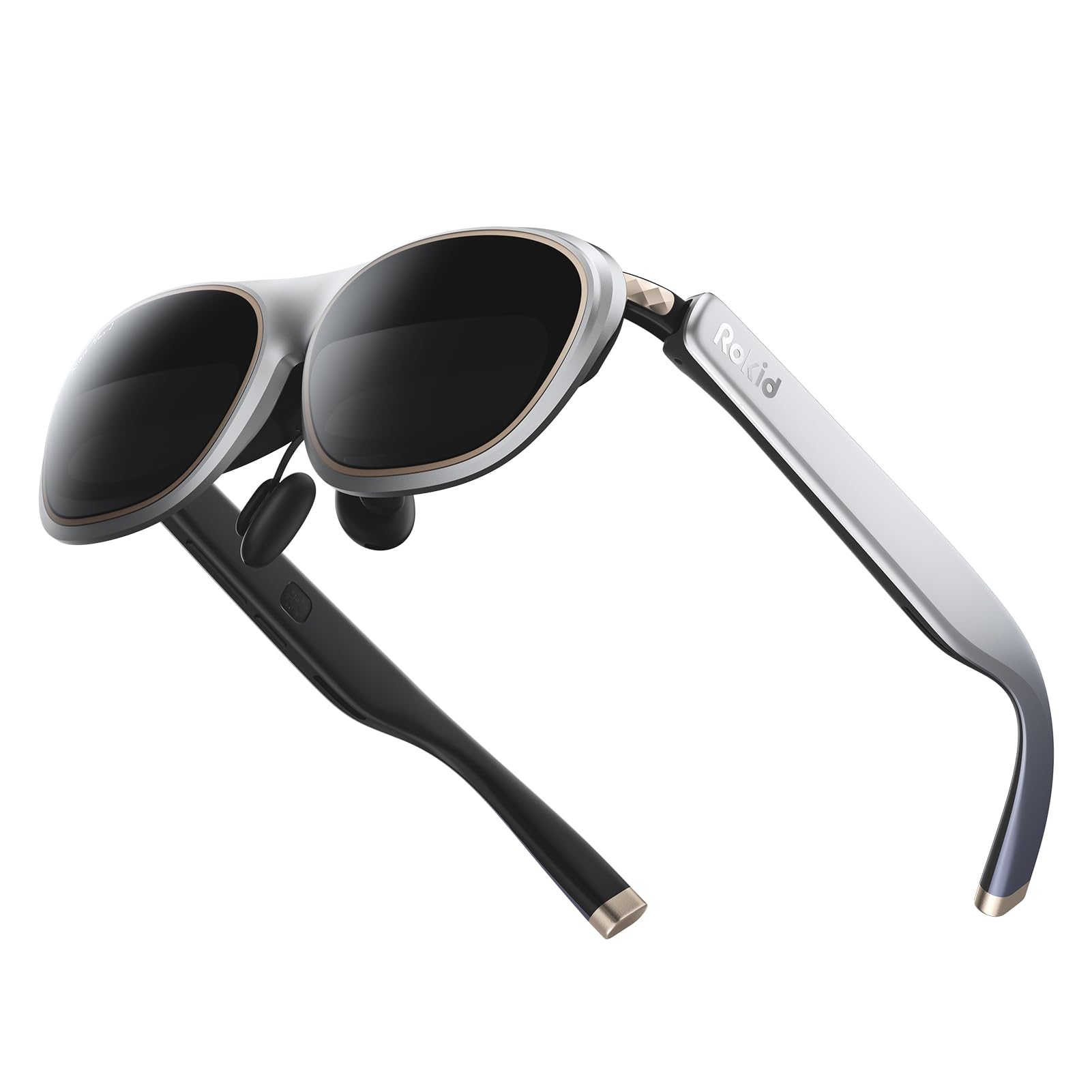
A featherweight travel companion that mirrors your phone into a 215-inch screen with no internal battery.
You get a private theater on a plane or train without carrying extra hardware—this weighs just 75 grams and runs entirely over USB-C, so it is the purest screen-mirroring glasses design on the list. It projects a 215-inch virtual screen at a 6-meter distance, uses a 50° field of view, and hits a 120 Hz refresh rate, so fast scenes stay smooth.
The adjustable 600 nits brightness keeps the image vivid in most conditions, and the cushioned nose pad prevents slipping during longer sessions. For vision correction, you can dial in myopia up to -6.00 diopters directly on the glasses, which is more range than most rivals offer at this size.
There is no internal battery, so it relies entirely on your host device, which owners note is a fine trade-off for the weight savings. The included nose pads can be swapped to fit your face, though bulky phone cases may not fit the included dock, and prescription needs beyond -6.00 require separate frames.
Who it suits: Travelers who want the lightest possible way to mirror a phone, tablet, or Steam Deck.
The simple catch: If you want spatial anchoring, you’ll need the optional Station 2 hub to get multi-screen features.
7. XREAL 1S AR Glasses
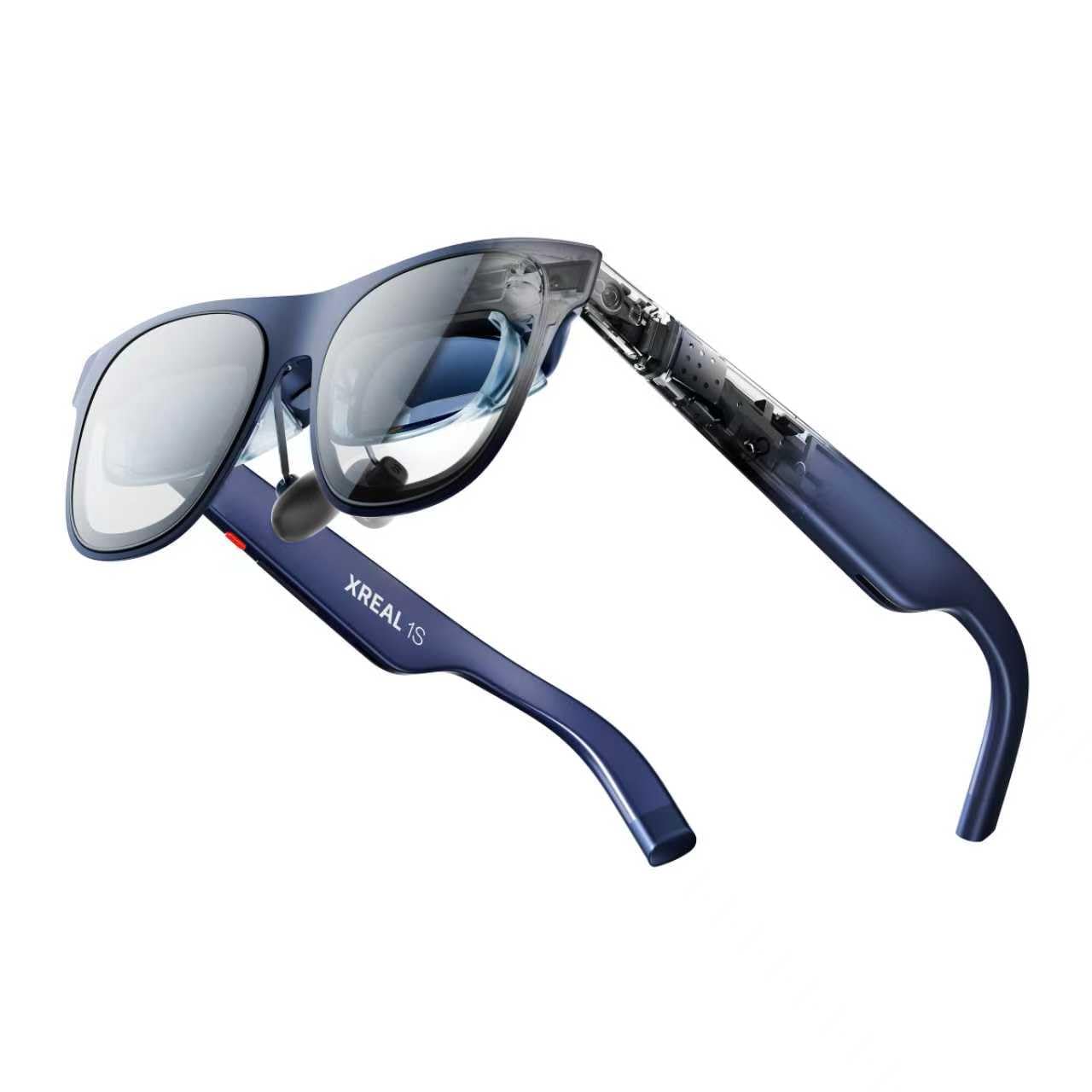
The pair that pins a virtual screen to your room through native 3DoF, powered by the X1 chip, with no app required.
This is the spatial computing standout — the X1 chip delivers native 3DoF tracking meaning the virtual screen stays anchored in space as you move your head, with no extra software or setup. You simply plug into any USB-C DP device and your content locks into place, which reviewers consistently describe as the smoothest, most stable anchoring they have tested in this category.
The 120 Hz refresh in 3DoF mode keeps motion blur-free, and the 52° field of view on a 1920 x 1200 OLED panel makes text crisp from edge to edge. Sound is co-developed with Bose, tuned for a spacious open-ear stage with deep lows, which owners say leads its class here for movies and games.
The most-discussed issue is image quality: the wayfarer frame lets in side glare in bright rooms, and there’s no built-in diopter adjustment. It is also certified by TÜV Rheinland for low blue light, and the IPD range of 59.5–70.5 mm fits approximately 95% of users.
The verdict: The clear choice for anyone who wants the virtual screen to stay perfectly still in the real world without frustrating app setup.
Consider first: If you need prescription correction, you’ll want custom lenses, and bright-room glare is the recurring fit note.
8. Meta Quest 3 512GB
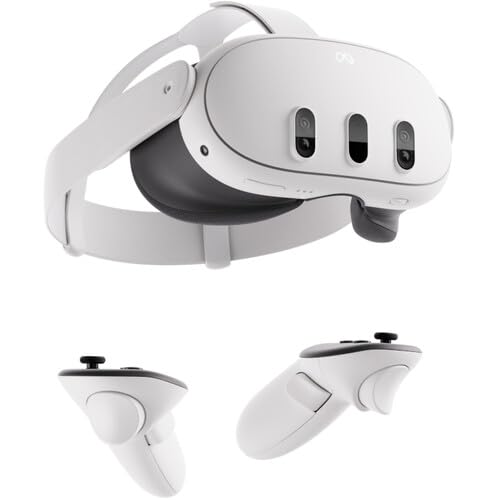
A nearly 30% resolution leap with 2X graphical processing, making it the premium untethered experience from Meta.
If you want the most powerful all-in-one headset that needs no PC or phone, this is the one. It boasts a 4K+ Infinite Display, roughly 30% sharper than earlier models, and doubles the graphical processing through the Snapdragon XR2 Gen 2 chip. Dual RGB color cameras deliver full-color passthrough, letting you blend your real room with digital worlds in vivid detail.
The 512GB storage is ample for a large game library, and the upgraded 8GB of RAM keeps everything responsive. Owners call it crisp, intuitive, and high-resolution, and it is the best wireless consumer VR headset many have used. The 40+ game catalog adds instant value.
The trade-offs are practical ones. Battery life is 2.2 hours on a charge, so longer sessions will need an external battery, and the stock strap is the most common gripe — several owners recommend an aftermarket head strap for comfort beyond ten minutes. As a renewed premium unit, the condition is praised as like-new.
The upgrade case
- Incredibly clear 4K+ display with full-color passthrough
- 512GB storage and 8GB RAM for a hefty game library
- Snapdragon XR2 Gen 2 handles next-gen graphics smoothly
What owners plan for
- 2.2-hour battery is short for marathon sessions
- Stock strap is the top comfort complaint
The recommendation: The best upgrade for existing Quest owners and enthusiasts who want the sharpest standalone experience.
Budget check: If you can live with slightly lower resolution, the Quest 3S is the smarter value pick.
9. XREAL One Pro AR Glasses

The widest 57° field of view here, plus Bose-tuned audio, makes this the most rich glasses-style display you can wear.
For the widest, most rich virtual screen in glasses form, this is the leader. The 57° field of view recreates the feeling of watching a 171-inch screen from four meters away, powered by Sony’s 0.55-inch Micro-OLED display (a tiny, high-contrast screen) at a smooth 120 Hz. Brightness reaches up to 700 nits (a measure of luminance), so it stays crisp even under bright sunlight.
The X1 chip delivers native 3DoF with ultra-low 3ms M2P latency, keeping the virtual screen stable even during rapid head movements. Sound comes from a unique acoustic chamber tuned by Bose engineers, and the dual IPD design with two size options means it fits over 95% of users comfortably with a spring hinge and adjustable arms.
The most-discussed issue is display quality—some find it sharp, others report blurry areas. Comfort also gets mixed feedback, with the recurring gripe being nose pain after about an hour, though that is solvable with accessory adjustments. Owners note it drains a phone battery reasonably fast, around 23% in 35 minutes of use.
Who it beats: Any other glasses-style display on raw field of view, making it the top pick for movie immersion and multi-screen work via SpaceWalker.
Think twice if: You have a sensitive nose bridge and plan long sessions — the comfort is the main caveat.
10. HTC Vive XR Elite with Deluxe Pack

A compact mixed-reality headset that bridges standalone convenience with low-latency PC VR gaming.
This is the flexible hybrid for people who want both standalone freedom and high-fidelity PC VR. It offers a 3840 x 1920 combined resolution at 19 pixels per degree, up to a 110° field of view, and a 90 Hz refresh rate — all in a remarkably compact form. Stepless IPD and diopter dials let you fine-tune the focus without tools.
The standout feature is the hot-swappable battery, giving up to 2 hours of continuous power that you can replace on the go, which is rare in this category. Hand tracking is excellent for productivity apps, and the full-color passthrough camera with a depth sensor makes mixed reality feel natural. The Deluxe Pack adds a face gasket, deluxe strap, and temple clips for a better fit.
The most-discussed issues are visual quality and battery life—some find it impressive, others report sub-par standalone performance. Battery life with face tracking enabled can drop to around 30 minutes, and full body tracking requires additional expensive accessories. Comfort is praised for long sessions, helping justify the higher price for enthusiasts.
Why it stands apart
- Hot-swappable battery for endless sessions
- Sharp 3840 x 1920 display with a wide 110° FOV
- No base stations needed, with precise tracking
What to weigh
- Battery drains fast when face tracking is on
- Higher price than other all-in-one headsets
Reach for this if: You are a PC gamer who also wants a capable standalone headset for travel or productivity.
Look elsewhere if: Your budget is tight or you need maximum standalone battery life without extra gear.
11. Oculus Rift S PC-Powered VR Headset

A proven PC-powered classic with improved optics, still delivering solid simulator and PC VR gaming.
For PC VR purists who already own a powerful rig, this is a dependable workhorse. It delivers a 1440×1600 resolution per eye on an LCD display, refreshing at 80 Hz, and connects via USB and DisplayPort. The improved optics and integrated VR audio mean you do not need extra headphones, and the inside-out tracking needs no external cameras or base stations.
Owners consistently find it an affordable entry into VR that works with all simulators, praising the frame rates even compared to far more expensive headsets. It is a great fit for racing and flight sim fans who want a dedicated PC headset, and the touchpad controllers are easy to use.
The recurring gripe is the USB connection. Many users report that a motherboard’s USB ports deliver insufficient power, causing disconnects, and a separate USB 3.0 PCI-e card is often the fix. Controller batteries drain weekly, and it is a discontinued model, so replacement parts are hard to find.
The value read: A solid budget path into PC VR for simulator fans, with the deepest library of any legacy headset.
The fair warning: Be ready for USB troubleshooting, and understand this is now a legacy product without ongoing support.
Understanding the Specs
Field of View
Field of view, measured in degrees, tells you how much of your vision the virtual screen fills. A wider field of view, like the 57° on the XREAL One Pro, feels far more rich and mimics a theater, while a narrower one can feel like watching a floating window. Bigger is genuinely better here, but it often makes the glasses bulkier.
Refresh Rate
This is how many times per second the image updates, shown in hertz (Hz). A 120 Hz display looks fluid and smooth for fast games and action movies, while a 60 Hz or 80 Hz rate can show motion blur or flicker. If you game seriously, aim for the highest refresh rate you can find.
FAQ
Will AR glasses work with my iPhone or Android phone?
Do I need a PC to use AR glasses?
Can I wear AR glasses over my prescription glasses?
What is the difference between 3DoF and 6DoF tracking?
How long does the battery last on an AR headset?
Is an AR headset the same as a VR headset?
Why do some AR glasses drain my phone battery so fast?
Can I use AR glasses for work and productivity?
Final Thoughts: The Verdict
The crowd favorite in the ar headset space is the Meta Quest 3S because it bundles a full standalone mixed-reality experience into one easy, wire-free package. If you want a featherweight display that turns your phone into a private theater, the TOZO VIZO Z1 brings the brightest outdoor screen, and for the widest, most rich glasses-style view, the XREAL One Pro is the one to reach for.
How We Picked
We do not accept paid placement. Every pick is matched to a real buyer and a real use-case; we do not hands-on test units.
Sources & Methodology
Specifications: manufacturer listings and product documentation. Review insights: verified customer reviews, as of August 2026. Pricing: not shown on this page (it changes often); check the current price via the retailer link.
As an Amazon Associate, Gadgets Feed earns from qualifying purchases. This does not affect which products we feature.