
A true macro lens isn’t about zooming; it’s about achieving life-size 1:1 magnification that resolves the fine veins of a leaf or the compound eye of an insect. Too many buyers mistake a “close-up” mode on a kit lens for the real thing, ending up with soft, unusable results.
I’m Rikta — the co-founder and writer behind Gadgets Feed. I spend my time dissecting sensor resolution, minimum focus distances, and lens coatings to match you with the right optics for the job. (And Homer 🐱 supervised every lens test from the warmth of his camera bag).
Whether you are chasing insect details in a garden or product shots for a studio, finding the right tool means balancing working distance, magnification ratio, and stabilization. This guide covers the best camera with macro lens for every kind of close-up shooter.
How To Choose The Best Camera With Macro Lens
Macro photography demands a specific set of optical characteristics. A general-purpose zoom lens with a “macro” label rarely delivers true 1:1 magnification. You need to prioritize three things: the magnification ratio, the minimum focus distance, and the working distance from lens to subject.
Magnification Ratio and Minimum Focus Distance
True macro starts at 1:1 — a life-size reproduction of the subject on the sensor. Lenses like the Nikon Z MC 105mm f/2.8 VR S deliver exactly that. The minimum focus distance (how close you can get to the subject) determines how small a detail you can fill the frame with. A shorter distance means larger magnification, but it also means you might cast a shadow over your subject or scare off a living creature.
Working Distance and Stabilization
Working distance is the space between the front of the lens and the subject. For insects, a longer working distance (like 105mm or 90mm lenses offer) prevents you from disturbing the subject and allows room for lighting. Optical stabilization becomes critical at macro distances, where even breathing can cause blur. Lenses with in-lens VR or OSS, like the Sony FE 90mm f/2.8 Macro G OSS, make handheld shooting viable in lower light.
Quick Comparison
On smaller screens, swipe sideways to see the full table.
| Model | Category | Best For | Key Spec | Amazon |
|---|---|---|---|---|
| Canon RF100mm F2.8 L Macro IS USM | Premium Lens | Professional 1.4x macro and portraits | 1.4x max magnification, 5-stop IS | Amazon |
| Sony FE 100mm F2.8 GM OSS | Premium Lens | Sony full-frame with G Master sharpness | 1.4x mag, 4 XD Linear AF motors | Amazon |
| OM SYSTEM M.Zuiko 90mm F3.5 Macro IS PRO | Premium Lens | Micro Four Thirds extreme macro | 2x mag (4x 35mm equiv.), IP53 sealed | Amazon |
| Canon EF 100mm f/2.8L IS USM | Premium Lens | DSLR users needing hybrid IS | 1:1 mag, hybrid image stabilization | Amazon |
| Nikon Z MC 105mm f/2.8 VR S | Premium Lens | Nikon Z macro with excellent VR | 1:1 mag, S-Line optics, VR | Amazon |
| Panasonic S 100mm F2.8 Macro | Premium Lens | L-Mount shooters needing lightweight | 1:1 mag, 298g weight, dual phase linear motor | Amazon |
| Sony SEL90M28G FE 90mm f/2.8 Macro G OSS | Mid-Range Lens | Handheld macro with optical steady shot | 1:1 mag, OSS, DDSSM AF | Amazon |
| Tamron 90mm F/2.8 Di III VXD 1:1 Macro | Mid-Range Lens | Sony shooters wanting value and sharpness | 1:1 mag, VXD AF, moisture-resistant | Amazon |
| Nikon Z MC 50mm f/2.8 | Mid-Range Lens | Everyday walkaround with macro capability | 1:1 mag, 50mm natural FOV, 9.12 oz | Amazon |
| OM SYSTEM TG-7 Black Underwater Camera | Rugged Camera | Underwater and outdoor macro shooting | 15m waterproof, 4x macro, microscope mode | Amazon |
| Pentax WG-90 Blue | Rugged Camera | Tough outdoor macro with LED ring lights | 14m waterproof, 6 macro lights, digital microscope | Amazon |
In‑Depth Reviews
1. Canon RF100mm F2.8 L Macro IS USM

This lens breaks the 1:1 barrier with a maximum magnification of 1.4x, letting you capture details smaller than standard macro optics can resolve. The SA control ring on the barrel offers a unique way to adjust the character of bokeh, though most users find themselves locking it to neutral for pure sharpness. Combined with a 5-stop Optical Image Stabilizer, handheld macro shots at 1.4x become practical even in challenging light.
On Canon’s R-series bodies, the IS works in concert with IBIS to deliver steady framing at 1:1 and beyond. The L-series build quality means it is dust and moisture sealed, and the USM autofocus is both fast and silent, making it suitable for video work. The only real trade-off is its weight — 730 grams — which makes it a front-heavy pairing on lighter RF bodies like the EOS R8.
As a professional macro lens, it pulls double duty for portraiture thanks to the 100mm focal length and creamy bokeh. When you compare its 1.4x magnification to any 1:1 competitor, you immediately see the advantage for tiny subjects like stamps, coins, and insect eyes. This is the definitive macro lens for the Canon RF ecosystem.
Why it’s great
- 1.4x magnification exceeds standard 1:1 macro
- 5-stop image stabilization for handheld shots
- Silent USM AF ideal for video
Good to know
- SA control ring feels gimmicky for most users
- Heavy at 730g for a 100mm prime
- Premium-tier investment for RF shooters
2. Sony FE 100mm F2.8 GM OSS

Sony’s G Master macro lens delivers 1.4x maximum magnification out of the box, with the option to push it to 2.8x using the optional teleconverter. That kind of reach puts you deep into super-macro territory without needing extension tubes. The four XD Linear AF motors ensure fast, precise, and essentially silent focusing, which makes it an excellent choice for video capture of small subjects.
The refined Optical Steady Shot stabilization reduces the micro-jitters that become magnified at 1.4x. When paired with a body like the Sony A7R V, the combination of IBIS and OSS allows steady handheld frames down to surprisingly slow shutter speeds. The Nano AR Coating suppresses flare and ghosting, which is critical when you’re working with macro lighting setups that often place lights close to the subject.
At 22.7 ounces, it balances well on full-frame Sony bodies without being cumbersome. The G Master resolution ensures every detail is retained edge-to-edge, with bokeh that feels smooth and natural. For Sony users who demand the highest magnification and the fastest AF in a single macro package, this lens sets the benchmark.
Why it’s great
- 1.4x magnification extends to 2.8x with teleconverter
- Four XD Linear motors for quiet, rapid AF
- OSS minimizes handheld macro shake
Good to know
- Top-tier price for a macro prime
- Teleconverter purchase required for 2.8x
- No aperture ring on the barrel
3. OM SYSTEM M.Zuiko 90mm F3.5 Macro IS PRO
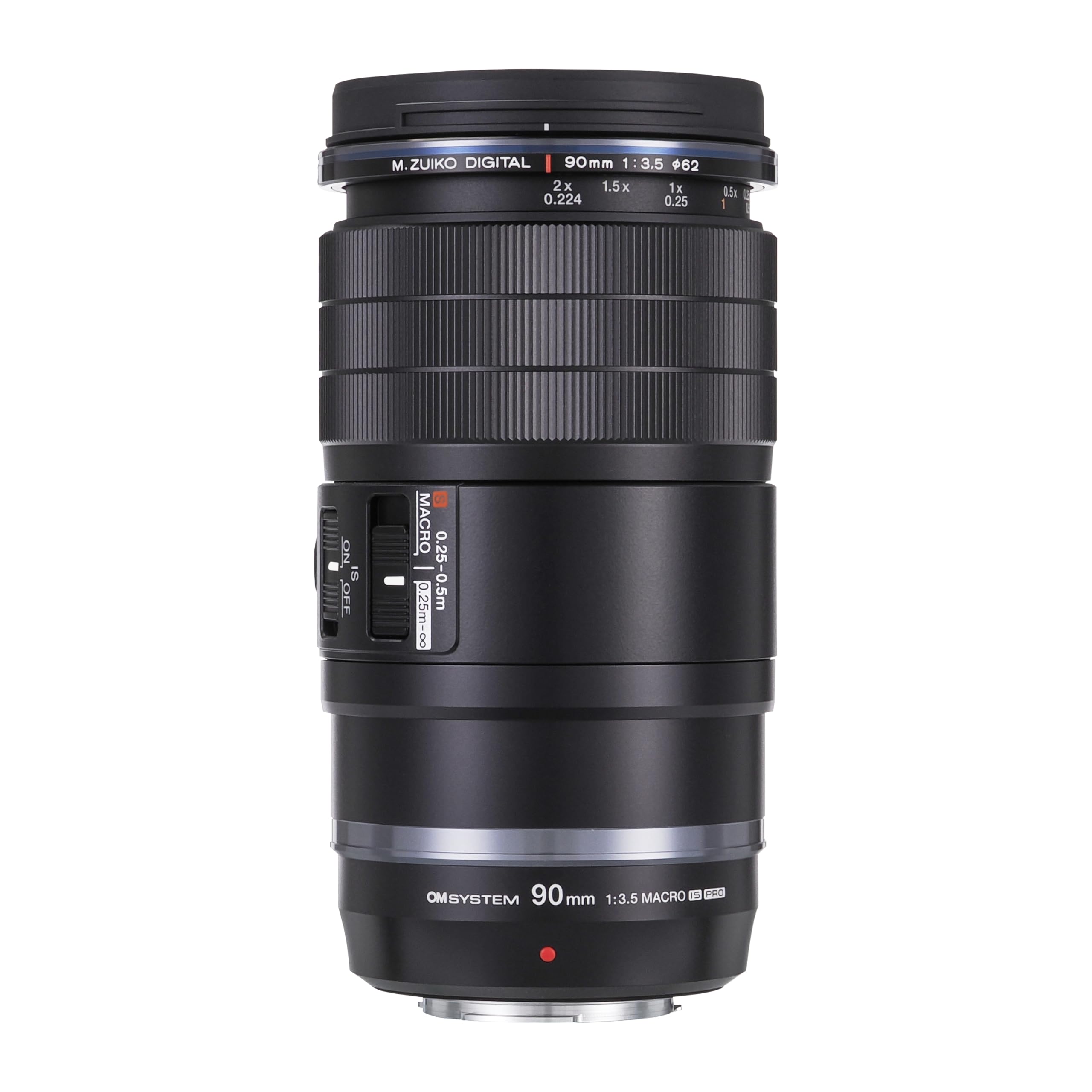
This lens achieves a native 2x magnification — equivalent to 4x on a 35mm full-frame system — putting it in a class of its own for Micro Four Thirds shooters. Adding the MC-20 teleconverter pushes that to 4x (8x 35mm equivalent), which is deep into scientific-imaging territory. The minimum shooting distance of 0.224 meters gives you working room even at these extreme magnifications.
The autofocus is class-leading for a macro lens of this reach, with high-speed and high-precision tracking that works reliably even in challenging light. The IP53 splashproof and dustproof performance means you can take it into wet environments without worry. The fluorine coating on the front element repels water and dirt, making field maintenance simple.
Weight comes in at 739 grams, which is reasonable considering the optical complexity required for 2x native magnification. When paired with an OM-1 or OM-5 body, the combined stabilization system delivers rock-solid handheld shots. For insect photographers and detail fanatics who want the highest possible magnification without switching systems, this is the ultimate MFT macro lens.
Why it’s great
- Native 2x magnification (4x 35mm equivalent)
- IP53 weather sealing for field use
- Works with teleconverter for 4x (8x equivalent)
Good to know
- Limited to Micro Four Thirds mount
- f/3.5 max aperture reduces low-light capability
- Premium lens price bracket
4. Canon EF 100mm f/2.8L IS USM

This lens is the reference standard for DSLR macro photography. The Hybrid Image Stabilization system compensates for both angular and shift camera shake, which is exactly what you experience during close-up work. That makes it noticeably more effective for handheld macro than standard IS systems found on non-macro lenses. The 1:1 life-size magnification is delivered with L-series sharpness and contrast.
The USM autofocus is fast and reliable for general shooting, though at macro distances many users still prefer manual focus for precision. The focus range limiter helps speed up AF by preventing the lens from hunting through its entire range. Build quality is typical L-series — robust, weather-sealed, and designed to last through years of professional use.
It weighs about 2 pounds, which is reasonable for a 100mm f/2.8L lens. While it is a DSLR-native lens, it works on Canon EOS R bodies via the adapter with no loss in performance. For anyone invested in the Canon EF ecosystem who needs a professional macro lens, this remains a top-tier choice even after the RF transition.
Why it’s great
- Hybrid IS corrects angular and shift shake
- L-series build and weather sealing
- Sharp at 1:1 magnification
Good to know
- Requires adapter for RF mount bodies
- No 1.4x magnification like RF version
- Heavier than some newer macro lenses
5. Nikon Z MC 105mm f/2.8 VR S
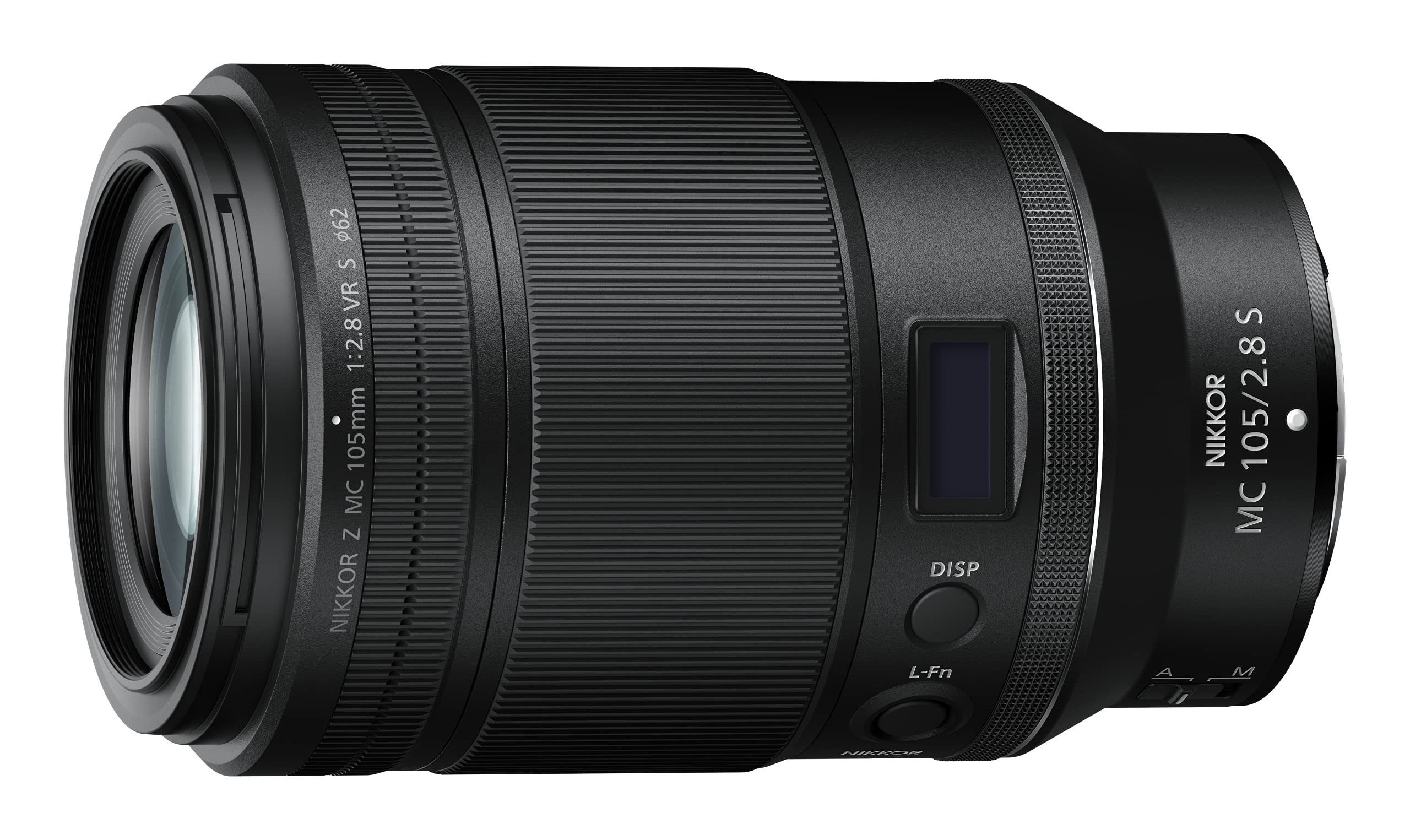
Nikon’s S-Line optics bring next-level sharpness and contrast to macro photography with this 105mm lens. The Vibration Reduction system works in concert with Z-series IBIS to deliver steady handheld images even at 1:1 magnification. The 105mm focal length provides a comfortable working distance for insect photography, keeping you far enough to avoid casting shadows or disturbing your subject.
The f/2.8 maximum aperture is useful not only for low-light shooting but also for creating shallow depth-of-field effects that separate your subject from the background beautifully. Weather sealing on all moving parts protects against moisture and dust ingress. The lens comes with a hood and case in the box, reflecting its professional positioning.
At just over 1.5 pounds, it is remarkably light for a 105mm f/2.8 macro with VR. Users report that it doubles as an excellent portrait lens due to its flattering focal length and creamy bokeh. For Nikon Z shooters, this is the definitive macro lens — the one that stays on the camera for both close-ups and everyday use.
Why it’s great
- 105mm offers excellent working distance for insect photography
- VR and IBIS combine for steady handheld shots
- S-Line optics deliver edge-to-edge sharpness
Good to know
- Minimum focus distance still requires approach
- Some autofocus breathing reported near MFD
- Premium price reflects S-Line quality
6. Panasonic S 100mm F2.8 Macro

At just 298 grams, this is remarkably light for a 100mm f/2.8 macro lens — about half the weight of many competitors. The Dual Phase Linear Motor delivers silent, responsive autofocus while suppressing focus breathing, which is critical for video work. The 1:1 life-size magnification is accompanied by high resolution from the center to the edges of the frame.
The lens is designed to match other LUMIX S-series lenses for unified operation and color rendering. It uses a Leica L-mount, making it compatible with Panasonic, Sigma, and Leica full-frame mirrorless bodies. The compact build means it can live on your camera as a walkaround prime without weighing you down.
The bokeh produced at f/2.8 feels smooth and natural, helping subjects stand out from the background. For video shooters, the focus breathing suppression means the angle of view remains stable during rack focusing — a rare advantage in a macro lens. This is the go-to choice for L-mount users who want a lightweight, high-performing macro lens.
Why it’s great
- Ultra-light 298g design never feels burdensome
- Focus breathing suppression ideal for video
- Silent Dual Phase Linear Motor AF
Good to know
- Limited to Leica L-mount systems
- No in-lens stabilization (uses body IBIS)
- Premium price bracket for weight savings
7. Sony SEL90M28G FE 90mm f/2.8 Macro G OSS

This 90mm G-series lens delivers true 1:1 magnification with built-in Optical Steady Shot stabilization, making it one of the most versatile macro lenses for Sony full-frame shooters. The minimum focus distance of 0.28 meters allows you to get close enough for life-size capture while still having room for lighting. The Direct Drive SSM autofocus is quiet and precise, suitable for both stills and video.
The Nano AR coating reduces flare and ghosting effectively, maintaining contrast even when shooting backlit subjects. The 9-blade circular aperture contributes to smooth, natural bokeh. The dust and moisture-resistant design means you can use it confidently in outdoor conditions, though it is worth noting that the lens does not have internal zoom — the barrel extends slightly during focusing.
Corner-to-corner sharpness is excellent thanks to Advanced Spherical elements and Super ED glass. The push-to-lock AF/MF ring provides quick switching when you need manual control for precise composition. For Sony E-mount users looking for a mid-range macro lens with stabilization, this delivers near-G Master quality at a more accessible investment.
Why it’s great
- Optical Steady Shot for handheld macro
- Nano AR coating suppresses flare effectively
- Sharp edge-to-edge with Super ED glass
Good to know
- Barrel extends during focusing
- AF hunts slightly at macro distances
- Some sample variation reported in packaging
8. Tamron 90mm F/2.8 Di III VXD 1:1 Macro
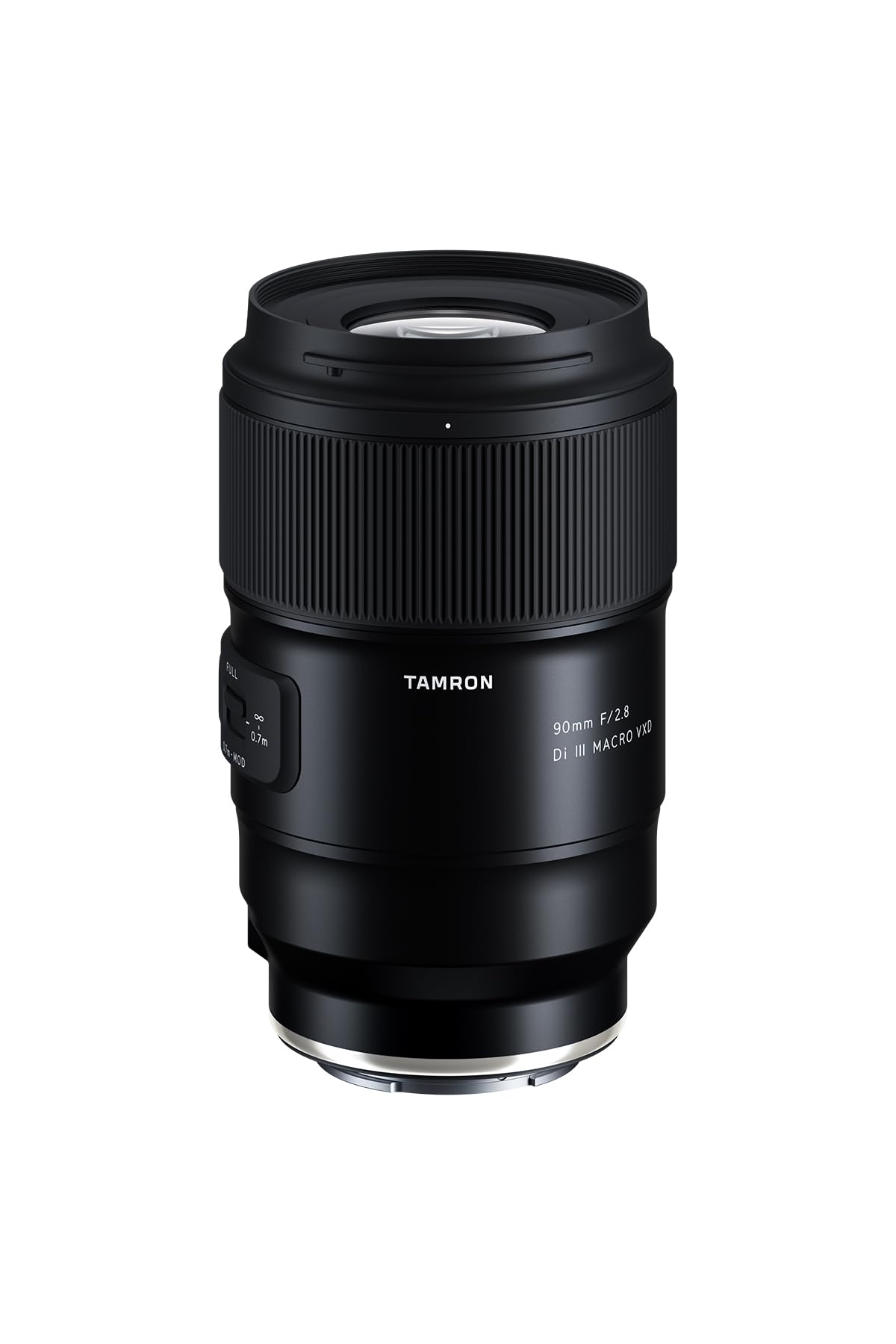
Tamron brings high optical performance to the Sony E-mount ecosystem with this 90mm macro lens. The VXD linear motor provides high-speed, high-precision autofocus with superb subject tracking, making it viable for moving subjects like insects. The flat-field performance is outstanding, meaning the entire frame stays sharp when photographing flat subjects like documents or stamps.
The BBAR-G2 and fluorine coatings reduce ghosting and flare while repelling moisture and fingerprints. Moisture-resistant construction adds a layer of protection for outdoor shooting. The 1:1 magnification gives you true life-size capture, and the 90mm focal length provides a comfortable working distance for small subjects.
The lens does not have built-in image stabilization, so you will need to rely on your camera body’s IBIS for handheld work. It is a lightweight option compared to stabilized Sony G-master lenses, making it easy to carry for extended shooting sessions. For Sony shooters on a budget who still demand sharp macro performance, this is a compelling alternative to the more expensive options.
Why it’s great
- VXD AF provides fast, precise tracking
- Excellent flat-field performance for document work
- Moisture-resistant construction
Good to know
- No in-lens image stabilization
- Relies on body IBIS for handheld stability
- Limited to Sony E-mount cameras
9. Nikon Z MC 50mm f/2.8
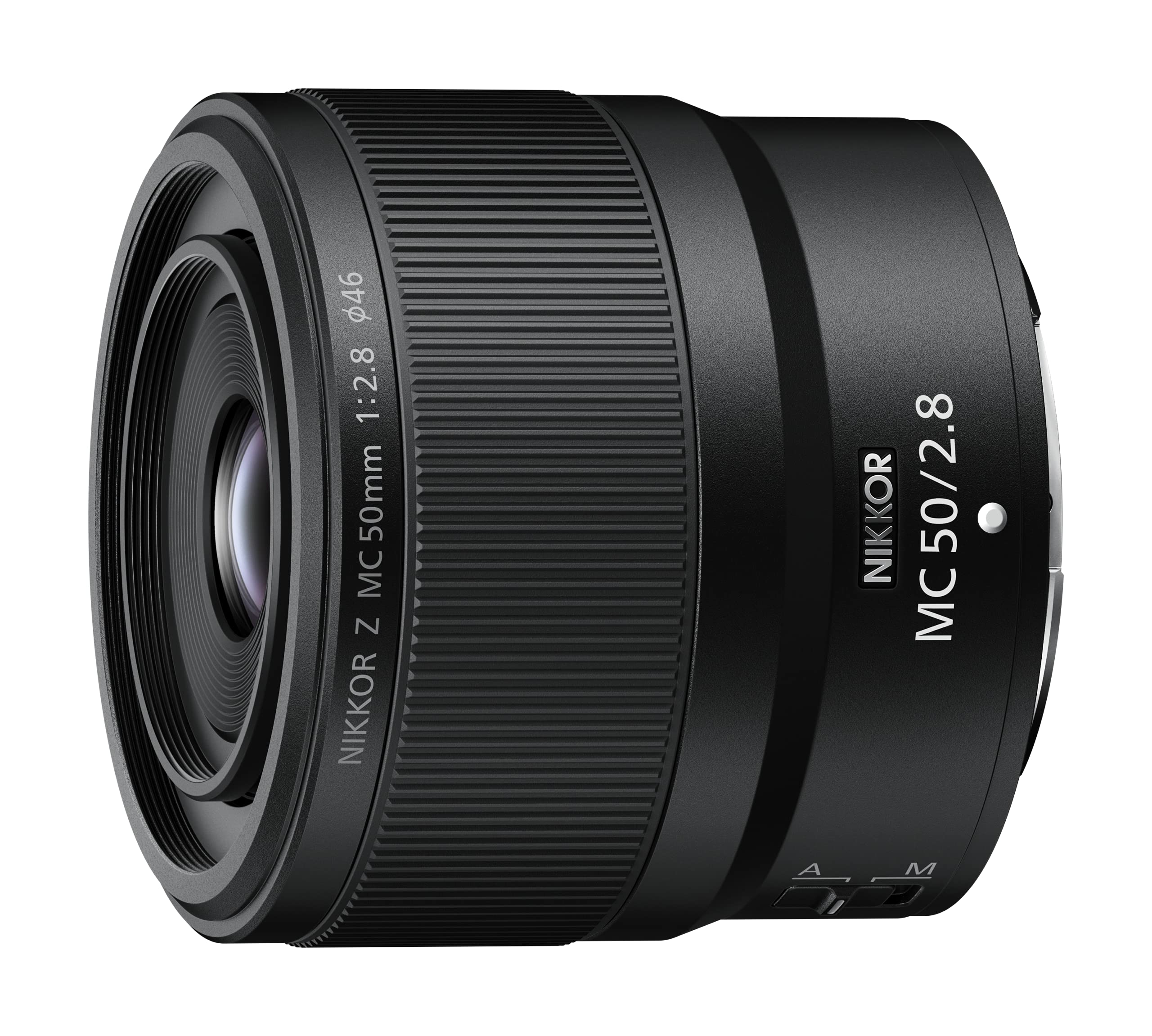
This compact 50mm macro lens weighs only 9.12 ounces, making it the lightest full-frame macro option in Nikon’s Z lineup. The 50mm focal length matches the human eye’s natural perspective, producing images that feel intuitive and familiar. It achieves true 1:1 magnification with a bright f/2.8 aperture that works well in everyday lighting conditions.
The front-focusing design minimizes the overall size, allowing you to leave it on your camera as a walkaround prime. It handles food photography, product shots, and close-up details with excellent sharpness and color reproduction. The fluorine coating on the front element helps repel dust and smudges.
The lens lacks Vibration Reduction, relying on Z-series body IBIS for stabilization. Its versatility makes it a great first macro lens for Nikon Z users who want to explore close-up photography without the bulk of a 105mm lens. It also doubles as a standard prime for everyday shooting, making it an economical choice for budget-conscious photographers.
Why it’s great
- Extremely lightweight at just 9.12 oz
- 50mm natural field of view for everyday use
- True 1:1 macro in a compact package
Good to know
- No in-lens VR stabilization
- Shorter working distance may scare skittish insects
- Not as sharp as the 105mm S-Line at macro distances
10. OM SYSTEM TG-7 Black Underwater Camera

The TG-7 is a compact, ruggedized camera built for extreme conditions. It is waterproof to 15 meters, shockproof from 2.1 meters, crushproof to 100 kgf, and freezeproof to -10°C. For macro shooters who work outdoors, the variable macro system offers four modes including an underwater microscope mode that captures details as close as 1 cm from the lens.
The F2.0 lens delivers good light gathering for a compact camera, and the back-illuminated CMOS sensor handles bright outdoor scenes well. It records 4K video at 30fps and high-speed movie modes at 120fps for capturing fast-moving subjects. The five underwater modes adjust color and contrast specifically for marine environments.
The small sensor limits low-light performance compared to larger mirrorless systems, and the 12MP resolution is modest by modern standards. However, for adventurers who need a rugged camera that can go underwater, in mud, or on a mountain, the TG-7 delivers reliable macro performance where no interchangeable lens camera would survive.
Why it’s great
- 15m waterproof, shockproof, and freezeproof
- Dedicated underwater microscope mode for close-ups
- Compact and easy to carry anywhere
Good to know
- Small sensor limits low-light macro performance
- 12MP resolution is lower than many modern cameras
- Autofocus can struggle in very dark conditions
11. Pentax WG-90 Blue

The WG-90 is a heavy-duty compact camera built for outdoor use, waterproof to 14 meters, shockproof against a 1.6-meter drop, and cold-resistant down to -10°C. Its standout feature for macro photography is the ring of six LED Macro Lights positioned around the circumference of the lens barrel, providing bright, uniform illumination for close-up subjects even in total darkness.
The PENTAX-original Digital Microscope mode captures clear, vivid images of microscopic details normally invisible to the naked eye. The back-illuminated 16-megapixel CMOS sensor reaches ISO 6400, giving you flexibility in darker environments. The Underwater and Underwater Movie shooting modes optimize color and contrast based on real underwater image data.
The 5x optical zoom lens offers a maximum focal length of 25mm, which is wide rather than telephoto. Battery life is rated at about 2.5 hours, though some users report faster drain during extended use. For budget-conscious adventurers who need a tough camera with built-in macro lighting and underwater capability, the WG-90 offers solid value without the premium price of the TG-7.
Why it’s great
- Six LED Macro Lights for close-up illumination
- 14m waterproof and shockproof design
- Digital Microscope mode for extreme close-ups
Good to know
- Battery life drains faster than expected during macro work
- Image quality limited by small sensor
- Wide-angle lens, not a telephoto macro
FAQ
What is the difference between a macro lens and a telephoto zoom lens with a macro mode?
What is the best working distance for insect macro photography?
Can I use extension tubes instead of a macro lens?
Why does my macro lens need image stabilization?
What does the f-number mean for a macro lens?
Final Thoughts: The Verdict
For most users, the best camera with macro lens winner is the Canon RF100mm F2.8 L Macro IS USM because its 1.4x magnification and 5-stop stabilization set a new benchmark for what a macro lens can achieve. If you want professional G Master optics with super-fast autofocus, grab the Sony FE 100mm F2.8 GM OSS. And for Micro Four Thirds shooters who demand extreme magnification, nothing beats the OM SYSTEM M.Zuiko 90mm F3.5 Macro IS PRO.