
Our readers keep the lights on and my morning glass full of iced black tea. As an Amazon Associate, I earn from qualifying purchases.
Specs are compiled from manufacturer listings and verified buyer reviews and can change over time — please confirm the key details on the product page before buying.
The hardest part of buying your first mountain bike isn’t the trail—it’s figuring out which bargain-priced bike won’t fall apart after a few rides. You want something that shifts cleanly, stops when you squeeze, and doesn’t fight you on the climb home. You don’t need to spend a fortune, but you do need to know which specs actually matter for trail fun.
I’m Min — the founder and writer behind Gadgets Feed. This guide is built by comparing the manufacturers’ published specifications and the patterns across verified customer reviews, so you get each pick’s real strengths and trade-offs instead of marketing spin.
Here’s how to find a sturdy, dependable ride without the guesswork. Here is the practical breakdown of the beginner mountain bike options that hold up to real-world use and honest trail miles.
Our Picks at a Glance

How To Choose The Best Beginner Mountain Bike
The entry-level market is crowded with bikes that look the part but ride poorly. Before you click buy, focus on a few core components that separate a dependable first bike from a frustrating paperweight. Your budget should stretch to get a reliable frame and decent brakes, not just a flashy paint job.
Frame Material: Aluminum vs. Steel
The frame is the backbone of your bike and the biggest factor in how it feels. Aluminum alloy frames are lighter, which makes them easier to maneuver on the trail and simpler to lift onto a car rack. Steel frames, like carbon steel or alloy steel, tend to be heavier but are often praised for their durability and ability to absorb road vibration. For a first bike, an aluminum frame usually offers a better balance of weight and strength, making your early rides less tiring.
Braking Power and Control
Reliable stopping is non-negotiable on loose dirt or steep descents. Mechanical disc brakes use a caliper to squeeze a rotor attached to the wheel hub, giving you consistent stopping power even in wet or muddy conditions. Linear pull brakes (also called V-brakes) squeeze the wheel rim instead and are simpler and cheaper, but they can lose grip when the rims get wet or muddy. Disc brakes are the safer, more modern choice for varied terrain.
Gearing and Drivetrain Simplicity
Most beginner bikes come with either a 7-speed, 8-speed, or 21-speed setup. A 21-speed drivetrain with a front and rear derailleur (the mechanism that moves the chain between gears) gives you a wide range for climbing hills and speeding on flats. A quality 21-speed system with smooth shifters makes a huge difference in rider confidence. Twist shifters are simple to use, while trigger shifters offer a more precise, click-based feel that some riders prefer.
Quick Comparison
| Model | Best For | Frame Material | Wheel Size | Brake Type | Amazon |
|---|---|---|---|---|---|
| AVASTA Earth★ Best Overall | Overall trail readiness | Aluminum Alloy | 26″ / 27.5″ | Disc | Amazon |
| EUROBIKE 27.5″Best Value | Budget dual suspension | Carbon Steel | 27.5″ | Disc | Amazon |
| Huffy StoneFamily Favorite | Family & heavier riders | Alloy Steel | 26″ | Linear Pull | Amazon |
| SPATIAL | Lockout suspension climbs | Aluminum Alloy | 24″ / 26″ / 27.5″ | Disc | Amazon |
| Huffy 26″ | Simple pavement & trails | Aluminum | 26″ | Linear Pull | Amazon |
| HILAND | Taller riders’ value | Carbon Steel | 26″ / 27.5″ | Disc | Amazon |
| Mongoose Flatrock | Youth & smaller adults | Aluminum | 24″ / 26″ / 29″ | V Brake | Amazon |
| EUROBIKE 29″ | Tall riders’ speed | Aluminum Alloy | 27.5″ / 29″ | Disc | Amazon |
| Mongoose Grafton | Fat tire stability | Aluminum | 26″ | Disc | Amazon |
In‑Depth Reviews
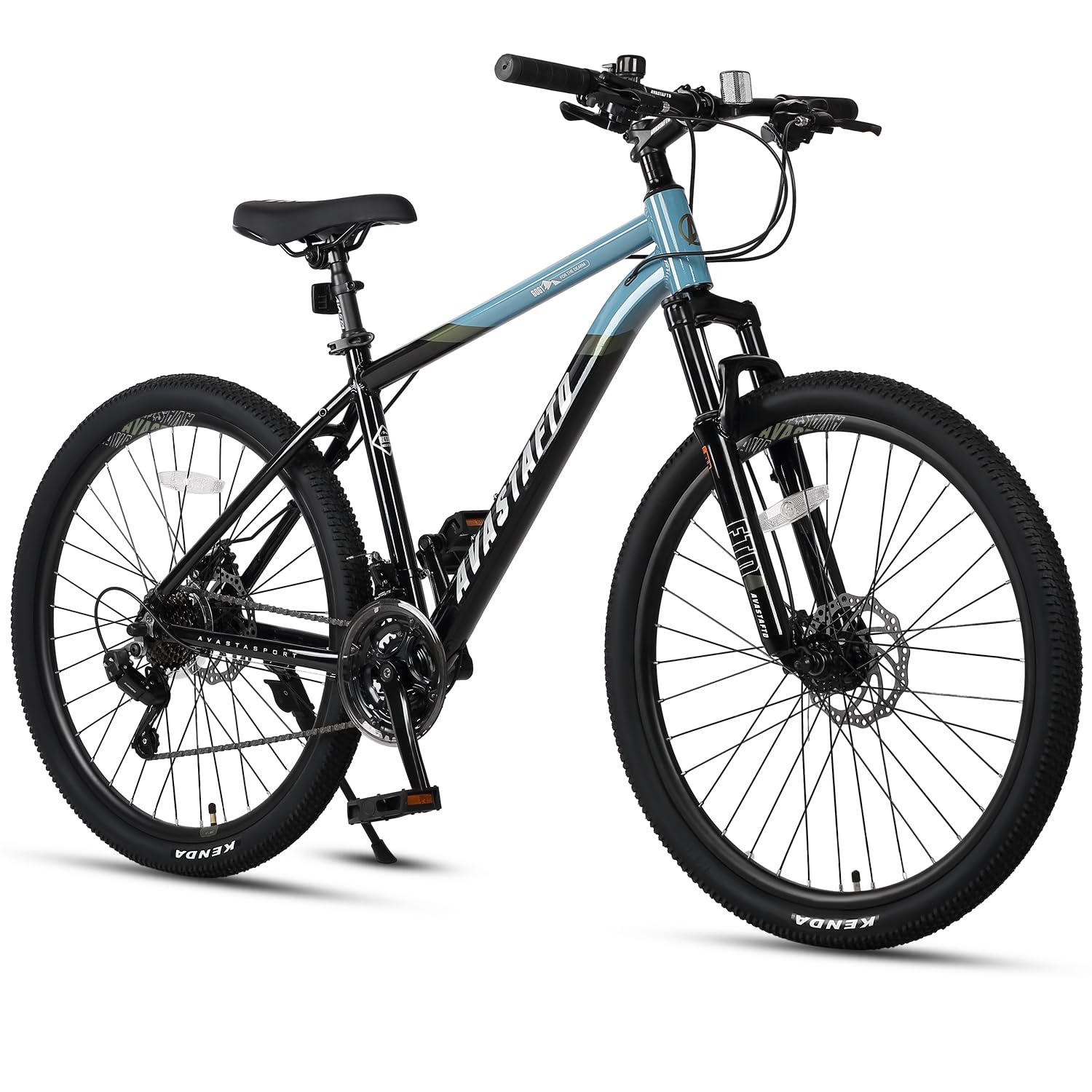
1. AVASTA Earth 26 27.5 Inch Mountain Bike
Our pick — over 4★ from 100+ verified ratings; the strongest balance of quality and price.
This trail-ready aluminum hardtail makes a first mountain bike feel like a smart investment, not a gamble.
The AVASTA Earth earns its top spot because it pairs the two things beginners value most: a lightweight build and real stopping power. The aluminum alloy frame and rims keep the bike agile on the trail without the back-breaking weight of a steel entry model. When you hit a root or rock, the switchable suspension fork soaks up the hit—and you can lock it out for smoother pedaling on flat pavement.
Shifting is handled by a 21-speed derailleur system with trigger shifters, which gives you a wide range of gears for climbing steep hills or cruising on the street. Buyers report the build quality is genuinely impressive for the money, and the bike handles everything from Montana singletrack to daily city commutes. The included bell, kickstand, reflectors, and tool kit mean you aren’t hunting for basics after assembly.
It arrives 75% pre-assembled with an installation video, and while setup is straightforward, the guidance suggests you double-check that all parts are present before you start. The fit accommodates riders well, with optional 26″ x 1.95″ and 27.5″ x 1.95″ all-terrain tires that use quick-release skewers, so you can swap between smoother rolling and aggressive traction depending on your ride.
What wins riders over
- Aluminum frame keeps it light for lifting and maneuvering
- Switchable suspension adapts to trail and pavement
- Complete accessory kit—bell, kickstand, and reflectors included
Where it asks for patience
- 75% pre-assembly still requires a careful setup session
- Durability gets mixed feedback, so treat the parts kindly at first
Reach for this if: you want a balanced first bike that feels light, stops with disc brakes, and shifts across 21 gears for both trails and commutes.
Think twice if: you plan to punish it on severe downhill trails every weekend—this is a quality beginner bike, not a downhill race rig.
2. EUROBIKE 21-Speed 27.5-Inch Mountain Bike
A dual-suspension cruiser that swallows bumps on a budget, built for riders up to six-foot-two.
The EUROBIKE stands out in the entry tier because it brings dual suspension—a front fork and a rear shock—to a price point where most bikes only offer front travel. On dirt roads and gravel paths, that rear cushion takes the edge off, making longer rides more comfortable for your back and wrists. The 17.5″ frame and 27.5″ wheels are sized for riders between 5’4″ and 6’2″, and the frame is rated for a maximum load of 330 lbs.
Stopping power comes from front and rear mechanical disc brakes, which hold up better than rim brakes when the trail gets muddy. Shifting is managed by 21-speed trigger shifters with front and rear derailleurs, and while owners note the shifting feels smooth after a quick adjustment, a few mention the derailleur cable routing isn’t intuitive. Assembly is genuinely beginner-friendly at 85% pre-assembled—most people finish in 15 to 25 minutes with the included instructions.
The trade-off for the cushioned ride is weight; the carbon steel frame tips the scales at 16.5 kg, making it noticeably heavier than an aluminum bike. Owners agree the stock seat and plastic pedals are the weakest links, so budget for a simple upgrade if you plan to ride often. The brand throws in a free one-year warranty, and the ride quality earns consistent praise for the money.
Dual-cushion comfort: The rear suspension makes this the pick for rough, bumpy paths where a hardtail would rattle you.
Heft to manage: It’s a sturdy steel frame that forgives, but you’ll feel the extra pounds hauling it upstairs.
Best suited to: taller beginners who want maximum bump absorption and a budget-friendly price tag.
Not ideal for: riders who need a featherweight frame for lifting or aggressive climbing—look to aluminum instead.
3. Huffy Stone Mountain Bike
A rugged steel cruiser with Shimano gearing and a loyal following among larger riders.
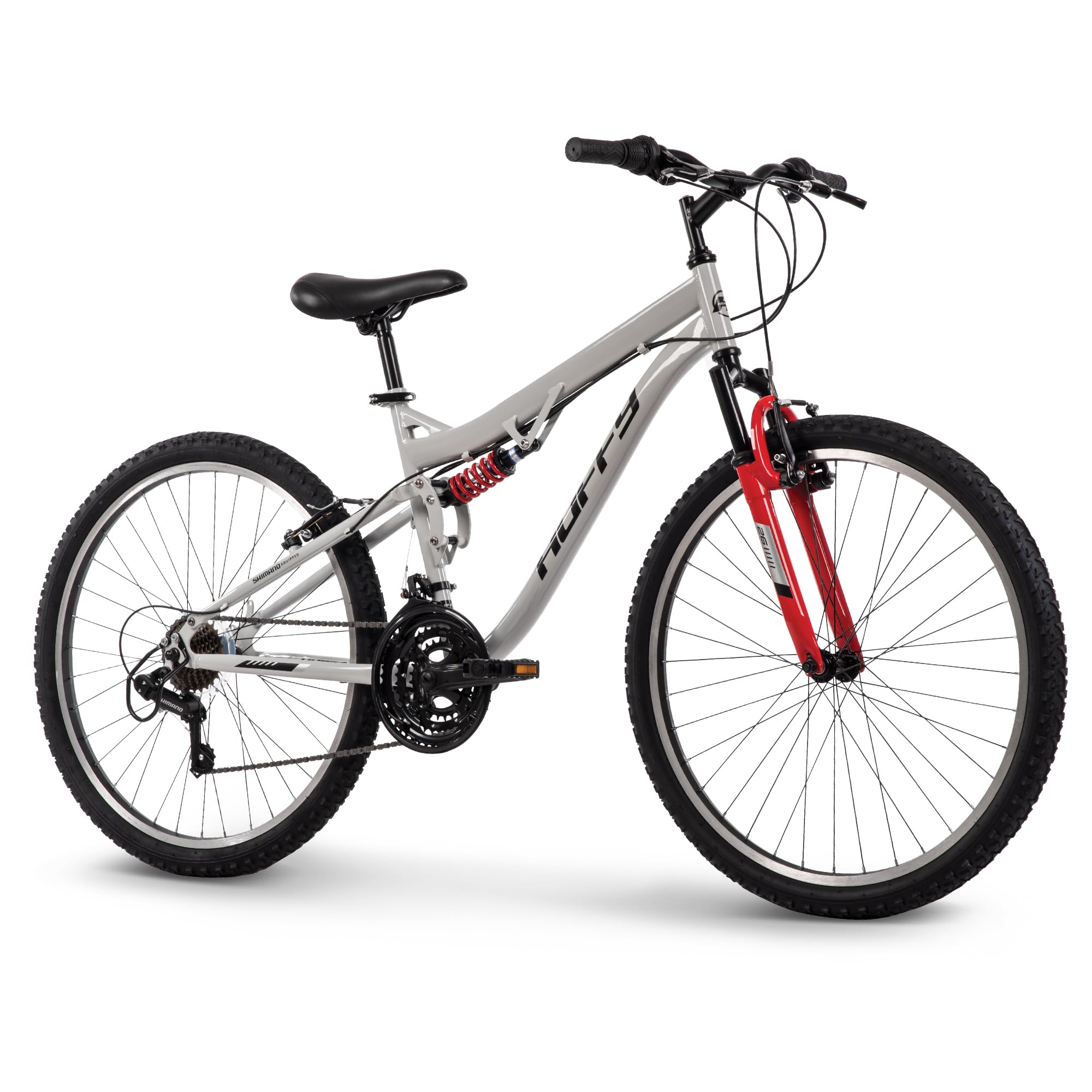
The Huffy Stone is the bike that keeps showing up in real-world long-term tests, and its crowd favorite status is built on the fact that it simply works. It uses a durable alloy steel frame finished in a sleek gray gloss with red accents, and the dual suspension—front fork plus rear spring shock—smoothes out gravel paths and uneven roads. The 26-inch knobby tires deliver grip on dirt and pavement, and the bike fits riders 5’0″ and taller.
What makes this a standout for beginners is the 21-speed Shimano drivetrain with a rear derailleur and twist shifters. Shimano is a trusted name in bike components, and the twist grip shifters are intuitive for new riders—no hunting for the right gear while bouncing down a hill. Owners mention this bike handles riders up to 230 and even 240 lbs comfortably, making it a rare budget option that doesn’t feel flimsy under heavier loads.
It’s not without its honest caveats. The brake system is dual linear pull rather than disc, which is fine for dry conditions but less ideal in heavy mud. A recurring theme in long-term reviews is that the rear tire can wear flat after heavy pavement use, and the stock seat is uncomfortable enough that many riders upgrade it. For a first bike that survives daily commutes and weekend trail rides, the value is hard to argue with.
Built for big riders: The steel frame and dual suspension handle riders well over 200 lbs without complaint.
Budget touches: The linear pull brakes and basic seat are where the savings show—plan small upgrades.
Grab this if: you want a dependable, family-friendly bike with a trusted Shimano drivetrain that won’t quit.
Look elsewhere if: you ride in consistently wet, muddy conditions where disc brakes outperform rim brakes.
4. SPATIAL Mountain Bike

A featherweight aluminum frame with a fork lockout that makes climbing hills noticeably easier.
The SPATIAL earns its place for beginners who plan to mix trail riding with serious climbing. It’s built around a lightweight 33 lb aluminum alloy frame, and the front suspension fork features a lockout—a switch that stops the fork from bouncing—so you don’t waste energy on uphill pedaling. Flip it open on the descent and the shock-absorbing fork eats up roots, rocks, and uneven ground.
Depending on the model you choose, you get either an 8-speed drivetrain or a 21-speed 3 x 7 setup with a 7-speed rear derailleur. Owners specifically call out the smooth, responsive shifters, and the 2.10-inch-wide tires add serious traction on dirt roads and mountain trails. The front and rear mechanical disc brakes deliver reliable stopping in rain, mud, and dirt, which is exactly what you want as a beginner building confidence.
It fits men and women from 146 to 195 cm tall across four wheel sizes—24″, 26″, 27.5″, and 29″—and arrives 85% pre-assembled with an installation video. The brake handle design has been flagged by a handful of owners as a weak point, so it’s worth a gentle first few rides to test the levers. For the money, the combination of a light frame, lockout fork, and smooth gearing is a strong package.
The climbing advantage
- 33 lb aluminum frame is easy to control on the trail
- Lockout fork keeps power on the pedals uphill
- Shimano gearing shifts quickly, per owner feedback
Watch points
- Brake handles have shown breakage in some units
- Stock seat is small—many riders add a gel cushion
Choose this for: hilly trails and mixed terrain where a lockout fork and light frame give you a real advantage.
skip it if: you’d rather have a plush dual-suspension ride than a climbing-focused hardtail.
5. Huffy 26″ Mountain Bike for Men

An aluminum-framed all-rounder that rolls as happily on pavement as it does on easy trails.
The Huffy’s 17-inch aluminum frame is the headline here—it’s noticeably lighter than the steel bikes in this lineup, which makes a real difference when you’re lifting it onto a rack or muscling it through a tight turn. It’s designed for riders 60″ and taller, and the 21-speed drivetrain with twist grip shifters gives you the range to climb hills or cruise flat paths without breaking a sweat.
The knobby all-terrain tires are a genuine highlight, providing grip on rocky trails, gravel, and loose ground while still rolling smoothly on pavement. Stopping is handled by alloy linear pull brakes, which owners say work fine and aren’t overly grabby—a plus for nervous new riders. The bike also includes an ergonomic saddle, comfortable grips, and a kickstand, so it’s ready for a commute or a casual neighborhood loop right from the start.
Assembly is mostly straightforward, though the front derailleur tuning can turn into a YouTube marathon for novices, and the seat is notoriously hard—most owners swap it immediately. Durability is the honest caveat here, with a few reports of pedals failing under repeated hard use. If you treat it as a capable general-purpose bike rather than a downhill machine, it delivers solid value.
Light and versatile: The aluminum frame and knobby tires make this a great first bike for pavement-to-gravel riders.
Setup friction: Budget time for derailleur tuning and a seat upgrade to get the most comfort.
Best for: casual riders who want one bike that handles both neighborhood streets and easy dirt paths.
Not for: aggressive trail riders who need the durability of disc brakes and tougher components.
6. HILAND 26/27.5 Inch Mountain Bike
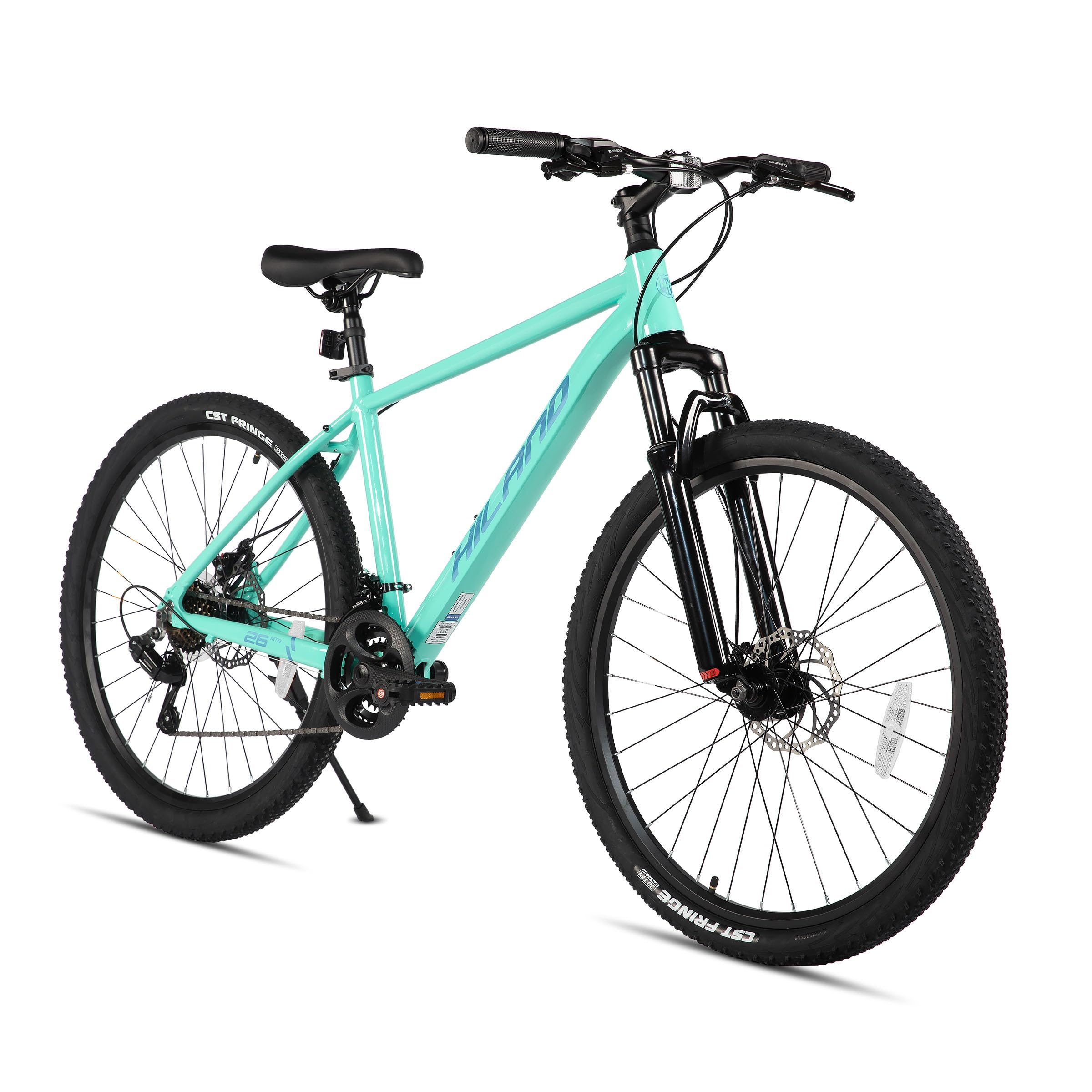
A dependable dual-disc hardtail that gives taller riders a comfortable fit without the premium price.
The HILAND is a smart pick if you’re on the taller side and want a bike that fits from day one. The 26″ model suits riders 5′ to 6′ tall, while the 27.5″ version stretches that to 5’4″–6’3″, and both feature an adjustable seat so you can dial in your leg extension. The high carbon steel frame is sturdy, and the double-walled alloy rims hold up to the bumps of off-road riding.
Stopping is a strong suit here—the dual disc brakes provide instant response in wet, muddy, or icy conditions, giving new riders confidence when the trail gets slick. The 21-speed drivetrain with twist grip shifters offers plenty of range for climbs and flat acceleration, and the 26-inch all-terrain tires roll smoothly on pavement while keeping grip on dirt. It arrives 85% pre-assembled with free pedals and all necessary tools.
Owners praise the smooth gear shifts and strong brakes, with one rider noting the frame welds look flawless. The honest caveat is that one owner’s gears failed after heavy use by a 12-year-old, and another flagged that the rear wheel can loosen and needs the bearing nut tightened. Regular maintenance—checking bolts and bearings—keeps this bike rolling reliably.
Fit-forward frame: The 27.5″ option is one of the few budget bikes that genuinely fits riders up to 6’3″.
Maintenance matters: Plan to check the rear wheel nut and bearings periodically to avoid loosening.
Reach for it if: you’re taller than average and want dual disc brakes with a steel frame that won’t flex.
Pass if: you prioritize a featherlight frame over a sturdy steel build.
7. Mongoose Flatrock
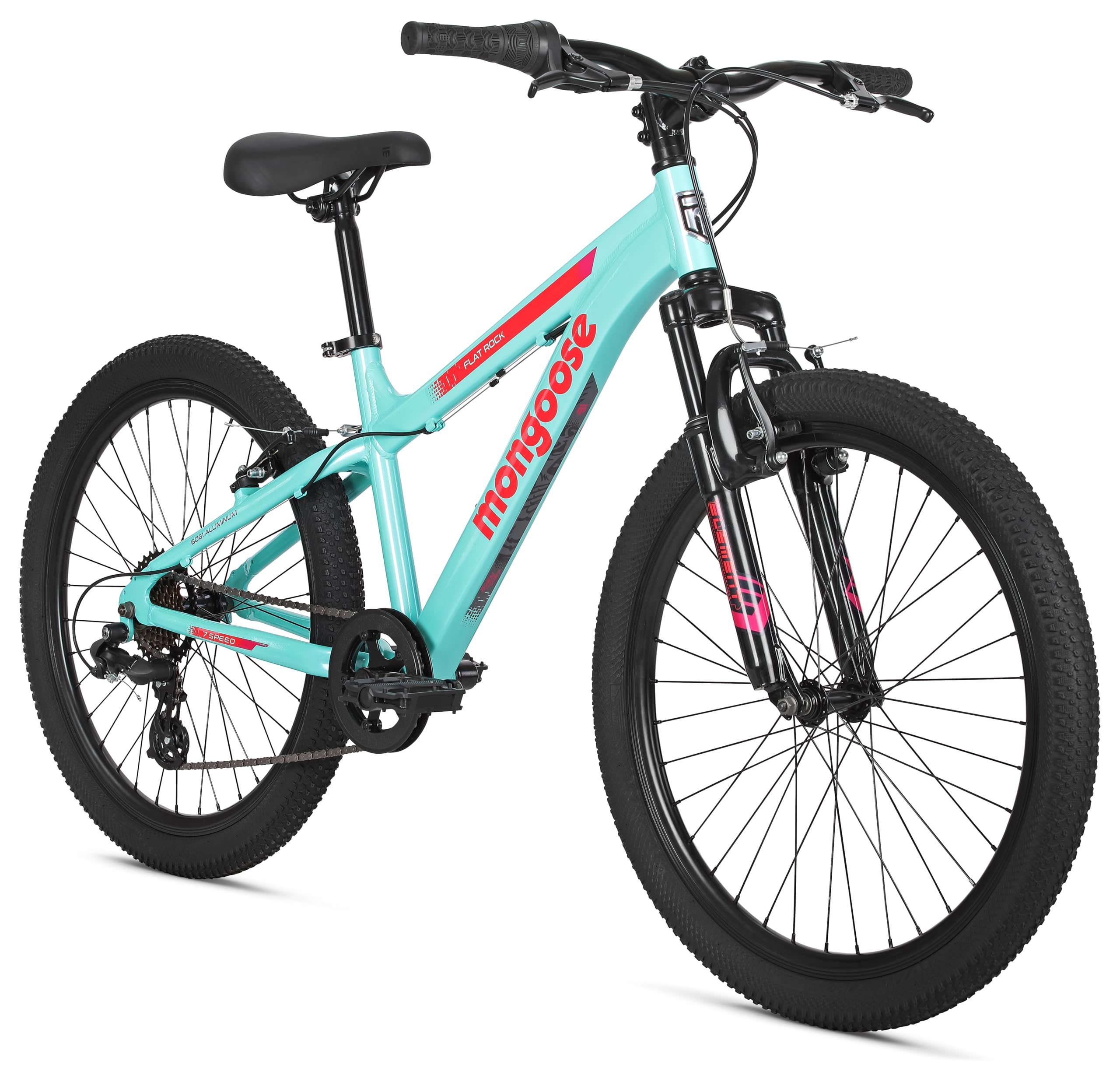
A lightweight aluminum ride from a heritage BMX brand, sized for youth and smaller adults.
The Mongoose Flatrock brings a trusted name in action sports to the beginner category, and it’s specifically built for riders from 4’4″ to 6’0″ tall across 24″, 26″, and 29-inch wheel options. The aluminum mountain frame with a sloping top tube gives it a modern look while keeping the weight manageable at 33.2 pounds. Knobby mountain tires provide grip on singletrack and crushed gravel paths.
Instead of overwhelming a new rider with 21 gears, the Flatrock keeps it simple with a 7-speed drivetrain and twist shifters. That simplicity is a genuine advantage for kids and first-timers—fewer gears mean fewer things to fumble with when you’re focused on staying upright. The suspension fork absorbs bumps on uneven terrain, and linear pull brakes provide reliable stopping for controlled descents.
Owners note the bike looks great and delivers good value, especially for ages 12 to 20. The honest trade-off is that the build quality gets mixed feedback—some say it feels solid while others find the hardware mediocre. It’s best treated as a dependable neighborhood and beginner-trail bike, and owners who maintain it with regular greasing and tightening report it lasting for years.
Simple and approachable: The 7-speed setup is perfect for kids and new riders who don’t need complex shifting.
Expect to tinker: Regular maintenance and occasional part swaps keep this one rolling long-term.
Pick this for: a younger rider or smaller adult getting their first taste of off-road riding.
Choose differently if: you need more gears or heavier-duty components for aggressive trails.
8. EUROBIKE 29″ / 27.5″ Mountain Bike

A big-wheeled aluminum speedster that rolls over obstacles and gets tall riders compliments.
The EUROBIKE 29″ is the pick for taller riders who want the rollover advantage of big wheels. It features a lightweight aluminum alloy 19-inch frame paired with 29-inch wheels (or an 18-inch frame with 27.5-inch wheels), and the high-quality suspension fork soaks up bumps and thumps on the trail. The aluminum frame keeps it lighter than steel models, and the durable alloy cranks mean less maintenance down the road.
Shifting is where this bike steps up—it uses Shimano shifters paired with a rear Shimano derailleur in a 21-speed 3 x 7 configuration. Owners consistently mention the gear changes are easy and smooth, making it a joy for climbing and acceleration. Front and rear mechanical disc brakes provide crisp all-condition stopping, and a 6’1″, 213 lb rider reports it fits perfectly and earns compliments on the trail.
The 85% pre-assembled build means you only need to attach the front fork, front wheel, seat, and pedals. The main caveat from owners is the handlebar grips feel cheap and are worth upgrading, and one reviewer noted the wheel size seemed closer to 26″ than the advertised 29″. If you’re tall and want a bike that rolls fast and looks sharp, this delivers.
The tall rider’s edge
- 29-inch wheels roll over obstacles with ease
- Shimano 3 x 7 drivetrain shifts smoothly from the start
- Aluminum frame keeps the weight manageable
The honest costs
- Stock grips feel cheap and warrant a quick upgrade
- Wheel size accuracy has been questioned by one owner
Best for: riders over 6 feet who want a smooth-shifting, big-wheeled bike that handles mountain trails.
Not ideal for: shorter riders who’ll find the 29-inch wheels harder to manage at low speeds.
9. Mongoose Grafton Mountain Bike

A fat-tire hardtail with 2.3-inch-wide rubber that floats over loose ground and rough terrain.
The Mongoose Grafton is built for riders who want maximum grip and a planted feel on difficult terrain. Its defining feature is the 2.3-inch-wide knobby mountain tires—significantly wider than standard cross-country tires—which provide superior traction on loose dirt, gravel, and singletrack. The aluminum hardtail frame with modern geometry and an internal headset gives it a clean, streamlined look while keeping the weight down.
Shifting is handled by a 21-speed trigger shifter setup, which owners find more precise than twist shifters for quick gear changes on the move. The mechanical disc brakes deliver reliable all-weather stopping power, so you can brake confidently even when the trail is wet. The suspension fork absorbs bumps on rough terrain, and the bike fits riders from 5’4″ to 6’2″ tall.
Quality is the most-praised aspect here, with owners describing the bike as heavy-duty and well-built for the money. The honest caveats include mixed assembly experiences and a few reports of alignment and reliability issues right from the start. It’s best approached as a sturdy, fun trail bike that rewards a careful setup session and basic mechanical check before your first real ride.
Traction monster: The 2.3-inch tires are the standout spec, giving beginners real confidence on loose ground.
Setup matters: Budget time for a thorough assembly and alignment check to avoid initial issues.
Grab it if: you ride on loose, sandy, or rocky terrain where fat tires make a visible difference in stability.
Look past it if: you want a bike that’s ready to ride with zero mechanical fuss right from the start.
Understanding the Specs
Frame Material and Weight
Your bike’s frame material changes how it rides and how easy it is to handle. Aluminum alloy is lighter, so you’ll pedal uphill with less effort and lift it onto a car rack more easily. Steel (whether carbon steel or alloy steel) is heavier but soaks up more road vibration and is often praised for raw durability. For a first mountain bike, aluminum is usually the balance—light enough for comfortable control, strong enough for trail use.
Disc Brakes vs. Linear Pull Brakes
This is the single most important safety decision in the budget category. Disc brakes squeeze a rotor attached to the wheel hub, giving you consistent stopping power even when the rims are wet or muddy. Linear pull brakes squeeze the wheel rim itself—simpler and cheaper, but they lose grip in mud and wet conditions. If you plan to ride trails after rain or through puddles, disc brakes are worth the slight price bump.
FAQ
What is the best wheel size for a beginner mountain bike?
How many gears do I need as a beginner?
Is a dual suspension bike better for a beginner?
What height should I be for a 26-inch mountain bike?
How much assembly is required for these bikes?
Are aluminum or steel frames better for beginners?
Should I buy a bike with disc brakes or linear pull brakes?
What is the weight limit for a beginner mountain bike?
Final Thoughts: The Verdict
For the majority of shoppers, the beginner mountain bike winner is the AVASTA Earth because it pairs a light aluminum frame with disc brakes and a 21-speed drivetrain at a beginner-friendly price. If you want maximum bump absorption for rough paths, grab the EUROBIKE 27.5″ with its dual suspension. And for a bike that genuinely fits taller riders with a smooth Shimano drivetrain, the EUROBIKE 29″ is the one to reach for.
How We Picked
We do not accept paid placement. Every pick is matched to a real buyer and a real use-case; we do not hands-on test units.
Sources & Methodology
Specifications: manufacturer listings and product documentation. Review insights: verified customer reviews, as of July 2026. Pricing: not shown on this page (it changes often); check the current price via the retailer link.
As an Amazon Associate, Gadgets Feed earns from qualifying purchases. This does not affect which products we feature.