
The leap from a standard 5.1 or 7.1 surround system to a true 7.1.2 Dolby Atmos configuration is the single most transformative upgrade you can make to your home theater. Unlike traditional channel-based audio, which pans sounds left and right, the .2 in a 7.1.2 setup adds two overhead or up-firing height channels that place objects precisely in three-dimensional space — a helicopter doesn’t just fly across the room, it flies over your head. The challenge is that real Atmos performance demands careful matching of raw amplifier power, speaker sensitivity, and room calibration, and the market is split between traditional AVR-driven separates and all-in-one soundbar systems that promise the same effect with far less clutter.
I’m Rikta — the co-founder and writer behind Gadgets Feed. I’ve spent years studying how power ratings, channel configurations, and room correction algorithms translate into real immersion, and I understand exactly which specs separate a genuinely convincing Atmos space from a system that merely claims it. (And Homer 🐱 supervised every wiring diagram with a territorial paw on the banana plugs.)
The real trick to predicting Atmos performance is to ignore marketing language and focus on measurable drivers: amplifier watts per channel at low THD, physical driver orientation (dedicated up-firing vs. virtual processing), and the quality of the auto-calibration software. This guide cuts through the confusion to help you find the absolute best 7.1.2 dolby atmos home theater system for your room, budget, and expectations.
How To Choose The Best 7.1.2 Dolby Atmos Home Theater System
A 7.1.2 system comprises seven surround channels, one subwoofer channel, and two overhead channels. How those channels are delivered — by a traditional AV receiver with passive speakers, or by a single soundbar with virtualized processing — defines the entire experience.
Amplifier Power and Dynamic Headroom
Atmos effects require sudden, dramatic shifts in volume, from a whisper to an explosion. An AVR rated for 90W per channel (measured at 8 ohms, 1kHz, 1% THD) provides the headroom to reproduce these swings cleanly without audible distortion. Entry-level receivers may string along at 50W, but that delta matters when the soundtrack asks all seven channels to hit hard simultaneously.
Height Channel Configuration
Not all overhead effects are created equal. A true 7.1.2 system uses either ceiling-mounted speakers or up-firing modules that bounce sound off the ceiling. Soundbars often rely on virtualized algorithms that simulate height using stereo phase tricks; while convenient, virtual height rarely fooled listeners in side-by-side comparisons with physical drivers. Look for dedicated upward-firing drivers as a minimum for convincing Atmos.
Room Correction and Calibration
An Atmos system is only as good as its ability to adapt to your room’s acoustics. AVRs from Denon, Yamaha, and Sony include sophisticated auto-calibration microphones that measure speaker distances, levels, and frequencies, then apply filters to smooth out standing waves and timing errors. Soundbars with a similar step — like Sonos Trueplay or JBL’s app-based EQ — can compensate for placement quirks, but they cannot match the precision of a multi-point AVR calibration.
Quick Comparison
On smaller screens, swipe sideways to see the full table.
| Model | Category | Best For | Key Spec | Amazon |
|---|---|---|---|---|
| Sony STR-AN1000 | AV Receiver | Balanced performance and value | 165W 6 ohms, 1ch | Amazon |
| Denon AVR-S970H | AV Receiver | 8K passthrough and gaming | 90W x 7 channels | Amazon |
| Yamaha RX-A2A | AV Receiver | Yamaha sound signature and build | 7.2-ch, 8K/4K120 | Amazon |
| Sonos Arc Ultra | Soundbar | Wireless simplicity and eco-system | 9.1.4 virtual height | Amazon |
| Onkyo TX-RZ50 | AV Receiver | Dirac Live calibration | 120W per channel | Amazon |
| JBL Bar 1300XMK2 | Soundbar | Detachable wireless surrounds | 1570W peak output | Amazon |
| Klipsch Ref Cinema + Onkyo | Bundle | Complete package with speakers | 5.1.4 system bundle | Amazon |
| Samsung HW-Q900F | Soundbar | Samsung TV integration | 7.1.2ch wireless Atmos | Amazon |
| Nakamichi Shockwafe 11.2.6 | Soundbar | Big sound from a soundbar form | 2300W max output | Amazon |
| Bose Smart Ultra + 700 | Soundbar | Refined audio with no wires | Dolby Atmos + PhaseGuide | Amazon |
| Klipsch Reference 5.2 + Yamaha | Bundle | Floorstanding speakers and dual subs | Dual 12″ subs + AVR | Amazon |
| Nakamichi Dragon 11.4.6 | Soundbar | Reference-grade home cinema | 3000W, 6 height channels | Amazon |
| Sony STRAZ7000ES | AV Receiver | Ultimate power and expandability | 13.2 ch, 150W 8 ohms | Amazon |
In‑Depth Reviews
1. Sony STR-AN1000

The Sony STR-AN1000 brings a distinct competitive advantage to the 7.1.2 category: 360 Spatial Sound Mapping technology that creates phantom surround channels beyond the physical speaker layout. With 165W into 6 ohms on a single channel, this receiver has more than enough power for a medium-to-large living room, and the Digital Cinema Auto Calibration IX system fine-tunes distances and levels with exceptional precision. Gamers benefit from HDMI 2.1 inputs supporting 4K/120 pass-through and VRR, so the Atmos gaming experience is fully intact.
Where the STR-AN1000 particularly excels is dialogue clarity. The S-Center Sync function, when paired with a compatible Sony TV, uses the TV’s own speaker as a center channel, anchoring voices dead-center in the soundstage. Setup is straightforward thanks to a graphical on-screen interface, and the receiver includes Wi-Fi, Bluetooth, Chromecast built-in, AirPlay 2, and Spotify Connect. The front display is small and the remote control doesn’t indicate the active sound field, but these are minor ergonomic compromises.
For a buyer seeking a capable AVR that balances raw power with Sony’s intelligent DSP, the STR-AN1000 stands out in the mid-range tier. It handles Dolby Atmos and DTS:X with confidence, and the 360 Spatial Sound Mapping trick genuinely widens the sweet spot for listeners seated off-center.
Why it’s great
- 360 Spatial Sound Mapping creates convincing phantom height channels
- 4K/120 and VRR support for modern gaming
- S-Center Sync improves dialog clarity with Sony TVs
Good to know
- Front display is small and not easily readable from a distance
- No phono input for turntable users
2. Denon AVR-S970H

The Denon AVR-S970H delivers 90 Watts across seven channels, making it a strong entry point for a 7.1.2 Atmos system without breaking the mid-range budget. Its 8K/60Hz and 4K/120Hz passthrough, combined with HDMI 2.1 gaming features like VRR and ALLM, make it equally suited for movie nights and high-frame-rate gaming. The Audyssey MultiEQ room correction is one of the more user-friendly systems in this price bracket, automatically adjusting speaker levels, distances, and equalization to suit your room’s acoustics.
Owners consistently praise the AVR-S970H for running cooler than competing Onkyo and Yamaha units, which speaks to efficient power management. The HEOS multi-room platform allows you to stream music to other Denon speakers around the house, and Bluetooth and Wi-Fi are built-in. One notable limitation: powering Zone 2 uses the same amplifier channels as the rear surrounds, effectively dropping the system to a 5.2.2 configuration when a second zone is active.
For the price, this Denon offers an unusually complete feature set. The on-screen setup videos guide even first-time AVR users through speaker configuration, and the eARC support ensures seamless audio return from modern TVs. If you want a receiver that does everything well at a sensible price, the S970H is a smart choice.
Why it’s great
- Excellent value with 90W per channel and 8K support
- Audyssey MultiEQ calibration is effective and easy to use
- HEOS multi-room streaming capability
Good to know
- Zone 2 uses rear surround channels, limiting main zone to 5.2
- No dedicated pre-outs for external amplification
3. Yamaha RX-A2A AVENTAGE

Yamaha’s AVENTAGE line has long signified superior build quality, and the RX-A2A continues that tradition. This 7.2-channel receiver includes YPAO R.S.C. (Reflected Sound Control) with multipoint measurement, which analyzes your room’s reflections to create a more accurate soundfield. The Surround:AI feature is a differentiator — it analyzes audio content in real time and adjusts the surround parameters to optimize effects like dialogue clarity and explosive impact on the fly.
The RX-A2A supports both Dolby Atmos and DTS:X, and three of its HDMI inputs handle 8K/60B and 4K/120 signals, making it future-proof for next-gen consoles and PC gaming. MusicCast wireless multi-room is built in, and the receiver is Roon Tested, a niche but valuable badge for high-resolution audio enthusiasts. The included phono input is a welcome addition for vinyl collectors.
Some users report occasional handshake issues with certain Sony TVs, requiring a power cycle to restore signal, but the general consensus is that the RX-A2A delivers clean, natural Yamaha sound with a reliable feature set. At its sale price, it is a compelling mid-range option, especially for fans of the brand’s warmer, refined audio signature.
Why it’s great
- Surround:AI dynamically optimizes audio in real time
- YPAO R.S.C. multi-point calibration is highly accurate
- Phono input and Roon Tested compatibility
Good to know
- MSRP is high; best value when purchased on sale
- Some users report HDMI handshake issues with Sony TVs
4. Sonos Arc Ultra

The Sonos Arc Ultra redefines what a soundbar can achieve with its 9.1.4 virtualized Dolby Atmos processing, using Sound Motion technology to fill a room with spatial audio from a single bar. While it is not a true 7.1.2 system in the traditional wired sense, its psychoacoustic height simulation is among the most convincing in the soundbar category. The AI-driven Speech Enhancement clarifies dialogue exceptionally well, and the Trueplay tuning (which uses your iOS device’s microphone) optimizes the sound for your specific room geometry.
Setup is minimal: one HDMI eARC connection to the TV, then the Sonos app handles the rest. The Arc Ultra integrates seamlessly with the broader Sonos ecosystem — add a Sub (or Sub Mini) for bass and Era 300 speakers for rear surrounds, and the system scales to a full 5.1.4 or beyond. The build quality is premium with a metal grille, and it supports both Sonos Voice Control and Amazon Alexa.
The major trade-off is that you are locked into the Sonos ecosystem for expansion, and achieving the full Atmos effect requires additional components that increase the total investment. For a buyer who prioritizes clutter-free installation and multi-room audio over AVR-level calibration depth, the Arc Ultra is a compelling premium choice.
Why it’s great
- Best-in-class virtual Atmos from a single bar
- Trueplay room tuning is remarkably effective
- Seamless multi-room and ecosystem expansion
Good to know
- Dedicated rear speakers and sub sold separately
- Requires eARC TV for lossless Atmos from Blu-ray
5. Onkyo TX-RZ50

The Onkyo TX-RZ50 is engineered for the enthusiast who demands Dirac Live — widely considered the gold standard in room correction — right out of the box. With 120 Watts per channel, this 9.2-channel receiver can be configured for a 7.1.2 setup with power to spare, or expanded to 7.1.4 with an external two-channel amplifier on the rear surrounds. The THX certification is a hard benchmark: it guarantees that the receiver adds no audible coloration to source material across 2,000+ tests.
Dirac Live calibration uses the included wired microphone and a smartphone or PC app to measure your room at multiple points, applying filters that dramatically flatten frequency response and tighten bass. In practice, users moving from basic AccuEQ or YPAO report a night-and-day difference in imaging precision and tonal balance. The TX-RZ50 also features HDMI 2.1 with 8K60/4K120 passthrough, independent crossover settings per channel, and Klipsch Optimize Mode that auto-sets crossover values for Klipsch Reference speakers.
The main caveats are a non-independent dual subwoofer output (both subs receive the same signal) and a slight HDMI input switching delay of around 12 to 15 seconds. However, for the price, the combination of Dirac Live, THX certification, and generous power make the TX-RZ50 a standout for those building a performance-oriented 7.1.2 system.
Why it’s great
- Dirac Live room correction is best-in-class
- THX Certified for neutral, uncolored playback
- Independent crossovers per channel for fine-tuning
Good to know
- Dual subwoofer outputs are not independently adjustable
- HDMI switching takes 12-15 seconds
6. JBL Bar 1300XMK2
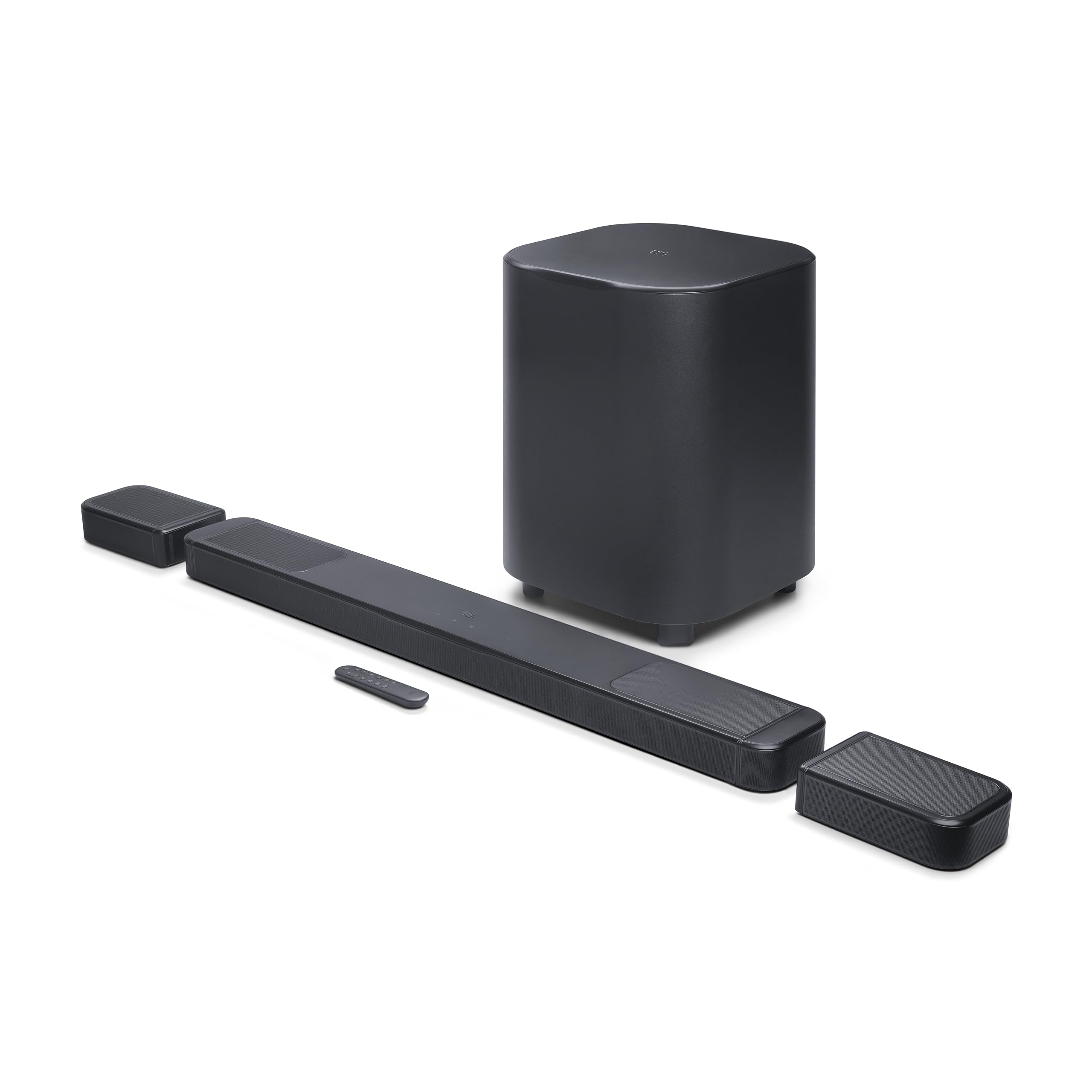
The JBL Bar 1300XMK2 takes a unique approach to the soundbar form factor: its surround speakers are detachable from the main bar and operate wirelessly via rechargeable batteries. This means you get physical rear speakers — with up-firing drivers — that actually sit behind you, producing true height effects rather than virtualized sound. The 11.1.4 channel architecture (including the wireless 12-inch subwoofer) generates a massive 1570W of peak power, making it one of the more potent soundbar systems on the market.
Setup is genuinely one-handed: lift the surround modules off the bar, place them behind your seating position, and the system auto-detects them. Battery life is rated at 4 to 5 hours, which covers most movie marathons, and the speakers snap back onto the bar for recharging overnight. JBL’s PureVoice 2.0 technology actively adjusts dialogue levels based on background sound, ensuring speech remains clear even during action-heavy scenes. MultiBeam 3.0 widens the front soundstage for a cinema-like spot regardless of seating position.
The system excels in flexibility — you can take one surround speaker into another room while streaming audio, for example. The obvious limitation is the battery dependency of the surrounds; for those who prefer a permanent, wire-free installation without worrying about charge cycles, this is a slight compromise. For anyone who values the versatility of true detachable rears, it is a standout option.
Why it’s great
- Real detachable surround speakers with up-firing drivers
- 12-inch wireless subwoofer delivers deep, tactile bass
- MultiBeam 3.0 creates a wide, cinema-style soundstage
Good to know
- Surround speakers require recharging after ~5 hours of use
- System is large and physically imposing
7. Klipsch Reference Cinema + Onkyo TX-RZ30

This bundle pairs the Klipsch Reference Cinema 5.1.4 speaker system — including four Atmos-enabled satellite speakers and a 10-inch subwoofer — with the Onkyo TX-RZ30 9.2-channel AVR. The Klipsch Tractrix horn-loaded tweeters deliver the brand’s signature high-frequency extension and dynamics, while the four Dolby Atmos satellite modules each contain both a front-firing driver and an up-firing driver for overhead effects. The result is a system that physically implements discrete height channels rather than relying on processing alone.
The Onkyo TX-RZ30 provides 170W per channel and shares the TX-RZ50’s robust amplifier stage, with HDMI 2.1 inputs and 8K support. The bundle is essentially a turnkey solution: speakers and receiver are matched by the manufacturer to work optimally together, removing the guesswork from pairing components. The 10-inch Klipsch subwoofer uses a front-firing ported design that produces authoritative bass that pressurizes medium-sized rooms easily.
Some users have reported reliability issues with the Onkyo receiver in this bundle, specifically amplifier failure on the front left and right channels after extended use. It is worth noting that Yamaha’s equivalent receiver in the Klipsch 5.2 bundle has a stronger long-term reliability track record. For buyers who prioritize the Klipsch horn sound and want a complete wired system out of the box, this bundle is a compelling starting point.
Why it’s great
- Klipsch Tractrix horn tweeters for detailed, dynamic highs
- Four dedicated Atmos satellite speakers with up-firing drivers
- Bundle includes AVR and speakers for a one-box solution
Good to know
- Some reliability concerns reported with the Onkyo TX-RZ30 receiver
- Large-gauge 4-conductor speaker wire required, not included
8. Samsung HW-Q900F
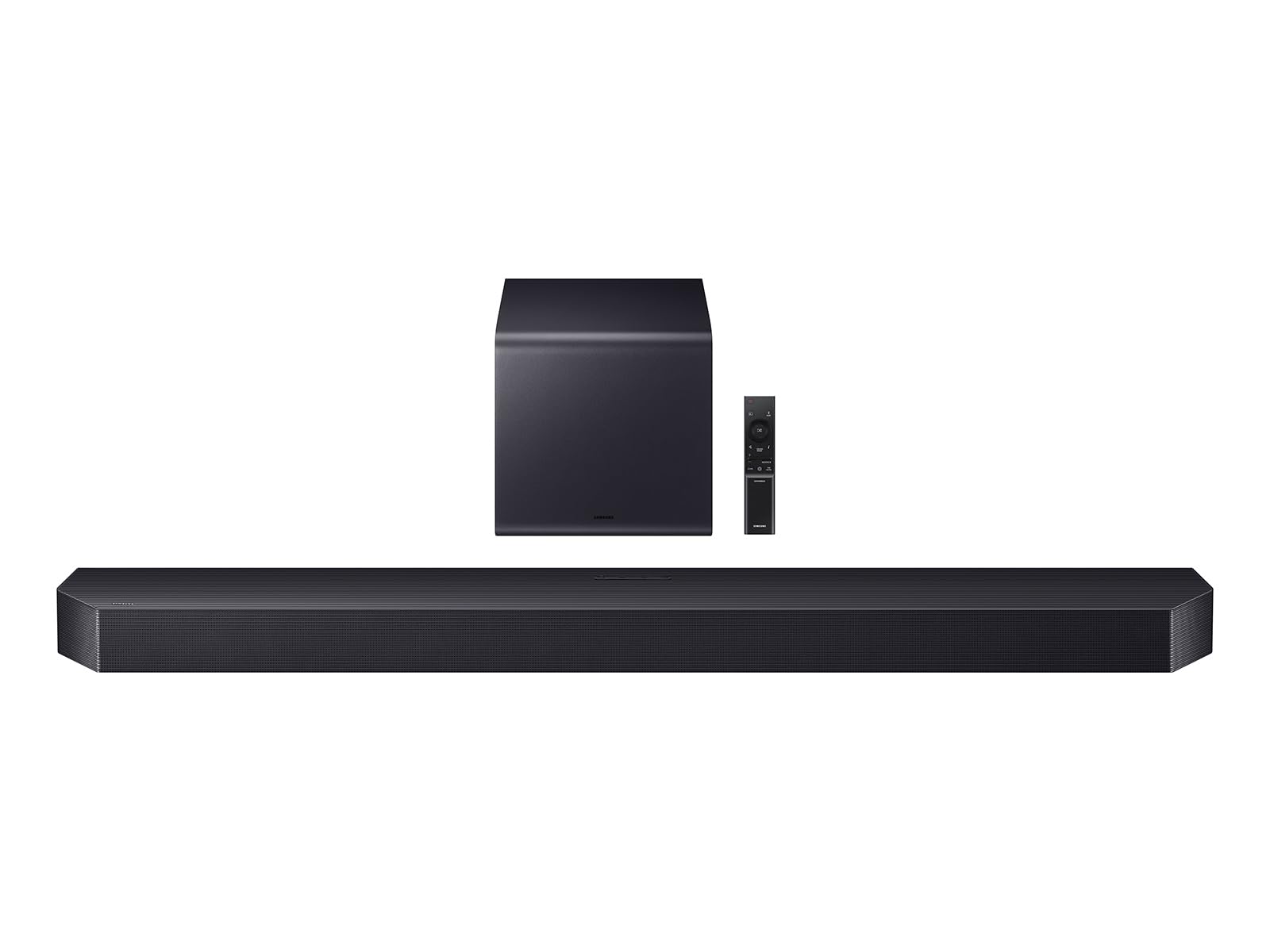
The Samsung HW-Q900F is a 7.1.2-channel soundbar that integrates closely with Samsung TVs through Q-Symphony, a feature that allows the TV’s built-in speakers to work in tandem with the soundbar for a wider, more nuanced soundstage. It employs side, top, and wide-firing drivers to create a sense of height and width, and the dedicated wireless subwoofer adds low-end weight. The soundbar’s auto-calibration uses an embedded microphone to analyze the room and adjust frequency response and bass levels automatically.
Setup is exceptionally simple: connect via HDMI eARC, and the soundbar is recognized instantly by most Samsung TVs. The HW-Q900F also supports Amazon Alexa, Google Cast, and Apple AirPlay 2 for voice and streaming control. Dialogue enhancement is handled automatically, adjusting vocal emphasis based on ambient noise levels in the room. Owners consistently praise the crisp highs and deep, room-filling bass, noting a significant upgrade from older soundbar systems.
The main drawback is its physical size — the bar is 4 inches tall and may block the bottom of a TV’s infrared receiver if not wall-mounted. Additionally, music playback quality tends to lag behind dedicated bookshelf speakers at a similar price, leaning toward a U-shaped EQ that favors treble and bass at the expense of midrange detail. For Samsung TV owners seeking a seamless Atmos soundbar with minimal cables, the HW-Q900F is a natural fit.
Why it’s great
- Q-Symphony pairs soundbar with Samsung TV speakers for enhanced immersion
- Auto-room calibration with built-in microphone
- Multi-assistant support (Alexa, Google, AirPlay 2)
Good to know
- 4-inch height may block TV IR sensor without wall mounting
- Music playback quality is less refined than dedicated speakers
9. Nakamichi Shockwafe 11.2.6
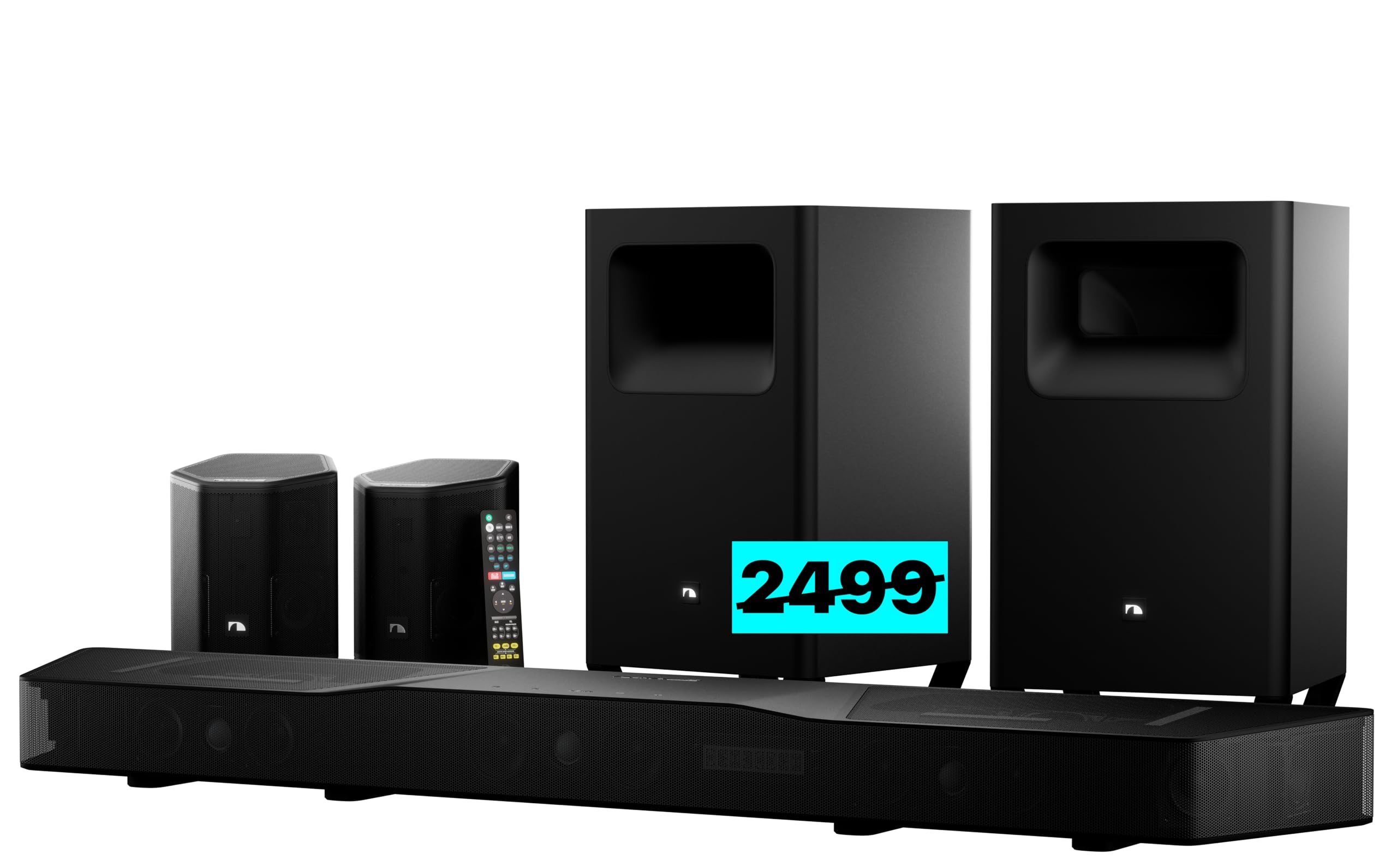
The Nakamichi Shockwafe 11.2.6 system is a soundbar in name only — its 54-inch chassis, dual 10-inch subwoofers, and bipolar surround speakers with discrete height drivers constitute a full-scale home theater system. The “6” in 11.2.6 refers to six discrete height channels (four up-firing in the main bar, two in the surrounds), which create a more convincing overhead bubble than any virtualized system can manage. With 2300W of peak output, it has the headroom to pressurize even large open-plan rooms.
Setup is wireless for the subwoofers and surround speakers, requiring no speaker wire runs to the rear of the room. The included AHD Ultra engine drives the bipolar surrounds to project sound from both sides and above, effectively creating the presence of six surround channels from just two physical units. Dialogue remains crystal clear even at high volume levels, thanks to dedicated center channel processing. The system supports HDMI eARC and two HDMI 2.1 inputs for 4K/120 Dolby Vision passthrough.
Owners uniformly praise the Shockwafe for its effortless ability to fill a large room with immersive, distortion-free sound. The dual 10-inch subs deliver bass that is both deep and articulate. The main limitation is physical scale — the components are large and heavy, and the system ships in three separate boxes. For a buyer who values true discrete Atmos height layers in a wireless package, the Shockwafe is a unique and powerful proposition.
Why it’s great
- Six discrete height channels for convincing overhead effects
- Dual 10-inch wireless subwoofers deliver powerful, clean bass
- Bipolar surround speakers create six-channel presence
Good to know
- Very large and heavy — requires substantial furniture space
- App-based control can be finicky with some firmware versions
10. Bose Smart Ultra + Bass Module 700
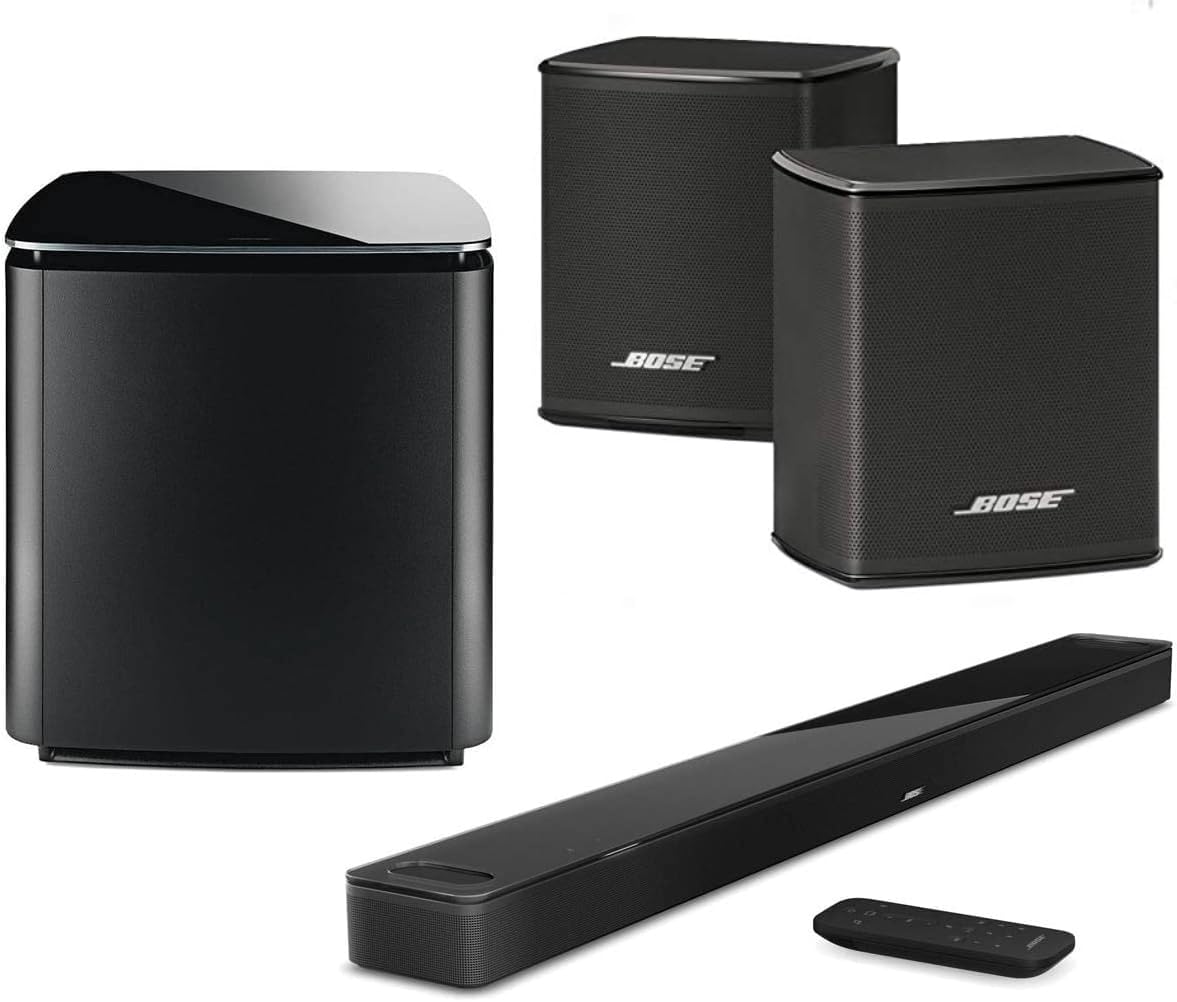
The Bose Smart Ultra soundbar, paired with the Bass Module 700 and two rear surround speakers, forms a fully wireless home theater system that delivers a refined, distortion-free rendition of Dolby Atmos. Bose’s PhaseGuide technology uses precisely angled ports to create a wide, enveloping soundstage without requiring upward-firing drivers in the traditional sense. The result is a diffuse but convincing sense of height that integrates smoothly with the front and rear channels.
Setup is streamlined through the Bose Music app, which guides you through speaker placement, ADAPTiQ audio calibration (using the included headset), and voice assistant setup (Amazon Alexa and Google Assistant are built in). The Bass Module 700 uses a QuietPort design to eliminate audible port noise at high volumes, producing clean, room-filling low-end. The rear surrounds are true wireless speakers that require only a power outlet — no signal cable to the soundbar.
The system’s chief strength is its refined, non-fatiguing sound signature. Bose does not aim for the aggressive impact of a Klipsch or JBL system; instead, it offers a polished, immersive experience that is ideal for movie dialogue and music alike. The major consideration is price — the full bundle (soundbar, sub, surrounds) is a significant investment — and the system cannot match the raw dynamic slam of a wired AVR + speaker setup. For a buyer seeking high-end wireless refinement, it is a top contender.
Why it’s great
- ADAPTiQ calibration tailors sound to the room with precision
- True wireless rear speakers with no signal cables
- Refined, non-fatiguing sound signature
Good to know
- Full system investment is substantial
- Cannot match the dynamic headroom of a wired AVR system
11. Klipsch Reference 5.2 + Yamaha RX-A2A
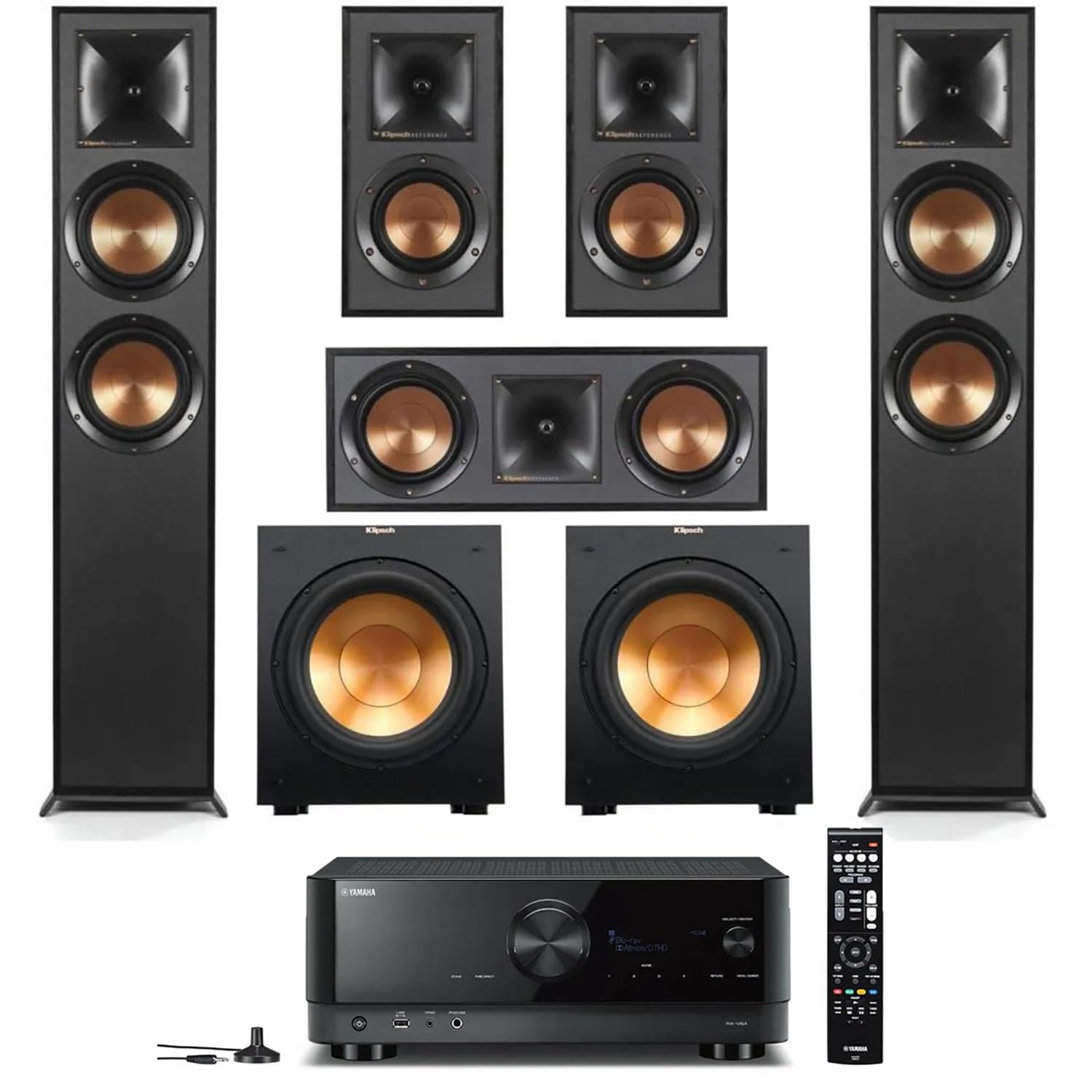
This Klipsch 5.2 system swaps the satellite + sub approach for a full-floorstanding configuration: two R-625FA towers with built-in Dolby Atmos up-firing drivers, an R-52C center channel, R-41M bookshelf surrounds, and dual R-12SW 12-inch subwoofers, all paired with the Yamaha RX-A2A receiver. The floorstanding towers inherently create a larger front soundstage than bookshelf speakers, and the integrated up-firing drivers deliver overhead effects without needing ceiling-mounted speakers.
The Yamaha RX-A2A receiver is a solid partner, providing YPAO room correction, MusicCast multi-room, and HDMI 2.1 support. The dual 12-inch subs are the highlight of this bundle — they produce bass with visceral authority that single-sub systems cannot match, reducing standing wave nulls through the power of two distributed sources. In practice, this system fills medium to large rooms with an effortless, cinema-grade presence that most soundbars cannot approximate.
Setup is more involved than a soundbar but straightforward for anyone comfortable connecting speaker wire. The Yamaha RX-A2A is known for its clean, natural sound, and the Klipsch aluminum tweeters add sparkle without harshness. The main downsides are physical footprint and the need for proper speaker placement to maximize the Atmos effect. For buyers who have the space and want genuine floorstanding dynamics with Atmos, this is a formidable bundle.
Why it’s great
- Floorstanding towers with integrated Atmos up-firing drivers
- Dual 12-inch subwoofers provide deep, even bass coverage
- Yamaha YPAO calibration and MusicCast streaming
Good to know
- Large physical footprint requires dedicated floor space
- Atmos height effect depends on ceiling height and material
12. Nakamichi Dragon 11.4.6
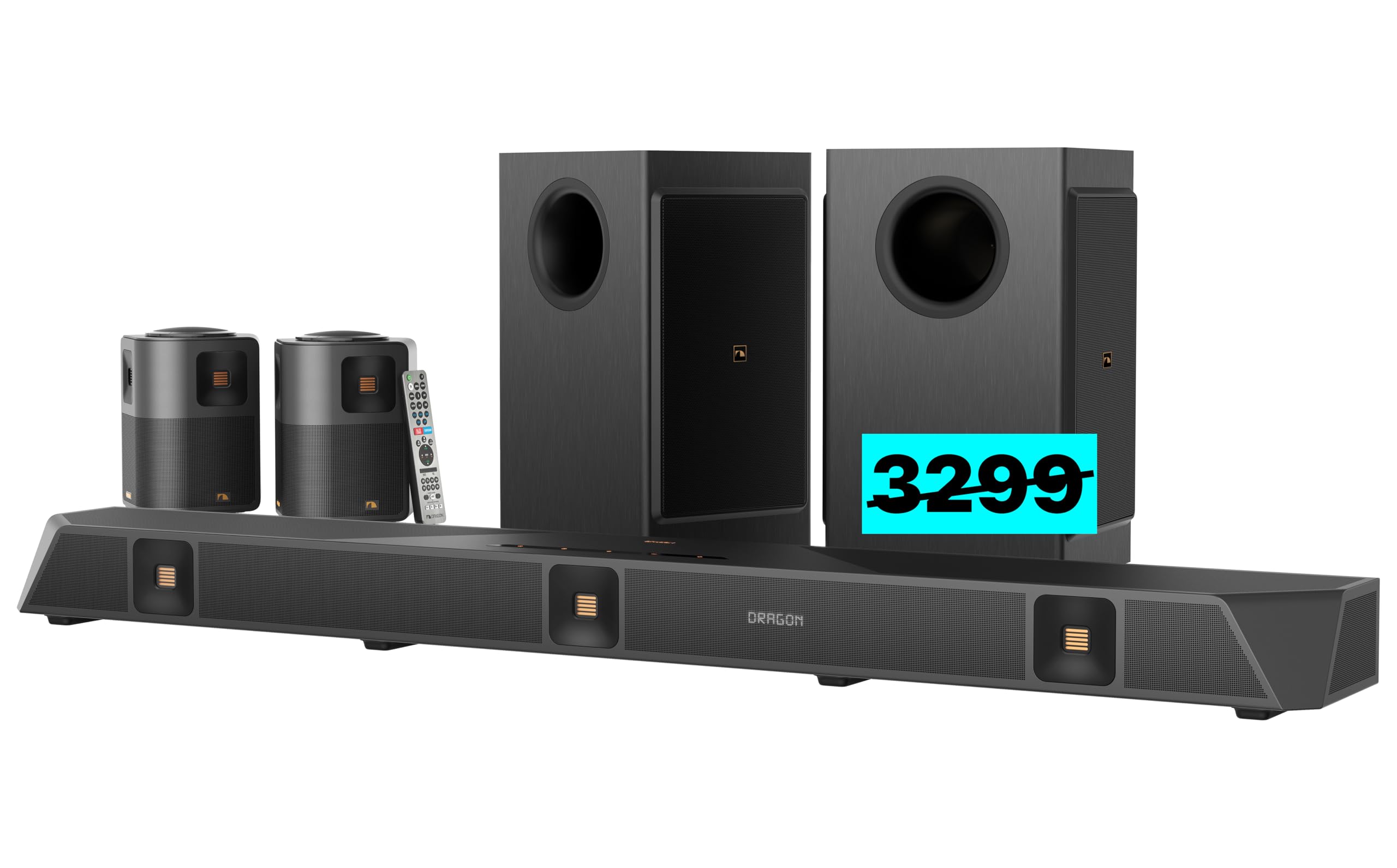
The Nakamichi Dragon 11.4.6 is designed as the ultimate soundbar-based home theater system, positioned to rival traditional AVR-and-speaker setups. Its 58-inch chassis houses seven HiFi Air Motion Transformer (AMT) tweeters — a rare inclusion in this form factor — that deliver crisp, extended highs with low distortion. The six discrete height channels (four from the main bar, two from the Omni-Motion surround speakers) use the PerfectHeight mechanism to lock overhead effects within the optimal listening zone.
The Pro-Cinema Surround Engine supports Dolby Atmos up to 24.1.10 and DTS:X Pro up to 30.2, processing at a depth that matches dedicated AVR flagship spec sheets. A pair of dual-opposing 8-inch subwoofers provides fast, controlled bass with minimal cabinet resonance, and the system supports up to four subwoofers for expanded coverage. The three HDMI 2.1 inputs handle 4K/120 Dolby Vision and HDR10+. The wired calibration process, which involves measuring distances from the listening position, is more involved than simpler soundbars but yields a genuinely customized soundfield.
Owners consistently describe the Dragon as transformative, with a soundstage that convincingly replicates the scale of a commercial cinema. The dual-opposing subs eliminate the one-note boominess of lesser designs, and the AMT tweeters preserve detail at extreme volumes. The primary barrier is price and physical size — this is a serious investment in both money and furniture real estate. For the dedicated home theater enthusiast who wants reference-level performance without separate AVR wiring, the Dragon is unmatched.
Why it’s great
- HiFi AMT tweeters provide exceptionally detailed high frequencies
- Six discrete height channels with PerfectHeight alignment
- Dual-opposing 8-inch subs deliver clean, non-bloated bass
Good to know
- Very high price point and large physical footprint
- Calibration requires manual distance measurements
13. Sony STRAZ7000ES

The Sony STRAZ7000ES sits at the apex of the AVR market, offering 13.2 channels of processing — enough for a full 7.1.6 or 9.1.4 configuration — with 150 Watts per channel into 8 ohms (2ch driven, 1kHz, 0.9% THD). Its 360 Spatial Sound Mapping technology goes beyond standard Atmos processing by mapping the room acoustics and creating phantom speakers in the height plane, effectively expanding the perceived channel count beyond the physical drivers. This is the receiver you buy when you want the absolute best foundation for a Dolby Atmos system, with room to expand.
The Sony ES (Essential Series) build quality is evident in the 55-pound chassis, the gold-plated terminals, and the massive toroidal transformer that provides substantial current reserves for dynamic peaks. Digital Cinema Auto Calibration IX uses a multi-point measurement system to optimize everything from speaker distance to equalization, and the front display includes a cover plate for a clean rack-mount or shelf appearance. HDMI 2.1 inputs (seven in, two out) support the full gaming suite of 4K/120, VRR, and ALLM.
The main drawbacks are the absence of HDR10+ support (critical for some Amazon Prime and 4K Blu-ray content) and the unit’s significant heat output, which may require a cooling fan in enclosed cabinets. The price places it firmly in the enthusiast tier. For the buyer who is building a dedicated home theater and demands the most capable, expandable AVR that Sony makes, the STRAZ7000ES is the definitive choice.
Why it’s great
- 13.2 channels for future-proof 7.1.6 or 9.1.4 configurations
- 360 Spatial Sound Mapping creates phantom height speakers
- Premium ES build quality with massive toroidal transformer
Good to know
- No HDR10+ support
- Runs very hot; ventilation or fan is recommended
FAQ
What is the difference between 5.1.2 and 7.1.2 Dolby Atmos?
Do I need ceiling speakers for a 7.1.2 Atmos system?
Can I use a 7.1.2 soundbar instead of an AVR and separate speakers?
Final Thoughts: The Verdict
For most users, the absolute best 7.1.2 dolby atmos home theater system is the Sony STR-AN1000 because it delivers class-leading 360 Spatial Sound Mapping, robust HDMI 2.1 gaming features, and reliable room calibration at a price that undercuts its premium competitors. If you want a system that eliminates all speaker wires and offers a true AVR-grade Atmos experience from a single source, grab the Nakamichi Shockwafe 11.2.6 — its dual 10-inch subs and six height channels are unmatched in the soundbar category. And for the enthusiast who demands the absolute pinnacle of expandable home theater power, nothing beats the Sony STRAZ7000ES.