
Our readers keep the lights on and my morning glass full of iced black tea. As an Amazon Associate, I earn from qualifying purchases.
Specs are compiled from manufacturer listings and verified buyer reviews and can change over time — please confirm the key details on the product page before buying.
Finding a heart rate monitor that stays accurate during a sweaty workout without the discomfort of a chest strap is the real challenge. This guide cuts through the noise to focus on arm-worn optical sensors—the kind that wrap around your bicep or forearm—and what actually makes them worth your money.
I’m Min — the founder and writer behind Gadgets Feed. This guide is built by comparing the manufacturers’ published specifications and the patterns across verified customer reviews, so you get each pick’s real strengths and trade-offs instead of marketing spin.
We highlight the best arm heart rate monitor options for cyclists, runners, and gym-goers who want reliable data without the chest strap hassle.
Quick Picks
- moofit HW401 Heart Rate Monitor Armband — Best Value
- CYCPLUS Heart Rate Monitor Armband H1 — Long Haul Champ
- FITCENT Heart Rate Monitor Armband — Reliable Workhorse
- COOSPO Heart Rate Monitor Armband HW807 — High Accuracy Pick
- CHILEAF Heart Rate Monitor Armband CL831 — Featherlight Pick
- COOSPO HW9 Heart Rate Monitor Armband — Zone Master
- HandPlus Heart Rate Monitor Armband — Data Logger
- POWR LABS Rechargeable Heart Rate Armband HW805 — Auto-Wear Pick
- Scosche Rhythm+ 2.0 Heart Rate Monitor Armband — Proven Performer
How To Choose The Best Arm Heart Rate Monitor
An arm heart rate monitor uses an optical sensor pressed against your skin to read blood flow, unlike a chest strap that reads electrical signals. The trade-off is real: optical sensors are more comfortable, but they can lag behind a chest strap during sudden sprints or high-intensity intervals.
Match the sensor to your sport
If you do steady-state cardio like cycling, hiking, or zone-2 running, an optical armband is plenty accurate. If your training is full of sprints and explosive movements, the data can lag by a second or two—enough to miss a true peak. For structured training where every beat counts, look for a sensor that tracks heart rate variability (HRV) as well as raw BPM.
Battery life is a lifestyle decision
Armbands range from about 20 hours to over 110 hours on a single charge. A 20-hour sensor means charging every week or two with regular use; a 110-hour sensor can go for a month or more. Magnetic charging cables are the norm here, and they make topping up quick—but check if the cable is standard or proprietary before you commit.
Check the straps and fit
Most armbands come with an adjustable strap that fits a forearm or bicep, and some include a second, longer strap for larger arms. A soft, breathable band that stays put without pinching is worth more than extra features. Some units are IP67 waterproof (safe for rain and sweat), but none of these are designed for swimming—so don’t expect pool laps to count.
Quick Comparison
| Model | Best For | Battery Life | Connectivity | Water Rating | Amazon |
|---|---|---|---|---|---|
| moofit HW401 | Budget-friendly accuracy | 20 hours | Bluetooth & ANT+ | IP67 | Amazon |
| CYCPLUS H1 | Long battery life | 110 hours | Bluetooth 5.1 & ANT+ | IP67 | Amazon |
| FITCENT CL830 | Budget-friendly value | 60 hours | Bluetooth & ANT+ | Not rated | Amazon |
| COOSPO HW807 | High accuracy & value | 20 hours | Bluetooth 5.0 & ANT+ | IP67 | Amazon |
| CHILEAF CL831 | Featherlight comfort | 60 hours | Bluetooth 5.0 & ANT+ | IP67 | Amazon |
| COOSPO HW9 | Customizable zones | 35 hours | Bluetooth 5.0 & ANT+ | Not rated | Amazon |
| HandPlus | Offline data logging | 72 hours | Bluetooth & ANT+ | Not rated | Amazon |
| POWR LABS HW805 | Multi-device pairing | Not specified | Bluetooth & ANT+ | Not rated | Amazon |
| Scosche Rhythm+ 2.0 | Proven accuracy | 24 hours | Bluetooth & ANT+ | IP68 | Amazon |
In‑Depth Reviews
1. moofit HW401 Heart Rate Monitor Armband

The budget armband that makes optical accuracy affordable with an optical sensor rated up to ±1 bpm.
For anyone who wants reliable heart rate data for zone-2 training or hiking without spending a fortune, the moofit HW401 delivers. The optical sensor is tested to an accuracy of up to ±1 bpm., so you get real-time heart rate and calorie data during training. It is an excellent entry point for indoor cycling on Zwift, where buyers report the data lands precisely in the app.
This one pairs instantly via Bluetooth and ANT+ with the apps you likely already use, including Wahoo Fitness, Polar Beat, and DDP Yoga. Owners mention it works as an affordable alternative to studio-specific monitors like OrangeTheory’s, with the studio adding the serial number to your profile for the board and stats. The LED light confirms your heart rate is found, flashing fast when searching and slow once locked on.
With up to 20+ hours of continuous use on a single charge and a magnetic charging cable, it handles long training blocks. A few owners note accuracy versus a chest strap on sprints, where an optical sensor can lag; this is a steady-state tool, not a sprint specialist.
accurate wrist-free tracking
- Connects to many devices—buyers call out smooth pairing with Wahoo and Garmin ForeTrek.
- Optical accuracy up to ±1 bpm, matching pricier monitors in steady-state workouts.
- IP67 waterproof rating shrugs off sweat and rain.
tight fit required
- Not suitable for swimming, despite the IP67 rating.
- Not every gym’s studio system accepts the device’s serial number.
steady runners: you want a low-cost, dependable optical armband for cycling, hiking, and gym sessions.
loose bands: your training is all-out sprints where a chest strap reads faster.
2. CYCPLUS Heart Rate Monitor Armband H1

The armband with a 110-hour battery and a patented optical sensor that tracks within ±1 bpm.
Battery anxiety disappears with the CYCPLUS H1. It charges fully in just 30 minutes and then runs for over 110 hours—a 5.5x gap versus the moofit’s 20 hours—so you can train for weeks without thinking about the charger. That makes it the clear pick for endurance athletes who log long sessions and hate recharging mid-week.
You get continuous heart rate readings with the CYCPLUS, thanks to a patented optical sensor that claims accuracy of ±1 bpm.. A color-coded LED shows your zone at a glance: green at or below 80 BPM, orange between 80 and 140 BPM, and red at 140 BPM and above. It connects via Bluetooth 5.1 and ANT+, so it pairs reliably with Garmin bike computers like the Edge 840, as well as ZWIFT for indoor cycling.
The trade-off is durability: the strap has drawn mixed feedback, with some owners reporting breakage, and one buyer’s unit stopped working a few months after purchase. Buyers describe the core sensor as “very accurate and durable,” with one noting it tracks closely alongside a chest HRM synced to a Garmin watch.
dual-band connectivity: the 110-hour battery is the best in this lineup, making it a set-and-forget companion for months of training.
tech tinkerers: cyclists and long-haul trainers who want to charge once and forget it.
plug-and-play: you want a strap built to survive years of rough daily wear.
3. FITCENT Heart Rate Monitor Armband

A 60-hour battery in a comfy band that pairs instantly with Peloton, Wahoo, and Strava.
The FITCENT CL830 makes a strong case for riders who want a long-lasting, easy-to-use armband without the premium price. Its rechargeable lithium battery lasts up to 60 hours, and the CL830 sensor tracks heart rate, training zones, and calories burned in real time across more than 200 popular fitness apps. Customers note it pairs from the start with Peloton and reads accurately versus a Fitbit.
You can pair this with smartphones, GPS watches, and bike computers from Wahoo, Polar, and Garmin, thanks to dual-band Bluetooth and ANT+ transmission. It stays put during rides and hikes, and owners note the band is light enough to forget. Some buyers praise the 12-month warranty as extra confidence for the price.
There is no auto-shutoff, so the battery can drain if you leave it on by mistake, and the strap runs short for larger upper arms—a 4/5-star caveat from owners. Durability wins lasting roughly two years of heavy use in buyer reports, which is strong for this tier.
casual gymgoers: app-heavy users on Peloton, Wahoo, or Strava who want a 60-hour battery.
data nerds: you have a larger build that needs a longer strap.
4. COOSPO Heart Rate Monitor Armband HW807

The crowd-favorite COOSPO with a patented optical sensor, color-coded zones, and dual Bluetooth connections.
What wins people over here is the HW807’s accuracy—a patented optical sensor rated at ±1 bpm. with heart rate variability (HRV) tracking—paired with a color-coded LED that shows your zone without glancing at a phone. It is a favorite among runners for zone-2 and MAF training, with buyers reporting it matches a pulse oximeter closely. Connectivity is the most-discussed strength, with dual Bluetooth 5.0 and ANT+ letting you link to Garmin watches, Concept2 rowers, and Peloton bikes.
The package includes two soft arm straps, which is a big comfort win for sharing or for bigger arms. Battery life is rated at 20 hours on a single charge, and reviewers point out it lasting a week of regular use. It is IP67 waterproof, so rain and sweat are fine, though swimming is off the table.
The honest trade-offs: reliability and battery life draw mixed feedback, with some units stopping charging, and one buyer cited a wildly inaccurate reading during an easy walk. Buyers also note the Velcro can weaken over time and the magnetic charger can be finicky—but for the accuracy and the dual-strap value, most owners are happy with the purchase.
dual sensor reliability
- ±1 bpm optical accuracy that buyers verify against pulse oximeters..
- Two straps included for fit flexibility and sharing.
- HRV support for deeper recovery and stress insights.
bulky housing
- 20-hour battery means weekly charging with regular use.
- Weak Velcro and a finicky magnetic charger are recurring notes.
interval trainers: accuracy and dual-strap comfort top your list for zone-based running.
minimalists: you want a battery that outlasts a full training month.
5. CHILEAF Heart Rate Monitor Armband CL831
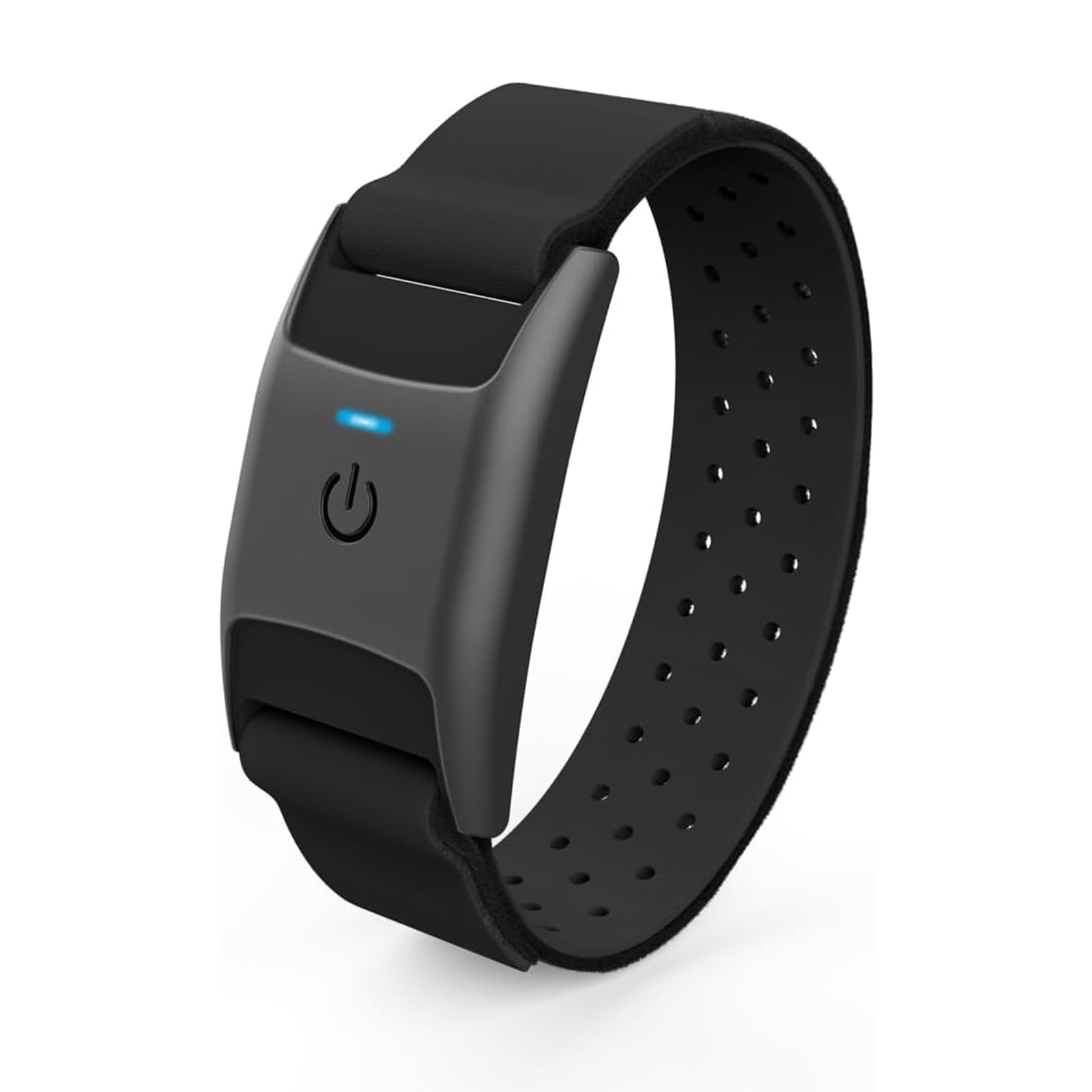
A 13-gram featherweight with a PPG optical sensor and color-shifting zone LED.
Weight is the story here. At just 13 grams, the CHILEAF CL831 is light enough that you’ll forget it’s on your arm, and its soft, breathable Lycra strap fits the upper arm, forearm, or near the elbow. The PPG optical sensor plus accelerometer delivers accurate real-time heart rate for running, cycling, hiking, and yoga, and shoppers say it connects easily to ZWIFT and Wahoo bike computers.
Battery life is a strong 60 hours with magnetic charging, so you get a full month of steady training between top-ups. The color-changing LED shows your heart rate zone in real time, which means you can monitor intensity without pulling out your phone mid-set. Bluetooth 5.0 and ANT+ dual modes keep it compatible with Polar Beat, Wahoo Fitness, and Zwift.
The recurring fit note: the band runs small for larger or muscular male arms, with one buyer fitting it near the elbow on a bigger build. The proprietary USB-A charger is a minor drawback for those who’ve standardized on USB-C, and one unit powered off mid-ride despite a solid Garmin connection.
day-trippers: anyone who prioritizes a barely-there feel and long battery life.
all-day wear: bigger arms that need a longer, stretchier strap.
6. COOSPO HW9 Heart Rate Monitor Armband

The COOSPO upgrade with a 5-color LED zone light and a vibration alert for max heart rate.
The HW9 builds on the HW807’s formula with a 5-color LED indicator for heart rate zone training, so you can tune your intensity at a glance. It supports heart rate variability (HRV) and adds a vibration warning when your heart rate exceeds your customized max—a safety feature that guards your training. The recommended Heartool or Coosporide app lets you set your true max heart rate instead of the default 200 bpm.
Battery life is a solid 35 hours with fast charging via a magnetic charger, and the HW9 allows two simultaneous Bluetooth connections. Buyers praise the upgraded elastic strap over the HW807, noting it includes a second strap for larger bodies. It pairs easily with Garmin and Specialized bike computers, and one owner notes it reads accurately against a Galaxy Watch 4.
Accuracy and stability draw mixed feedback—one owner warns against wearing it on the bicep for larger arms, where the strap fails, and reports the plastic connectors snapping after months. The no-auto-shutoff design risks battery drain if forgotten, and the strap can stretch out faster than expected.
zone training focus: the 5-color LED and vibration alert make it a standout for structured zone training.
zone coaches: you train by heart rate zones and want a visual and vibration cue.
offline users: you have a larger bicep that the strap won’t secure.
7. HandPlus Heart Rate Monitor Armband
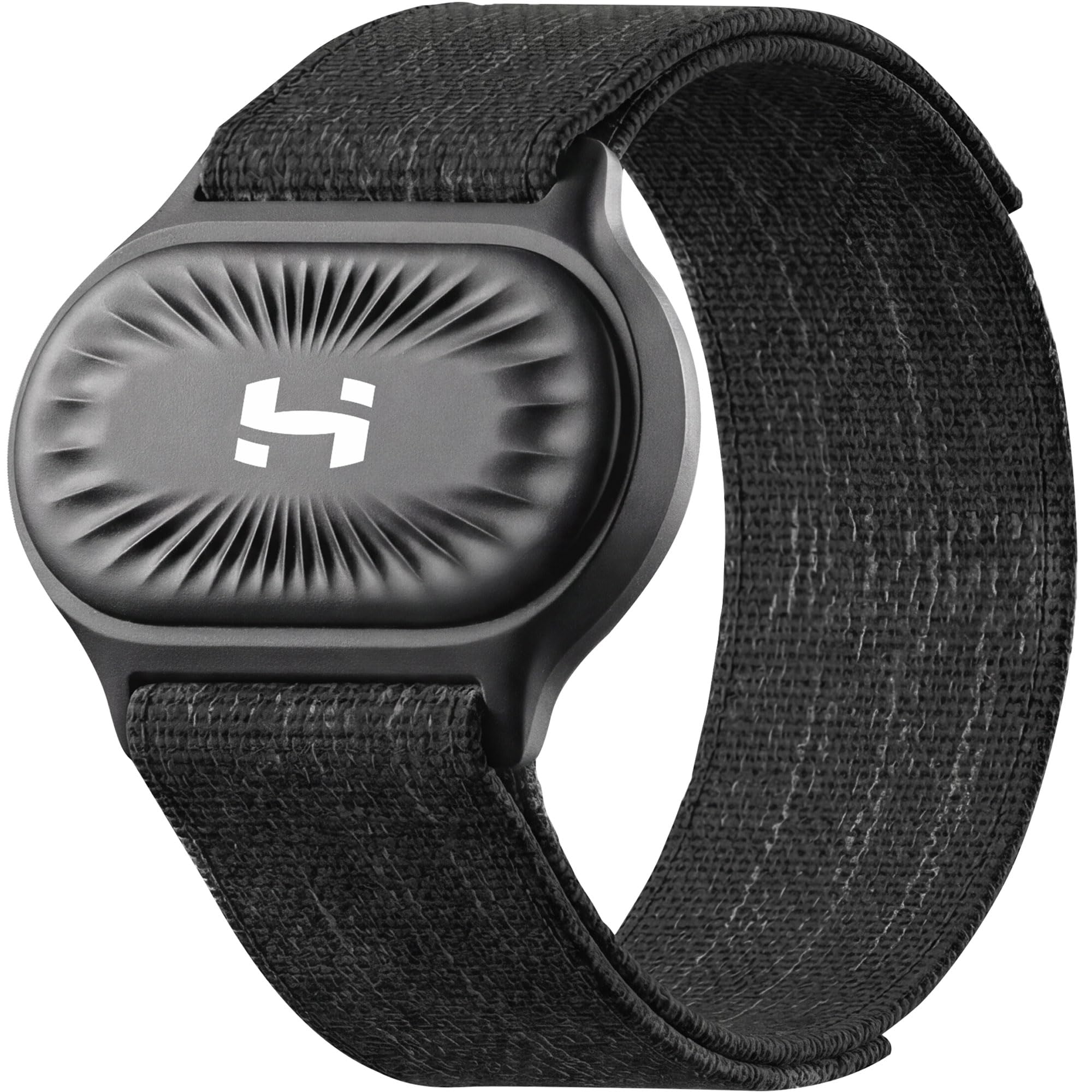
A no-button armband with 72-hour offline storage for swimmers and multi-sport athletes.
The HandPlus suits athletes who don’t want to babysit a device. There are no buttons—just shake it to activate, and it records automatically with up to 72 hours of offline data storage, so you don’t lose a workout to a forgotten press of “Start.” It tracks heart rate zones, SpO₂ (blood oxygen), and body temperature in real time, displayed on your lock screen or Dynamic Island. Swimmers particularly praise it, reporting accurate readings in the water and reliable pairing with Garmin Fenix 8 and Holosport goggles.
The optical sensor tracks heart rate zones within 0.2% of chest strap accuracy., and buyers find it a comfortable armband alternative to chest straps with days-long battery life. Bluetooth and ANT+ connectivity pairs easily with phones, smartwatches, and bike computers.
The concerns are real: one buyer reports wildly inaccurate readings that dropped from 160 to 80 BPM at a constant walking pace, and the companion app tracks precise location and can inject location-based ads, raising data privacy questions. There’s no built-in display, so initial positioning takes a bit of adjustment.
first-timers: swimmers and multi-sport athletes who want offline logging and SpO₂ tracking.
advanced athletes: you’re uncomfortable with a location-tracking app.
8. POWR LABS Rechargeable Heart Rate Armband HW805
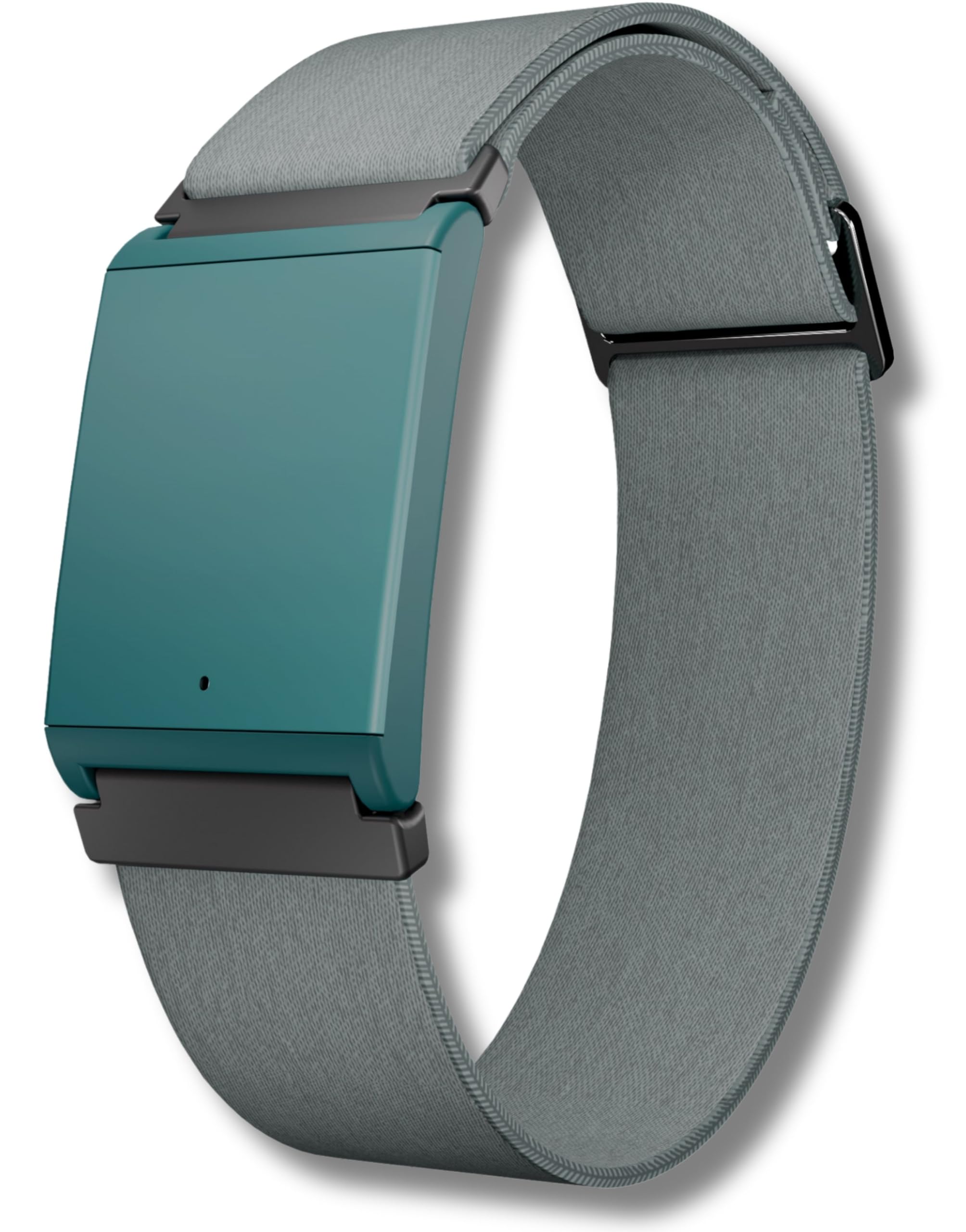
The auto-activating armband that pairs with up to three devices at once via dual Bluetooth ANT+.
The POWR LABS HW805 removes the friction of starting a workout. Intelligent sensors detect skin contact and activate automatically—no power buttons, no pairing rituals before every session. It connects to up to 3 devices at once through dual Bluetooth ANT+, so your data flows to a bike computer, a watch, and a phone simultaneously without drops. The ultralight design with a soft-touch silicone strap sits flush against the arm without bouncing, built for marathon-length sessions.
Buyers find it works well with Peloton, Zwift, and iFit, with accurate readings and reliable performance that holds up over months of use. It replaces faulty units from bigger brands in several owner reports, paired with Apple Health and Wahoo KICKR gear. The auto on/off is a genuine convenience—it powers down when skin contact is lost.
Battery life is the divisive point: some report it holds charge for many workouts, while others say it loses power quickly, with one owner needing a charge every 3-4 days if Bluetooth isn’t reset. The light interface is minimal—just green and blue LEDs—so you trade a display for the auto-wear convenience.
rechargeable convenience
- Auto-wear detection means zero button-pressing to start.
- Multi-device pairing up to 3 connections at once.
- Lightweight silicone strap stays put on high-intensity moves.
charging cable needed
- Battery life varies widely—some owners charge every few days.
- Minimal LED interface with limited visual feedback.
commuters: athletes who want a grab-and-go armband that syncs everywhere without button presses.
forgetful chargers: you need a battery that survives weeks of daily use without a charge.
9. Scosche Rhythm+ 2.0 Heart Rate Monitor Armband

The battle-tested armband with HRV mode and IP68 waterproofing that pros trust.
The Scosche Rhythm+ 2.0 is the armband that the review pages sum up with a single word: accurate. Buyers report it matched a 12-lead EKG during a stress test and reads within 1–2 bpm of a treadmill’s chest strap.. Its HRV mode captures precise RR interval data from subtle heartbeat variations, streaming to HRV4Training, Morpheus Training, and Welltory for deeper recovery and stress insights. It sits snugly near the elbow over a vein and stays put without gels or sliding.
With an IP68 waterproof rating, it shrugs off sweat, rain, and demanding sessions, and the rugged construction holds up to indoor and outdoor training. Battery life is up to 24 hours of continuous use, with the LED turning red above 160 bpm during hard intervals. Connectivity spans Bluetooth and ANT+ to strap into Peloton, Wahoo, and Strava, backed by Scosche’s lifetime tech support.
The trade-offs are honest: reliability draws mixed feedback, with occasional connection drops or wild readings—one owner saw 195 bpm while walking a few times a year—and battery accuracy falls off when the charge drops low. The absence of a charging indicator means you must power it off manually or the battery dies. Yet for most buyers, it remains the trusted, accurate choice that’s easier to wear than a chest strap.
serious cyclists: you want proven accuracy and HRV data for structured recovery training.
budget buyers: you need a device with a clear charging indicator and flawless Bluetooth every session.
Understanding the Specs
Optical vs. Chest Strap Accuracy
An optical sensor reads blood flow under your skin, which is why it’s comfortable on the arm. But it can lag a chest strap during sudden sprints or fast intervals—so your peak may read a second late. For steady-state cardio like cycling, hiking, or zone-2 runs, the difference is negligible; for all-out efforts, a chest strap reads faster.
Battery Life and Charging
Battery life spans from 20 hours to over 110 hours on a single charge. A 20-hour sensor means charging weekly with regular use; a 110-hour unit can go a month or more. Magnetic charging cables are standard, and most units charge fully in 30 minutes to 1.5 hours—but check if the cable is standard or proprietary before you buy.
FAQ
Will an arm heart rate monitor work with my Garmin watch or bike computer?
Is an optical armband as accurate as a chest strap?
Can I wear an arm heart rate monitor swimming?
How long does the battery last on a single charge?
What does IP67 or IP68 mean for a heart rate monitor?
Can an armband connect to Peloton, Zwift, or studio bikes?
What is heart rate variability (HRV) and why does it matter?
How do I get the most accurate reading from an optical armband?
Can I connect an armband to my phone and bike computer at the same time?
What’s the difference between Bluetooth and ANT+?
Final Thoughts: The Verdict
For most people, the arm heart rate monitor winner is the COOSPO HW807 because it pairs a ±1 bpm optical sensor with dual-strap comfort. and a price that undercuts premium rivals. If you want a battery that outlasts a full month, grab the CYCPLUS H1 with its 110-hour runtime. And for proven accuracy with HRV insights that pros rely on, the Scosche Rhythm+ 2.0 is the one to reach for.
How We Picked
We do not accept paid placement. Every pick is matched to a real buyer and a real use-case; we do not hands-on test units.
Sources & Methodology
Specifications: manufacturer listings and product documentation. Review insights: verified customer reviews, as of August 2026. Pricing: not shown on this page (it changes often); check the current price via the retailer link.
As an Amazon Associate, Gadgets Feed earns from qualifying purchases. This does not affect which products we feature.