
Our readers keep the lights on and my morning glass full of iced black tea. As an Amazon Associate, I earn from qualifying purchases.
Specs are compiled from manufacturer listings and verified buyer reviews and can change over time — please confirm the key details on the product page before buying.
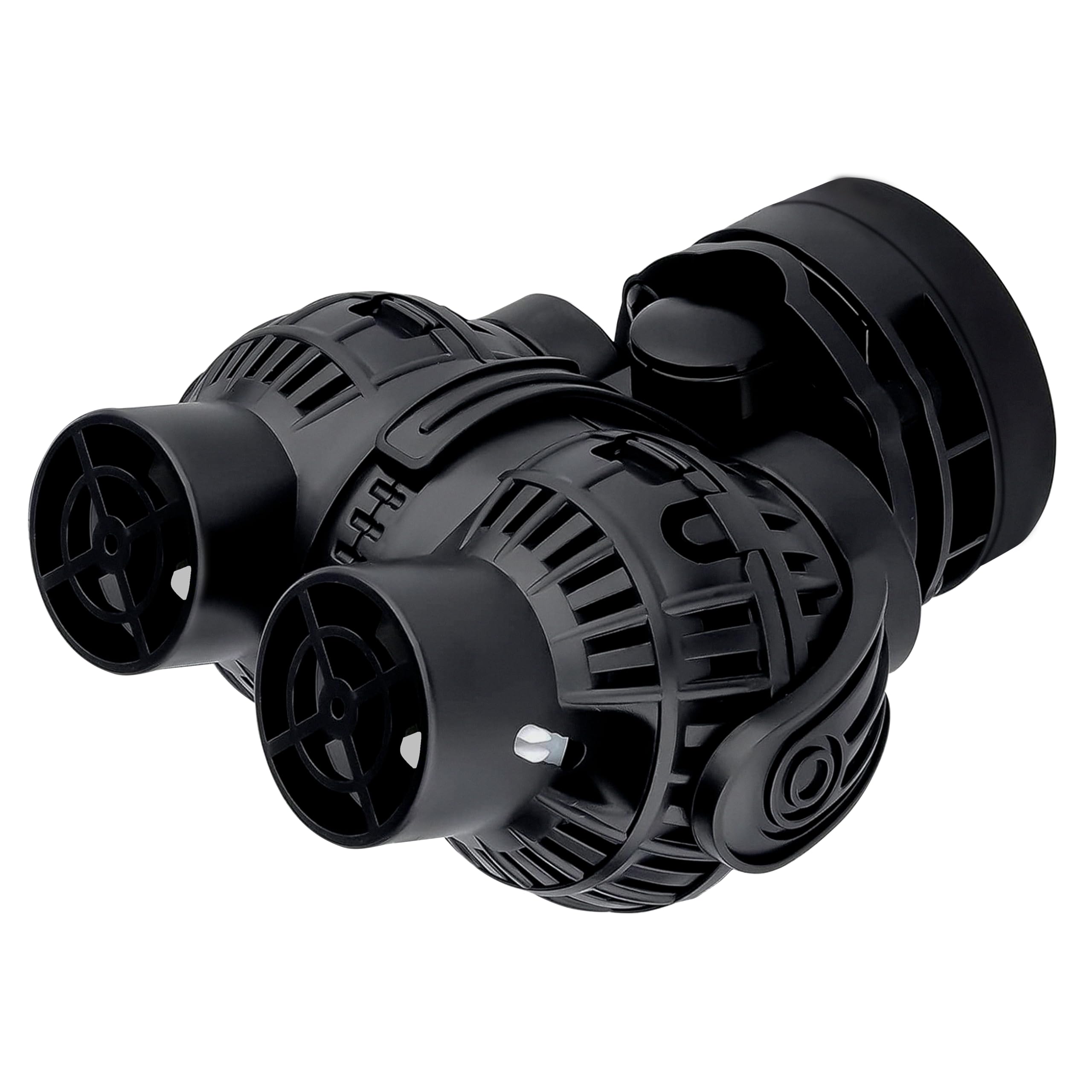
Dead spots are stagnant zones where waste accumulates and corals suffer. Without constant, randomized water movement, detritus settles and corals fail to thrive. An aquarium wave machine is a submersible pump that creates varied, pulsing water movement to eliminate dead spots and mimic natural currents.
I’m Min — the founder and writer behind Gadgets Feed. This guide is built by comparing the manufacturers’ published specifications and the patterns across verified customer reviews, so you get each pick’s real strengths and trade-offs instead of marketing spin.
You want an aquarium wave machine that moves water like the ocean without rattling your living room or draining your wallet. We compared flow rates (measured in gallons per hour, or GPH), wattage, and mounting systems against real tank sizes to separate the true reef workhorses from the noisy ones, so you can match the right pump to your setup without over-spending or under-powering your tank.
Our Picks at a Glance


How To Choose The Best Aquarium Wave Machine
Before you buy, the first rule of thumb is matching flow to tank size. A pump that is too strong for a small tank will blast your fish across the glass, while a weak pump on a large tank leaves dead spots that collect waste. Start by looking at the GPH rating and thinking about your tank’s volume.
Match Flow Rate to Your Tank Volume
As a general target, you want water turnover that suits your livestock — soft corals do well with gentle flow, while SPS corals demand high, chaotic movement. Pay attention to the recommended tank size in the specs. A pump rated for 50-100 gallons will feel overwhelming in a 10-gallon nano reef, but perfect for a 75-gallon display.
AC vs DC Motors and Noise
The motor type determines noise, control, and energy efficiency. The older AC (alternating current) pumps are simpler and often cheaper, but they tend to hum and offer only fixed flow. Newer DC (direct current) pumps use a controller to vary the flow, which means they run quieter, let you create wave patterns, and often use less power. If you want a silent living room, a DC pump with a controller is usually worth the premium.
Mounting and Placement Flexibility
Placement flexibility is as critical as flow power for eliminating dead spots. Strong magnetic mounts let you place the unit anywhere on glass or acrylic up to a certain thickness without tools, and they hold firm when algae builds up. Look for a head that rotates so you can aim the flow where it’s needed — at the surface for oxygenation or down low to sweep detritus toward your filter intake.
Quick Comparison
| Model | Best For | Max Flow | Power | Mount | Amazon |
|---|---|---|---|---|---|
| Hydor Koralia Evolution 850★ Best Overall | Reliable mid-size tanks | 850 GPH (3217 LPH) | 5 Watts | Magnet | Amazon |
| YCTECH 8W Wave MakerBudget Heavy Hitter | Budget high flow | 1600 GPH | 8 Watts | Magnet | Amazon |
| Fluval Sea CP2Compact Performer | Compact nano tanks | 1600 LPH | — | Suction Cup | Amazon |
| Aqueon Circulation Pump | Small planted tanks | 500 GPH | — | Suction Cup | Amazon |
| Uniclife Wave Maker | Medium tanks with modes | 1058 GPH | 12 Watts | Magnet | Amazon |
| Jebao SLW-10 | Quiet controllable reefs | 1065 GPH (4000 L/H) | 10 Watts | Magnet | Amazon |
| hygger Cross Flow | High-tech large tanks | 1850 GPH (7000 LPH) | 18 Watts | Magnet | Amazon |
| AI Nero 3 | App-controlled reefs | 2000 GPH (7570 LPH) | Max 20 Watts | Magnet | Amazon |
In‑Depth Reviews
1. Hydor Koralia Evolution 850
Our pick — over 4★ from 700+ verified ratings; the strongest balance of quality and price.
The set-and-forget Italian workhorse that sells tanks on reliability before power.
Its shaft-less impeller delivers 850 GPH (3217 LPH) at just 5 watts. That’s 50% less energy than previous Koralia models with up to 20% more flow. Buyers report it runs dead-quiet, and one 75-gallon reef owner called it “powerful 850GPH, quiet, efficient,” recommending it as the minimum for their tank.
It’s built for tanks from 50 to 100 gallons, fresh or marine, and the sphere joint lets you adjust the flow direction. The improved vibration-absorbing magnet and suction cup support hold securely on glass or acrylic up to 1/2″ thick. During a decade of ownership chatter, the recurring praise isn’t about raw power — it’s about the fact that it simply keeps working. The 2-year manufacturer warranty adds a layer of confidence that budget pumps rarely offer.
One frequent observation is that the intake screens can clog with debris and need a quick clear, but this is a minor maintenance point rather than a flaw. In a 220-gallon context, owners say it excels at moving water without disturbing the sand bed — ideal for fish-only and reef systems alike. It’s also smaller than older Koralia models, so it won’t dominate the tank’s interior.
Why it wins
- Dead-quiet at 5 watts while still moving 850 GPH
- Reliability is the most-praised trait — owners trust it for years
- Holds firm on glass or acrylic up to 1/2″ thick
Who should pass
- Some find 850 GPH too strong for smaller tanks
- Intake screens clog with debris and need periodic cleaning
The dependable choice: This is for the mid-size reef keeper who wants a proven, near-silent pump that outlasts cheaper alternatives.
Check your tank size: If your aquarium is under 40 gallons, the 850 GPH blast may be more than your fish want.
2. YCTECH Wave Maker 8W 1600GPH
An 8-watt budget pump that moves more water per watt than some premium units.
You get serious circulation for your money here: this pump pushes 1600 GPH (gallons per hour) using just 8 watts, which is 60% more power-hungry than the Hydor above but delivers nearly double the flow. Owners mention the flow is genuinely strong — one 220-gallon saltwater keeper wrote: “So I ordered two pumps not knowing if they would be any good, then a year later I wanted to move more water in my 220G salt tank so I ordered 4 more.” That repeat purchase tells you it works.
The head rotates 360° horizontally and 270° vertically, so you can aim the flow exactly where you need it — up top for surface agitation or down low to sweep the substrate. The strong magnetic bracket holds the pump firmly on glass up to 15mm thick, and the 4 shock-absorbing feet help keep the running noise down. It’s designed for both freshwater and saltwater, and the push-pull switch makes flow speed adjustment easy.
The honest caveat is consistency. While many owners call it silent and powerful, a few report units that stopped working after the second use or became noisy, and quality control is the most-discussed aspect in reviews — treat it as a fit-note rather than a praise point. One turtle-tank owner found the directional head easily dislodged by their pet, so it’s best kept in fish-only or reef setups.
Best for tight budgets: If you need massive flow on a small budget, this delivers more GPH per dollar than anything on this list.
The gamble: The occasional dead-on-arrival unit means you should test it immediately and use the 12-month warranty if needed.
3. Fluval Sea CP2
European-engineered mini pump that disappears into nano tanks while adding clean flow.
The CP2’s defining trait is its tiny footprint — at just 3.6″L x 5.6″W x 3.8″H, it takes up minimal space compared to the bulky Hydor, which is nearly double that height. That compactness makes it a favorite for small reef tanks, with a 15-gallon owner calling it “best wave maker for me… adds a nice clean flow.” It pushes 1600 liters per hour, which is roughly half the flow of the Hydor’s 3217 LPH, so it’s clearly aimed at smaller aquariums up to 25 gallons.
The 270° adjustable output nozzle lets you customize water movement to eliminate dead spots, and the suction mount installs in seconds. It’s designed for both freshwater and saltwater, and owners say it handles debris well while keeping the tank clean. The flow is strong enough to keep a 55-gallon reef’s SPS corals happy, according to one buyer, though it’s best suited to more modest tanks.
The mixed feedback centers on longevity — while some units run for years, others have stopped operating after a few months, and a few report a loud screech on first plug-in that settles to quiet. The suction cup is very strong, which is good for security but can make repositioning a bit tricky. The manufacturing warranty is solid for a pump in this class, backing up its European-engineered reputation.
Reach for it if: You have a nano or small reef up to 25 gallons and want a compact, quality pump that won’t clutter the tank.
Look elsewhere if: You need serious flow for a large display — the CP2’s LPH output is built for smaller volumes.
4. Aqueon Circulation Pump 500 GPH

The modest 500 GPH pump that proves gentle flow can be exactly what a small tank needs.
This is the pick for tanks where a full wave maker would cause chaos. With a 500 GPH flow rate recommended for 20-40 gallon aquariums, the Aqueon delivers steady circulation without blowing your fish around. An owner using it on a 20-gallon reef said it was “too powerful for a 10 gallon” — which is a perfect illustration of its balance. It simulates natural river and reef currents, helping with oxygenation and waste movement.
The ball-and-socket connection point lets you aim flow in any direction, and the easy-lock suction cup makes installation, adjustments, and removal simple. Owners highlight its quiet operation, thanks to rubber mount buffers, and one noted it “takes a beating and keeps on pumping.” The energy-efficient motor increases water movement without drawing excessive power, and it’s suitable for both freshwater and saltwater setups.
The main trade-off is durability — some customers note units failing after 1.5 months or breaking within a week, while others have had theirs running for years. It also takes up more space in the tank than premium options, so it’s better suited as a behind-the-scenes powerhead than a sleek front-of-tank centerpiece. The Limited Lifetime warranty is a nice safety net for a pump at this price point.
A good first pump: If you’re new to circulation pumps or have a small planted tank, this gentle, quiet flow is an easy win.
Keep expectations honest: Some units fail early, so test it right away and lean on the lifetime warranty if needed.
5. Uniclife Wave Maker 1058 GPH

A DC smart pump that gives you four wave modes without the premium price tag.
This is where wave makers start getting interesting. The Uniclife uses a DC 24V motor with a controller that offers 4 distinct wave modes (M1/M2/M3/M4), letting you switch from a gentle swell to a more turbulent sea pattern at the press of a button. Power sits at 12W with a max flow of 1058 GPH, and it’s explicitly rated for 30-60 gallon tanks. Reviewers point out it runs continuously for months, with one 180-gallon keeper praising its power: “I use it in my 180 gallon, and it circulates everything very well.”
The strong magnetic base makes positioning easy, and the rotatable head pushes waves from multiple directions for all-round circulation. It also has a feeding feature — hold the “speed/feed” button for about 3 seconds and the pump stops for 10 minutes, so you can feed without food getting swept away. That’s a real convenience for daily reef keeping, and the DC motor keeps noise to a quiet ringing rather than a hum.
The most-discussed aspect is reliability, which skews mixed — some shoppers say zero issues, while a few had units stop pushing water after 5 weeks until they cleaned the 8 intake holes on the back. Monthly cleaning is the fix, but it’s important to know going in. The wide impeller guard spacing also risks small fish or inverts getting through, so it’s not ideal for tanks with tiny inhabitants.
The smart features
- 4 wave modes (M1-M4) for varied water movement
- 10-minute feed pause is genuinely useful
- Power and quality are the most-praised traits
Maintenance reality
- Intake holes clog and need monthly cleaning
- Wide impeller guard isn’t safe for tiny fish
Grab it for: 30-60 gallon tanks where you want wave mode variety and feed control without app complexity.
Remember: Budget for 10 minutes of cleaning each month to keep the impeller spinning freely.
6. Jebao SLW-10

A compact 10-watt pump with a ceramic shaft that keeps the noise down and the flow up.
What sets the SLW-10 apart is its external drive controller — there are no electronics inside the pump itself, which extends the unit’s life since the wet components are simpler. It delivers a max flow of 4000 L/H (1065 GPH) at just 10 watts, and the 3D rotation angle lets you fine-tune the output direction. Owners call it “super quiet,” with one nano-tank keeper noting it produces “strong and controllable water flow” at a great price compared to top-tier brands.
The ceramic shaft material is a key durability factor — it resists wear better than plastic shafts, which is why this pump performs well despite its low price. It also features master and slave wireless control, so you can sync multiple pumps for a coordinated wave pattern across a larger tank. The included clamp and magnet let you position it anywhere.
The honest take: while many owners rave about it, a subset report units that stop working after 3 months or last only 2 weeks, making reliability the most-discussed aspect — a mixed bag rather than a clear win. It’s also quite strong for small tanks; a 20-gallon owner warned it was “way too strong for my 20g tank.” The 6-month limited warranty is shorter than most, so test it early.
For the quiet seeker: If a silent motor and compact footprint matter more than long-term certainty, this earns its spot.
The lottery factor: Great units and duds both exist — buy with a return plan in mind.
7. hygger Cross Flow 18W

The cross-flow powerhouse that creates ocean-like waves across tanks up to 135 gallons.
This pump packs the most features, including 5 wave modes and 1% flow adjustments. Its unique cross flow technology spreads waves 360 degrees, unlike traditional pumps that push water in one direction, creating a flow that mimics the real ocean. Power tops out at 18W with a maximum flow of 1850 GPH (7000 liters per hour), making it suitable for large freshwater and marine reefs up to 135 gallons. Owners confirm it transforms a 75-gallon reef, creating “awesome waves while providing enough flow to kick up detritus.”
The intelligent LED controller is the crown jewel here. It offers 5 wave modes — pulse, sine, constant, random, and cross flow — plus 30-100 flow rate levels and 30-100 frequency levels, so you can fine-tune power and frequency by 1% increments. It also includes feeding mode, night mode, and linkage mode for syncing multiple units. One 65-gallon owner loves the M5 mode for its natural waves, calling it easy to turn off for feeding with memory.
At 8.5 inches long and 2 inches in diameter, this is a slender pump that installs at different tank positions to achieve different effects — top for wave shapes, middle for bubble streams, or bottom to blow away debris. The magnetic base holds on tanks up to 1/2″ thick, and the 24V DC sine wave control keeps it almost silent, though a few owners note a slight hum in wave mode at startup. The most frequent praise centers on water flow and adjustability.
The control freak’s dream
- 5 wave modes and 1% increments for dialing in perfect flow
- Cross flow spreads water 360° eliminating dead spots
- Slender 8.5″ profile fits sleek installations
Worth noting
- Slight hum in wave mode at startup for some setups
- More complex controller has a learning curve
Choose this for: Large tanks up to 135 gallons where you want granular control over wave patterns and a quiet, powerful unit.
Be ready for: An initial setup session with the controller — but the fine-tuning payoff is worth it.
8. AquaIllumination AI Nero 3

A tiny 2,000 GPH titan controlled entirely from your phone, with a fish guard built in.
This is the smartest pump in the lineup, and it shows. The Nero 3 delivers up to 2,000 GPH (7570 liters per hour) of adjustable flow — the highest on this list — while drawing a max of just 20 watts. It’s remarkably compact at 4.92″L x 5.79″W x 6.22″H, and owners highlight how easy it is to program through the myAI or Mobius app on iOS or Android. One buyer called it “the best wavemaker for any saltwater aquarium… more power than you will ever need.”
The built-in Nero Guard offers extra safety for slow-swimming and curious inhabitants, which is a thoughtful addition for reef tanks with gobies or shrimp. It’s a submersible pump with a strong magnetic mount, and app control lets you set curves, random waves, and feed modes with a few taps. It also supports Neptune Fusion control via Apex with the Apex and MXM module, so it slots into a fully automated reef system.
The reliability picture is the catch. While many buyers report flawless operation and call it super quiet, a notable subset report units stopping after two months, with one owner’s replacement dying within a week showing a “jammed” error. The low-profile design is gorgeous, but durability gets mixed-to-negative feedback — the most-discussed aspect is reliability. Value for money also skews mixed given the premium price point.
For the tech-forward reefer: If you already run an AI or Neptune ecosystem and want app-based wave control, this is the gold standard.
Set expectations: At this price, a unit failing early is more frustrating — lean on the warranty and test immediately.
Understanding the Specs
GPH and LPH Flow Rates
Gallons per hour (GPH) and liters per hour (LPH) measure how much water the pump moves. This is the first number to check. For a reef tank, you generally want 20-50 times your tank volume per hour for SPS corals, but soft corals prefer gentler flow. A 75-gallon tank with a 850 GPH pump gets about 11x turnover per hour, which is moderate — good for mixed reefs but not extreme SPS. Match the GPH to the tank sizes the manufacturer recommends.
Wattage and Energy Use
Wattage tells you how much electricity the pump draws at maximum power. Lower wattage often means higher efficiency for the same flow. The Hydor at 5 watts moving 850 GPH is extremely efficient, while the hygger at 18 watts moves 1850 GPH — a bigger output needing more energy. For a pump running 24/7, a 5-watt difference adds up, so look at the GPH-per-watt ratio to find the best value on your electricity bill.
AC vs DC Motors and Controllers
An AC (alternating current) motor runs at a fixed speed and is typical of simpler, cheaper pumps — they hum and can’t create wave patterns. A DC (direct current) motor uses a separate controller to vary the speed, which enables wave modes, feed pauses, and night reductions, all while running quieter. If you want natural water movement rather than a constant stream, a DC pump with a controller is worth the premium.
Mounting: Magnets vs Suction Cups
Mounting affects both ease of installation and how much tank space the pump occupies. Magnetic mounts let you place the pump anywhere on glass or acrylic without tools and hold firm up to a specified glass thickness. Suction cups are simpler and often cheaper, but they can fail as algae builds up. Strong magnets also allow quick removal for cleaning, which is essential for long-term reliability.
FAQ
How many gallons per hour do I need for my reef tank?
Is a DC wave maker worth the extra cost over an AC pump?
How do I clean a wave maker to keep it running?
Will a wave maker fit any glass thickness?
What is the difference between a circulation pump and a wave maker?
Why is my wave maker making noise?
Can I use a saltwater pump in a freshwater tank?
Is the Nero 3 worth its premium price?
How many wave makers do I need for a large tank?
What is feeding mode on a wave maker?
Final Thoughts: The Verdict
If you want one dependable pick, the aquarium wave machine winner is the Hydor Koralia Evolution 850 because it pairs dead-quiet 5-watt operation with a reliable 850 GPH flow that suits most tanks. If you want smart wave modes and fine-tuned control on a large display, grab the hygger Cross Flow. And for the tech-driven reefer who wants app-based control, the AI Nero 3 is the one to reach for — just keep your return window close.
How We Picked
We do not accept paid placement. Every pick is matched to a real buyer and a real use-case; we do not hands-on test units.
Sources & Methodology
Specifications: manufacturer listings and product documentation. Review insights: verified customer reviews, as of August 2026. Pricing: not shown on this page (it changes often); check the current price via the retailer link.
As an Amazon Associate, Gadgets Feed earns from qualifying purchases. This does not affect which products we feature.