
A solar panel without a proper battery is like a gas tank with a hole — you generate power, but you can’t store it for when the sun goes down. The right battery for solar panel setup determines whether your off-grid system runs your fridge all night or leaves you in the dark by midnight. With chemistries ranging from old-school lead-acid to modern LiFePO4, and capacities climbing past 300Ah, choosing the wrong chemistry means replacing your bank every few years at a cost that eats your solar savings.
I’m Rikta — the co-founder and writer behind Gadgets Feed. I’ve analyzed hundreds of hours of customer feedback on solar energy storage, cross-referencing lifespan claims against real-world cycle counts so you don’t have to guess what will actually last a decade. (And Homer 🐱 supervised the research from his sunny charging station on the windowsill).
Whether you’re powering an RV, a cabin, or a home backup system, the difference between a battery that serves you for one season or ten comes down to chemistry, BMS quality, and usable capacity. We’ve combed through specs and real user experiences to bring you the definitive guide to the best battery for solar panel across every budget and application.
How To Choose The Best Battery For Solar Panel
Selecting a battery for your solar setup isn’t about picking the highest number — it’s about matching the chemistry, voltage, and BMS features to your specific energy consumption pattern. Oversize and you waste budget; undersize and you cycle too deep, killing lifespan prematurely. Here’s how to narrow the field.
Chemistry: LiFePO4 vs. Sealed Lead Acid (AGM)
Lithium iron phosphate (LiFePO4) has become the default choice for serious solar builds because it delivers 3,000 to 15,000 cycles versus the 200–500 cycles of lead-acid. LiFePO4 batteries also provide consistent voltage throughout discharge — your inverter won’t sag under load. They are 60% lighter and require zero maintenance. The tradeoff is a higher upfront cost that pays back over years of service. AGM remains viable only for very small budgets or backup systems that see infrequent use.
BMS — The Battery’s Brain
The Battery Management System (BMS) is the component that protects your cells from overcharge, over-discharge, short circuits, and temperature extremes. A budget-friendly battery with a weak BMS can fail silently. Look for a BMS rated to handle your inverter’s peak surge current — a 100A BMS is standard for a 100Ah cell, but if you’re powering a high-draw appliance, a 200A BMS gives you headroom. Low-temperature cutoff is critical if your battery lives in an unheated garage or RV in winter; lithium charging below freezing can cause permanent damage.
Capacity Sizing and Usable Energy
Battery capacity is measured in amp-hours (Ah), but what matters is usable watt-hours. A 100Ah 12V battery stores roughly 1,280Wh. Lead-acid batteries should only be discharged to 50% depth of discharge (DoD) to avoid damage, meaning you get only 640Wh usable. LiFePO4 batteries can be discharged to 80–100% without issue, effectively doubling your usable energy from the same rated capacity. Calculate your daily load in watt-hours, then size your bank to cover at least one full day of consumption with a safety margin.
Voltage Compatibility with Your System
Most small to mid-sized systems run 12V, which is simple to wire and compatible with a wide range of inverters and charge controllers. Larger off-grid homes push toward 24V or 48V to reduce current and allow thinner wiring. A 48V battery like the AOUSK model in this guide can eliminate the need to series four 12V batteries, simplifying wiring and improving efficiency. Choose the voltage that matches your existing inverter or charge controller specifications.
Quick Comparison
On smaller screens, swipe sideways to see the full table.
| Model | Category | Best For | Key Spec | Amazon |
|---|---|---|---|---|
| Battle Born 100Ah | Premium LiFePO4 | Ultimate reliability & 10-year warranty | 3000-5000 cycles @ 100% DoD | Amazon |
| AOUSK 48V 100Ah | High-Voltage System | Large off-grid solar arrays | 5120Wh usable, rack-mount 3U | Amazon |
| ECO-WORTHY 280Ah | High-Capacity LiFePO4 | Full-time RV & home backup | 3584Wh, 200A BMS, metal case | Amazon |
| Dumfume 300Ah | Value High-Capacity | Cost-effective bulk energy storage | 314Ah actual, 4019Wh capacity | Amazon |
| MEYULMOL 300Ah (2-Pack) | Bundle Deal | Large banks needing parallel setup | 7680Wh total, 200A BMS per unit | Amazon |
| Redodo 12V 100Ah | Mid-Range LiFePO4 | Reliable upgrade from lead-acid | 4000 cycles @ 100% DoD, 22 lbs | Amazon |
| HumsiENK 12V 100Ah | Bluetooth LiFePO4 | Monitoring-focused users | 15000 cycles, 19.73 lbs, IP65 | Amazon |
| EnginStar 300W Power Station | Portable All-in-One | Camping & small backup | 296Wh capacity, 60W panel included | Amazon |
| WEIZE 12V 100Ah AGM | Budget Lead Acid | Entry-level or infrequent backup | 63 lbs, 3% self-discharge rate | Amazon |
In‑Depth Reviews
1. Battle Born 100Ah LiFePO4
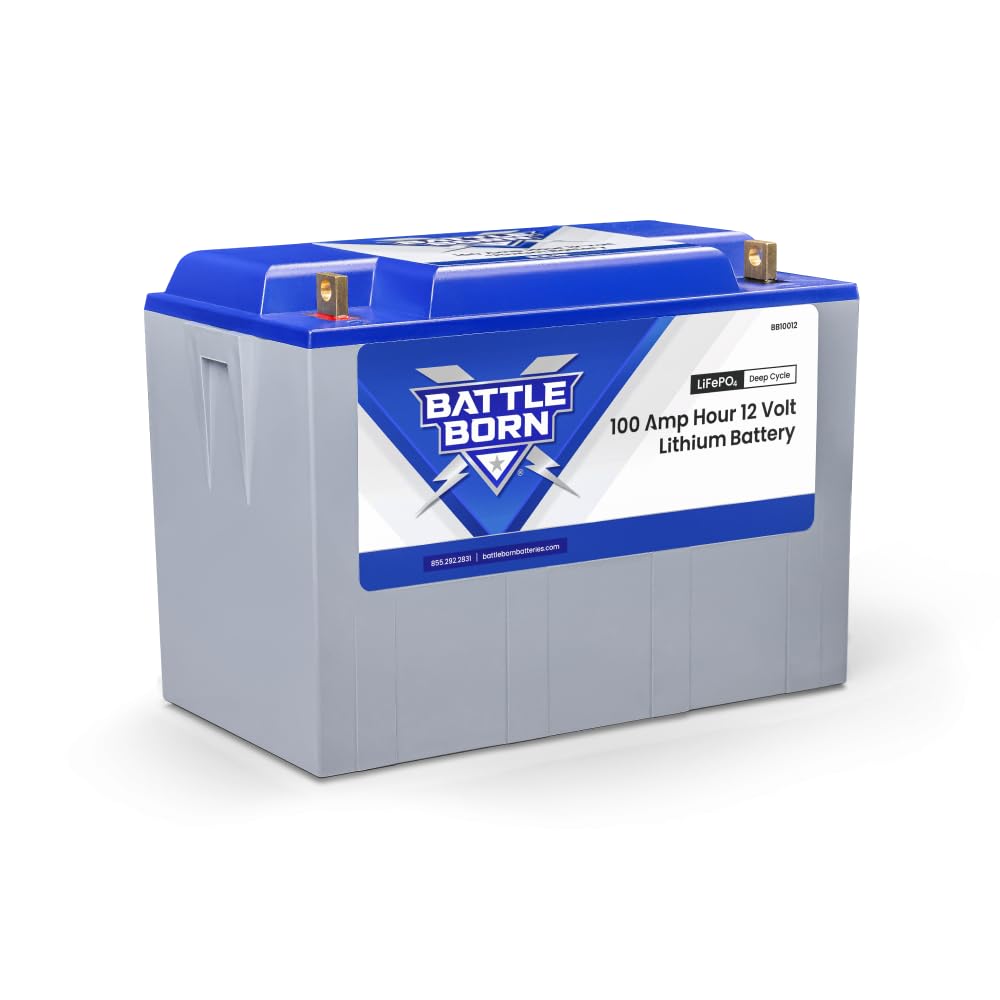
Battle Born sets the benchmark in the solar battery space with a 100Ah LiFePO4 unit that delivers 3,000 to 5,000 deep discharge cycles — that’s up to 15 years of daily use in an off-grid RV or cabin. At just 31 pounds, it’s a direct drop-in replacement for a Group 27 or Group 31 lead-acid battery, yet it provides 100% of its rated capacity without the 50% DoD penalty that cuts AGM batteries in half. The internal BMS handles low-temperature protection, high and low voltage, and short circuits, giving you peace of mind in freezing climates.
Users report running a 450W heater for 90 minutes to raise an RV interior 12°F, plus powering fridge, lights, water pump, and devices 24/7 for a week without issues. The 10-year warranty and responsive US-based customer support justify the premium price for anyone who wants a set-and-forget solution. If a BMS issue arises, Battle Born ships a free replacement — a level of service that’s rare in this category.
The tradeoff is the highest per-amp-hour cost in this guide, making it overkill for a weekend camping setup where a budget-friendly lithium battery would suffice. You’ll also need a lithium-compatible charge controller or alternator regulator — an additional expense of roughly mid-range cost to upgrade if your current gear is lead-acid only.
Why it’s great
- 10-year warranty with proven customer service
- 100% usable capacity from 100Ah rated
- Drop-in replacement — no rewiring for most RVs
Good to know
- Highest price per Ah in this guide
- May require lithium-compatible charger upgrade
2. AOUSK 48V 100Ah LiFePO4
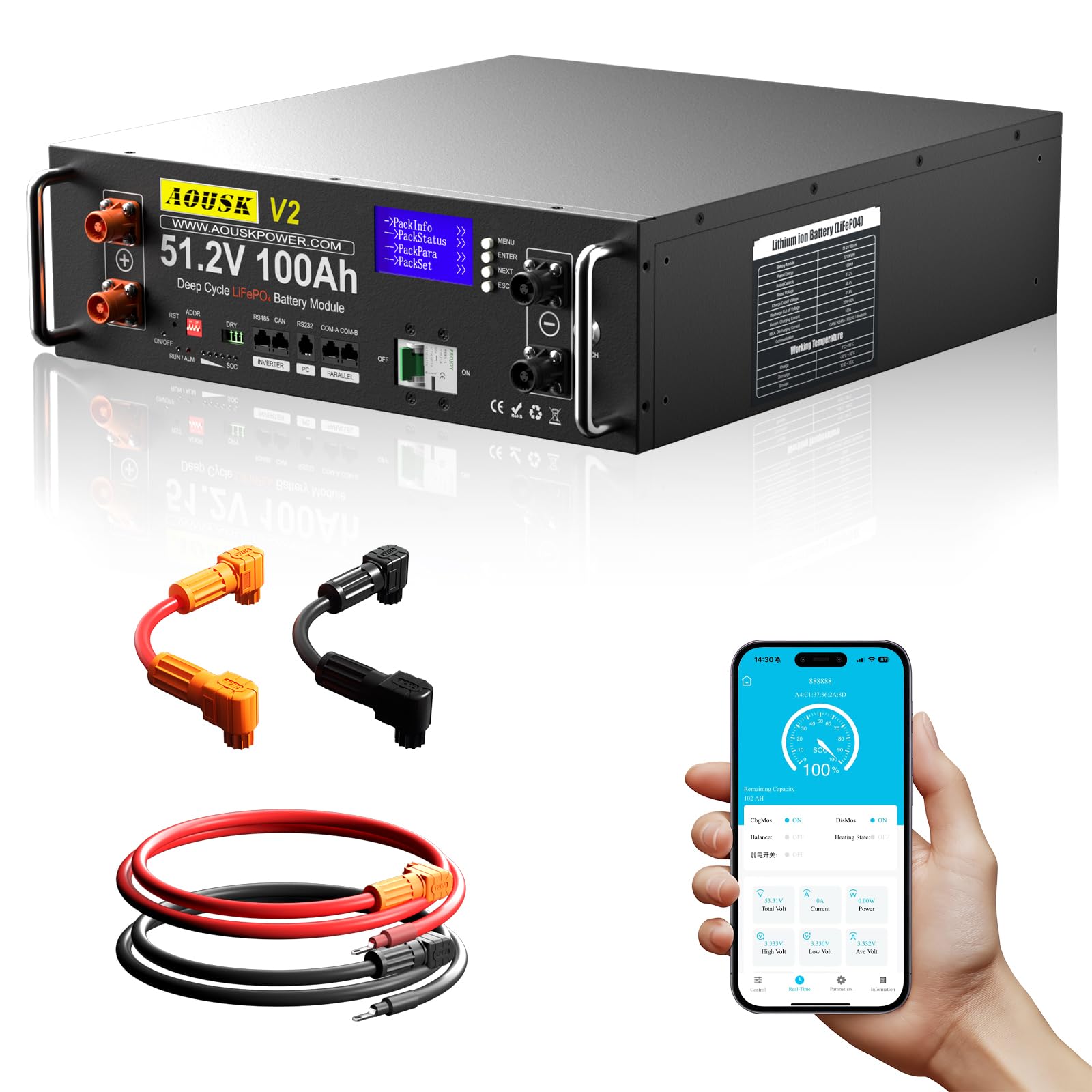
The AOUSK 48V 100Ah battery is designed specifically for serious off-grid solar systems. With 5.12kWh usable energy in a single unit, it eliminates the need to series four 12V batteries — saving wiring complexity, balancing headaches, and rack space. The rack-mount 3U form factor slots directly into a standard server cabinet, and at 94.8 pounds, it’s manageable for one-person installation. Built-in CAN and RS485 communication ensures seamless handshake with most popular all-in-one solar inverters.
Real users confirm it arrives undamaged, slots in easily, and runs stable in parallel with matching cells. One reviewer is already planning to scale to 10 units for full home off-grid power after just two weeks of flawless operation. The smart BMS communicates directly with inverters to optimize charge/discharge parameters, and the Bluetooth app gives real-time monitoring without needing separate shunt hardware.
The 48V voltage means it’s not compatible with standard 12V RV or small cabin systems — you need a 48V inverter and charge controller. It’s also the heaviest battery in this guide, which is fine for stationary rack mounting but not for portable setups. The 5-year warranty is solid, but some users note that communication cable compatibility should be confirmed with your specific inverter model before purchase.
Why it’s great
- Single 48V unit replaces four 12V in series
- CAN/RS485 communication with inverters
- Rack-mount 3U saves space
Good to know
- Requires 48V inverter system
- Heavier than 12V equivalents at 94.8 lbs
3. ECO-WORTHY 12V 280Ah Metal Case
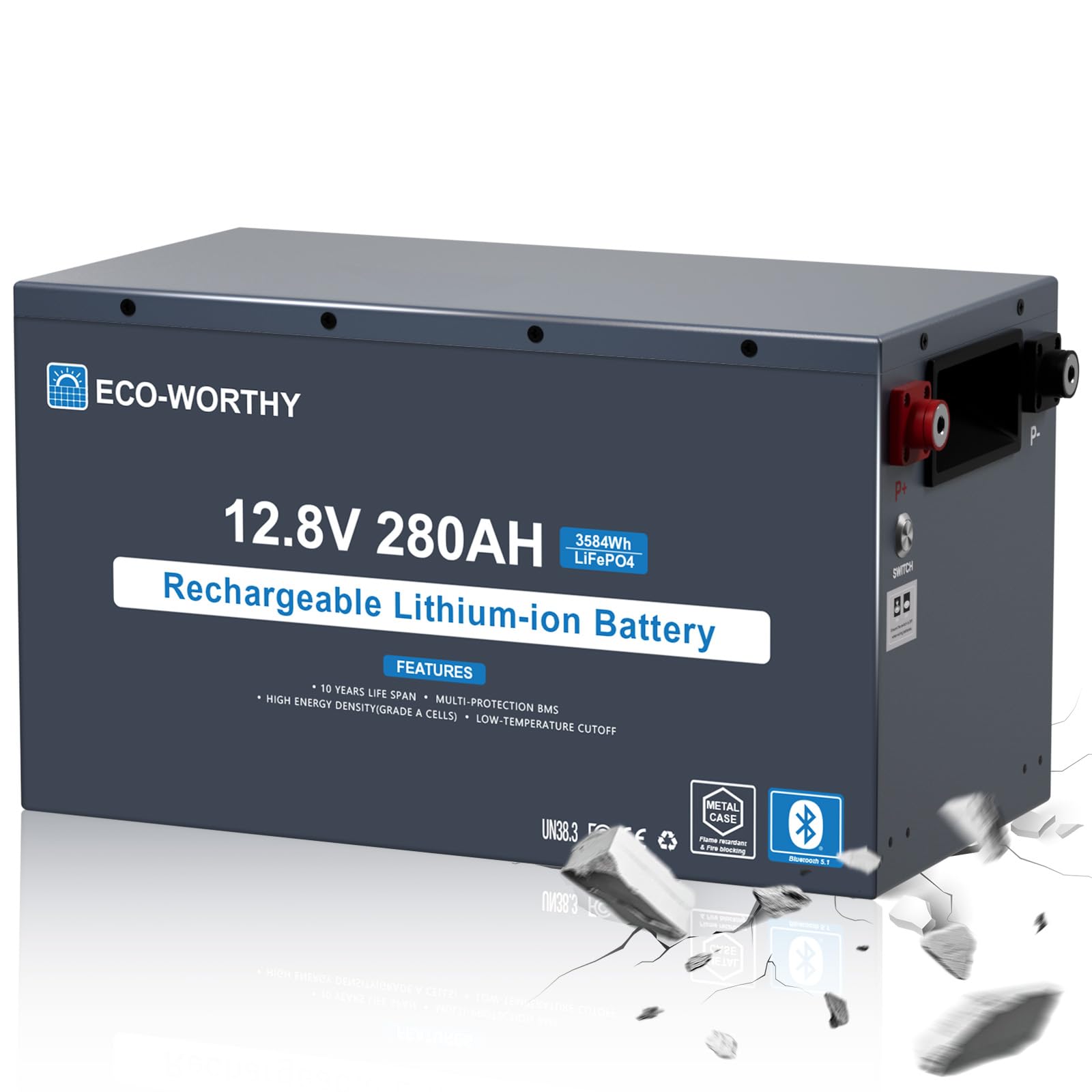
The ECO-WORTHY 280Ah LiFePO4 battery strikes the best balance between capacity, features, and price in the high-capacity category. Its heavy-duty metal case provides superior heat dissipation and fire safety compared to plastic shells, plus it comes with mounting feet so you can bolt it directly to your RV floor without a separate battery box. The 200A BMS handles surge loads from microwaves, induction cooktops, and 2000W inverters without tripping — a genuine advantage for full-time RVers and off-grid homes.
With 3,584Wh of usable energy, two of these batteries give you over 7kWh — enough to run a residential fridge, lights, and electronics for a full day in moderate conditions. The built-in Bluetooth app shows voltage, capacity, and charge/discharge status in real time, and the low-temperature cutoff kicks in at 20°F to protect cells from freezing damage. Users report the cells arrive balanced and consistently exceed their rated capacity by a small margin.
The 68.5-pound weight is reasonable for a 280Ah battery, though it’s still a two-person lift into a tight compartment. Some users note the Bluetooth range is limited to about 20 feet, and the absence of an integrated heater means you need to keep it above freezing during charging. The 3-year warranty is shorter than Battle Born’s 10-year, but the price per kilowatt-hour is dramatically lower.
Why it’s great
- Metal case with mounting feet — no extra battery box
- 200A BMS handles high-draw appliances
- Bluetooth monitoring with low-temp cutoff
Good to know
- 3-year warranty is shorter than premium brands
- No integrated heater for extreme cold charging
4. Dumfume 12V 300Ah (314Ah) LiFePO4
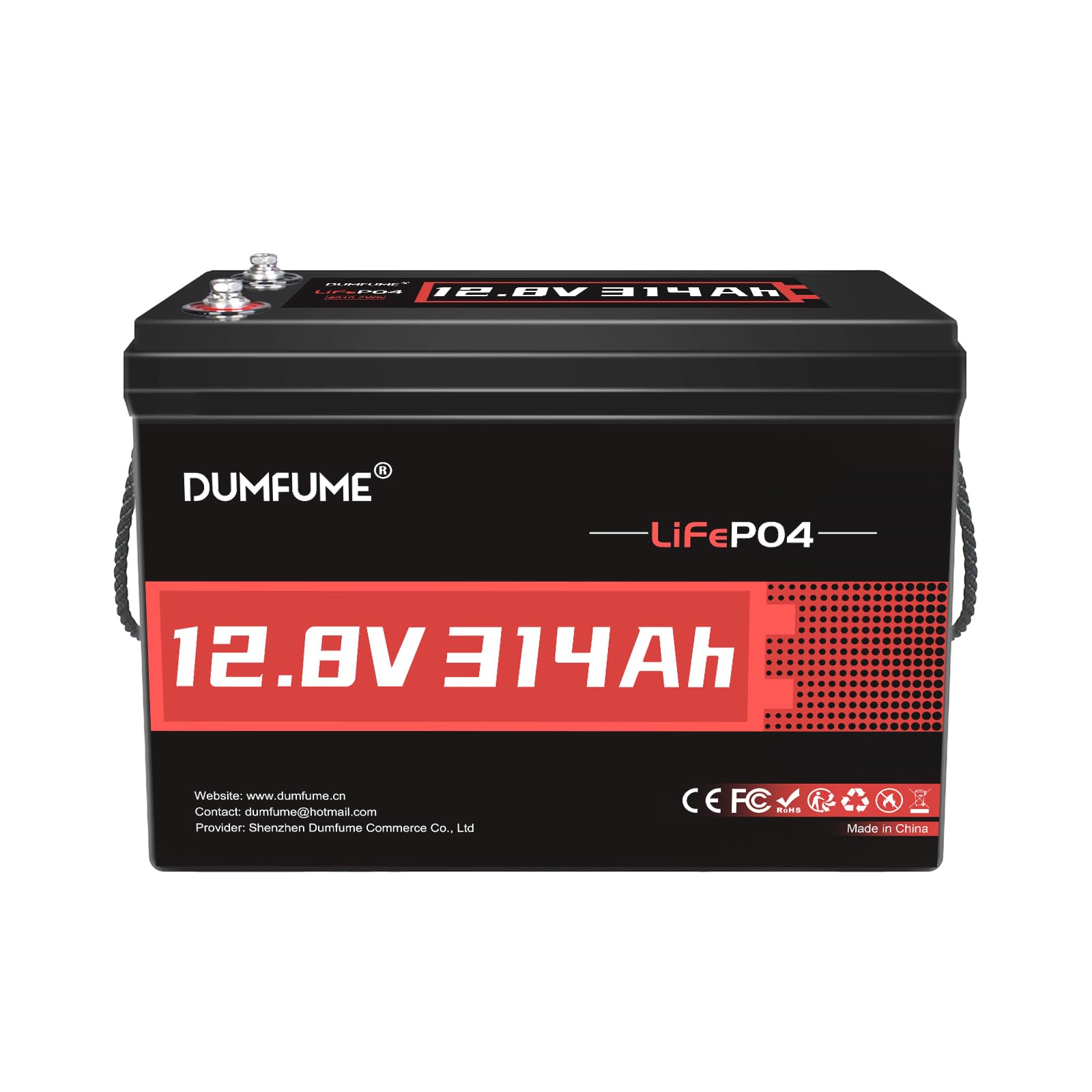
The Dumfume 300Ah battery is rated at 314Ah actual capacity, giving you 4,019Wh of usable energy in a compact package weighing just 57 pounds. That’s roughly one-third the weight of a comparable lead-acid bank and nearly double the energy density. For cost-conscious buyers building a large solar bank, this battery delivers the lowest price per amp-hour among the high-capacity units reviewed here.
Built with a 200A BMS and ABS impact-resistant casing, it supports 4,000 cycles at 100% DoD and up to 15,000 cycles at 60% DoD — translating to a decade or more of daily solar cycling. Users report the batteries consistently exceed their rated capacity by about 7Ah, and even after a year of service, performance remains above spec. It can be wired in series or parallel up to 4S4P, giving you flexibility to scale to 48V or 1200Ah+ banks.
The catch is that some units arrive at low voltage (12.2-12.4V) and require a jump charge from another battery to wake the BMS. A few shipping damage reports mention cracked cases, though customer service handles replacements. The user manual is sparse for solar beginners, and the 5-year warranty only applies to direct purchases from the manufacturer — Amazon purchases require contacting customer service.
Why it’s great
- Best price per Ah in the high-capacity tier
- 314Ah actual capacity exceeds rating
- Lightweight at 57 lbs for 300Ah+
Good to know
- Some units arrive needing BMS wake-up charge
- Warranty terms differ between Amazon and direct orders
5. MEYULMOL 12V 300Ah (2-Pack)
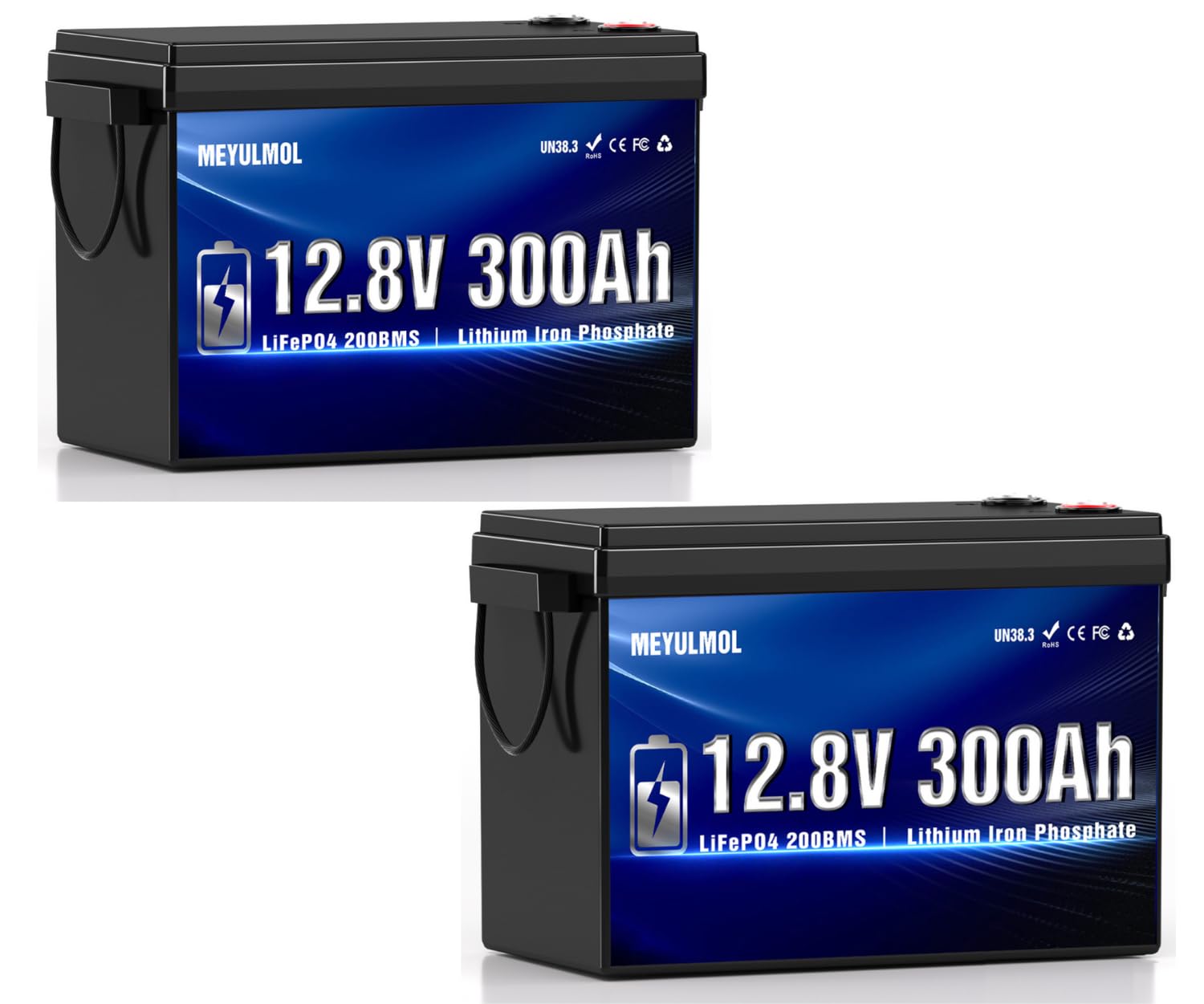
Each battery uses automotive-grade A-class cells and supports 4,000+ cycles at 100% DoD with a claimed 10-year lifespan. The 200A BMS features seven layers of protection including low-temperature cutoff at -4°F discharge and 32°F charge resume.
Real-world feedback is strong: users living full-time in 33-foot RVs report running a 120V apartment fridge and a 55-inch TV all day after just a couple hours of generator charging. The batteries charge quickly via solar, stay stable under continuous load, and are maintenance-free. The compact size — roughly one-third the weight of an equivalent lead-acid bank — makes installation in tight RV compartments straightforward.
Packaging has been a pain point: some units arrive with scratches from inadequate padding, and the included bronze bolts are soft and prone to stripping if hand-tightened — you’ll want to swap them for stainless steel hardware. The manufacturer provides 24-hour customer support via Amazon chat, but response quality for warranty claims is still being tested by early adopters.
Why it’s great
- Massive 7,680Wh total in a 2-pack
- 200A BMS per unit handles heavy loads
- Fits full-time RV & small off-grid home needs
Good to know
- Packaging can be insufficient — inspect on arrival
- Soft bolts should be replaced with sturdier ones
6. Redodo 12V 100Ah LiFePO4
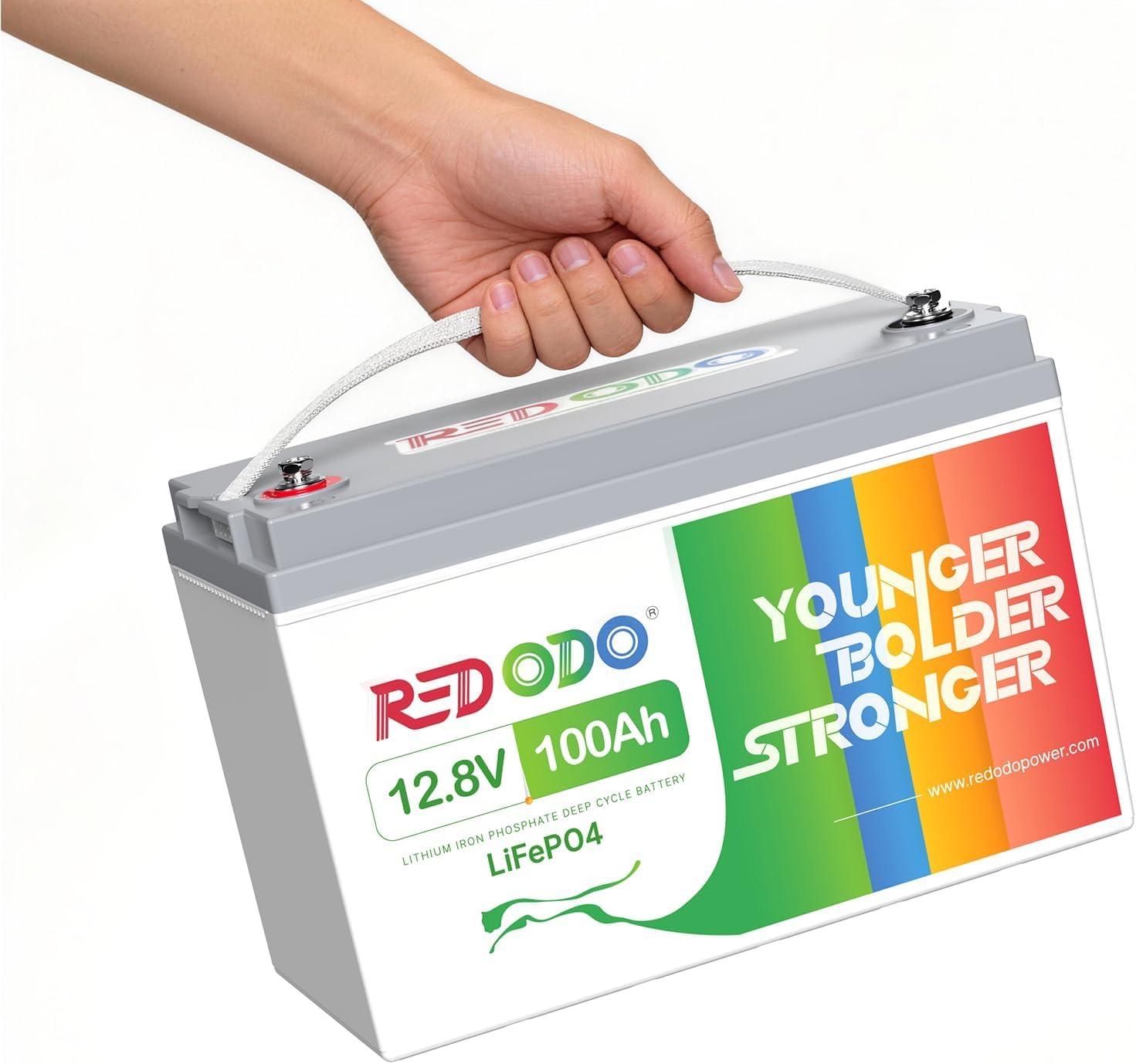
The Redodo 12V 100Ah LiFePO4 battery is the workhorse choice for users upgrading from lead-acid without breaking the bank. At 22 pounds — 60% lighter than an equivalent AGM battery — it fits a standard BCI Group 31 battery box and provides 4,000 cycles at 100% DoD. The built-in 100A BMS protects against overcharge, over-discharge, over-current, and high temperature, and the battery can be wired in series or parallel up to 4S4P for larger systems.
Users in demanding applications — pool cleaning vacuums, electric mowers, and full-time RV living — report that the Redodo delivers consistent voltage throughout discharge, eliminating the power sag that plagues lead-acid. One reviewer replaced failing lead-acid in a Ryobi electric mower with four Redodo batteries and cut the lawn with 90% charge remaining. Another has been running three years in a motorhome with no degradation.
The lack of Bluetooth means you’ll need a separate shunt to track state of charge accurately. Some users note that the Renogy 40A Rover MPPT controller can’t be easily configured to LiFePO4 requirements, though Redodo’s customer support provides guidance. It’s also not suitable for starter batteries or high-CR golf cart applications due to the 100A BMS limit.
Why it’s great
- Proven 3-year real-world reliability from users
- Lightweight at 22 lbs — easy installation
- 4000 cycles at full depth of discharge
Good to know
- No Bluetooth monitoring — requires separate shunt
- Not suited for starter or golf cart applications
7. HumsiENK 12V 100Ah LiFePO4 with Bluetooth
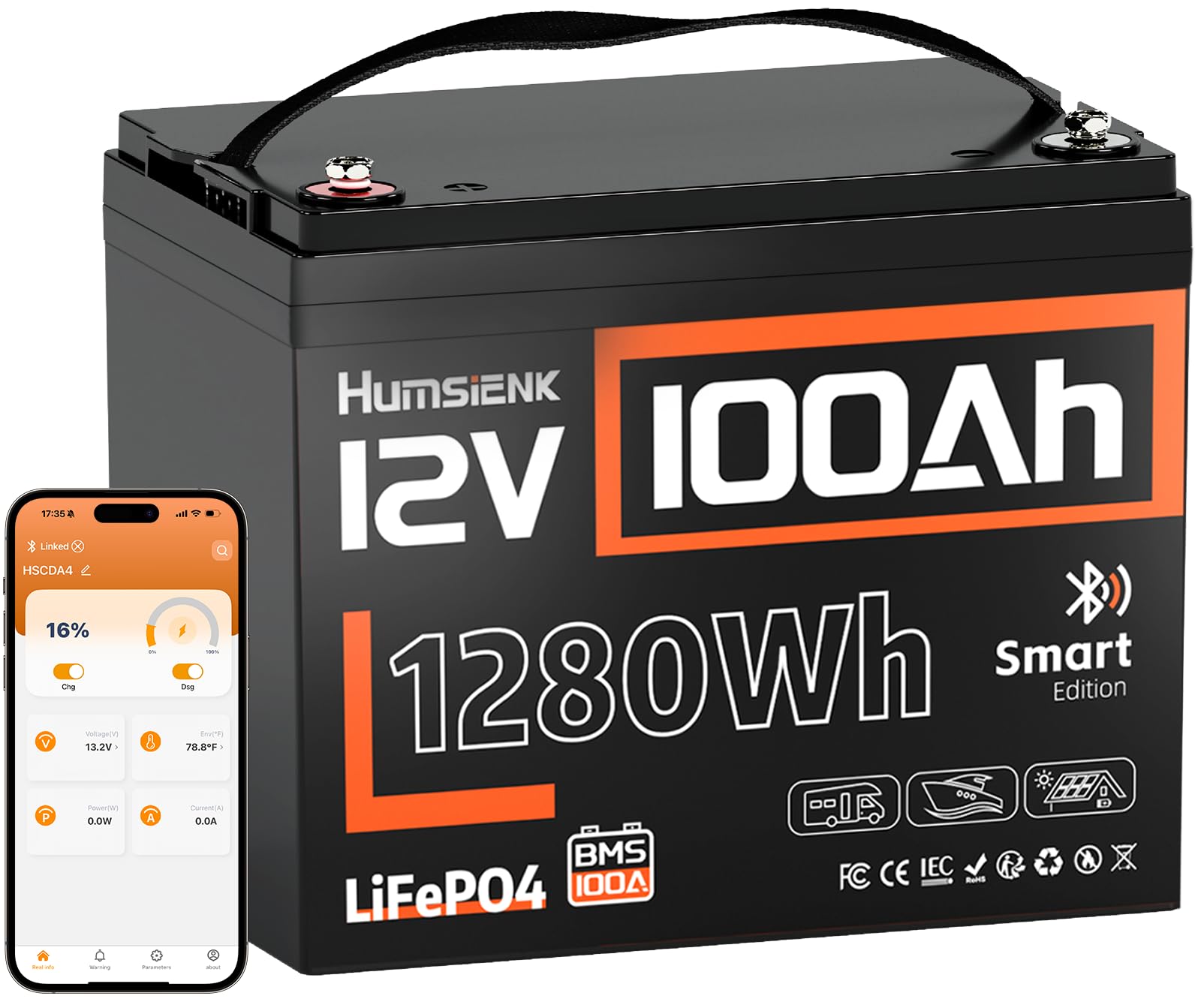
The HumsiENK 12V 100Ah LiFePO4 battery packs an impressive feature set into a compact BCI Group 24 package that weighs just 19.73 pounds — the lightest 100Ah battery in this guide. It supports up to 15,000 cycles at 60% DoD, making it one of the longest-lasting options available if you avoid full discharges. The built-in Bluetooth app provides real-time monitoring of voltage, temperature, and state of charge, plus the ability to adjust discharge control parameters.
With an IP65 waterproof rating, this battery can handle splashes and dust in marine, RV, and outdoor solar installations without concern. The 100A smart BMS includes low-temperature cutoff and comprehensive protection against overcharge, over-discharge, and short circuits. Users report it pairs easily with solar charge controllers and maintains stable voltage under load. After months sitting in boxes during setup, a four-pack still held full charge — testament to the ultra-low self-discharge rate.
The Bluetooth app requires being within about 5 feet to connect, which some find annoying when trying to check status from a distance. It also only shows one battery at a time in parallel setups, so you’ll still need a shunt for a full bank view. The 5-year warranty is competitive, though the brand is newer to the market compared to established names like Battle Born.
Why it’s great
- IP65 waterproof — safe for marine and outdoor use
- Exceptional 15,000 cycle potential at 60% DoD
- Lightest 100Ah at under 20 pounds
Good to know
- Bluetooth range is short — about 5 feet
- Cannot monitor multiple batteries individually via app
8. EnginStar 300W Portable Solar Generator
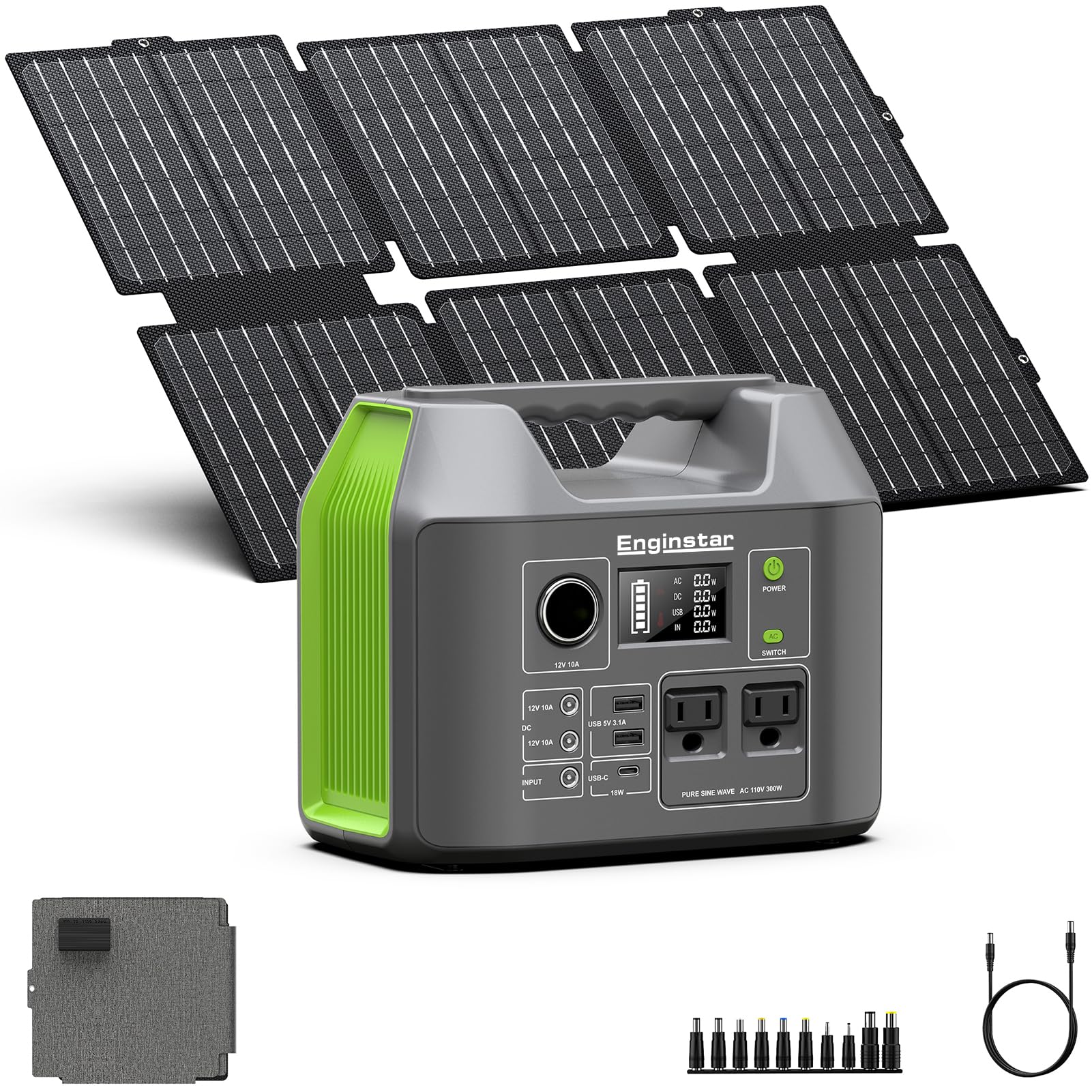
The EnginStar 300W portable power station with included 60W solar panel is the turnkey solution for campers, CPAP users, and emergency backup needs where you don’t want to wire a permanent battery bank. Its 296Wh lithium-ion battery pack provides enough juice to power a CPAP machine for two full nights, charge phones and laptops, or keep a mini-fridge running for several hours. The entire unit plus panel weighs under 11 pounds and fits in a backpack.
With dual 110V pure sine wave AC outlets, 2 USB-A ports, a USB-C port, and regulated 12V/24V DC outputs, you can charge multiple devices simultaneously without worrying about dirty power damaging sensitive electronics. The included 60W monocrystalline panel has a 23% conversion efficiency and folds down to laptop size. The power station can also be recharged from a wall outlet or 12V car socket in about 3 hours at 65W max charging speed.
This is not a permanent solar battery — the 296Wh capacity is roughly one-quarter of a single 100Ah LiFePO4 battery, and the built-in lithium-ion cells are rated for about 1,000 cycles rather than the 4,000+ of prismatic LiFePO4 cells. It works best as a portable supplement to a larger solar bank or as a standalone unit for short trips. Some users note the phone charging speed is slower than expected.
Why it’s great
- Complete portable system with solar panel included
- Runs CPAP for 2 nights on a single charge
- Lightweight and backpack-friendly at 6.5 lbs
Good to know
- Only 296Wh — suited for small loads, not whole-home
- Lithium-ion cells have shorter lifespan than LiFePO4
9. WEIZE 12V 100Ah AGM Deep Cycle

The WEIZE 12V 100Ah AGM battery is the go-to choice when budget is the primary constraint. As a sealed lead-acid battery, it requires no maintenance, no distilled water refills, and produces no fumes — making it safe for indoor use in RVs and cabins. With a 3% self-discharge rate, it holds its charge well during seasonal storage, and users report running two 100Ah units in parallel for over two years powering a 700W inverter for TV and cooking in an off-grid RV.
At 63 pounds, it’s nearly three times heavier than a comparable LiFePO4 battery, and its usable capacity is effectively 50Ah — only 640Wh — because deep cycling AGM below 50% DoD rapidly kills the cells. It’s a proven workhorse for emergency backup (furnace, fridge) where deep cycling isn’t expected daily. Users love that it just works without a BMS to worry about, making it simpler for beginners who don’t have a lithium-compatible charge controller.
The killer limitation is cycle life: 200-500 cycles compared to 4,000-15,000 for LiFePO4. If you cycle it daily in a solar setup, you’ll replace it every 1-3 years, wiping out the upfront savings. It also can’t be discharged below 50% without damage, and charging is slower than lithium due to the acceptance profile. Best reserved for infrequent backup duty or as a starter battery while you save for a lithium upgrade.
Why it’s great
- Lowest upfront cost — accessible entry point
- No BMS to fail or configure
- Maintenance-free sealed design
Good to know
- Only 50% usable capacity — effectively 50Ah
- 200-500 cycle lifespan is short for daily solar use
- Heavy at 63 lbs — difficult to install alone
FAQ
Can I mix old and new LiFePO4 batteries in the same bank?
Do I need a special charge controller for LiFePO4 solar batteries?
What gauge wire should I use between my solar battery and inverter?
Final Thoughts: The Verdict
For most users, the best battery for solar panel winner is the ECO-WORTHY 12V 280Ah Metal Case LiFePO4 because it delivers massive 3,584Wh of usable energy, a rugged metal enclosure that simplifies installation, and a price per kilowatt-hour that undercuts most competitors while still including Bluetooth monitoring and a 200A BMS. If you want the longest warranty and premium build quality for a critical off-grid system, grab the Battle Born 100Ah for its well-earned reputation and 10-year backing. And for a high-voltage whole-home setup where low current matters, nothing beats the AOUSK 48V 100Ah for its seamless inverter communication and clean rack-mount design.