
Our readers keep the lights on and my morning glass full of iced black tea. As an Amazon Associate, I earn from qualifying purchases.
Specs are compiled from manufacturer listings and verified buyer reviews and can change over time — please confirm the key details on the product page before buying.
Your engine’s owner’s manual tells you exactly which oil it needs, and if it says 0W-40, you have to pick the right chemistry for your driving style. European cars, high-mileage trucks, and track-day toys all use this viscosity, but for different reasons. Here is how each oil’s base chemistry matches your real-world driving, so you buy the right protection the first time.
I’m Min — the founder and writer behind Gadgets Feed. This guide is built by comparing the manufacturers’ published specifications and the patterns across verified customer reviews, so you get each pick’s real strengths and trade-offs instead of marketing spin.
Here is the honest breakdown of the best 0w-40 synthetic oil options for daily drivers, European performance cars, and weekend racers alike.
Our Picks at a Glance


How To Choose The Best 0W-40 Synthetic Oil
The “0W-40” label tells you the oil stays thin enough to flow at freezing temperatures (the “0W”) while remaining thick enough to protect at high operating heat (the “40”). That combination makes it the default choice for many European engines and a smart upgrade for high-mileage domestic motors, but not every bottle is built the same.
Decode the approvals on the bottle
Manufacturer approvals like Mercedes-Benz 229.5, BMW LL-01, and Porsche A40 are not decoration. They mean the oil was tested to meet the specific wear, deposit, and piston-cleanliness standards those engines demand. If your car’s manual lists an approval, matching it exactly is the safest route — it guarantees you stay within warranty requirements.
Match the oil to the miles on your engine
A 200,000-mile daily driver needs different chemistry than a freshly built track motor. High-mileage engines often benefit from the thicker hot-temperature film a 0W-40 provides over a thinner grade, while a modified turbo engine with extra boost demands the shear stability of a racing-grade ester oil. Know what your engine is doing before you pour anything in.
Quick Comparison
| Model | Best For | Base Chemistry | Volume | Key Approvals | Amazon |
|---|---|---|---|---|---|
| Royal Purple 0W-40★ Best Overall | High-mileage daily drivers | Synthetic | 1 Quart (6-Pack) | Universal Fit | Amazon |
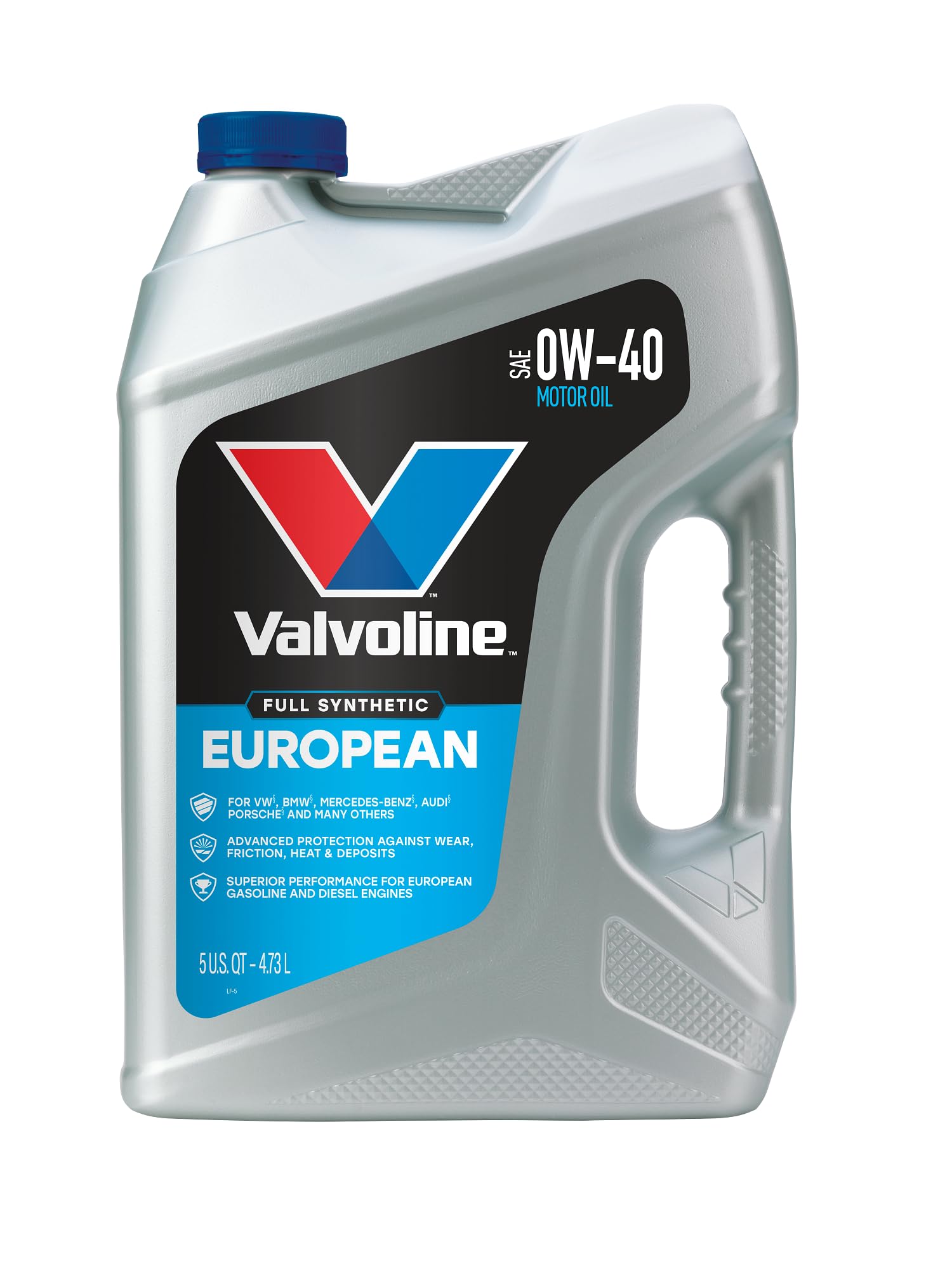
| Valvoline Euro 0W-40Best Euro Value | European gas & diesel | Full Synthetic | 5 Quart Jug | MB 229.5, BMW LL-01, Porsche A40 | Amazon |
| Motul 300V 0W-40Track Performer | Track & racing builds | Ester Core | 2 Liter Can | Universal Fit | Amazon |
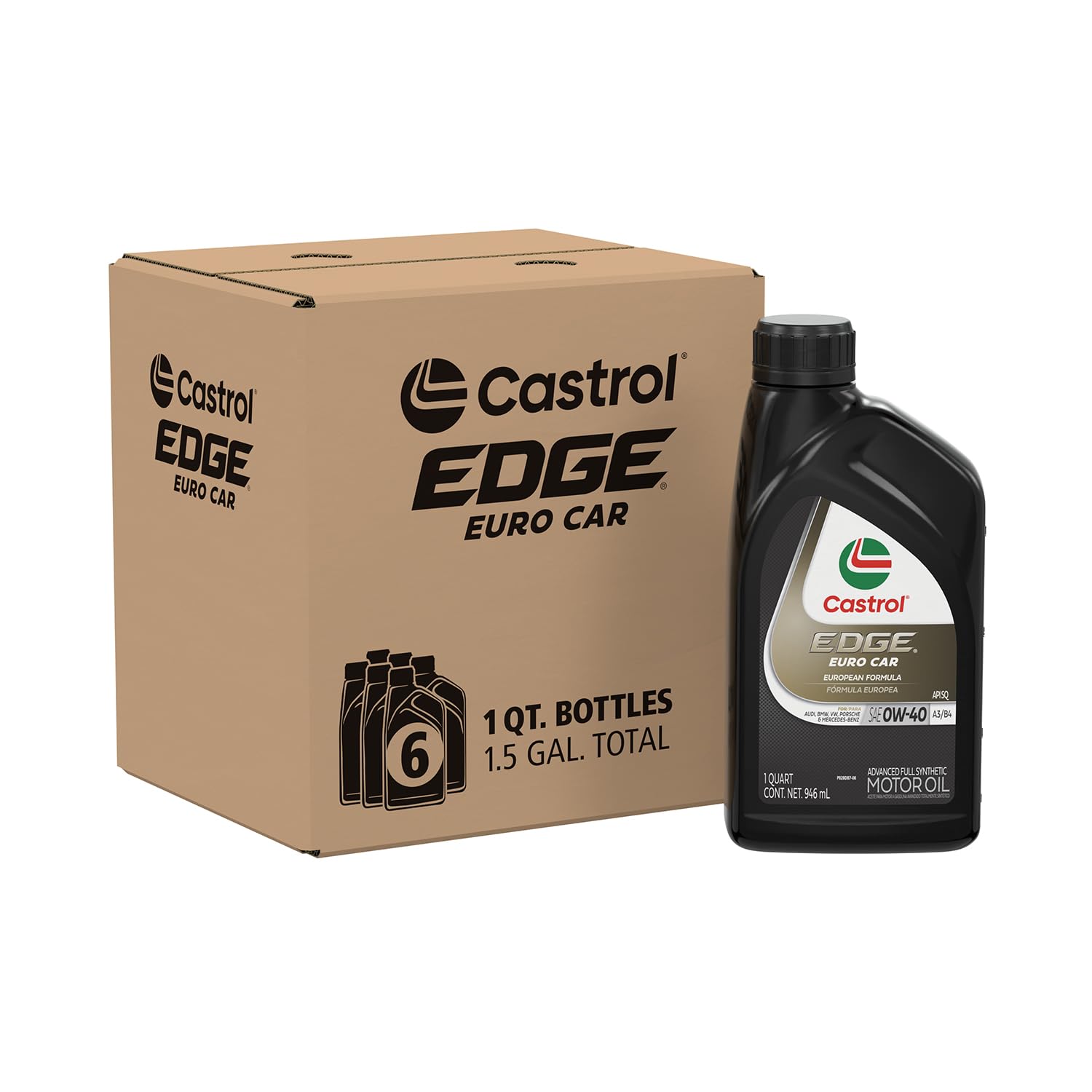
| Castrol EDGE Euro 0W-40 | German-engine daily drivers | Full Synthetic | 1 Quart (6-Pack) | MB 229.5/229.3, Porsche A40 | Amazon |
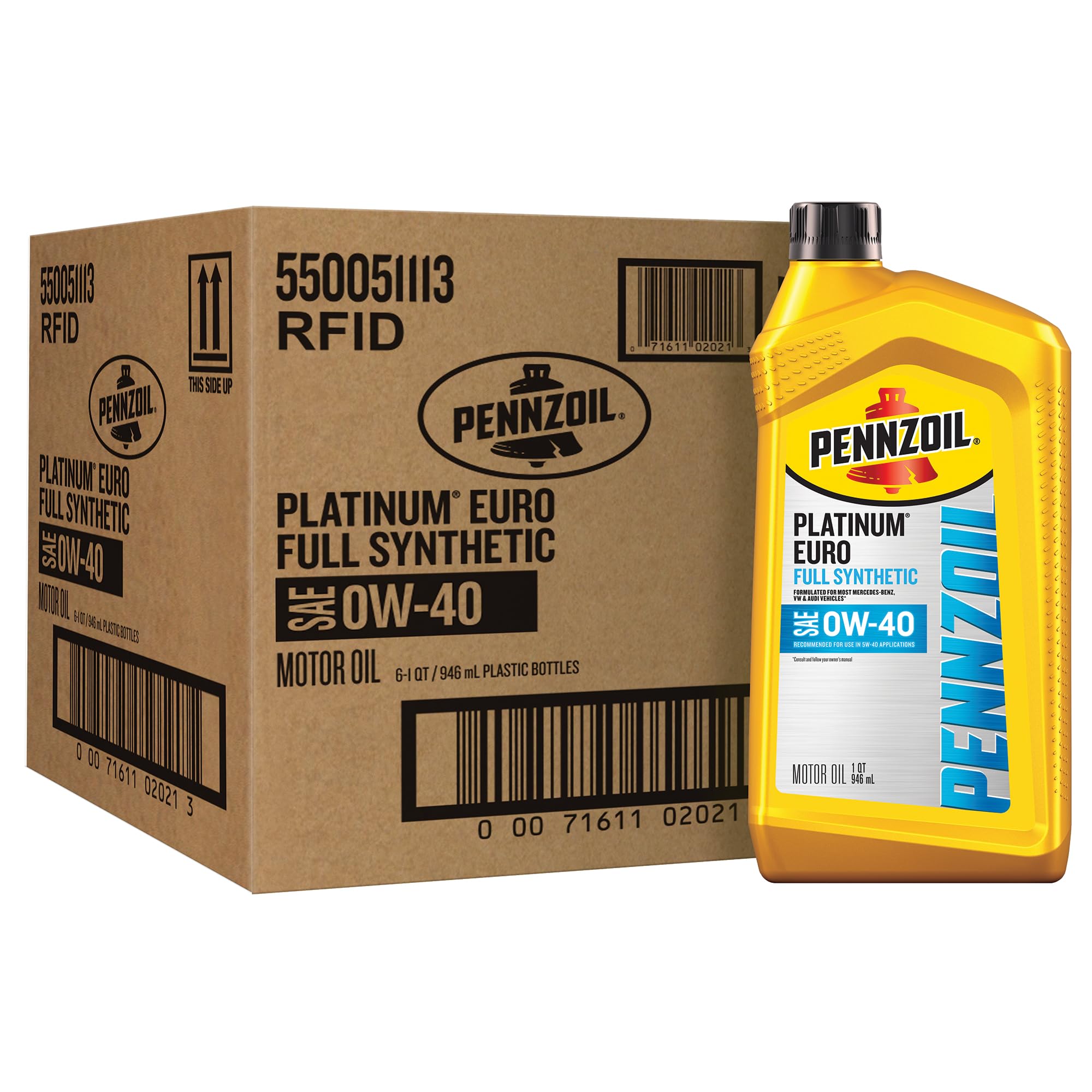
| Pennzoil Platinum Euro | European gas engines | Natural Gas Based | 1 Quart (6-Pack) | VW, Porsche, MB | Amazon |
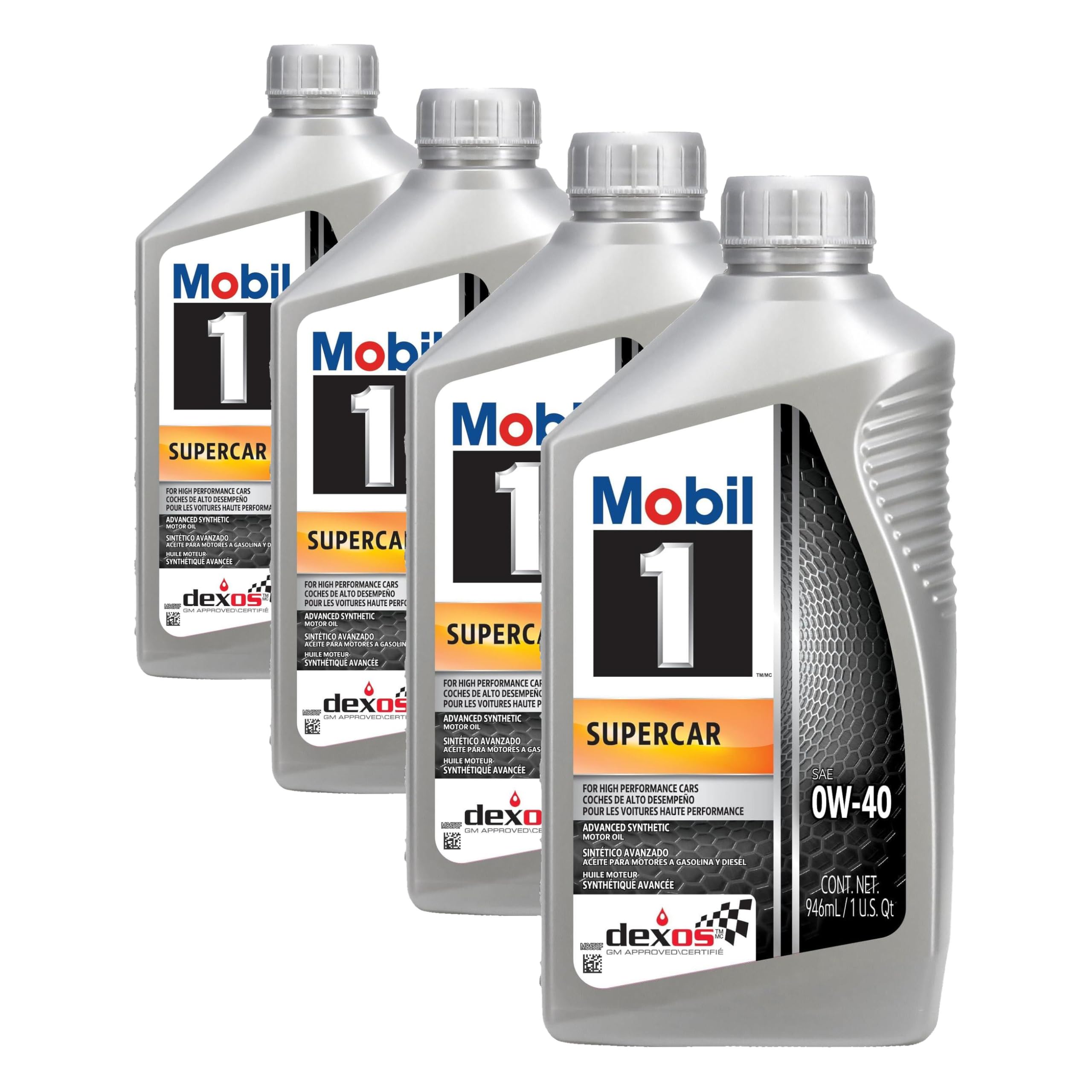
| Mobil 1 Supercar 0W-40 | American performance cars | Full Synthetic | 1 Quart (4-Pack) | GM dexosR | Amazon |
| Red Line 0W-40 | Modified & forced-induction | Ester/PAO Formula | 1 Gallon | BMW LL-01, Porsche A40 | Amazon |
| Liqui Moly Synthoil Energy | German performance engines | Full Synthetic | 5 Liter Jug | Vehicle Specific Fit | Amazon |
In‑Depth Reviews
1. Royal Purple 0W-40 High Performance Synthetic
Our pick — over 4.5★ from 300+ verified ratings; the strongest balance of quality and price.
The high-mileage workhorse that makes aging engines run smoother, quieter, and cooler.
Royal Purple earns the top spot because it directly answers the biggest worry of owners with six-figure odometers: keeping a tired engine alive. A mechanic recommended this 0W-40 for a 2004 Chevy Colorado with 235,000 miles, picked specifically over the factory 5W-30 to give that high-mileage motor a thicker hot-temperature film. That is exactly the scenario this oil was built for — better wear protection and improved fuel efficiency are the headline claims on the bottle.
The thing that wins people over is the color. Owners single out the distinctive purple dye as a trust signal, but the real story is what happens after you pour it in. Long-time users report smoother operation, better cooling, and a noticeably quieter engine. One loyal owner who has run Royal Purple for 10-20 years across engine, transmission, diff, and transfer case says it stretches oil change intervals and holds up under hard driving.
Keep one honest trade-off in mind: oil quality feedback is genuinely mixed, with an occasional report that it comes out dirtier than expected at change time. That is a routine observation, not a defect — and it does nothing to dent the overwhelming consensus that this is the oil to reach for when your engine has real miles behind it.
Why Owners Stick With It
- Engine runs visibly smoother and cooler after the switch
- Long-time users report longer intervals between changes
- Strong ethanol-fuel compatibility for modern pumps
Who Should Think Twice
- A few report the oil drains dirtier than rivals at change time
- Six-quart case means buying a 7th quart separately for big trucks
Reach for this if: your daily driver has past 100,000 miles and you want smoother, cooler, quieter operation from a trusted synthetic.
Look elsewhere if: you need a very specific OEM approval printed on the bottle — Royal Purple is universal-fit rather than brand-certified.
2. Valvoline European Vehicle Full Synthetic 0W-40
The European-vehicle specialist that carries the approvals to keep your warranty intact.
If you drive a European car and worry about warranty coverage, this Valvoline is the safest bet on the list. It meets the requirements for Mercedes-Benz 229.5, 229.3, and 226.5, plus BMW LL-01, Porsche A40, and the VW 502.00/505.00 family. Owners confirm the confidence directly: it works in a 2021 Jeep Rubicon 3.6L, where the 0W-40 runs thicker at high temps than the factory 0W-20 and meets Stellantis API/SAE specs without voiding anything.
This is a low-SAPS formula — meaning reduced sulfated ash, phosphorus, and sulfur — which keeps the emissions system and catalytic converter happy. That matters for modern Euro diesels and gasoline direct-injection engines alike. The flash point sits at a solid 428 °F, a real number that tells you this oil resists burning off under heat..
Buyers who switched from other brands mention the smoothness is immediately noticeable when driving. One owner used it in a Polaris Ranger TM that had not seen fresh oil in 20 years and reported the engine ran better right away. Loyal Valvoline fans — including one who has used the brand for 50 years — appreciate that this 0W-40 ratio is hard to find locally, making the 5-quart jug a convenient Amazon buy.
Warranty-Friendly Chemistry: the low-SAPS formula protects emissions hardware while the listed approvals cover the major German and American OEM specs.
Best for: European gas or diesel owners who want brand-printed approvals and a single 5-quart jug for one full oil change.
Who it won’t serve: hard-core track drivers needing a racing ester core — this is a street-oriented daily-driver oil.
3. Motul 300V 0W-40 Competition Racing Oil
The ester-core race oil that keeps a 450hp turbo build feeling fresh at redline.
Motul 300V is the oil you choose when every horsepower matters. It is built from an ester core — a base chemistry that clings to metal surfaces far better than standard synthetics — which translates directly into what track owners feel: rapid engine RPM response and stable oil pressure even in high-output turbo engines. One owner running a built 450hp Bugeye WRX calls it the best oil he has ever used, and a 2022 BMW M2C owner says it runs smoother and cooler than any other brand he has tried.
This is a competition oil designed for circuit, drag race, drift, endurance, hill climb, rally, and track days. The type-of-use list is long, and that tells you the chemistry is tuned for sustained abuse rather than casual commuting. The shear stability — the oil’s ability to keep its thickness under extreme mechanical stress — is the headline technical claim, and it is exactly what prevents metal-on-metal wear when you are pounding laps.
The honest trade-off is the price per liter and the fact that it is engineered for performance engines, not economy. Owners note it is pricey but justified when the engine is built. Just remember the collective advice from the review pages: change it at least once a year if you only weekend-cruise, because this oil is meant to be fresh.
Built for Abuse: ester-core film strength and high shear stability make this the pick for turbo, supercharged, and built engines that see track time.
Grab this if: your car is modified, boosted, or sees regular track days and you want maximum film strength at every RPM.
skip it if: you just need a reliable commuter oil — the racing chemistry and cost are wasted on a stock daily driver.
4. Castrol EDGE Euro 0W-40 A3/B4 Full Synthetic
The German-made favorite that owners cross-shop against Amsoil — and often prefer.
Castrol EDGE Euro carries serious credibility: it is certified to API SN/CF and ACEA A3/B3/B4, and meets Mercedes-Benz 229.5 and 229.3, Porsche A40, and VW 505.00 and 502.00. The maker claims a 42 percent better rating on fighting power-robbing deposits, a specific figure that signals aggressive piston-cleaning chemistry., which is the kind of specific number that tells you this oil is aggressive about keeping pistons clean. Owners confirm the fit is spot-on for European cars, including an SL500 and an S60-R.
The most telling endorsement comes from a buyer who used Amsoil for 40 years but found it hard to purchase. He switched to this German-made Castrol and ran his own cold-flow and hot tests on it — the kind of hands-on verification only a dedicated oil nerd performs. That single vote of confidence from a lifelong Amsoil user says a lot about how this oil performs.
What owners love most is that it fits their vehicle specifications, and the value is strong for a 6-quart case. The recurring gripe is price volatility — this 0W-40 has gotten expensive and the price seems to fluctuate, which has some owners weighing whether to switch. Weight is a real consideration too: at 12 pounds for the case, it is a hefty box versus the far lighter 2-pound Royal Purple six-pack on this list.
What Earns Loyalty
- German-made with a strong reputation among Euro owners
- Certified across API SN/CF and ACEA A3/B3/B4 standards
- Owners confirm it fits SL500 and S60-R specifications perfectly
Honest Drawbacks
- Price swings noticeably over time — some owners shop around because of it
- The 12-pound case is bulky to store and ship
Choose this for: German-engine daily drivers where brand-printed approvals for Mercedes, Porsche, and VW give you total confidence.
Be aware: the price fluctuates more than rivals, so it pays to watch for a good deal.
5. Pennzoil Platinum Euro Full Synthetic 0W-40
The natural-gas-derived synthetic that silences noisy valve trains in VW and Mercedes engines.
Pennzoil Platinum Euro is made from natural gas, not crude oil, and that base-material difference is the whole story here. The maker backs it with a guarantee of protection for up to 15 years or 500,000 miles, whichever comes first.. For a 2014 Tiguan CCTA 2.0 TSI at 140,000 miles, buyers report the valve and cam chain noise disappears entirely — among the most specific and satisfying outcomes in this category.
This oil is formulated for modern light-duty diesel and high-performance gasoline engines in European vehicles, covering Mercedes-Benz, Renault, VW, and Porsche. The 6-quart case delivers 192 fluid ounces, which is enough for most Euro cars plus a top-up.. Owners describe it as VW-approved with the new SP additive package for chains, which is a meaningful detail for chain-driven engines.
The real-world verdict from the review pages: it runs super smooth with no consumption on a Tiguan, and a Mercedes CLS-400 owner says the car “loves it.” One driver whose manual called for Castrol 0W-30 used this Pennzoil 0W-40 as a top-up and found it just as good at a better buy. If you want faster low-temperature oil flow and protection in extreme heat, this is the one.
Chain-Safe Formula: the SP additive package is specifically designed to protect timing chains, a common weak point in modern VW and Audi engines.
Ideal for: VW, Audi, and Mercedes owners with chain-driven engines who hear noise and want it gone.
Not for: pure track builds — this is a street-focused Euro oil, not a racing ester blend.
6. Mobil 1 Supercar Advanced Full Synthetic 0W-40
The dexosR-certified oil that Corvette owners must use to keep the warranty valid.
If you own a modern American performance car, this is the oil your engine was designed around. Mobil 1 Supercar 0W-40 is recommended for GM dexosR applications, including high-performance naturally aspirated, turbocharged, and supercharged gasoline engines. Corvette owners confirm the crucial detail: the 2020-2025 Corvette requires this exact oil, so using anything else is simply not an option for warranty confidence.
The formulation is tuned for street and track use in high-performance North American sports cars. Enhanced frictional properties help improve fuel economy and achieve higher horsepower, while active cleaning agents help enable lower operating temperatures for longer engine life.. The 4-pack delivers 128 fluid ounces, and the 7.4-pound weight tells you the bottles are substantial..
The caveat that shows up in the reviews is packaging consistency — some buyers received the older green-stripe ESP bottle instead of the newer Supercar DexosR label, though the fluid inside is identical. The bigger complaint is pricing: it is one of the finest oils you can buy, but owners note the normal per-quart price is high and it is best bought on a deal or in a multi-pack.
Engine-Specific Requirement: for C8 Corvette owners this is not a choice — it is the mandated dexosR spec that keeps the powertrain warranty intact.
Mandatory for: any GM dexosR vehicle, especially 2020-2025 Corvettes where this exact oil is required.
Cost-aware note: the per-quart price is steep at retail, so buy the multi-pack or wait for a deal.
7. Red Line 11105 SAE 0W-40 Fully Synthetic

The ester/PAO blend that modified turbo engines trust for high-load, high-heat stress.
Red Line is where you land when your engine is modified and every other oil feels like a compromise. This is a polyol ester/PAO formula — a premium base-stock combination that clings to metal surfaces after shutdown and resists shearing down under load. Owners of heavily modified BMW 335d diesels tuned to 600+ lb-ft specifically choose this 0W-40 for winter running, praising the smoothness under load.
The approvals list is deep: VW/Audi 500.00/502.00/503.01/505.00, BMW LL-01, water-cooled Porsche A40, Mercedes-Benz 229.3/229.5, plus Dodge Viper and many later Chryslers (MS-10725). It also meets API SN/SM/SL/CF and ACEA A3/B3/B4. For a 6.4 Hemi, owners call it the best oil for longevity, citing the high zinc/phosphorus content that flat-tappet and high-lift cams need. The brand has been around since 1979, and the reputation is built on that history.
One honest detail to note: the gallon jug is great for vehicles that take 6 quarts, but a 2018 Ram 2500 owner found the seller’s 6-quart limit annoying when his truck needs 7 — he had to source the extra quart locally at a higher price. Still, the consensus is that this oil is among the best on the market, with engines running smoothly from mile 1 to mile 5,000.
Why It Wins on Modified Engines
- Ester base adheres after shutdown — no startup valvetrain noise in cold winters
- High zinc/phosphorus content protects aggressive cams and lifters
- Depth of approvals covers VW, BMW, Porsche, Mercedes, and Chrysler
Practical Limits
- Buyer’s 6-quart order cap forces a separate local purchase for 7-quart trucks
- Opinions on value and durability are genuinely mixed — some find it worth the premium, others do not
Reach for this if: your motor is modified, boosted, or a big-cam Hemi and you want an ester/PAO film that refuses to let go.
Think twice if: your engine needs the full 7 quarts — the single-gallon format plus the 6-quart order limit is awkward.
8. Liqui Moly Synthoil Energy A40 0W-40

The German-market legend that owners call the smoothest, most efficient oil they have poured.
Liqui Moly is the brand German owners swear by, and the quality is the single most-discussed aspect of this 5-liter jug. Enthusiasts call it the best German oil from the best oil company in the world, recommending it regardless of OEM specifications. The 5-liter format is a genuine convenience advantage — it is the exact volume most European engines need for a full oil change, delivered in one jug with a pull-out nozzle.
Real data backs the enthusiasm. An owner with a modified Golf R ran oil tests showing wear metals at 1-2 ppm iron — below average — and measured oil consumption around 0.5-0.75 quart per 5,000 miles, which is excellent.. He found the viscosity and flash borderline at the 5,000-mile mark, which is a fair reminder that even great oils have a service life.
The one honest weakness: it runs thicker cold than some rivals like Mobil 1, and one Audi A6 3.2 FSI owner noticed timing chain slap at 20-40°F temperatures. That is a winter-cold symptom, not a defect, and it is outweighed by the consensus that this oil is quieter and smoother in daily driving. The 10.23-pound jug ships well, and owners appreciate the protective packaging and early delivery..
Quality First: the 36 positive mentions of quality dwarf every other aspect — this is the oil German-car owners trust with their most expensive machines.
Pick this for: German performance vehicles where you want the brand reputation and a single 5-liter jug to complete the change.
One caveat: in very cold climates the thicker cold-flow means the first minutes can produce chain rattle on some engines.
Understanding the Specs
Viscosity Grade (0W-40)
The “0W” means the oil pumps easily at freezing temperatures, so your engine is protected from the very first cold start. The “40” means it stays thick enough at operating temperature to maintain a strong film between metal parts. Together they give you winter-friendly flow and summer-grade protection in one bottle.
Base Chemistry (Ester vs. PAO vs. Conventional)
Full synthetics are built from either PAO (polyalphaolefin) or ester base stocks, or a blend of both. PAO offers excellent thermal stability, while ester molecules cling to metal surfaces for better startup protection. Racing oils like Motul 300V use ester cores for maximum film strength; street oils lean on PAO for longevity and value.
Manufacturer Approvals (MB 229.5, BMW LL-01, Porsche A40)
These codes mean the oil passed specific tests for wear, deposits, and piston cleanliness in that brand’s engines. Matching your owner’s manual approval exactly is the safest choice — it guarantees warranty compliance and correct protection. An oil without a specific approval is still fine for universal use, but you lose that guarantee.
Low-SAPS vs. High-Zinc Formulations
Low-SAPS oils reduce sulfated ash, phosphorus, and sulfur to protect catalytic converters and diesel particulate filters — essential for modern emissions systems. High-zinc oils, like the racing and classic-car blends, protect flat-tappet cams and lifters but can poison a catalytic converter. Know which your engine needs before you pour.
FAQ
Can I use 0W-40 instead of 5W-30 in my high-mileage engine?
Will using 0W-40 void my new car warranty?
What is the difference between ester-based and PAO-based synthetic oil?
How often should I change racing-grade 0W-40 oil?
Is 0W-40 synthetic oil good for European diesel engines?
What does API SN or API SP mean on a 0W-40 bottle?
Can I top up one brand of 0W-40 with another brand?
Why is 0W-40 harder to find in local stores than other grades?
Final Thoughts: The Verdict
For most drivers, the 0w-40 synthetic oil winner is the Royal Purple 0W-40 because it delivers smoother, cooler, quieter operation that high-mileage owners feel immediately. If you drive a European car and want warranty-safe approvals on the bottle, grab the Valvoline European Vehicle 0W-40. And for a modified turbo or track-day build, the Motul 300V is the ester-core oil that serious owners reach for.
How We Picked
We do not accept paid placement. Every pick is matched to a real buyer and a real use-case; we do not hands-on test units.
Sources & Methodology
Specifications: manufacturer listings and product documentation. Review insights: verified customer reviews, as of August 2026. Pricing: not shown on this page (it changes often); check the current price via the retailer link.
As an Amazon Associate, Gadgets Feed earns from qualifying purchases. This does not affect which products we feature.