
Forget staring at flat diagrams in a textbook. The best way to understand the human body is to hold it in your hands, pull it apart, and see exactly how the lungs nestle next to the heart, how the stomach sits below the diaphragm, and how the brain splits into two hemispheres. A high-quality anatomy doll turns abstract biology into something tangible, whether you’re teaching a curious six-year-old or preparing for a nursing exam.
I’m Rikta — the co-founder and writer behind Gadgets Feed. I spend my time dissecting product specs, comparing materials, and analyzing educational value to separate the genuinely useful teaching tools from the cheap gimmicks. (And Homer 🐱 sat on the plush doll and refused to move until I explained where the pancreas goes).
After comparing over a dozen models on material quality, part count, educational extras, and real-world durability, I’ve narrowed the field to the seven best contenders that actually deliver on their promise. This is your definitive guide to the best anatomy jane doll options available right now, covering everything from soft plush versions for toddlers to detailed PVC models for serious study.
How To Choose The Best Anatomy Jane Doll
Not every model on the shelf deserves a spot in your classroom or living room. The difference between a lasting educational tool and a frustrating disappointment comes down to material, part design, and the quality of supporting materials. Here’s what to check before you click buy.
Material Matters: PVC vs. Plush
The biggest fork in the road is material. Rigid PVC models, usually standing 10 to 11 inches tall, offer precise anatomical detailing, durable parts that snap securely into place, and easy cleaning with alcohol wipes. They are ideal for school settings, medical display, and older children who can handle small pieces responsibly. Plush anatomy dolls, on the other hand, are soft, huggable, and safe for toddlers aged 3 and up. Organs usually attach with Velcro inside a zippered belly, and there are zero small parts to lose or swallow. Choose PVC for detail and longevity; choose plush for early childhood safety and engagement.
Part Count and Organ Realism
The number of removable organs directly dictates how thorough the learning experience can be. A 15-piece set typically includes the brain (2 parts), heart, lungs (4 parts), stomach, liver, pancreas and spleen, intestines, esophagus and aorta, diaphragm, and skull cap. This is the gold standard for teaching the major organ systems. A 9-piece set — common in plush dolls — covers the essentials (heart, lungs, stomach, liver, kidneys, intestines, trachea, esophagus) but skips the finer sub-structures. If your goal is detailed anatomical study, go for at least 15 pieces. For basic body awareness in preschoolers, 9 pieces is perfectly sufficient. Also check whether the organs are hand-painted and color-coded for easy identification.
Interactive Features and Support Materials
A static model teaches only so much. The best anatomy dolls come with extras that turn a plastic figure into a full lesson. Talking models with explanation and quiz modes reinforce memory through audio feedback. Full-color illustrated guidebooks with labeled diagrams make reassembly intuitive and give parents and teachers ready-made talking points. Some kits include double-sided knowledge cards for quick reference. If you are homeschooling or supplementing a biology unit, investing in a model with these extras saves hours of lesson prep and keeps children engaged far longer than a silent figure ever could.
Quick Comparison
On smaller screens, swipe sideways to see the full table.
| Model | Category | Best For | Key Spec | Amazon |
|---|---|---|---|---|
| Science Can Talking Model | Interactive PVC | Engaging STEM lessons | 15 parts + talking module | Amazon |
| EVOTECH SCIENTIFIC 11″ | Premium PVC | Medical-quality display | Oak-wooden base included | Amazon |
| VEVOR Anatomy Bundle | Multi-Model Set | Comprehensive study | 4 models: skeleton, brain, torso, heart | Amazon |
| 2026 New 11″ Model (MEIDUSHA) | Budget PVC | Value-conscious classrooms | 15 pieces, 1.26 lbs | Amazon |
| breesky 10.5″ Medical Torso | Mid-Range PVC | Portable study aid | 15 parts, 1.23 lbs | Amazon |
| KAKIBLIN Plush Anatomy Doll | Plush Toddler | Ages 3+ gentle intro | 9 organs, soft plush fabric | Amazon |
| June Garden Little Patient Lucas | Plush Toddler | Fine motor skill play | 9 organs, hospital gown | Amazon |
In‑Depth Reviews
1. Science Can Human Body Model for Kids

This 11-inch model stands apart because it talks back. Two built-in modes — Explanation Mode, which walks through each organ’s name and function, and Quiz Mode, which challenges the user to identify parts correctly — transform passive assembly into an active game that cements knowledge. The audio feedback means a child can study independently without needing a parent or teacher to read labels aloud.
The 15-piece set includes the brain, heart, lungs, stomach, liver, and intestines, all hand-painted with realistic color gradients. The base keeps the torso stable during assembly, and the included 26-page illustrated guidebook provides structured lessons far beyond what the model alone offers. Powered by three AA batteries (not included), the talking unit is housed in the base and activates when organs are placed correctly.
Parents and homeschool educators consistently report that the quiz mode turns anatomy into a game their kids request by name. The combination of tactile assembly, visual detail, and auditory reinforcement makes this the most effective single-model learning tool on this list. The only tradeoff is that the small pieces make it unsuitable for children under six, and the battery requirement means you’ll need to keep spares handy.
Why it’s great
- Interactive talking base with explanation and quiz modes reinforces memory through audio feedback
- 15 hand-painted, realistic organ pieces plus a 26-page full-color guidebook for structured lessons
- Encourages independent learning — kids can study without constant adult assistance
Good to know
- Requires 3 AA batteries that are not included in the box
- Small parts pose a choking hazard for children under 6 years old
- The talking module adds weight, making it less portable than simpler PVC models
2. EVOTECH SCIENTIFIC 2026 New Human Body Model

This is the model you buy when you want a piece that looks as good on a shelf as it performs in a classroom. The torso sits on an attractive oak-wooden base, and every organ is hand-painted with the kind of precision that makes it suitable for a doctor’s office display. The PVC material is non-toxic and easy to wipe clean with alcohol, maintaining its vivid colors even after repeated handling.
The 15 detachable pieces cover the same core organs as the other 11-inch models, but the fit and finish are noticeably tighter. Parts snap into place with a satisfying click and hold securely during vertical display — there is no accidental collapse when you pick it up to move it. The included educational brochure is basic, but the model itself is so clearly labeled that most users find the brochure unnecessary. EVOTECH SCIENTIFIC holds an original design patent from 2019, and the build quality reflects years of refinement.
One common note from buyers is that the pamphlet’s instructions are sparse, and initial reassembly of the lungs can be tricky due to their flexible shape. A small dab of museum wax solves any stability issue. For a student, teacher, or anatomy enthusiast who wants a durable, museum-quality reference piece that doubles as decor, this model delivers the best build of any single-torso unit here.
Why it’s great
- Oak-wooden base provides a stable, attractive display suitable for professional settings
- Non-toxic PVC material with hand-painted details that resist fading and are easy to clean
- Parts fit securely and do not collapse when the model is moved or displayed vertically
Good to know
- Included instruction pamphlet is basic and lacks detailed reassembly guidance
- The lungs may require a small amount of museum wax to stay firmly seated
- Not intended for children under 12 due to small parts and delicate assembly
3. VEVOR Human Anatomy Model Bundle Set

Instead of a single torso, VEVOR packs four distinct models into one box: a human skeleton, a brain, a torso with removable organs, and a separate heart model. This bundle is purpose-built for anyone who needs to study multiple systems simultaneously — a pre-med student reviewing for an anatomy exam or a high school biology teacher setting up a lab station. The 2.65-pound set covers far more ground than any solo torso can.
Each model is made from durable PVC and features a detachable design for hands-on exploration. The torso component includes the major organs, and the separate heart and brain models allow for focused study on those critical structures. The skeleton, while simpler than a professional-grade articulated model, provides a clear overview of bone placement. All pieces come with a manual, though users note the instructions are minimal and best used as a starting point rather than a comprehensive guide.
The bundle’s main weakness is that individual component quality varies slightly — the skeleton has fewer detachable parts than dedicated skeleton models. Some buyers have reported a broken brain clip, though this appears to be an isolated manufacturing issue rather than a systemic flaw. For the price of a single premium torso, getting four department-specific models represents a serious value proposition for dedicated anatomy study.
Why it’s great
- Four models (skeleton, brain, torso, heart) in one box for comprehensive multi-system study
- Durable PVC construction suitable for repeated handling in classrooms and study groups
- Costs significantly less than buying four comparable models individually
Good to know
- The skeleton model has fewer detachable parts than dedicated skeleton models
- Some units have arrived with minor defects like a broken brain clip
- Instructions are sparse, and the models require patient assembly on first use
4. 2026 New 11 inch Human Body Model for Kids (MEIDUSHA)

This entry-level torso from MEIDUSHA hits the essential marks without the frills. At 11 inches and 1.26 pounds, it is lightweight enough to carry between home and classroom easily. The 15-piece set includes the standard organ lineup — brain, heart, lungs, liver, stomach, intestines, and more — all made from environmentally friendly PVC that can be wiped down with alcohol without damaging the paint.
The hand-painted details are reasonably accurate for the price tier, with color differentiation that helps younger learners identify organs at a glance. The base is sturdy enough to keep the torso upright during assembly, and once assembled, the model holds together well for display. An installation manual is included to guide reassembly, though the English translation is the weakest part of the package, with small pictures that can be confusing on first use.
Customer feedback consistently mentions that this model works well as a classroom visual aid and sparks curiosity about anatomy in children. The main drawback is the instruction booklet’s poor translation and unclear diagrams, which can frustrate initial assembly. Once you figure out the correct organ placement, however, the model functions perfectly as a learning tool and display piece. For the price, it delivers solid functionality with no major dealbreakers.
Why it’s great
- Lightweight 1.26-pound build makes it easy to transport to school or between rooms
- Environmentally friendly PVC material with paint that resists fading and alcohol cleaning
- Affordable entry point into 15-piece anatomy models without cutting essential organ coverage
Good to know
- Instruction manual has poor English translation and small, unclear reassembly pictures
- Some organs are very small and pose a choking risk for young children
- Build quality is adequate but the paint detail is less refined than premium models
5. breesky 10.5inch Medical Torso Human Body Model

At 10.5 inches, this breesky model is slightly more compact than the standard 11-inch torsos, making it a strong candidate for tight desk spaces or bags that need to fit a textbook alongside the model. The 15-piece organ set covers the respiratory, digestive, and nervous systems, with parts that fit together snugly enough that the organs do not fall out when the model is displayed upright.
The base is weighted sufficiently to prevent tipping during hands-on manipulation, and the PVC material has a matte finish that does not show fingerprints easily. Development was guided by medical professionals, and the organ placement reflects accurate anatomical positioning rather than simplified cartoon layouts. The size tradeoff is minor: at half an inch shorter, some users find the lung pieces slightly more fiddly to position compared to larger models.
This model has proven particularly popular as a gift for curious pre-teens and as a white elephant item that sparks genuine interest. The 1.23-pound weight and compact dimensions mean it travels easily. The only notable complaint is that the initial assembly requires patience, as the parts arrive packed tightly and need careful sorting. Once assembled, it stays together reliably and serves as a functional study companion for anatomy students.
Why it’s great
- Compact 10.5-inch size fits easily into bags and on crowded desks without sacrificing organ count
- Weighted base keeps the model stable during assembly and upright display
- Developed with medical professional input for accurate anatomical positioning
Good to know
- Slightly smaller than standard 11-inch models, making some lung pieces more fiddly to position
- Initial unpacking and sorting of tight-packed parts requires patience
- Some users reported shipping delays or delivery issues depending on the carrier
6. KAKIBLIN Human Body Model for Kids, Plush Anatomy Doll

This is not a hard plastic model — it is a soft, huggable plush doll with a zippered tummy that opens to reveal nine felt organs attached by Velcro. The design is explicitly aimed at children ages 3 and up, removing any choking hazard or sharp edges. The doll is stuffed with PP cotton in the head and limbs while the torso remains flat to accommodate the organ pocket, creating a comfortable lap-friendly size of 18.9 by 13 inches.
Each organ is labeled with its name and color-coded to make identification intuitive for preschoolers. The included “apron” style overlay adds a second play layer, and the removable hospital gown encourages dressing practice alongside anatomy lessons. Parents report that the doll sparks endless questions about how bodies work and pairs beautifully with a toy doctor kit for imaginative medical play. The Velcro attachment is strong enough to stay put during play but easy enough for small hands to pull apart.
The main limitation is the 9-piece organ set, which omits the diaphragm, pancreas, and the split brain structure that 15-piece models offer. This is not a flaw for the target age group — three-year-olds do not need to differentiate the spleen from the pancreas — but it means the doll’s educational ceiling is reached faster. For introducing basic body awareness to toddlers in a safe, snuggly format, nothing on this list does it better.
Why it’s great
- Soft plush construction with no small parts makes it completely safe for children aged 3 and up
- 9 labeled, color-coded organs attach securely with Velcro and are easy for small hands to manipulate
- Hospital gown and apron add dressing-play value that extends the toy’s lifespan beyond anatomy lessons
Good to know
- Only 9 organs included — missing the diaphragm, pancreas, and split brain structure found in 15-piece models
- Educational depth plateaus earlier than PVC models, limiting use as the child grows
- Plush material cannot be wiped down with alcohol; spot cleaning with a damp cloth is recommended
7. June Garden Little Patient Lucas Plush Anatomy Doll
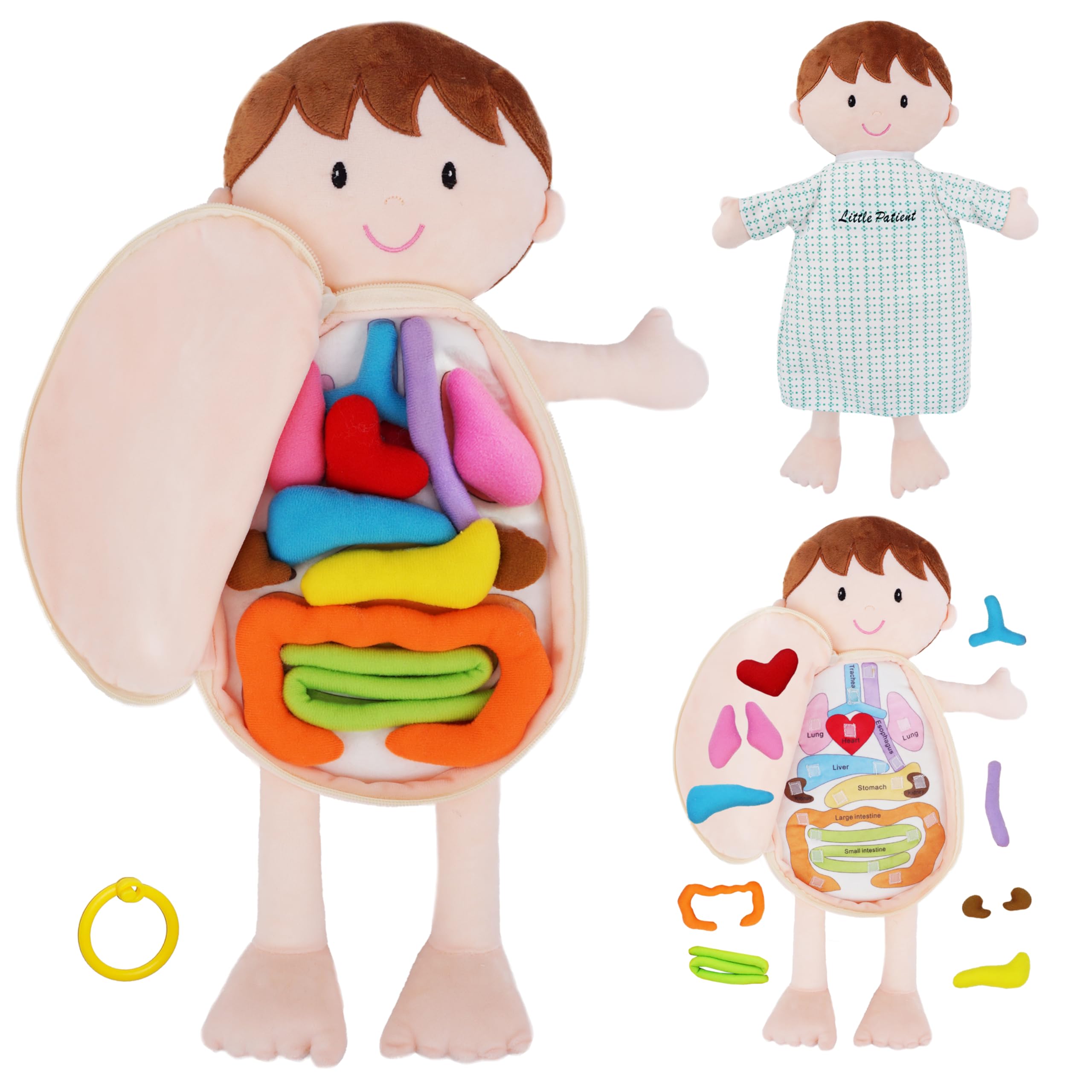
Little Patient Lucas takes the plush anatomy concept and builds a full fine-motor workout around it. The doll features a zipper on his belly, a removable hospital gown with buttons and snaps, and nine soft organs that tuck into place. Each fastener — the zipper, the buttons, the Velcro organ patches — targets a different dexterity skill, making this as much an occupational therapy tool as an anatomy lesson.
The organs are vividly colored and generously sized for tiny hands, and the doll’s embroidered face and soft fabric make it instantly huggable. At 18 by 13 inches, Lucas is nearly identical in size to the KAKIBLIN doll but includes a hospital gown that adds a medical-play dimension. Parents of two-year-olds report that the doll holds up well to daily carrying, chewing attempts, and repeated trips through the washing machine (surface wash only, as the organs are removable).
The one design quirk worth noting is that the belly zipper is permanently joined at the bottom, which prevents children from practicing aligning the two zipper halves — a common developmental milestone for three-year-olds. For children who have already mastered zipping, this is irrelevant. For those still learning, it is a missed opportunity. Despite this, the combination of organ recognition, dressing practice, and emotional comfort makes Lucas a standout choice for the youngest learners.
Why it’s great
- Multiple fastener types (zipper, buttons, snaps, Velcro) build fine motor skills alongside anatomy knowledge
- Soft, embroidered plush design is huggable and safe for children as young as 2 years old
- Hospital gown adds imaginative medical-play value that extends beyond organ identification
Good to know
- Belly zipper is permanently joined at the bottom, preventing practice of aligning zipper halves
- 9-organ set is limited compared to PVC models, offering less anatomical depth for older children
- Surface clean only — the doll cannot be fully submerged or machine washed
FAQ
What age is appropriate for a PVC anatomy doll with 15 removable parts?
Can plush anatomy dolls be washed if they get dirty?
Final Thoughts: The Verdict
For most users, the best anatomy jane doll winner is the Science Can Human Body Model because its interactive talking base with explanation and quiz modes transforms passive disassembly into active learning, and the included 26-page guidebook provides structured lessons that no silent model can match. If you want a premium display piece with museum-grade build quality, grab the EVOTECH SCIENTIFIC 11″ Model with its oak-wooden base and hand-painted precision. And for a young child aged 2 to 4 who needs safe, soft exploration of basic anatomy, nothing beats the June Garden Little Patient Lucas Plush Doll, which combines organ recognition with fine motor skill development in a huggable package.