
Our readers keep the lights on and my morning glass full of iced black tea. As an Amazon Associate, I earn from qualifying purchases.
Specs are compiled from manufacturer listings and verified buyer reviews and can change over time — please confirm the key details on the product page before buying.
When your engine idles rough, guzzles fuel, or throws a check-engine light, a failing air charge temperature sensor is often the quiet culprit. This small probe tells your engine’s computer how hot or cold the incoming air is, so it can mix the right amount of fuel. Replace it yourself in minutes and skip the shop diagnostic fee entirely.
I’m Min — the founder and writer behind Gadgets Feed. This guide is built by comparing the manufacturers’ published specifications and the patterns across verified customer reviews, so you get each pick’s real strengths and trade-offs instead of marketing spin.
Because we matched every sensor’s mounting style and electrical output to real vehicle fitment data, you can trust this list of the air charge temperature sensor options to point you to the exact part your engine bay needs.
Our Picks at a Glance


How To Choose The Best Air Charge Temperature Sensor
Before you buy, you need to match three things: the part number your car expects, how the sensor physically mounts, and whether the electrical connector lines up. Get those right and the swap is a ten-minute job with basic hand tools.
Match the Part Number, Not Just the Brand
Every vehicle has a specific OE part number engraved on the original sensor. Cross-reference that number against the replacement’s listing — for example, the AcornTech and HiSport sensors both replace Chrysler’s 5149182AB. Also verify the connector plug style, since Chrysler, Ford, and GM each use different shapes.
Flange Mount vs. Threaded Mount
Most intake sensors in this class use a flange mount, which means they bolt or clip flat against the intake tube. The Standard Motor Products AX3T, however, is a threaded mounting style, which is a critical difference if your intake has a press-fit rubber seal instead. Confirm which type your engine bay has before ordering.
Check the Temperature Rating
An intake sensor sits right in the engine’s airflow, so it must survive under-hood heat. The AcornTech sensor is rated up to 250 °F, which covers normal engine bay conditions. If you run forced induction or a heavily modified setup, verify the rating matches your heat load.
Quick Comparison
| Model | Best For | Mounting Type | Output Type | Material | Amazon |
|---|---|---|---|---|---|
| ACDelco Gold 213-4663★ Best Overall | Universal GM LS swaps | Flange Mount | Digital | Aluminum | Amazon |
| Standard Motor AX3TFord Classic Fit | Classic Ford trucks | Flange (threaded) | Analog | Metal | Amazon |
| AcornTech IAT | Chrysler/Dodge/Ram family | Flange Mount | Electrical signal | Metal | Amazon |
| Standard Motor AX49T | 90s Jeep & Dodge Magnum | Flange Mount | Push-Pull | Plastic, Stainless Steel | Amazon |
| HiSport IAT 5149182AA | Mopar daily drivers | Flange Mount | Analog | Metal or hi-temp plastic | Amazon |
| Mopar 05149279AC | Dodge Challenger/Charger | Flange Mount | — | — | Amazon |
| Genuine Chrysler 5149279AC | Ram & Renegade owners | Flange Mount | Electrical signal | Ceramic, Metal | Amazon |
In‑Depth Reviews
1. ACDelco Gold 213-4663 Intake Manifold Temperature Sensor
Our pick — over 4.5★ from 550+ verified ratings; the strongest balance of quality and price.
The aluminum-bodied swap that fixes idling and reads every metric correctly.
This ACDelco Gold unit is the crowd favorite for a reason: it is built to meet factory fit, form, and function, and its aluminum housing shrugs off engine-bay heat. Buyers report it resolved rough-idle problems on a 2002 Buick Park Avenue, with one noting “Fit perfectly, all the metric read correct” after an LS swap.
Installation is genuinely beginner-friendly — buyers mention no tools are required, and the flange mount seats with a firm push. Its digital output sends a clean signal to the ECU, which is why the same part works across GM engines from a Park Avenue to a swapped LS. Owners consistently single out build quality and clean signal output as the top strengths.
At 4.3 x 2.4 x 2.2 inches, it takes up a touch more room than the compact Standard Motor AX3T (1.5 x 1.16 x 2.88 inches), but that larger body houses the sturdy aluminum construction buyers trust. It is the best all-around pick for anyone wanting a dependable, no-surprises replacement.
gold-standard fit
- Premium ACDelco build quality in a durable aluminum housing.
- Digital signal output reads cleanly on modern ECUs.
- Tool-free installation that takes minutes, not hours.
premium price tag
- Larger body may not fit tight stock intake shrouds.
- GM-specific connector won’t mate with Chrysler or Ford harnesses.
trusted OEM: you drive a GM product or plan an LS swap and want a known, quality part.
budget builds: your intake has a rubber press-fit seal instead of a flange bolt pattern.
2. Standard Motor Products AX3T Air Charge Temperature Sensor
The 1.6 oz metal sensor that keeps 90s Ford trucks idling smooth.
If you own a classic Ford, this sensor solves rough idle and poor running. Owners mention it “works as intended” on a 1990 Mustang 5.0 and fits perfectly on a 1993 Ford Ranger 2.3, while a 1992 F-150 5.8 owner says it made his idle “so much better.” The metal body weighs just 1.6 ounces, so it tucks into the intake without adding bulk.
Like the ACDelco above, it uses a flange mount, but the AX3T’s analog output suits the older engine computers found in these trucks. Buyers highlight its reliable signal and low price as the main selling points. It arrives made in the United States, which reassures buyers who want a quality part.
Here is the honest catch: it is a threaded mounting style, not a rubber-seal press fit. One owner of a 94 F-150 found it would not seat because his truck uses a forced-pressure rubber installation. If your intake has that style, this sensor won’t work without modification.
budget-friendly pick: the go-to pick for 1990-1993 Ford trucks and Mustangs, provided your intake uses a threaded socket.
3. AcornTech Intake Air Temperature Sensor (5149182AB)

The flange-mounted fix that cleared a Jeep’s engine code and saved the diagnostic fee.
This AcornTech sensor replaces OE part numbers 5149182AB, 5149182AA, and AX243, and it lists fitment across the whole Chrysler-Dodge-Ram family. It reads incoming air temperature so the ECU can trim fuel delivery and spark timing for clean combustion.
The real-world win comes from a buyer who fixed a Jeep engine code and a fan issue with a simple install, saving a diagnostic fee. The sensor’s upper temperature rating of 250 °F means it handles normal under-hood heat without drama. Owners most often praise the sensor’s build quality.
The honest note: reliability draws mixed feedback. Some owners say it works great while others report it won’t work at all, so this is a budget-conscious gamble compared to the OEM Mopar options below. If you want zero doubt, the genuine parts are safer.
off-road ready: you want a cheap fix for a Chrysler, Dodge, or Ram and are comfortable double-checking fitment.
street cars: you prefer the reliability of a genuine OEM sensor for daily-driver duty.
4. Standard Motor Products AX49T Air Charge Sensor

The ±1.5% accurate sensor that cleared up lagging acceleration on 90s Jeeps.
This Standard Motor sensor is a proven fix for the 4.0 Jeep inline-six and the 5.2L and 5.9L Dodge Magnum engines. Customers note it communicates with the PCM “as flawless as the stock sensor” on a 1997 Dakota, and one owner says it “cleared up my lagging acceleration” on a Jeep. The connector fits properly, like OE.
Its push-pull output and ±1.5% measurement accuracy mean precise temperature data reaches the engine computer. The plastic and stainless steel construction keeps it light at 22.68 g, so it won’t stress the intake mounting. One owner notes it “still fully functioning” a year and a half after installation.
The fit note: one Jeep YJ Wrangler owner had to adapt it to fit, so a universal part sometimes needs minor tweaks. For preventive replacement near 200k miles, buyers call it an inexpensive, good-value choice. The recurring reminder is to also replace the second air temp sender in the radiator support on Chrysler products.
reliable performer: a reliable, accurate sensor for 90s Jeep and Dodge Magnum owners who want a stock-like feel at a sensible price.
5. HiSport Intake Air Temperature Sensor IAT 5149182AA

The high-precision thermistor sensor with a thick gasket that holds stable in Mopar intakes.
This HiSport sensor matches the 5149182AA and 5149182AB OE numbers for Chrysler, Dodge, Jeep, and Ram models, down to a 2025 Gladiator. Its thermistor senses temperature rise and fall, and the ECU reads that through voltage changes to adjust the cold and warm air ratio. The ±1.5% measurement accuracy keeps the data honest.
Fit is the standout feature here. Reviewers point out the gasket is “thick enough to hold the sensor stable and not be a loose fit,” so it stays put. One reviewer noted no issues after a 1200-mile trip, and another confirmed it works perfectly on a 2014 Grand Caravan. It runs on a standard 12-volt DC supply, matching your vehicle’s harness.
Installation is straightforward, but owners share one tip: if the check engine light comes on after the swap, drive for a while and let the system cycle through several on-off cycles before the code clears. It is not a defect—just the ECU (engine control unit) re-learning the new sensor.
tuner favorite: Mopar owners who want an affordable, accurate sensor with a stable, rattle-free fit.
long hauls: your intake needs a threaded seat — this is strictly a flange mount.
6. Mopar 05149279AC SENSOR CHARGE AIR TEMP

The genuine Mopar sensor that matched a Challenger R/T exactly, down to the part number.
This is the real factory part, and buyers keep confirming the fit. One owner notes it is advertised as not fitting a 2016 Dodge Challenger R/T, but it is “in fact, an exact fit. Same part number.” Another broke the tabs on their old sensor and found the dealership wanted over, while this exact Mopar part cost half that.
As a genuine OEM component, it is manufactured to meet factory specifications for fit, form, and function. The flange mount matches the stock location on the intake tube, and it works on a 2019 Dodge Charger R/T without issue. For owners who want zero guesswork, this is the safest bet.
One buyer did ask how to remove the old sensor, noting “there’s a trick to this one.” A gentle twist while pulling usually frees the locking tabs, and a flathead screwdriver helps release the clip. It is a minor learning curve, not a flaw in the part.
OEM purist: you want the exact factory sensor for a Challenger, Charger, or other modern Mopar without aftermarket doubt.
DIY swaps: the lower review count means fewer real-world install stories, but the ones present are all positive.
7. Genuine Chrysler 5149279AC Air Charge Temperature Sensor
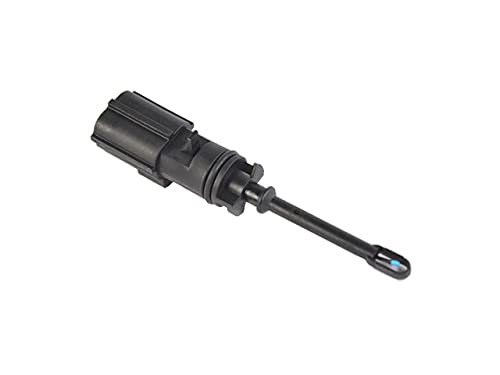
The ceramic-and-metal OEM sensor that cleared a Jeep Renegade’s P0112 code in five minutes.
This is the genuine Chrysler factory part with the 5149279AC part number, and it is a direct fit for the vehicles that use it. A 2017 Ram 1500 5.7 owner confirms it “exactly matched what came out” of the truck, and a 2016 Jeep Renegade owner cleared their P0112 error code with a swap under five minutes.
The ceramic and metal build feels solid in hand, and the electrical signal output communicates cleanly to the ECU (engine control unit). As an OEM (original equipment manufacturer) part, it matches factory calibration exactly—no guesswork. A Dodge Charger R/T 2022 owner confirms it works perfectly after an intake swap.
The trade-off is straightforward: genuine OEM parts typically cost more than aftermarket alternatives. But buyers consistently call it worth it, noting “OEM parts are the best and the price was good.” If you want maximum confidence and a guaranteed match, this is the one.
Mopar loyalist: your Ram, Charger, or Renegade needs a factory-exact sensor and you don’t want to gamble on aftermarket fitment.
aftermarket fans: the premium price compared to the value-oriented AcornTech option, with fewer reviews to draw on.
Understanding the Specs
Output Type: Digital vs. Analog
Your car’s ECU reads temperature as either a digital on/off signal or an analog voltage that rises and falls with heat. Modern GM engines (like the ACDelco above) prefer digital for cleaner data, while older Ford and Chrysler computers use analog. Match the output to your ECU or the signal will be unreadable.
Measurement Accuracy ±1.5%
This spec, found on the AX49T and HiSport sensors, tells you how close the reading is to the true air temperature. A ±1.5% tolerance keeps the ECU’s fuel-trim calculations precise, protecting idle stability and mileage.
FAQ
How do I know if my air charge temperature sensor is failing?
Will a sensor with a different part number still fit my car?
What is the difference between a flange mount and a threaded mount?
Is a digital output sensor better than an analog one?
How long does an air charge temperature sensor last?
Can I install the sensor myself without special tools?
Will this sensor fix my check engine light immediately?
What does the temperature rating of 250 °F mean for my engine?
Final Thoughts: The Verdict
The champion of the air charge temperature sensor category is the ACDelco Gold 213-4663 because its digital output, aluminum build, and tool-free install make it the most dependable universal choice. If you drive a classic Ford truck, the Standard Motor AX3T is the proven fix. And for Mopar owners who want zero fitment doubt, the Genuine Chrysler 5149279AC is a factory-exact match worth the premium.
How We Picked
We do not accept paid placement. Every pick is matched to a real buyer and a real use-case; we do not hands-on test units.
Sources & Methodology
Specifications: manufacturer listings and product documentation. Review insights: verified customer reviews, as of August 2026. Pricing: not shown on this page (it changes often); check the current price via the retailer link.
As an Amazon Associate, Gadgets Feed earns from qualifying purchases. This does not affect which products we feature.