
Our readers keep the lights on and my morning glass full of iced black tea. As an Amazon Associate, I earn from qualifying purchases.
Specs are compiled from manufacturer listings and verified buyer reviews and can change over time — please confirm the key details on the product page before buying.
Base ten blocks make abstract place value concepts tangible for children. Place value, regrouping, and borrowing all become real when a kid can snap ten ones into a rod. The challenge is choosing a set that is durable, complete, and easy to organize.
I’m Min — the founder and writer behind Gadgets Feed. This guide is built by comparing the manufacturers’ published specifications and the patterns across verified customer reviews, so you get each pick’s real strengths and trade-offs instead of marketing spin.
Whether you’re a homeschool parent or a classroom teacher, the right base ten manipulatives make abstract math concepts tangible and genuinely fun for young learners.
Our Picks at a Glance

How To Choose The Best Base Ten Manipulatives
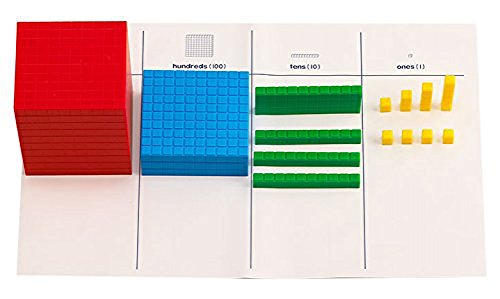
Base ten blocks are a physical model of our number system. You get units that stand for ones, rods for tens, flats for hundreds, and a cube for thousands. When the pieces are proportional, a child can see that ten ones truly equal one ten, which builds number sense through touch.
Decide between interlocking and plain blocks
Interlocking blocks snap together like building bricks. This makes it easy to show regrouping by physically connecting ten units into a rod. Plain, non-interlocking pieces are smoother and often cheaper, but you lose that satisfying click that helps some children grasp the concept of joining values.
Check the piece count and what it includes
Most starter sets include around 121 to 131 pieces, usually one thousand cube, ten hundred flats, a mix of ten rods, and one hundred units. A higher piece count means you can model larger numbers and more complex equations without running out of parts.
Look at material and storage
Plastic blocks are durable and easy to clean, making them ideal for classrooms and active kids. Foam blocks are lighter and quieter, but they can be chewed or dented. A good storage box or tote is a real convenience, as these sets come with many small parts.
Quick Comparison
| Model | Best For | Piece Count | Material | Interlocking | Amazon |
|---|---|---|---|---|---|
| Simply magic 131 PCS★ Best Overall | Color-coded learning | 131 | Plastic | No | Amazon |
| Didax Interlocking 121Top Performer | Snap-together teaching | 121 | Plastic | Yes | Amazon |
| hand2mind Take Home KitMost Versatile | Multi-tool homeschool | 292 | Mixed | Some | Amazon |
| TOMMYHOME Plastic Set | Budget classroom set | 131 | Plastic | No | Amazon |
| XYGROOW 133 PCS | Hands-on subtraction | 133 | Plastic | No | Amazon |
| Doloowee 121 PC Set | Value with storage | 121 | Plastic | No | Amazon |
| Torlam 131 PCS | Visual learners | 131 | Plastic | No | Amazon |
| Didax Starter Kit | Classic classroom staple | 121 | Plastic | No | Amazon |
| Learning Resources Set | Activity book included | 141 | Plastic | No | Amazon |
In‑Depth Reviews
1. Simply magic 131 PCS Base Ten Blocks
Our pick — over 4.5★ from 950+ verified ratings; the strongest balance of quality and price.
The color-coded classroom favorite that makes place value click for young minds.
This set is designed by teachers, which shows in how the colors line up with each place value. The 131 pieces include 1 cube thousand, 10 flats hundreds, 20 rods tens, and 100 units ones, so you can model numbers up to the thousands. Buyers report these are great value math blocks for homeschoolers, noting they’re color-coded by value, sturdy, and well-packaged.
Owners praise the set most for its teaching value, with quality a close second. Kids often play math games independently with these, which is a win for parents overseeing lessons. The plastic meets ASTM and CPSIA safety standards for children’s use.
Reviewers also highlight the accurate sizing, where 10 ones fit perfectly on a ten rod, which is crucial for visual learners. The set even comes with a PDF full of math games. The reusable box and individual bags keep everything organized between lessons, which parents appreciate after a long school day.
Why kids engage
- Color coding makes values instantly recognizable
- Accurate proportions reinforce the base ten concept
- Includes 100 ones for extensive counting practice
Before you buy
- Blocks do not interlock, so regrouping needs a mat or flat surface
- Plastic pieces can be lost if the box is not closed properly
Best for: Homeschool families and classrooms wanting a color-coded, teacher-designed set that keeps kids engaged.
Consider instead if: you specifically need blocks that snap together to physically demonstrate regrouping.
2. Didax Interlocking Base Ten Blocks
The snap-together set that proves the base ten system with every satisfying click.
This 121-piece set is built for hands-on learning where pieces click together like LEGOs. Students can physically snap ten units into a rod, which makes the concept of regrouping tangible for young learners. The durable plastic is safe for young kids, as it cannot be bitten off, which is a practical concern for early elementary classrooms.
Owners praise the set’s quality most, with interlocking ability a close second. The pieces click together easily and work well for their intended purpose, helping visualize the progression from ones to tens to hundreds. “Shipped on time and in good packaging” reflects the reliable experience owners mention.
One note for families: the tens units do not break apart into ones, so showing certain concepts requires using the separate unit pieces. The different colors help separate values, though some buyers wish there were more yellow rods included. The box keeps everything stored neatly between uses.
Snap advantage: The interlocking design is the standout feature here, making it easier for children to see and feel the base ten system in action.
Good to weigh: Tens rods cannot separate into ones, which some teachers find limiting for certain demonstrations.
3. hand2mind Take Home Math Manipulatives Kit
A full math toolbox that goes far beyond basic base ten blocks.
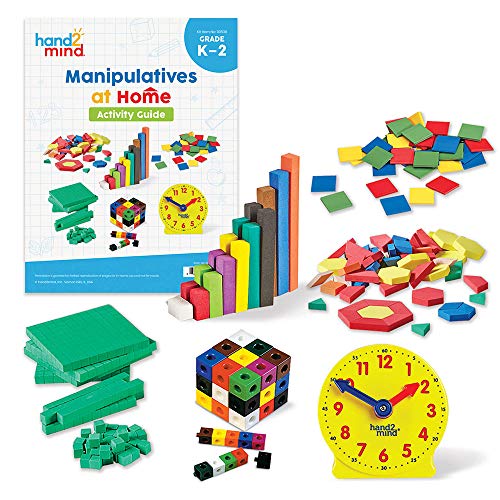
This kit is the answer for homeschool parents who want everything in one box instead of shopping for each manipulative separately. With 292 pieces, it packs in 100 snap cubes, foam base ten units, rods and flats, plus pattern blocks, color tiles, and a learning clock. That is 292 pieces versus the 121-piece Didax set.
The snap cubes are the crowd favorite, but every piece in the set earns its place in lessons. One buyer notes this is their second purchase because the first set was so loved the pieces got lost from heavy use. The included clock is a standout for teaching time, which is a skill that pairs naturally with math practice.
Teachers have recommended this specific kit for students with learning disabilities, finding it perfect for daily use. The foam base ten pieces are lighter than plastic, which some children find easier to handle. A buyer even bought this for a college education course, noting it was cheaper than renting a comparable set.
All-in-one value
- Includes 6 different manipulative types in one purchase
- 10 flats and 20 rods for modeling larger numbers
- Learning clock adds time-telling practice
Things to know
- Foam base ten pieces are softer than solid plastic
- You get fewer dedicated base ten pieces than a full set
Reach for this if: you want one comprehensive homeschool kit covering multiple math skills, not just place value.
Look elsewhere if: you need a deep supply of base ten pieces specifically for constant regrouping practice.
4. TOMMYHOME Plastic Base Ten Blocks Set

A solid, budget-friendly set sized perfectly for small hands and busy classrooms.
This set includes 1 cube, 10 flats, 20 rods, and 100 units, all packed in a neat storage box. The size is just right for little hands, making it easy for kindergarteners to manipulate the pieces during lessons. Parents report their kids spend hours playing with them, which is a good sign for engagement.
Educational value is the top praise here, with quality close behind. The different colors help students understand numerical values at a glance, which supports place value and number concept lessons. The plastic is stronger than foam cubes, so it holds up to building towers and shapes during free play.
A few customers note the tens blocks are only three-sided, which is a minor texture quirk when laying them flat. One owner wished the sides were consistent on all four sides for quicker handling. The set supports up to 6 players, making it practical for small group work in a classroom rotation.
Classroom ready: With 6-player support and a durable storage box, this set fits small group math centers well.
Minor quirk: The three-sided tens blocks take a moment to get used to, but they do not affect learning.
5. XYGROOW Base Ten Blocks with Place Value Chart

The set that turned subtraction borrowing from a frustration into a lightbulb moment.
What makes this set special is the complimentary erasable mat, which you can write on repeatedly with whiteboard markers. This turns the base ten blocks into a complete lesson station, where kids can draw numbers and physically move pieces to solve problems. The 133 pieces include the standard cube, flats, rods, and units, all stored in a small bin.
Classroom use and quality tie as the top praise from owners. Children who struggle with abstract concepts like borrowing in subtraction finally see the process by physically moving pieces between the tens and hundreds positions. One kindergarten parent captures the magic: their child exclaimed, “I get it now!” after using the blocks to grasp place value.
The durability story is mixed, with some buyers noting cracked plastic containers arriving. The tens sticks and hundreds flats are hollow in the back, which is a minor aesthetic point but does not affect function. The set is lightweight and easy to clean, built for long-term use.
Lightbulb moments: The write-and-wipe mat combined with blocks creates a powerful visual lesson for place value and borrowing.
Handle with care: The storage bin has been the weak point for some buyers, though the blocks themselves hold up well.
6. Doloowee Base Ten Blocks Set

A teacher-designed 121-piece set with an improved storage box that keeps every piece in place.
This set mirrors the popular Simply Magic design but adds an upgraded storage box that parents love. The 121 pieces include 1 cube for thousands, 10 flats for hundreds, 10 rods for tens, and 100 units for ones. Designed by teachers, it focuses on making base ten concepts and place value click through vibrant, color-differentiated blocks.
Quality is the top praise, with educational value a close second. Buyers describe the blocks as exactly as advertised, with correct volumes and counts for math lessons. The plastic is hard, not soft, which makes it durable for daily homeschool use. One buyer notes the pieces are very durable, though the container itself can arrive cracked in transit.
The blocks meet ASTM and CPSIA safety standards for children. The storage box makes it easy to pack away toys between lessons, which parents appreciate. One lighthearted review notes their son prefers playing with the blocks over using them as a learning tool — a good sign for engagement, even if lessons take a back seat.
Built to last
- Hard plastic holds up to daily use and building play
- Improved storage box keeps pieces organized
- Safety certified for children’s use
Watch for
- Container durability in shipping has been inconsistent
- Blocks do not interlock for regrouping demonstrations
Best for: Parents wanting a durable, teacher-designed set with excellent organization for home lessons.
Choose another if: you need interlocking pieces or have concerns about shipping damage to the box.
7. Torlam 131 PCS Base Ten Blocks

The complete kit with a bonus write-and-wipe mat that turns counting into a game.
This kit includes 1 write & wipe mat, 100 unit cubes, twenty 10-unit rods, ten 100-unit flats, and one 1,000-unit cube, plus a write & wipe pen. The four-color design lets kids visually represent ones, tens, hundreds, and thousands, and even build and solve equations. The mat guides lessons, making it a complete package right from the start.
Educational value is the top praise by a wide margin, with quality close behind. The blocks are perfect for visual and kinesthetic learners, offering durable, hands-on practice that makes counting fun. The plastic is easy to clean and compact, designed for long-term use without breaking.
The dry erase feature receives mixed feedback — some love the mat, while others find the pen or surface less impressive. The set works for addition, subtraction, multiplication, and division, making it useful across multiple grade levels. The compact pieces are lightweight and easy to store or carry between home and classroom.
Complete package
- Bonus write-and-wipe mat and pen included
- Four colors make place values instantly clear
- Supports all four basic operations
Consider
- Dry erase components get mixed reviews
- Blocks do not snap together
Reach for this if: you want a complete kit with a guided mat for visual learners who thrive on structured practice.
Pick another if: you value interlocking blocks over the bonus mat.
8. Didax Educational Resources Base Ten Plastic Starter Kit
A durable classic that survives years of use and still looks brand new.
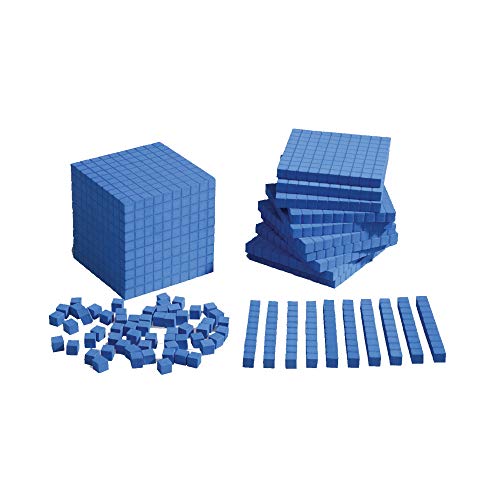
This starter kit includes 100 unit cubes, 10 ten rods, 10 hundred flats, and 1 thousand block, all in a classic single color. It is a popular manipulative for teaching place value and understanding the decimal system. Made in the United States, it carries a level of quality control that parents and teachers trust.
Quality is what owners praise most, with educational value close behind. One homeschool parent reports the blocks are still in like-new condition two school years after purchase, which speaks to the durability. The blocks are the same color throughout, which does not bother most students and keeps the focus on size and proportion.
Beyond math, kids build towers, mazes, and obstacles with the pieces, turning learning into play. The durability story is mixed on arrival, with some units coming cracked at the seams, though replacements resolve the issue. At 16 ounces, it is light enough to carry between home and classroom.
Built for years: The single-color design and sturdy plastic make this a long-lasting classroom staple.
Note: Some units have arrived with cracks at the seams, so check pieces on arrival.
9. Learning Resources Base Ten Starter Set

The set that includes an activity book to guide lessons for grades 3 through 6.
This set goes beyond the standard pieces by including a Base Ten book with 36 activities for 3rd through 6th graders. The 141 pieces include 100 counting cubes for ones, 30 rods for tens, 10 flats for hundreds, and one large block for thousands. The included activity book turns the blocks into a structured curriculum, not just a toy.
Educational value is the top praise, with value for money close behind. Parents find it perfect for teaching first graders and older students alike, covering place value, estimation, operations, and even fraction concepts. The blocks are hard plastic with non-interlocking pieces, and the proportional sizing helps children visualize how 1000 compares to 100 and 10.
The single 1000s cube is the common limitation, as it restricts modeling numbers above 2000. Some reviewers point out the cube is not weighted to match 1000 units, though this rarely bothers children. The sturdy box holds all pieces plus a couple of extras, and the customer service has been praised for sending replacements when pieces go missing.
Structured learning
- Includes 36-activity book for guided lessons
- 30 rods give extra capacity for tens
- Proportional sizes aid visual understanding
Limitations
- Only one 1000s cube included
- 1000s cube feels lighter than expected
Best for: Families wanting a structured learning set with an activity book to guide lessons for older elementary grades.
Another option if: you need multiple 1000s cubes for modeling numbers up to 5000 or beyond.
Understanding the Specs
Piece Count and Composition
The piece count tells you how many parts are in the set, but the composition matters more. A standard set includes 1 cube for thousands, 10 flats for hundreds, 20 rods for tens, and 100 units for ones. More rods and units mean you can model larger numbers and more complex equations without running out of pieces mid-lesson.
Interlocking vs. Non-Interlocking
Interlocking blocks snap together, letting children physically join ten ones into a rod. This makes regrouping and borrowing concepts tangible. Non-interlocking blocks are smoother and often cheaper, but you lose the satisfying click that helps some learners understand the base ten system through touch.
FAQ
What is the difference between interlocking and non-interlocking base ten blocks?
How many pieces do I need to teach place value effectively?
Are plastic or foam base ten blocks better for young children?
Can base ten blocks be used for subjects other than place value?
What ages are base ten blocks designed for?
How do I store base ten blocks to avoid losing pieces?
What is the difference between a 121-piece and a 131-piece set?
Are base ten blocks safe for children to use?
Can base ten blocks help with homework from school?
How do I know which set is right for my child’s grade level?
Final Thoughts: The Verdict
For the majority of shoppers, the base ten manipulatives winner is the Simply magic 131 PCS set because its teacher-designed, color-coded pieces earn the strongest owner loyalty while keeping kids engaged independently. If you want snap-together blocks that make regrouping tactile, grab the Didax Interlocking set. And for a complete homeschool toolkit covering multiple math skills, the hand2mind Take Home Kit is the one to reach for.
How We Picked
We do not accept paid placement. Every pick is matched to a real buyer and a real use-case; we do not hands-on test units.
Sources & Methodology
Specifications: manufacturer listings and product documentation. Review insights: verified customer reviews, as of August 2026. Pricing: not shown on this page (it changes often); check the current price via the retailer link.
As an Amazon Associate, Gadgets Feed earns from qualifying purchases. This does not affect which products we feature.