
Our readers keep the lights on and my morning glass full of iced black tea. As an Amazon Associate, I earn from qualifying purchases.
Specs are compiled from manufacturer listings and verified buyer reviews and can change over time — please confirm the key details on the product page before buying.
Applying water-based polyurethane is where most DIY finishes go wrong. You lay down a beautiful coat, it dries, and suddenly you see bristle hairs, streaks, and bubbles frozen in the film. That happens because you grabbed a brush with natural bristles or one that sheds, and water-based finish snags on it. Here is how to pick a brush that lays down polyurethane, varnish, or a water-based finish glass-smooth without shedding a single hair.
I’m Min — the founder and writer behind Gadgets Feed. This guide is built by comparing the manufacturers’ published specifications and the patterns across verified customer reviews, so you get each pick’s real strengths and trade-offs instead of marketing spin.
This list uses human-like matching to find the best brush for polyurethane water-based, so not every pick is the exact number searched; the nearest same-type size serves the same purpose. We cover nine brushes that keep their bristles in place and dry to a level coat.
Our Picks at a Glance


How To Choose The Best Brush For Polyurethane Water-Based
The single most important rule: never use a natural-bristle brush with water-based poly. Water swells natural hair, making it go limp and mushy mid-stroke. You want nylon, polyester, or foam — synthetics that keep their shape when wet.
The Bristle Blend Decides the Level
A flagged bristle tip is split like a split end on hair, and that split surface grabs finish and lays it down flat, which is what erases visible brush marks. A brush with flat-cut or square tips leaves a track line with every pass. For polyurethane, look for the word flagged or a nylon-and-polyester blend.
Foam Is the Pressure-free Options
Foam applies finish with zero stroke texture because it has no bristle lines at all. It presses finish onto the surface without dragging, so it never leaves a mark. Foam brushes are also disposable, which means fast cleanup; you can toss them after a job or rinse and reuse them for the next one.
Firmness Controls Your Glide
A firmer brush carries more finish per dip and spreads it without you pressing hard. That matters because pressing hard with polyurethane pushes the finish around and creates bubbles. A medium-firm synthetic brush gives enough flex to flow around corners without excessive pressure from your hand.
Quick Comparison
| Model | Best For | Bristle Type | Width | Pack Size | Amazon |
|---|---|---|---|---|---|
| Wooster Shortcut★ Best Overall | Cutting in and trim work | Synthetic blend | 2 inch | Pack of 3 | Amazon |
| Minwax PolycrylicFinish Pro | Clear wood finishes | Nylon/polyester | 2 inch | Single | Amazon |
| Pro Grade FoamDisposable Pick | Disposable touch-ups | Foam | 1 inch | 48 Piece | Amazon |
| Purdy Nylox Dale | Flawless flat surfaces | 100% nylon | 2 inch | Single | Amazon |
| Wooster Firm Varnish | Medium-weight coatings | Nylon/polyester | 2 inch | Single | Amazon |
| Peachtree Foam | Stain and varnish jobs | Foam | 2 inch | 24 Pack | Amazon |
| Country Chic Paint | Furniture refinishing | Synthetic angled | 2 inch | Single | Amazon |
| Tosnail Foam | One-use bulk projects | Foam | 2 inch | 96 Pack | Amazon |
| Jen Poly Foam | Polyurethane application | Foam | 2 inch | 48 Pack | Amazon |
In-Depth Reviews
1. Wooster Brush Q3211-2 Shortcut Angle Sash Paintbrush
Our pick — over 4.5★ from 800+ verified ratings; the strongest balance of quality and price.
The angled trim specialist that cuts clean lines without shedding a single hair.
The defining trait here is the 2-inch angled sash profile, which slants the bristles to make cutting in around windows, molding, and cabinet edges almost automatic. That angle lets you lay polyurethane exactly where you want it without dragging the whole brush body against the surface. Weighing just 2.4 ounces versus the Pro Grade foam set at 8.8 ounces, it keeps an afternoon of trim work comfortable.
Buyers report the brush laid down a thick layer with little to no stroke marks, and one even pushed it through three rounds of painting after washing with no shedding or bending of the hairs. The flexible purple Shergrip handle is the comfort story — it adds grip and reduces hand cramping during long sessions, which is a real win when you are holding a brush at odd angles over a workbench or door frame.
What wins people over most is the outright quality, with versatility a close second — owners use it for walls, furniture, and even canvas with acrylics. The synthetic blend works with all paints and water-based stains, so it is not a one-job brush. The only mixed note is bristle shedding, which shows up for a small group, while the vast majority report hairs staying put.
What Owners Love
- Angle sash cuts in easily around trim
- Short handle reduces hand fatigue
- Reusable across many projects after washing
Watch Out For
- A few report occasional bristle shedding
- Short handle may feel odd for big flat walls
Reach for it if: you spend most of your time cutting in around trim, cabinets, and moldings where an angled brush earns its keep.
Look elsewhere if: you only coat large flat tabletops — a wider or foam brush covers more surface per pass.
2. Minwax 427320008 Polycrylic Wood Stain Brush
The purpose-built brush for clear finishes that stay silky coat after coat.
This is the rare brush engineered for exactly what its name says: water-based stains and finishes like Minwax’s own Polycrylic. The 2-inch flagged nylon-and-polyester blend is tuned soft, which is precisely what you want when laying down a clear coat where any ridge would glare back at you. The stainless steel ferrule and natural hardwood handle give it a premium balance that reads as a tool, not a throwaway.
Owners mention it performed perfectly with Polycrylic, cleaned up well, and kept its stiffness and softness even after multiple washes. The flagged tips are the reason — those split bristle ends catch the finish and level it out so you do not see stroke tracks in the dried film. Buyers also reach for it on sealer work like deck spindles, coming back clean job after job.
The trade-offs are honest ones. A handful of owners found the bristles shedding during use, and some saw bubbles in the finish — though both complaints sit against a strong quality reputation that is the most-praised aspect overall. It is built for quart-size cans and wants a gentle hand; overworking the finish is what creates the bubbles, not the brush itself.
Perfect match: if your project is built around Minwax Polycrylic or similar water-based clears, this brush is the zero-guess companion.
The catch: it asks for patience — smooth it with long, even strokes rather than scrubbing back and forth.
3. Pro Grade Foam Brushes 1 Inch 48 Piece Set
The 48-pack workhorse for stain and urethane jobs you want to toss when done.
The 1-inch width is on the narrow side, which makes it ideal for touch-ups, crafts, trim, and moldings — anywhere a full-size brush is overkill. Customers note these handle wood stain, urethane, and both thick and thin paints without the heads ever detaching, even after a dozen uses.
Foam is the whole point for polyurethane because it physically has no bristle lines, so it cannot leave stroke marks. The dense poly foam holds finish and releases it evenly, and because each brush is disposable, cleanup is just tossing the head. The sharp edge is what owners call out — it stays rigid enough to cut a clean line against a cabinet face.
The value story is the most-praised aspect, since the per-brush cost is tiny, with versatility a close second. That said, durability gets mixed reactions: these are meant as disposable tools, so expecting them to survive a full kitchen cabinet set is not the point. The foam quality itself earns praise as denser than most bargain packs.
Best for: pop-up projects and multi-coat poly jobs where you want a fresh applicator every time without scrubbing bristles.
Not for: big flat surfaces where a 1-inch head means endless passes.
4. Purdy Nylox Dale Paint Brush 2 Inch
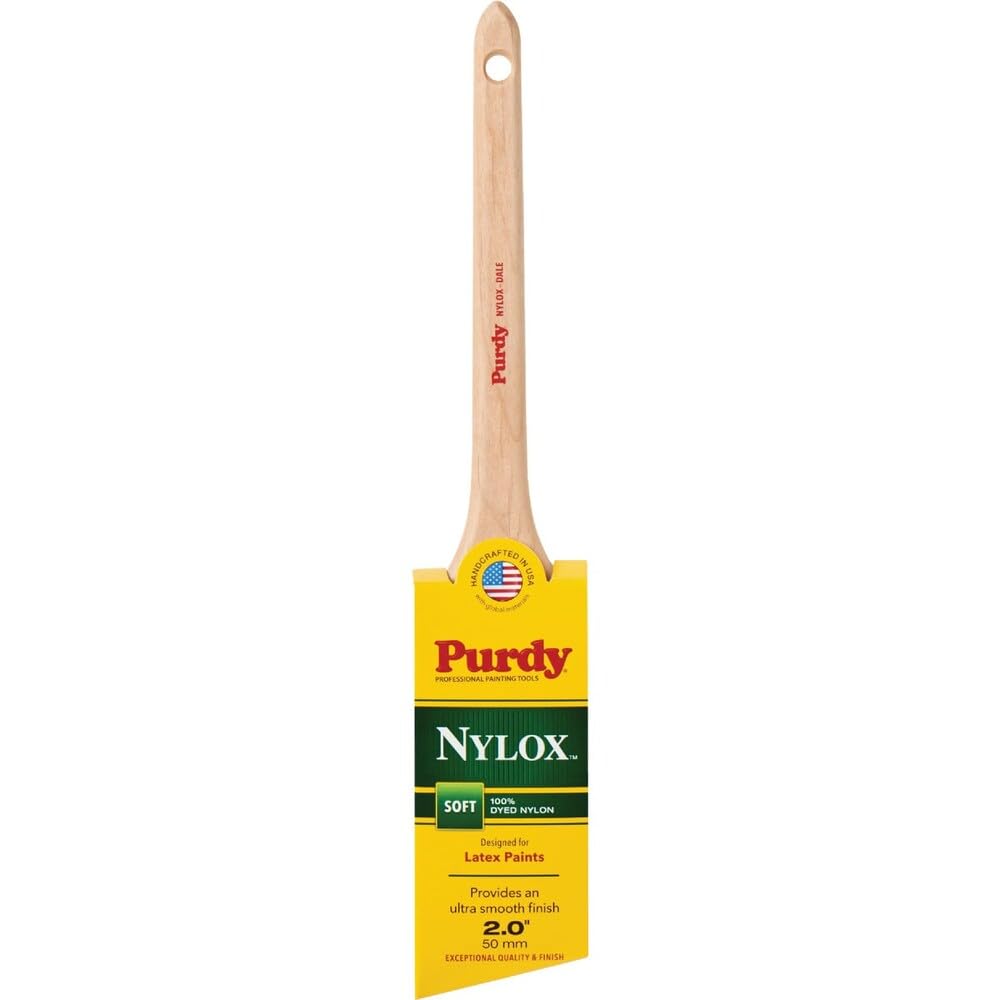
The 100% nylon brush that glides on finishes with no visible lines at all.
The construction is the headline here: 100% nylon filaments that are tipped and flagged, meaning the very ends are split to catch and level the finish. That is the mechanical secret to why reviewers point out smooth application with minimal brush marks and precise cut-in on trim. The 2-inch width with a rattail handle balances well in the hand for detail work on doors, windows, and cabinets.
Buyers describe it as soft yet firm, holding way more finish than other brushes and laying it down with fewer strokes. It is designed for latex paints and primers, which puts it squarely in the water-based family where a synthetic filament is non-negotiable. The praise centers on brush quality, with softness the second-most appreciated trait.
The honest caveats are two. Some report the center bristles falling out over time, and a few find the cost hard to swallow. Weigh against the outcome, though: owners who use it on high-gloss enamels get a finish with no visible lines, which is exactly the bar polyurethane demands.
Why It Wins
- Flagged nylon tips erase stroke marks
- Holds more finish per dip than rivals
- Firm yet soft for precise cut-ins
Consider This
- Center bristles occasionally loosen
- Sits at a premium price point
Pick it for: a flawless level finish on furniture and trim where every ridge will be visible.
skip it if: you want a reusable utility brush for rough work — this one is for the careful final coat.
5. Wooster 2″ Ultra/PRO Firm Varnish Brush

The firm-blend favorite that cuts lines so clean you can skip the masking tape.
This brush’s reason to exist is a firm nylon-and-polyester blend tuned for balanced flex, which translates to good glide and excellent coverage on medium-weight coatings indoors or out. Weighing just 1.6 ounces, it is featherlight in the hand, and the sealed maple wood handle resists water — a real plus since water-based poly wants to seep into raw wood. The round rust-resistant steel ferrule keeps the bristles cinched tight.
The professional endorsement here is strong. A career painter who used Purdy for years switched to this brush after trying it on cost, and another pro said it outperforms the Purdy firm version for cut-in work. Shoppers say cutting in requires no masking tape at all, and the brush handles everything from ceilings to extra-firm trim work.
With its recommended paint type listed as acrylic and a varnish-focused name, this is a natural fit for water-based polyurethane. It is a single brush rather than a multi-pack, so the value question is whether one tool replaces many — and owners say yes, treating it as their go-to across all jobs with proper cleanup.
Your move: if you want one pro-grade brush that covers both varnish and latex work, this firm blend does both.
Fair warning: it is a single brush, so color changes mean a full clean between coats.
6. Peachtree 2″ Foam Brush 24 Pack
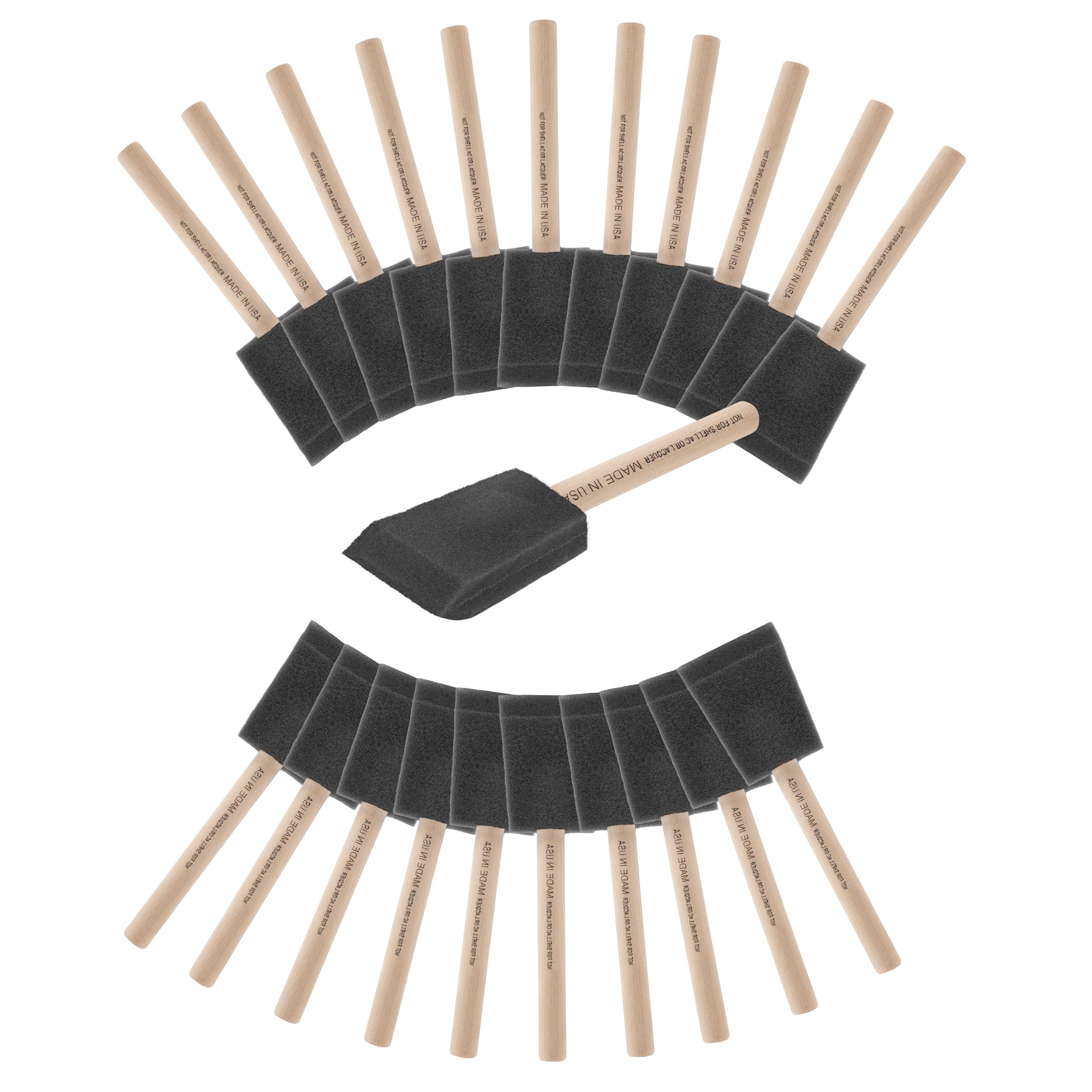
The dense USA-made foam brush that holds its shape through heavy coating work.
The chiseled foam profile on these 2-inch brushes is the standout feature — it tapers to an edge that slips into tight corners and along baseboards where a round foam head cannot reach. Buyers report using one brush for hours on an iron fence with oil-based paint and ending with no mess, and others note they survived large coating jobs without tearing, which is rare in the foam world.
Being made in the USA is part of the appeal, and owners mention these hold their rigidity better than overseas rivals. The dense foam is the most-praised quality, with durability second — owners mention reusing them the next day when wrapped in plastic, which stretches the value well beyond a one-and-done disposability.
The one mixed note is stain application, which makes sense: foam can press stain unevenly if you push hard, so these shine brightest with a light touch on varnish and polyurethane. It is a 24-pack, so you get the volume for a full project without the commitment of a single premium brush.
Grab it for: staining and varnishing sessions where you want a rigid, dense foam head that will not flake.
Keep in mind: they reward a gentle hand with stain; press too hard and the layer goes uneven.
7. Country Chic Chalk Style Paint Brush 2″
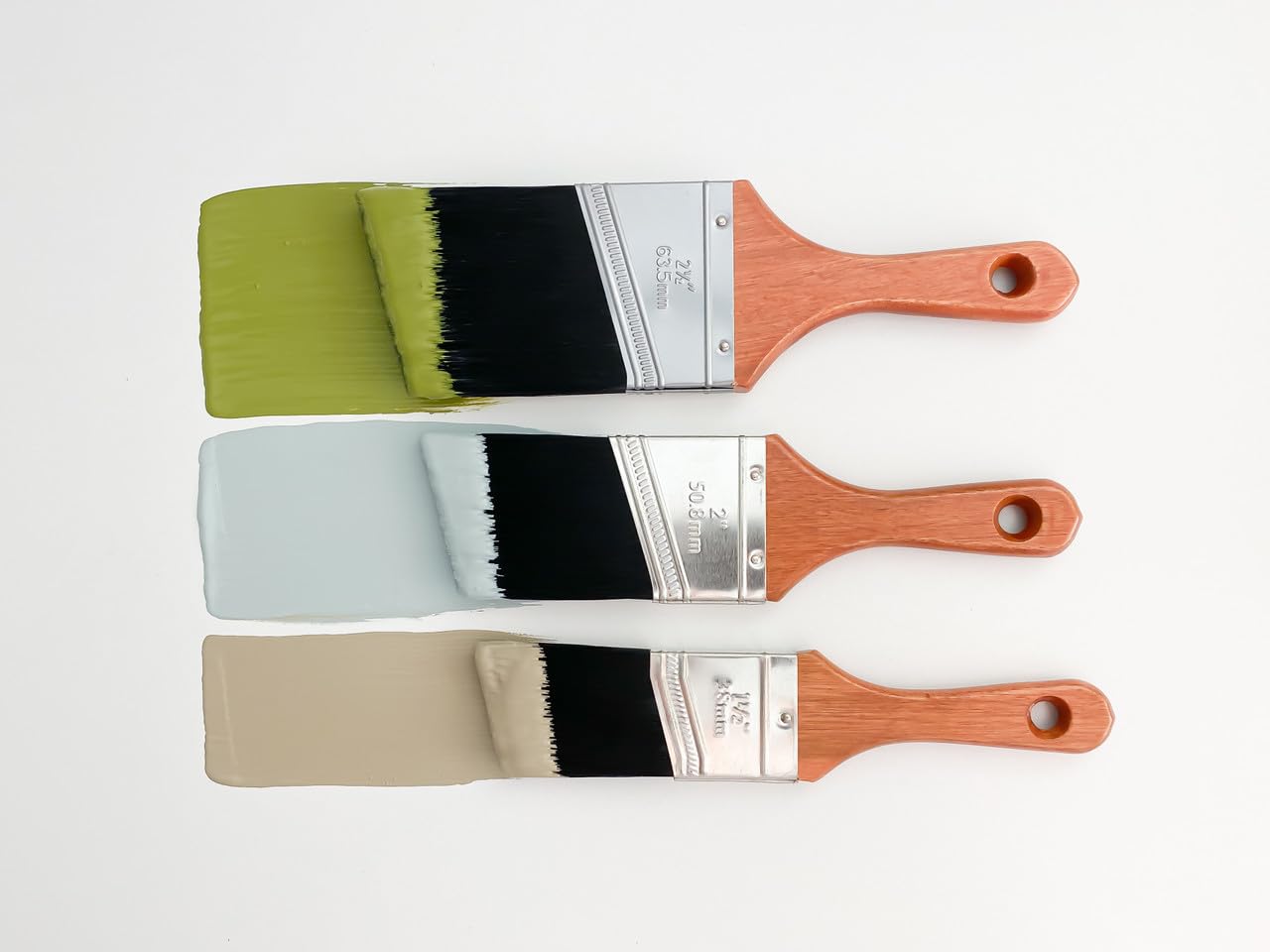
The vegan synthetic angled brush that leaves chalk and mineral paints stroke-free.
Born from the chalk-paint world, this 2-inch angled brush uses synthetic bristles that are explicitly built for water-based paint, which makes it a quiet star for water-based polyurethane too. The short handle is the clever bit — it lets you paint inside drawers, between shelves, and in other cramped furniture spots where a long handle would knock into everything. Customers note it fits the hand beautifully and cleans up like new after every project.
No shedding is the selling point, and buyers confirm this one does not drop hairs into wet finish the way many synthetics do. That matters enormously with a clear coat, because a single loose bristle ruins the surface. The performance praise centers on leaving virtually no brush strokes when used with chalk mineral paint on textured cabinet doors.
The most-praised aspect is quality, with performance second, and ease of cleaning rounding out the top three. The honest downside is price: some owners feel it is steep for a single brush, and one even called it maybe too expensive for one-time use. It is a specialist’s tool for furniture-refinishing projects with a clear top coat involved.
Standout Traits
- Zero shedding means no hairs in your finish
- Angled shape cuts clean furniture lines
- Short handle reaches inside drawers
Think About It
- Premium price for a single brush
- Angle is tuned for furniture, not wide panels
Choose it for: furniture refinishing with chalk paint and a water-based clear coat on top.
Pass it by: if you want a multi-pack for general trim work across a big renovation.
8. Tosnail 96 Pack 2 Inch Foam Paint Brush

The 96-piece bulk box for whole-house staining marathons where each coat gets a fresh head.
This is volume as a feature: 96 individually useful 2-inch foam brushes built from polyester foam, which the maker says works with both oil-based and water-based paint. Each head measures 2 inches wide by 2.5 inches long and a half-inch thick, on a 4-inch wooden handle — proportions that give you real surface coverage for a foam tool. Weight is a hefty 14.4 ounces, but that is the whole box, not a single brush.
Owners doing full-house sanding and restaining report these work great for one-time use and toss, with no issues of the handle detaching from the sponge. The dense foam gets positive feedback, and the top-praised aspect is quality with value for money second — a rare pairing that signals the heads actually hold up instead of crumbling into the finish.
Two honest notes: a few buyers find the foam too soft, and some flag adhesive issues on the head-to-handle bond. Neither is a pattern — the majority report sturdy heads that last longer than the competition. For a whole project where you want a fresh applicator every coat, this box is the economic play.
Build your workflow around it: if restaining or clear-coating an entire house, the per-brush math makes disposal painless.
The soft note: foam softness splits opinions, so test one head before committing to a full-gloss surface.
9. Jen Manufacturing Poly Foam Brush 2 Inch Pack of 48

The foam legend famous for staying intact through coat after coat of polyurethane.
Jen is the name that comes up when woodworkers talk about foam brushes that do not fall apart, and the reputation is earned. The 2-inch poly foam head on a 4-inch wooden handle is built for paint, stain, and varnishes, and reviewers point out it stays firm until the job is done with no brush marks left behind. The surface recommendation covers wood, porcelain, and stainless steel, so it is not limited to a single material.
Buyers rave about the glued tip never detaching — a common failure point on cheap foam brushes where the head slides off mid-stroke and drags through wet finish. Some report using a single brush for three coats of shellac with it holding up great, and one long-time buyer found it the best of the best among all foam brushes tried. The most-praised aspect by far is quality, with value for money the strong second.
The standout feature is durability, which is the entire reason the pack earns its higher price. It is washable and reusable when you want, or disposable when you don’t. If you have struggled with foam heads shredding into your polyurethane, this 48-pack is the fix.
Make it your default: for applying stains, oils, and polyurethane where a firm, non-shedding foam head makes the difference.
One thing to know: the price is the highest on this list, but the per-brush cost drops fast when each one outlasts a dozen rivals.
Understanding the Specs
Bristle Material
Synthetic bristles — nylon, polyester, or a blend — are the only safe choice for water-based polyurethane. Natural bristles absorb water, go soft, and create drag marks. Nylon gives a smooth, soft flex while polyester adds firmness, so a blend balances both for a level coat.
Flagged Tips
A flagged tip is a split bristle end, similar to split hair. That split surface holds finish and releases it flat, which is what erases visible stroke marks in a dried clear coat. A brush without flagged tips will leave ridge lines with every pass.
Brush Width
Width controls coverage versus control. A 2-inch brush covers flat surfaces efficiently while still cutting in around trim, making it the most versatile size for polyurethane projects. Narrower 1-inch heads suit touch-ups and small crafts where precision beats speed.
Foam vs Bristle
Foam has no bristle lines, so it physically cannot leave stroke marks, which makes it ideal for clear coats. Bristle brushes hold more finish and spread faster across large areas but need flagged synthetic tips for a smooth result. Many woodworkers use both: bristle for big surfaces, foam for cut-ins.
FAQ
Can I use a natural bristle brush with water-based polyurethane?
What is the difference between a flagged and non-flagged brush bristle?
Is foam or bristle better for applying polyurethane?
How do I clean a synthetic brush after using water-based polyurethane?
Why do I see bubbles in my water-based polyurethane finish?
Can foam brushes be reused or are they one-time only?
What size brush should I use for polyurethane on furniture?
Why do bristles fall out of my paintbrush into the finish?
Is a firm or soft brush better for varnish and polyurethane?
Can the same brush handle both stain and clear polyurethane?
Final Thoughts: The Verdict
For most people, the brush for polyurethane water-based winner is the Wooster Shortcut because its angled synthetic blend cuts in cleanly and survives repeated washings without shedding. If you want a flawless level finish on furniture, grab the Purdy Nylox for its flagged nylon tips. And for fast, disposable polyurethane coats, the Jen Poly Foam 48-pack is the one to reach for — its firm heads outlast most rivals, and the crowd loves it for exactly this job.
How We Picked
We do not accept paid placement. Every pick is matched to a real buyer and a real use-case; we do not hands-on test units.
Sources & Methodology
Specifications: manufacturer listings and product documentation. Review insights: verified customer reviews, as of August 2026. Pricing: not shown on this page (it changes often); check the current price via the retailer link.
As an Amazon Associate, Gadgets Feed earns from qualifying purchases. This does not affect which products we feature.