
Our readers keep the lights on and my morning glass full of iced black tea. As an Amazon Associate, I earn from qualifying purchases.
Specs are compiled from manufacturer listings and verified buyer reviews and can change over time — please confirm the key details on the product page before buying.
You are shopping for a 48-inch-class TV because your room — a bedroom, a den, or a gaming corner — can’t handle a 65-inch screen on the wall. The 48-50 inch size is now among the most competitive segments in the TV market, with options from budget-friendly 4K sets to premium OLED panels. You’ll find the right balance of picture quality, smart features, and gaming performance for your space, whether you are upgrading from an old 1080p set or adding a second screen for the family.
I’m Min — the founder and writer behind Gadgets Feed. This guide is built by comparing the manufacturers’ published specifications and the patterns across verified customer reviews, so you get each pick’s real strengths and trade-offs instead of marketing spin.
We have analyzed the specs and owner feedback for the leading models to help you choose the best 48 inch smart tv for your room, your viewing habits, and your budget.
Our Picks at a Glance

How To Choose The Best 48 Inch Smart TV
Before you click buy, you need to answer one question: what is the TV for? A bright living room with windows needs a different panel than a dark home theater or a gaming setup. Here is what actually matters when comparing 48-inch class sets.
Panel Technology: OLED vs Mini-LED vs Standard LED
This is the biggest fork in the road. OLED panels use self-lit pixels, meaning each pixel turns on and off independently. This delivers perfect black levels because pixels can switch off completely, creating almost infinite contrast. Mini-LED is a backlit panel with thousands of tiny LEDs controlling brightness in zones — it gets much brighter than OLED, which helps in bright rooms. Standard LED is the budget option, offering solid 4K picture but with less precise contrast control. If you watch movies in a dark room, OLED wins. If the TV sits across from a sunny window, a bright Mini-LED or LED set will serve you better.
Refresh Rate and Gaming Features
Refresh rate is how many times the screen updates per second, measured in Hertz (Hz). A 60Hz TV is fine for casual streaming and broadcast TV. If you own a PlayStation 5 or Xbox Series X, you want a set that supports 120Hz or 144Hz, which allows those consoles to output at high frame rates for smoother motion in fast games. Look for HDMI 2.1 ports, which are required for these high refresh rates, along with features like VRR (Variable Refresh Rate) that reduce screen tearing.
Smart Platform and Ports
The smart TV platform is your daily interface — it decides how quickly you get to Netflix or YouTube. The major systems are Roku, Google TV, Fire TV, webOS, and Samsung’s Tizen. They all stream the big apps, but they differ in speed, usability, and ad clutter. Also check the port count. You need at least two to three HDMI ports for a streaming stick, soundbar, and game console. For older devices a composite or optical audio output is helpful. Count your devices before you choose.
Quick Comparison
| Model | Best For | Panel Type | Refresh Rate | HDR Support | Amazon |
|---|---|---|---|---|---|
| LG C4 OLED★ Best Overall | Gaming & Cinema | OLED | 144 Hz | Dolby Vision | Amazon |
| Westinghouse Roku TVBest Value | Value & Simplicity | LED | 60 Hz | HDR | Amazon |
| Samsung M70HQuantum Leap | Smart Features | Mini-LED | 120 Hz | HDR10 | Amazon |
| FPD Google TV | Budget Friendly | LED | 60 Hz | HDR10 | Amazon |
| VIZIO V-Series | SmartCast Users | LED | 60 Hz | HDR10 | Amazon |
| Hisense E7 Cinema | Sports & Streaming | Mini-LED | 144 Hz | Dolby Vision | Amazon |
| TCL QM6K | High Brightness | Mini-LED | 144 Hz | Dolby Vision | Amazon |
| Sony BRAVIA 2 | PS5 Owners | LED | 60 Hz | Dolby Vision | Amazon |
| Samsung S90F | Color Accuracy | OLED | 144 Hz | HDR10+ | Amazon |
| Sony A90K OLED | Film Purists | OLED | 120 Hz | Dolby Vision | Amazon |
| LG C6 OLED (Renewed) | Budget OLED | OLED | 165 Hz | Dolby Vision | Amazon |
In‑Depth Reviews
1. LG 48-Inch Class OLED evo C4 Series Smart TV
Our pick — 4.5★ from 1,500+ verified ratings; the strongest balance of quality and price.
The crowd-pleasing OLED that pairs perfect black levels with console-grade gaming speed.
The LG C4 delivers flagship OLED picture quality in a compact 48-inch frame without the flagship price tag. Its self-lit OLED panel (each pixel creates its own light, so blacks are truly black) packs over 8 million individually controlled pixels, and it hits 100% Color Volume and 100% Color Fidelity — meaning colors stay rich and accurate from the darkest shadows to the brightest highlights, so a sunset scene looks as vivid as real life.
It is also a serious gaming display with a 144 Hz refresh rate and 0.1ms response time. With a 144 Hz refresh rate, a 0.1ms response time, and support for NVIDIA G-Sync and AMD FreeSync Premium, it is smoother than the Samsung M70H’s 120 Hz in fast-paced titles. Four HDMI 2.1 inputs mean you can connect a PS5, Series X, and soundbar without swapping cables, and the Game Optimizer menu puts every mode in one place.
Buyers report “excellent OLED: perfect contrast, vivid HDR, great PS5 gaming, intuitive Game Optimizer.” The webOS 24 platform includes LG Channels with 300-plus free channels, and the Re:New Program promises software updates for 5 years. The catch: the built-in speakers are workable but thin, so most people end up pairing this with a soundbar — and at 144 Hz it consumes 176 kilowatt hours per year, so it is not the most efficient set here.
What Wins People Over
- Perfect blacks and vivid HDR from true OLED self-lit pixels.
- 144 Hz refresh with G-Sync and FreeSync for tear-free console play.
- Four HDMI 2.1 ports handle multiple modern consoles at once.
Real Trade-Offs
- Built-in audio is thin — a soundbar is almost mandatory.
- Uses 176 kWh per year, higher than most LED rivals.
Reach for this if: You want a top-tier picture and plan to game on a PS5 or Xbox Series X.
Think twice if: You are on a strict budget and would rather spend the savings on a soundbar and a mid-range LED.
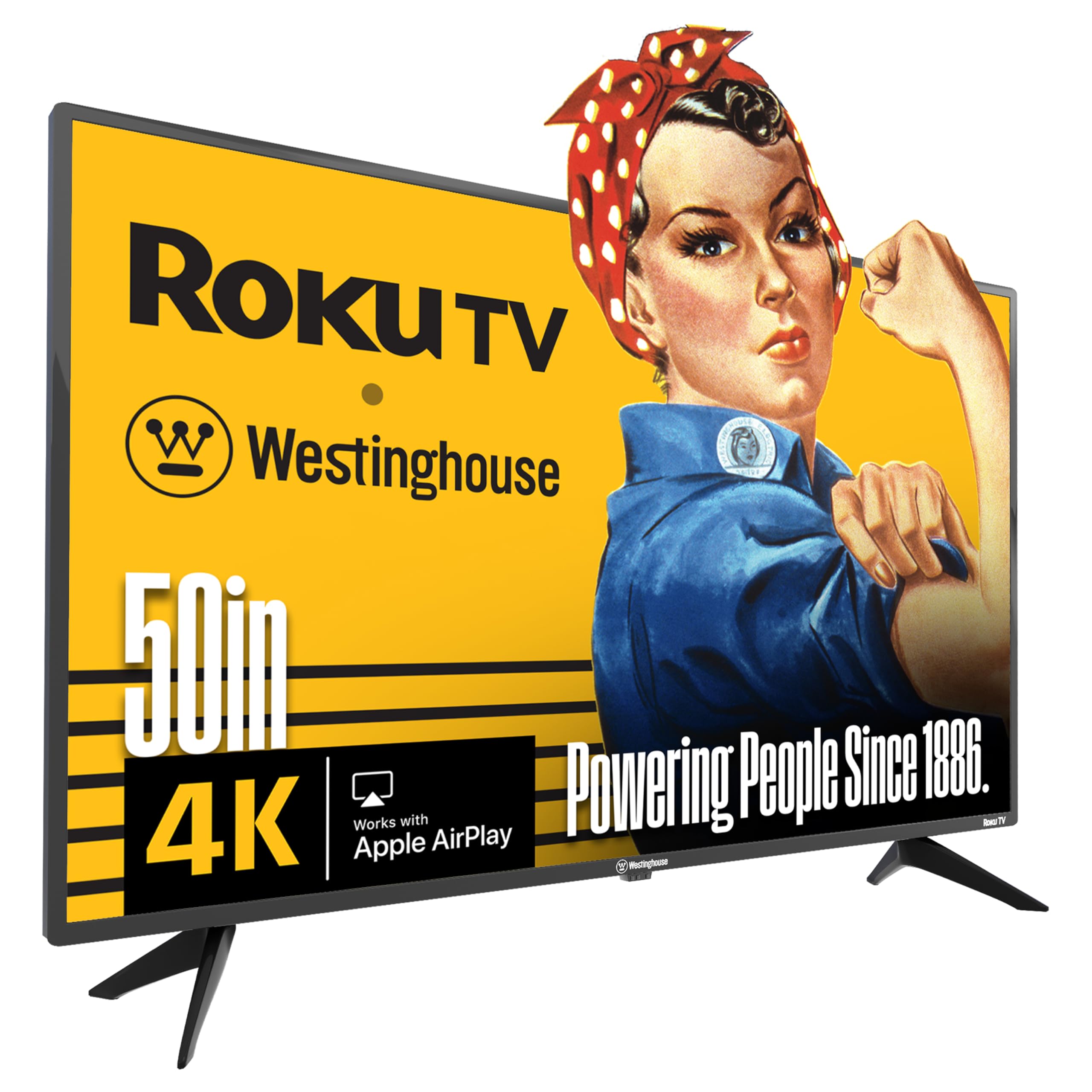
2. Westinghouse Roku TV – 50 Inch Smart TV, 4K UHD
A lightweight 4K Roku TV that over-delivers for the price, with a few compromises to know.
If your priority is a simple, reliable 4K TV for casual viewing, the Westinghouse Roku is the smart money pick. Roku is one of the easiest smart platforms to navigate, and this set gives you access to 350-plus free live channels and thousands of streaming apps. It also works with Siri, Alexa, or Hey Google, and supports Apple AirPlay2 for casting from your phone.
Owners mention a “sharp HD/UHD/4K picture; adjustable EQ sound adequate; antenna broadcast works well; good value at.” The 16:9 panel has a 1000:1 contrast ratio, which is modest but perfectly watchable for streaming and cable. With 4 HDMI inputs, a composite video input, and optical digital audio, you can connect older DVD players and soundbars without hunting for adapters.
The trade-offs are honest ones. The base depth is 9.4 inches — slightly deeper than the LG C4’s 9.1 inches, so give it a little breathing room on a cabinet. The picture gets praise, but reliable build quality over multiple years is less proven at this price point. The side-mounted volume button on the remote is the recurring gripe, so expect a learning curve.
Best for: A budget buyer who wants a big 4K screen with a dead-simple interface and no subscription clutter.
Good to know: The 1000:1 contrast ratio is fine for a bright living room, but a dark movie room will reveal its limits.
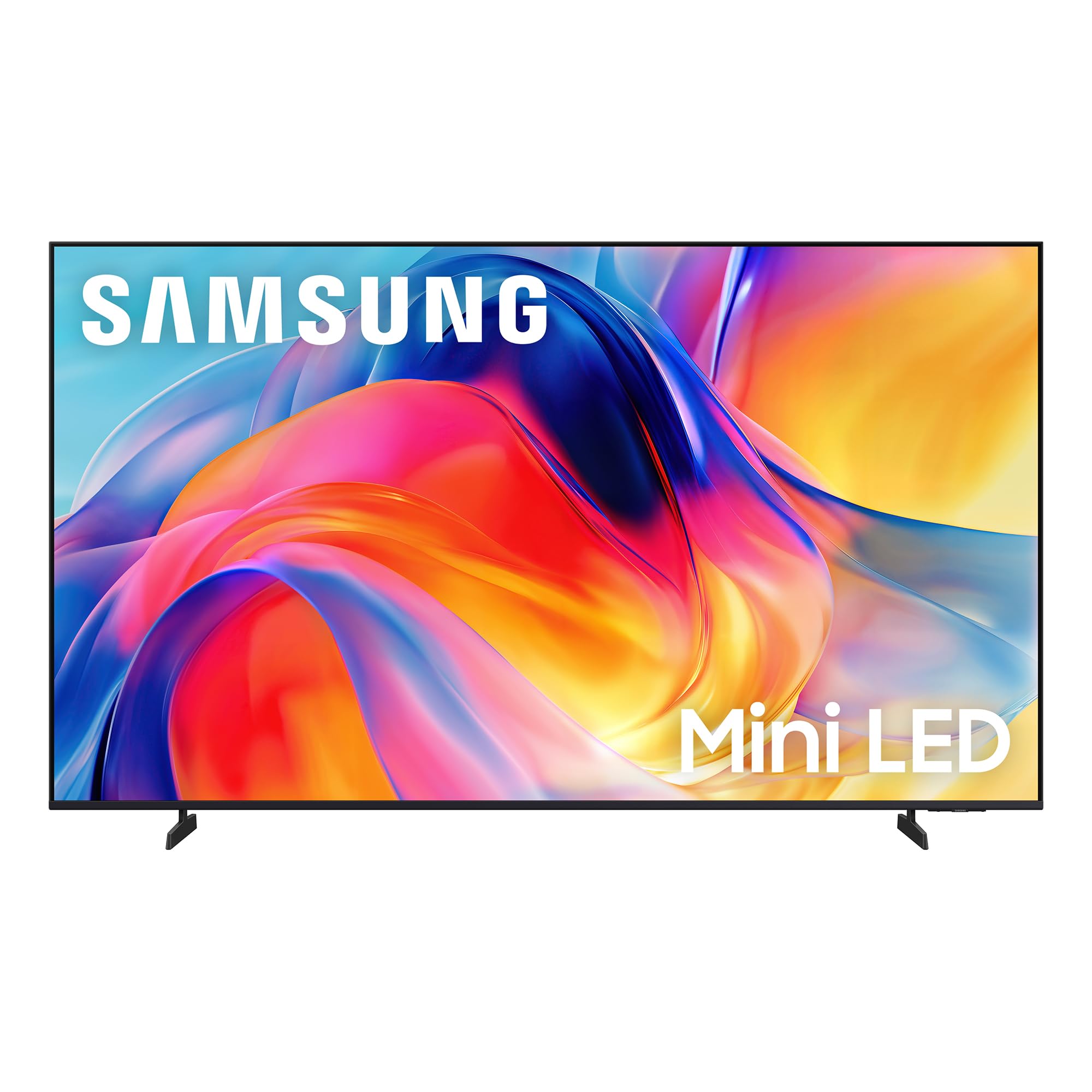
3. Samsung 50-Inch Class M70H Series Mini LED 4K Smart TV
A Mini-LED mid-ranger that brings Samsung’s vivid color science to the 50-inch class.
Samsung slots the M70H into a balance: it brings Mini-LED backlighting (tiny LEDs that control brightness more precisely) to a size where most rivals still use standard LEDs. With the Mini LED Processor 4K driving brighter highlights and deeper blacks, the picture is noticeably punchier than a plain LED panel, and the Pure Color Spectrum claims to render one billion true-to-life colors.
Gamers get a boost from Motion Xcelerator with DLG at 120 Hz (a feature that smooths fast motion), but note: the LG C4’s 144 Hz beats this set’s 120 Hz for refresh rate. What you get here is the Samsung Gaming Hub, which pulls cloud gaming services and consoles into one menu, plus 2,700+ free streaming options via Samsung TV Plus.
Owners call it great for movies and sports, with easy setup and a responsive interface. The recurring complaint is the remote: it is a minimalist design with no number pad and awkward HDMI switching. It is also down to 3 HDMI ports, so check your device count. The Samsung M70H screen size is 50 inches, a 4% larger screen than the LG’s 48 inches — a touch more cinematic if your space allows.
Why It Stands Out
- Mini-LED adds real punch to bright scenes compared to standard LEDs.
- 120 Hz Motion Xcelerator keeps fast sports and games smooth.
- Samsung TV Plus gives free access to a huge library of content.
The Catch
- Minimalist remote lacks a number pad and can frustrate power users.
- Only 3 HDMI ports — limited for multi-device setups.
Pick it for: Color-rich streaming and sports in a bright room, where Mini-LED brightness matters more than perfect blacks.
Look elsewhere if: You need simple HDMI switching or have more than three devices to plug in.
4. FPD 50 Inch Smart TV, 4K LED Google TV
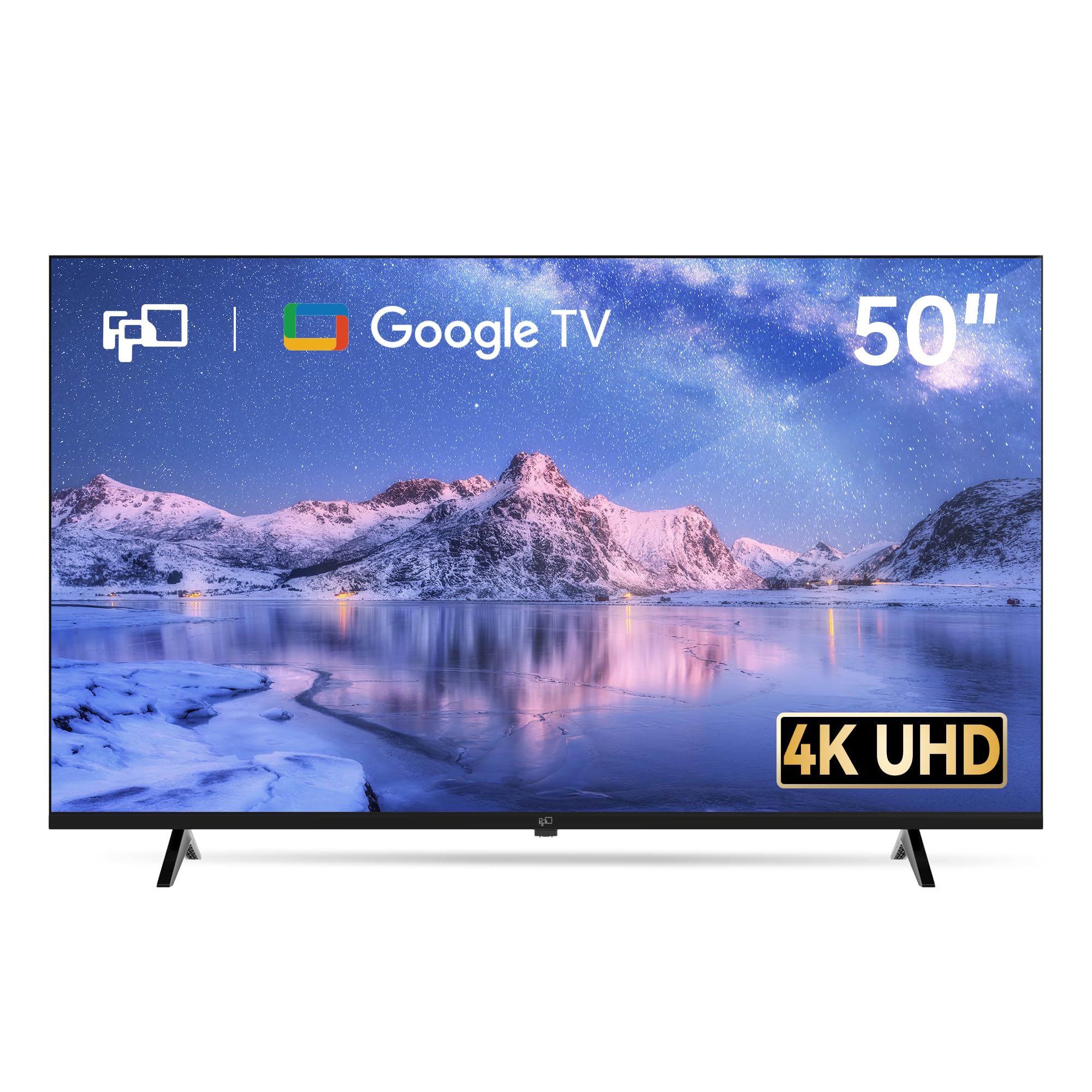
A Google TV set that wraps 4K HDR, voice control, and low-cost streaming into one easy package.
If you live inside the Google ecosystem, the FPD is a straightforward 4K choice. It runs Google TV with Google Play built in, so Netflix, YouTube, and Prime Video sit on one clean home screen, and Google Cast lets you fling content from your phone straight to the big screen. The 50-inch LED panel delivers 3840 × 2160 UHD resolution at a 60Hz refresh rate.
It does not stop at basics: HDR10 boosts contrast and color accuracy, while Dolby Audio handles the sound. The MEMC (Motion Estimation, Motion Compensation) technology reduces blur during sports, and ALLM (Auto Low Latency Mode) helps keep fast gameplay responsive. With 3 HDMI 2.1 ports including 1 eARC, there is room for a console, soundbar, and streaming box.
Owners say it looks “pretty damn good 99% of the time,” and value the built-in Chromecast for screen mirroring. Be honest about the limitations: the panel is not a premium display, and the speakers are the weakest link — plan for a soundbar. A few units stopped working after a few months, so this is best where a quick warranty replacement is not a huge hassle.
Strongest for: A spare bedroom or office TV for streaming, where Google Cast and voice search get daily use.
Keep in mind: The sound is weak and the panel is mid-range — treat this as a smart, capable 4K set, not a cinema display.
5. VIZIO 50 Inch 4K Smart TV, V-Series UHD LED HDR

VIZIO packs its SmartCast platform, Apple AirPlay, and low-lag gaming into a solid 50-inch LED.
The VIZIO V-Series is a familiar, dependable name in the 50-inch class. At its core is the IQ Active 4K HDR Processor, which handles upscaling from HD to sharper 4K and uses Active Pixel Tuning to adjust brightness pixel-by-pixel for better accuracy and contrast. The 200K:1 contrast ratio is dramatically higher than entry-level sets, so dark scenes carry more depth.
For gamers, the V-Gaming Engine automatically enables Auto Game Mode on Xbox and PlayStation to lower input lag. The SmartCast platform gives quick access to Netflix, Disney Plus, YouTube, and Prime Video, plus a dedicated selection of free streaming channels. You also get Apple AirPlay and Chromecast built in, so iPhone and Android users are both covered.
Owners who have bought multiple VIZIOs keep coming back for the ease of use and quality. The honest caveat: a meaningful number of reports mention the TV not turning on after some time, which is a reliability flag worth weighing. The base depth runs 10 inches, a bit deeper than the LG’s 9.1 inches, so factor that into your stand or wall-mount plan.
What You Get
- 200K:1 contrast ratio punches above entry-level LED pricing.
- Runs both Apple AirPlay and Chromecast for any phone.
- V-Gaming Engine trims input lag automatically on consoles.
Weigh This
- Reliability reports around power-on failures give some pause.
- 10-inch base depth needs a deeper cabinet.
Who it’s for: Households mixing iPhone and Android users who want built-in casting and simple SmartCast navigation.
Before you commit: Consider a longer warranty if this is your main living room TV, given the power-on reports.
6. Hisense 50″ E7 Cinema Series Hi-QLED Mini-LED 4K UHD Smart Fire TV
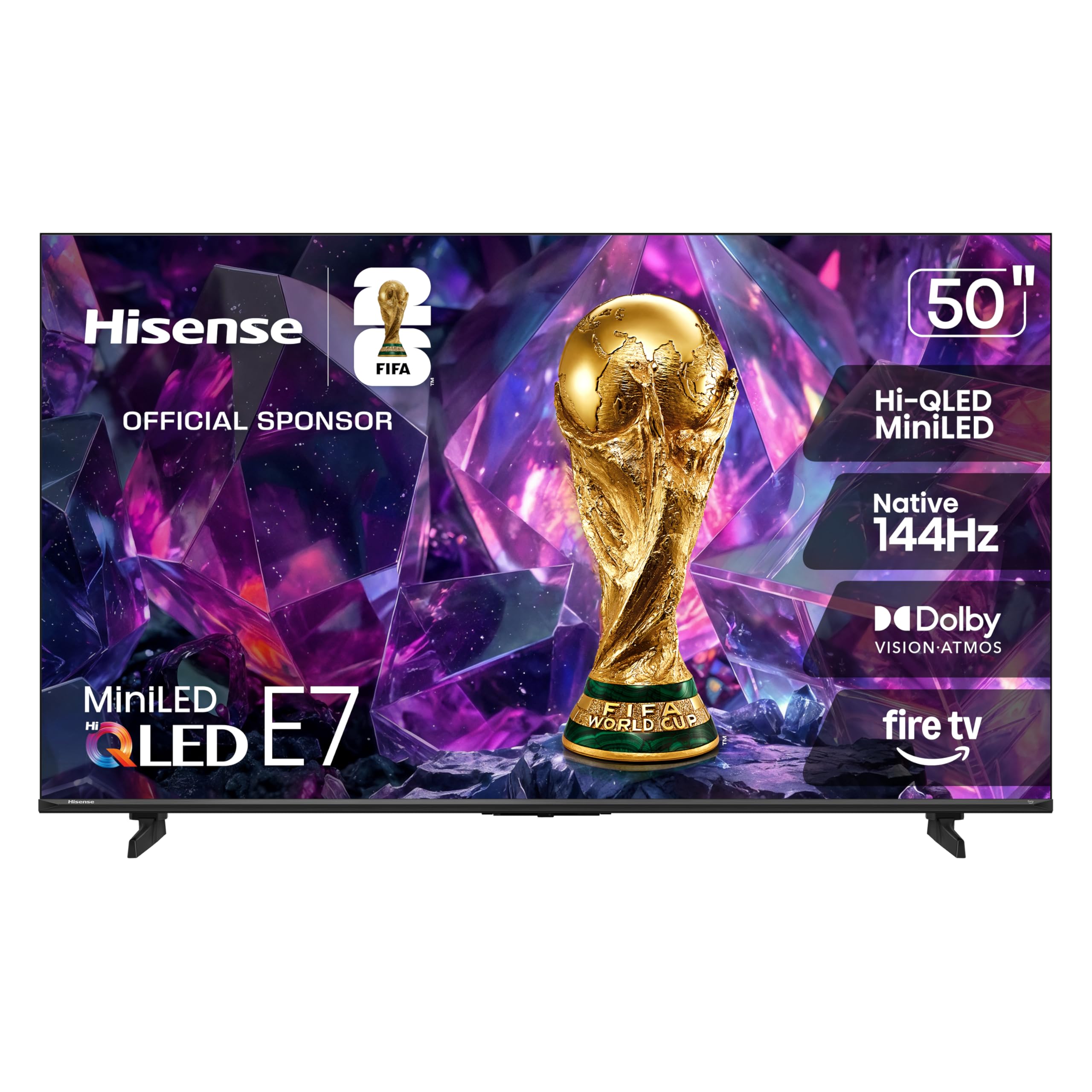
A Mini-LED Fire TV with a native 144Hz panel that keeps fast action buttery smooth.
Hisense aims squarely at sports fans and gamers with the E7. The Hi-QLED Mini-LED panel uses thousands of light zones to deepen shadows and punch up highlights, and the native 144Hz Game Mode keeps fast-moving action fluid without the blur you get on 60Hz displays. Dolby Vision IQ and HDR10+ Adaptive both tweak the picture based on your room’s lighting, so it looks right at any hour.
The Fire TV platform makes it a strong choice for Alexa households. The included Alexa voice remote can control apps, volume, and smart home devices, and the OS loads quickly. AI Picture processing analyzes scenes in real time to adjust brightness and color, while AI Sports Mode boosts crowd audio and smooths motion when it detects a game.
The experience earns high marks — buyers call the colors vibrant and the 144Hz “buttery smooth.” The upgrade path is clear for anyone coming from a five-year-old Sony. The downsides are minor: the packaging is on the weaker side and the stands are plastic. One owner noted that two of these TVs in the same house can interfere with each other’s remotes, a known quirk to plan around.
Shines at: Live sports and competitive gaming where the 144Hz refresh and MEMC motion handling earn their keep.
Heads up: If you already have another Fire TV nearby, remote interference is a real possibility.
7. TCL 50 Inch Class QM6K Series Mini LED QLED 4K HDR Smart Google TV
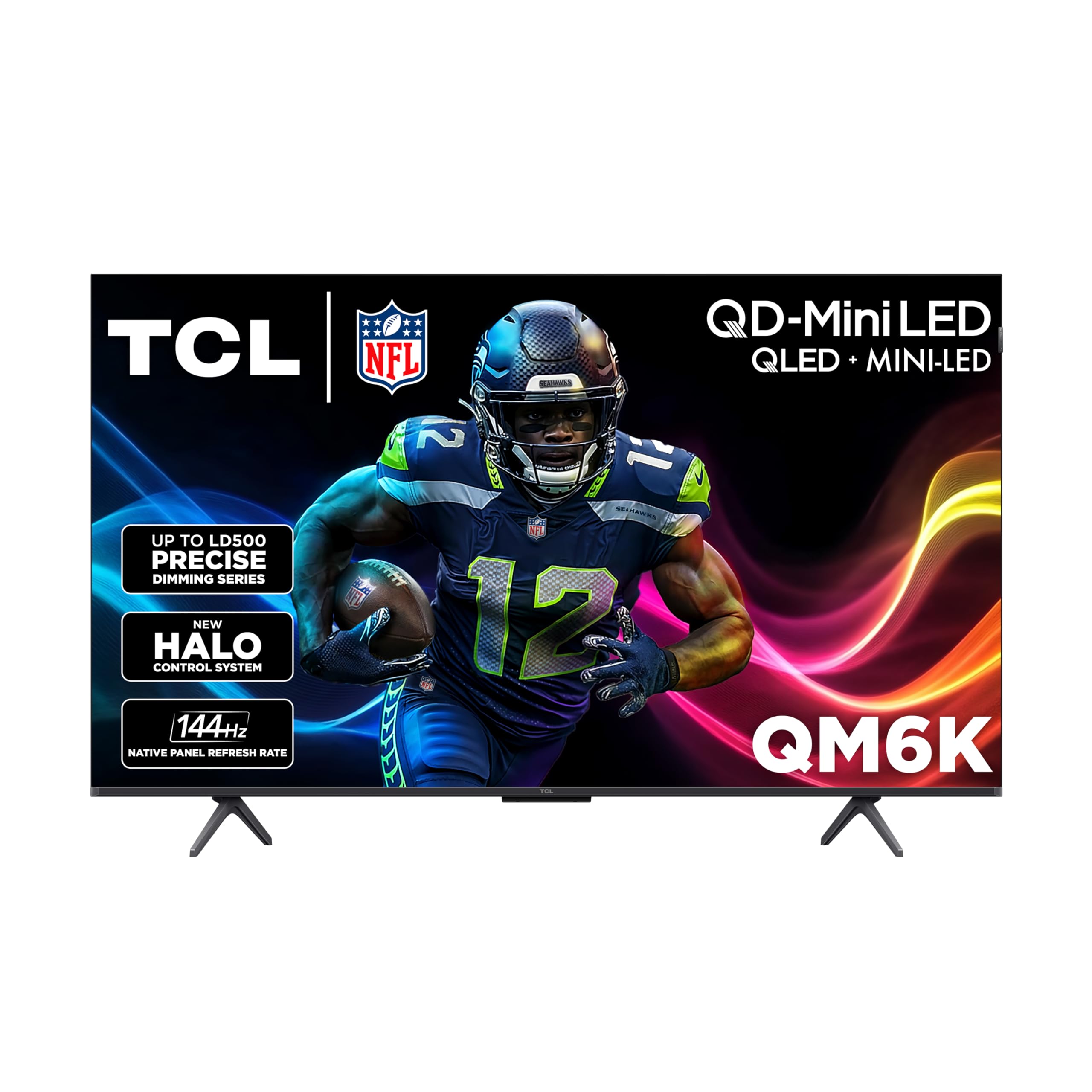
A bright QD-Mini LED Google TV that tames glare and pairs punchy color with proper audio.
TCL’s QM6K is the set for bright rooms. The QD-Mini LED panel, driven by the new TCL Halo Control System, delivers impressive brightness with minimal glare in light-filled spaces — a frequent point of praise from owners. It is a 50-inch panel with a 144 Hz refresh rate, so it handles both lively sports and fast gaming without smearing.
The sound quality is a standout here. With Dolby Atmos and an Onkyo-tuned audio system, the built-in speakers are dramatically better than the thin drivers on most budget sets. Google TV powers the interface with support for Apple TV, Disney Plus, Hulu, Netflix, and Prime Video right from the start, plus a voice remote with Alexa built in.
Owners upgrade to this from older models and immediately notice the crisp display and anti-reflective screen. It also supports 4 HDMI ports, two of which run at 144 Hz, giving console players room to grow. The main complaint is app-switching lag — the interface is decently fast, but moving between apps is not instant. Ideally, pair it with an HDMI 2.1 cable to open up the full gaming specs.
What Impresses
- High brightness and an anti-reflective screen tame sunny rooms.
- Onkyo audio and Dolby Atmos beat most built-in TV speakers.
- Two of the four HDMI ports hit 144 Hz for high-end consoles.
Where It Slips
- App-to-app switching has noticeable lag.
- You will want an HDMI 2.1 cable to actually use the 144 Hz.
Choose this for: A living room with big windows where brightness and anti-glare matter more than perfect black levels.
skip it if: You are a home theater purist who demands OLED’s absolute blacks in a dark room.
8. Sony 50 Inch BRAVIA 2 II LED 4K HDR Smart Google TV
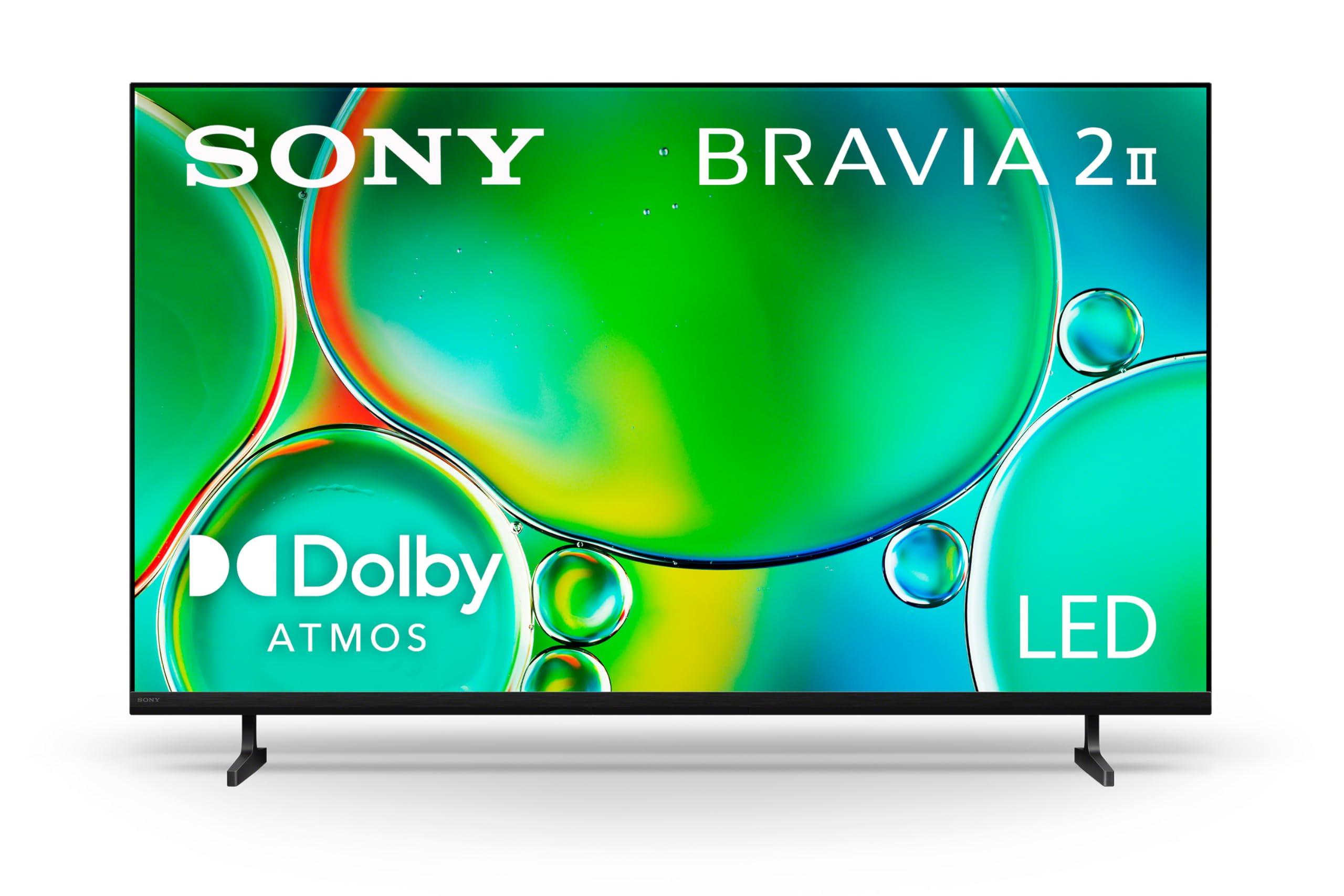
Sony’s value BRAVIA that brings exclusive PS5 picture tuning to a 50-inch LED.
If you own a PlayStation 5, the BRAVIA 2 II is built with you in mind. It carries exclusive PS5 features — Auto HDR Tone Mapping and Auto Genre Picture Mode — that tune the picture automatically when you switch from a game to a movie. The 4K Processor X1 drives rich colors and sharp details, while 4K XR-Reality PRO upscales lower-resolution content closer to 4K quality.
Google TV runs the interface, and it streams perfectly to Apple AirPlay 2 or Google Cast. Motionflow XR keeps fast-moving sports and action movies blur-free, and the Sony Pictures CORE app bundles movies right into your account. The LED panel is a 60Hz display, so it is less of a hardcore gaming screen than the 144 Hz rivals above — but for PS5 owners, the exclusive tuning bridges that gap.
Owners are typically pleased with the picture quality and processing speed, with set-up taking about 10 minutes. A prior Sony Bravia lasting 18 years is the benchmark many hope to repeat. The occasional unit has had WiFi dropouts or freezing issues, which is always frustrating. The base depth hangs at 10.13 inches — deeper than the LG’s 9.1 inches — so measure your stand before you commit.
Best aligned with: PS5 owners who want Sony’s exclusive Auto HDR and Genre Picture modes without paying flagship prices.
Be realistic: At 60 Hz, this is a streaming and casual gaming screen, not a high-frame-rate esports display.
9. Samsung 48-Inch Class S90F Smart TV, NQ4 Gen3 Processor

An AI-driven OLED that upscales everything to 4K and keeps gaming tear-free at 144Hz.
This is Samsung’s answer to the LG C4: a true 48-inch OLED with the NQ4 AI Gen3 processor running 128 neural networks to enhance picture and sound. It upscales any content to near-4K quality, boosts brightness in the right spots, and smooths motion on fast-moving balls and text. In a dark room, the OLED contrast is phenomenal.
Gamers get elite speeds — the panel supports VRR gaming at up to 4K 144Hz. The AI processor also transforms standard SDR content into HDR-like quality, so older shows and movies gain brighter highlights and more vivid colors. It runs Samsung’s smart platform with Alexa built in, and the Motion Xcelerator 144Hz engine keeps sports and shooters fluid.
Owners describe it as the best TV they have owned, with perfect blacks in dark rooms and surprising brightness in sunlight. The base depth of 10.4 inches is the deepest on this list, so plan your TV stand carefully. Samsung’s OLED tech is superb, but it is a premium price for a 48-inch screen — and OLED panels in general reward users who vary their content to avoid any static-image retention.
The Highlights
- 128-neural-network AI processor upscales everything to sharp 4K.
- 144 Hz VRR gaming delivers tear-free console performance.
- OLED contrast with surprising brightness even in sunlit rooms.
The Trade-Off
- 10.4-inch base depth needs serious cabinet space.
- Premium price for a 48-inch class screen.
Grab this for: A dedicated dark room where you want OLED’s perfect black levels with Samsung’s aggressive AI upscaling.
Think twice if: Your console mostly plays 60Hz titles — the 144Hz spec is wasted on casual games.
10. Sony 48 Inch A90K BRAVIA XR 4K HDR OLED Smart Google TV

Sony’s compact OLED flagship where the screen itself becomes the speaker.
For the videophile, the A90K is the reference. The Cognitive Processor XR mimics how humans see, delivering intense contrast, deep blacks, and natural colors. The XR OLED Contrast Pro technology gives full depth to scenes, and XR Triluminos Pro renders billions of accurate colors. Owners call it “literally the best picture I have ever seen.”
The audio is the a neat extra: Acoustic Surface Audio+ uses actuators to vibrate the entire screen, producing sound that seems to come from the actors’ mouths. With a built-in subwoofer and Dolby Atmos support, it genuinely performs “as good as a sound bar” according to owners. It also pairs flawlessly with PS5, with input lag as low as 8.5ms and exclusive BRAVIA XR features like Auto HDR Tone Mapping.
This is the most premium 48-inch option here, and it shows. It handles Dolby Vision, IMAX Enhanced, and Netflix Adaptive Calibrated Mode for the truest picture possible. The catch: value is hotly debated — the picture IS better than the standard BRAVIA, but the casual viewer may not notice the premium cost. It also demands a dark room; a semi-gloss screen is not the brightest under open blinds.
For the purist: If picture accuracy and screen-as-speaker audio are non-negotiable, this is the peak of the 48-inch class.
Reality check: Casual streamers may not justify the premium — the regular BRAVIA is still a very good TV.
11. LG 48 Inch OLED evo AI C6 4K Smart webOS TV (Renewed)

A renewed LG OLED that flaunts a 165Hz panel and a full accessory bundle at a lower entry cost.
This is the path to OLED for a smaller budget. The LG C6 is a renewed model, meaning it has been inspected and restored, and it brings the same self-lit pixel magic: over 8.3 million pixels with Perfect Black and Perfect Color technology. The Alpha 11 AI Processor Gen3, LG’s most powerful Dual AI Engine, drives the picture, and Brightness Booster adds vivid detail.
The gaming spec is the headline here — a 165Hz refresh rate with NVIDIA G-Sync, AMD FreeSync Premium, and a 0.1ms response time. That is the highest refresh on this entire list, beating even the LG C4’s 144 Hz. It runs Dolby Vision, Dolby Atmos, and Filmmaker Mode, plus OLED Care features designed to prevent burn-in. Customers note zero burn-in after months of retro 4:3 gaming.
The bundle sweetens the deal: you get 2 HDMI cables, a home theater setup guide, and Deco Essentials’ exclusive 26-month extended protection plan. The quotes on the listing are “outdated,” so trust the hardware specs over the review count. Since it is renewed, check that the included accessories are complete on arrival — one owner found a used keyboard in the box instead of the expected remote setup.
The Appeal
- 165Hz refresh is the fastest gaming panel in this roundup.
- Bundle includes 2 HDMI cables and a 26-month protection plan.
- True OLED blacks and colors with a fast webOS interface.
Proceed With Eyes Open
- Renewed condition means inspecting accessories on arrival.
- Review coverage is limited given the newer listing.
Ideal for: Budget-conscious buyers who want OLED performance and 165Hz gaming, and are comfortable with a renewed unit.
Be careful with: The renewal process — verify all bundled accessories are present and undamaged.
Understanding the Specs
Refresh Rate Explained
Refresh rate, listed in Hertz (Hz), tells you how many times per second the screen redraws the image. A 60Hz TV handles standard TV and movies fine. Jump to 120Hz or 144Hz and fast camera pans, sports, and games look noticeably smoother. If you game on a current-gen console, a 120Hz or 144Hz panel open up higher frame rates, and G-Sync or FreeSync support prevents the screen from “tearing” during intense action.
HDR vs. SDR
HDR (High Dynamic Range) is a picture standard that increases the range between the darkest blacks and the brightest whites, making colors look richer and more realistic. Dolby Vision and HDR10+ are the two premium HDR formats; Dolby Vision is used widely across streaming services, while HDR10+ competes on Samsung and some other brands. A TV that supports either will make compatible Netflix or Disney Plus content look dramatically better than a non-HDR set.
FAQ
Is a 48 inch TV really the same as a 50 inch TV?
Do I need a 120Hz or 144Hz TV for watching movies?
What is the difference between OLED and Mini-LED for a 48 inch TV?
Will a 48 inch OLED TV fit on my existing TV stand?
What does HDMI 2.1 mean for a gaming TV?
Should I buy a renewed or refurbished OLED TV?
Is a soundbar essential with a 48 inch smart TV?
Which smart TV platform is easiest for a non-tech-savvy person?
How many HDMI ports do I really need on a 48 inch TV?
Final Thoughts: The Verdict
For most people, the best 48 inch smart tv is the LG C4 OLED because it delivers OLED picture quality, 144 Hz gaming performance, and four HDMI 2.1 ports — everything a modern living room or gaming den needs in one sleek 48-inch package. If you want a bright Mini-LED panel for a sunny room and prefer the Google TV interface, grab the TCL QM6K. And for a budget-friendly entry into 4K with the simplest smart platform available, the Westinghouse Roku TV is the one to reach for. All three are proven performers backed by strong owner feedback — the winning move is simply to match your room’s lighting and your gaming habits to the panel that suits them.
How We Picked
We do not accept paid placement. Every pick is matched to a real buyer and a real use-case; we do not hands-on test units.
Sources & Methodology
Specifications: manufacturer listings and product documentation. Review insights: verified customer reviews, as of August 2026. Pricing: not shown on this page (it changes often); check the current price via the retailer link.
As an Amazon Associate, Gadgets Feed earns from qualifying purchases. This does not affect which products we feature.