
Our readers keep the lights on and my morning glass full of iced black tea. As an Amazon Associate, I earn from qualifying purchases.
Specs are compiled from manufacturer listings and verified buyer reviews and can change over time — please confirm the key details on the product page before buying.
Peel-and-stick roofing is the fastest way to stop a leak without tearing off your old roof, but the adhesive quality varies wildly between rolls. The real question is which one grips instantly, survives the sun, and won’t lift at the edges when the wind picks up. This guide breaks down the top adhesive roof tiles by their adhesive strength, coverage, and what owners actually experience after installation.
I’m Min — the founder and writer behind Gadgets Feed. This guide is built by comparing the manufacturers’ published specifications and the patterns across verified customer reviews, so you get each pick’s real strengths and trade-offs instead of marketing spin.
You need adhesive roof tiles that seal fast and stay sealed, so we weighed coverage per roll, adhesive grip, and leak-stopping track record to find the three worth your time and effort.
Our Picks at a Glance
How To Choose The Best Adhesive Roof Tiles
The secret to a lasting peel-and-stick roof isn’t just the thickness of the membrane; it is the chemical makeup of the adhesive layer. Butyl rubber sticks aggressively to metal, concrete, and plywood, while thinner asphalt-based sheets can bubble or slide if the surface isn’t perfect.
Adhesive Strength and Material
Look for a solvent-free butyl rubber core. It stays flexible as the roof expands and contracts with heat, so it grips without cracking or hardening over time — a quality that determines whether your seam survives a full summer of sun.
Coverage and Roll Dimensions
One roll can cover anywhere from a tight RV seam to a whole shed roof, so match the square footage to your project. A 35.5-inch-wide roll that runs 32.8 feet long covers up to 96 square feet in a single pass, which is enough for a small outbuilding or multiple flashings.
Installation Temperature
Adhesion is temperature-sensitive with every brand. For the strongest bond, the surface should be above 5°C (41°F), dry, clean, and smooth — cold or damp surfaces are the most common reason a peel-and-stick sheet lifts later.
Quick Comparison
| Model | Best For | Adhesive Core | Roll Coverage | Item Weight | Amazon |
|---|---|---|---|---|---|
| MFM Peel & Seal Aluminum★ Best Overall | Storm-proof shed and RV sealing | Aluminum-faced asphalt | 36 in. wide roll | 29 pounds | Amazon |
| Gueevin Reflective Butyl Roll | Large flat metal roof patches | Solvent-free butyl rubber | 96 sq ft per roll | 37.4 pounds | Amazon |
| MFM Peel & Seal White | Mobile home roofs and flat seams | Peel-and-stick membrane | 36 in. wide roll | 29 pounds | Amazon |
In‑Depth Reviews
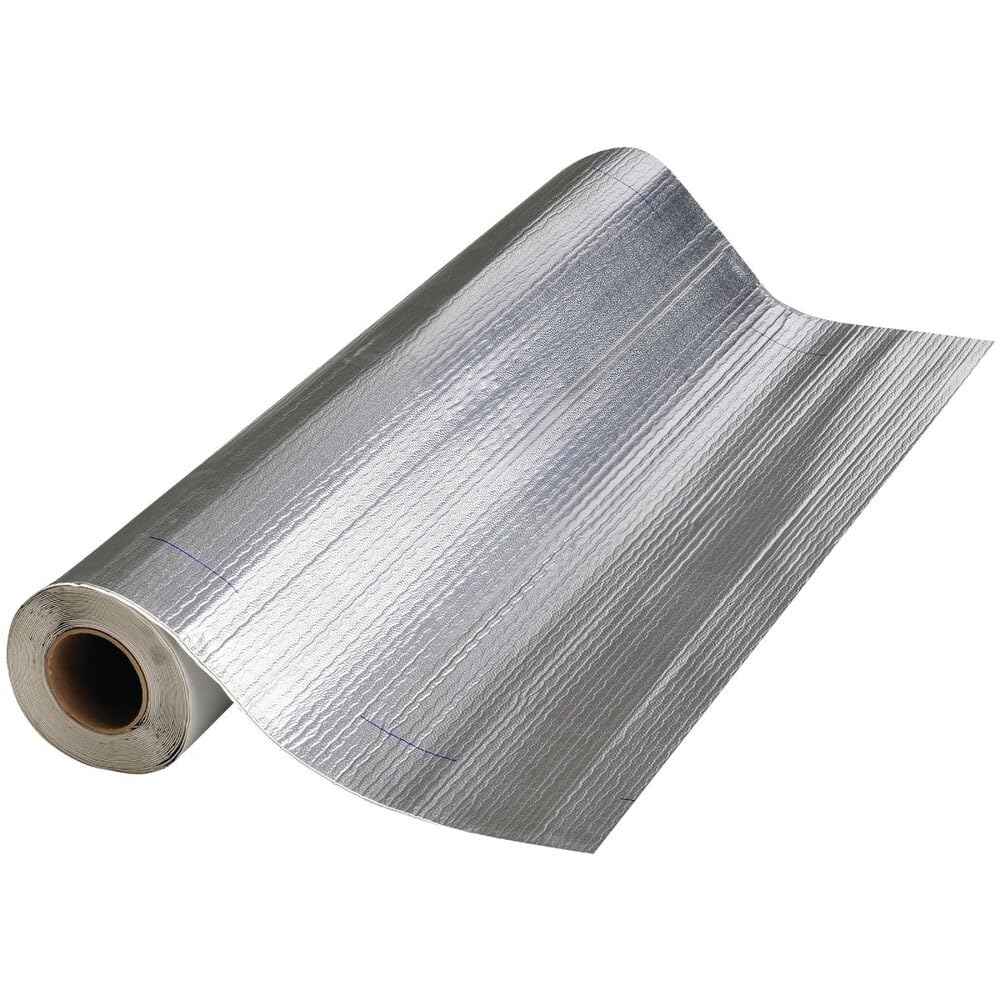
1. MFM Peel & Seal Self Stick Roll Roofing (36in. Aluminum)
Our pick — over 4.5★ from 100+ verified ratings; the strongest balance of quality and price.
The aluminum-faced roll that has survived hurricane winds without peeling up.
This is the roll for anyone who needs a repair that outlasts the next big storm. It weighs 29 pounds, so you are carrying a substantial membrane, but the aluminum facing reflects the sun’s heat sharply, which keeps the adhesive from baking and softening in Phoenix-style summers. Buyers report it survived hurricane winds over 100 mph without peeling.
Installation is genuinely beginner-friendly, with many first-timers putting it down by hand with no underlayment at all. Buyers also use it to dampen road noise in car doors and tailgates. The trade-off is that the adhesive gets mixed feedback — it sticks fiercely when conditions are right, but some owners had it refuse to bond on cooler or dirtier surfaces.
One Phoenix-area buyer summed it up neatly, noting it worked “very well for me on my stick built, 10×12 foot Shed,” and that the silver surface really reflects the heat. At this price for a single 36-inch-wide roll, you are paying for proven toughness and a heat-reflective face that many cheaper rolls lack.
Sticky Reality: The adhesive is the most-discussed trait, and it is genuinely split — perfect on a warm, clean deck, unreliable on a cold one. Treat installation temperature as the make-or-break step, not an optional detail.
Reach for it if: you need leak prevention and hurricane-grade durability on a shed, porch, or RV — and you can install on a warm dry day.
Look elsewhere if: you cannot control the surface temperature or need a roll that forgives a slightly dusty or damp base.
2. Gueevin 35.5 Inch x 32.8 Feet Self Stick Roll Roofing with Reflective Aluminum

The solvent-free butyl roll that covers a full 96 square feet and never hardens.
This is the pick for large flat repairs where one roll should do the whole job. Each roll runs 35.5 inches wide by 32.8 feet long, covering up to 96 square feet at a 0.04-inch thickness — enough to resurface a trailer roof or a series of porch flashings without buying a second roll. That coverage comes with weight: at 37.4 pounds, it is noticeably heavier than the MFM rolls at 29 pounds, reflecting its thicker, denser butyl core.
The defining trait here is the solvent-free flexible butyl rubber, which will not shrink, crack, release toxic fumes, or harden as it ages. It stretches and moves with thermal expansion, which matters on metal roofs that heat and cool aggressively. The adhesive is aggressive to the point of being unforgiving — owners mention that once it touches the surface, it will not come back up, so you get exactly one chance to place it right.
DIY homeowners and contractors have used it to stop travel-trailer leaks and seal shed roofs alike. One owner summed it up plainly: “wherever you put it that’s where it’s gonna stay,” noting it stopped all their leaks. The honest trade-off is that a few buyers had water still get through with a double layer, so surface prep and overlapping technique matter more here than with other rolls.
Why This One Wins
- Covers up to 96 sq ft in a single roll — the biggest footprint of the three
- Solvent-free butyl rubber stays flexible and won’t harden or crack
- Extra-sticky grip that stops leaks permanently on metal and concrete
Where It Shows Limits
- At 37.4 pounds, it is the heaviest roll to haul up a ladder
- No second chances — misplace it and it will not lift without damage
- A minority of owners still saw water ingress with a double layer
Best for: a homeowner tackling a large flat roof or trailer in one go, who wants flexible long-term adhesion.
Think twice if: you are working alone on a ladder — the weight and instant-grab adhesive demand strength and precision.
3. MFM Peel & Seal Self Stick Roll Roofing (36in. White)

The white-faced workhorse that hides roof defects and keeps mobile homes dry.
This is the roll to reach for when you are patching a mobile home or an old metal roof that has seen better days. The white surface hides a lot of defects visually, and the peel-and-stick membrane can go directly over plywood or old metal with no underlayment. Owners have installed it over separated metal seams on damaged mobile-home roofs and reported no issues weeks later.
Its Energy Star certification confirms the white surface reflects more sunlight. The material is thin, which makes it easy to cut to shape but also means it can stick to itself if you are not careful and methodical — unroll deliberately and keep it flat as you work.
Buyers consistently praise its quality for repeated mobile-home use. One owner noted it hides “alot of defects” and keeps you dry for a long time. The catch is the same adhesion sensitivity as its aluminum sibling: sticky enough to adjust slightly while placing, but sharp objects can gash it and edges need securing for high-wind highway use.
Quality First: Material quality is the thing everyone raves about — it’s thin, flexible, and forgiving to work with, provided you keep it from folding onto itself mid-install.
Pick this when: you want a proven, easy-to-cut white membrane for a flat mobile-home or lean-to patch.
skip it if: your edges will face highway winds — you’ll need to secure them with extra glue and a wider seam tape.
Understanding the Specs
Butyl Rubber vs. Asphalt Adhesive
Butyl rubber is a solvent-free synthetic rubber that stays flexible for years, expanding and contracting with your roof without cracking or hardening. Asphalt-based adhesives are cheaper but more temperature-sensitive and more likely to bubble if the surface isn’t perfectly clean. For a roof that moves, butyl wins on longevity.
Coverage Per Roll (Square Feet)
Coverage tells you how many projects one roll can finish. A 36-inch-wide roll is standard for seams and flashing, while a 35.5-inch by 32.8-foot roll expands to 96 square feet for full sections. Match the roll’s square footage to the size of your repair so you do not end up buying two rolls for one job.
FAQ
What is the difference between butyl rubber and regular peel-and-stick roofing?
What temperature is needed to install adhesive roof tiles?
Can I install these over an existing metal roof that has damage?
How many square feet does a single roll cover?
Will these tiles stick immediately or can I adjust them?
Can adhesive roof tiles be used on an RV or travel trailer?
Is a reflective surface worth paying extra for?
What happens if I apply it to a dirty or damp surface?
Final Thoughts: The Verdict
If you want one dependable pick, the adhesive roof tiles winner is the MFM Peel & Seal Aluminum because it pairs proven hurricane-grade durability with a heat-reflective face that protects the adhesive. If you need the most coverage for a large flat repair, grab the Gueevin Butyl Roll and its 96 square feet of flexible, solvent-free grip. And for an easy-cutting white membrane that hides defects on a mobile home, the MFM White Roll is the reliable, Energy Star-rated choice worth your time.
How We Picked
We do not accept paid placement. Every pick is matched to a real buyer and a real use-case; we do not hands-on test units.
Sources & Methodology
Specifications: manufacturer listings and product documentation. Review insights: verified customer reviews, as of August 2026. Pricing: not shown on this page (it changes often); check the current price via the retailer link.
As an Amazon Associate, Gadgets Feed earns from qualifying purchases. This does not affect which products we feature.