
Our readers keep the lights on and my morning glass full of iced black tea. As an Amazon Associate, I earn from qualifying purchases.
Specs are compiled from manufacturer listings and verified buyer reviews and can change over time — please confirm the key details on the product page before buying.
The real question when shopping for a budget drone isn’t just “does it fly” — it’s whether you’ll ever see it again after a gust of wind. A camera drone in this price range lives or dies on two things: a GPS lock that brings it back home, and a camera that doesn’t turn your backyard into a blurry mess. This guide sorts through the crowd to find the few that genuinely deliver on both.
I’m Min — the founder and writer behind Gadgets Feed. This guide is built by comparing the manufacturers’ published specifications and the patterns across verified customer reviews, so you get each pick’s real strengths and trade-offs instead of marketing spin.
The best budget drone with camera balances a stable hover, a usable 4K lens, and a return-to-home feature you can trust without emptying your wallet.
Our Picks at a Glance


How To Choose The Best Budget Drone With Camera
Before you click buy, you need to separate the toys from the tools. Budget drones with cameras range from backyard flyers to surprisingly capable aerial cameras, and the price tag alone doesn’t tell you which you’re getting. Focus on four things: GPS safety, camera quality, flight time, and motor type.
GPS and Return-to-Home are non-negotiable
GPS is a satellite positioning system that tells the drone exactly where it is in the sky. In this price range, it’s the difference between a relaxing flight and a walk of shame. A drone with GPS can hover in place, and if you lose signal or the battery runs low, it flies itself back to the takeoff point. Without it, a strong breeze can push your drone over a tree line and out of sight.
Flight time claims are only half the story
Some drones promise 40 or 50 minutes of flight time, but read the fine print — that number often includes two batteries. One battery will typically give you 15 to 25 minutes of actual flying. A model that ships with two or three batteries is usually the better value, because swapping a battery is far faster than waiting for a recharge.
Brushless motors outperform brushed ones
Brushless motors are a newer type of motor with no physical brushes rubbing inside, so they run smoother, quieter, and last much longer. They also handle wind better, which matters if you want to fly anywhere beyond a completely calm living room. If a budget drone lists brushless motors as a feature, it’s a sign the manufacturer invested in performance over pure cost-cutting.
Quick Comparison
| Model | Best For | Flight Time | Camera | Weight | Amazon |
|---|---|---|---|---|---|
| SIMREX G29★ Best Overall | GPS safety & value | 40 min (2 bat.) | 90° 4K + 5G FPV | 8 oz | Amazon |
| Hiturbo JY013Best Value | True entry-level | 20–30 min (2 bat.) | 1080p HD | 1.1 lb | Amazon |
| Holy Stone HS420Best for Kids | Kids & indoor fun | ~21 min (3 bat.) | 1080p FPV | 31 g | Amazon |
| Ameta S20 Lite | 4K in a pocket size | 36 min (2 bat.) | 12MP SONY 4K | 165 g | Amazon |
| Hocany HK99 | Long-range GPS flying | 48 min (2 bat.) | 110° 4K | 248 g | Amazon |
| WeFone WF31 | Beginner GPS features | 50 min (2 bat.) | 100° 4K | 7.6 oz | Amazon |
| CHUBORY 4K Drone | Long runtime & range | 84 min (3 bat.) | 120° 4K HD | 180 g | Amazon |
| suangrc X9 | Built-in screen control | 18 min (1 bat.) | 110° 4K UHD | 249 g | Amazon |
| Oddire HK11 | Sharp 4K photos | 48 min (2 bat.) | F2.15 110° 4K | 249 g | Amazon |
In‑Depth Reviews
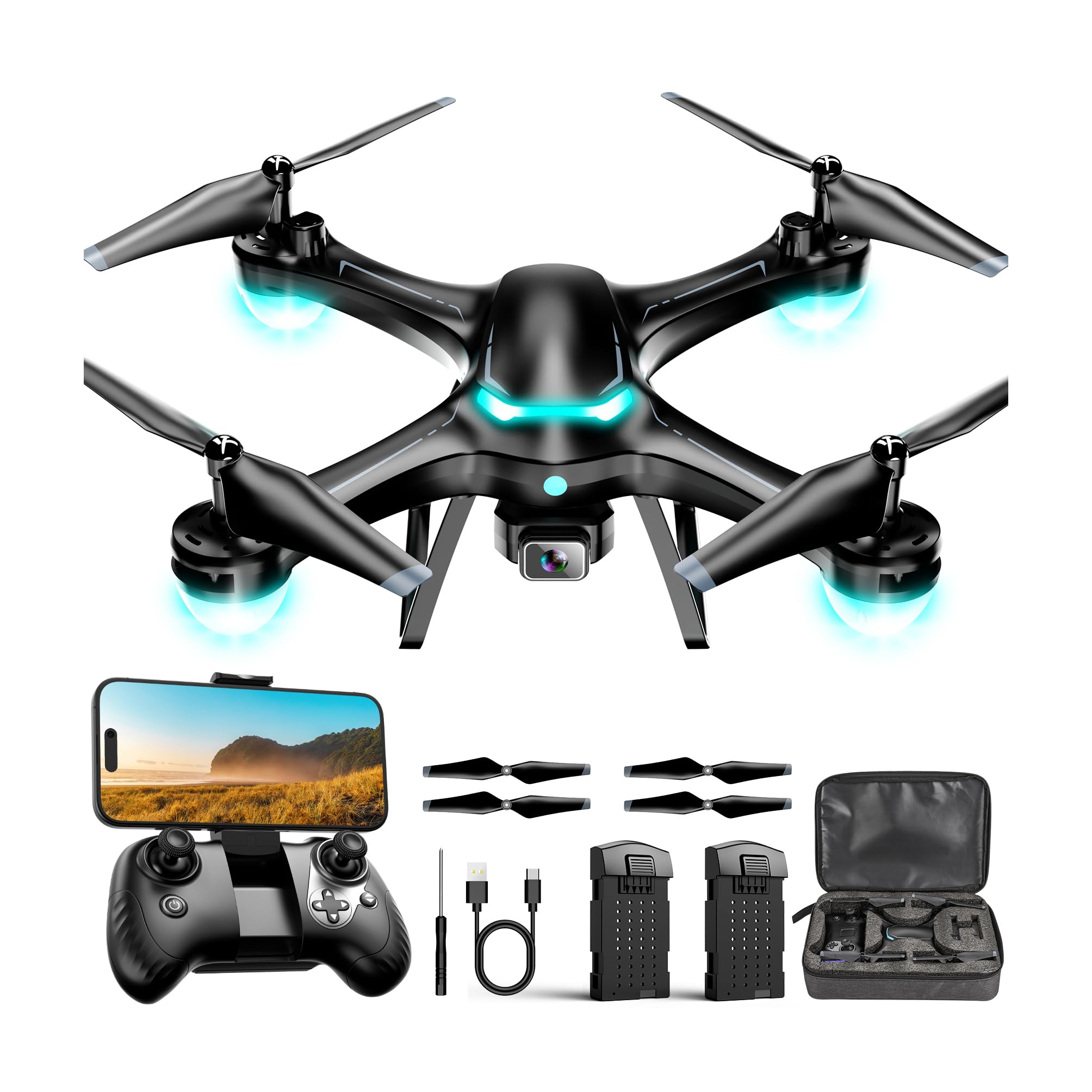
1. SIMREX GPS Drone G29
Our pick — over 4.5★ from 250+ verified ratings; the strongest balance of quality and price.
The GPS-guided flyer that refuses to get lost, with a 4K camera to capture it all.
You get confidence with this drone because it uses GPS (satellite positioning) for an Auto Return feature — you hit the button or the signal drops, and it flies itself back home. The Find My Drone app even shows its location on a map if it lands far away, so your investment is protected instead of lost.
The camera tilts 90° electrically, so you can aim it straight down or out at the horizon from your phone via 5G WiFi FPV (a live first-person video feed on your screen). You get a maximum flight distance of 2296 feet outdoors. With 40 minutes of total flight time across two batteries and quieter brushless motors, this drone gives you the longest, most stable sessions in this lineup.
What wins people over is the build and polish — it’s the rare entry-level pick that feels high-quality. Buyers report it flies like a far pricier model, with easy controls, reliable GPS stability, and a clear 4K camera that beginners can master quickly. The foldable arms make it travel-friendly, and Altitude Hold and Headless Mode keep orientation simple from takeoff to landing.
Why it wins
- GPS Auto Return and Find My Drone protect against loss
- 40 min total flight with two included batteries
- 90° adjustable 4K camera with 5G FPV live view
- Brushless motors for quieter, wind-resistant flight
Points to weigh
- One review flags it as not ideal for absolute beginners due to its speed
- Max range assumes open, unobstructed outdoor space
Reach for this if: you want a dependable first GPS drone that protects itself from flyaways and delivers closer to 40 minutes of airtime.
Look elsewhere if: you have zero flying experience and want the slowest possible learning curve — this one can move.
2. Hiturbo Drone with 1080P Camera
The crash-forgiving starter that packs two batteries and a real carrying case.
This is the classic “learn here first” drone. It captures 1080p HD photos and video, and comes with two batteries giving roughly 10-15 minutes each. It also ships with a protective case, spare blades, and propeller guards — so the first crash (and there will be one) is a learning moment, not a broken toy.
Beginner features are everywhere. Altitude Hold keeps it hovering at a set height, One Key Start handles takeoff and landing, and Headless Mode means you don’t have to mentally flip the controls when it faces you. Three speed modes let you grow into it, while Gesture Selfie, 3D Flips, Circle Fly, and Trajectory Fly add fun once you’re confident.
Owners highlight how quiet it is and how sturdy it stays after crashes. The emergency stop is a genuine safety net for kids and first-timers. At roughly 12.6 inches across, it’s a noticeably bigger footprint than the SIMREX’s 7.87 inches, which makes it feel more substantial but less pocketable.
Built for beginners
- Two batteries with spare blades and guards included
- Altitude Hold and One Key Start simplify first flights
- Emergency stop and Headless Mode add safety
- Quiet operation that won’t annoy the neighbors
Know before you fly
- 1080p, not 4K — fine for fun, not pro footage
- No GPS, so keep it close and calm-weather only
Pick this when: you want the safest, most forgiving way to learn, with enough battery to actually practice instead of just charging.
skip it if: you need 4K resolution or GPS auto-return — this stays a home-range flyer.
3. Holy Stone HS420 Mini Drone
A pocket-sized flyer that’s tough enough for kids and quiet enough for indoors.
At 31 grams and smaller than most phones, this is the drone you toss in a backpack without a second thought. It uses three modular batteries to stretch your flying time, and each one swaps in and out easily and charges safely. The included carrying case keeps it protected between flights.
Right from the start it does One-Key Start, Altitude Hold, and Toss to Launch — literally throw it gently and it takes off. Propeller guards and an emergency stop keep things safe for young pilots. The 1080p FPV camera gives a live view on your phone, and the lens angle adjusts manually. Two speed modes mean a kid can start slow and an older pilot can push it.
While the fun factor is the biggest draw, battery life is the one mixed note — some owners mention around 7-10 minutes per battery. It’s worth keeping a couple charged. The maneuverability and quiet flight earn steady praise, and the fact it doesn’t break on impact is a huge win for its intended audience.
Who it’s for: families and first-time flyers who want indoor-friendly, crash-resistant fun in a truly tiny package.
The honest limit: expect shorter flights per battery than the GPS models above, so order the extra batteries or plan short sessions.
4. Ameta S20 Lite Drone
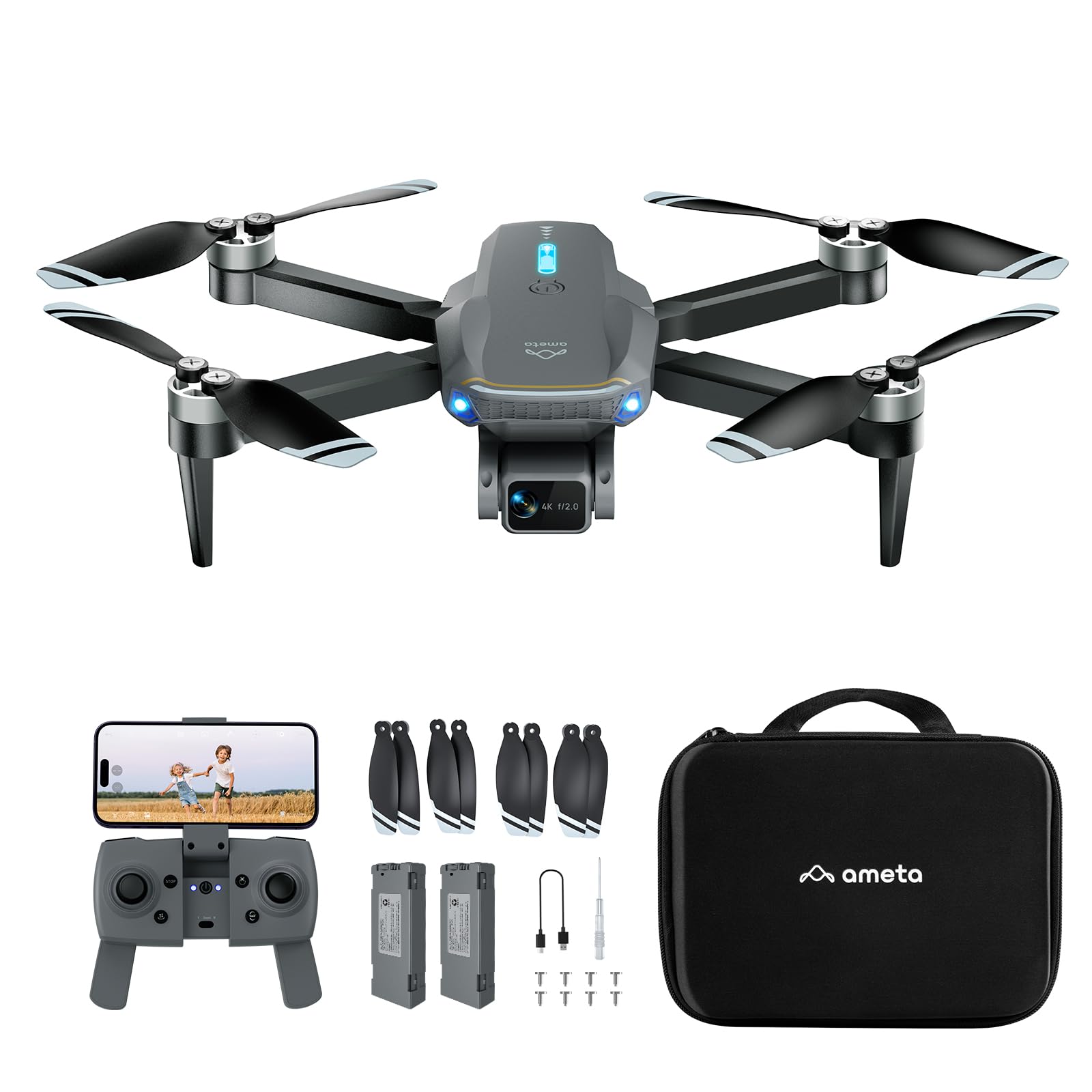
Serious 4K clarity in a frame that slips into your jacket pocket.
What sets this drone apart is the camera hardware. It pairs a 12MP SONY CMOS sensor with a 90-degree adjustable lens to capture 4096 x 3072 resolution images — that’s the widest, sharpest still photos in this budget group. The 5G FPV feed streams smoothly to your phone with minimal delay.
Two intelligent batteries give 36 minutes of combined flight, and the whole thing weighs just 165 grams — under the 249-gram mark that usually requires FAA or Remote ID registration. The foldable design and included premium carrying bag make it genuinely travel-ready. A built-in buzzer and Find My Drone function help you locate it if it lands in tall grass.
Beginner mode and optical flow positioning (a bottom sensor that helps it hover precisely) make it friendly to learn on. The honest trade-off: stability gets mixed feedback, and some customers note it drifting or struggling in wind since it skips GPS. It’s a calm-day flier, but the image quality punches well above its weight.
Standout trait: the SONY sensor and 12MP resolution deliver the best stills in this price class.
Keep in mind: no GPS means wind is the enemy — fly it in calm conditions and it shines.
5. Hocany HK99 GPS Drone
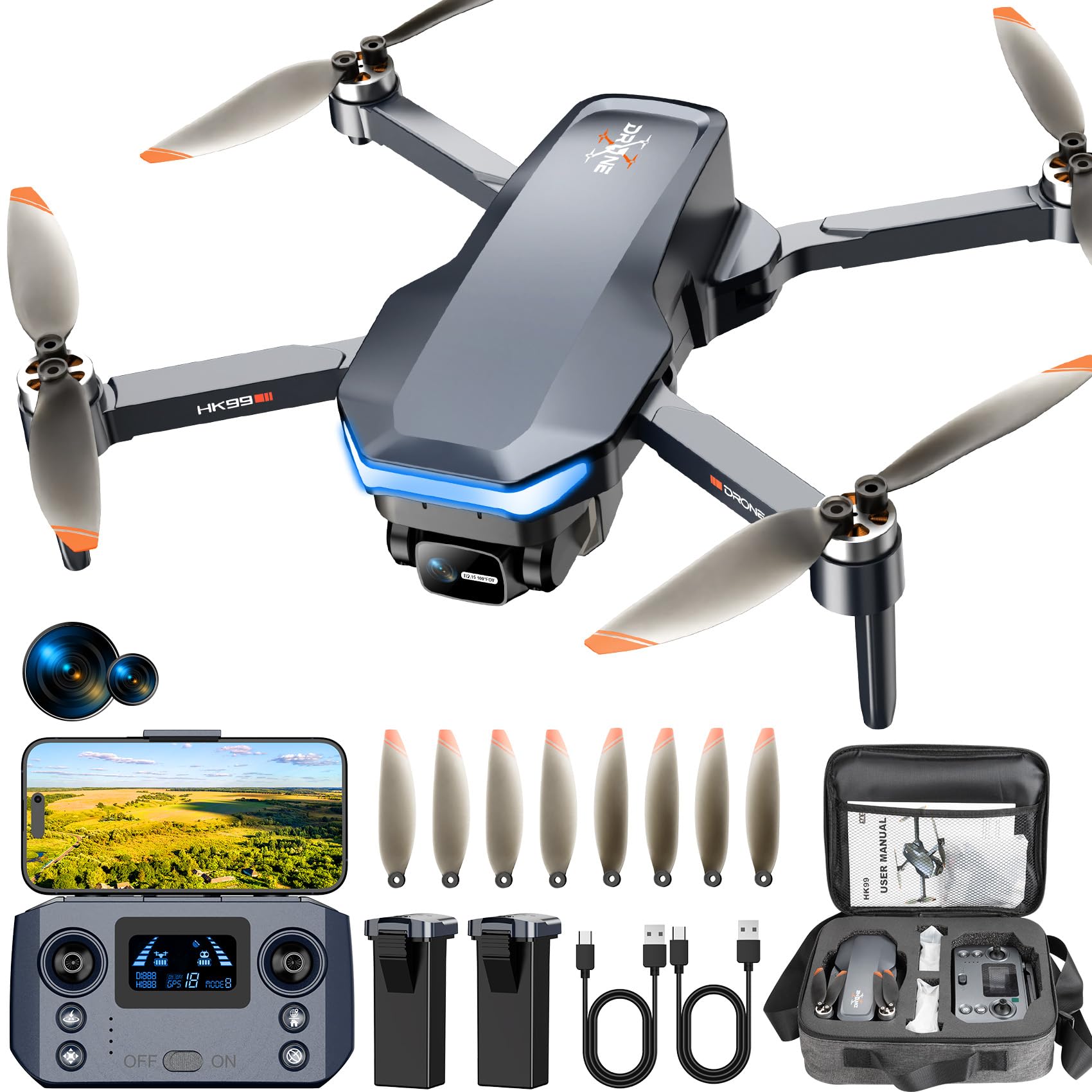
A GPS drone that flies far, checks your roof, and always comes back.
This is the practical pick for anyone who wants to inspect gutters, rooftops, or distant property lines without climbing a ladder. It combines GPS with optical flow positioning for precise location locking, and it handles that job with a 110° wide-angle 4K camera that tilts 90° to point where you need it.
The range is the headline: a stable 1640-foot video transmission with control reach up to 985 feet. Two batteries deliver up to 48 minutes of flight, and brushless motors give it solid wind resistance. The foldable body and custom carrying case make it easy to bring along.
Owners love that it’s genuinely beginner-friendly with beginner mode, headless mode, one-key takeoff, and one-key landing. With a 30-day replacement window and lifetime tech support, the brand backs it up. There’s some mixed feedback on long-term reliability, but most pilots report smooth, stable GPS flight and clear footage that rivals pricier drones.
Choose it when: you want to fly far enough to inspect the property and need GPS to bring it home every time.
Think twice if: you’re a brand-new pilot — the range and speed can outpace your reflexes at first.
6. WeFone WF31 GPS Drone
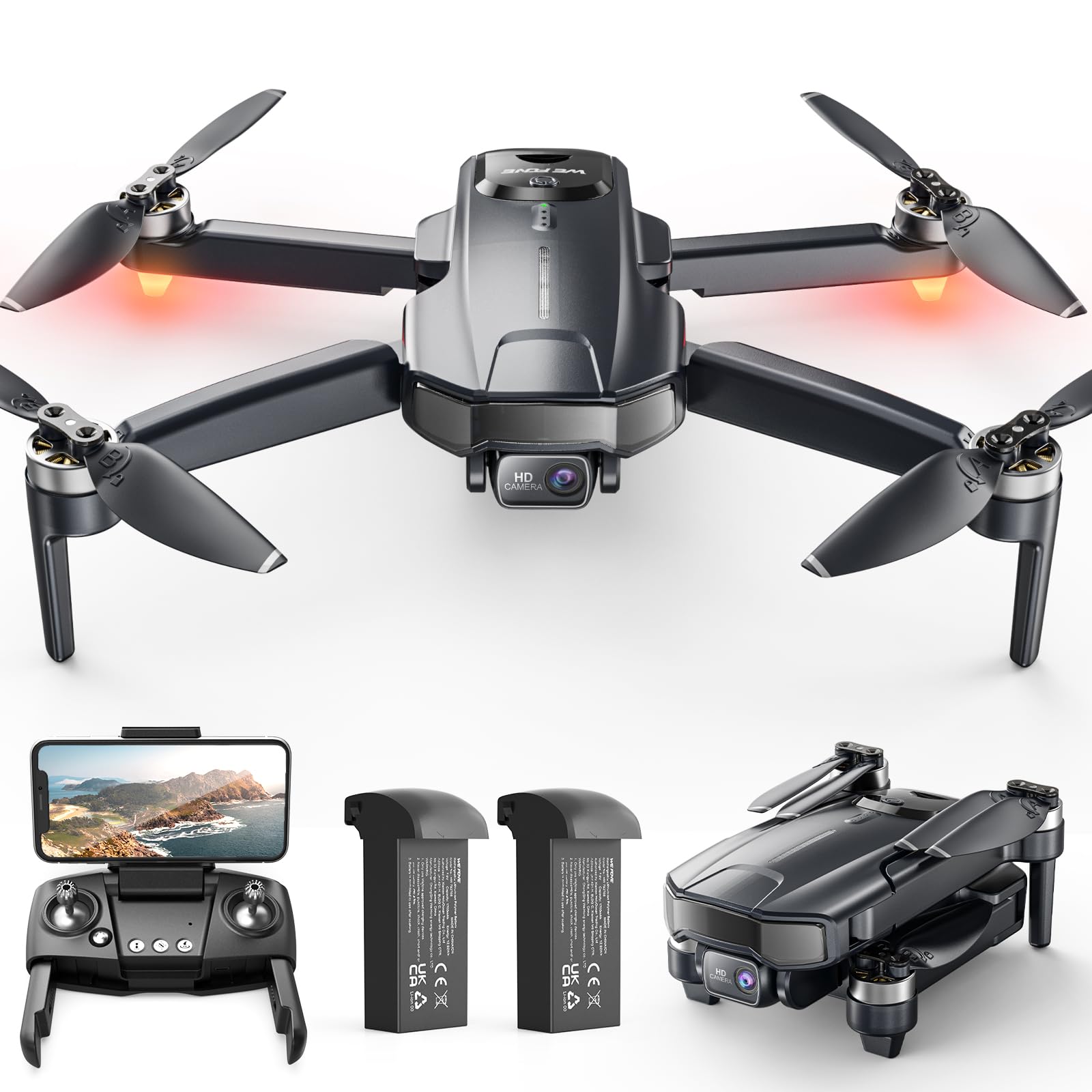
A featherweight GPS drone engineered around beginner confidence.
The WF31 weighs just 7.6 ounces, which puts it comfortably under the 249-gram FAA registration threshold. It runs a 4K camera with a 100° wide-angle lens and 90° adjustment, streaming smooth 5GHz FPV — a high-bandwidth wireless feed that keeps the live view from stuttering.
GPS Auto Return is the centerpiece: press the button, or let it trigger on low battery or signal loss, and it flies back to the takeoff point. Follow Me, Waypoint flight, and Point of Interest give you pro-style shots without pro-level piloting. When GPS is weak, optical flow positioning steps in to stabilize the hover.
Two enhanced batteries add up to 50 minutes of total flight. Reviewers point out it’s genuinely easy for novices, with rear lights showing direction and mode, and a compact carrying bag included. Battery life gets a mixed note — some see the full 25 minutes per pack, others report less, so treat it as “up to” rather than guaranteed.
The draw: pro-grade GPS features — auto return, follow me, waypoints — at a starter price.
The caveat: actual per-battery runtime varies, so keep the second battery charged and nearby.
7. CHUBORY 4K Drone

The endurance king that flies for 84 minutes without touching the ground.
This drone solves the biggest budget-drone frustration: constant recharging. Three upgraded batteries deliver up to 84 minutes of total flight time, which owners say means multiple practice sessions without the annoyance of waiting on a charger. The brushless alloy motors are described as incredibly smooth and quiet.
Its control range is a jaw-dropper for the price — 2650 feet, versus the measly 250 feet many budget drones manage. The 120° wide-angle 4K camera is switchable between the front view and a bottom optical flow camera, so you can watch the sky or the terrain under the aircraft. Gesture Selfie, Follow Me, Trajectory Flight, and Altitude Hold are all onboard.
Under 249 grams, it dodges registration requirements, and the foldable design with carrying case makes it easy to haul. The singular note of caution: a minority of pilots found the companion app unreliable, which affects the camera feed — check your specific phone before relying solely on it.
Why it stands out
- 84 min total runtime across 3 batteries
- 2650 ft control range — class-leading at this price
- Dual front/bottom FPV cameras
- Quiet brushless motors with strong wind resistance
Worth knowing
- App performance is inconsistent for some users
- Camera is HD-capable, though not all pilots see true 4K
Take it if: flight endurance and raw range matter more to you than anything else in this budget bracket.
Pass on it if: you need a flawless phone-app camera experience every single flight.
8. suangrc X9 4K GPS Drone
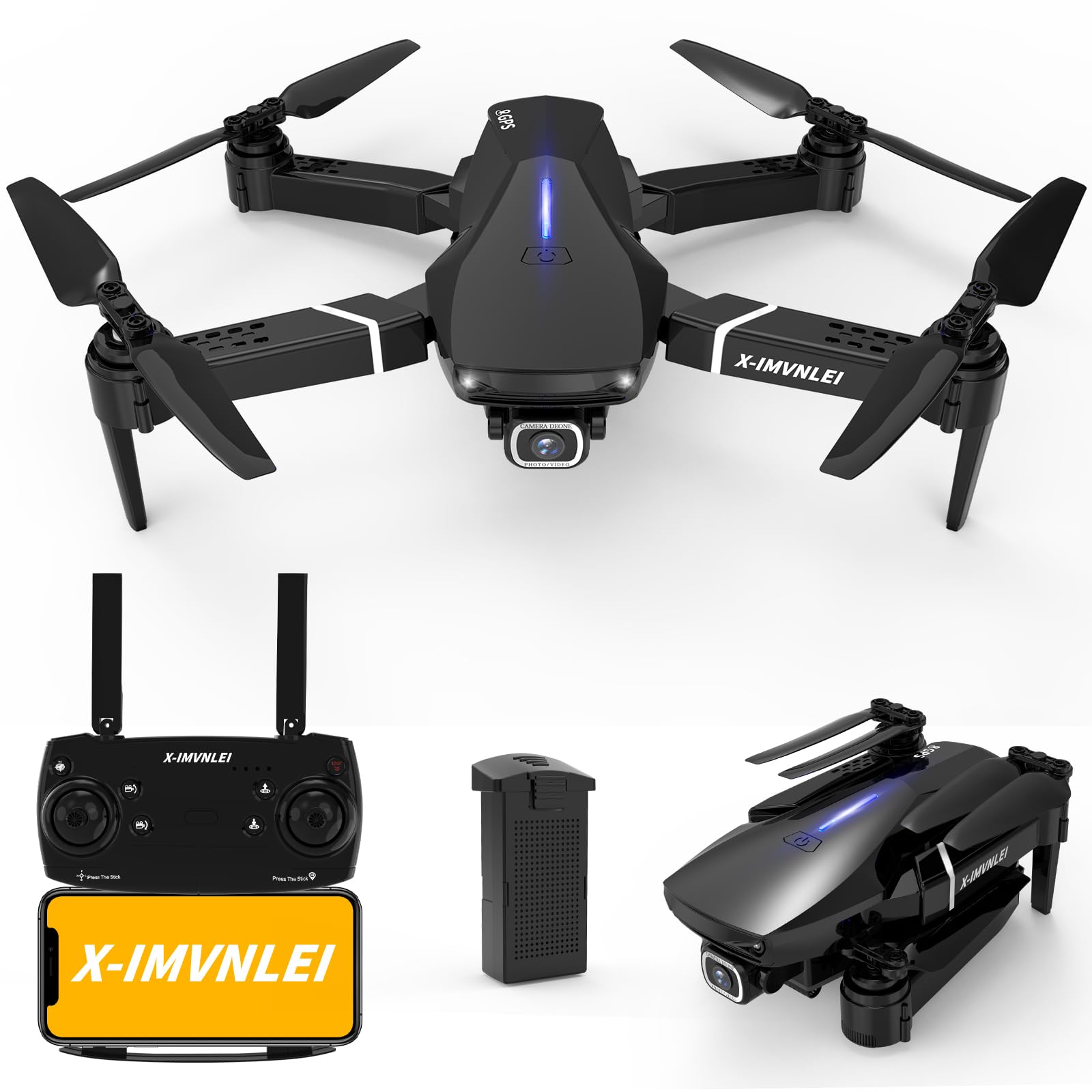
The GPS drone that puts the live view right on your controller’s screen.
This is the pick for anyone who hates fiddling with phone mounts and app connections. The controller has a built-in 4.5-inch LCD screen, so your live FPV feed is right there in your hands — no phone, no app, no pairing hassle. It even comes with an 8GB SD card so you can start recording immediately.
GPS handling is reliably solid, with auto-return, follow-me, and circle modes that owners confirm work well. The 110° adjustable 4K UHD lens frames wide shots, and dual cameras (front plus bottom) give you both views. One-key takeoff/landing, headless mode, altitude hold, and three speed levels make it a friendly first GPS drone.
At 249 grams with a single included battery giving about 18 minutes of flight, it’s lighter on endurance than the multi-battery models. The trade-off is simplicity — owners love that a child can fly it without a phone, and the responsive controls feel intuitive. It’s a calm-day flyer with modest wind resistance.
Standout feature: the integrated 4.5-inch LCD controller screen removes the biggest setup headache in budget drones.
Trade-off to accept: one battery and weaker wind tolerance means shorter, calmer sessions.
9. Oddire HK11 4K GPS Drone

The 4K drone with a fast lens that keeps footage sharp in tricky light.
The camera is the star here: an F2.15 110° wide-angle lens — a bright aperture that lets in more light, which means clearer footage in shade or overcast conditions. It captures 4096×3072 resolution photos and 2048×1088 videos, recorded straight to an SD card. The lens tilts 90° by remote or app for flexible framing.
Dual 7.7V 1800mAh batteries give up to 48 minutes of total flight, and the 5G WiFi transmission keeps a stable live feed. An integrated signal repeater in the remote holds the connection out to 1640 feet. GPS Auto Return, Follow, Waypoint, and Fly Around modes come standard, and it can land itself back on its takeoff spot even in heavy wind.
Owners are genuinely impressed with how stable it holds position and how responsive it feels. It’s under 249 grams, so no FAA or Remote ID registration is needed in most regions. The built-in app filters and music make sharing easy. The main mixed note is battery runtime — the 48-minute claim is best-case across both packs.
Choose this for: the best low-light camera performance and stable GPS auto-landing in this price band.
Know this: SD card sold separately, and expect real-world flight time closer to 20 minutes per battery.
Understanding the Specs
GPS and Return-to-Home
GPS is satellite positioning that lets the drone know its exact location. The Return-to-Home feature uses that to fly back to its takeoff point automatically when the battery is low, the signal drops, or you press the button. It’s the single best insurance against losing a drone to a gust of wind or a misjudged distance. Drones without GPS depend entirely on your piloting skill to stay in range.
Brushless Motors
Brushless motors have no internal brushes rubbing against the moving parts, so they run smoother, quieter, and cooler than older brushed motors. That translates to better wind resistance (the drone doesn’t get shoved around as easily), longer motor lifespan, and less annoying whine. Most budget drones that list brushless motors as a headline feature are investing in actual performance and durability.
FPV and Camera Resolution
FPV stands for First-Person View — a live video feed streamed to your phone or controller screen as you fly. 4K refers to a resolution of around 4000 pixels wide, delivering roughly four times the detail of 1080p HD footage. A 90° or 110° adjustable lens lets you tilt the camera to frame shots. Remember: the sensor and lens quality matter as much as the resolution number, which is why a 12MP SONY sensor can beat a cheaper 4K marketing label.
Flight Time and Battery Count
Flight time is usually quoted as a total across all included batteries, not a single pack. A drone claiming 48 minutes with two batteries typically gives about 24 minutes per charge. Always check how many batteries ship in the box. Swapping a battery takes seconds and beats waiting an hour to recharge, so a multi-battery package is almost always the better value.
FAQ
Do I need a license to fly a budget drone with a camera?
What is the difference between GPS and non-GPS drones?
How long will a budget drone battery actually last?
Is 4K worth it on a budget drone, or is 1080p enough?
Can I fly a budget drone outdoors in the wind?
What does the FPV live view actually show me?
How high and far can a budget drone fly?
Is a brushless motor drone worth paying extra for?
What is optical flow positioning used for?
How do I get the best video quality out of a budget drone?
Final Thoughts: The Verdict
For most buyers, the budget drone with camera winner is the SIMREX G29 because it bundles GPS auto-return, a 90° adjustable 4K camera, and 40 minutes of flight across two batteries into one dependable package. If you want a simple to use starter experience, grab the Hiturbo JY013 with its crash-forgiving build and two batteries. And for the maximum airtime and range, reach for the CHUBORY, which flies 84 minutes across three batteries and controls out to 2650 feet.
How We Picked
We do not accept paid placement. Every pick is matched to a real buyer and a real use-case; we do not hands-on test units.
Sources & Methodology
Specifications: manufacturer listings and product documentation. Review insights: verified customer reviews, as of August 2026. Pricing: not shown on this page (it changes often); check the current price via the retailer link.
As an Amazon Associate, Gadgets Feed earns from qualifying purchases. This does not affect which products we feature.