
Our readers keep the lights on and my morning glass full of iced black tea. As an Amazon Associate, I earn from qualifying purchases.
Specs are compiled from manufacturer listings and verified buyer reviews and can change over time — please confirm the key details on the product page before buying.
Recovering from a broken ankle is a long, careful road, and the right brace can mean the difference between a confident stride and a nervous shuffle. This guide cuts through medical jargon to find an ankle brace that delivers real stability without feeling like a plaster cast. You’ll learn which support features matter most for healing, how to tell a daily-wear brace from a true stabilizer, and which models owners trust long-term.
I’m Min — the founder and writer behind Gadgets Feed. This guide is built by comparing the manufacturers’ published specifications and the patterns across verified customer reviews, so you get each pick’s real strengths and trade-offs instead of marketing spin.
We focus on the support, fit, and real-world comfort that matter most during recovery, so you can walk with confidence. ankle brace after broken ankle choices here are ranked for stability, ease of use, and how well they slip into your normal shoes.
Our Picks at a Glance

How To Choose The Best Ankle Brace After Broken Ankle
Picking a brace after a fracture is different from grabbing one for a weekend sprain. Your ankle needs protection from rolling — that sideways twist that can set back weeks of healing — while still letting you bend your foot naturally for walking. The right brace balances rigid side support with enough flexibility for daily movement.
Rigid Stabilizers vs. Flexible Compression
Look for a brace with firm, splint-like supports running up both sides of your ankle. These stiff panels are what stop your foot from rolling inward or outward. Many designs let you remove these stabilizers, which is ideal because you can keep them in during early healing and take them out later when you need more freedom for sports or long days.
Strap Systems: Figure-8, Stirrup, and Lace-Up
How the brace tightens changes how it feels and how quickly you can get it on. Figure-8 straps cross over the ankle to lock the heel down, a stirrup design pulls up from under the foot, and lace-up styles offer the most precise, evenly distributed compression. Hook-and-loop closures are faster and easier to adjust one-handed, especially when your ankle is swollen.
Quick Comparison
| Model | Best For | Support Type | Closure | Item Weight | Amazon |
|---|---|---|---|---|---|
| Fitomo Figure 8 Brace★ Best Overall | Daily recovery with adjustable rigidity | Removable Side Splints | Hook & Loop | 0.19 kg | Amazon |
| Aircast Air-StirrupTherapist Favorite | Injury rehab and hiking support | Semi-Rigid Shells | Hook & Loop | — | Amazon |
| AGPTEK Lace-Up StabilizerSurgery Transition | Post-surgery support in shoes | Dual Side Stabilizers | Hook & Loop, Lace-Up | 0.18 kg | Amazon |
| Velpeau Stirrup Brace | Grade 1-2 sprains and ligament injury | Adjustable Stirrup Splint | Hook & Loop | 9.44 oz | Amazon |
| Med Spec ASO Speed Lacer | Daily wear and athletic training | Figure-8 Straps | Lace | 6.4 oz | Amazon |
| Active Ankle T2 | High-impact sports like volleyball | Rigid U-Shaped Shell | Single Strap | 7.04 oz | Amazon |
| McDavid Bio-Logix | Construction work and daily stability | Flex-Link Hinge | Adjustable Wrap | 0.2 kg | Amazon |
| BioSkin TriLok | Tendonitis and arch support | Figure-8 Wrap | Figure-4 Straps | 0.2 kg | Amazon |
| Zamst A2-DX | Sports with high-grade sprains | Guard Stabilizers | Stirrup Straps | 5.44 oz | Amazon |
In‑Depth Reviews
1. Fitomo Ankle Brace with Removable Side Splints
Our pick — 4.5★ from 350+ verified ratings; the strongest balance of quality and price.
The triple-lock recovery brace that adapts as your ankle heals.
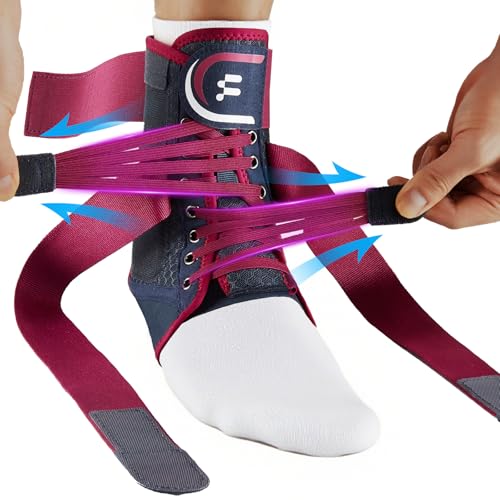
This is our top pick because it tackles the two biggest worries after a fracture: swelling and re-injury. It combines top strap compression, dual removable side stabilizers, and cross straps into a Triple-Lock system that supports sprained ankles and helps prevent rolling. The Figure 8 design lets you fine-tune how tight it feels, so you can loosen it for a desk day and cinch it down before a walk.
What stands out in owner feedback is the build quality — that is the single most-praised feature. The brace is also consistently described as comfortable and secure, with Velcro closures that hold up well and a lightweight build that works with all types of shoes. Because the stabilizers come out, you get strong support early in recovery and a more flexible feel later on. Buyers report it replaced a medical boot with a doctor’s approval and helped heal a severe sprain.
One honest caveat: this is designed for support and protection, not full immobilization. If you need a rigid cast for an acute break, this isn’t that. But for the transition from a boot to real life, it delivers a 0.19 kg frame of confidence that easily slips into most shoes.
Why it wins
- Removable side stabilizers let you scale support as healing progresses
- Figure 8 strap offers fine-tuned compression for different activities
- Stays secure during basketball or long hours without constant readjustment
Keep in mind
- Provides strong support, not full immobilization for an acute fracture
- Some owners note it can rub with very low-cut ankle socks
Reach for this if: you need one adaptable brace that carries you from post-boot healing into daily wear and light activity.
Look elsewhere if: you require a rigid, non-flexing device for an unstable fresh break.
2. Aircast Air-Stirrup Ankle Support Brace
The classic air-filled stabilizer that hikers swear by for pain-free trails.
Physical therapists frequently recommend this brace for its air-cell design that reduces swelling. Semi-rigid shells lined with a Duplex aircell technology system wrap your ankle, and the compression promotes efficient edema reduction — which is a fancy way of saying it helps squeeze out swelling. The contoured shells conform closely, so there is minimal bulk in your shoe.
Functionally, it resists inversion more than taping, yet normal flexion stays virtually unrestricted. That means it stops the roll that caused the injury without making you walk like a robot. Owners mention it eliminates pain when hiking, and it suits acute injuries, post-op use, chronic instability, and grade I-III sprains.
The trade-off here is the fit. The support is the most-praised aspect with strong effectiveness feedback, but comfort and fit get mixed opinions — some find the position shifts, causing plastic pressure, and a few report air bladders deflating. This is a brace that rewards careful strap positioning.
Stability first: owners consistently rate this highly for holding the ankle in line and reducing pain during recovery, making it a strong choice for returning to uneven terrain.
Best suited to: anyone cleared for activity who wants proven, therapist-backed support that fits inside normal shoes and boots.
Consider a different fit if: you have had trouble with plastic braces shifting or want an air bladder that holds pressure indefinitely.
3. AGPTEK Lace-Up Foot Stabilizer
The post-surgery pick that beats a doctor’s plastic brace for comfort.
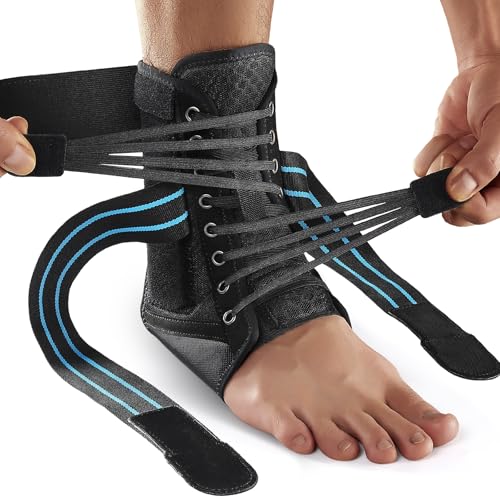
After foot surgery, the last thing you want is another rigid, uncomfortable device. This AGPTEK brace pairs 360° support — reinforced dual side stabilizers, X-cross compression straps, and top wrapping — with an open heel design that enhances natural movement. This targeted compression relieves pain and reduces swelling without the bulk of a hospital brace.
Customers note it is more comfortable than the doctor’s plastic brace, and a size M fits a Women’s 10W well. The quick-lace system with dual-direction hook-and-loop fasteners secures in about one second, and the elastic laces adapt to a swollen or normal foot. Weighing 0.18 kg, it is slightly lighter than the Fitomo above, and the honeycomb ventilation zones keep it breathable for all-day wear.
At 4.4 stars from hundreds of owners, the quality and comfort are the standout themes. One buyer did wish for stiffer plastic supports on the sides, so if you need absolute rigidity, this might feel a touch flexible. But for daily wear after surgery, it is a clear winner.
The strong points
- Velcro straps and quick-lace save time versus traditional lace-ups
- Removable lateral splints allow customization for rehab or sports
- Open heel design prevents irritation and allows natural movement
Watch out for
- A couple of owners found the side supports not stiff enough
- Fit gets mixed feedback, so check the size chart carefully
Grab this if: you want the comfort of a sleeve with the structure of a splint for post-surgery recovery or daily wear.
skip it if: you demand the maximum stiffness of a fully rigid stirrup splint.
4. Velpeau Ankle Stabilizer Brace
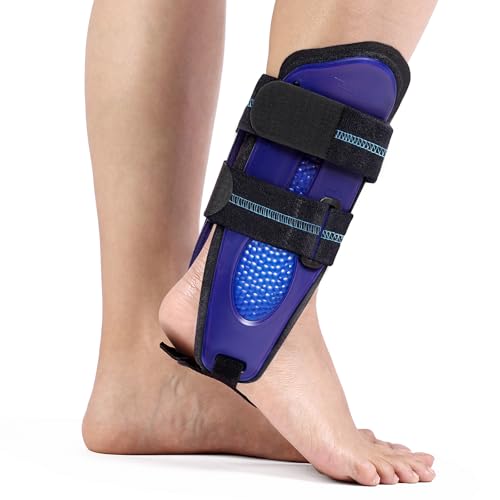
A stirrup splint that cools swelling and fits either foot.
What makes this Velpeau brace clever is the gel pad option. In the Gel Pads version, you can pop the pad in the freezer for a cold compress on acute swelling, or heat it in hot water for heat therapy. The plastic splints on both sides use Bi-Injection technology, so the bony parts of your ankle sit in gel-protected holes rather than pressing against hard plastic.
At 9.44 ounces, it is a substantial-feeling brace, and the two large lateral straps with a buckle system distribute pressure evenly so it doesn’t fall off easily. It is designed for ankle fibular ligament injury (Grade I and II), chronic instability, and post-operative use. The reversible design means one brace works for both feet — useful if you need to switch sides.
The ankle support itself is the most-praised aspect, and owners say it prevents side-to-side motion while keeping a normal stride. Fit is the mixed note here: some find it bulky in shoes, especially with narrow ankles, and a rare unit has had strap issues. It works great with crocs or stretchy footwear.
Function with a caveat: this brace delivers excellent stability for weak or rolled ankles, but its padding makes it better suited to roomier shoes.
Choose this for: ligament injuries where you want the option of hot or cold therapy and the convenience of a brace that fits both feet.
Think twice if: you need a slim profile that vanishes inside narrow athletic shoes.
5. Med Spec ASO Speed Lacer Ankle Stabilizer
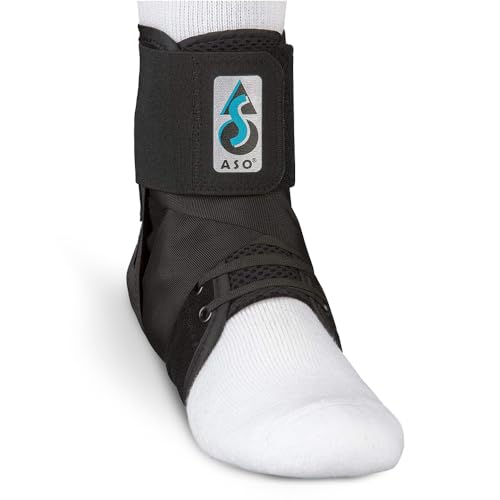
The speed-lace brace that tightens evenly in seconds, no re-tying.
If you have ever hated fussing with laces mid-game, the ASO Speed Lacer solves it. The quick-pull hook and loop closure tightens evenly in seconds, giving repeatable compression without re-tying — ideal for practices and everyday training. The Figure-8 stabilizing straps secure the heel and resist inversion, while the low-profile shape slides into most athletic footwear.
At 6.4 ounces, this is one of the lighter braces here, and the breathable tongue and padded boot support long shifts on your feet. The bilateral design works on either ankle, and durable materials stand up to basketball, soccer, and running. Owner feedback is glowing on quality and ease of use, which are the two most-praised aspects by far.
The main complaint is fit for wide calves — even sizing up can leave extra foot fabric — so it rewards a careful look at the size chart and a snug lace adjustment.
What owners love
- Speed lace system makes on/off much easier than traditional lacing
- Strong, durable construction that restricts movement well
- Oversized finger loops allow one-handed tension adjustment
The honest limits
- Fit is mixed, particularly for wider calves
- May rub the shoe collar during wear
Best for: athletes and workers who want a fast, repeatable lockdown that supports a healing ankle through drills and long days.
Not ideal for: those with very wide calves who need a more forgiving upper cuff.
6. Active Ankle T2 Ankle Brace
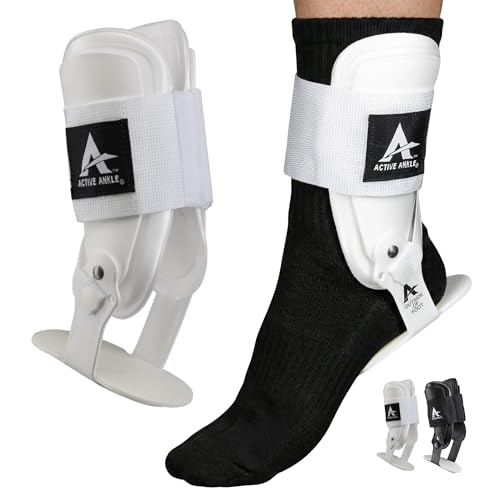
The rigid stabilizer built for volleyball landings and quick cuts.
When you return to high-impact sports after a break, you want maximum protection against that sideways roll. The Active Ankle T2 uses a rigid U-shaped shell to minimize side-to-side movement — think of it as a plastic bumper around your ankle bone. With 7.04 ounces of weight and an anatomical bilateral hinge, you stay mobile while the shell absorbs the dangerous motion.
The Small size fits men’s shoe size 5-7 and women’s 6-8, and the feather-light EVA padding molds to your ankle for extended wear. A single strap system adjusts for low-top or high-top shoes, and the latex-free build suits injury prevention or post-sprain stabilization. Reviewers point out it provides “a lot of lateral stability,” which is the thing everyone raves about — quality and protection are the top-praised aspects here.
The honest trade-offs: the sticky bottom plate can collect lint, it squeaks after a couple of weeks for some, and it stretches shoe sides if left in your footwear. Durability is mixed, with one report of a break after a month, but for many, the stability is worth it. Place the insole over the foot pad for extra steadiness.
Athlete-first design: the wide Velcro strap stays put and the shell prevents twists, making it a favorite for indoor volleyball middles and outside hitters.
Pick this up for: returning to volleyball, basketball, or cheerleading where every landing tests your ankle’s strength.
pass on it if: you want a brace that disappears into your shoe without stretching it, or you only need light daily compression.
7. McDavid Bio-Logix Ankle Brace
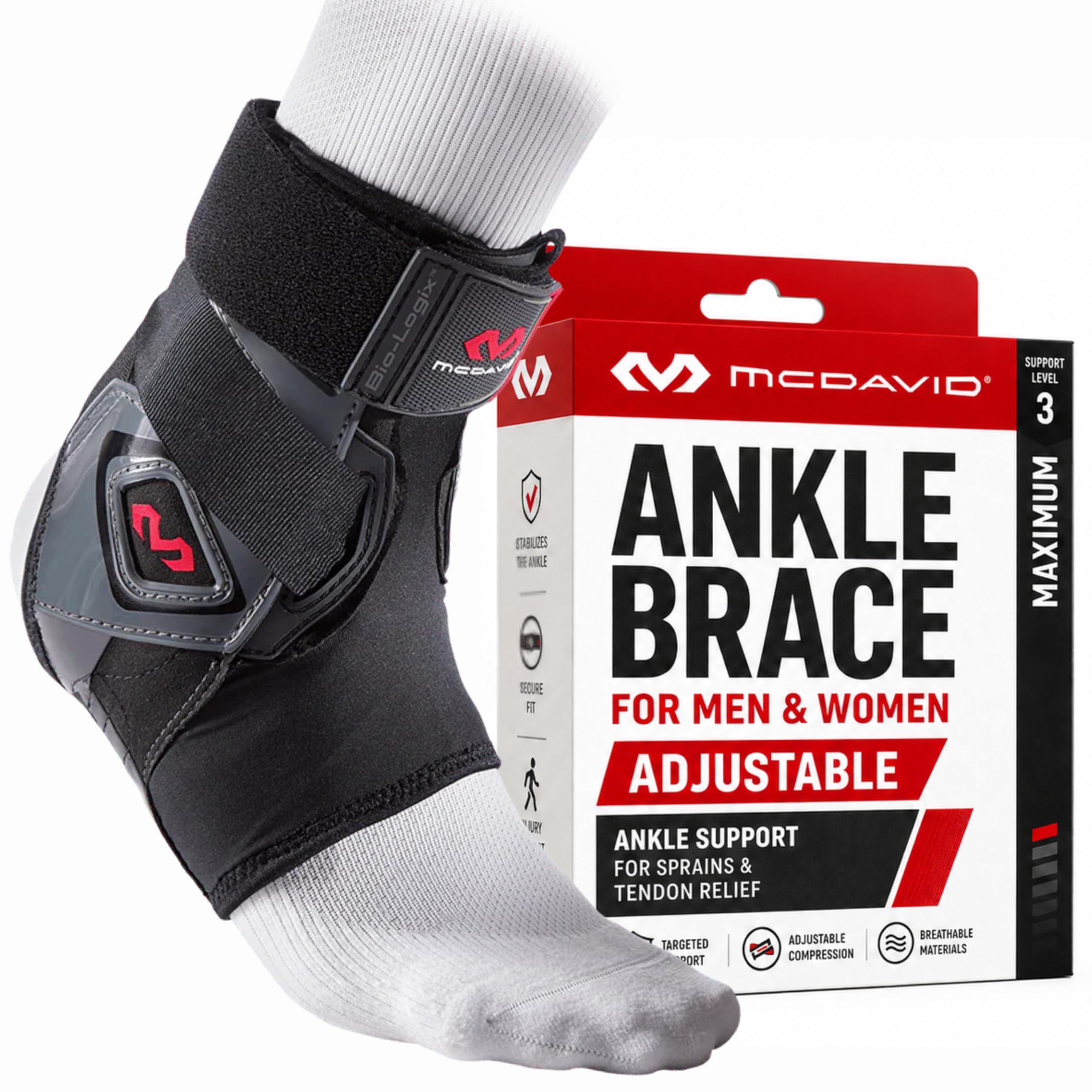
The hinge-hybrid that keeps working ankles supported through tough jobs.
This McDavid brace takes a different approach: instead of stiff side splints, it uses a Flex-Link hinge design for maximum support with a more natural body-in-motion feel. The memory foam padding surrounds your ankle joint, and multiple anchor straps let you customize the tightness to your liking. It is a low-profile design that is lightweight and highly supportive.
The most compelling endorsement comes from a construction worker recovering from a broken talus bone, who used it daily to climb ladders. They reported the ankle doesn’t ache by the end of the day and that it is comfortable and not bothersome. It also helps with mobility during recovery and is anatomically specific for right or left ankle — this one is a Right M/L size.
Support and quality are the most-praised aspects, but the fit is mixed, with some finding it too small. One buyer rated it a 3, saying it allows a few movements and has no hinges or plastic moldings, which means less chafing but perhaps slightly less rigid brace support than a stirrup design. Weighing 0.2 kg, it is comparable to the Fitomo and BioSkin options.
Comfort-driven stability: the memory foam and hinge combo give you protection without the hard plastic dig, perfect for all-day wear on your feet.
Reach for this if: you work a physical job or want a supportive brace that feels like a padded wrap rather than a plastic cage.
Look elsewhere if: you need the maximum rigidity of a hinged or stirrup splint for intense cutting sports.
8. BioSkin TriLok Ankle Brace

The engineered wrap that supports your arch and ankle as one unit.
What separates the TriLok from a simple compression sleeve is the FootLok strap, which lifts and supports the arch while the figure-8 wrap stabilizes the ankle. Instead of treating the foot and ankle separately, they work together — a combination that makes this a top choice for posterior tibialis tendonitis and arch issues alongside sprains.
The payoff is real: shoppers say immediate pain relief when walking and stairs become manageable, with near-zero pain and reduced swelling within a week. It fits in trainers, flats, boots, and cleats, and one bilateral design works on either foot. The materials are lightweight, breathable, and hypoallergenic, weighing 0.2 kg.
The catch is the learning curve. With four straps and a specific wrap path, it can take 20 minutes to put on the first time, and the included instructions are hard to find — most people have it down by the second or third wear. Comfort and effectiveness are the most-praised aspects, but sizing is mixed. The maker suggests sizing down for narrow feet at the bottom of a range and sizing up for wide feet.
The engineering win
- Arch lift plus ankle stability in one integrated system
- Low-profile materials fit in cleats and court shoes
- Strong pain relief and support for tendonitis
Before you buy
- Significant learning curve to apply it correctly
- Can slide down the calf if not adjusted precisely
Best for: tendonitis or arch-related ankle pain where you need targeted, integrated support and are willing to practice the four-step application.
Not for: anyone who wants a grab-and-go brace with no learning process.
9. Zamst A2-DX Ankle Brace
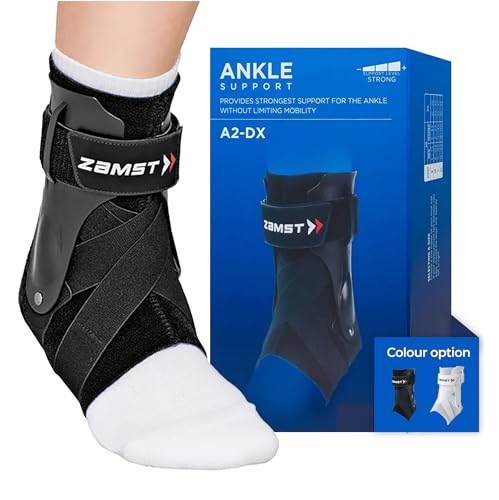
The stirrup-action brace for athletes who refuse to give up their sport.
The Zamst A2-DX is built for the athlete recovering from a high ankle sprain or dealing with chronic instability. It focuses on the positional difference of the ankle on both sides to stabilize the joint and prevent rolling. A connected plantar strap and cross strap pull upwards from the heel in a stirrup action, adding an extra layer of support specifically for ankle sprain relief.
Weighing just 5.44 ounces, it is remarkably light for the support it provides, using thin, low-profile materials with excellent ventilation. It is designed for tennis, football, volleyball, basketball, and gym work. A buyer with no ATFL (a key ankle ligament) reported it enabled them to play soccer again after a high sprain, calling it the “least bulky high-support brace.”
This is the premium end of the spectrum, aimed at active use rather than sitting on a couch. The directions are overly complicated — owners advise ignoring the text and just following the pictures, which makes it easy to put on in seconds. It develops odor with heavy use, so hand-washing is needed. Effectiveness and support are the top-praised aspects, and one reviewer noted it added great support to weak ankles after a college break.
For the dedicated athlete: this hinge-style brace allows running and cutting while strongly resisting re-rolling — a worthy investment for pickleball, soccer, or basketball returns.
Pick this for: high-grade sprains and chronic instability where you need max support with minimal bulk under your shoe.
Pass if: you only need light daily compression and don’t want to learn a specific application sequence.
Understanding the Specs
Removable Side Stabilizers
These are the stiff panels running up both sides of your ankle. They stop it from rolling inward or outward, which is how most ankle injuries happen. The key word is removable — keeping them in during early recovery gives you rigid protection, and taking them out later allows a more flexible feel for daily wear or sports. If you are healing from a break, look for a brace that gives you this option so you are not stuck buying a second brace later.
Strap Systems and Closures
How a brace tightens changes how it feels on your foot and how quickly you can get it on. Figure-8 straps cross over the ankle to lock the heel down, giving you fine-tuned compression. A stirrup design pulls up from under the foot for an added level of support. Lace-up styles distribute pressure most evenly, but hook-and-loop (Velcro) closures are faster and easier to adjust one-handed — a real benefit when your ankle is swollen and you do not want to bend over struggling with laces.
FAQ
How is an ankle brace different from a walking boot after a fracture?
Can I wear an ankle brace inside my regular shoes?
When should I remove the side stabilizers during recovery?
How long does an ankle brace last with daily use?
Will a brace stop my ankle from rolling on uneven ground or in sports?
Is a lace-up brace better than a hook-and-loop brace?
Can I use a brace for both my left and right ankle?
Are these braces safe to wear all day?
How do I put on the BioSkin TriLok correctly?
Final Thoughts: The Verdict
For most people recovering from a break, the ankle brace after broken ankle winner is the Fitomo Figure 8 Brace because its removable stabilizers and triple-lock system adapt to every stage of healing. If you want the proven, therapist-recommended air-cell design for hiking and injury rehab, the Aircast Air-Stirrup is the one to reach for. And for athletes refusing to give up their sport, the Zamst A2-DX brings stirrup-action support with the least bulk at 5.44 ounces. With a crowd of thousands of owners across these picks backing their performance, you can choose with confidence based on your activity level and recovery stage.
How We Picked
We do not accept paid placement. Every pick is matched to a real buyer and a real use-case; we do not hands-on test units.
Sources & Methodology
Specifications: manufacturer listings and product documentation. Review insights: verified customer reviews, as of August 2026. Pricing: not shown on this page (it changes often); check the current price via the retailer link.
As an Amazon Associate, Gadgets Feed earns from qualifying purchases. This does not affect which products we feature.