
Our readers keep the lights on and my morning glass full of iced black tea. As an Amazon Associate, I earn from qualifying purchases.
Specs are compiled from manufacturer listings and verified buyer reviews and can change over time — please confirm the key details on the product page before buying.
A winter tent must handle snow, freezing rain, and howling wind—unlike a summer shelter. The real test is whether the poles survive a gusty night and whether you stay warm below freezing. Here are the three best solo winter tents, judged on pole strength, snow load, and warmth.
I’m Min — the founder and writer behind Gadgets Feed. This guide is built by comparing the manufacturers’ published specifications and the patterns across verified customer reviews, so you get each pick’s real strengths and trade-offs instead of marketing spin.
Whether you’re a backpacker counting every ounce or a car camper who wants a quick setup, here’s how to choose the right 4 season single person tent.
Our Picks at a Glance

How To Choose The Best 4 Season Single Person Tent
A true 4-season tent is built differently from a 3-season one. It uses stronger poles to shrug off snow load, and it usually has less mesh so it can trap your body heat. That warmth comes with a cost: poor ventilation can mean waking up to a wet sleeping bag from condensation.
Weight vs. Durability
Your biggest decision is how you’ll carry it. A backpacker wants the lightest option possible, measured in pounds, while a car camper can afford a heavy shelter that feels like a fortress. Weight isn’t just about your back — a lighter tent often uses thinner fabric that may not survive a branch falling on it.
Waterproofing and Pole Strength
Look at the waterproof rating, which tells you how much water pressure the fabric can handle before leaking. A rating of 3000mm is solid for most conditions. The poles are just as important — aluminum is the standard for strength without excess weight, but the exact alloy and design affect how much wind it can take.
Quick Comparison
In‑Depth Reviews
1. OneTigris Stella 4 Season Camping Tent
Our pick — over 4.5★ from 450+ verified ratings; the strongest balance of quality and price.
The crowd-pleasing dome that balances winter toughness with a backpackable 4.8-pound frame.
The Stella is the pick that wins people over with pure build quality — it’s the most-praised aspect by a long shot. It’s a genuine 4-season shelter that buyers report has “survived 30-40mph winds and rain dry,” which is exactly the kind of confidence you want when a storm rolls in at dusk. The 3000mm waterproof rating on the 20D nylon fly means you stay dry in a downpour, and the 40D nylon floor adds a tougher layer under your sleeping bag.
Setup is remarkably fast — most owners have it standing in about 3 minutes thanks to the flexible poles that cross at the top and anchor on all four corners. The removable blackout outer tent is a clever touch, letting you block morning light or leave it off for stargazing.
The honest trade-off here is heat management. It holds warmth beautifully in cool weather — a big plus for winter — but the ventilation is limited, and a few tall owners note that 6-foot-plus sleepers have to lie angled. The interior is tight on headroom, and the fly can stick to the inner tent in humidity. For the price, though, it “punches above its price and beats many premium brands,” as the review pages sum it up.
Why it wins: Outstanding value with premium-level durability, a huge floor for one person, and a sub-5-pound weight that backpackers can live with.
The trade-off: Limited airflow means hot nights, and the low height won’t suit very tall campers.
Reach for this if: you want one tent that does winter storms and summer trips without breaking your back or your budget.
Look elsewhere if: you’re over 6 feet tall and need full-length lying room, or you sleep hot and need serious airflow.
2. MSR Freelite 1-Person Ultralight Backpacking Tent

The featherweight champion that shaves ounces but demands careful handling on the trail.
The Freelite is the go-to for the gram-counting thru-hiker who wants a true 4-season shelter on their back. It’s celebrated for being “very light, extra compact,” and its semi-freestanding design with DAC NFL aluminum poles keeps the weight down while still offering a roomy rectangular floorplan. With 39 inches of headroom and a 20 square foot floor, it’s more like a bivy-plus than a cramped coffin.
The tech-friendly details are genuinely useful: every pocket has a cable port for running a charging cord to your phone, and the waterproof DuraShield-coated rainfly and floor use taped seams to keep moisture out. The unified hub-and-pole system makes setup and pack-down quick, and it all compresses into a small stuff sack. This is the option that disappears into your pack until you need it.
Here’s the honest catch — this is the pick with the most polarizing owner feedback. Some owners mention a “pole snapped first night” and the door stake string popping off in mild weather, which is worrying for a premium-priced shelter. Others find the top too narrow and note the door can let water in when opened in rain. The nylon rainfly stretches when wet, so you’ll need to re-tension the guylines. It’s a niche tool: brilliant for the weight-obsessed, but you must treat the components gently.
What the gram-counters love
- Extremely light and compact for a 4-season solo shelter
- Smart cable ports on every pocket for device charging
- Quick hub-and-pole setup with a symmetrical design
Where it gets delicate
- A few units arrived with poles snapping on the first night
- Door design can drip water inside when opened in rain
- Rainfly stretches when wet and needs re-tensioning
Who it beats: anyone carrying this for miles — nothing else here comes close on pack weight.
Who it doesn’t: if you want bombproof durability over a low pack weight, the heavier options are the safer bet.
3. Kakadu Canvas Swag Tent, 1 Person
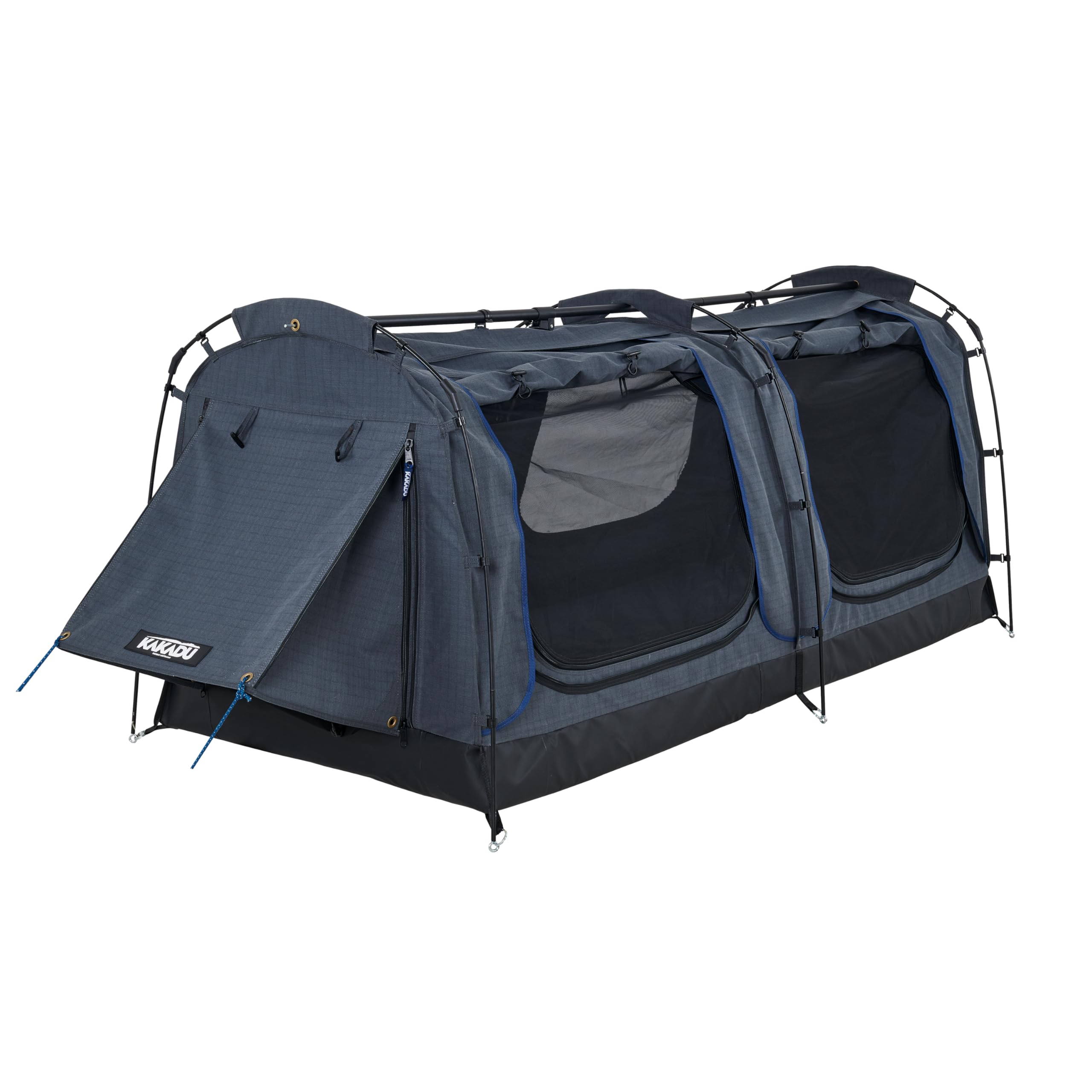
The 39.7-pound mobile bedroom that swaps backpacking for a hotel-quality night under the stars.
This is a completely different breed of shelter. The Kakadu is a canvas swag — a freestanding ground tent that sets up in about 1 minute, which is 3 times faster than the OneTigris Stella. At 39.7 pounds, you’re not carrying this anywhere; you’re driving it to camp. But what you get for that weight is a near-vertical-walled room with a built-in 2.75-inch high-density foam mattress that owners call “honestly pretty nice.”
You can camp through scorching heat, heavy rain, and snow because this tent uses 420gsm ripstop polycotton canvas with a 600gsm PVC bucket floor. The ClimaTech gusseted end windows (ventilated flaps that open even in storms) keep air moving, so you won’t wake up stuffy. A built-in Lumos LED light strip (a low-glare light sewn into the fabric) lets you find the bathroom at midnight without fumbling for a flashlight. Six storage panels keep your gear off the mattress, and it fits a Teton XXL cot (an extra-wide camping bed) perfectly for big guys — even with a 30-pound dog sharing the space.
The one cloud over this otherwise stellar setup is water resistance. A few owners reported that after hard rain, the inside got wet, with water pooling under the mattress — a serious issue for a tent advertised as waterproof. Most buyers love it, praising the sturdy build and stout zippers, but if you camp in persistent downpours, you’ll want to seam-seal it yourself or bring a tarp. The oversized carry bag also barely fits in a large rooftop box, so check your storage space first.
Basecamp luxury: A mattress, LED lighting, and near-instant setup make this feel less like camping and more like a cozy micro-cabin.
Rain risk: The waterproofing has vocal skeptics — treat this as “mostly dry” until you’ve sealed the seams.
Choose it when: you’re car camping, moving camp often, and want zero assembly hassle with real sleeping comfort.
skip it if: you need to carry your shelter on your back, or you face heavy rain without the chance to add extra sealing.
Understanding the Specs
Waterproof Rating (mm)
This number tells you how much water pressure the fabric can handle before leaking, so you know if your tent will stay dry in a storm. A 3000mm rating, like on the OneTigris Stella, means it handles heavy rain well — you can sleep through a downpour without drips. Anything lower struggles in sustained rain, while higher numbers give you extra confidence for long, wet trips.
Floor Area and Headroom
A solo tent’s floor area tells you if you can stretch out and store gear. The MSR Freelite’s 20 square feet is tight but workable, while the OneTigris’s 28.29 square feet is genuinely roomy. Headroom matters if you sit up to change clothes — a low tent will have you hunched over.
FAQ
What makes a tent a true 4-season tent?
How heavy is too heavy for a solo backpacking tent?
Will a 4-season tent be too hot in summer?
What is a swag tent and who is it for?
Why does condensation build up inside a winter tent?
How important is the waterproof rating number?
Can I use a 1-person 4-season tent for 2 people?
What should I check before buying a canvas tent?
Final Thoughts: The Verdict
For most solo winter campers, the 4 season single person tent winner is the OneTigris Stella because it delivers premium durability, a generous 28.29 square foot floor, and a backpackable 4.8-pound weight at a value price. If you’re a gram-counting thru-hiker, the MSR Freelite is the ultralight specialist to reach for. And for car campers who want a 1-minute setup with a built-in mattress, the Kakadu Canvas Swag is the one to grab.
How We Picked
We do not accept paid placement. Every pick is matched to a real buyer and a real use-case; we do not hands-on test units.
Sources & Methodology
Specifications: manufacturer listings and product documentation. Review insights: verified customer reviews, as of August 2026. Pricing: not shown on this page (it changes often); check the current price via the retailer link.
As an Amazon Associate, Gadgets Feed earns from qualifying purchases. This does not affect which products we feature.