
Our readers keep the lights on and my morning glass full of iced black tea. As an Amazon Associate, I earn from qualifying purchases.
Specs are compiled from manufacturer listings and verified buyer reviews and can change over time — please confirm the key details on the product page before buying.
If you are shopping for a 1/4 sheet sander, you already know the drill: the sandpaper keeps slipping, the dust cloud follows you around the room, and your hand goes numb after ten minutes. The right pick solves all three at once. This guide breaks down the nine models worth your money, from a no-frills corded workhorse to a premium brushless kit, so you can match the tool to the actual project on your bench.
I’m Min — the founder and writer behind Gadgets Feed. This guide is built by comparing the manufacturers’ published specifications and the patterns across verified customer reviews, so you get each pick’s real strengths and trade-offs instead of marketing spin.
You will find the 1/4 sheet sander that fits your workshop, your hand, and your patience for dust and noise.
Our Picks at a Glance

How To Choose The Best 1/4 Sheet Sander
A 1/4 sheet sander, often called a palm sander, uses a flat rectangular pad that vibrates in tiny circles to smooth wood, paint, or drywall. Before you pick one, you need to decide between a cord that never runs out of power and a battery that lets you work anywhere. The table below compares the key specs, and the sections after it explain what each number actually means for your projects.
Amperage and OPM: The Power Duo
Amperage tells you how much electrical current the motor draws, which usually translates to sanding muscle. The OPM, or orbits per minute, tells you how fast the pad vibrates. A higher OPM like 14,000 removes material faster, while a variable-speed dial lets you slow things down for a finer finish on delicate work.
Dust Collection: Bag, Canister, or Vacuum
Every sander here collects dust somehow, but they do it differently. A cyclonic canister separates dust from air before it hits the filter, a standard bag catches what it can, and a vacuum port lets you hook the tool straight to a shop vac for near-zero dust. If you are sanding indoors, this is the difference between a quick cleanup and a full-room dusting session.
Paper Clamp System and Weight
You will change sandpaper constantly, so the clamp system matters more than you think. Hook-and-loop pads let you peel sheets off in seconds, while lever clamps hold traditional punch-hole sheets but take a bit more fiddling. Weight is equally important: a 2.2-pound tool is easier on your wrist than a 3.8-pound one during a long sanding session.
Quick Comparison
| Model | Best For | Motor Power | Speed (OPM) | Weight | Amazon |
|---|---|---|---|---|---|
| Makita BO4557★ Best Overall | Pro-grade corded finishing | 1.6 Amp | 14,000 rpm | 2.2 lbs | Amazon |
| ZEITE 2.4ABest Value | Budget value with cyclonic dust | 2.4 Amp | 14,000 OPM | 3.1 lbs | Amazon |
| RYOBI S652DGKDIY Starter | First-time DIY buyers | 2 Amp | 14,000 rpm | 3.1 lbs | Amazon |
| RYOBI PCL401B | ONE+ battery owners | 18V Cordless | 14,000 OPM | 3.2 lbs | Amazon |
| CRAFTSMAN CMCW222B | Variable-speed cordless work | 20V Cordless | 9,000-12,000 OPM | 3.2 lbs | Amazon |
| Black+Decker QS900 | Small jobs and polishing | 2 Amp | 16,000 OPM | 2.6 lbs | Amazon |
| BOSCH GSS20-40 | Low-vibration finishing | 2 Amp | 12,000 OPM | 2.7 lbs | Amazon |
| Milwaukee 2649-20 | M18 battery platform users | 18V Cordless | 11,000-13,000 OPM | 3.8 lbs | Amazon |
| DEWALT DCW200D1 | Brushless precision with kit | 20V Brushless | 8,000-14,000 OPM | 2.1 lbs | Amazon |
In‑Depth Reviews
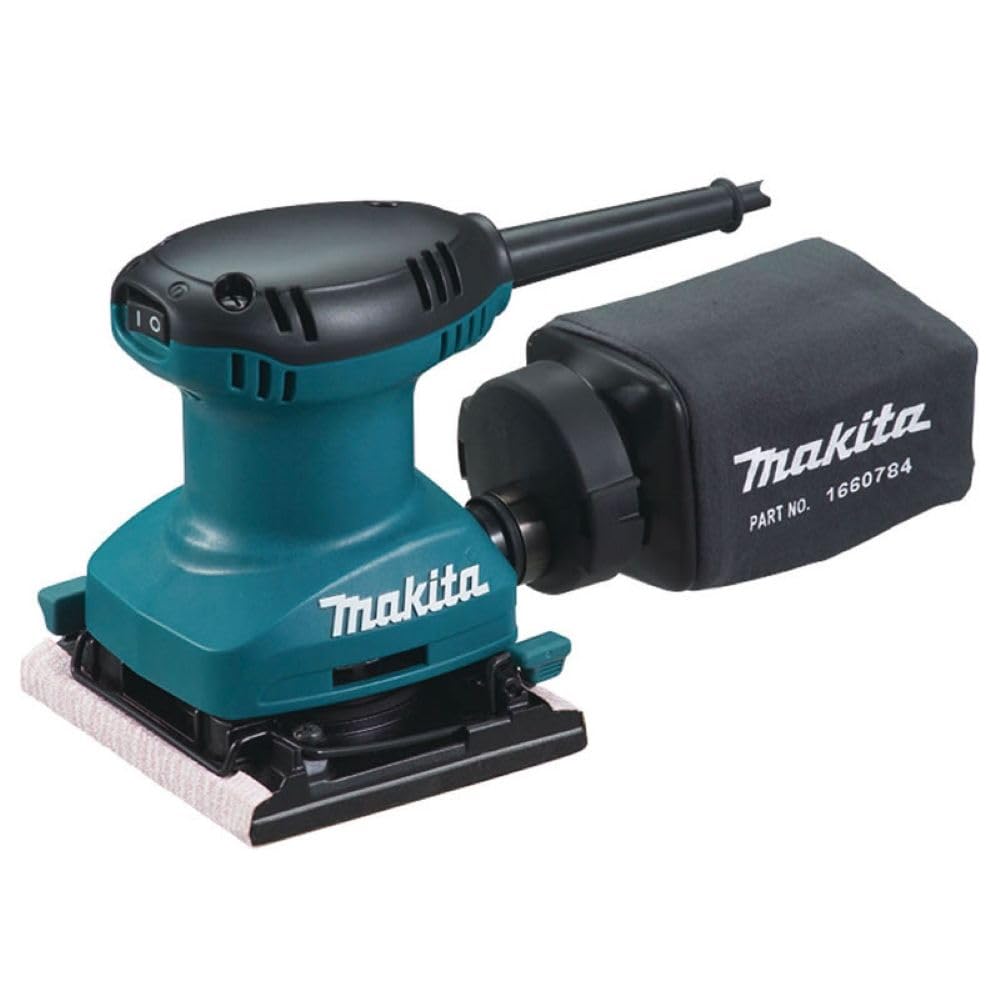
1. Makita BO4557 1/4 Sheet Finishing Sander
Our pick — over 4.5★ from 300+ verified ratings; the strongest balance of quality and price.
The corded pro’s choice that trades raw amps for buttery-smooth, precision finishing.
The Makita BO4557 is the sander you reach for when the finish has to be flawless, not just fast. Its all ball-bearing construction keeps the pad running smoothly and is built to shrug off years of shop abuse. At 1.6 amps it is not the most powerful motor on this list — the ZEITE below delivers 50% more amperage — but this tool is about control and consistency, not brute force.
The through-the-pad dust collection system is a genuine standout: it pulls dust down through the sandpaper and out the back, which keeps your work surface visible and your lungs happier. It spins at 14,000 rpm, giving you the speed you need for efficient material removal without the vibration that tires your hand out.
Weighing just 2.2 pounds, it is the lightest corded option here and noticeably easier to maneuver than the 45% heavier RYOBI cordless. Fans of the brand consistently call it “very solid, well-built” — the kind of praise that follows Makita around the world in any language. It measures 110mm x 110mm x 133mm, a compact footprint that fits comfortably in the palm of your hand.
Why it earns the top spot
- Featherlight at 2.2 lbs so long sessions don’t fatigue your arm
- All ball-bearing construction for smooth, durable operation
- Through-pad dust collection keeps the surface clear as you work
What to know before buying
- 1.6 amps is modest — it’s built for finish work, not heavy stock removal
- Premium price tag reflects the brand and build quality
Reach for it if: you do finishing work daily and want a precise, low-vibration tool that will outlast your current corded model.
Think twice if: you need to hog off material fast, because the lower amperage means slower cutting on rough jobs.
2. ZEITE 2.4 Amp 1/4 Sheet Sander
A budget sander that punches way above its class with cyclonic dust separation.
You get smoother, faster sanding with the ZEITE because its 2.4-amp motor delivers 50% more power than the Makita above, spinning at 14,000 OPM (orbits per minute, the speed of the sanding pad). Its cyclonic dust box uses air sedimentation (a spinning airflow that drops dust into the bottom) to keep the air clear, so you are not inhaling a cloud with every pass.
It ships with 12 pieces of sandpaper in grits 80, 100, and 120, plus a paper punch to turn old sheets into vacuum-compatible ones. The hook-and-loop base pad makes swapping paper easy without tools, though the included sheets are on the thin side.
Buyers report the dust collection works like a charm, especially when connected to a shop vac. There is one honest catch: it is loud. The owner who called it “UNGODLY LOUD” was not exaggerating, so wear ear protection if you are doing drywall work. The 10-foot power cord with a swiveling ball joint gives you plenty of reach and reduces cord breakage over time.
What wins people over
- Cyclonic dust box separates dust from air effectively
- 12 sandpapers included so you can start working right away
- Hook-and-loop pad for tool-free paper changes
The trade-off
- Loud operation — among the loudest handheld tools owners have used
- Clamp system can be fiddly, and stock paper is thin
Best for: budget-minded DIYers who want strong power and genuinely useful dust control without spending premium money.
Not for: anyone sanding in a shared living space, because the noise will clear the room.
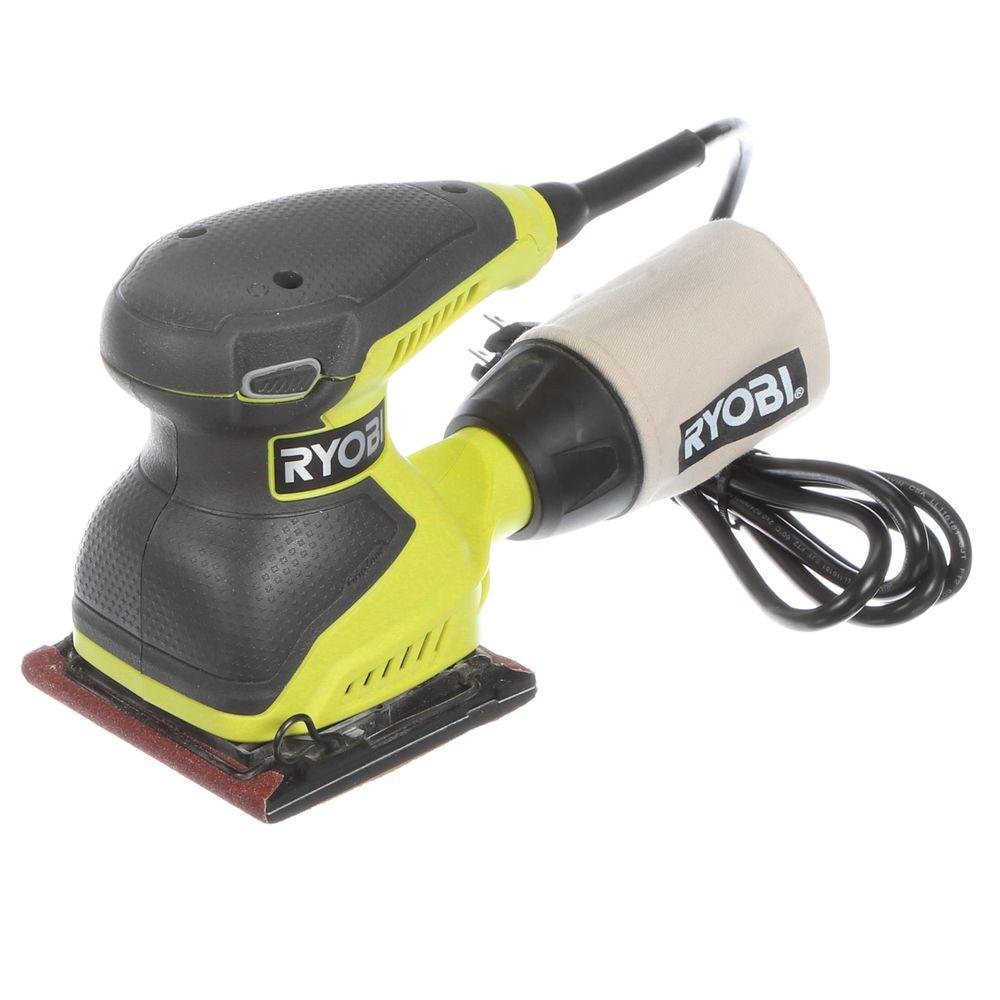
3. RYOBI 2 AMP Corded 1/4 Sheet Sander (S652DGK)
A beginner-friendly corded sander that turns delayed DIY projects into quick wins.
The RYOBI S652DGK is the perfect gateway tool for anyone who has never owned a sander. It runs on a 2-amp motor at 14,000 rpm, which is plenty of speed for paint removal and light woodwork, and it fits the hand really well. It’s the tool that finally gets those postponed projects done.
Buyers who picked it up as their first sander report knocking out two long-delayed projects within a week of it arriving. The learning curve is gentle: a quick YouTube video on how to load the paper and you are sanding. It requires little to no pressure to do the job, which means smoother results and less fatigue.
It is also noticeably quieter than older sanders, running smoothly without the harsh scream some budget tools produce. At 3.1 pounds it is not the lightest option, but that weight actually helps keep the pad flat on the work surface. For a tool that makes DIY approachable, it is genuinely hard to fault.
Owner consensus: this is the tool that turns “I should really fix that” into a finished weekend project — easy to control, smooth operation, and forgiving for beginners.
Grab it if: you are new to woodworking and want a reliable, straightforward corded sander at a friendly price.
Move on if: you need a dust port for a shop vac, since the design prioritizes simplicity over vacuum compatibility.
4. RYOBI ONE+ 18V Cordless 1/4 Sheet Sander (PCL401B)

A cordless upgrade that eliminates cord tangles and works with your existing RYOBI batteries.
If you already own RYOBI ONE+ tools, the PCL401B is a no-brainer addition. It runs on the same 18V batteries you already have, spinning at 14,000 OPM for faster material removal than the corded RYOBI above. The upgraded paper clamp system makes sheet changes easier than ever, which is a huge quality-of-life improvement.
The biggest win here is the lack of a power cord. Owners who switched from a corded sander love not having the cord snag on edges mid-job. It fits in the palm of your hand, and at 3.2 pounds it is only slightly heavier than the corded S652DGK, but that weight is balanced well.
For patching drywall and smoothing wood, owners mention fantastic results — one owner noted their wall patches were invisible after painting for the first time ever. The dust collection is solid but not perfect: the catch cup helps but you will still need to clean up. The dust catcher slides on without a lock, which is the main durability complaint, so treat it gently.
Why it’s a crowd favorite
- No cord to snag or tangle during the job
- Shares batteries with the entire RYOBI ONE+ lineup
- Improved clamp system simplifies paper changes
The honest catch
- Dust catcher slides on without a lock and can pop off
- Tool only — you must supply your own battery and charger
Pick this if: you are already in the RYOBI ONE+ ecosystem and want cordless convenience for drywall and furniture work.
skip it if: you need reliable vacuum attachment for dust-free sanding, since the bag system is mediocre.
5. CRAFTSMAN V20 Cordless 1/4 Sheet Sander (CMCW222B)

A cordless sander with variable speed that performs like a corded model, minus the extension cord.
The CRAFTSMAN CMCW222B gives you a variable speed dial from 9,000 to 12,000 OPM, so you can dial down the aggression for fine finishing or crank it up for faster stock removal. That range makes it more versatile than single-speed cordless options, adapting to both delicate trim work and rougher sanding jobs.
Its low-profile, lightweight build is designed for comfort and control, and the dust-sealed switch is built to survive years of dusty shop air. Dust collection is rapid and versatile, featuring both a dust bag and a 1-1/4 inch vacuum connection, so you can choose between portability and clean operation.
Owners who replaced old corded sanders with this one report better performance and genuinely appreciate the cordless freedom. The recurring note is battery life: a moderately sized project can chew through multiple batteries, so a spare or two is recommended. It is a quality starter sander that performs admirably for its category.
Where it shines: variable speed gives you control that fixed-speed cordless sanders lack, making it a worthy upgrade for anyone tired of fighting a cord.
Where it struggles: battery life is the limiting factor, so plan for spares on bigger jobs.
Choose it if: you want variable speed and solid performance in a cordless format for furniture and porch projects.
Reconsider if: you only have one battery, because you will likely need to charge it mid-project.
6. Black & Decker QS900 1/4-Sheet Sander

A lightweight, high-speed sander that makes quick work of small jobs and headlight polishing.
The Black & Decker QS900 spins at a blistering 16,000 OPM, the fastest on this list, which makes short work of paint removal and spackle smoothing. Its compact size and soft-grip body give you excellent control for prolonged sanding sessions, and at 2.6 pounds it is easy to hold for extended periods.
What surprises most owners is its versatility. Beyond basic wood sanding, buyers have used it to polish car headlights with a microfiber cloth and scratch remover, reporting noticeably brighter and safer results. The filtered dust collection keeps the work area clean, and the included paper punch lets you turn cheap full sheets into pre-holed sandpaper.
The main trade-off is consistency: some customers note the dust cup fits perfectly while others say it won’t snap on securely, leading to dusty operation. Durability is similarly mixed, with a few reporting breakage after several months of heavy use. For small jobs and occasional use, however, it is a capable and affordable performer.
What makes it handy
- Fastest speed on the list at 16,000 OPM for quick material removal
- Compact and light at 2.6 lbs for precise control
- Filter is washable under soapy water for easy maintenance
Know the limits
- Dust cup fit is inconsistent between units
- Durability is mixed, with some owners reporting failure after months
Perfect for: quick DIY touch-ups, small projects, and the creative use of polishing headlights.
Look elsewhere if: you need a sander for daily professional use, where long-term durability is unproven.
7. BOSCH GSS20-40 Orbital Finishing Sander

A German-engineered palm sander with near-zero vibration for quiet, precise finishing.
The BOSCH GSS20-40 is designed for tight orbital motions and precision finishing. Its 2.0-amp motor delivers 12,000 oscillations per minute, and the precision-machined aluminum sanding plate ensures even sanding across the entire surface. This is a tool built for the perfect finishing touch on woodworking projects.
The soft-grip design is a genuine comfort win, minimizing vibration and providing stable handling for long-term use. Owners consistently praise the ergonomics, noting it is quiet, powerful, and easy to control for hours at a time. Cabinet refinishing is a common use case, where the balance and control really pay off.
Dust collection here is exceptional, especially when connected to a shop vac via an adapter — reviewers point out near-zero dust in the air. The micro-filter dust canister with a screw-off cap works well on its own too. It accepts both clamped sheets and stick-on paper, adding flexibility. The only mixed feedback concerns sandpaper hold-down for some sheet types, so you may need to experiment with brands.
Editor’s take: this is the finishing sander that feels like a precision instrument, with low vibration and dust control that make marathon sessions genuinely pleasant.
Reach for it if: you prioritize comfort and clean operation for furniture refinishing and detailed woodwork.
Pass on it if: you want maximum speed for aggressive material removal, since 12,000 OPM is on the moderate side.
8. Milwaukee M18 1/4 Sheet Sander (2649-20)

A rugged cordless sander that captures up to 95% of dust and glides smoothly over surfaces.
The Milwaukee 2649-20 is a cordless powerhouse for anyone invested in the M18 platform. Its variable speed dial adjusts from 11,000 to 13,000 OPM, giving you control over the material removal rate. The 1.6mm orbit diameter strikes a strong balance between how fast it cuts and how smooth the surface finish turns out.
Dust collection is a headline feature here — up to 95% of dust is captured, which means dramatically less cleanup time and a cleaner work environment. The two-step clamp system allows for quick and easy sandpaper changes, and shoppers say the paper fits snugly for a perfect hold, even better than other cordless options.
At 3.8 pounds it is the heaviest sander on this list, and owners note it is tail-heavy with a battery attached. The side dust chute can get in the way when sanding tight corners. However, with a small 2.0Ah battery, you can sand for over half an hour — plenty for most sessions. It is built to Milwaukee’s rugged standard, and the low vibration levels genuinely reduce fatigue.
Why pros like it
- Up to 95% dust collection keeps the workspace significantly cleaner
- Variable speed dial for matching removal rate to the task
- Superb paper hold with the two-step clamp system
Things to weigh
- Heaviest pick at 3.8 lbs, with a tail-heavy balance
- Side chute can hinder access in tight corners
Best for: M18 platform loyalists who want cordless power with top-tier dust capture for serious projects.
Not ideal if: you are not in the Milwaukee battery ecosystem, since the tool-only price adds up with a battery purchase.
9. DEWALT DCW200D1 20V MAX XR Cordless 1/4 Sheet Sander Kit

A featherlight brushless sander with the widest speed range for precise control.
The DEWALT DCW200D1 is the most advanced sander on this list, featuring a brushless motor that boost runtime and efficiency. Its variable speed control spans an impressive 8,000 to 14,000 OPM — the widest range here — letting you slow down for delicate finishing or speed up for faster removal. At just 2.1 pounds, it is also the lightest cordless option, a joy to maneuver.
The low-profile height lets you get close to the work surface for precise sanding, and the texturized rubber overmold grip keeps your hand comfortable. The paper clamp holds sheets securely while allowing easy installation. You get a complete kit: the sander, a dust bag, a hole punch, a charger, a 2.0Ah battery, and a kit bag, so it is ready to work from the start.
Buyers describe it as “exactly what I needed for tight spaces” and praise its lightweight feel. The main point of debate is battery life — some report it lasting for hours of work, while others find a full charge runs out in just a few minutes under heavy load. For most users, having the included charger and battery is a solid starting point, but a spare is wise for bigger projects.
What makes it special
- Brushless motor for superior runtime and efficiency
- Widest speed range at 8,000-14,000 OPM for total control
- Complete kit includes battery, charger, and dust bag
Consider this
- Battery life is inconsistent between owners, from hours to minutes
- Highest price on the list reflects the premium kit contents
Worth it for: serious DIYers and pros who want a complete, lightweight, brushless system (no carbon brushes to replace) with precise speed control that other picks here lack.
Overkill if: you only sand occasionally and cannot justify the premium for brushless technology and variable speed.
Understanding the Specs
Amperage and Motor Type
Amperage measures the electrical current the motor draws, and higher amps usually mean more sanding power. For cordless models, the motor type matters more: a brushless motor uses electronic commutation instead of physical brushes, which reduces friction, heat, and wear. That is why the DEWALT brushless motor delivers better runtime than a standard cordless motor of similar size.
OPM and Variable Speed
OPM, or orbits per minute, is how fast the sanding pad vibrates in tiny circles. A higher OPM removes material faster but can leave a coarser finish, while lower OPM is gentler for fine work. A variable speed dial, like the one on the CRAFTSMAN or Milwaukee, lets you match the speed to the task — slow for finishing, fast for stock removal.
Dust Collection Methods
Dust collection designs vary widely. A cyclonic canister, like on the ZEITE, spins dust to the bottom so the filter stays clean longer. A standard dust bag, as on the RYOBI cordless, catches what it can but may leave a residue. A vacuum port, found on the Makita and Bosch, lets you connect a shop vac for near-zero dust — the best option for indoor work.
Weight and Ergonomics
Weight directly affects how long you can sand comfortably. A 2.1-pound sander like the DEWALT is easy for overhead or extended work, while a 3.8-pound Milwaukee needs more forearm strength. Soft-grip bodies and low-vibration designs, as on the Bosch, reduce hand fatigue and numbness during long sessions.
FAQ
What is the difference between a 1/4 sheet sander and a random orbital sander?
Will my standard 1/4 sheet sandpaper fit these sanders?
How does a cyclonic dust box compare to a regular dust bag?
Is a cordless 1/4 sheet sander worth the extra cost?
What grit sandpaper should I start with?
Can I connect these sanders to a shop vacuum?
How much vibration should I expect from a palm sander?
What is the advantage of a variable speed sander?
How long does a cordless sander battery last?
Is a 1/4 sheet sander good for drywall sanding?
Final Thoughts: The Verdict
The 1/4 sheet sander that takes the crown is the Makita BO4557, because its featherlight 2.2-pound build, ball-bearing smoothness, and reliable dust port make it the most precise and durable finishing tool for serious woodworkers. For budget shoppers who want power and cyclonic dust control without the premium cost, the ZEITE 2.4A is the value champion, and the crowd favorite status of the DEWALT DCW200D1 — a 4.7-star performance across 180+ owners — makes it the premium pick if you want the lightest, most controllable brushless experience with a complete kit.
How We Picked
We do not accept paid placement. Every pick is matched to a real buyer and a real use-case; we do not hands-on test units.
Sources & Methodology
Specifications: manufacturer listings and product documentation. Review insights: verified customer reviews, as of August 2026. Pricing: not shown on this page (it changes often); check the current price via the retailer link.
As an Amazon Associate, Gadgets Feed earns from qualifying purchases. This does not affect which products we feature.