
Our readers keep the lights on and my morning glass full of iced black tea. As an Amazon Associate, I earn from qualifying purchases.
Specs are compiled from manufacturer listings and verified buyer reviews and can change over time — please confirm the key details on the product page before buying.
Your attic is likely the single biggest source of heat gain in your home. On a hot afternoon, that uninsulated roof surface can push temperatures past 140°F, turning your upstairs into an oven and forcing your AC to work overtime. The fix is a radiant barrier, a reflective foil that bounces heat back out before it ever reaches your living space, and this guide breaks down the best options on the market to help you choose.
I’m Min — the founder and writer behind Gadgets Feed. This guide is built by comparing the manufacturers’ published specifications and the patterns across verified customer reviews, so you get each pick’s real strengths and trade-offs instead of marketing spin.
We’ve analyzed the top reflective foil rolls to find which ones actually block heat, are easy to staple up, and hold up over time. attic insulation is a durable home-improvement purchase, so we’ve focused on coverage, durability, and real-world temperature drops.
Our Picks at a Glance


How To Choose The Best Attic Insulation
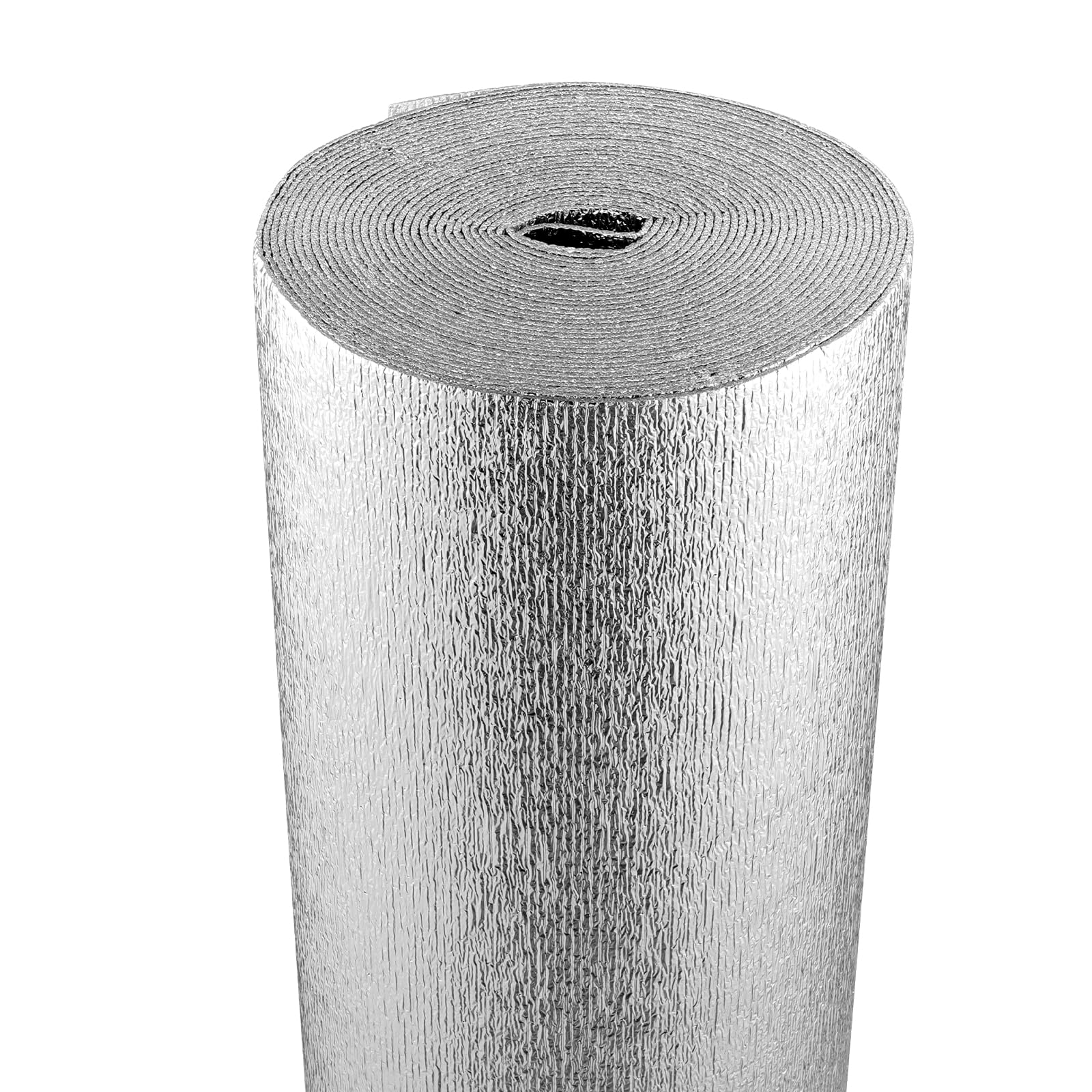
Most people think insulation means thick, fluffy fiberglass. But for blocking summer heat, a radiant barrier — a thin, reflective foil — is often the smarter first move, because it stops heat before it even gets into the insulation layer. This guide focuses on reflective foil rolls, the kind you staple to your rafters.
Start With The Coverage You Need
Before anything else, measure your attic floor or rafter surface to know how many square feet you need to cover. Rolls come in sizes like 500 or 1000 square feet, and buying the right size saves you from piecing together scraps or wasting money on excess. A 4-foot-wide roll, for example, spans 125 feet to give you 500 square feet of material.
Check The Fire Rating And Certification
Attic foil sits against wood and electrical wiring, so a Class A / Class 1 fire rating is non-negotiable. Look for products that meet ASTM C1313, the standard for radiant barrier certification, which tests for surface burning, corrosivity, and tear resistance. This isn’t just a box to check — it’s what keeps your home up to code and safe.
Decide Between Perforated And Solid Foil
Perforated foil has tiny holes that let moisture escape, which is crucial in an attic where condensation can build up and cause mold. Solid foil acts as a vapor barrier, which is better for specific spots like crawl spaces. For most whole-attic installations, the breathable, perforated style is the safer bet.
Quick Comparison
| Model | Best For | Coverage | Weight | Heat Blocked | Amazon |
|---|---|---|---|---|---|
| RadiantGUARD Xtreme★ Best Overall | Whole-attic DIY | 500 sq ft | 13 lbs | 95% | Amazon |
| Reflectix BP24050Best for RVs | RV windows & doors | 2 ft x 50 ft | 2.72 kg | Radiant | Amazon |
| VEVOR Double ReflectiveGreat Value | Garage doors | 48 in x 50 ft | 4.2 lbs | 95%+ | Amazon |
| SmartSHIELD -5mm | Ducts & walls | 24 in x 50 ft | — | 97% | Amazon |
| SmartFOIL Industrial | Barns & metal buildings | 500 sq ft | — | 95% | Amazon |
| UBMOVE Bubble Roll | Multi-purpose | 48 in x 125 ft | 5 lbs | Radiant | Amazon |
| Reach Barrier DD24100 | Garage panels | 2 ft x 100 ft | — | Radiant | Amazon |
| US Energy 1000 sqft | Large attics | 1000 sq ft | — | 99.7% | Amazon |
In‑Depth Reviews
1. RadiantGUARD® Radiant Barrier Xtreme Attic Insulation
Our pick — over 4.5★ from 750+ verified ratings; the strongest balance of quality and price.
The toughest, most certified foil that makes a measurable dent in your attic’s afternoon bake.
You can trust RadiantGUARD because it passes the ASTM C1313 Radiant Barrier Certification (a set of tests for surface emittance, water vapor transmission, surface burning, corrosivity, tear resistance, and adhesive performance). That gives you a Class A / Class 1 fire-rated building product (the highest fire safety rating) that meets local, state, and federal building codes. So you are not gambling on safety with a material that sits against your roof’s wood.
Real-world numbers back up the claims. Buyers report pointing a thermometer at a west-facing roof in the afternoon: the attic side of the roof hit 140°F, while the material itself read 108°F — a 30-degree drop that means less heat pours into your living space. The roll is heavy-duty at 13 pounds for 500 square feet, so it is sturdier and less likely to tear as you staple it across rafters. It blocks 95% of radiant heat gain and loss. (the heat that travels through air, not through contact) and is non-toxic and fiber-free, so you can install it without a breathing mask.
Installation is a straightforward two-person job. You staple it to the underside of your rafters, and you should also cover vertical gable walls for complete protection. The foil cuts easily with utility scissors, though handling a full roll solo can be awkward. It’s the crowd favorite for good reason, holding a 4.7-star average across hundreds of owners who consistently praise its toughness and effectiveness.
What wins people over
- Certified Class A / Class 1 fire rating and full ASTM C1313 compliance
- Proven 30-degree drop between bare roof and foil surface
- Heavy 13 lb roll resists tearing during a DIY install
The trade-offs to know
- Full 500 sq ft roll is unwieldy for one person to handle alone
- Price sits above entry-level bubble foil options
Reach for this if: you want a certified, heavy-duty foil for a whole-attic DIY project where safety ratings matter.
Who should pass: anyone covering a single garage door, where a smaller, lighter roll is simpler to manage.
2. Reflectix BP24050 24-Inch-by-50-Foot Bubble Pack Insulation
The go-to bubble foil for windows, doors, and vehicles where heat pours through glass.
Reflectix takes a different approach: instead of a flat foil, you get a 0.31-inch-thick bubble pack sandwiched between reflective aluminum layers. That air-filled middle layer gives it a bit of cushioning and makes it genuinely versatile beyond attics. The most common use owners rave about is blocking windows — in RVs, vans, and homes — where you cut it to fit any window or door frame and immediately stop solar gain.
The numbers are convincing for vehicle use. Owners mention a 20-degree temperature difference in a car while camping with this blocking the windows, and another found it cut their electric bill by about a month in a garage. It’s manufactured in China but the quality is dependable, and it installs without special tools — you can cut it to size with scissors and even secure it with velcro for sliders.
Grab this one for a metal garage door, where the U-shaped panels hold the reflective roll in place without tape. But know it is more of a radiant reflector than a thick insulator, so manage your expectations — one owner who expected dramatic heat reduction said it “helps reduce heat transfer at car windows, but not that much” after reading other reviews. It works best when your goal is bouncing radiant heat, not stopping conduction (heat moving through solid materials).
Smart versatility: the 24-inch width pairs perfectly with standard garage door panels, and owners confirm it works without removing hurricane supports — a rare convenience feature.
Best matched to: RV and car owners who want an easy, cut-to-fit heat shield for windows and doors.
Look elsewhere if: your priority is a full attic retrofit, where a larger 500 sq ft roll covers far more ground per dollar.
3. VEVOR Double Reflective Insulation Roll
A feather-light foam-core foil that cuts a garage’s summer heat without adding door weight.
VEVOR’s twist is a 3.2 mm foam core between two layers of reflective aluminum foil. That makes it a 3-in-1 solution: a radiant barrier, an insulator, and a vapor control layer all at once. The high-density EPE foam core is what separates it from flat foil, giving it a little structural body that helps it hold its shape against a garage door or shed wall.
At just 4.2 pounds for a 48-inch-wide by 50-foot-long roll, this is remarkably easy to handle — a stark contrast to the 13-pound RadiantGUARD above. That light weight pays off in a garage door, where Customers note it reflects over 95% of solar heat. while adding negligible door weight, so your opener doesn’t struggle. One buyer measured a 30-35°F temperature cut on a garage door in direct Florida sun using an air-gap installation method.
Owners have applied it everywhere from metal shops to tiny home underskirting. It tears and punctures only with effort, and the reflective surface has a side benefit: it brightens the workspace it covers. The 48-inch width is wider than most garage door panels, so you can cut it to fit with a utility knife and use spray glue or carpet tape to hold it in place.
Pick this for: garage doors and sheds where you want a lightweight, double-sided shield that’s easy to cut and fold away.
Think twice if: you need a fire-rated building material for a code-inspected whole-attic job — this lacks the certification paperwork of the top pick.
4. SmartSHIELD -5mm Reflective Insulation Roll

The thickest foam-core pick, with a sky-high R-value that doubles as a sound deadener.
SmartSHIELD brings real insulation substance, not just reflection. Its 5 mm closed-cell polyethylene foam core is sandwiched between pure aluminum on both sides, and The maker claims an R-value up to 15.67 with one layer and up to 21.10 with two layers.. That’s a genuine thermal barrier, not just a heat reflector, and it reflects 97% of radiant energy to boot.
This is the pick for problem spots, not just broad coverage. Owners have wrapped sweating air handler units in Florida, repaired HVAC ductwork, and boosted cold bathroom walls with it — jobs where a thin foil won’t cut it. Being Class 1 / Class A fire rated and non-toxic, it won’t irritate skin, eyes, or throat during installation, and it doubles as a sound barrier. The vapor-proof construction also prevents condensation, making it a solid choice for crawl spaces and metal buildings.
The trade-off is the width: at 24 inches, it covers less ground per roll than the 48-inch options, so a big attic needs more rolls. But for targeted fixes, the minimal thickness adds a healthy R-value and radiant factor without eating into your living space. Owners note it’s easy to cut and work with, and one called it a “huge improvement” over insufficient fiberglass on a cold exterior wall.
The real insulation advantage
- 5 mm foam core delivers R-value up to 15.67 with one layer
- Reflects 97% of radiant energy, the highest claim on this list
- Doubles as a sound barrier and vapor barrier
Where it falls short
- 24-inch width means more seams and more rolls for large areas
- No adhesive included, so garage door installs need separate tape or snaps
Best for: HVAC ducts, air handlers, and walls where you want both radiant reflection and actual insulation value in a thin layer.
Not ideal for: covering a wide attic quickly, where a 48-inch wide roll means fewer cuts.
5. SmartFOIL 4ft x 125ft Industrial Grade Radiant Barrier

A commercial-grade, perforated foil that blocks heat and still lets your attic breathe.
SmartFOIL is built for the tough jobs, with an industrial and commercial grade construction that’s tear and puncture proof, yet still cuts easily with utility scissors. It’s engineered for existing homes and new builds alike, stapling easily to the bottom of rafters or over attic floor insulation. Both sides reflect 95% of radiant heat., making it just as effective in a metal barn as a residential attic.
A key differentiator is the perforation. The 4-foot by 125-foot roll is breathable, which lets moisture escape — crucial for attics where trapped humidity can cause rot and mold. It meets or exceeds all ASTM C1313 standards with a Class A fire rating, and a proprietary clear coating provides corrosion resistance. That certification plus breathability makes it a legitimate house wrap and attic foil for those who care about building science.
Owners use it from poultry houses to porches, and the reviews echo a consistent theme: durability with a decrease in the summertime electric bill. It’s slightly thicker than standard aluminum foil — more like industrial foil — which makes staples hold firmly without tearing through. For the budget-conscious, this undercuts many premium rolls while delivering the same certification level as the top pick.
Breathability wins: the perforated design separates it from bubble foil, letting your attic vent moisture while it bounces heat.
Choose this for: metal buildings, barns, and attics where you want certified Class A protection with moisture breathability.
skip it if: you need a foam core for sound dampening or true insulation depth — this is pure reflective foil.
6. USA Reflective Insulation Bubble Roll (UBMOVE)
A made-in-USA bubble roll that keeps a tack room cool and mice out in one install.
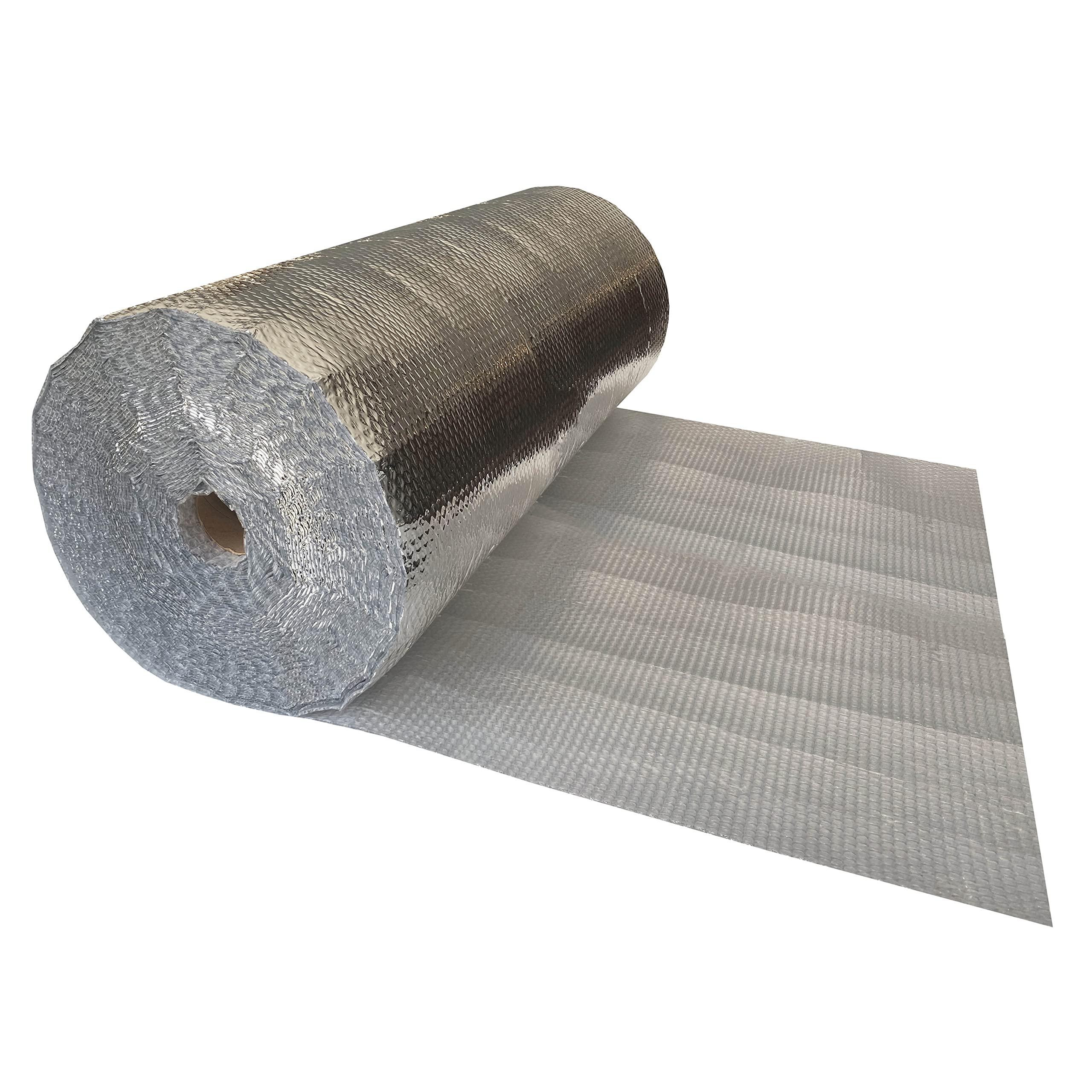
UBMOVE’s roll uses a 3/16-inch bubble layer wrapped in foil, It uses a one-sided thermoflex design with a claimed R-value of 4.9 to 14.1.. It’s a versatile pick for garage ceilings, greenhouses, and even shipping cold products.
Owner stories show the range: one used it in a tack room and found it “helps keep the building cooler and warmer” while being easy to install with no mess. Another key win for livestock spaces is that mice are “not nearly as likely to make this material their home” compared to fiberglass. In a small garden shed, it “worked unbelievably well” for keeping cats warm. The one-sided foil means one reflective surface and one bubble side, a design that suits walls and ceilings where you don’t need dual reflection.
Honest caveats: the thickness got mixed feedback — some find it thick, others thin — and a few owners say the roll wasn’t the full 125 feet advertised. A west-facing window in Texas “extremely hot in the summertime” saw real improvement but didn’t fully block all heat. For a general-purpose roll that installs with scissors or a knife and handles attics, walls, and crawl spaces, this is a dependable mid-range option.
Ideal for: sheds, tack rooms, and greenhouses where you want insulation plus a rodent-resistant alternative to fiberglass.
Watch out: verify the roll length on arrival, as a few owners found it short of the advertised 125 feet.
7. Reach Barrier DD24100 Double Reflective Insulation Roll

The ultra-long 100-foot roll engineered for garage panels and reflective sound dampening.
Reach Barrier brings real numbers to the garage door fight. At 0.3 inches thick, this layered bubble and reflective design tucks into garage door panels, and owners track measurable results: one measured a 17°F difference between insulated and uninsulated door sections with a laser thermometer, while another saw panel surfaces at 140°F versus insulation at or below 80°F. A Vegas sun test knocked a garage down about 5 degrees.
At 2 feet wide and 100 feet long, it’s engineered for the repeated panel sections of a garage door. It cuts easily to length without special tools and tucks into the sheet metal folds of non-standard panels without adhesive. One owner fitted a 16-foot by 16-foot garage door in under an hour, and a 6,000 BTU window unit could then cool the garage effectively in hot Florida weather. The layered design blocks heat while retaining cool air once your AC is running.
The long length also lends itself to attic rafters, radiant floors, and crawl spaces, and the maker markets it for sound reduction along exterior and interior walls. It’s lightweight and easy to cut, making it a more flexible alternative to rigid Styrofoam garage panels at a better value. For those planning a bigger project, reviewers point out they’d happily use it again in the attic after seeing garage results.
Proof on panels: measured 17°F laser-thermometer differences and a 140°F-to-80°F surface drop are the strongest garage-door stats in this lineup.
Grab this for: non-standard garage door panels and rafters where 100 feet of length spares you from buying multiple rolls.
Pass if: you’re covering a wide open attic floor, where the 24-inch width means more pieces to seam together.
8. US Energy Products Radiant Barrier Insulation 1000 sqft

A double-wide 1000-square-foot roll that claims the highest reflectivity in this guide, so you cover more attic space in one pass.
US Energy Products wins on sheer scale and reflectivity. The roll measures 250 feet long by 4 feet wide, delivering 1,000 square feet of material in a single package — enough for a very large attic or a full metal pole building. It boasts a 99.7% reflective value, the highest claim on this list., and The maker cites studies showing cooling cost reductions of 10-45% depending on your climate region..
The construction is impressively strong despite being remarkably thin. A fabric mesh between layers keeps the barrier from ripping, and owners confirm you “can’t tear it” — staples pull out without tearing the material, making installs less frustrating. It’s double-sided and tear-resistant, handling heavy handling without puncturing or wrinkling excessively, and cuts easily with utility scissors.
One owner insulated a 24×36 metal pole building roof and found the interior temperature tracked the outside air with the requisite 1-inch air gap. Another completed a ranch house attic install in about an hour, crediting the stiffer material for being easier to manage in a low roof line. It’s ASTM compliant with a Class A / Class 1 fire rating and meets breathability standards, so it’s properly certified for code compliance. The 12-foot pieces are tough solo, so the recommendation is to cut 4-6 foot sections for manageable handling.
Why it stands out
- 1000 sq ft per roll covers big attics and pole buildings in one shot
- 99.7% reflectivity, the highest claim across all eight picks
- Fabric-reinforced mesh prevents tearing under staplers
Install notes
- 12-foot pieces are unwieldy alone; 4-6 foot sections work best
- Needs a 1-inch air gap to reflect heat properly, as with all foil barriers
Buy this for: large attics or commercial metal buildings where maximum coverage per roll and 99.7% reflectivity are the top priorities.
It’s not the pick for: small jobs — the huge roll is overkill for a single garage door and harder to store.
Understanding the Specs
Radiant Barrier vs. R-Value
A radiant barrier’s job is to reflect heat, not store it. Unlike fiberglass batts that slow heat conduction with thickness, a foil barrier bounces radiant heat away — which is why a 1/8-inch foil can feel cooler than a 6-inch batt of fiberglass in a hot attic. R-value measures resistance to conductive heat flow, which is why foam-core rolls like SmartSHIELD list one (up to 15.67) while flat foils like RadiantGUARD don’t. For summer heat, the reflectivity percentage matters more than R-value.
Perforation and Breathability
Perforated foil has thousands of tiny holes that let water vapor escape, preventing condensation from building up against your roof deck. This is critical in an attic, where warm moist air rises and can turn a solid vapor barrier into a moisture trap. Solid foil is better for crawl spaces and concrete floors where you actively want a vapor block. SmartFOIL and RadiantGUARD lead on breathable design, while Reflectix and VEVOR offer solid faces for targeted use.
FAQ
Does a radiant barrier work as well as fiberglass insulation in my attic?
How do I measure how many square feet of attic foil I need?
What is the ideal air gap for a radiant barrier to work?
Is perforated or solid foil better for my attic?
Can I install radiant barrier foil myself without special tools?
What fire rating should I look for when buying attic foil?
Will attic foil actually lower my electric bill?
What is the difference between a foil roll and a bubble pack insulation roll?
Will radiant barrier foil prevent heat gain in a metal building or shed?
What is the difference between a 4-star and a 5-star rated attic insulation roll?
Final Thoughts: The Verdict
For most buyers, the attic insulation winner is the RadiantGUARD Xtreme because it combines a full ASTM C1313 certification with a proven 30-degree temperature drop and durable 13-pound construction. If you want the best foam-core insulation for ducts and walls, the SmartSHIELD delivers 97% reflectivity and R-value up to 15.67. And for the biggest bang per roll, the US Energy 1000 sqft offers the highest 99.7% reflectivity covering a full 1000 square feet in one package.
How We Picked
We do not accept paid placement. Every pick is matched to a real buyer and a real use-case; we do not hands-on test units.
Sources & Methodology
Specifications: manufacturer listings and product documentation. Review insights: verified customer reviews, as of August 2026. Pricing: not shown on this page (it changes often); check the current price via the retailer link.
As an Amazon Associate, Gadgets Feed earns from qualifying purchases. This does not affect which products we feature.