
Our readers keep the lights on and my morning glass full of iced black tea. As an Amazon Associate, I earn from qualifying purchases.
Specs are compiled from manufacturer listings and verified buyer reviews and can change over time — please confirm the key details on the product page before buying.
You want a rangefinder that gives you a fast, reliable yardage on a deer at dawn without emptying your wallet. Today’s budget models deliver clarity, angle compensation, and enough range for most hunts without the premium price. These picks are based on specs and verified buyer feedback for real-world performance.
I’m Min — the founder and writer behind Gadgets Feed. This guide is built by comparing the manufacturers’ published specifications and the patterns across verified customer reviews, so you get each pick’s real strengths and trade-offs instead of marketing spin.
You’re here for a clear-eyed look at the best budget rangefinder for hunting that balances reach, accuracy, and ruggedness while staying affordable.
Our Picks at a Glance

How To Choose The Best Budget Rangefinder For Hunting
Before you compare yardage numbers, think about your actual hunting style. A western mountain hunter needs long reach and angle compensation, while a whitetail hunter in thick woods needs fast acquisition and a clear image in low light. Choose based on your terrain, not just the maximum advertised range.
Range on Game vs. Range on Reflective Targets
Manufacturers love to advertise maximum range, but that figure is almost always measured against a reflective target — like a road sign or a building. A deer’s hide doesn’t reflect laser light nearly as well, so the real-world range on game is usually a fraction of the advertised max. When a listing says “1,500 yards,” ask what it can do on a deer at dawn, not on a barn at noon.
Angle Compensation for Uphill and Downhill Shots
Gravity doesn’t care about the straight-line distance to your target. If you’re shooting up or down a steep slope, the true horizontal distance is shorter than the line-of-sight distance, and that difference can cause you to miss high. Angle Range Compensation (ARC) or Horizontal Component Distance (HCD) tech fixes this by calculating the correct distance for your shot, which is essential for anyone hunting in mountains or rolling hills.
Magnification and Objective Lens Size
Magnification (like 6x or 7x) brings the target closer, while the objective lens diameter (like 21mm or 24mm) controls how much light reaches your eye. A larger objective lens gathers more light, which directly helps you see clearly during the critical low-light periods of dawn and dusk when deer are most active. Balance magnification for target ID with a larger objective lens for low-light visibility.
Quick Comparison
| Model | Best For | Max Range | Magnification | Angle Compensation | Amazon |
|---|---|---|---|---|---|
| Leupold RX-1400I TBR/W★ Best Overall | Long-range ballistic precision | 1,400 yds (reflective) | 5x | Yes (TBR/W) | Amazon |
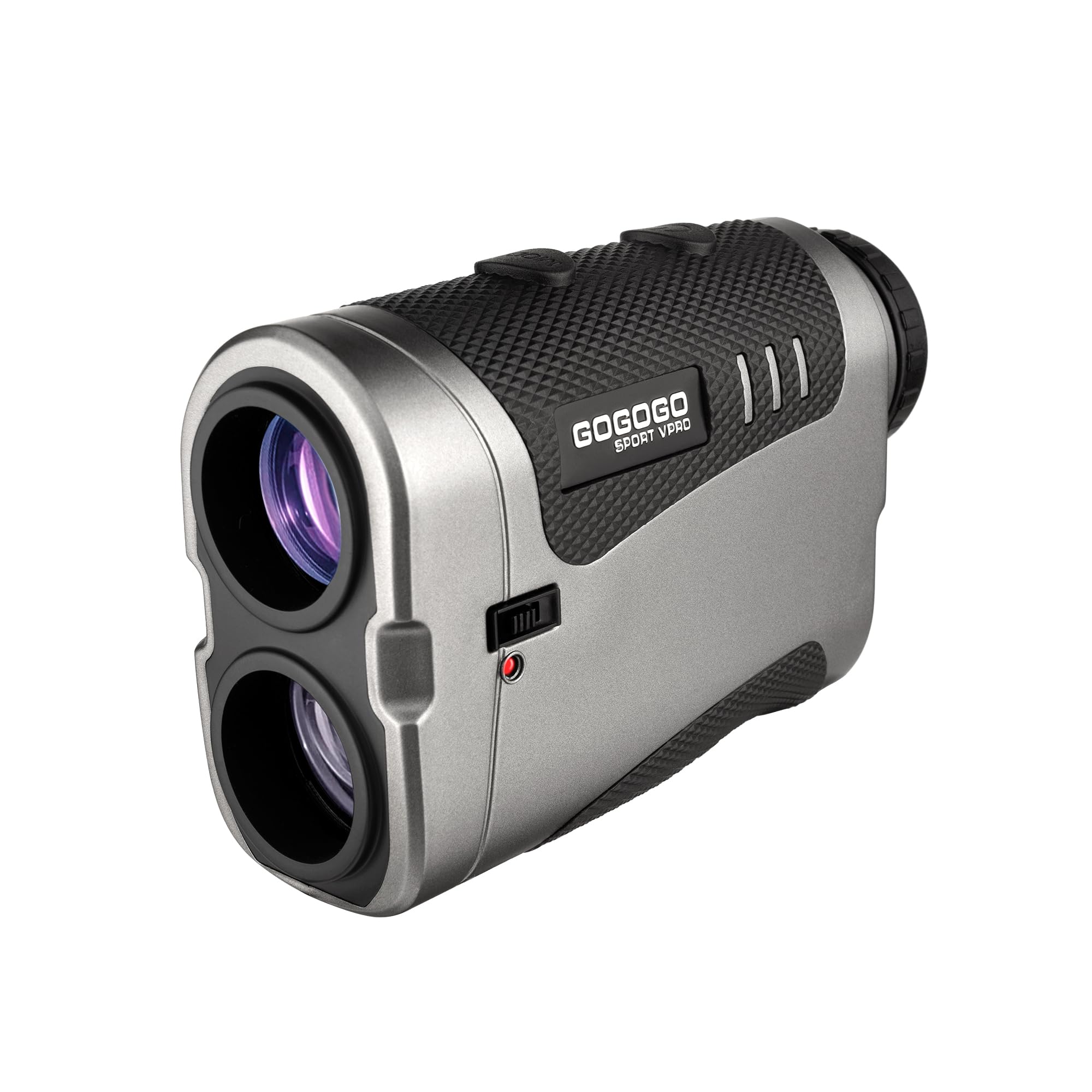
| Gogogo Sport Vpro VRP-2500Best Value | Budget all-rounder with slope | 2,500 yds | 7x | Yes (Slope Switch) | Amazon |
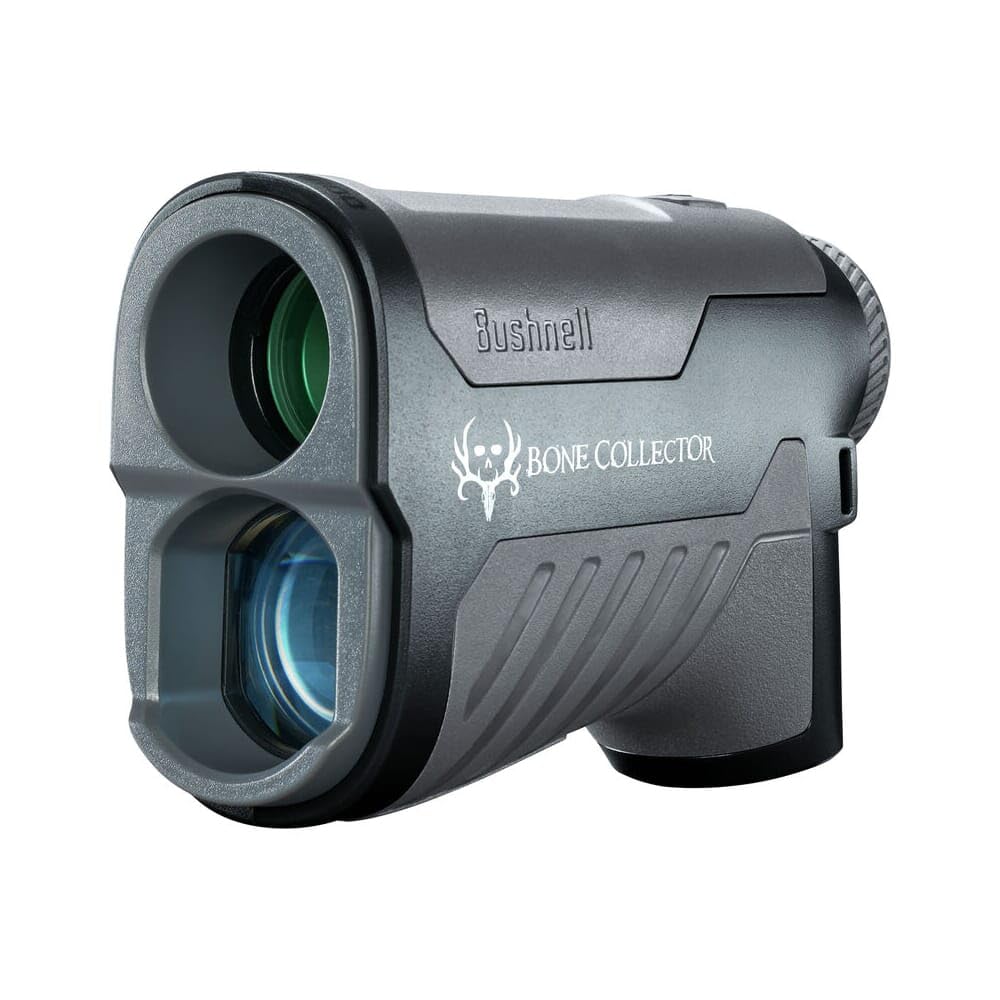
| Bushnell BoneCollector 1000Fast Scanner | Fast scanning for bow & rifle | 1,000 yds | 6x | Yes (ARC) | Amazon |
| REDTIGER H002 | Long battery life on extended trips | 1,600 yds | 7x | Yes | Amazon |
| Sig Sauer Buckmasters 1500 | Value with ballistic holdover data | 1,500 yds (reflective) | 6x | No | Amazon |
| Vortex Sonora HD 1800 | crisp optics with lifetime warranty | 1,800 yds (reflective) | 6x | Yes (HCD) | Amazon |
| Astra Optix OTX1600 | Fast reads & bright display | 1,760 yds (reflective) | 6x | Yes | Amazon |
| Nikon PROSTAFF 1000i | Pocket-friendly & weather-resistant | 1,000 yds (reflective) | 6x | Yes (ID) | Amazon |
| Bushnell Prime 1500 | Versatile bow & rifle modes | 1,500 yds | 6x | Yes (ARC) | Amazon |
In-Depth Reviews
1. Leupold RX-1400I TBR/W Gen 2
Our pick — over 4.5★ from 400+ verified ratings; the strongest balance of quality and price.
The ballistic computer that turns wind and angle into a single, trustworthy hold point.
This Leupold makes you a better shooter at distance because it calculates the ballistically correct range for your shot, not just the line-of-sight distance. Its True Ballistic Range/Wind (TBR/W) technology (a system that factors in bullet drop and wind) can even generate a hold point for a 10-mph wind at a 90-degree angle out to 800 yards. For a bow hunter, the selectable Bow mode with Flightpath technology (a feature that shows potential arrow obstructions) gives angle-compensated ranges, a capability you rarely see at this price level.
Weighing in at just 5.1 ounces, it’s noticeably lighter than the Bushnell BoneCollector 1000’s 8 ounces, making it easy to carry on a long stalk. The selectable TOLED display uses bright red numbers and letters with adjustable brightness settings, so you can dial in the right visibility whether you’re in a dark timber or a bright field. The housing is aluminum and rated IP54 for water resistance, and buyers report the build quality is excellent.
If you want the most advanced ballistic help for your money, the crowd favorite Leupold — backed by a 4.7-star rating from hundreds of owners — is the one to beat.
What Shines
- Wind-hold and angle-compensated ballistics out to 800 yards
- Ultra-light at 5.1 ounces for an aluminum unit
- Bright red TOLED display with adjustable settings
What to Watch
- Higher price than other budget picks
- Some reports of a finicky plastic battery cap
Reach for this if: you want the most advanced ballistic features — wind hold, angle compensation, and bow flightpath — in a featherlight package.
Think twice if: your hunts stay under 300 yards and you’d rather save the cash for other gear.
2. Gogogo Sport Vpro VRP-2500
A 2,500-yard range and slope compensation for less than the cost of a tank of gas.
If raw range per dollar is your metric, this Gogogo is the value king. It boasts a measurement range of up to 2,500 yards with an accuracy of ±0.3 yards and returns readings in 0.18 seconds — which is faster than many units costing three times as much. The 7x magnification is a step above the 6x found on the Leupold and Bushnell models, so you get a bit more reach when trying to pick out a distant buck.
The slope switch is a key feature for hunters. It lets you toggle between slope compensation for casual practice and a tournament-legal flat mode, and it’s equally at home for golf, archery, and hunting. The 5800 GS magnetic force means it snaps securely onto a metal cart or stand, and the IP54 water resistance plus USB-C quick charge keeps it ready for the field. Owners mention it does “everything my range finder does at 1/3 the cost,” which sums up its appeal perfectly.
At 6.4 ounces, it’s not the lightest option, but it’s still easy to pack. The biggest trade-off is that the measurement modes — 5 in total including speed and continuous scan — give it a learning curve that a pure hunting unit might not have.
Why It Wins
- Massive 2,500-yard range with ±0.3-yard accuracy
- 7x magnification and fast 0.18-second reads
- Rechargeable USB-C battery with a gauge
Keep in Mind
- Many modes to learn for a dedicated hunter
- Plastic housing feels less premium than aluminum
Best for: the budget-conscious buyer who hunts and golfs and wants one rangefinder that does everything.
skip it if: you prioritize a rugged, premium-feeling housing over sheer range.
3. Bushnell BoneCollector 1000
A fast-scannning bow-and-rifle workhorse with a bright image that beats its price.
Bushnell built this with the Bone Collector crew specifically for hunters, and it shows in the details. The ARC (Angle Range Compensation) technology delivers true horizontal and line-of-sight distances with 1-degree angle precision, so uphill and downhill shots stay honest. For scanning a ridge line quickly, the ultra-fast scan mode updates ranges 4 times per second — which is noticeably quicker than many rivals and helps you lock onto a moving target.
It ranges up to 1,000 yards, which is a solid, honest number for a budget unit, and customers note ranging deer out to 350 yards without any trouble. The 6x magnification is paired with a 50% larger objective lens than you’d expect in this class, delivering up to 2X brighter imaging through an all-glass, multi-coated optical system. That brightness is a real edge at dawn and dusk when deer are moving.
The trade-off is the 8-ounce weight — it’s heavier than the 5.1-ounce Leupold. It’s also worth knowing the CR2 battery doesn’t last as long as some owners would like, so it’s smart to pack a spare on a long trip.
Field Strengths
- 4x-per-second scan mode for fast target tracking
- 2X brighter image with larger objective lens
- ARC technology for true angle-compensated distances
Field Limitations
- Heavier at 8 ounces
- CR2 battery life could be better
Choose this for: a fast, bright, angle-compensated unit that’s made for the specific demands of bow and rifle hunting.
Pass if: you need the lightest possible gear for high-mileage mountain hunts.
4. REDTIGER H002 Hunting Rangefinder

A 7x optic with an 8,000-shot battery for hunters who leave the charger at home.
This REDTIGER is for the hunter who wants a long stretch of field time without worrying about a dead unit. Its upgraded 1000mAh rechargeable battery (a measure of battery capacity) is rated for up to 8,000 measurements on a full charge — enough for many full hunting trips. When it’s time to top up, the USB-C charging cable is in the box, and the 2-year unconditional warranty plus 24/7 technical support adds real confidence.
On the optics side, it offers a 1,600-yard range with ±0.5-yard accuracy and fast readings in under 0.5 seconds. The 7x magnification and 80% light transmission lenses deliver clear views even in challenging light. A single button press switches between modes for horizontal distance, angle, height, straight-line distance, and speed, so you can adapt from bow hunting to rifle work without digging through menus.
At 5.6 ounces, it’s respectably light for a 7x unit. The honest caveat is that accuracy gets mixed feedback — some reviewers point out trouble pinpointing small targets at extreme range, though most find it matches far more expensive units. One reviewer noted ranging 800 yards where a friend’s rangefinder failed.
Long-Haul Strengths
- Up to 8,000 measurements per charge
- 7x magnification with 80% light transmission
- 2-year unconditional warranty and 24/7 support
Long-Haul Limits
- Mixed feedback on pinpointing tiny targets at extreme range
- Some owners note switches feel a bit low-quality
Grab this when: you want a rechargeable, high-magnification rangefinder that won’t quit on a multi-day hunt.
Look elsewhere if: you need guaranteed precision on very small targets at 1,000+ yards.
5. Sig Sauer Buckmasters 1500

SIG-grade optics with a built-in ballistic holdover guide for the Buckmasters scope crowd.
This is a smart value play for hunters already using Buckmasters riflescopes. Its “Buckmasters Mode” comes equipped with 8 onboard ballistic groups, so the rangefinder can tell you exactly which Buckmasters BDC holdover dot to use in your scope — a feature that takes the guesswork out of long shots. Its vivid red illuminated display is tune for low-light hunting, and the 6x22mm optics deliver a clear view.
In terms of raw capability, it ranges 1,500 yards on reflective targets, 800 yards on trees, and a solid 600 yards on deer — a realistic figure that matches what hunters actually need. It weighs just 5.2 ounces and is IPX-4 waterproof, making it a great pocket companion for a long day. Buyers consistently praise its accuracy in the field, with one noting it’s “dead-on” on a hunting trip, and several mentioning the red display is a big plus in low light.
The main thing to know is that it lacks angle compensation, which is a significant omission if you hunt steep terrain. Also, battery life draws some negative feedback, so it’s worth carrying a spare.
Smart Features
- Onboard ballistic holdover guide for Buckmasters scopes
- Lightweight 5.2 oz with IPX-4 waterproofing
- Realistic 600-yard range on deer
Smart Cautions
- No angle compensation for steep terrain
- Battery life is a common gripe
Ideal for: Buckmasters scope owners and flat-ground hunters who want SIG-brand clarity without a premium price tag.
Not for: anyone hunting mountains where angle compensation is a must-have.
6. Vortex Sonora HD 1800

HD-class glass with a lifetime warranty that makes the price tag feel tiny.
Vortex is a name that carries serious weight in the optics world, and the Sonora HD 1800 delivers on that reputation. The HD optical system cuts chromatic aberration (color fringing around edges) and provides outstanding color fidelity, while the fully multi-coated lenses boost light transmission for better low-light performance. This yields a clear, true-to-life image for easier target ID at distance.
It can range up to 1,800 yards on reflective targets, but the more relevant number for hunters is 700 yards on game. The HCD (Horizontal Component Distance) angle-compensated technology gives bow and rifle shooters the critical distance data needed for accurate uphill and downhill shots. Shoppers say ranging out to 1,400 yards without a problem, and the 6x viewer is praised as “very clear.”
At 6.1 ounces, it’s a comfortable middle weight. The real kicker is the unlimited, unconditional, lifetime VIP warranty that’s fully transferable — if it breaks, Vortex repairs or replaces it. This warranty is rare at this price, making it a true buy-once investment.
Optical Edge
- HD optical system with exceptional resolution and color
- HCD angle compensation for bow and rifle
- Fully transferable lifetime warranty
Consider This
- Slightly higher price than entry-level options
- Fewer owner reviews means less long-term data
This is your pick if: you value premium HD glass and want the security of a lifetime, no-questions-asked warranty.
Look past it if: you’re strictly on a minimum-spend budget and can live with softer optics.
7. Astra Optix OTX1600
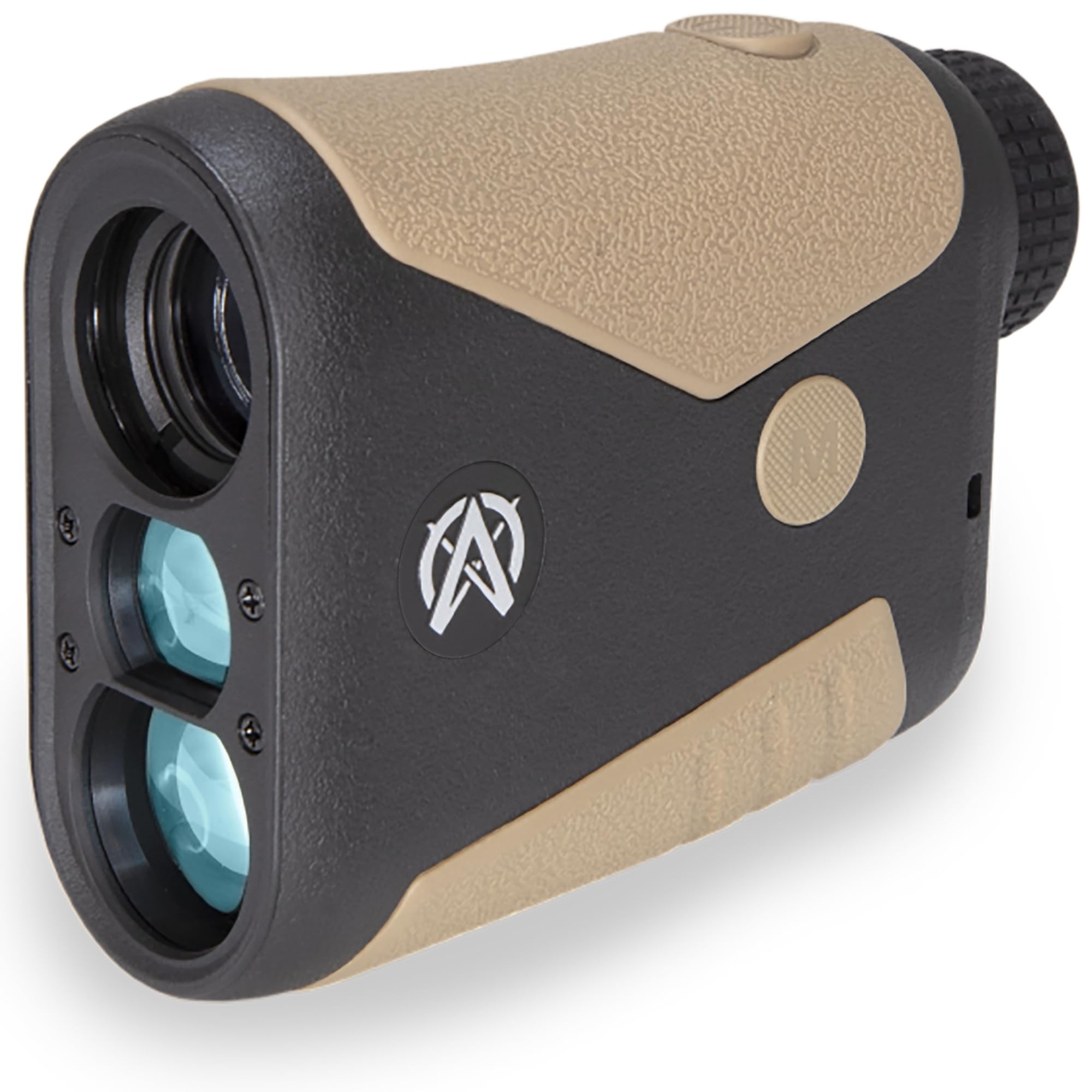
The 0.10-second response that snaps onto a target before you’ve even finished your exhale.
Speed is the name of the game here. The Astra Optix OTX1600 delivers ranging speeds as fast as 0.10 seconds, making it one of the quickest responders in this lineup. That speed is a genuine advantage when you’re lining up a shot on a moving animal or scanning a ridge for the brief window a buck steps into the open. It ranges up to 1,760 yards on reflective targets, 1,000 yards on trees, and 800 yards on deer.
The red OLED display is a standout feature. It provides a projected red reticle and readout with 5 adjustable brightness settings, which is excellent for low-light conditions — buyers report it’s bright and usable in all light, with one noting they can use it without glasses. The all-glass optical system with fully multi-coated lenses and a rain-repellent protective coating keeps the view clear and clean. The 6x magnification is standard, but the fast read speed and bright display make it feel more responsive.
It’s rated IPX6 for water resistance, which is better than the IPX4 found on many rivals. The 0.14 kg weight (about 4.9 ounces) makes it easy to pack, and it comes backed by a lifetime, fully transferable warranty. The honest trade-off is that some owners mention the optics aren’t the absolute sharpest and the small size can make it harder to target small objects with a steady hand.
Speed & Display
- Ultra-fast 0.10-second ranging speed
- Bright OLED display with 5 adjustable settings
- IPX6 water resistance and lifetime warranty
The Caveats
- Some owners find optics good but not top-tier
- Small size demands a steady hand for tiny targets
Choose it when: split-second acquisition and a bright, readable display matter more than absolute optical purity.
Consider another if: maximum light transmission at dawn is your absolute priority.
8. Nikon PROSTAFF 1000i
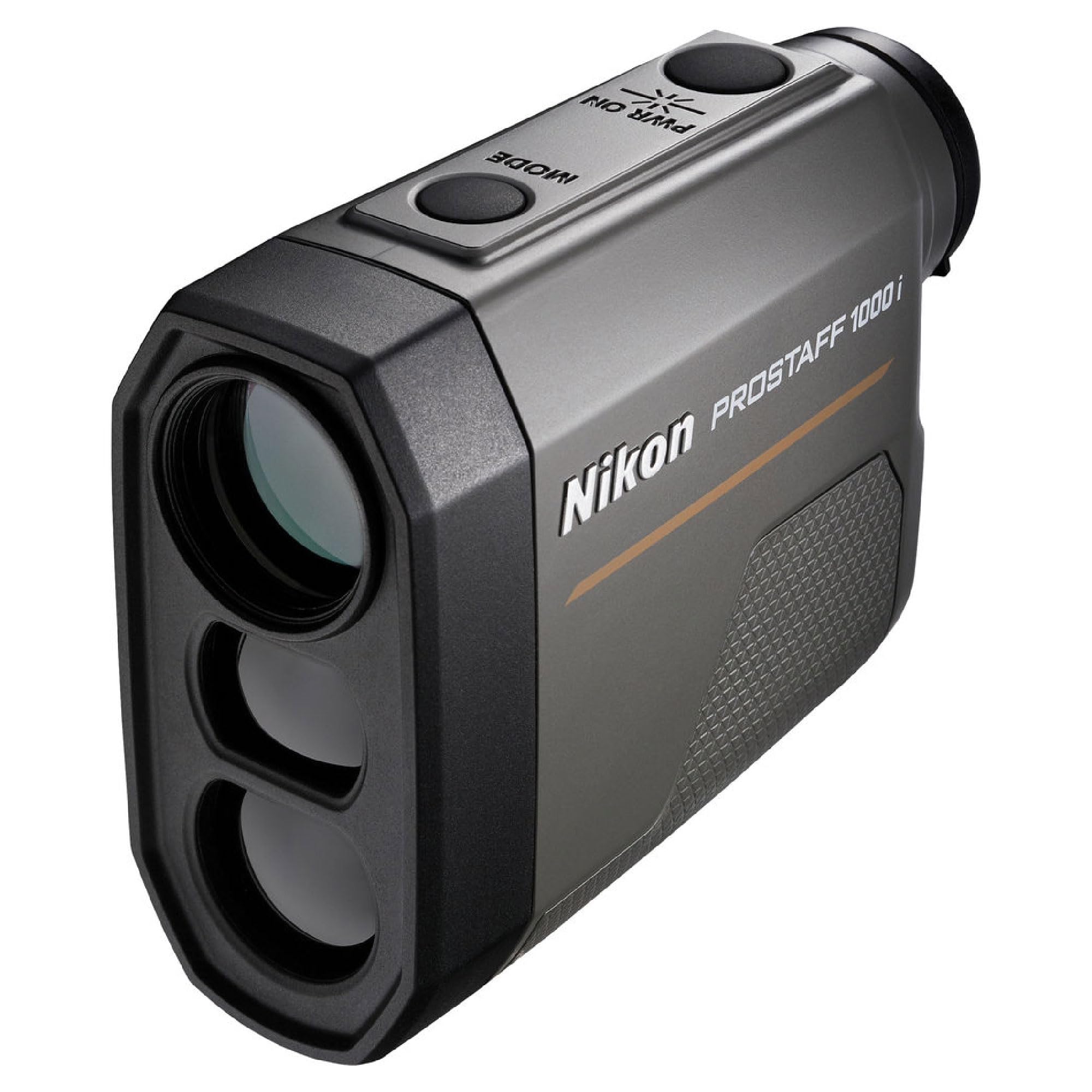
A pocket-sized Nikon with ID incline technology that fits in a bino pack pocket.
Nikon’s PROSTAFF 1000i proves that a compact unit can still handle serious hunting math. Its ID (Incline/Decline) Technology calculates the true horizontal distance to targets at inclines or declines up to ±89 degrees, which is about as steep as you’ll ever shoot. That makes it a legitimate performer for mountain hunters, even at this small size. The 6x magnification pairs with a 20mm objective lens and anti-reflection multi-coated optics for a bright, color-accurate view.
The TRU Target Technology (a system that lets you choose which target to lock onto) is a standout for hunting in thick cover. It lets you switch between First Target or Distant Target Priority, so you can isolate a single animal or read the farthest target in a group — perfect for navigating dense foliage without getting a false reading off a branch. It’s accurate to ±1 yard up to 100 yards and ±2 yards beyond, with a max range of 1,000 yards to reflective surfaces.
Weighing only 4.6 ounces, it’s the lightest in this lineup and easily slips into a pocket or pack. The IP67 rating means it’s well-sealed against rain and dust, and the 17mm eye relief is comfortable for eyeglass wearers. The main feedback is that it has no illuminated display, so the readout relies on ambient light — readable in daylight but a consideration for legal hunting hours.
Compact Strengths
- Ultra-light 4.6 oz with IP67 water resistance
- TRU Target priority modes for dense cover
- ID incline/decline tech for steep shots
Compact Limits
- No illuminated display for very low light
- Some customers note difficulty returning readings past 200 yards
Reach for it if: you need the lightest, most packable rangefinder that still includes angle compensation and priority targeting.
Pass if: you hunt in very low light and need an illuminated reticle.
9. Bushnell Prime 1500

The dedicated bow-and-gun hybrid with brush-ignoring smarts for serious woods hunters.
This is the premium Bushnell pick for the hunter who splits time between a bow and a rifle. It has dedicated Rifle and Bow Modes that give you accurate readouts accounting for arrow or bullet drop, angle, and ballistics — so you get weapon-specific data without manual math. The ARC (Angle Range Compensation) technology handles the terrain angle, giving you true distance on uphill and downhill shots.
The Brush and Bullseye modes are the real differentiators here. Brush mode ignores foreground objects like brush, trees, and branches, giving you distances to background objects only. Conversely, Bullseye mode acquires the distances of small targets without inadvertently measuring the background. For a whitetail hunter working thick cover, these two modes prevent the frustrating problem of ranging the tree in front of the deer instead of the deer itself.
The optical system is genuinely bright. It features fully multi-coated optics with ultra-wide-band coatings for true-to-life colors, and a 50% larger objective lens paired with an all-glass system delivers 2X brighter images — adding critical time to your hunt at dusk and dawn. The 6x24mm configuration is classic, and the IPX4 rating handles rain. The one recurring owner complaint is a battery issue where the unit can act as if the battery is dead, so it’s worth checking the connection and packing a spare.
Hunting Edge
- Brush and Bullseye modes for accurate reads in thick cover
- Dedicated Rifle and Bow modes with ballistics
- 2X brighter image with 50% larger objective lens
Hunting Caveat
- Some units act as if the battery is dead intermittently
- Eye relief and zoom could be improved per some owners
Best suited for: the dedicated woods hunter who needs weapon-specific modes and brush-ignoring intelligence most.
Look elsewhere if: you want the lightest unit or are mainly a flat-ground, long-range shooter.
Understanding the Specs
Angle Compensation (ARC / HCD / ID)
This is the technology that corrects your distance reading for the angle of your shot. When you shoot uphill or downhill, the straight-line distance to the target is longer than the true horizontal distance — the distance that matters for how your bullet or arrow drops. Angle Range Compensation (ARC), Horizontal Component Distance (HCD), and Nikon’s ID (Incline/Decline) technology all do this math for you. Every serious hunting rangefinder should have it, and the models without it (like the Sig Buckmasters 1500) are best left for flat terrain.
Real-World Range on Game
Manufacturers quote range figures based on reflective targets, which give the longest readings. A deer’s hide doesn’t reflect laser light as efficiently, so the real-world range on game is always much shorter — often less than half the advertised maximum. When comparing models, match the advertised “range on deer” or “range on game” spec to your typical shooting distances. A unit rated at 1,000 yards on a reflective surface might only reliably range a deer at 400-600 yards, which is usually fine for most hunting scenarios.
FAQ
How far can a budget hunting rangefinder actually range a deer?
Is angle compensation worth paying extra for?
What does the IPX4 or IP54 water resistance rating mean?
Will a golf rangefinder with slope work for hunting?
What is the difference between bow mode and rifle mode?
How important is magnification on a hunting rangefinder?
What is the best battery type for a hunting rangefinder?
Why does my rangefinder struggle to get a reading on a deer in thick brush?
Can I use a hunting rangefinder for other purposes like golf or disc golf?
What does a “lifetime warranty” on a rangefinder actually cover?
Final Thoughts: The Verdict
If you want one dependable pick, the budget rangefinder for hunting winner is the Leupold RX-1400I TBR/W because it brings advanced ballistics and wind-hold data into a 5.1-ounce package that serious hunters trust. If you want the absolute most range for your dollar, grab the Gogogo Sport Vpro VRP-2500 with its 2,500-yard reach and slope switch. And for the hunter in thick cover who needs brush-ignoring intelligence, the Bushnell Prime 1500 is the one to reach for.
How We Picked
We do not accept paid placement. Every pick is matched to a real buyer and a real use-case; we do not hands-on test units.
Sources & Methodology
Specifications: manufacturer listings and product documentation. Review insights: verified customer reviews, as of August 2026. Pricing: not shown on this page (it changes often); check the current price via the retailer link.
As an Amazon Associate, Gadgets Feed earns from qualifying purchases. This does not affect which products we feature.