
Our readers keep the lights on and my morning glass full of iced black tea. As an Amazon Associate, I earn from qualifying purchases.
Specs are compiled from manufacturer listings and verified buyer reviews and can change over time — please confirm the key details on the product page before buying.
Ceramic knives cut through soft produce so cleanly that tomatoes and ripe fruit don’t squish under the blade — that is the real reason cooks reach for them. But the same razor edge that glides through veggies is brittle, so the single biggest buying decision is learning where that sharpness ends and where breakage begins. This guide compares the sharpest, most reliable ceramic blades by looking at edge retention, blade length, and the honest handling trade-offs owners deal with daily.
I’m Min — the founder and writer behind Gadgets Feed. This guide is built by comparing the manufacturers’ published specifications and the patterns across verified customer reviews, so you get each pick’s real strengths and trade-offs instead of marketing spin.
From single utility blades to full kitchen sets, these ceramic knives balance razor edges against real-world fragility, so you know exactly which one belongs in your drawer.
Our Picks at a Glance

How To Choose The Best Ceramic Knives
Ceramic knives shine at one job: slicing fruits, vegetables, and boneless meats with precision. The trade-off is that the blade is essentially hardened glass — incredible at cutting, fragile if you hit a bone or drop it on tile.
Match the blade to the task
A serrated edge excels at tomatoes and crusty bread because the teeth grab slippery skin without crushing the interior. A plain edge gives you clean, uniform slices for chopping veggies and dicing. Choose based on what you cut most.
Read the fragility warnings
No ceramic knife is meant for frozen food, bones, or hard squash. Owners who respect that boundary get years of service; those who push it chip the tip. Treat the blade like glass and it will treat you well.
Quick Comparison
| Model | Best For | Blade Length | Edge Type | Item Weight | Amazon |
|---|---|---|---|---|---|
| Kyocera 5-inch Serrated Utility★ Best Overall | Tomato slicing | 5 inches | Serrated | 0.05 kg | Amazon |
| NAN Wind 5-Piece SetBest Value | Budget set buyers | 6 inches (chef) | Plain | — | Amazon |
| VegItPro 6-inch Santoku | All-purpose chopping | 6 inches | Plain | 0.17 kg | Amazon |
| Miracle Blade 7-Piece Set | Set with sheaths | 6 inches (chef) | Serrated | 0.49 kg | Amazon |
| Cestari 8-inch Bread Knife | Crusty bread and melons | 8 inches | Serrated | — | Amazon |
| Kyocera 6-inch Santoku | Premium everyday chef | 6 inches | Plain | 3.2 ounces | Amazon |
| Kyocera 3-PC INNOVATION Set | Top-tier 3-knife set | 5.5 inches (santoku) | Plain | — | Amazon |
In‑Depth Reviews
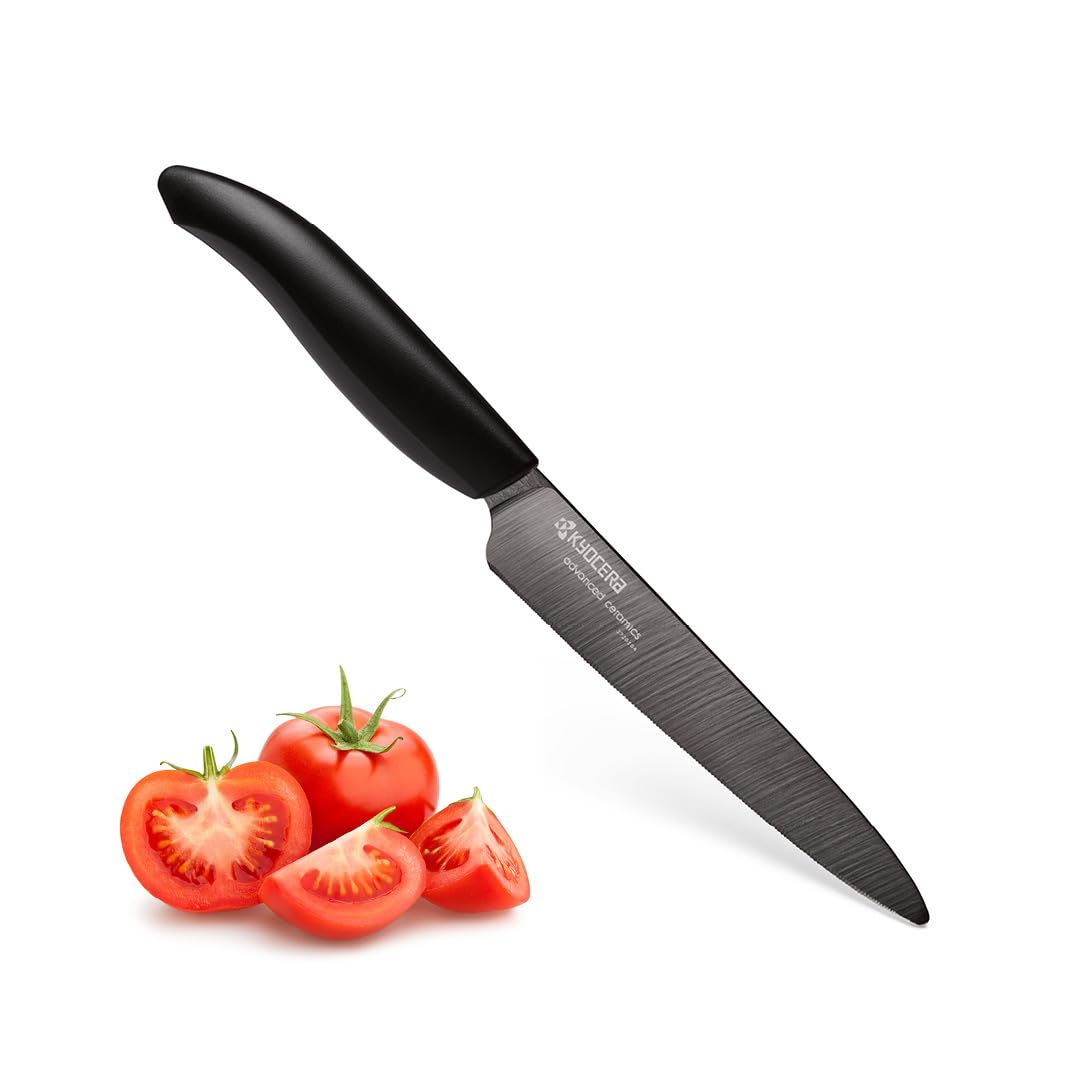
1. Kyocera Advanced Ceramic Revolution Series 5-inch Micro Serrated Utility Knife
Our pick — over 4.5★ from 150+ verified ratings; the strongest balance of quality and price.
The tomato whisperer that turns slippery skins into perfect even slices.
This 5-inch Kyocera with micro serrations is the knife owners reach for when they want paper-thin tomato slices without crushing the flesh. The fine teeth grip thin, slippery skins that plain blades skate over, and at just 0.05 kg it feels nearly weightless in hand — about 3.4 times lighter than the VegItPro 6-inch below. Buyers report daily use for years, with the edge staying sharp through seven years of service before any issue appeared..
The trade-off shows up the moment you hit anything hard. The tip broke while coring a cabbage, and owners say to avoid hard items entirely. Ceramic’s weakness is impact, so treat this like a precision tool, not a beater knife. It is rust-proof, won’t brown food, and resists acids, which makes it ideal for fruits and vegetables.
What wins people over is the sharpness — dozens of owners single it out as the best tomato knife they have owned. It cuts cleanly through boneless meat too, but the manufacturer is clear: no hard or frozen foods. If you want one knife that handles the delicate jobs beautifully and you respect its limits, this is the one.
edge retention king
- Fine serrations give clean, even tomato slices
- Featherlight at 0.05 kg for fatigue-free cutting
- Rust-proof and acid-resistant for produce prep
- Edge holds through years of daily use
fragile if dropped
- Tip chipped on a cabbage core
- Breaks if dropped or forced on hard items
- Not for bones, frozen foods, or twisting
daily precision: you want the definitive ceramic tomato and produce slicer with a proven sharpness record.
heavy chopping: you need a do-everything knife that can handle bones or frozen items — this one cannot.
2. NAN Wind 5-Piece Ceramic Knife Set with Block Stand
A full kitchen of ceramic blades that collapses into a compact stand.
This orange set bundles a 6-inch chef’s knife, 5-inch bread knife, 4-inch vegetable knife, 3-inch fruit knife, and a peeler — everything a beginner needs to try ceramic without buying piece by piece. The ABS handles have an anti-slip design, and the stand fans out and collapses for compact storage. Owners use them daily for light tasks and call the set a good deal for the price.
The honest catch comes straight from the review pages: “the blades are like glass.” Owners mention chips when cutting watermelon or frozen items, so this set rewards gentle use.
The blade quality earns consistent praise, and while sharpness gets mixed feedback across the set, most owners find the chef’s knife cuts well. If you want an affordable way to outfit a kitchen with ceramic and you will stick to soft produce, this set delivers real value.
kitchen outfitting: first-time ceramic buyers who want a full range of knives plus a peeler in one budget-friendly package.
minimalist setups: you routinely cut melons or frozen foods — the blades chip on hard items.
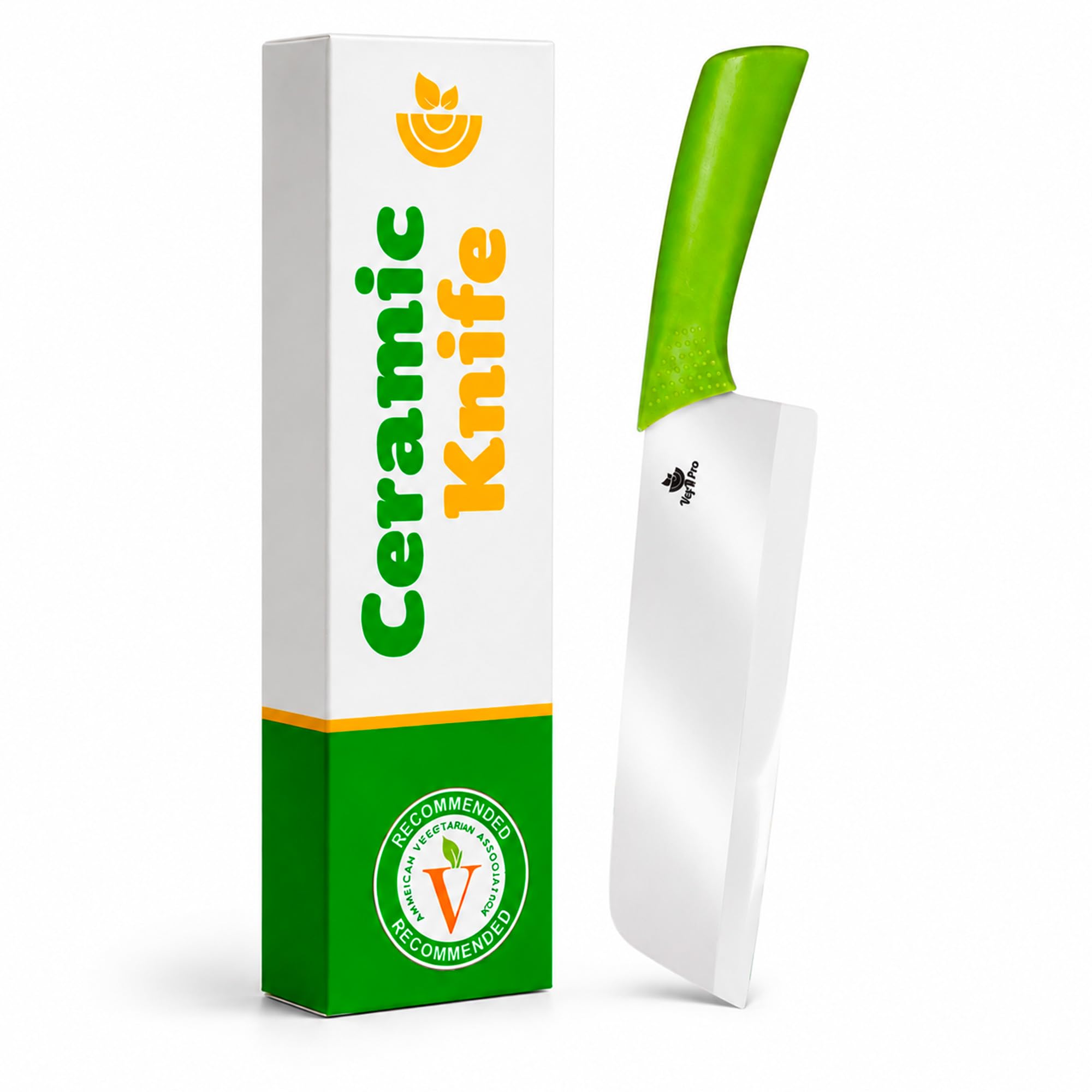
3. VegItPro 6-inch Santoku Blade Ceramic Chef Knife
The sturdy all-rounder that survived a one-meter drop test.
At 0.17 kg, this 6-inch santoku has a reassuring heft that helps it power through larger vegetables like zucchini and tomatoes. The wheat-straw handle is lightweight and reduces hand fatigue, and the plain ceramic edge gives clean, uniform slices for salads and meal prep. Customers note it arrives intact thanks to better shipping — a real concern when two previous ceramic orders from other sellers arrived broken.
Quality is the standout here, with owners consistently praising the build. The blade is rust-proof, prevents browning, and won’t transfer metallic tastes or odors. One owner even watched it survive a one-meter drop test, a rare feat for ceramic.
The mixed feedback lands on sharpness — some find it extremely sharp from the start, others wish for more bite. The recurring durability note is the blade detaching from the handle in rare cases, so treat the joint gently. For a well-built santoku that handles the daily veggie rotation, this is a strong mid-range pick.
all-purpose slicing: you want a sturdy, lightweight santoku for chopping, slicing, and dicing vegetables all week.
large hands: razor-edge precision from the start matters most — sharpness feedback here is genuinely mixed.
4. Miracle Blade IV World Class 7-Piece Ceramic Knife Set

Razor-sharp serrated blades that come with their own protective covers.
This set includes three ceramic knives plus a peeler, each with a sheath cover to keep the blade safe in a drawer — a thoughtful touch that protects both the edge and your fingers. The serrated edges stay rust and stain-free, and the composite handles have an easy-grip design that stops slipping. At 0.49 kg, this is the heaviest set here, so it feels more substantial than the featherlight Kyocera blades.
The sharpness is the headline — owners warn that if you have never used Miracle Blades, “you’ll slice your fingers open quick.” The knives cut well and are genuinely useful in the kitchen. But the feedback is mixed: some find the blades not quite as sharp as expected, and the set is heavier than pure ceramic because the blades are metal-coated.
You get confidence from a lifetime warranty that covers defects in materials and workmanship. But note the set includes 3 knives with covers, not 6, which surprised one owner. If you want a protected, serrated set backed by a lifetime offer, this is a solid choice.
budget bundles: cooks who want sheathed, serrated ceramic blades with a lifetime warranty for household use.
pro use: you want pure featherlight ceramic — these run heavier due to the metal coating.
5. Cestari Advanced Ceramic 8-inch Serrated Bread Knife

The elegant black blade that slices crusty bread without crushing the crumb.
This 8-inch serrated blade is built for the jobs that wreck plain edges: crusty bread, melons, tomatoes, meat, and cheese. The razor edge cuts paper-thin slices in seconds, and the serrations handle slippery tomato skins without crushing the interior. Owners say it looks like a -plus piece of cutlery, with a black mirror finish that draws compliments.
The rubberized handle won’t slip, and the single-piece polypropylene construction has no seams to harbor germs — plus it is top-rack dishwasher safe. A custom-molded sheath keeps the blade safe in a drawer, and the lifetime replacement warranty means you can return it for any reason, no questions asked.
Knife quality is the top praise, with sharpness close behind — the edge holds for months without honing.. The rare mismatch comes from cooks who prefer steel, and one noted the blade is sharp enough for most tasks but not the absolute sharpest. For a bread and produce specialist you will never sharpen, this is the standout.
crusty loaves: you bake bread or cut melons regularly and want a no-sharpen serrated blade with a lifetime replacement promise.
general cutting: you want an all-purpose chef blade — this is a specialist, not a generalist.
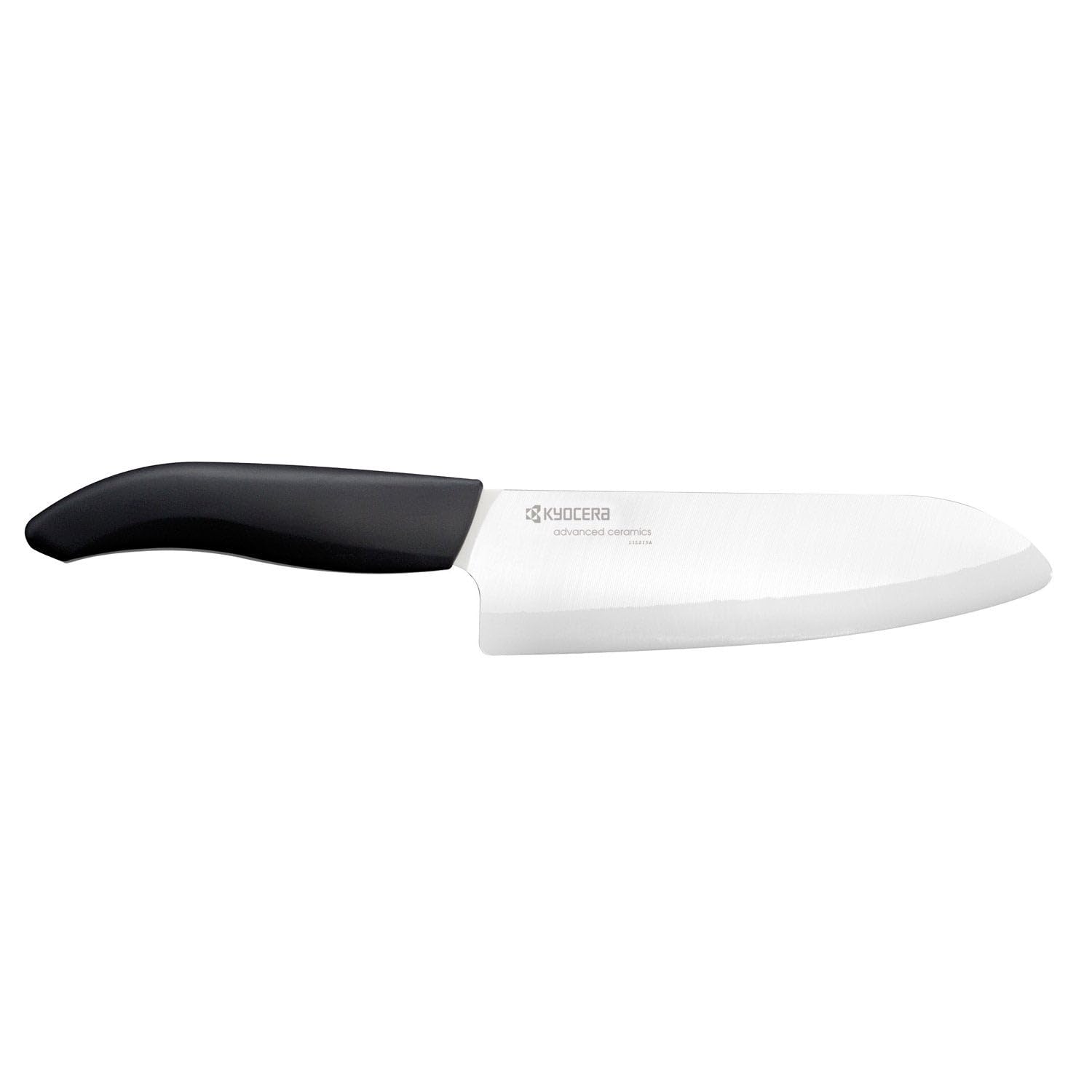
6. Kyocera Advanced Ceramic 6-inch Chef’s Santoku Knife
The featherweight everyday chef that stays sharp for years on end.
At just 3.2 ounces, this 6-inch santoku is the all-purpose workhorse for slicing, dicing, and mincing vegetables, fruit, and boneless meat. Reviewers point out the edge staying sharp for up to 4 years of regular use. — cutting through produce “like butter” — and praise its lightweight design for easy handling. It is the most-reviewed premium pick here, and the quality consensus is strong.
Sharpness is the second-most-praised trait, with owners calling it superb for tomatoes and rosemary. But the durability warnings are real: the blade cracks on hidden bones, breaks against glass or granite, and the tip is thin and fragile. One owner lost a blade to a hidden bone while cutting — an honest reminder of ceramic’s limits.
The handle combines alloy steel and plastic for a comfortable grip, and the blade is rust-proof and acid-resistant. If you want the definitive Kyocera santoku experience and will treat it with care, this is the premium pick that earns its place.
precise vegetable work: cooks who want a top-tier, featherlight daily slicer and will avoid bones, glass, and granite.
budget shoppers: you cut near bones often — the thin tip is genuinely fragile.
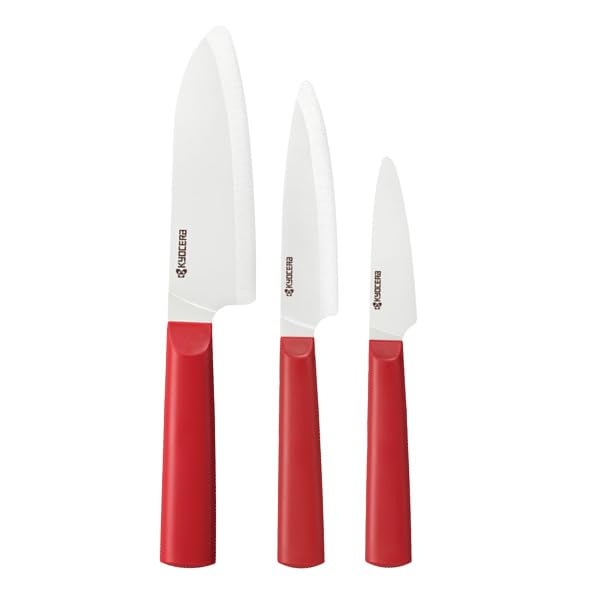
7. Kyocera 3-PC INNOVATION Ceramic Knife Set
The top-tier trio with a patented hammer-inspired handle and nano-refined blade.
This 3-piece set pairs a 5.5-inch santoku, a 4.5-inch utility, and a 3-inch paring knife — the full range for vegetable prep. The patented INNOVATIONwhite handle draws from traditional Japanese hammer design for an ergonomic grip, and the zirconia-alumina blend blade is crafted for superior wear resistance. Owners say it cuts a tomato or onion “like a sheet of paper,” with fine, precise slicing of peppers and kale stems.
At half the weight of steel knives, the set reduces hand fatigue, ideal for users with arthritis or hand injuries. The ceramic is non-reactive and non-corrosive, so it never rusts or transfers a metallic taste, and food stays fresher without browning.
Owners confirm the blades chip, a brittleness trade-off, though Kyocera offers a resharpening service. One skeptic noted that at this level, quality steel plus sharpening tools might be more low-maintenance, but for pure ceramic performance, this is the peak. If you want the best Kyocera has to offer in one set, this is it.
small kitchens: you want the full 3-knife Kyocera system with the patented handle and nano-refined blade for easy prep.
big meal prep: you prefer a low-maintenance steel setup — ceramic’s chipping is an inherent trade-off here.
Understanding the Specs
Blade Length and Edge Type
Blade length determines what a knife can tackle — a 5-inch utility suits tomatoes and small produce, while an 8-inch bread knife handles whole loaves and melons. Serrated edges grip slippery skins and crusty bread without crushing, while plain edges give clean, uniform slices for chopping. Match the length and edge to your most frequent cutting task.
Weight and Handle Design
Lightweight ceramic knives reduce hand fatigue during repetitive chopping, which matters for daily prep and for users with hand issues. Ergonomic handles with anti-slip grip improve control and precision. Heavier blades feel more substantial but tire the hand faster; the right weight depends on how long you spend at the cutting board.
FAQ
Why do ceramic knives chip and break so easily?
Can I cut frozen food or bones with a ceramic knife?
How long does a ceramic knife stay sharp?
What is the difference between serrated and plain ceramic blades?
Can ceramic knives be washed in the dishwasher?
Why does food not brown when cut with a ceramic knife?
Is a ceramic knife set or a single blade a better first buy?
Which Kyocera is better — the 5-inch serrated or the 6-inch santoku?
How do I stop a ceramic knife tip from breaking?
Do heavy ceramic knives chop better than lightweight ones?
Final Thoughts: The Verdict
Across the board, the ceramic knives winner is the Kyocera 5-inch Serrated Utility because its proven sharpness and featherlight design make it the definitive produce slicer. If you want a full kitchen range in one budget-friendly package, grab the NAN Wind 5-Piece Set. And for the top-tier three-knife experience with the patented handle, the Kyocera 3-PC INNOVATION Set is the one to reach for.
How We Picked
We do not accept paid placement. Every pick is matched to a real buyer and a real use-case; we do not hands-on test units.
Sources & Methodology
Specifications: manufacturer listings and product documentation. Review insights: verified customer reviews, as of August 2026. Pricing: not shown on this page (it changes often); check the current price via the retailer link.
As an Amazon Associate, Gadgets Feed earns from qualifying purchases. This does not affect which products we feature.