
Our readers keep the lights on and my morning glass full of iced black tea. As an Amazon Associate, I earn from qualifying purchases.
Specs are compiled from manufacturer listings and verified buyer reviews and can change over time — please confirm the key details on the product page before buying.
A border isn’t a border until it has a rhythm of color that lasts from spring through fall. The real challenge is picking plants that actually perform in your soil and zone, not ones that look great in a stock photo. This guide cuts through the seed-pack hype to show you which bulbs and seeds earn their spot along your walkway, fence, or bed.
I’m Min — the founder and writer behind Gadgets Feed. This guide is built by comparing the manufacturers’ published specifications and the patterns across verified customer reviews, so you get each pick’s real strengths and trade-offs instead of marketing spin.
Whether you crave spring tulips or summer daisies, the best border flowers for your yard come down to planting time, height, and how much patience you have. border flowers that bloom reliably make the difference between a forgettable lawn and a neighborhood showpiece.
Our Picks at a Glance

How To Choose The Best Border Flowers
Border planting is about layering — short plants at the front, tall ones at the back, and a mix of bloom times so something is always happening. Before you buy, think about how much sun your border actually gets, when you want color, and whether you prefer the instant satisfaction of bulbs or the sprawling surprise of seeds.
Bulbs vs Seeds: Know the Difference
Bulbs like daffodils and tulips give you near-guaranteed spring color with almost no effort — you plant them in fall, and they come up on their own. Seeds cost less and cover more ground, but they demand patience: some take weeks to sprout, and germination can be hit or miss depending on soil and weather. For a reliable border, many gardeners mix both — bulbs for early structure, seeds for summer volume.
Match Plants to Your Zone and Sun
Before you pick any border flower, check your USDA hardiness zone (a numbered map that tells you which plants survive your local winter cold). This matters more than any other spec. A daffodil rated for zones 3-8 will struggle in a sweltering zone 10, while a coneflower for zones 4-9 may not survive a brutal northern winter. Match your zone first, then your sun exposure — full sun means at least six hours of direct light daily, and some borders only get part of that.
Quick Comparison
| Model | Best For | Plant Type | Mature Height | Blooming Period | Amazon |
|---|---|---|---|---|---|
| 50 Yellow Daffodil Bulbs★ Best Overall | Reliable spring color | Bulbs (50 count) | 45 cm | Spring | Amazon |
| Hollyhock Summer Carnival MixTall Drama | Tall back-border drama | Seeds (3000+) | 5–8 feet | Summer to Fall | Amazon |
| Eden Brothers All Annual MixWide Coverage | Large-area coverage | Seeds (20 species) | Varies | Summer to Fall | Amazon |
| White English Lawn Daisy | Low front-border carpet | Seeds (1000 count) | Very low | Spring to Summer | Amazon |
| Pink English Daisy | Soft pink accents | Seeds (1000 count) | Very low | Summer | Amazon |
| Purple Blazing Star | Pollinator-friendly spikes | Bulbs (5 count) | Up to 40 inches | May–June | Amazon |
| Echinacea LAKOTA ‘Santa Fe’ | Low-maintenance perennials | Live plant (1) | 12-16 inches | Summer to Fall | Amazon |
| 100-Pack Mixed Tulips | Mass spring display | Bulbs (100 count) | Varies | Spring | Amazon |
In‑Depth Reviews
1. 50 Yellow Daffodil Bulbs — Dutch Master Value Bag
Our pick — 4.5★ from 550+ verified ratings; the strongest balance of quality and price.
The spring border classic that delivers a 45 cm burst of yellow with almost no effort.
These daffodil bulbs are the closest thing to a sure bet in border gardening. Each bulb is size 10/12 cm, which is what you want for a first-year show rather than a waiting game. Plant them 10 cm deep and 10 cm apart in fall, and the sturdy stems rise to about 45 cm tall — perfect for a mid-border pop of classic trumpet yellow.
The quality is where this pack wins you over. The bulbs arrive healthy and plump, and buyers report that every single one sprouted within two weeks of planting. One gardener in Zone 8 planted at the suggested time and had zero issues, describing the results as bright, vibrant, and healthy. The survival rate is the one honest caveat — a small share of orders have arrived with rotten bulbs, though the seller has refunded on those.
What wins people over here is the growth — with over 50 buyers singling out bulb growth as the standout trait, and quality close behind. For a spring border that asks nothing of you beyond a fall afternoon of digging, this is the pick.
What Owners Love
- Every bulb in the bag typically blooms in the first season
- Plant 10 cm deep in fall for easy spring color
The Honest Trade-Off
- An occasional bulb in a batch arrives rotten, not a pattern
Grab these if: you want a dependable spring border with minimal effort and maximum payoff.
Think twice if: you need summer or fall color — daffodils are strictly a spring act.
2. HOME GROWN Hollyhock Summer Carnival Mix
Five-to-eight-foot cottage classics that turn a back border into a vertical spectacle.
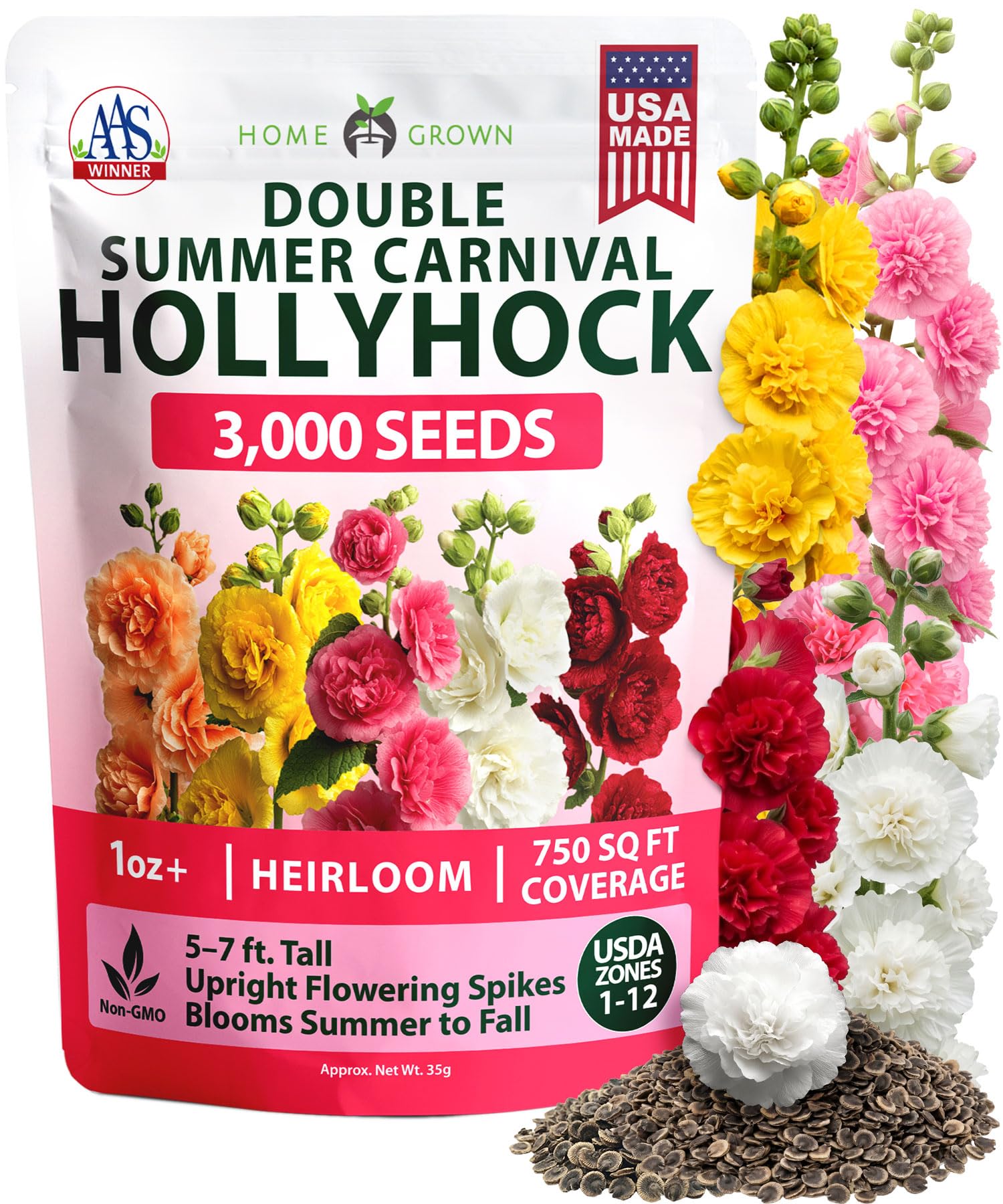
If your border needs height, these hollyhocks deliver it in a big way. The Summer Carnival Mix reaches 5–8 feet tall, making it the obvious choice for planting along a fence or as a backdrop that gives your shorter front plants something to play against. It’s an AAS Award-Winning variety, which is a solid nod to its garden performance.
The 3000+ seed count is generous enough to cover a large bed or share with neighbors. The blooms pull in bees, butterflies, and hummingbirds, which makes this a lively, moving border rather than a static one. The plants are biennial, so they reseed naturally once established — plant them once and they keep returning with minimal effort.
Honestly, germination is the mixed bag here. Owners mention anywhere from quick sprouting with dozens of seedlings to no growth at all, so your soil prep matters. The payoff for patience is real: as owners put it, “flowers bloomed 6-7 weeks after planting” when given proper care.
The Big Payoff
- Massive height for back-border privacy and drama
- Self-seeding returns year after year
The Catch
- Germination varies — direct sow in fall or after frost for best odds
Plant these if: you want towering color along a fence and don’t mind waiting a season for the show.
Look elsewhere if: you need instant, guaranteed sprouts in a single season.
3. Eden Brothers All Annual Wildflower Mix
A 20-species mix that blankets a 250-500 square foot border in color all summer.
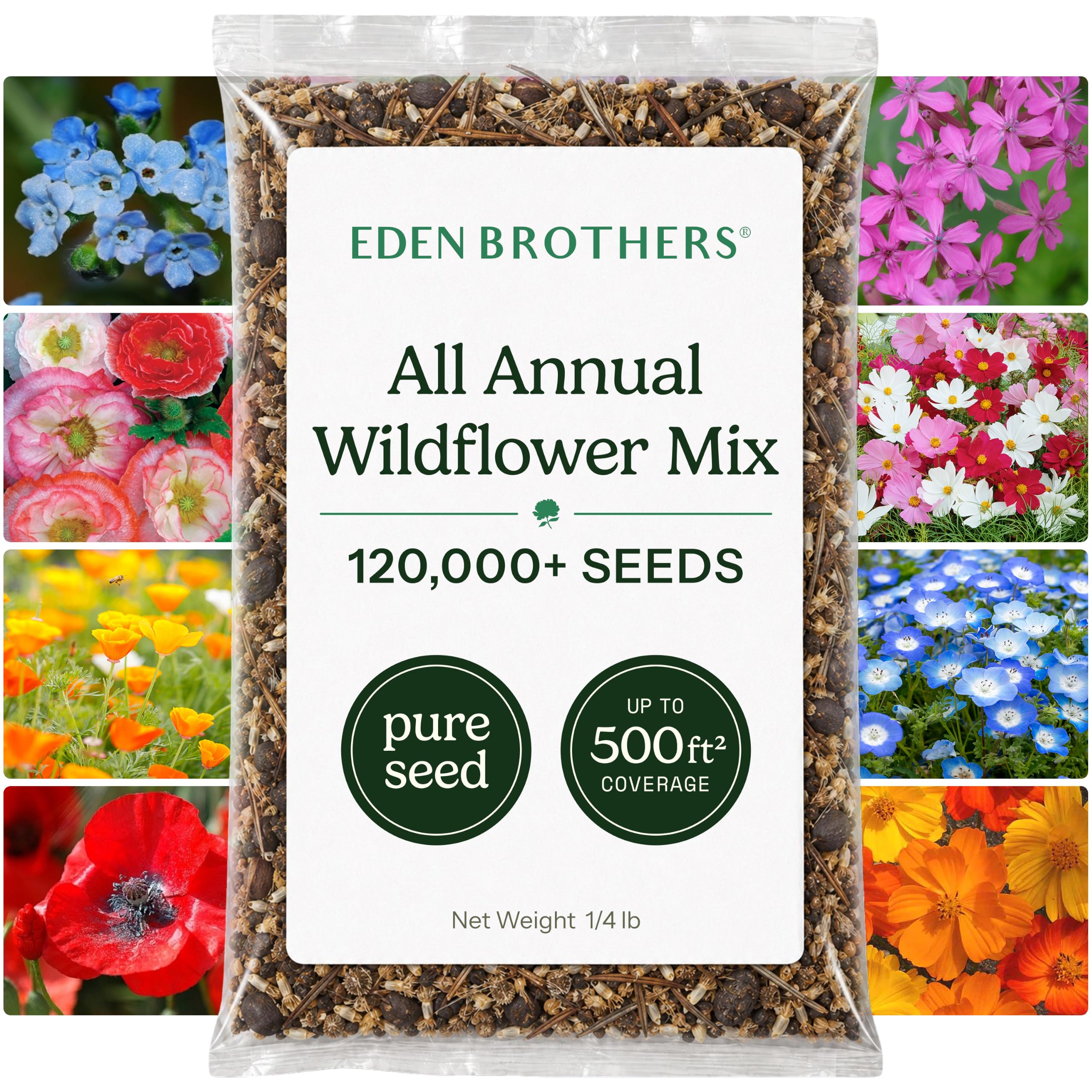
This is the bulk option for anyone who wants to stop thinking about individual plants and just let a border explode. The Eden Brothers mix includes 20 easy-to-grow species like Cornflower Tall Blue, Cosmos, Scarlet Flax, and Wild Annual Sunflower, all in one 1/4 lb bag. It’s non-GMO, heirloom, and organic, which matters if clean seed sources are your priority.
The coverage is the headline — this bag handles 250-500 square feet, which is enough for a serious border or a whole backyard strip. It’s suited for USDA zones 3-10, so it travels well across most of the country. The mix is designed to bloom from summer through fall, giving you months of mixed color rather than a single burst.
The honest caveat is germination again — some customers note fast growth and a sea of flowers, while others see barely any growth at all. The variety and appearance are the consistent wins, with the mix earning praise for its range of colors and species. One buyer threw the seeds over a dirt area, lightly raked, and had sunflowers budding within two months.
What Works
- Massive coverage for the weight — a little goes a long way
- Non-GMO, heirloom, organic seed sources
Before You Buy
- Germination is inconsistent — soil contact and watering decide your results
Buy this for: large borders or community plots where variety and volume beat precision.
skip it if: you have a small space — the seed volume is genuinely too much for a tiny bed.
4. White English Lawn Daisy Mix — 1000 Seeds

A low-spreading white carpet for the very front of a border that handles sun or shade.
These English daisies are the opposite of the tall border plants — they grow very low to the ground and spread quickly, making them ideal for the front edge of a bed or even woven into a lawn. Bellis Perennis thrives in fertile, moist, well-drained soil and is happy in full sun or partial shade, across zones 3-9. The 1000 seeds give you plenty of material for edging.
The planting secret is gentle: seeds just need to be lightly pressed into the soil, not buried. They’re non-GMO and neonicotinoid-free, which is a plus for anyone mindful of pollinators. The brand has been a licensed California nursery since 1985, which is a long track record for a seed company.
The honest reality is that germination here is polarizing. Some buyers describe nearly 100% sprouting, while others report nothing happened at all — it’s genuinely inconsistent. When they do take, the daisies are described as adorable little lawn decorations that fill a space with white smiles.
The Appeal
- Low-growing spread perfect for front borders and lawns
- Tolerates both full sun and partial shade
Be Aware
- Germination is a gamble — some bags sprout eagerly, others stay dormant
Choose these for: a soft white edging along a path or the front of a mixed border.
Reconsider if: you need guaranteed results — this one rewards patience and luck in equal measure.
5. Pink English Daisy — 1000 Seeds
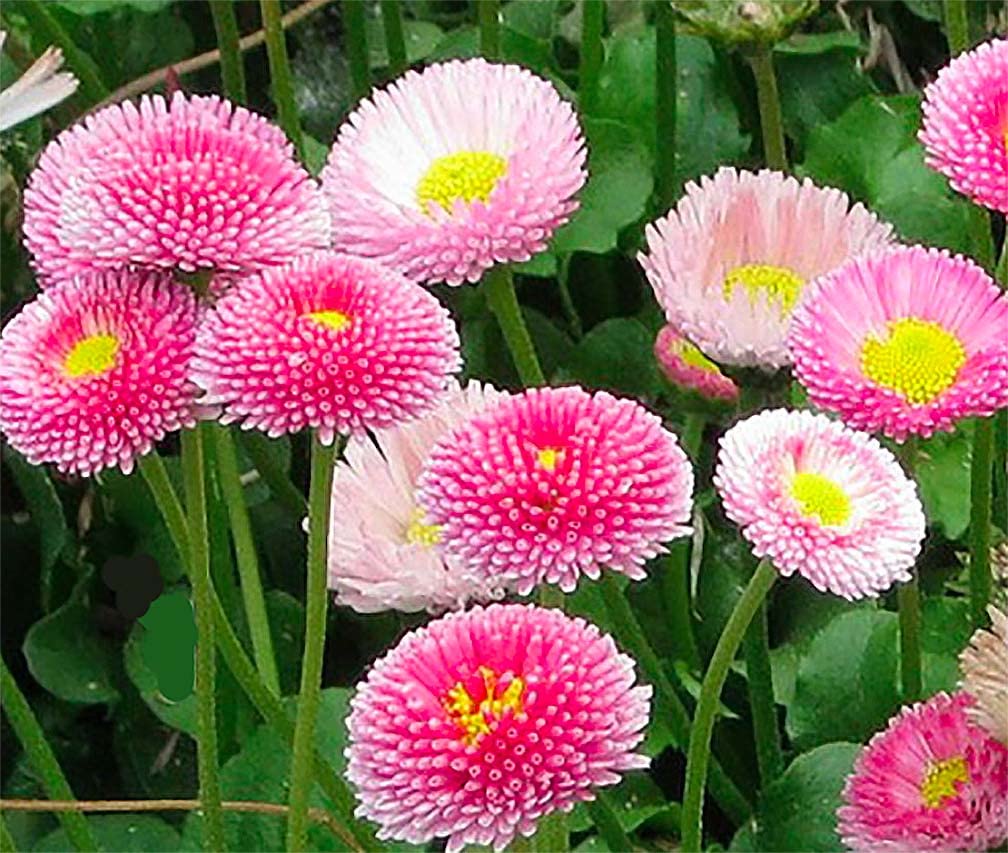
The pink sister to the white daisy, adding a soft wash of color to borders and lawns.
If the white daisy is the classic, the pink version is the romantic. These Bellis Perennis seeds grow low and spread quickly, flowering in summer with a soft pink tone that softens the hard edge of a border. They’re pet friendly, which is a genuine relief if your dog patrols the yard and you worry about what’s planted along the fence line.
The planting method is the same — lightly press into soil, no burying needed. The timing window is fall to spring, and the seeds handle all soil types. Like its white counterpart, this comes from Marde Ross & Company, which has operated as a licensed California nursery since 1985.
Germination is the recurring concern here, and it’s the honest reason this isn’t higher on the list. Some buyers planted in fall and were delighted when the daisies popped up the next spring, describing them as adorable and easy to grow. Others followed the directions exactly and saw nothing after two weeks. The appearance is the consistent positive — the pink color gets steady praise.
Why It Stands Out
- Pet-friendly label for households with curious animals
- Adorable low blooms that spread across the front edge
The Risk
- Germination is genuinely inconsistent — some bags produce nothing
Try these if: you want a soft pink accent at the front of the border and are okay with a wait-and-see season.
Pass if: you need reliable, fast sprouts — the daisies won’t promise you that.
6. Purple Blazing Star — 5 Fresh Bulbs, Liatris Spicata

Velvety purple spikes up to 40 inches tall that act as a late-season lifeline for bees.
Blazing star is the border plant that does double duty — it looks striking and feeds pollinators when other nectar sources run dry. The Liatris Spicata bulbs grow up to 40 inches tall, producing velvety purple blooms atop slender, grass-like foliage. It’s the vertical texture your border needs if everything else is round and soft.
These bulbs are kept in temperature-controlled refrigeration to preserve freshness, and they’re guaranteed to germinate. They thrive in sun or part shade, tolerate poor soil, and flourish in zones 3-9, blooming May-June. The plants are pollinator-friendly and deer resistant — a serious advantage if your neighborhood deer treat borders as a buffet.
The bloom performance is honestly mixed. Some buyers saw fast spring growth with purple flowers appearing by early July, while others reported bulbs that never bloomed at all. The appearance and health of the bulbs earn consistent praise, but the bloom count is the biggest variable here. A few orders also arrived with 4 bulbs instead of 5, so count your corms on delivery.
The Strengths
- Deer-resistant and pollinator-friendly in one plant
- Unique vertical spikes add structure to any border
Watch For
- Bloom success varies — some corms flower readily, others stay dormant
Pick this up for: a structural mid-border spike that keeps bees and butterflies fed into late summer.
Think again if: you demand guaranteed first-year blooms — the corms can be finicky.
7. Proven Winners Echinacea LAKOTA ‘Santa Fe’ Coneflower

A fully-rooted perennial coneflower in a #1 container that plants straight into your border.
Unlike the seeds and bulbs on this list, this is a live plant — delivered fully rooted in a #1 Size Container, ready to go in the ground the day it arrives. The Echinacea LAKOTA ‘Santa Fe’ shows pink-orange flowers and matures to 12-16 inches tall by 16-18 inches wide. That compact size makes it a natural for grouping at the front or middle of a border.
The appeal here is instant gratification and low maintenance. It’s a perennial that attracts butterflies and hummingbirds, and it’s deer and rabbit resistant — two checks in the win column for anyone whose border is a nightly wildlife stop. It prefers USDA zones 4-9 and handles moderate watering with ease.
The honest caveat is size and survival. The plant arrives small, and while some buyers received a healthy, sturdy specimen that exceeded expectations, others found the plant too small to survive. It’s a gamble on shipping and handling. When it works, it’s a beautifully flowering perennial that comes back year after year.
What You Get
- Instant perennial — no waiting for germination or sprouting
- Deer and rabbit resistant for confidence
The Risk
- Arrives small and some specimens don’t survive transplanting
Buy this for: an immediate, low-maintenance perennial that returns each year without replanting.
Be cautious if: you expect a large, blooming plant on arrival — it ships as a young start.
8. 100-Pack Mixed Tulip Bulbs — Willard & May
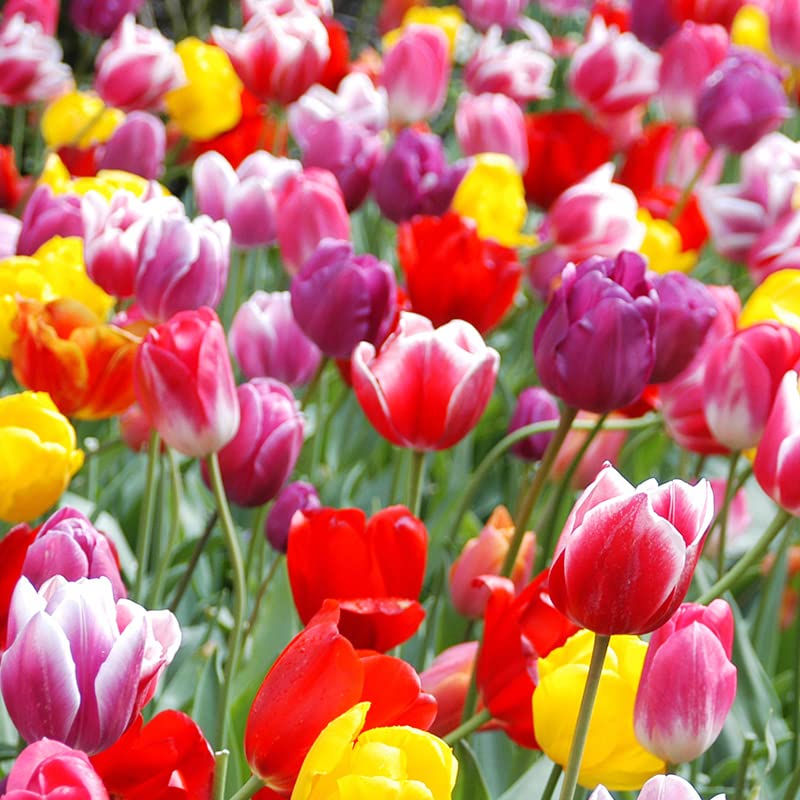
A 100-bulb spring explosion in assorted colors, built for mass border displays.
This is the big-swing option for a border that wants to announce spring loudly. The 100-pack mixes early, mid, and late-season tulips in a variety of bloom shapes and colors, so your display stretches out rather than peaking all at once. Ideal for borders, mass displays, and cutting gardens in full sun to part shade.
The bulbs are 11/12 cm size, which is on the larger end and generally means better first-year blooms. They’re cold-hardy for USDA zones 3-8, and the winter stratification triggers those vibrant spring blooms. The tulips are described as excellent cut flowers with tall, sturdy stems and classic cup-shaped blooms — a florist favorite for a reason.
Quality and appearance earn steady praise, with over 20 buyers calling out the quality as the standout trait. The honest variables are germination rate and bulb size — some report nearly everything blooming, others say about 50% come up, and opinions split on whether the bulbs look big or small. One buyer planted 200 bulbs in October in zone 6 and still got gorgeous blooms that lasted about 2.5 weeks.
The Payoff
- 100 bulbs for a serious mass spring display
- Early, mid, and late varieties extend the bloom window
Keep In Mind
- Bloom rate can land around 50% depending on your winter and soil
Reach for these if: you want a big, layered tulip show and are planting across a wide border.
Look elsewhere if: you need every single bulb to bloom — the rate is not guaranteed at 100%.
Understanding the Specs
Bulb Size
Bulb size is measured in centimeters around the bulb’s circumference, and bigger usually means better. A daffodil at 10/12 cm or a tulip at 11/12 cm has more stored energy, which translates to a stronger first-year bloom. Smaller bulbs often need a season to build up before they flower properly.
USDA Hardiness Zone
Your zone tells you which plants will survive your winter lows. A plant rated for zones 3-8 is cold-hardy but may struggle in a hot southern climate, while one rated 4-9 handles both cold and moderate heat. Always match the plant’s zone range to where you actually garden — it’s the single most important compatibility check.
Planting Period
Fall-planted bulbs like daffodils and tulips need winter cold to trigger spring blooms. Seeds are more flexible — some want a fall sowing for natural stratification, others are fine after the last frost in spring. Read the planting window before you buy so you aren’t stuck holding seeds through the wrong season.
Expected Plant Height
Height determines where a plant belongs in your border. Short growers like daisies sit at the front edge, mid-height daffodils anchor the middle, and towering hollyhocks or blazing star form the backdrop. Match the mature height to the depth of your border to avoid blocking views.
FAQ
When is the best time to plant daffodil and tulip bulbs for a border?
What is the difference between planting bulbs and planting seeds in a border?
How deep should I plant daffodil bulbs in my border?
Which border flowers are best for attracting pollinators?
What does USDA hardiness zone mean for border flowers?
Can I plant border flower seeds in the spring?
Why are some of my border bulbs not blooming?
Which border flowers are deer and rabbit resistant?
Final Thoughts: The Verdict
The crowd favorite for a reason — the 50 Yellow Daffodil Bulbs hold a strong 4.5-star rating across over 500 owners, and the growth is what wins people over almost every time. If you want towering summer drama along a fence, the Hollyhock Summer Carnival Mix is your vertical answer. And for a mass spring display that fills a wide border with color, the 100-Pack Mixed Tulips deliver the biggest bang for your planting effort.
How We Picked
We do not accept paid placement. Every pick is matched to a real buyer and a real use-case; we do not hands-on test units.
Sources & Methodology
Specifications: manufacturer listings and product documentation. Review insights: verified customer reviews, as of August 2026. Pricing: not shown on this page (it changes often); check the current price via the retailer link.
As an Amazon Associate, Gadgets Feed earns from qualifying purchases. This does not affect which products we feature.