
Our readers keep the lights on and my morning glass full of iced black tea. As an Amazon Associate, I earn from qualifying purchases.
Specs are compiled from manufacturer listings and verified buyer reviews and can change over time — please confirm the key details on the product page before buying.
The moment a standard blade touches acrylic, the friction turns the cut line into a cloudy, molten mess. This guide focuses on the opposite: blades engineered with tooth geometries and coatings that keep the material cool, so you get a clean edge without sanding. You will find the right blade for your specific saw, whether it is a rotary tool, a jigsaw, or a full-size table saw.
I’m Min — the founder and writer behind Gadgets Feed. This guide is built by comparing the manufacturers’ published specifications and the patterns across verified customer reviews, so you get each pick’s real strengths and trade-offs instead of marketing spin.
The key is matching the blade to the tool and the material thickness. Here is our breakdown of the blade for cutting acrylic that earns its place in your shop.
Our Picks at a Glance

How To Choose The Right Acrylic Blade
Acrylic is a thermoplastic, which means it softens when it gets hot. A standard wood blade spins fast enough to generate that heat, melting the plastic back together behind the cut. The solution is a blade designed with a different grind and more teeth.
Match the Blade to Your Tool
A rotary tool needs a small cutting disc, a jigsaw needs a fine-tooth blade, and a table saw needs a full-size circular blade. This guide covers all three, so first decide which saw you will use for the project.
Tooth Count is Everything
More teeth mean a finer cut. For a jigsaw, a 13 TPI (teeth per inch) blade is aggressive but smooth enough. For a 10-inch circular blade, you want a high tooth count like 80 or even 200 to keep the edge clean.
Quick Comparison
| Model | Best For | Blade Type | Tooth Count | Arbor Size | Amazon |
|---|---|---|---|---|---|
| Dremel SC476★ Best Overall | Rotary Tool Detail Work | Cut-off Wheel | 80 Grit | — | Amazon |
| FOXBC 3″ BladeTop Performer | Compact Cut-Off Saws | Carbide Circular | 36 Teeth | 7/16″ | Amazon |
| Diablo Jig SawBest Value | Plexiglass Sheets | Bi-Metal Jig Saw | 13 TPI | U-Shank | Amazon |
| KAKURI Hand Saw | Manual PVC & Acrylic Cuts | Japanese Pull Saw | Fine-Tooth | — | Amazon |
| MASTEC 10″ Blade | Miter & Table Saws | Carbide Circular | 80 Teeth | 5/8″ | Amazon |
| FOXBC 10″ Blade | Non-Ferrous Metals & Plastic | Carbide Circular | 80 Teeth | 5/8″ | Amazon |
| IVY Classic 10″ Blade | Thin Plexi & Vinyl | High Carbon Steel | 200 Teeth | 5/8″ | Amazon |
| Freud LU94M010 | Flawless Commercial Cuts | TiCo Carbide Circular | 80 Teeth | 5/8″ | Amazon |
In-Depth Reviews
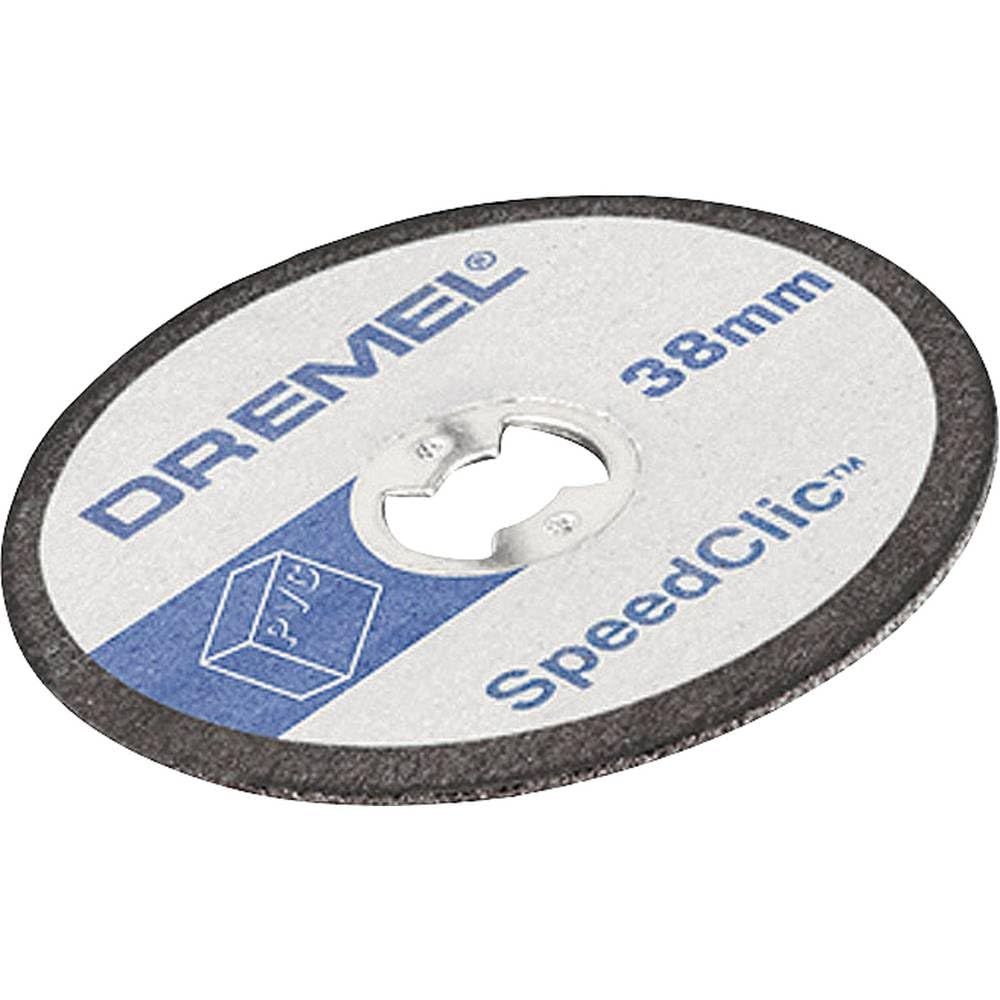
1. Dremel SC476 SpeedClic Cutting Wheels
Our pick — over 4.5★ from 800+ verified ratings; the strongest balance of quality and price.
The rotary companion that swaps blades in seconds for precision detail cuts.
If your acrylic work happens on a Dremel rotary tool, this is the accessory kit that eliminates the most annoying part of the job: changing wheels. The SpeedClic system works with a simple pull, place, and push motion, so you are not hunting for a tiny wrench between cuts. Each of the 5 discs is 38 mm in diameter with a 14 mm working depth, which is enough for thin sheets and detailed shaping work.
The wheels are made from ceramic grit at an 80-grit medium grade, a combination that stays aggressive on plastic without loading up. Buyers report they “cut well at any speed” and praise how “thick discs that work well and don’t snap.” Even at higher RPMs the discs hold together, which is exactly what you need when you are freehanding a curve.
This kit tops the list because it makes the rotary tool genuinely pleasant to use, and Its popularity is backed by a 4.7-star average from 800+ owners.. The only real limit is the 14 mm depth, so it is not the tool for thick blocks, but for sheet goods and sign work it is the pick.
Why It Wins
- Tool-free keyless wheel changes save real time on multi-cut projects
- Rated for 35,000 RPM, it handles full-speed runs without snapping.
- Ceramic construction resists snapping on curved cuts
Who Should Skip It
- Only fits Dremel rotary tools, not full-size saws
- 14 mm depth limits it to thinner acrylic sheets
Reach for this if: you do most of your cutting with a rotary tool and hate fiddling with tiny screws.
Look elsewhere if: you need to cut thick acrylic blocks or use a table saw.
2. FOXBC 3 Inch Carbide Circular Saw Blade
A compact carbide blade that brings clean, fast cuts to small cut-off saws.
For the growing family of 3-inch cut-off saws, these blades are the upgrade from the stock steel disc. The 36-tooth carbide edge stays sharp far longer than a plain steel blade, and the ultra-thin kerf design means the saw motor does not have to work as hard. That translates to better control over the cut, which is the difference between a clean edge and a melted one on acrylic.
The strength of the package is the material: high-density tungsten carbide. Owners mention the cuts are “clean and smooth through the Aluminum I needed cut,” and sharpness holds up across wood, plastic, and PVC. With a 3-pack in the box, you have spares ready for when one finally dulls. The compatibility list is long, covering Dremel Saw-MAX, Ryobi One+, Milwaukee, Dewalt, and Worx models.
It holds a 4.7-star score from over 400 owners., and the fit receives strong praise. The one thing to note is the arbor bushing is small and easy to lose, so keep it in a safe spot when swapping blades.
The Case For It: a high-quality, wear-resistant carbide blade at a price that makes the 3-pack a no-brainer for compact saw owners.
Who it fits: anyone running a 3-inch cut-off saw who wants a longer-lasting blade for plastic and aluminum.
Point of caution: the small arbor bushing demands careful handling so it does not vanish between jobs.
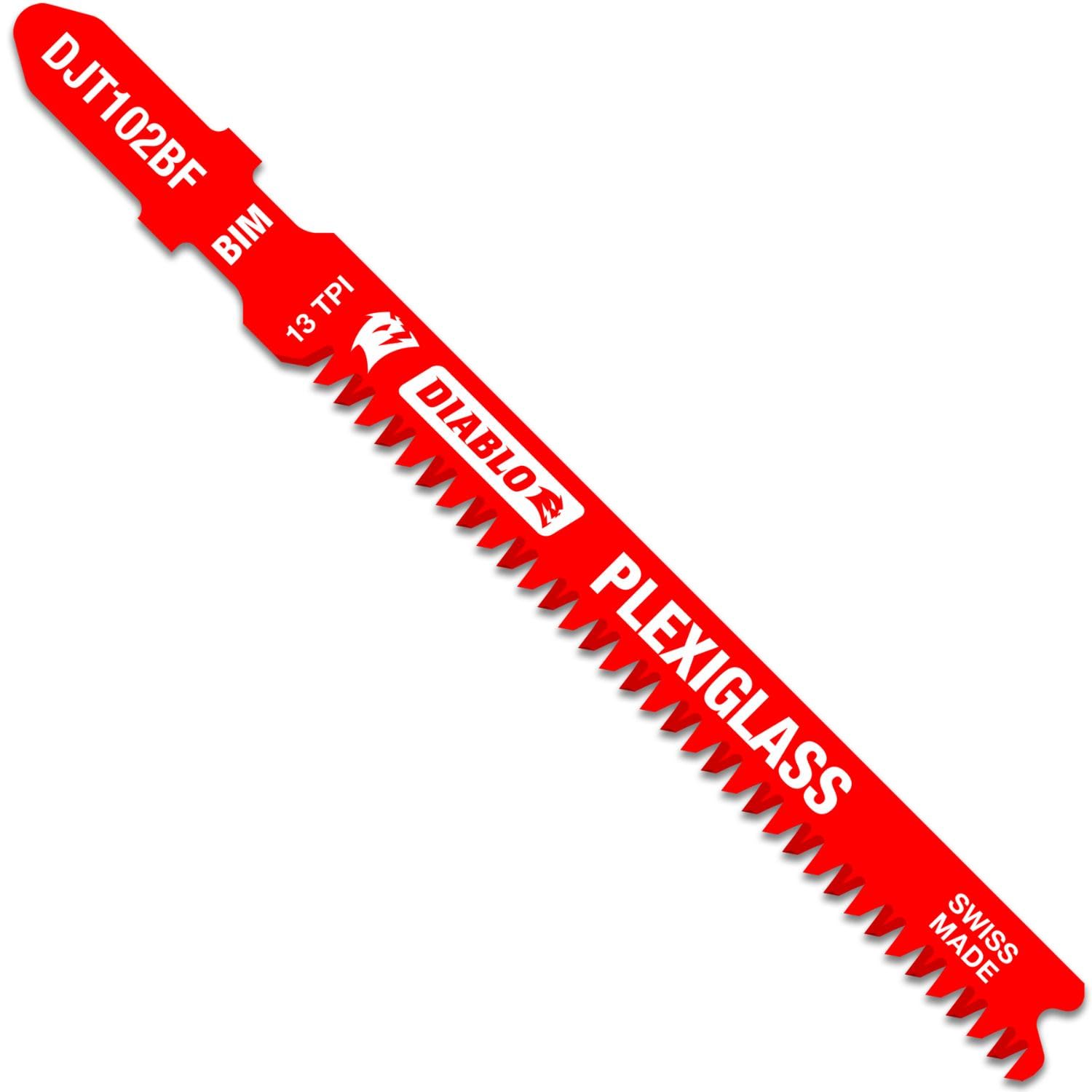
3. Diablo Bi-Metal Jig Saw Blades
The jigsaw blade that stays cool enough to slice plexiglass without melting it.
Jigsaws are the go-to for freehand cuts in acrylic, but they fail fast when the blade heats up and the plastic fuses back together. This Diablo blade is built to avoid that, with an ultra-hardened edge that runs cooler and The hardened edge runs cooler and lasts up to 5X longer than standard bi-metal.. The 13 TPI tooth pattern is aggressive for speed but fine enough for a clean finish on plexiglass.
It fits all combo and most U-shank jigsaws, so it is a universal drop-in for corded and cordless models. Customers note slicing through 1/4-inch plexiglass “like butter,” and the cuts come out without melting. The 5-pack gives you a good stock of spares, and the chip resistance is a point of discussion. Some cuts come out splinter-free while others see minor chipping on thin sheet, so a steady hand and a backing board help.
It earns a 4.6-star average from a few hundred owners., this is the value play for anyone who already owns a jigsaw.
Best For: intricate curved cuts in plexiglass sheet where a table saw cannot reach.
Grab these if: you want a melting-free jigsaw cut without paying for a specialty blade.
Keep in mind: on very thin acrylic, chips can occur, so use a fine blade speed and a sacrificial board.
4. KAKURI PVC Pipe Saw

The Japanese pull-saw that turns acrylic cutting into a quiet, precision task.
Not every acrylic task needs a power tool. For quick cuts on PVC pipe, rain gutters, and thin acrylic sheets, this hand saw is sharp enough to work without the noise and dust of a power saw. The blade is high-carbon Japanese steel with a fine-tooth pattern and a pull-action design, meaning it cuts on the pull stroke for more control. It stays sharp for a long time thanks to impulse blade edge quenching.
The replaceable blade system is tool-free, so you can swap in a spare by hand without screwdrivers. A plastic scabbard sleeve stores the saw and can hold up to three spare blades, which is handy for the shop or the truck. On thin 2mm acrylic, it cuts faster than a scoring cutter, though a light touch at a 45-degree angle prevents pieces from snapping off at the edge.
Reviewers point out it works well for PVC and CPVC pipe, cutting with a thin blade that doesn’t flex. It is a 4.2-star tool with over 500 ratings., making it a reliable manual option.
The Right Place For It: accurate, burr-free cuts on pipe and thin sheet without setup time or power cords.
Pick this up if: you need a quiet, portable saw for field work or small pipe cuts.
Mind the technique: a soft touch with a 45-degree angle is key on thin acrylic to avoid cracking.
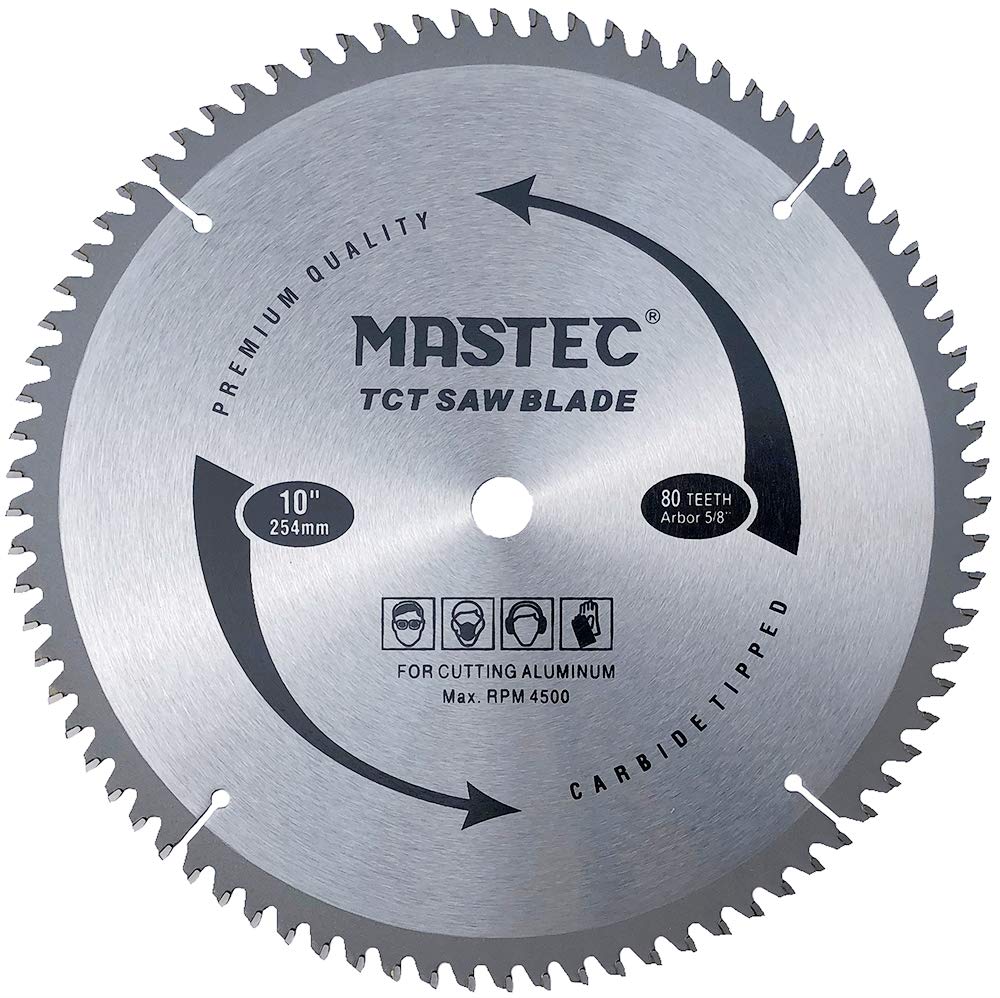
5. MASTEC 10 Inch 80 Tooth TCG Saw Blade
A 10-inch workhorse that keeps acrylic and aluminum cuts smooth and cool.
When you move up to a miter saw or table saw, the blade needs the right grind to prevent acrylic from melting. This MASTEC blade uses a Triple Chip Grind (TCG) tooth design, which means alternating flat-top and beveled teeth that shear the material cleanly rather than tearing it. The 80 carbide teeth at a 5/8-inch arbor fit most standard circular saws.
The cutting performance earns the loudest praise, with owners highlighting that it slices through aluminum angle stock and T-trac “like butter” with clean results. For acrylic, the high tooth count and TCG geometry work together to keep the cut line cool and burr-free. It is a reliable mid-range option for mixed-material shops.
It holds a 4.7-star average from over 700 owners., the durability does get mixed feedback, with a few owners noting carbide tips can come off over time. For most users, though, it is a solid performer.
Why It Earns Its Spot: a high-tooth-count blade that handles both non-ferrous metal and plastic, ideal for mixed workshops.
Best if: you run a miter or table saw and cut aluminum as often as you cut plastic.
Watch for: occasional reports of carbide tips detaching, so check it periodically on heavy use.
6. FOXBC 10-Inch 80-Tooth TCG Saw Blade

Engineered quiet and vibration-free for flawless acrylic and aluminum cuts.
This is the higher-end sibling in the FOXBC lineup, built with laser-cut stabilizer vents that trap noise and reduce vibration. Less vibration means more accuracy on the cut line, which is critical for acrylic where a wobbling blade can cause chipping. The 80-tooth TCG grind produces clean, burr-free edges on acrylic and non-ferrous metals.
It is compatible with DeWalt, Skil, Metabo, and Makita 10-inch miter, slide miter, and table saws. Shoppers say cutting 3/8-inch acrylic with “no tear out or chipping,” which is the exact outcome you want. The 0.094-inch kerf is thin, so it requires less power from the saw while staying durable.
This blade holds a 4.8-star average from 177 owners., making it one of the highest-rated in this roundup.
Standout Element: the combination of a thin kerf and vibration-dampening vents gives you precision without taxing your saw motor.
Choose this if: you want a premium, quiet blade for a 10-inch miter saw and care about edge quality.
Note: it is a single blade purchase, so the upfront cost is higher than multi-packs.
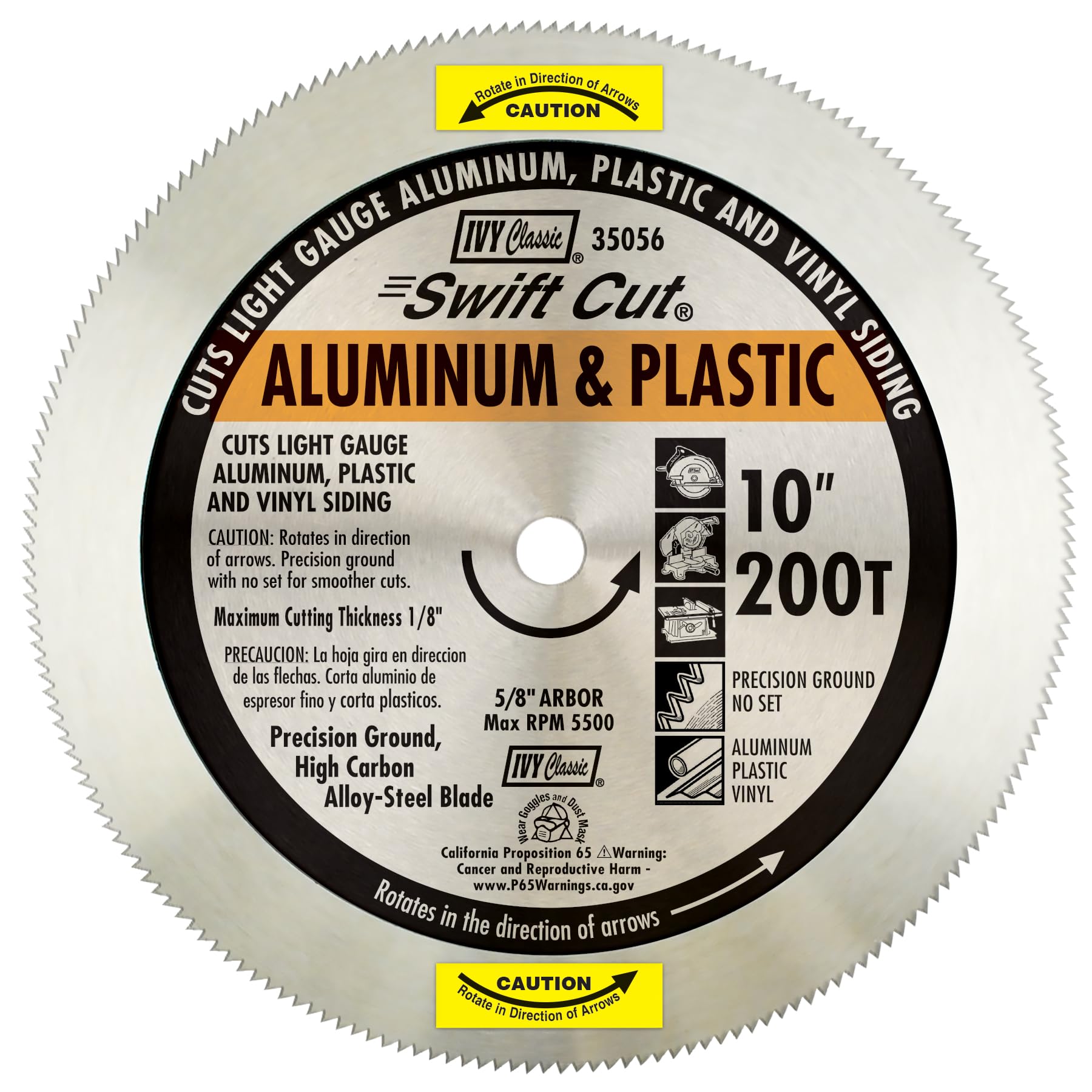
7. IVY Classic 10″ 200 Tooth Swift Cut Blade
An ultra-fine 200-tooth blade that polishes thin plexi and vinyl siding to a clean edge.
For the smoothest possible cut on thin material, this blade brings 200 precision-ground teeth to the job. The high carbon-alloy steel body and teeth with no set produce a fine, accurate cut that is perfect for picture frames and 1/8-inch plexiglass. Owners specifically mention using it on a table saw for accurate sheet cuts instead of a jigsaw.
The catch is the thickness limit. The manufacturer states it is designed for material up to 1/8-inch thick, so it is not a general-purpose blade for thicker acrylic. For anything thicker, they direct you to an 80-tooth non-ferrous blade. It is excellent for vinyl siding and light gauge aluminum.
Sharpness is the most-praised aspect, with over 50 owners calling it out. Durability is the honest trade-off — it is a steel blade that won’t outlast a carbide one, so treat it as a specialist tool.
Best Use: picture-frame and trim work where a mirror-smooth edge matters more than blade longevity.
Reach for it when: you are cutting 1/8-inch plexi or vinyl and want zero cleanup.
Keep it away from: thick acrylic blocks, where the 200 teeth can clog and the steel will dull fast.
8. Freud LU94M010 10″ Plastic Blade
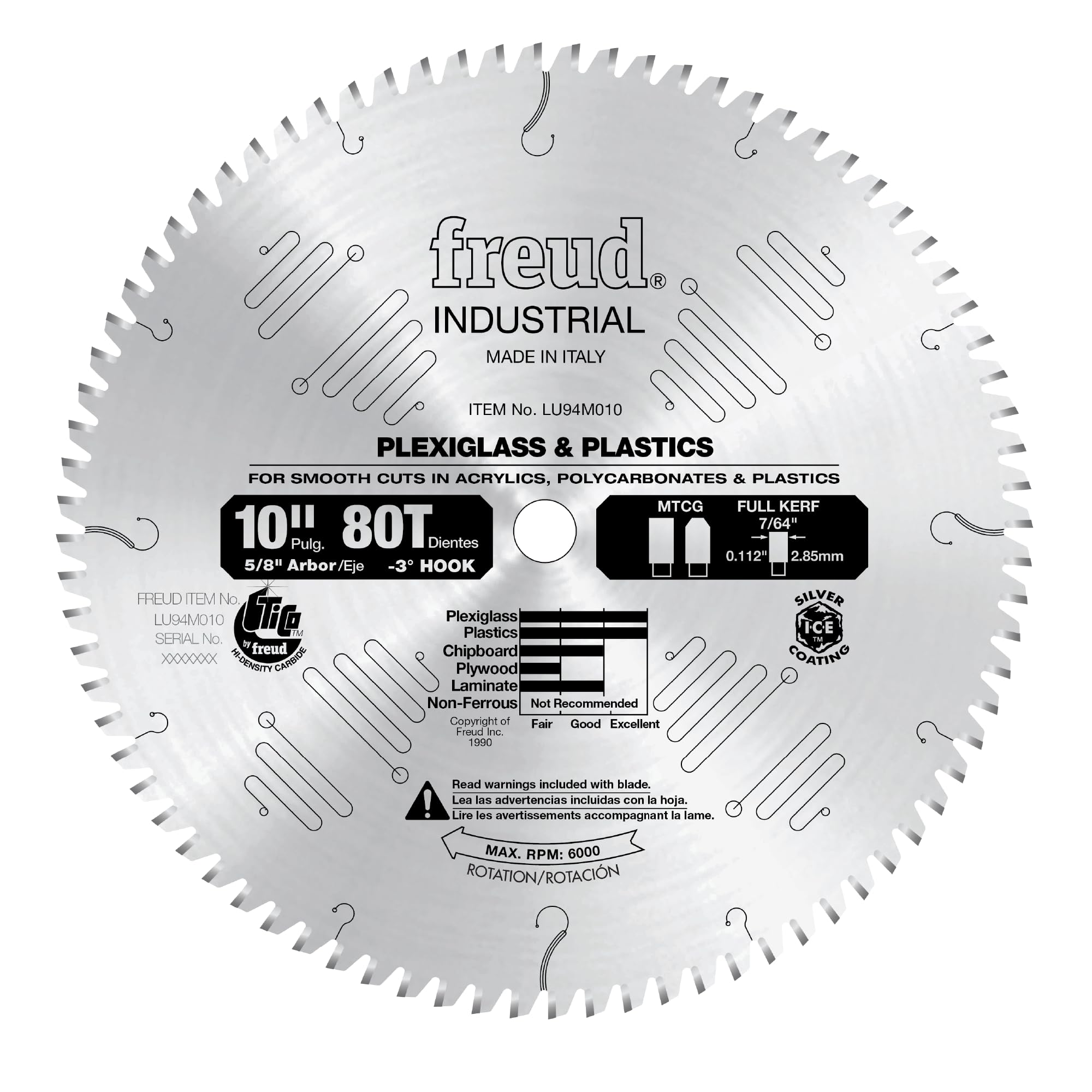
The dedicated plastic blade that delivers a finished-edge cut right off the saw.
This is the blade you buy when you are done compromising on acrylic finish quality. Freud engineered it specifically for plastics with a Modified Triple Chip Grind (MTCG) that keeps the material cool during the cut, eliminating the melting that ruins edges. The negative 3-degree hook angle prevents the blade from grabbing the workpiece, which is a major safety and finish benefit.
The 80 teeth use Premium TiCo HI-Density Carbide, a blend designed for maximum performance on plastic and engineered wood. The Silver Ice Coating resists corrosion and pitch buildup, so the blade stays clean. Buyers report cutting 1/4-inch and 1/2-inch acrylic with “no jagged edges” and minimal finishing required, and 1/8-inch plexiglass comes out smooth with no grabbing.
It runs on a 5/8-inch arbor, but note that a 1-inch arbor spacer may be needed for some DeWalt compound miter saws. At a 4.6-star average from over 230 owners, this is the professional pick.
The Pro Edge: cuts acrylic and PVC with a finish so clean that sanding becomes optional, saving hours on large projects.
Invest in this if: acrylic cutting is a regular part of your work and you need chip-free, melt-free results.
Budget check: the premium price is justified only if you cut enough plastic to wear out lesser blades.
Understanding the Specs
Triple Chip Grind (TCG)
This tooth geometry uses alternating flat-top and beveled teeth. The flat teeth do the heavy cutting while the beveled teeth clean the edges, producing a burr-free finish that is essential for acrylic. This design keeps the blade sharp longer and prevents the material from melting.
Hook Angle
The hook angle is the tilt of the tooth relative to the blade body. A negative hook angle, like the -3° on the Freud, means the tooth leans back. This reduces grabbing and keeps the cut smooth on plastics, which tend to grab more than wood.
FAQ
What is the best way to cut acrylic without melting it?
Can I use a wood blade to cut acrylic?
What does TPI mean on a jigsaw blade?
What is the difference between an 80-tooth and a 200-tooth blade for acrylic?
How do I know if a blade will fit my saw?
Why does my acrylic crack when cutting?
What is a carbide-tipped blade and why is it better?
Can I cut acrylic with a hand saw?
Final Thoughts: The Verdict
If you are cutting with a rotary tool, the Dremel SC476 is the winner thanks to its tool-free SpeedClic system and reliable ceramic discs. For a table saw, the FOXBC 10-inch delivers premium, vibration-free cuts. And for manual work, the KAKURI is the quiet, precise pick.
How We Picked
We do not accept paid placement. Every pick is matched to a real buyer and a real use-case; we do not hands-on test units.
Sources & Methodology
Specifications: manufacturer listings and product documentation. Review insights: verified customer reviews, as of August 2026. Pricing: not shown on this page (it changes often); check the current price via the retailer link.
As an Amazon Associate, Gadgets Feed earns from qualifying purchases. This does not affect which products we feature.