
Our readers keep the lights on and my morning glass full of iced black tea. As an Amazon Associate, I earn from qualifying purchases.
Specs are compiled from manufacturer listings and verified buyer reviews and can change over time — please confirm the key details on the product page before buying.
Fuel pumps seem simple until you are stranded, or you replace one twice a year. The real question is not just flow rate — it is whether the pump fits your vehicle’s setup and survives daily use. This guide cuts through the marketing to the specs that actually predict a reliable fuel delivery system.
I’m Min — the founder and writer behind Gadgets Feed. This guide is built by comparing the manufacturers’ published specifications and the patterns across verified customer reviews, so you get each pick’s real strengths and trade-offs instead of marketing spin.
If you’re rebuilding a fuel system, you need a dependable unit that matches your car’s demands and your installation skill. This breakdown of the top automotive fuel pump options focuses on flow, fit, and real-world durability.
Our Picks at a Glance

How To Choose The Best Automotive Fuel Pump
The fuel pump must deliver adequate fuel pressure and volume under all load conditions. If it cannot supply enough fuel under load, you will experience sputtering, lean conditions, and potential engine damage. Match the pump’s LPH rating to your engine’s horsepower and fuel type to avoid lean conditions.
Flow Rate: The LPH Equation
Flow rate, measured in liters per hour (LPH), is the key metric. A stock engine might need a pump rated at 255 LPH, while a modified performance engine with forced induction demands 340 LPH or more to maintain fuel pressure at high RPMs. Select a pump rated at least 10-15% above your engine’s peak fuel demand.
Fitment: Universal vs Vehicle-Specific
Some pumps are universal, meaning they fit various vehicles with custom mounting and wiring. Others are vehicle-specific modules that include the fuel level sender and are designed to bolt into a particular model. A vehicle-specific module bolts in with no wiring or mounting modifications.
Quick Comparison
| Model | Best For | Flow Rate | Pump Type | Fuel Type | Amazon |
|---|---|---|---|---|---|
| Fill-Rite FR1210H★ Best Overall | Mobile transfer & refueling | 15 GPM | Rotary Vane | Multi-Fuel | Amazon |
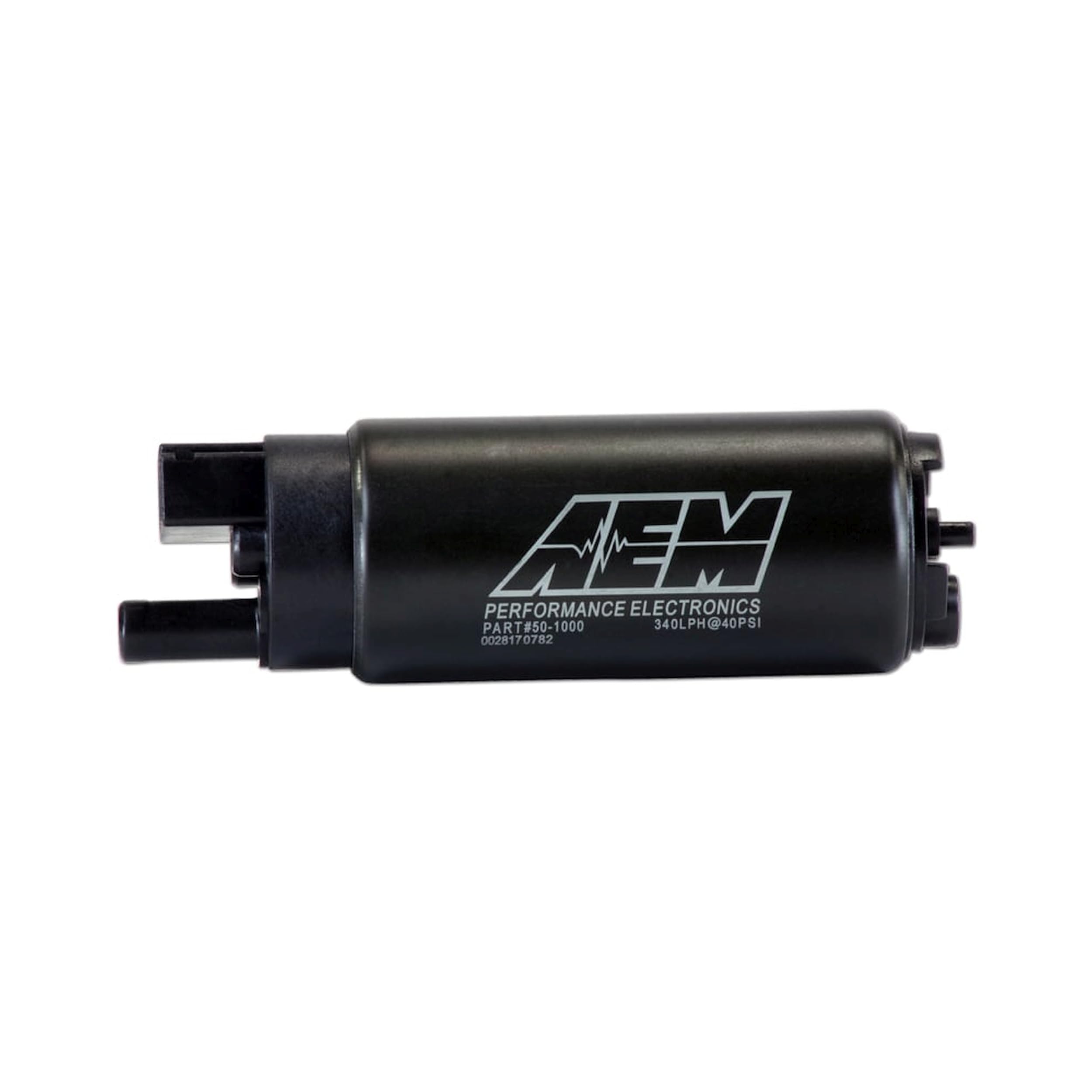
| AEM 50-1000Top Performer | High-flow EFI swaps | 340 LPH | In-Tank Turbine | Gasoline | Amazon |
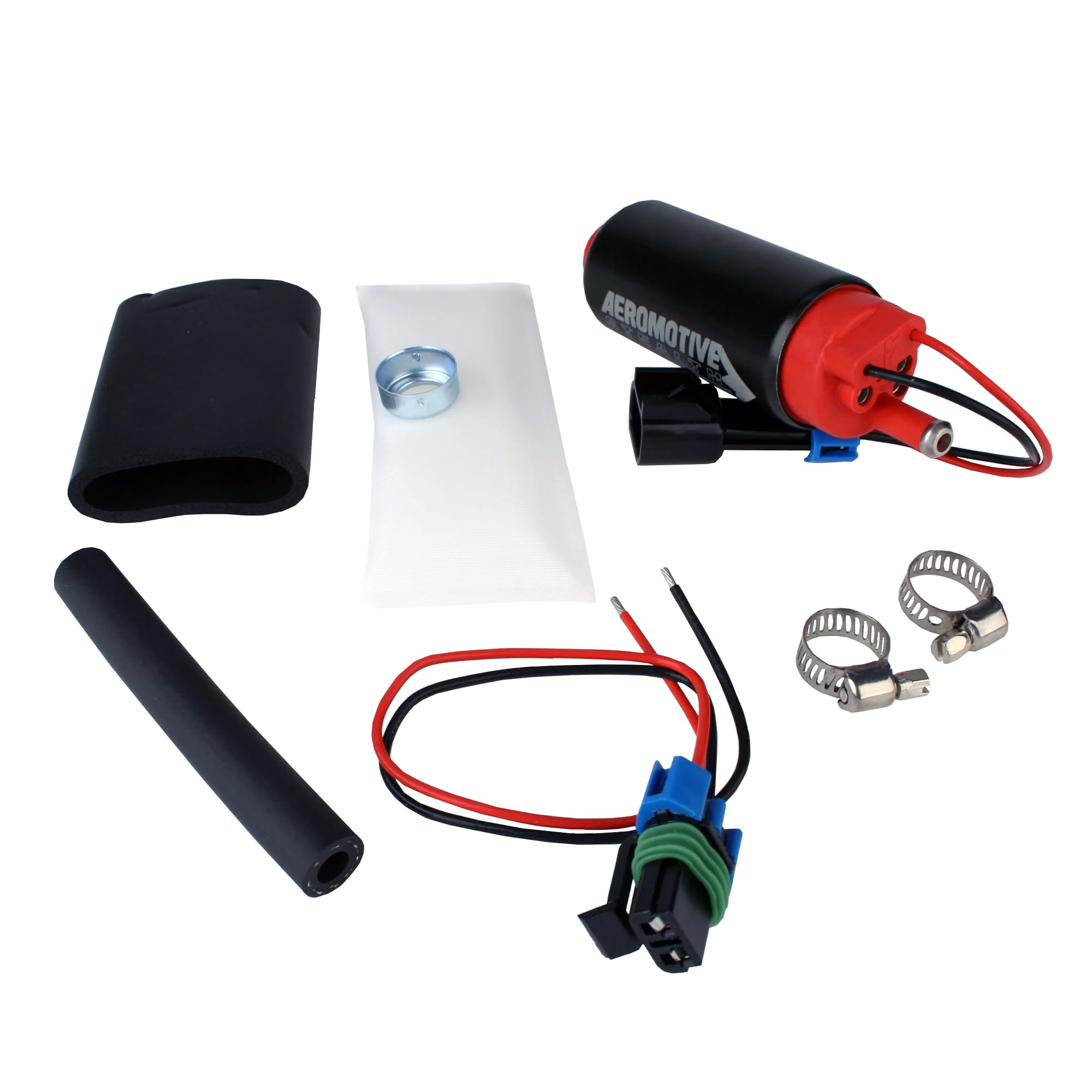
| Aeromotive 11540Premium Pick | Quiet high-output builds | 340 LPH | In-Tank Turbine | Gasoline, E85 | Amazon |
| Delphi FG0407 | OE replacement for trucks | OE Spec | Module Assembly | Gasoline | Amazon |
| Walbro TIA485-2 | E85 performance upgrades | 450 LPH | In-Tank Turbine | Gasoline | Amazon |
| Holley 12-801-1 | Carbureted street/strip | 97 GPH | External | Gasoline | Amazon |
| Delphi FG1057 | OE replacement for GM trucks | OE Spec | Module Assembly | Liquid Fuel | Amazon |
| Fill-Rite FR1204H | Transfer pump (pump only) | 15 GPM | Rotary Vane | Multi-Fuel | Amazon |
| Motorcraft PFB101 | Ford Powerstroke replacement | OE Spec | Module Assembly | Gasoline | Amazon |
In-Depth Reviews
1. Fill-Rite FR1210H 12V Fuel Transfer Pump
Our pick — over 4.5★ from 700+ verified ratings; the strongest balance of quality and price.
The heavy-duty workhorse that moves fuel fast for trucks and trailers.
This pump is for anyone who needs to move fuel from a drum or tank without a trip to the gas station. It pushes 15 gallons per minute, so a 55-gallon drum empties in under four minutes. The cast iron housing is built for rough environments, and it pulls fuel from depths of 8 feet while discharging up to 37 feet high.
Installation is straightforward. The junction box rotates 180 degrees, making wiring easier in tight spots, and the kit comes with everything you need: a 12-foot discharge hose, a manual nozzle, a 34-inch suction pipe, and an 18-foot power cable. Buyers report it works even in extreme cold, functioning at -40 F temperatures.
Owners mention that the rust coating is the main concern — one owner in the Florida Keys found it covered in rust stains after a month. The quality and reliability earn the most praise by far, and the pump’s speed makes it a favorite for mobile fueling setups.
What Wins Owners Over
- Fast 15 GPM transfer speed for quick refueling
- Rotary vane technology keeps flow consistent as parts wear
- Thermal overload protection prevents motor burnout
The Honest Trade-Off
- Paint finish can rust in coastal or salty environments
- Nozzle feels a bit flimsy from the start
- Lifetime warranty requires keeping your receipt and documentation
Reach for this if: you need a dependable, high-volume transfer pump for a truck, trailer, or farm tank and want full kit convenience.
Look elsewhere if: you’re in a high-salt environment and can’t tolerate the cosmetic rust that can appear.
2. AEM 50-1000 High Flow In-Tank Fuel Pump
The universal EFI pump that powers engine swaps while staying affordable.
This is the pump for the enthusiast doing an LS swap or a K-series build who wants proven flow without a factory part number. It delivers 340 liters per hour at 40 PSI, which supports high-output naturally aspirated and forced induction engines. The 39-millimeter diameter fits most factory hangers, and the offset inlet simplifies installation in tight tanks.
Reliability is the standout theme here. Customers note running this pump for years — one logged a decade of service in a K-swap car before fuel pressure loss appeared. It’s also remarkably quiet, with smooth fuel delivery that you barely notice from the cabin.
It is a universal pump, so you will likely need to solder or splice wires, and its physical size is smaller than some stock units. The value is undeniable, with many buyers calling it the best pump in its price class for the flow it provides.
What wins people over is the combination of high flow and low noise — a rare pairing that makes it a go-to for performance builds.
Our Read: A smart, high-flow choice for swaps and upgrades, but be ready for custom wiring. Durability is mixed in the long run — some fail early, though most go years.
3. Aeromotive 340 LPH In-Tank Fuel Pump – 11540
A trusted turbine design that flows 340 LPH with whisper-quiet operation.
For a high-output car running E85 or needing serious fuel volume, this Aeromotive pump is a strong contender. It flows over 340 LPH at 40 PSI, supporting demanding EFI and carbureted setups. The turbine-style design delivers smooth, consistent fuel with quiet operation that owners consistently highlight.
The pump body is a compact OEM-style 39mm, fitting select in-tank hangers — you will need to check the Aeromotive application catalog to confirm your vehicle. The kit includes a universal filter sock, wiring pigtail, rubber hose, clamps, and grommet for a streamlined install. It is compatible with both gasoline and E85 fuels, making it flexible for different builds.
The main caveat is durability — some reviewers point out failure within six months. The 340 series Stealth pump is known for its quiet priming and consistent pressure hold, but treat early failures as a possibility.
Why It Stands Out
- Over 340 LPH flow for serious forced induction builds
- Runs on gasoline and E85 for fuel flexibility
- Quiet turbine operation praised in reviews
Consider This
- Durability is mixed; some units fail early
- Check fitment with the application catalog before buying
4. Delphi FG0407 Fuel Pump Module Assembly

A drop-in OE replacement that fixes fuel delivery and your gas gauge in one go.
If your truck died in traffic and you traced it to a bad pump, this is the module you want. It is a complete assembly that includes the pump, the fuel level sender, and the float — everything you need to replace the entire in-tank unit. It is application-validated to fit specific GM trucks, with owners confirming direct fit on 2002 Silverado 1500 and 2500HD models.
The fuel level readings are accurate because the float height matches OE specs. Shoppers say the pump is quiet and provides plenty of fuel pressure. The wiring plug comes included, making it almost plug-and-play for anyone comfortable with basic electrical connections.
Noise is also a recurring mention, with some units being louder than expected.
Solid Choice: A complete, well-engineered module for GM trucks that fixes the gauge and the pump together. The fit earns the most praise, though durability opinions split.
5. Walbro TIA485-2 450 LPH Fuel Pump Kit

The high-flow kit for boosted builds that need 450 LPH of headroom.
This Walbro kit is for the serious performance crowd running turbo or supercharged setups that demand serious fuel volume. It flows 450 LPH, giving you plenty of headroom for E85 and high-horsepower applications. The kit includes the pump, filter, and wiring essentials to get you running.
It is branded by Walbro but made by TI Automotive, the owner of the Walbro brand. Some buyers love it for the price and flow, others raise authenticity concerns. The pressure control is also a mixed bag — some report flawless pressure, others say it fails to build pressure at all.
For the price, it is a popular low-pressure fuel pump upgrade for platforms like the N54 and N55 BMW engines, with owners running them for years without issue.
High Flow, Mixed Reception: The 450 LPH capacity is the draw, but verify authenticity and be prepared for variability in reliability.
6. Holley 12-801-1 97 GPH RED Electric Fuel Pump

A classic external pump for carbureted engines, delivering constant flow with no pulsation.
This Holley Red pump is the go-to for carbureted street and strip cars. It is an external pump that mounts outside the tank, flowing 97 gallons per hour of free flow. At a maximum pressure of 7 PSI, it works perfectly with carburetors like Edelbrock without needing a regulator.
The tumble-polished billet look gives it a clean appearance, and the lower housing casting is designed for enhanced fuel flow. The motor draws just 2 amps, keeping the electrical load low. Buyers report simple installation and quiet operation, with one noting it works flawlessly on a Dodge pickup carb conversion.
The trade-off is that it’s not for EFI systems, which need higher pressure, and it is not designed for aircraft use. It has been used for years in various projects with reliable results.
Built for Carbs
- 97 GPH free flow for strong carbureted performance
- Constant flow with no pulsation
- Simple external mount, easy install
Keep in Mind
- 7 PSI max pressure, not for EFI systems
- A little louder than some expect
7. Delphi FG1057 Fuel Pump Module Assembly
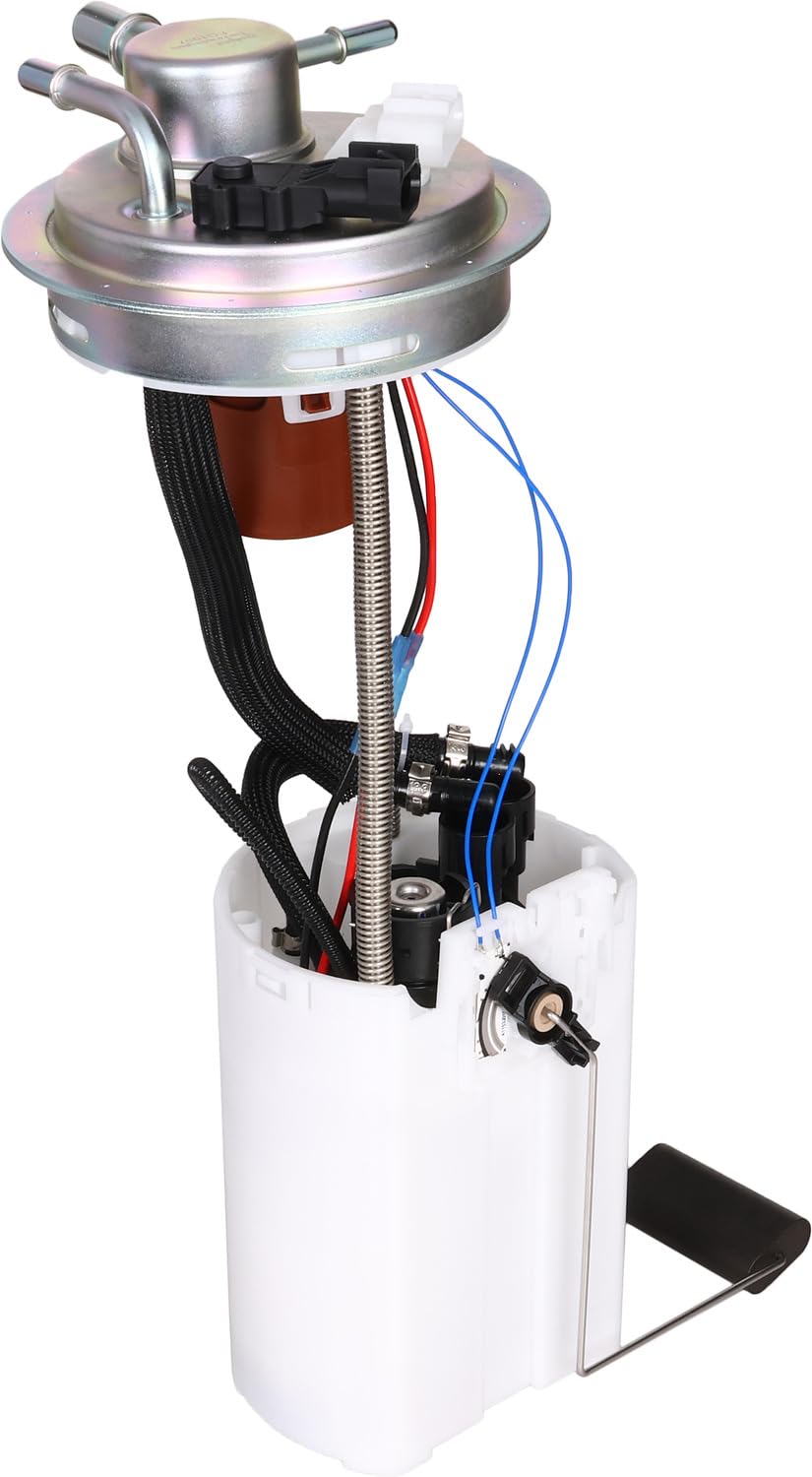
A rugged, direct-fit module for GMC and Chevy trucks that owners trust for years.
For GM truck owners needing a dependable replacement, this Delphi module is a favorite. It fits models like the 2010-2012 GMC Sierra 1500 and Chevy Silverado with the 4.8 and 5.3 liter engines. Owners praise its perfect fit, rugged build, and easy installation after the old unit is removed.
The module is built to Delphi’s OE standards, with float height matching factory specs for accurate fuel gauge readings. It also draws lower amperage to reduce demand on the vehicle’s electrical system. Owners mention it working well for years, with one noting it solved an evap leak and fixed the fuel gauge.
A few owners mention the gas gauge can be inaccurate below a quarter tank, and one reported damage upon arrival. The price is often cited as half of what a parts store charges, making it a strong value.
Dependable Pick: A high-quality module with perfect fit for specific GM trucks. The performance and fit earn the most praise, with occasional quality control issues.
8. Fill-Rite FR1204H 12V Fuel Transfer Pump (Pump Only)

The pump-only option for those who already have hoses and nozzles on hand.
This is the same dependable 1200 series pump as our top pick, but without the hoses and nozzle. It is designed for buyers who already have transfer accessories or want to build a custom kit. It flows 15 gallons per minute and features the same cast iron construction and thermal overload protection.
Owners call it a workhorse that pumps gasoline faster than a gas station pump, though one notes it doesn’t quite hit the 15 GPM mark. The included components cover the essentials: a 3/4-inch elbow, a 5-foot ground wire, wire nuts, and PTFE tape.
It needs a solid 12+ volt DC source to start reliably, so heavy gauge wire is a common recommendation. Noise level is a point of disagreement — some find it acceptable, others find it loud.
Smart Buy: The same reliable pump as the top pick, minus the extras. Be prepared for some noise and ensure a strong battery source.
9. Motorcraft PFB101 Fuel Pump Assembly

The genuine Ford part for Powerstroke trucks, with the filter pre-installed.
For Ford Super Duty owners, especially those with the 6.0 Powerstroke, this is the part to get. It is a genuine Motorcraft (FoMoCo) assembly, which means it matches factory specs for fit and performance. Owners confirm perfect fitment on 2003-2006 F-250 and F-350 models.
The assembly comes with the filter and water separator pre-installed, saving you time and hassle. Installation is straightforward for someone with basic tools, though you may need a fuel line disconnect tool and to work around the driveshaft. Customers note it holds a solid 65 PSI and runs quietly.
The main consideration is wiring — some trucks need a newer 2-plug harness instead of the old 3-plug. It’s a genuine part, so you pay a premium, but reviewers point out it outlasts cheaper aftermarket pumps that fail within a year.
The OEM Advantage
- Genuine Ford Motorcraft part with proven reliability
- Filter and water separator pre-installed
- Solid 65 PSI pressure reported by owners
Before You Buy
- Check your truck’s wiring harness connector type
- Premium price over aftermarket options
Understanding the Specs
LPH vs GPH Flow Rates
Flow rate tells you how much fuel the pump can move per hour. Liters per hour (LPH) is the standard for EFI pumps, while gallons per hour (GPH) is common for carbureted external pumps. A 340 LPH pump is roughly equivalent to 90 GPH. Higher LPH supports more horsepower, but oversizing by 10-15% provides safe headroom without excess cost.
In-Tank vs External Pumps
In-tank pumps sit inside the fuel tank, which keeps them cool and quiet, and they are the norm for modern EFI vehicles. External pumps mount outside the tank and are common on older carbureted cars or as high-flow upgrades. Universal pumps require custom wiring and mounting; modules are plug-and-play for specific models.
FAQ
Will a universal fuel pump fit my car?
What flow rate do I need for 500 horsepower?
Can I use E85 fuel with any fuel pump?
How long does a fuel pump last?
Why is my fuel pump noisy?
What is the difference between a fuel pump and a fuel pump module?
Do I need a fuel pressure regulator?
How do I know if my fuel pump is failing?
Final Thoughts: The Verdict
If you want one dependable pick, the automotive fuel pump winner is the Fill-Rite FR1210H because it delivers proven reliability and high-volume transfer in a complete kit. If you want a high-flow EFI upgrade for a swap, grab the AEM 50-1000. And for a direct OE replacement for your GM truck, the Delphi FG0407 is the one to reach for.
How We Picked
We do not accept paid placement. Every pick is matched to a real buyer and a real use-case; we do not hands-on test units.
Sources & Methodology
Specifications: manufacturer listings and product documentation. Review insights: verified customer reviews, as of August 2026. Pricing: not shown on this page (it changes often); check the current price via the retailer link.
As an Amazon Associate, Gadgets Feed earns from qualifying purchases. This does not affect which products we feature.