
Our readers keep the lights on and my morning glass full of iced black tea. As an Amazon Associate, I earn from qualifying purchases.
Specs are compiled from manufacturer listings and verified buyer reviews and can change over time — please confirm the key details on the product page before buying.
Your 4-year-old will learn to ride faster if their feet sit flat on the ground while seated—that single fit check decides whether they build confidence or fight the bike. This guide covers balance bikes and first pedal bikes with training wheels, sized for small riders, so you can skip the guesswork.
I’m Min — the founder and writer behind Gadgets Feed. This guide is built by comparing the manufacturers’ published specifications and the patterns across verified customer reviews, so you get each pick’s real strengths and trade-offs instead of marketing spin.
Here are the best bikes for 4 year olds that balance weight, safety, and room to grow, ranked by what parents and kids actually experience. bikes for 4 year olds that fit right turn wobbly first rides into joyful daily adventures.
Our Picks at a Glance
How To Choose The Best Bike For A 4 Year Old
Shopping for a kids’ bike feels simple until you realize that a 1-inch difference in wheel size or a few pounds of weight can completely change the experience for a 40-pound child. The good news is that modern kids’ bikes fall into two clear camps: balance bikes that teach balance first, and pedal bikes with training wheels for a more traditional start. Whichever you choose, the guiding principle is the same — the bike must feel like an extension of your child, not a burden they have to wrestle.
Fit Your Child, Not Their Age
Age is a starting point, but inseam length is the real deciding factor. A 4-year-old with a 16-inch inseam needs a different bike than one with a 20-inch inseam, even though they’re the same age. The rule of thumb is to look for a bike where your child can sit on the saddle with both feet flat on the ground and a slight bend in their knees. This gives them the stability and control they need to build confidence, whether they’re gliding on a balance bike or learning to pedal.
Weight Is Everything For Small Riders
An adult can lift a 20-pound bike without a thought, but a 4-year-old cannot. A bike that is too heavy is hard to steer, hard to stop, and genuinely discouraging for a small child. Lighter bikes, typically made from aluminum or magnesium, are easier for kids to control and for parents to load into the car. When comparing models, pay close attention to the listed weight — a difference of even 3 to 4 pounds is significant enough to affect how willingly your child rides.
Balance Bike vs. Training Wheels
The biggest philosophical choice is between teaching balance first or using training wheels. Balance bikes let kids push with their feet and lift them to glide, teaching the core skill of balance without pedals. Training wheels on a pedal bike let them learn pedaling and braking first, with balance coming later. Parents often find balance bikes lead to a faster transition to a regular pedal bike, since the hardest skill is learned first, but some kids prefer the feel of a “real” bike with pedals right away.
Quick Comparison
| Model | Best For | Type | Weight | Frame Material | Amazon |
|---|---|---|---|---|---|
| Strider 12 Pro★ Best Overall | Lightest learning curve | Balance Bike | 5.6 lbs | Aluminum | Amazon |
| RoyalBaby EZ-ProGrows With Them | Grows from balance to pedals | 2-in-1 Balance/Pedal | 19.4 lbs | Aluminum | Amazon |
| Hornit AIROFeatherlight Pick | Featherlight premium rides | Balance Bike | 6.5 lbs | Magnesium | Amazon |
| bicystar 14 Inch | Tough outdoor terrain | Balance Bike | 8.5 lbs | Carbon Steel | Amazon |
| KRIDDO 2-in-1 | Budget-friendly versatility | Balance Bike/Tricycle | 10.6 lbs | Carbon Steel | Amazon |
| BABY JOY Kids Bike | Classic first pedal bike | Pedal Bike | — | Metal | Amazon |
| Glerc Fantacy | Adventure-ready starter | Pedal Bike | 21 lbs | Alloy Steel | Amazon |
| COSTWAY Kids Bike | Certified safety features | Pedal Bike | — | Carbon Steel | Amazon |
| Glerc Little Molly | Retro style on wheels | Pedal Bike | 23 lbs | Carbon Steel | Amazon |
In‑Depth Reviews
1. Strider 12 Pro, Aluminum Balance Bike for Kids Aged 1–5 Years
Our pick — over 4.5★ from 450+ verified ratings; the strongest balance of quality and price.
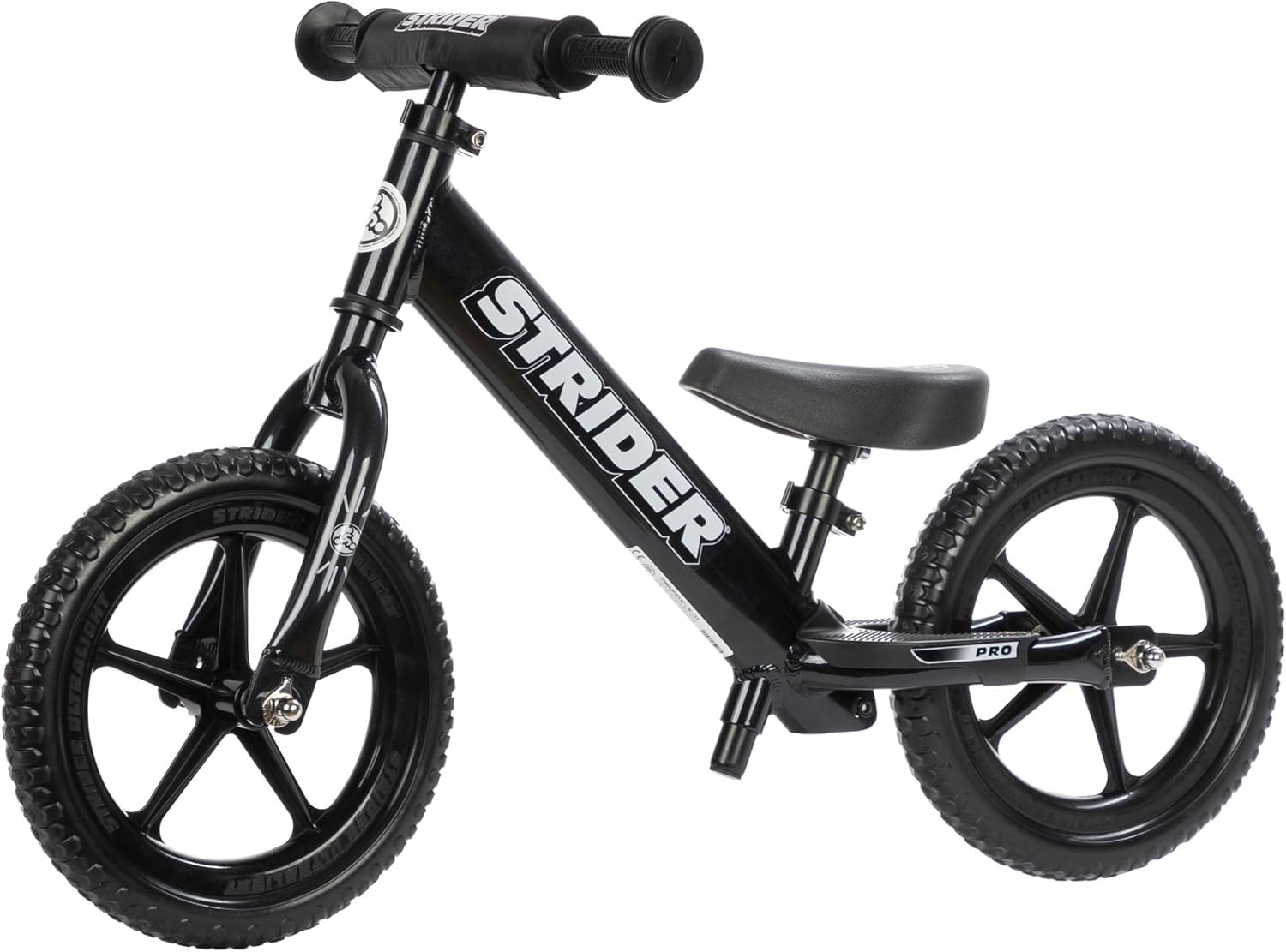
The featherweight champion that turns tiny toddlers into confident gliders.
The defining stat here is the weight: 5.6 pounds. That makes it 52% lighter than the bicystar’s 8.5-pound frame., a gap any 4-year-old will feel instantly when they lift, steer, and carry it. Parents rave that a small child can carry this bike with one hand, which tells you everything about how manageable it feels for little arms.
This is a pure balance bike, meaning no pedals and no training wheels — your child pushes with their feet, then lifts them to glide. The aluminum frame is built to survive rough use, and the Flat-Free Foam Rubber Tires mean you will never fix a flat, no matter how many curbs get bashed. The seat adjusts from 11 to 17 inches, so it fits kids with an inseam of 12 to 20 inches, and the whole thing supports riders up to 60 pounds.
What wins people over is the speed of learning. Buyers report: “Daughter mastered balance/steering, transitioned to pedal bike in <1hr.” That is the entire promise of this category, delivered in under an hour. The recurring gripes are minor: the seat post can protrude when slammed down all the way, and the headset has a bit of play compared to a real bike. Neither stops a child from learning, but you may want to saw the seat post for the smallest riders.
Why It Wins
- 5.6 lb aluminum frame kids can manage solo
- Flat-free foam tires mean zero maintenance
- Seat grows from 11 to 17 inches for ages 1 to 5
- Owners mention pedal-bike transition in under an hour
Trade-Offs
- No pedals at all — pure balance learning only
- Seat post may need trimming for very small kids
- Headset feels less stiff than a full pedal bike
Reach for this if: you want the fastest, most proven path from zero to riding a pedal bike, backed by a lightweight frame your child can actually control.
Look elsewhere if: your 4-year-old is adamant about having pedals right now — this bike has none, by design.
2. RoyalBaby EZ-Pro Kids Bike, 2-in-1 Balance to Pedal
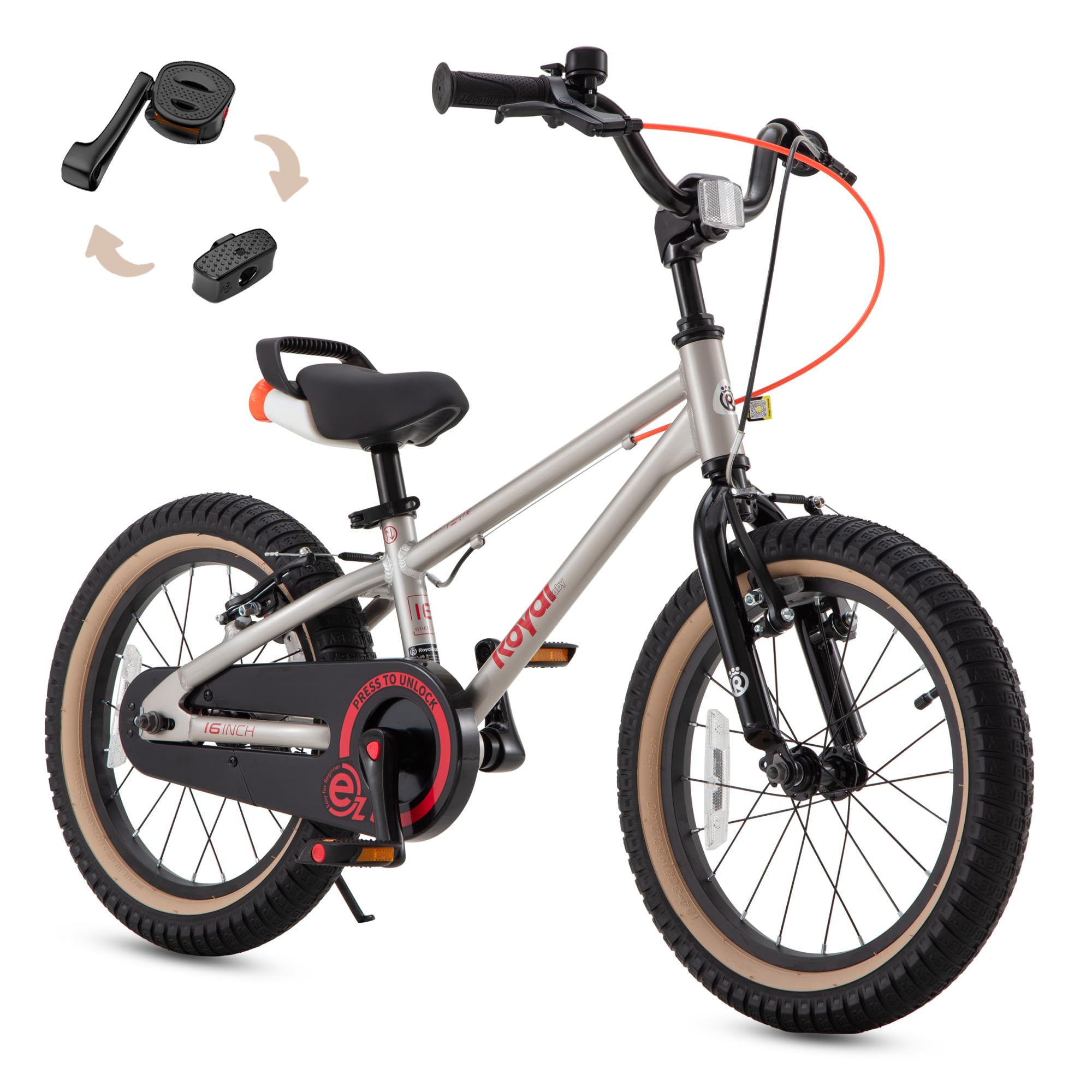
One clever bike that swaps from balance gliding to pedal power in seconds.
This is the rare bike that genuinely eliminates the “buy two bikes” problem. It starts as a balance bike, and when your child is ready, you switch it to a pedal bike without any tools — the kind of one-key conversion that saves you a whole second purchase. The lightweight aluminum frame comes in at 19.4 pounds, noticeably lighter than the 21-pound Glerc or 23-pound Glerc Little Molly, which makes a real difference for a 4-year-old learning to maneuver.
The 98% pre-assembled setup means you’re not wrestling with brake cables from the start, and the seat height adjusts without tools too. It’s built to CPSC safety standards with a responsive dual hand brake system. Customers note one child “rode the balance for about 3 minutes and then put the pedals on and took off,” and another “balanced in 2 days, pedaling solo in a week” after failing with a different brand. That’s the 2-in-1 design doing exactly what it promises.
The honest trade-off is sizing: one owner with a 36-inch child noted their feet reached the pedals but not the ground when seated — a reminder to measure your kid’s inseam, not just their age. There’s also a rare report of a slight rubbing noise between the chain and guard. The tool-free conversion and the “rocket boosters” under the seat that kids love make this a standout pick for families who want one bike to last several years.
Best For: parents who want a single bike that evolves from balance learning to real pedaling without buying a second model.
The Catch: measure the inseam carefully — the balance-to-pedal flexibility doesn’t fix a seat height that’s too tall for your specific child.
3. Hornit AIRO Balance Bike, Magnesium Alloy
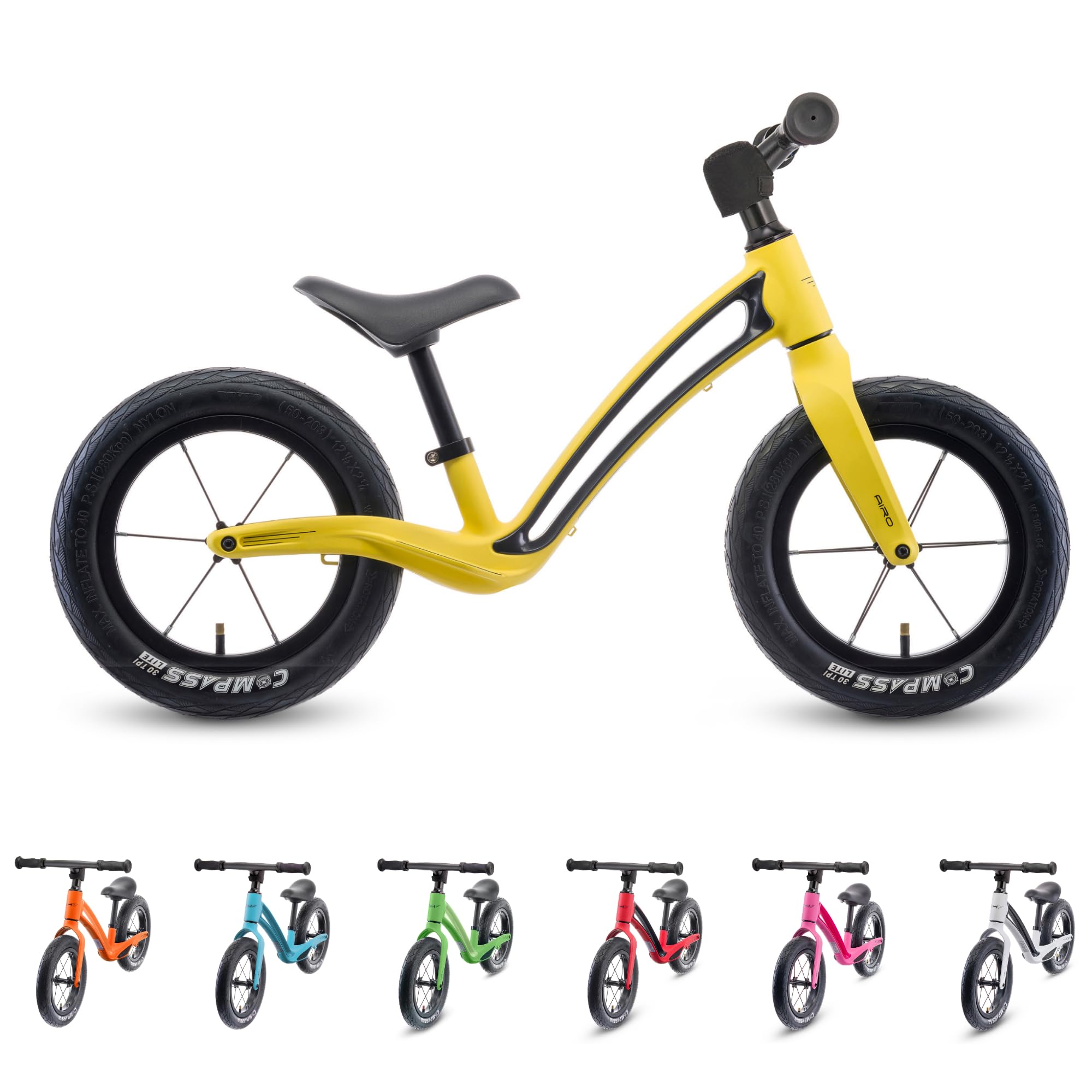
Magnesium magic that feels almost too light to be a real bike.
The Hornit AIRO earns its spot because it weighs just 2.95 kg (about 6.5 pounds), thanks to a magnesium alloy frame (a lightweight metal). Buyers describe it as “shockingly light”—One grandparent noted other bikes weighed about 50% of their grandkid’s body weight, making this a standout for small riders.. The Hammer Yellow matte finish stands out, and the grip-taped footrests are contoured into the frame for easy freewheeling.
Air-filled tires (which use air, not foam) give a smoother ride on gravel, and the padded stem (the part connecting the handlebars) adds protection. Assembly takes just three bolts with the included Allen key. The seat adjusts for an inside leg measurement of 30cm to 46cm (11.8″ to 18.1″), so it grows with your child. The brand backs it with a lifetime warranty on the frame and forks—a sign that more than one child will learn on this same bike.
The trade-offs are small but real. The stock seat post runs long for smaller kids and may need trimming, the pump needs an adapter, and the footrest paint can chip over time. A few owners found the sizing ran small for a 4-year-old with a 16-17 inch inseam, so measure carefully. But for a 3-year-old clocking a 1.5-mile loop, this is the bike that makes daily riding easy.
Why It Shines: the featherlight magnesium frame plus air tires make this the smoothest, easiest-to-handle balance bike in this lineup.
Who Should Pass: taller 4-year-olds at the top of the size range, unless you confirm the seat post reaches their inseam first.
4. bicystar 14 Inch Balance Bike with Rubber Air Tires
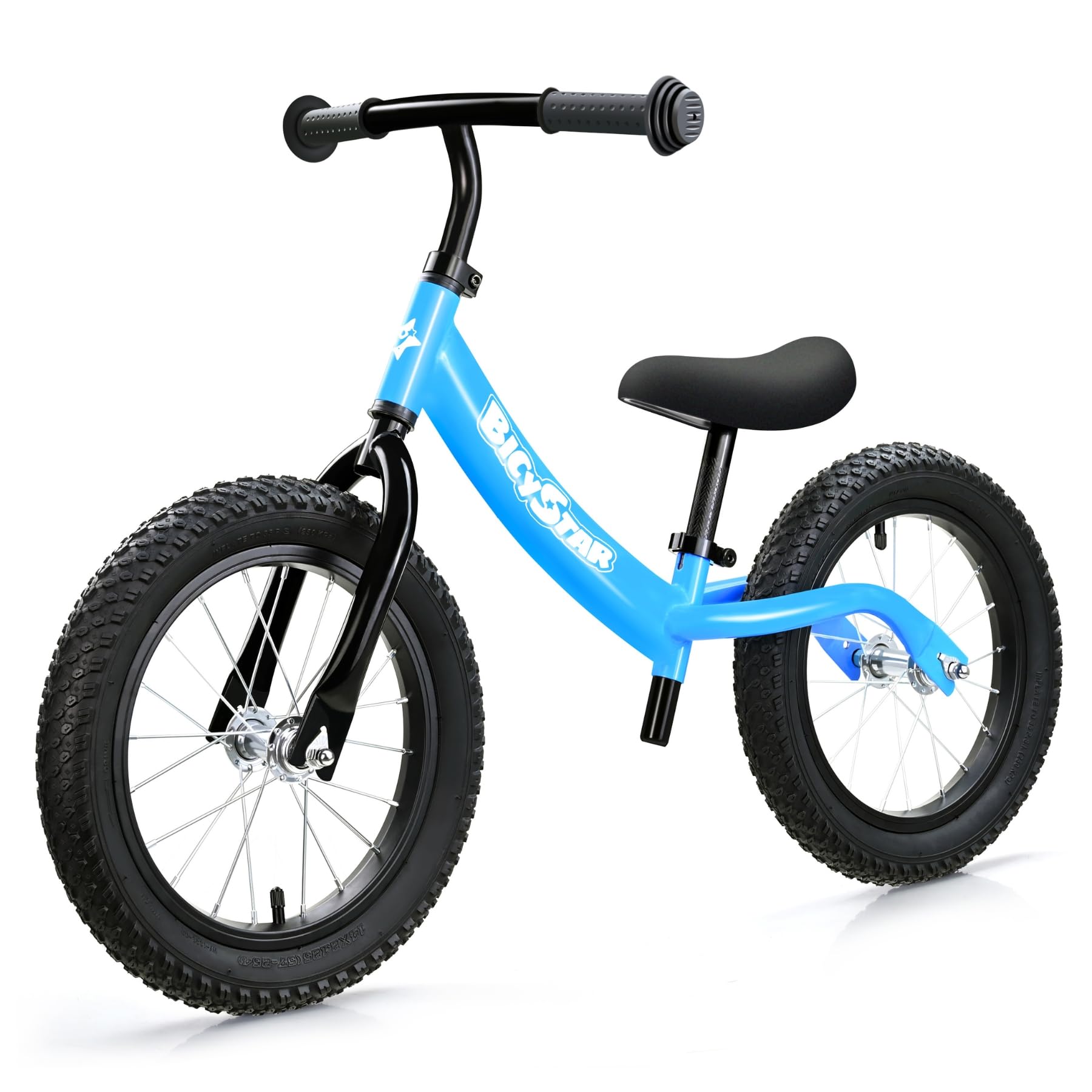
Real rubber air tires that grip gravel and roll smooth indoors.
While the Strider uses foam tires, the bicystar goes the other way with genuine inflatable rubber air tires — the kind that grip outdoor gravel and roll smoothly on pavement. For a family that rides on mixed terrain, this is the differentiator. At 8.5 pounds it’s heavier than the Strider’s 5.6 pounds (a 52% gap.), but that’s a fair trade for the grip and shock absorption of real air tires.
The seat adjusts from 13″ to 21″ to fit inseams of 13.5″ to 22″, with a handlebar height of 21.6″ to 24″, so it genuinely grows with a 4-year-old. The wide carbon steel frame supports up to 110 pounds, which is far more headroom than most in this category. It comes with soft grips, a padded seat, and a coasting footrest, and the quick-release seat makes height changes painless.
What buyers praise most is the overall quality — it’s “comparable to Strider but lighter” per one owner, and assembly is quick with clear instructions. The 8-year frame, 2-year tire, and 1-year parts warranty show unusual confidence. The one note is you may need to re-tighten bolts after the first few rides, and some kids wanted rear foot grips for resting their feet while coasting.
What Stands Out
- Real air tires grip gravel and roll smooth inside
- Seat grows from 13″ to 21″ for years of use
- 110 lb frame capacity outlasts the competition
- 8-year frame warranty backs the build
What To Know
- 8.5 lbs is heavier than featherweight rivals
- Bolts may need re-tightening after first rides
- No rear foot grips for coasting comfort
Pick this for: families who ride on gravel, grass, and uneven paths where air tires genuinely outperform foam.
Think twice if: your priority is the absolute lightest bike — the Strider beats it by 52% in weight..
5. KRIDDO 2-in-1 Foldable Balance Bike and Toddler Tricycle

A tricycle and a balance bike folded into one smart, space-saving package.
The KRIDDO attacks the “which first?” question differently: it’s both a tricycle and a balance bike. In trike mode your child gets stability and safety; flip it to balance bike mode and they start mastering balance. That two-in-one flexibility means you’re not buying a separate trike for the youngest years and a balance bike later. It’s also 15% more compact than the Strider (28.94″L vs 33.25″L)., and it folds in just 2 steps for storage or transport.
Reviewers point out “it took about 15 minutes to assemble with all parts and a hand tool provided with clear instructions,” and the build quality earns the most praise by far. The pedals store in a dedicated slot under the rear seat so they can’t get lost, and an exclusive front headlight adds visibility for dimmer evening rides. It fits ages 2 to 5, with the size running best for smaller kids — one owner’s 5-year-old at just 34 inches tall found it perfect.
The main caveat is sizing: feedback is genuinely mixed on fit, with some finding it perfect and others saying it runs small. If your 4-year-old is tall for their age, this may be a short-lived purchase. But for a smaller 4-year-old or a family with younger siblings coming up, the 2-in-1 design and easy fold make it exceptional value.
Why It’s Smart: one bike that works as a safe trike for beginners and a balance bike for the next stage, with the easiest storage in this lineup.
Who It’s Not For: taller 4-year-olds near the top of the size charts — this one skews toward the smaller end.
6. BABY JOY Kids Bike with Removable Basket

The classic pedal bike with training wheels and a basket built for treasures.
For parents who want a traditional first pedal bike, the BABY JOY delivers. It comes with stable training wheels for beginners and — the feature kids actually care about — a cute removable basket. One buyer’s daughter “puts rocks and toys in there every time we go out,” which is exactly the kind of detail that turns a bike into an everyday adventure. The 12-inch version fits ages 3 to 4 (height 31.5″-41.5″), while the 14-inch suits ages 3 to 5 (height 37.5″-43.5″).
Safety is handled with a dual brake system: a hand brake with a shorter distance designed for small hands, plus a coaster brake that stops when pedaling backward. The fully enclosed chain guard keeps little fingers safe, and the wear-resistant pneumatic tires are built from five layers for a steady ride. The carbon steel frame is sturdy, and the 85% pre-assembled design means most of the work is done before it arrives.
The build quality earns the top praise, with the pink-and-white wheels and brown saddle combo noted as looking great together. Assembly runs about 30 minutes, and owners advise keeping tools handy for the first ride to tighten bolts under real pressure. One owner had a front-end issue with the first unit, but the company replaced it immediately — responsive support. There are isolated durability concerns, so treat it as a solid beginner bike rather than a multi-child heirloom.
What Kids Love
- Removable basket for hauling toys and rocks
- Dual brakes: easy hand brake plus coaster brake
- Fully enclosed chain guard for safety
- 85% pre-assembled right from the start
What To Watch
- Re-tighten bolts after the first ride or two
- Occasional durability hiccups reported
- Training wheels mean balance comes later
Best for: a child who wants the full “big kid” pedal-bike experience with training wheels and a basket for adventures.
skip it if: you want to teach balance first without training wheels — this is a traditional pedal bike by design.
7. Glerc Fantacy Kids Bike with Training Wheels
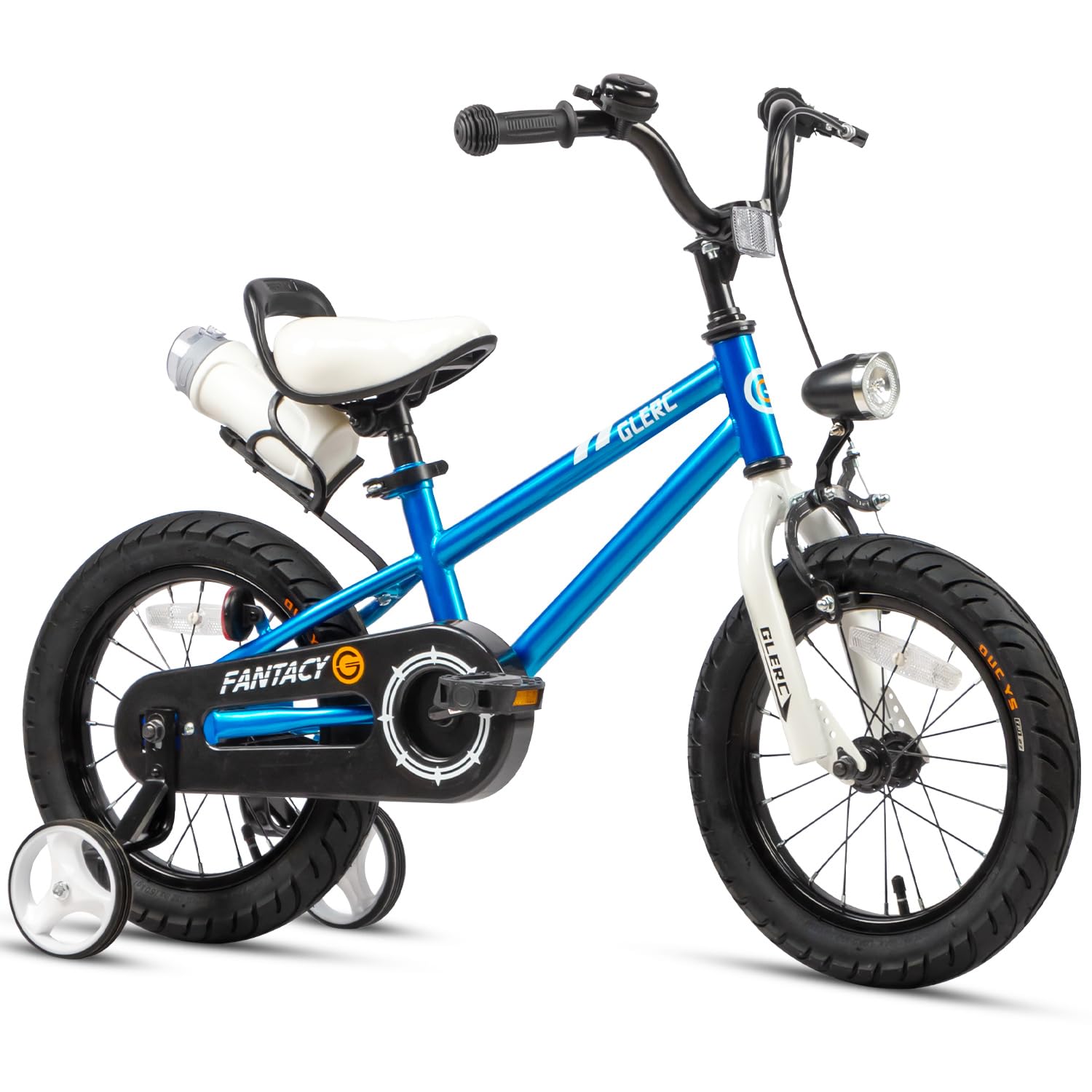
A starter bike loaded with extras that make every ride feel like a mission.
The Glerc Fantacy is built for kids who want gear. It comes with a water bottle holder to keep them hydrated and a safety LED light for visibility — the kinds of touches that make a 4-year-old feel like they’re on a real adventure. The 12-inch version fits ages 2 to 4 with a 33″-37″ height, and the 14-inch fits older kids, so sizing options cover the 4-year-old range well.
Braking pairs a coaster brake (pedal backward to stop) with a handbrake, giving beginners an intuitive system that also lets them develop more advanced skills. The adjustable seat and handlebars grow with your child, and the bike arrives 85% pre-assembled so final setup takes about 20 minutes. At 21 pounds for the 12-inch, it’s on the heavier side, and one reviewer noted it was “perfect for my 4 year old” with easy assembly and great quality.
The quality is the most-praised aspect, and the assembly earns solid marks. The honest caveat is stability: some shoppers say the training wheels can work loose after about 10 minutes of riding, so you may need to check and tighten them regularly. If you’re willing to give the hardware a quick re-tighten now and then, this is a feature-packed starter bike that kids genuinely love.
Why Kids Love It: the water bottle holder, LED headlight, and bell make it feel like real gear, not just a toy.
What Needs Attention: the training wheels may loosen during rides — plan to check them before each outing.
8. COSTWAY Kids Bike with Training Wheels
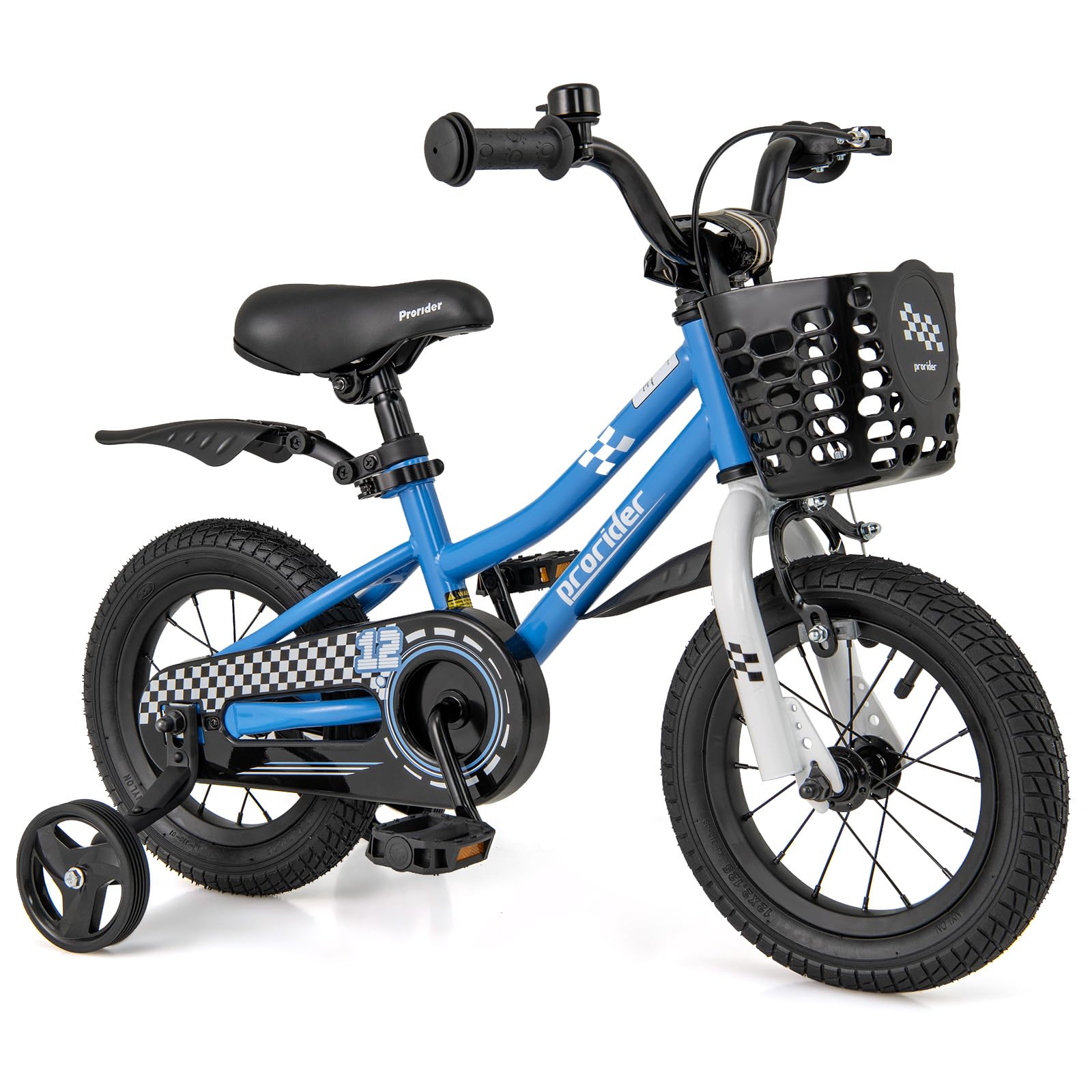
A pedaling first bike with certified safety and a basket for the ride.
If safety certifications matter to you, the COSTWAY stands out: it’s ASTM and CPSIA certified, which means it’s been tested against recognized toy safety standards. It pairs that with a dual brake system — a hand brake with short reach for small hands and a coaster brake — plus a fully enclosed chain guard and detachable training wheels for the beginner phase. The removable front basket adds practicality for carrying treasures.
Available in 12″, 14″, 16″, and 18″ wheel sizes, the 12-inch suits ages 3-4 (height 31.5″-41.3″), and the 14-inch fits ages 3-5 (height 37.5″-43.5″). The 5-layer wear-resistant pneumatic tires grip asphalt, brick, boardwalks, and grass, while the high-strength carbon steel frame endures active kids. Owners describe assembly as easy with clear instructions, taking about 30 minutes, and praise how sturdy it feels with stable training wheels.
What buyers appreciate most is how well it works as a first bike, particularly for three-year-olds and smaller children. The quality and sturdiness get consistent praise, and it’s often called a great Christmas gift option. The size runs suited to smaller kids, so taller 4-year-olds may need the next wheel size up. It’s a dependable, safety-conscious choice for the traditional training-wheel route.
Safety First
- ASTM and CPSIA certified for toy safety
- Dual brakes: hand brake plus coaster brake
- Detachable training wheels for beginners
- Removable front basket for carry-alongs
Keep In Mind
- Runs small — taller kids need the next size
- Some mixed feedback on reliability over time
- Training wheels are the learning path here
Choose this for: certified safety standards and a stable first pedal-bike experience, so you get confidence without the guesswork.
Reconsider if: you have a tall 4-year-old — measure their inseam against the saddle height before picking a wheel size.
9. Glerc Little Molly Retro Cruiser Bike
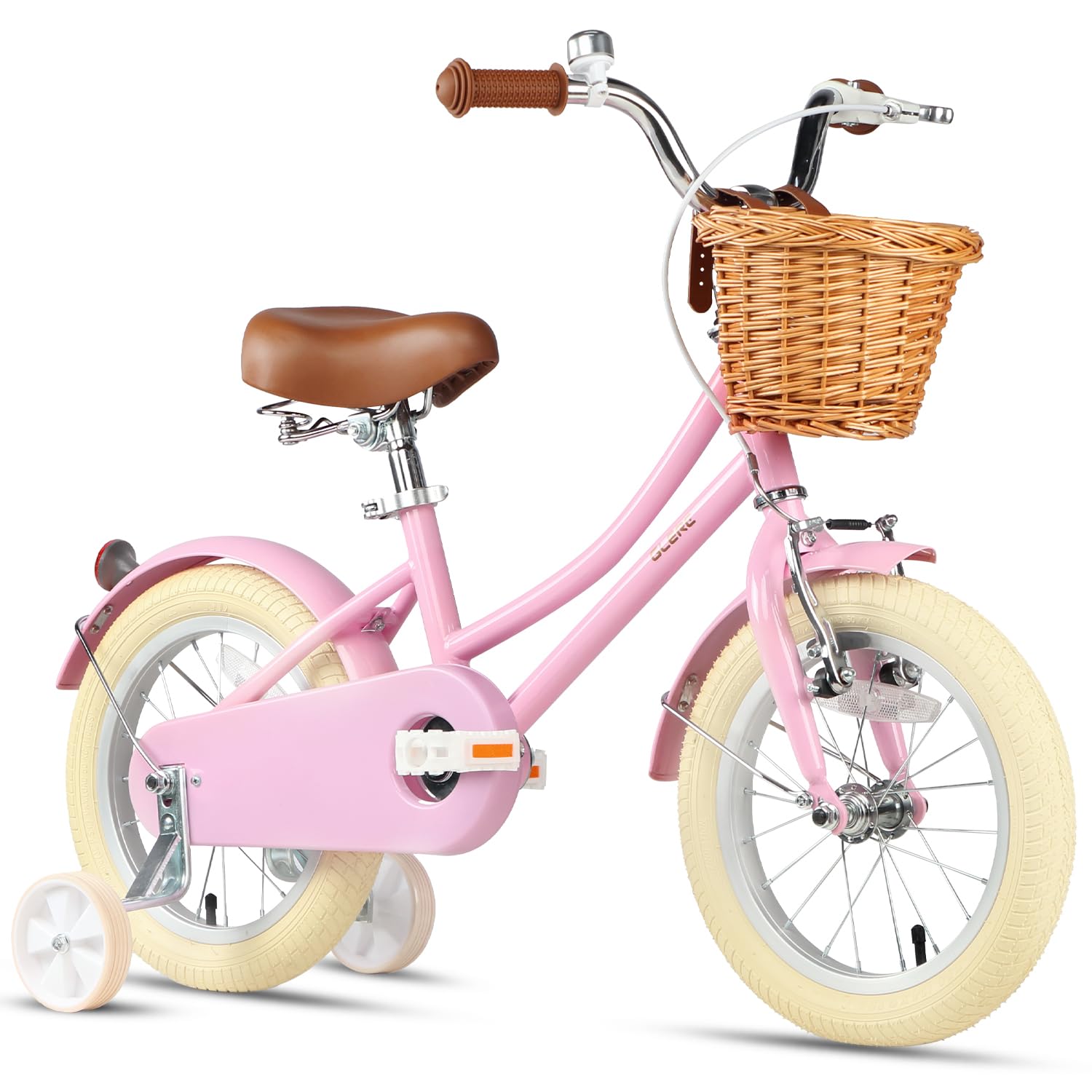
A vintage-styled cruiser that makes first rides feel like a charming parade.
The Glerc Little Molly is the bike that stops neighbors. Its vintage-style metal frame, brown faux leather saddle, wicker basket, and fenders create a look entirely unlike the plastic-heavy competition — and buyers love that it’s not pink or purple. The 14-inch version fits ages 3-5 with a 36″-44″ height and 16″-20″ inseam, and it weighs 23 pounds, making it the heaviest pedal bike here, so factor that in for smaller riders.
Designed with beginners in mind, it uses short-travel aluminum brake levers that small hands can actually reach, a lower standover height for easy mounting, and protective handlebar pads. It pairs hand brakes with coaster brakes for plenty of stopping power. Assembly is straightforward: the 85% pre-assembled body needs just a few parts added, finishing in about 25 minutes with the included tools.
The quality and appearance earn the loudest praise, with owners calling it “better than Walmart” and noting how adorable it is watching siblings ride matching ones. The wicker basket is a hit — one granddaughter carries her favorite baby doll in it. The durability shows some mixed feedback, including occasional reports of broken sprockets, so it’s best treated as a charming daily rider rather than an off-road machine. If the retro look is what your child wants, nothing else here comes close.
Why It Turns Heads: the wicker basket, faux leather saddle, and vintage frame make this the most distinctive bike in the lineup.
Who Should Pass: anyone needing a heavy-duty workhorse — the styling comes first here, and 23 lbs is a lot for the smallest riders.
Understanding the Specs
Wheel Size and Inseam Fit
Wheel size (12″, 14″, 16″) is the headline number, but the real fit check is your child’s inseam — the length from their crotch to the floor. A 12-inch wheel generally suits a 13″-16″ inseam, while a 14-inch fits a 16″-20″ inseam. The most reliable method is to have your child sit on the saddle and confirm both feet touch the ground flat. A bike that’s too tall is intimidating; one that’s too small is outgrown in months.
Frame Material and Weight
Frame material drives weight, and weight drives how easily a 4-year-old can control the bike. Aluminum frames are the lightest common option (think 5.6 to 8 pounds for balance bikes), steel frames are heavier but often cheaper and more durable, and magnesium offers an ultralight middle ground. Every extra pound is something your child has to lift, steer, and stop — lighter almost always means a better learning experience.
Brakes: Coaster vs. Hand
Coaster brakes stop the bike when your child pedals backward, which is intuitive for beginners but takes a moment to learn. Hand brakes work like adult bikes and help develop real braking skills, but the levers must be sized for small hands to work well. Many kids’ bikes pair both, so a child can rely on the coaster brake while gradually learning the hand brake — the safest progression for a 4-year-old.
Tires: Foam vs. Air
Foam tires (often EVA) are flat-free and zero-maintenance, perfect for smooth surfaces and parents who never want to pump a tire. Air-filled rubber tires offer better grip on gravel and grass, plus a smoother ride, but they can go flat and need occasional inflation. Choose foam for simplicity on pavement, or air tires if your family rides on varied outdoor terrain.
FAQ
Is a balance bike better than training wheels for a 4 year old?
What size bike does a 4 year old need?
How do I measure my child’s inseam for a bike?
How much should a kids bike weigh for a 4 year old?
Will my 4 year old outgrow a 12 inch bike quickly?
What is the difference between a balance bike and a pedal bike?
Are foam tires or air tires better for a kids balance bike?
How do I know if the bike seat is the right height?
Do 4 year olds need hand brakes or coaster brakes?
What should I look for in a safe kids bike?
Final Thoughts: The Verdict
The best bike for most 4-year-olds is the Strider 12 Pro because its 5.6-pound frame and proven balance-first approach gets kids riding faster than any training-wheel setup. If you want one bike that grows from balance to pedals without a second purchase, the RoyalBaby EZ-Pro is the cleverest choice. And for outdoor families riding gravel and grass, the air-tired bicystar 14 Inch delivers the grip where foam tires can’t. The common thread across all these picks: a bike that fits your child’s inseam and weighs little enough to control will turn first rides into a daily highlight.
How We Picked
We do not accept paid placement. Every pick is matched to a real buyer and a real use-case; we do not hands-on test units.
Sources & Methodology
Specifications: manufacturer listings and product documentation. Review insights: verified customer reviews, as of August 2026. Pricing: not shown on this page (it changes often); check the current price via the retailer link.
As an Amazon Associate, Gadgets Feed earns from qualifying purchases. This does not affect which products we feature.