
Our readers keep the lights on and my morning glass full of iced black tea. As an Amazon Associate, I earn from qualifying purchases.
Specs are compiled from manufacturer listings and verified buyer reviews and can change over time — please confirm the key details on the product page before buying.
You need a club that fills the gap between your pitching wedge (around 45 degrees) and sand wedge (around 56 degrees) while staying affordable. Buyers consistently report that a good 48 degree wedge performs like premium tour models for a fraction of the cost, and the right pick depends on spin, feel, and forgiveness from tight lies.
I’m Min — the founder and writer behind Gadgets Feed. This guide is built by comparing the manufacturers’ published specifications and the patterns across verified customer reviews, so you get each pick’s real strengths and trade-offs instead of marketing spin.
You want a club that produces consistent yardages and stops the ball fast on the green, and this roundup of the 48 degree wedge market focuses on real owner experiences to help you choose with total confidence.
Our Picks at a Glance

How To Choose The Best 48 Degree Wedge
Before you buy, decide what you want the club to do from the fairway, how much spin you need to stop the ball, and whether the clubhead feel matches your skill level. A gap wedge fills the distance void between your pitching wedge (around 45 degrees) and sand wedge (around 56 degrees), so it is often the most-used club for full approach shots into greens.
Spin and Groove Design
The grooves on the clubface are what grab the ball and produce backspin, which is the reason the ball stops instead of rolling past the hole. A CNC milled face (a face cut by machine with precision tolerances) is the standard you want here, because the exact-cut grooves create consistent friction in both dry and wet conditions. The reviews back this up — buyers repeatedly point to the milled grooves as the reason they get “drop-and-stop” action on the green.
Bounce Angle and Sole Design
Bounce is the angle of the sole (the bottom edge of the clubhead) that stops the club from digging into the turf or sand. Higher bounce angles, in the 10 to 14 degree range, help you glide through soft sand and thick rough without the head catching, while lower bounce suits firm fairways. For a 48 degree wedge used mainly on tight lies, a mid-range bounce in the 3 to 12 degree area gives you the versatility to play from both the fairway and the fringe.
Shaft Flex and Feel
The shaft flex (how much the shaft bends during your swing) must match your swing speed or the club will launch the ball too high or too low. Regular flex is the standard choice for most golfers, while stiff flex suits faster swingers. A forged head (a clubhead formed from a solid piece of metal) delivers a softer, more satisfying feel at impact compared to cast heads, and that feedback tells you instantly where you struck the ball on the face.
Quick Comparison
| Model | Best For | Loft | Bounce | Flex | Amazon |
|---|---|---|---|---|---|
| MAZEL Forged Wedge★ Best Overall | Full-swing distance and spin | 48° | Not specified | Regular | Amazon |
| MAZEL 48 Degree WedgeBest Value | Bunker escapes and control | 48° | Not specified | Regular | Amazon |
| XINGGM Forged Wedge | Budget spin and durability | 48° | 68° | Stiff | Amazon |
| PowerBilt X-Grind | Pitching wedge replacement | 48° | 3° | Regular | Amazon |
| wosofe Forged Wedge | Soft feel and looks | 48° | 12° | Regular | Amazon |
| Mizuno Pro T1 | Premium tour-level performance | 48° | 10° | Stiff | Amazon |
In‑Depth Reviews
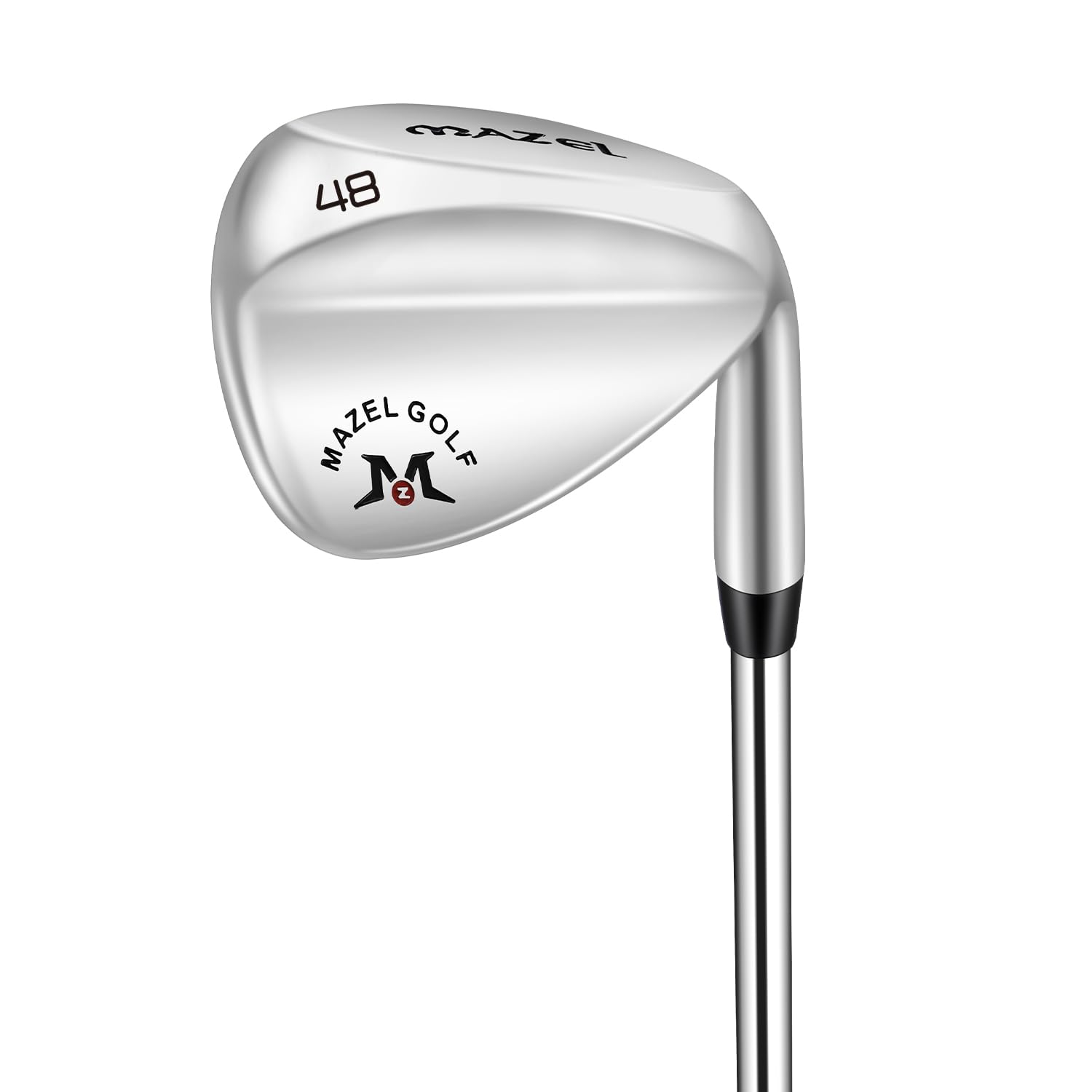
1. MAZEL Forged 48 Degree Wedge
Our pick — over 4.5★ from 150+ verified ratings; the strongest balance of quality and price.
The crowd favorite that matches tour-level wedges at a fraction of the cost.
The CNC milled clubface with conforming grooves is why buyers report the 48° gap wedge hits around 120 yards at a 110 driver speed. That kind of full-swing distance is exactly what a gap wedge is for, and the regular flex shaft with a 120g weight compensates nicely to keep the ball flight predictable.
Owners consistently compare this club to the Taylormade MG2 and Vokey SM9 in terms of quality, which says a lot for a club in this tier. The high-toe design with 4 weight ports positions the center of gravity upward as loft increases, and the result is a satisfying feel on every shot that buyers describe as solid and durable. The sole grinds and camber (the curved shape of the bottom of the club) make it easier to clip the ball cleanly off tight lies, which is the main scenario a 48 degree wedge lives in.
Owners mention the micro grooves keep their bite even after months of play., and several note the club feels and looks like a quality wedge with fantastic groove performance. The biggest praise is the appearance, with well over two dozen owners singling out how good the club looks in the bag, and the value for money is the second most-discussed positive. Weighing in at 0.48 kg, it feels substantial but not heavy through the swing.
What Owners Love
- Tour-level feel at a budget-friendly price
- CNC milled face generates strong backspin
- High-toe weighting gives a satisfying impact feel
Small Trade-offs
- The loft selection on the product page can be awkward to navigate
- Some buyers bent the 52° version stronger, so the stock loft options may not suit everyone
Reach for this if: you want a 48 degree wedge that delivers real spin and yardage without spending premium money — it is the pick that beats clubs costing several times more.
Think about this: if you prefer a softer forged feel over the blade design, the shaft choice here is regular flex only, so faster swingers may want to check the stiff-flex options below.
2. MAZEL Forged Wedge 48 Degree
The escape-artist wedge built to get you out of bunkers and back to scoring.
This 48 degree wedge is built for one job: getting the ball up quickly over a hazard. The extra-wide sole (the bottom edge of the clubhead) cuts through sand without skipping or digging, so you can clear the lip and stop the ball quickly on the green. Customers note the 48° version improves touch and control around the greens.
The full CNC milled clubface (a face precision-cut by machine) with conforming grooves delivers more spin and consistency from the fairway, fringe, or rough. A low-handicap golfer found the spin surprising for the price, with a low spinning shot stopping within 1 foot on a urethane ball and reduced run-out on Surlyn balls. Some reviewers point out hitting the 48 degree wedge 70 yards with great control., which makes it a reliable scoring club.
Build quality is the thing owners praise most, with well over three dozen buyers mentioning it, and value for money is the second most common positive at nearly two dozen mentions. The clubhead is made from stainless steel and weighs 300 g, and buyers describe the weight as good while noting the grip is excellent and the club is stylish. One honest caveat: the weight draws mixed feedback, with a few owners finding the head on the heavy side, so if you prefer a lighter feel through the swing, this may take some adjusting.
Confident pick: for the money, this is a beautifully built wedge that shoppers say functions as well as top-brand clubs.
Fit note: the head weight is a matter of taste — most love it, a few find it heavy.
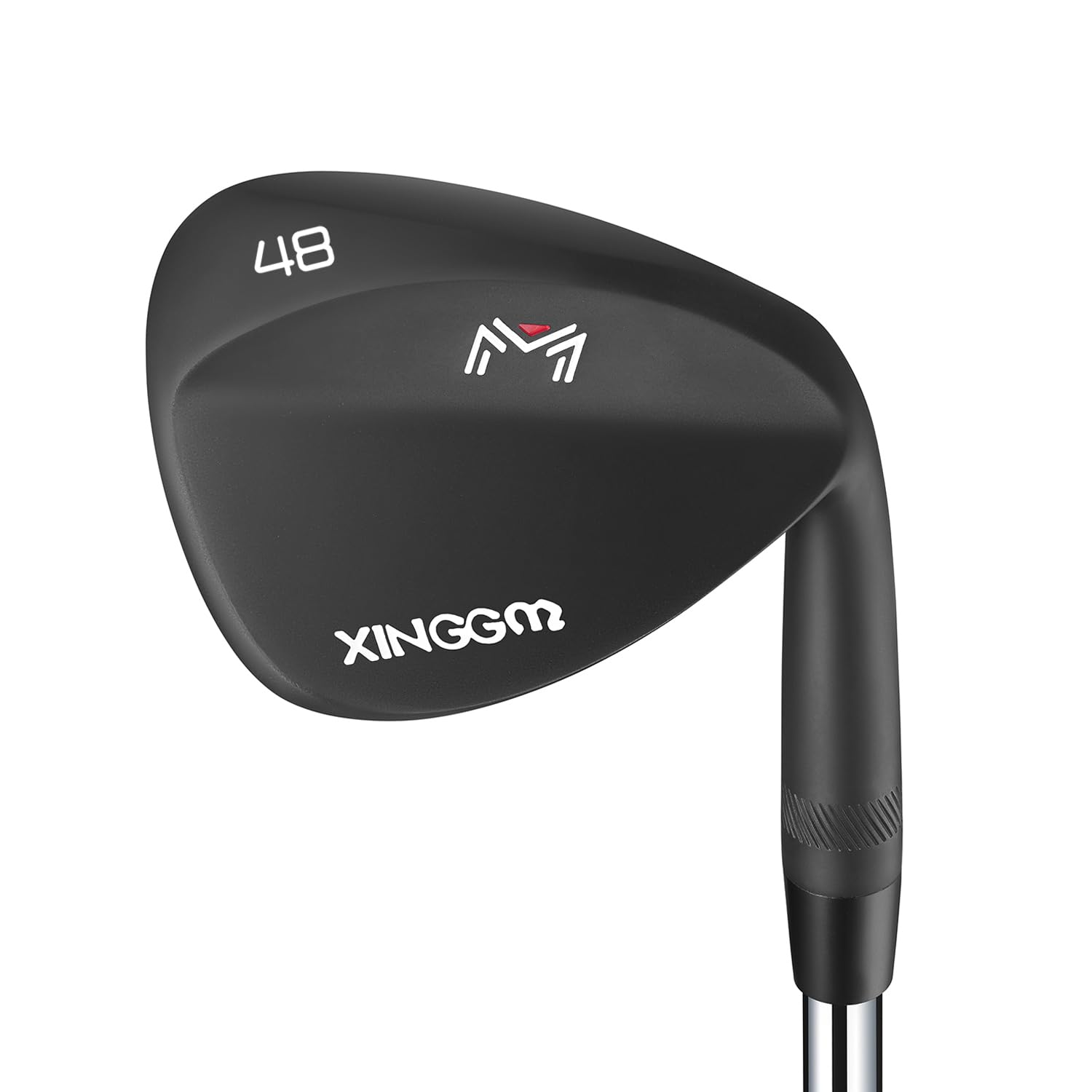
3. XINGGM Forged 48 Degree Wedge
A forged-feel bargain that buyers call a steal for the money.
The standout here is the micro CNC milled face (a face cut with precision machine tolerances) with a spiral groove pattern that helps eliminate water and debris from the clubface. Buyers report the milled face gives intense backspin, with flop shots spinning back noticeably., and they describe the feel as great for a less expensive forged wedge, making this a smart entry-level option that punch above its tier.
The step-shaped shaft design combined with an anti-slip grip reduces vibrations and provides accurate feedback upon impact, so you know exactly where you struck the ball. The forged craft and QPQ appearance technology (a surface-hardening treatment) increase the durability of the clubhead, giving it higher abrasion strength than other wedges even in wet sand bunkers and grassy areas. At 48 degrees with a stiff flex, this one suits golfers with faster swing speeds who want a lower, more controlled trajectory.
For the money, owners mention you cannot go wrong, with several calling it a great value and one planning to add a 54 degree version after liking the 48. The beveled sole (a shaped bottom edge) lets you open the club face further and hit the ball higher with greater accuracy. One note from owners: the included grip is basic but comfortable, and several buyers swapped in their own grip and loved the result.
Why Buyers Like It
- Intense backspin from the micro milled face
- Durable QPQ coating holds up in wet conditions
- Stiff flex suits faster swingers
Consider This
- The stock grip is basic, so budget for a replacement if you want premium feel
- Stiff flex is not ideal for slower swing speeds
Who it beats: any cast wedge near the same money — the forged feel and spin are genuinely impressive here.
Who it does not suit: golfers who need a regular flex, since this comes only in stiff.
4. PowerBilt X-Grind 48 Degree Wedge

The solid, no-drama 48 that steps in perfectly when your pitching wedge goes missing.
The scenario buyers describe most is replacing a lost pitching wedge, and this 48 degree X-Grind fills that exact role with a solid, soundly built stainless steel head. It is available as a 48 degree pitching wedge (the lowest loft in the series) alongside 52, 56, 60, and 64 degree options, so you can build a complete short-game set from one family of clubs.
The beveled sole grind (a shaped bottom edge) lets you open the face as needed for high lob shots, low loft shots, bump and runs, chipping, and bunker play. The strategically placed cutout in the head improves the center of gravity for purer shots, and customers note it is great for 90 yards and chipping, with one owner birdying the first hole they used it on. At 3 degrees of bounce, this is a low-bounce wedge built for firm fairways and tight lies rather than soft sand.
The 35.5 inch length with a steel wedge flex shaft and proprietary Powerbilt rubber grip makes it a familiar, comfortable club for golfers of all skill levels. It is also the lightest on the pocket of the mid-range options, which buyers appreciate. The one place it does not shine is soft bunker play, where the low 3 degree bounce means the leading edge can dig into sand, so it is a better fit for dry courses and fairway approach shots.
Straight shooter: a reliable, traditional 48 degree wedge that will not let you down from the fairway or on chip shots.
Know the limit: the low bounce is a firm-turf tool, not a soft-sand escape artist.
5. wosofe Forged 48 Degree Wedge
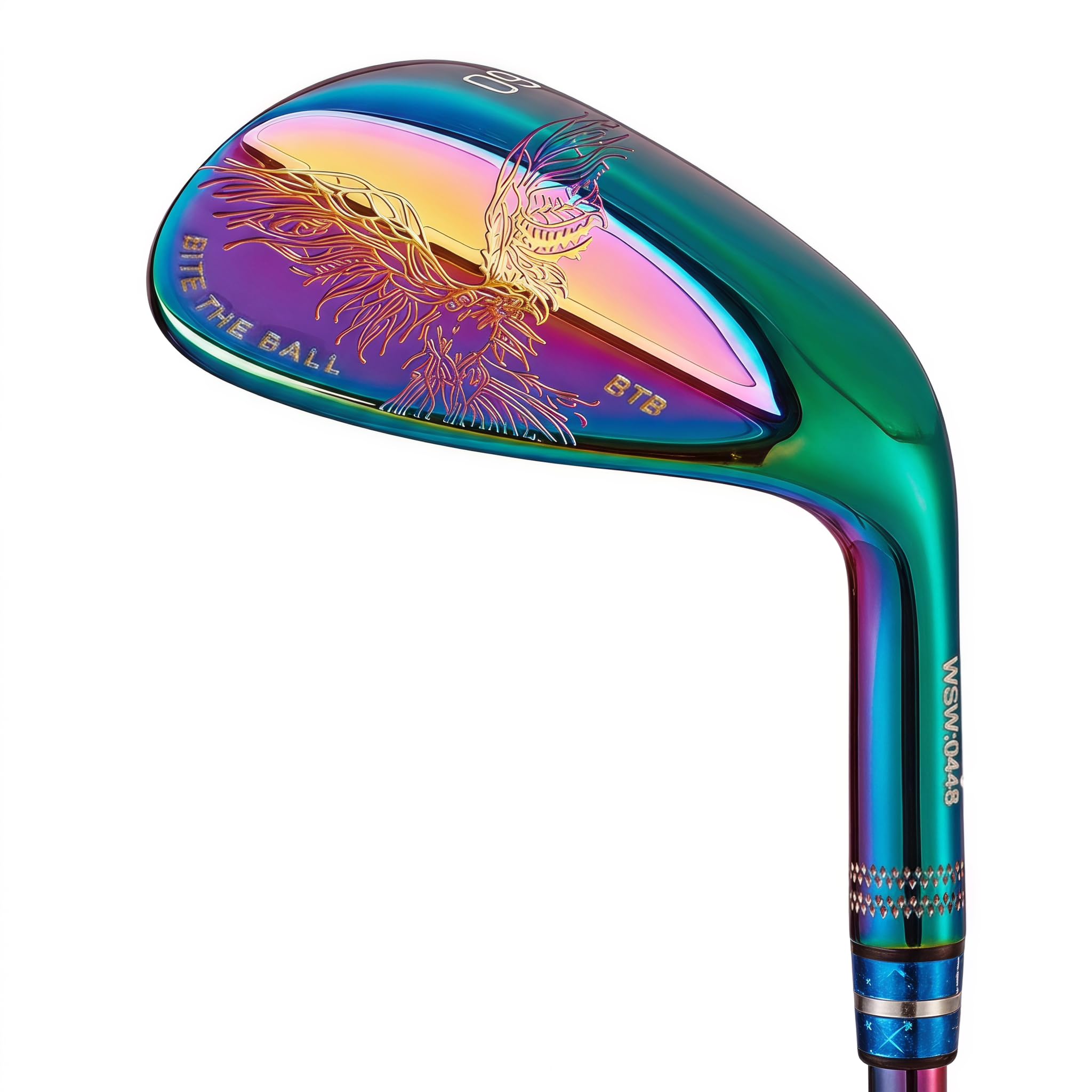
The showpiece wedge whose soft carbon steel feel lives up to its mirror-polished looks.
Forged from 1020 soft carbon steel, this wedge feels significantly softer than standard cast iron clubs, and the low center of gravity design provides an enlarged sweet zone so off-center hits still maintain direction. The double-plating coating with a mirror-polished finish makes it genuinely beautiful — buyers describe it as the prettiest club they have ever owned, with one admitting it became a wall hanger because it was too good looking to play.
This one leads distinctly on feel versus the XINGGM and PowerBilt above, and the CNC milled multi-directional groove texture tune friction between ball and face for high-RPM backspin in dry or wet conditions. Available from 48 to 60 degrees, it pairs a 12 degree bounce for this 48 degree version, which gives it a 10 degree advantage in sand-versatility over the PowerBilt’s 3 degree bounce, making it far more forgiving from soft bunkers. A 63.5 degree lie angle and midsize grip round out the fit.
Quality and appearance are the two most-praised aspects, with owners calling it an eye-catcher that hits the same as high-end wedges. The honest trade-off appears in the durability reports: a handful of reviewers point out the clubhead separating from the shaft after around 5 uses, which is a real concern even if many others report no issues. The 2-year after-sales maintenance guarantee is the maker’s answer to that., but it is worth knowing before you commit to this as your everyday workhorse.
What Wins People Over
- Soft 1020 carbon steel feel on every strike
- High-RPM backspin from the milled face
- Stunning mirror-polish finish
What to Watch
- Occasional reports of head separating from shaft after a few uses
- Midsize grip may feel thick if you prefer standard
Best if: you want premium soft feel and a club you will not mind showing off — this one hits like a high-end wedge for less.
Look elsewhere if: you want a club for heavy daily practice, where the shaft joint is the weak point to watch.
6. Mizuno Pro T1 48 Degree Wedge

The one-piece forged masterpiece that shoppers say beats the latest Vokey wedges.
This is the premium end of the 48 degree wedge market, and for good reason: it is a one-piece Grain Flow Forged HD club from 1025E Pure Select mild carbon steel, produced at Mizuno’s iconic facility in Hiroshima, Japan, where their irons have been made since 1968. The Harmonic Impact Technology fine-tunes the head geometry for ideal impact feel and feedback, and buyers report the feel and feedback are excellent on every strike.
What sets this apart from every other wedge in this list is the Quad Cut Groove system, with milled narrow and deep grooves tune for stronger lofts and wide and shallow grooves for higher lofts. The Hydroflow Micro Grooves are laser-etched microscopic lines that channel away moisture for maximum spin in wet conditions, and the Face Milling Lines increase surface roughness to add spin nearer the green. Owners mention more spin around the greens than with other wedges, with one calling these better than the latest Vokey wedges.
The 10 degree bounce and stiff flex make this a player’s club that rewards precision, and owners note it is honestly quite heavy compared to other clubs in a set, though it feels balanced in the hand. As with all blade wedges, it takes more precision to swing well than a cavity-back, so it is best suited to golfers who practice their ball-striking. The one recurring note is that the BLACK ION finish loses color and wears with time, which is expected for a colored club but worth knowing if you want your wedges to look pristine for years.
Collector-grade performance: the softest feel and best wet-weather spin in this lineup, straight from a legendary Japanese forging house.
The catch: the BLACK ION finish fades with use, and the heavy head takes practice to master.
Understanding the Specs
Bounce Angle
Bounce is the angle of the sole (the bottom edge of the clubhead) that stops the club from digging into the turf. A low bounce around 3 degrees suits firm fairways and tight lies, while a high bounce in the 10 to 12 degree range helps you glide through soft sand and thick rough. For a 48 degree wedge used primarily from the fairway, a mid-range bounce gives you the flexibility to also play from the fringe and light bunkers.
CNC Milled Face
A CNC milled face (a face precision-cut by machine with tight tolerances) creates grooves with exact depth and shape, which is what generates consistent backspin on the ball. The grooves grab the cover of the ball on impact and make it spin backward, so the ball stops faster when it lands. This is the single most important spec for getting “drop-and-stop” action on the green, especially from full 48 degree approach shots.
FAQ
What is the difference between a 48 degree wedge and a pitching wedge?
What distance can I expect from a 48 degree wedge?
Should I choose a 48 degree wedge with high or low bounce?
What does CNC milled mean on a golf wedge?
Is a 48 degree wedge the same as a gap wedge?
How do I know if I need regular or stiff flex in my wedge?
Will a 48 degree wedge work for bunker shots?
How long does a forged wedge last before it needs replacing?
What grip size should I look for on a 48 degree wedge?
Can I mix a 48 degree wedge with my existing iron set?
Final Thoughts: The Verdict
If you want one dependable pick, the 48 degree wedge winner is the MAZEL Forged Wedge because it delivers tour-level spin and distance — hitting around 120 yards — at a price that beats clubs costing several times more. If you want an escape-artist club for bunkers with an extra-wide sole, grab the MAZEL 48 Degree Wedge. And for the softest feel and best wet-weather spin from a legendary Japanese forging house, the Mizuno Pro T1 is the one to reach for. The review pages sum it up well: buyers call the MAZEL forged wedge a surprisingly great club that matches Taylormade and Vokey quality, which tells you the value on offer across this list.
How We Picked
We do not accept paid placement. Every pick is matched to a real buyer and a real use-case; we do not hands-on test units.
Sources & Methodology
Specifications: manufacturer listings and product documentation. Review insights: verified customer reviews, as of August 2026. Pricing: not shown on this page (it changes often); check the current price via the retailer link.
As an Amazon Associate, Gadgets Feed earns from qualifying purchases. This does not affect which products we feature.