
That musty smell in the basement, the condensation on your windows, or the feeling of walking into a room that feels heavier and damper than it should — these are the signs your home is holding too much moisture in the air. The question isn’t whether the humidity is a problem; it’s whether the appliance designed to fix it delivers on its promise without becoming another piece of equipment you have to babysit.
I’m Min — the co-founder and writer behind Gadgets Feed. I’ve spent hundreds of hours researching and comparing dehumidifier specifications, parsing customer durability reports, and analyzing the pint-per-day ratings and energy efficiency claims to find the models that actually work.
If you are tired of damp towels, fogged windows, and the creeping worry about mold creeping into your walls, this guide on are dehumidifiers worth it will help you decide which machine reliably solves the moisture problem without creating new ones.
How To Choose The Best Dehumidifier For Your Home
Buying a dehumidifier seems simple, but the wrong choice means either a machine that runs constantly without keeping up, or one that’s overkill and wastes money. The key variables are how much water you need to pull out of the air (pint capacity), where you plan to drain it, and how much noise you can tolerate. Here’s what to focus on.
Pint Capacity: Match the Machine to the Space
Dehumidifier ratings are measured in pints of moisture removed per day, usually tested at 95°F and 90% relative humidity. A 21-pint unit is perfectly suited for a bedroom, bathroom, or small basement under 1,500 square feet. For a standard damp basement around 2,500 square feet, you need at least a 34-pint capacity. For large basements or whole-home coverage approaching 4,500 to 5,000 square feet, look for models that pull 50 to 80 pints per day. Oversizing a unit is rarely a problem — it cycles off faster and saves energy.
Drainage: Tank vs. Continuous Hose
Every dehumidifier comes with a water tank that you manually empty. Tanks range from 0.66 gallons to over 1.7 gallons. If your space is exceptionally humid, a small tank will fill up in hours, forcing you to empty it multiple times a day. The better solution is continuous drainage — attaching a garden hose or the included drain hose to a floor drain. If you plan to run the unit constantly in a basement, prioritize a model that supports continuous drainage.
Noise Level and Compressor Quality
Entry-level dehumidifiers often use budget compressors that buzz or hum at 50 decibels or more. For a bedroom or living area, look for units rated at 40 to 45 decibels — about the level of a quiet conversation. In a basement you rarely visit, noise is less critical. The compressor core also dictates longevity: units with copper tubing (not aluminum) and rotary compressors tend to survive longer without failure.
Energy Efficiency and Smart Features
An Energy Star certified unit uses significantly less electricity than a non-certified model. Look for the official label — some brands slap “Energy Star 2025” on the box without actual certification. Smart features like automatic humidity control, a color-changing display, and a 24-hour timer add convenience but don’t affect raw dehumidification power. Auto-defrost is a must-have if your basement runs cooler than 65°F, as it prevents ice from building up on the coils.
Quick Comparison
On smaller screens, swipe sideways to see the full table.
| Model | Category | Best For | Key Spec | Amazon |
|---|---|---|---|---|
| AEOCKY LEO-Lite | Premium | Energy-efficient large basements | 74 Pint/day, 4500 sq. ft. | Amazon |
| GoGuess 21 Pint | Mid-Range | Small bedrooms/RVs | 21 Pint/day, 1600 sq. ft. | Amazon |
| Glowells 34 Pint | Mid-Range | Medium basements, quiet spaces | 34 Pint/day, 2500 sq. ft. | Amazon |
| Arecovas 52 Pint | Mid-Range | Large rooms/drying clothes | 52 Pint/day, 4500 sq. ft. | Amazon |
| KNKA 80 Pint | Premium | Very large, humid basements | 80 Pint/day, 4500 sq. ft. | Amazon |
| Gasbye DryPrime | Premium | Cooler basements, max durability | 115 Pint/day, 4500 sq. ft. | Amazon |
| DECIUU 100 Pint | Premium | Whole-home, large garages | 100 Pint/day, 5000 sq. ft. | Amazon |
In‑Depth Reviews
1. AEOCKY LEO-Lite 74 Pint Dehumidifier
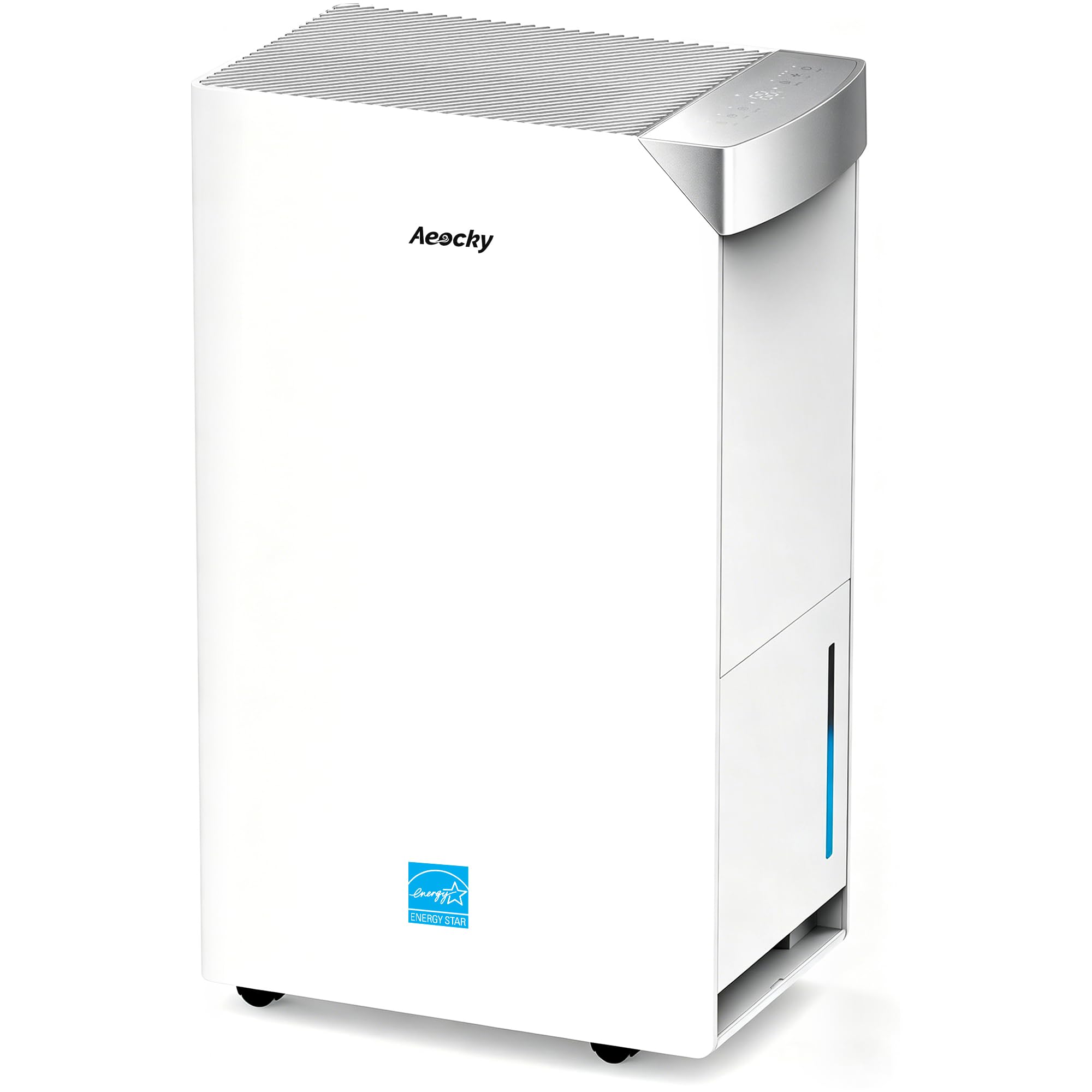
The AEOCKY LEO-Lite is a purpose-built machine for homeowners who need reliable, high-capacity dehumidification in large basements without the energy penalty. It pulls 74 pints per day (at 95°F, 95% RH) and covers up to 4,500 square feet. What sets it apart is its official Energy Star Version 6.0 certification — not a marketing label, but a verified standard that translates to up to 50% less energy consumption than non-certified units. This matters when the machine runs 24/7 during humid months.
Noise output is a critical factor for living spaces, and the LEO-Lite delivers with a 44 dB low-speed fan rating, making it quieter than a typical living room conversation. The “3+2” pure copper tubing and rotary compressor PRO+ design address the common durability weakness of budget dehumidifiers, aiming for a lifespan beyond three years. The auto-defrost function ensures it continues working even when basement temperatures dip into the 50s°F, a scenario that causes cheaper units to fail.
The unit’s footprint is narrow at 8.6 inches wide and 23.3 inches tall, which saves floor space, but the tank is not enormous — users should plan to use the included drain hose for continuous operation. Real-world owners report pulling 5 to 6 quarts of water every 12 to 13 hours in typical basements, completely eliminating musty odors. The trade-off for this premium efficiency and quiet operation is a higher upfront investment than mid-range models.
Why it’s great
- Official Energy Star 6.0 certification for serious electricity savings.
- 44 dB noise floor is genuinely quiet for a high-capacity unit.
- Pure copper tubing and rotary compressor built for longevity.
Good to know
- Smaller tank requires continuous drainage for unattended use.
- Premium price point compared to basic 50-pint units.
2. GoGuess 21 Pint Dehumidifier
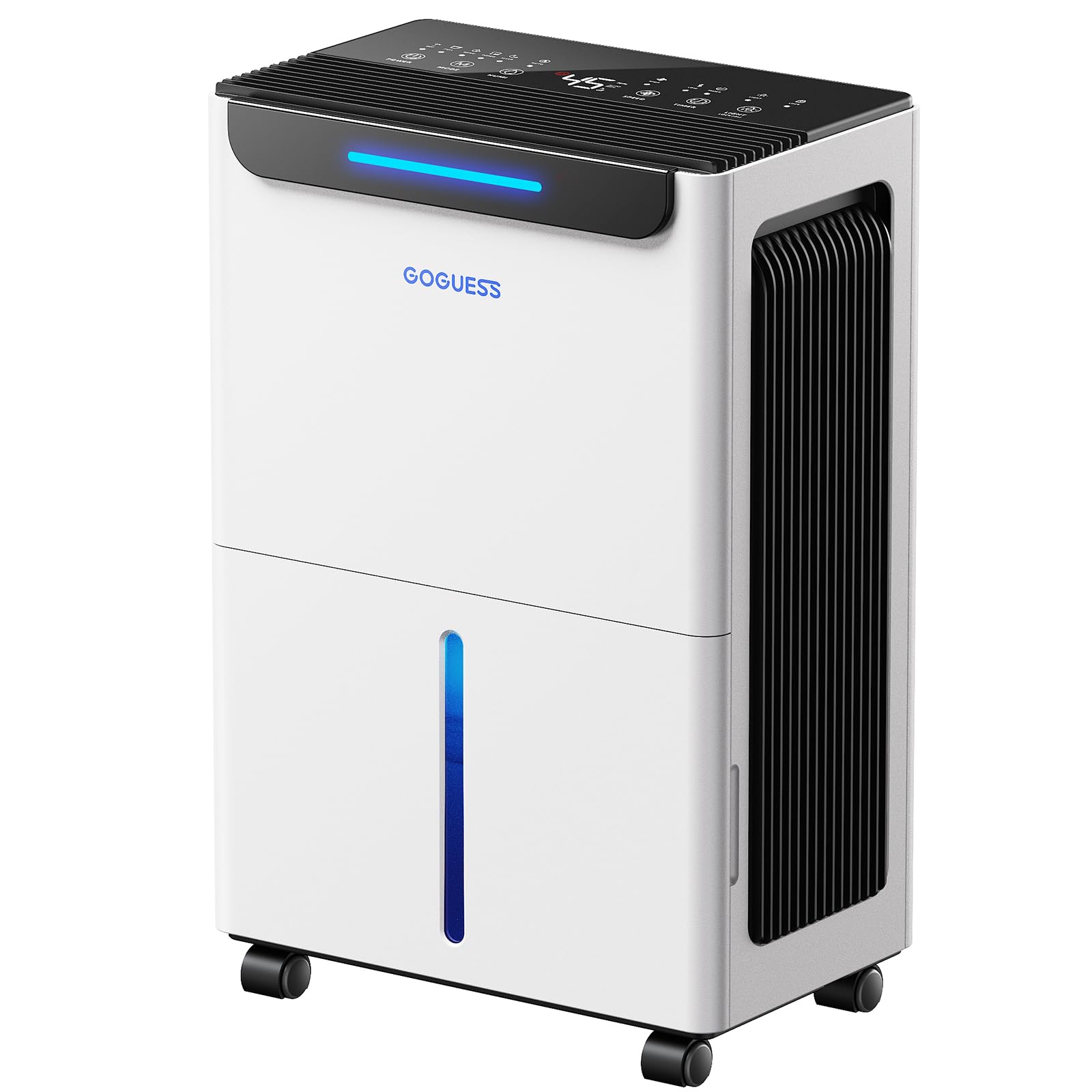
The GoGuess 21-pint model is the entry-level champion for targeted moisture control in smaller spaces. Rated for up to 1,600 square feet, it removes 21 pints per day under standard conditions, making it ideal for bedrooms, bathrooms, RVs, or a small basement office. Its compact dimensions (7.2 inches deep, 13.1 inches wide, 17.3 inches tall) mean it fits neatly on a shelf or in a corner without dominating the room.
Noise is a strong selling point: 40 dB in operation is quieter than a library whisper. The three-mode system — DEHU for target humidity, TURBO for rapid drying, and SLEEP for ultimate quiet — gives you control over how aggressive it works. The color-changing LED display shows real-time humidity at a glance, even when the unit’s compressor is off. The 2.3-liter tank triggers automatic shut-off when full, and the included 3.28-foot drain hose offers a continuous drainage path for longer run times.
Customer reviews consistently praise how easy it is to set up and how effective it is at removing moisture from small rooms without the humming drone of larger units. The trade-off is obvious: it simply doesn’t have the capacity for a large, open basement or a chronically damp space over 1,500 square feet. For a small bedroom or a modest bathroom, however, it hits the perfect sweet spot of price and performance.
Why it’s great
- Very quiet at 40 dB, perfect for bedrooms and living areas.
- Compact footprint fits tight spaces.
- Includes continuous drain hose for longer unattended use.
Good to know
- Limited to 1,600 sq. ft.; unsuitable for large basements.
- Small 2.3L tank fills quickly in very humid conditions.
3. Glowells 34 Pint Dehumidifier

For a medium-sized damp basement around 2,500 square feet, the Glowells 34-pint unit hits a critical performance sweet spot. It removes 34 pints per day, enough to pull a wet room from 72% humidity down to 62% within half a day of continuous use. The real highlight is the noise rating: 36 dB is extraordinarily quiet for a compressor-driven unit, quieter than most library environments and ideal for basements that double as living spaces.
The three operating modes — DEHU for standard dehumidification, DRY for speeding up clothes drying, and CONTI for continuous moisture removal — give you flexibility for different scenarios. The DRY mode is a genuine plus for laundry rooms or rainy-season use. Users recommend using the included 6.56-foot drain hose with CONTI mode to avoid tank emptying entirely. At only 22 pounds and equipped with castors and side handles, it’s easy to move between rooms.
Some owners note that while the unit is impressively quiet on low fan speed, it generates moderate noise on higher settings. The build uses ABS plastic and stainless steel, which feels sturdier than all-plastic competitors. If you need to dehumidify a moderately damp basement or large living area and you absolutely cannot tolerate a buzzing machine, this is your top mid-range pick.
Why it’s great
- 36 dB noise floor is among the quietest in this capacity class.
- DRY mode specifically helps speed up laundry drying.
- Lightweight 22 lbs with castors for easy room-to-room movement.
Good to know
- Noise increases noticeably on higher fan speeds.
- Best performance requires continuous drain hose setup.
4. Arecovas 52 Pint Dehumidifier

The Arecovas 52-pint dehumidifier is a balanced mid-range option for large rooms up to 4,500 square feet, including spacious basements and open-concept living areas. It pulls 52 pints of moisture per day using a commercial-grade compressor, and its claimed 45% reduced energy usage versus non-certified units makes it a solid pick for running continuously. The three modes — DEHU, DRY, and CONT — cover the same essential bases as pricier competitors.
Safety features are comprehensive: overload protection, power outage memory, automatic shut-off when full, auto-defrost sensors, and a child lock. The 0.66-gallon (2.5-liter) tank is on the smaller side for a 52-pint unit, meaning it will fill quickly in a damp basement — the included 6-foot drain hose is practically essential for unattended operation. The built-in wheels and handles make moving this 31.9-pound machine manageable.
Customer sentiment is generally positive, with users noting it eliminates musty smells within a day of operation. There are reports of units failing after several months, but the manufacturer has responded to complaints and offered replacements. If you need strong dehumidification for a large, humid space and you plan to use the continuous drain from day one, this is a capable value play at a lower price than premium 70+ pint models.
Why it’s great
- High 52-pint capacity covers large 4,500 sq. ft. areas.
- Multiple safety features including auto-defrost and child lock.
- Energy-efficient compressor reduces operational cost.
Good to know
- Small 0.66-gallon tank requires continuous drainage for best use.
- Some long-term durability concerns reported in reviews.
5. KNKA 80 Pint Dehumidifier
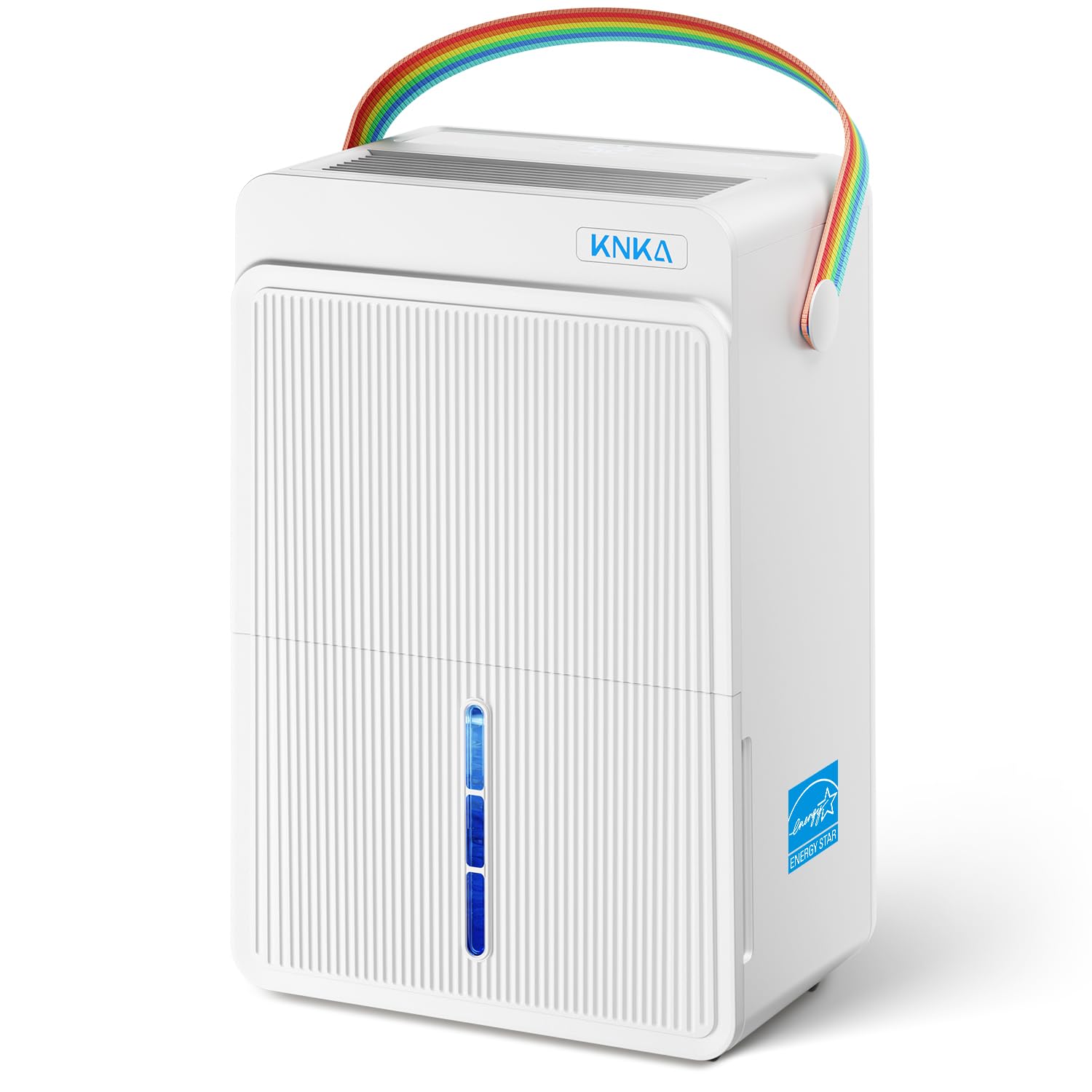
The KNKA 80-pint dehumidifier is built for heavy-duty moisture removal in spaces up to 4,500 square feet. In peak summer conditions (95°F, 95% RH), it extracts up to 80 pints per day, dropping to 56 pints per day in warmer basement conditions (86°F, 80% RH). This makes it a top contender for homes with chronic dampness that overwhelms smaller units. It also holds official Energy Star certification, so it won’t spike your electricity bill.
Noise is rated at 40 to 45 dB, depending on the fan speed — competitive with premium units in this class. The design includes a rainbow-woven handle for comfortable carrying, 360° swivel casters, and a washable filter. The user interface features a color-changing LED display that shifts based on ambient humidity levels, offering at-a-glance awareness. The unit supports three modes: AUTO (default 50% RH), DRY for clothes, and SETTING for manual humidity control from 30% to 80%.
The included 1.06-gallon tank is smaller than ideal for this capacity; users consistently praise the included 6.56-foot drain hose for continuous drainage. An optional 2.64-gallon external tank can be purchased separately. Owners report immediate results — basements go from damp to dry in a single day. The build uses both metal and plastic, giving it a reassuring weight. This is the model to choose if you need maximum daily water removal and you have a dedicated floor drain.
Why it’s great
- High 80-pint daily capacity for very humid basements.
- Certified Energy Star for efficient, low-cost operation.
- Quiet at 40-45 dB with smart humidity color display.
Good to know
- Internal tank is small; continuous drain is recommended.
- Heavier build at 32+ pounds requires wheels to move.
6. Gasbye DryPrime Dehumidifier
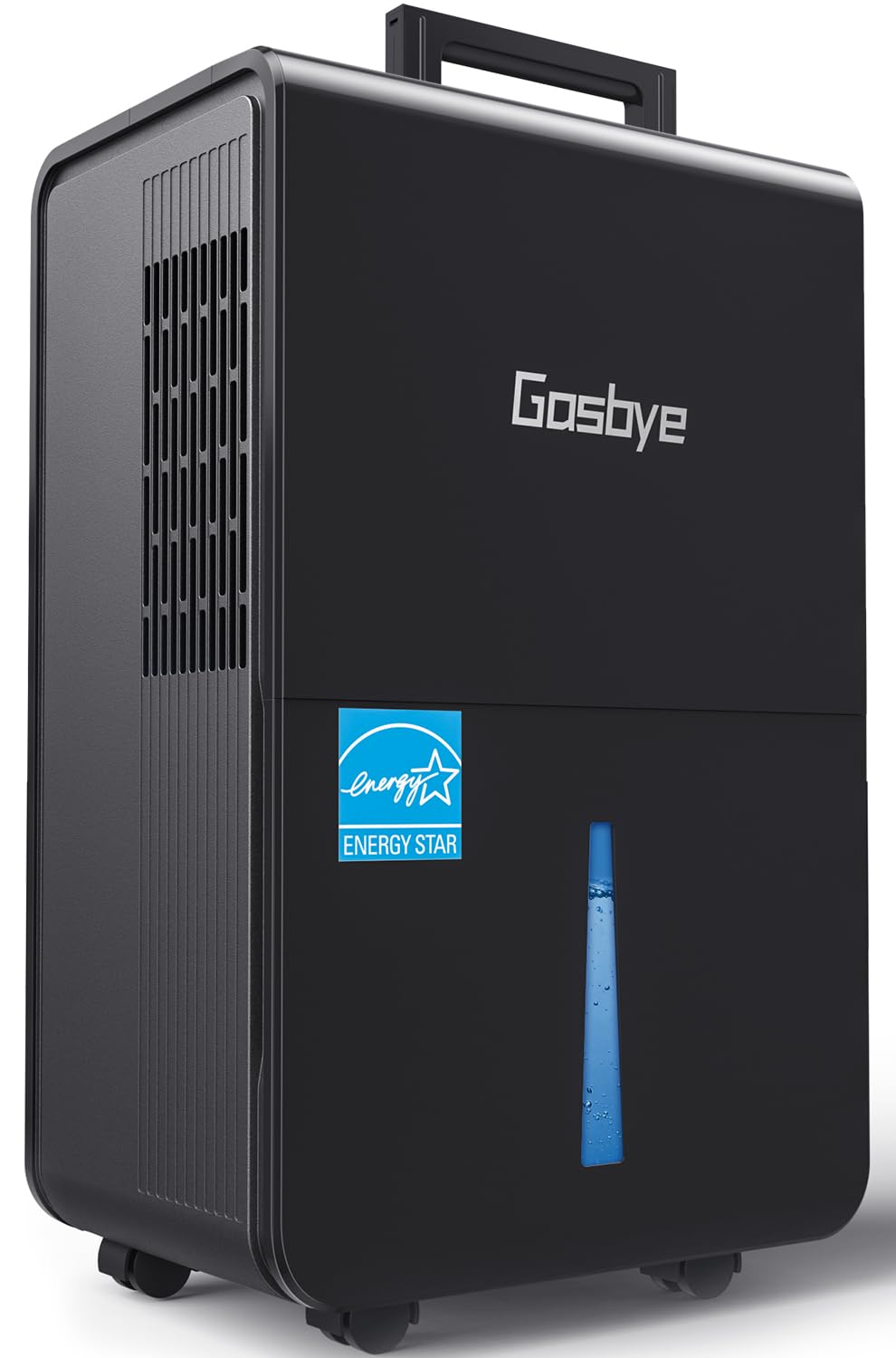
The Gasbye DryPrime is the heavyweight in this lineup, both figuratively and literally at 43 pounds. It boasts a max capacity of 115 pints per day at standard testing conditions (86°F, 80% RH) and 73 pints per day at 80°F, 60% RH. It uses reinforced 5-tier copper coils rather than cheap aluminum, addressing the common failure point of compressor-based dehumidifiers that brick within one to two years. It is Energy Star 2026 certified with a unique ID of 3417537.
Noise is a moderate 45 dB, acceptable for a basement but noticeable in a living space. The 1.7-gallon water tank is the largest among the units reviewed here, but you can still switch to continuous drainage using either the included 5-foot hose or a standard 3/4-inch garden hose. The smart control system shuts the compressor off when humidity drops 3% below your target and restarts when it rises 3% above — a simple but effective hysteresis algorithm.
Gasbye stands behind the DryPrime with a 2-year quality coverage policy and US-based support that reportedly responds within hours. Several customer reviews highlight a unit failure within the first year, but the support team shipped a brand-new replacement immediately. This suggests the build reliability isn’t flawless, but the after-sales service is exceptional. If you prioritize a strong warranty and want a beastly water removal rate for a large, cold basement, the DryPrime is a serious contender.
Why it’s great
- Massive 115-pint daily capacity for extreme humidity.
- Reinforced copper tubing designed for a longer lifespan.
- 2-year coverage and responsive US customer support.
Good to know
- Heaviest unit in the lineup at 43 lbs.
- Some early failures reported, though quickly replaced.
7. DECIUU 100 Pint Dehumidifier
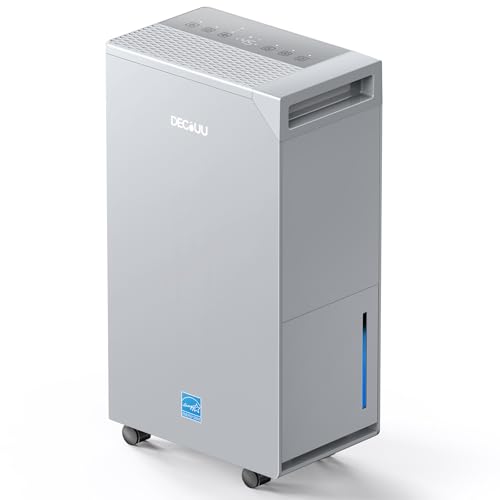
The DECIUU 100-pint dehumidifier holds the prestigious ENERGY STAR Most Efficient 2024 designation, meaning it consumes less electricity than 97% of comparable models while removing up to 100 pints of moisture per day in high-humidity conditions (95°F, 90% RH). Rated for areas up to 5,000 square feet, it is the largest-coverage unit in this roundup, suitable for open-plan basements, garages, laundry rooms, and even entire small homes.
The unit offers three drainage options: a 1.45-gallon (5.5-liter) tank, a 6.56-foot drain hose for continuous drainage, or a standard 3/4-inch garden hose connection for long-run setups. The intelligent humidity control allows adjustment from 35% to 80% RH, and the auto-defrost function maintains performance in cooler environments. At 32.8 pounds with 360° swivel casters and a hidden handle, it is surprisingly easy to reposition for its size.
Customer feedback highlights its dramatic improvement in comfort — one user reported dropping relative humidity from 75% to 45-50% within a week. Multiple reviewers mention it’s significantly quieter than their previous units. There is a note that the unit may trigger an H5 error code if the basement drops below 65°F, but the customer support team responds within 12 hours to resolve it. The 2-year protection plan adds peace of mind. This is the best pick for covering the most square footage with the highest official efficiency rating.
Why it’s great
- ENERGY STAR Most Efficient 2024 certification saves on bills.
- Covers up to 5,000 sq. ft., the largest area in this guide.
- Three drainage options, including garden hose compatibility.
Good to know
- May display error code in basements below 65°F.
- Larger chassis takes up more floor space.
FAQ
What size dehumidifier do I need for my basement?
How much electricity does a dehumidifier use per month?
Can I use a dehumidifier in a cold basement below 60°F?
Should I empty the tank or use continuous drainage?
Why does my dehumidifier smell musty?
Final Thoughts: The Verdict
For most users, the are dehumidifiers worth it winner is the AEOCKY LEO-Lite 74 Pint because it combines official Energy Star 6.0 efficiency with whisper-quiet 44 dB operation and copper components built to last beyond three years. If you want a quieter mid-range unit for a medium basement, grab the Glowells 34 Pint at 36 dB. And for whole-home moisture removal covering up to 5,000 square feet, nothing beats the certified efficiency of the DECIUU 100 Pint Most Efficient model.