
The question of whether to buy a projector or a television is one of the most fundamental decisions in home entertainment. It forces you to weigh raw picture quality against sheer screen size, daytime usability against cinematic immersion, and upfront cost against long-term practicality. No single answer fits every room, every budget, or every viewing habit.
I’m Min — the co-founder and writer behind Gadgets Feed. I’ve spent hundreds of hours analyzing the technical specifications of modern projectors and TVs, comparing lumen outputs, contrast ratios, color gamuts, and input lag numbers to determine where each technology truly excels.
This guide cuts through the marketing noise to help you decide once and for all are projectors better than tvs, or if a traditional television still holds the crown for your specific setup.
How To Choose Between A Projector And A TV
The decision isn’t about which technology is inherently superior; it’s about which one matches your environment, your content, and your expectations. A high-end TV will always beat a budget projector on contrast and brightness, but a mid-range projector can deliver a screen size that no TV can match at the same price. The key is knowing what to look for.
Brightness: ANSI Lumens vs Nits
Televisions are measured in nits, while projectors use ANSI or ISO lumens. A typical modern LED TV outputs between 300 and 1000 nits, which is far brighter than any projector in a well-lit room. For a projector to be usable with ambient light, you need at least 1,000 ANSI lumens realistically; above 2,000 ANSI lumens starts to rival a TV in a dimly lit space. Premium models with 3,000+ ANSI lumens or triple-laser engines can perform well even with curtains open, but they will never match the raw punch of an OLED TV in direct sunlight.
Contrast and Black Levels
This is the single biggest compromise projectors make. Because a projector relies on a reflective surface, true black is impossible — the darkest part of the image is the color of your wall or screen. TVs, especially OLEDs and high-end LCDs, can achieve perfect blacks by turning off individual pixels. If you watch a lot of dark, cinematic content like horror films or space dramas in a dedicated dark room, a good TV will offer a distinctly better experience. Projectors compensate with size and immersion, but they cannot win the black-level battle.
Screen Size and Viewing Distance
Projectors win this category overwhelmingly. For the price of an entry-level 65-inch TV, you can get a projector that throws a 120-inch image. The human eye perceives size logarithmically, meaning the jump from 65 to 120 inches feels far more dramatic than the jump from 32 to 55. If your room allows the space and you sit at a distance where a 120-inch image fills your field of view (roughly 10-12 feet), the projector’s immersion advantage is real and significant.
Input Lag and Gaming Performance
Televisions have improved drastically for gaming, with many models offering 120Hz refresh rates and sub-10ms input lag. Projectors historically lagged far behind, but newer models now feature dedicated gaming modes with 240Hz support and 1ms response times. Even so, the input lag on the fastest projectors hovers around 15-30ms in gaming mode, while a good gaming TV can hit 5-10ms. For casual gaming on a huge screen, projectors are now viable; for competitive esports, a dedicated gaming monitor or TV remains superior.
Quick Comparison
On smaller screens, swipe sideways to see the full table.
| Model | Category | Best For | Key Spec | Amazon |
|---|---|---|---|---|
| WiMiUS G2 | MID-RANGE | All-Round Smart Performance | Real 1100 ANSI Lumens | Amazon |
| HAPPRUN 2000 ANSI (Google TV) | MID-RANGE | Bright, Smart, All-in-One | 2000 ANSI Lumens | Amazon |
| HAPPRUN 2000 ANSI (4K Decoding) | MID-RANGE | Value with 300″ Display | 2000 ANSI Lumens | Amazon |
| TCL A1s | MID-RANGE | Trusted Brand & Portability | 600 ISO Lumens | Amazon |
| TOPTRO A2 | MID-RANGE | Short Throw & Live TV | Real 650 ISO ANSI | Amazon |
| Samsung Freestyle 2nd Gen | MID-RANGE | Ultra-Portable Lifestyle | 230 Lumens | Amazon |
| BenQ TH671ST | PREMIUM | Dedicated Gaming & Short Throw | 3000 ANSI Lumens | Amazon |
| NEBULA Cosmos 4K SE | PREMIUM | True 4K Dolby Vision | 1800 ANSI Lumens | Amazon |
| JMGO N1S Ultimate | PREMIUM | Daylight-Ready Triple Laser | 3300 ISO Lumens | Amazon |
| XGIMI HORIZON 20 | PREMIUM | Reference RGB Triple Laser | 3200 ISO Lumens | Amazon |
| Epson Home Cinema 3800 | PREMIUM | 3LCD Color Accuracy | 3000 Lumens (Color & White) | Amazon |
In‑Depth Reviews
1. WiMiUS G2 Official Google TV Projector
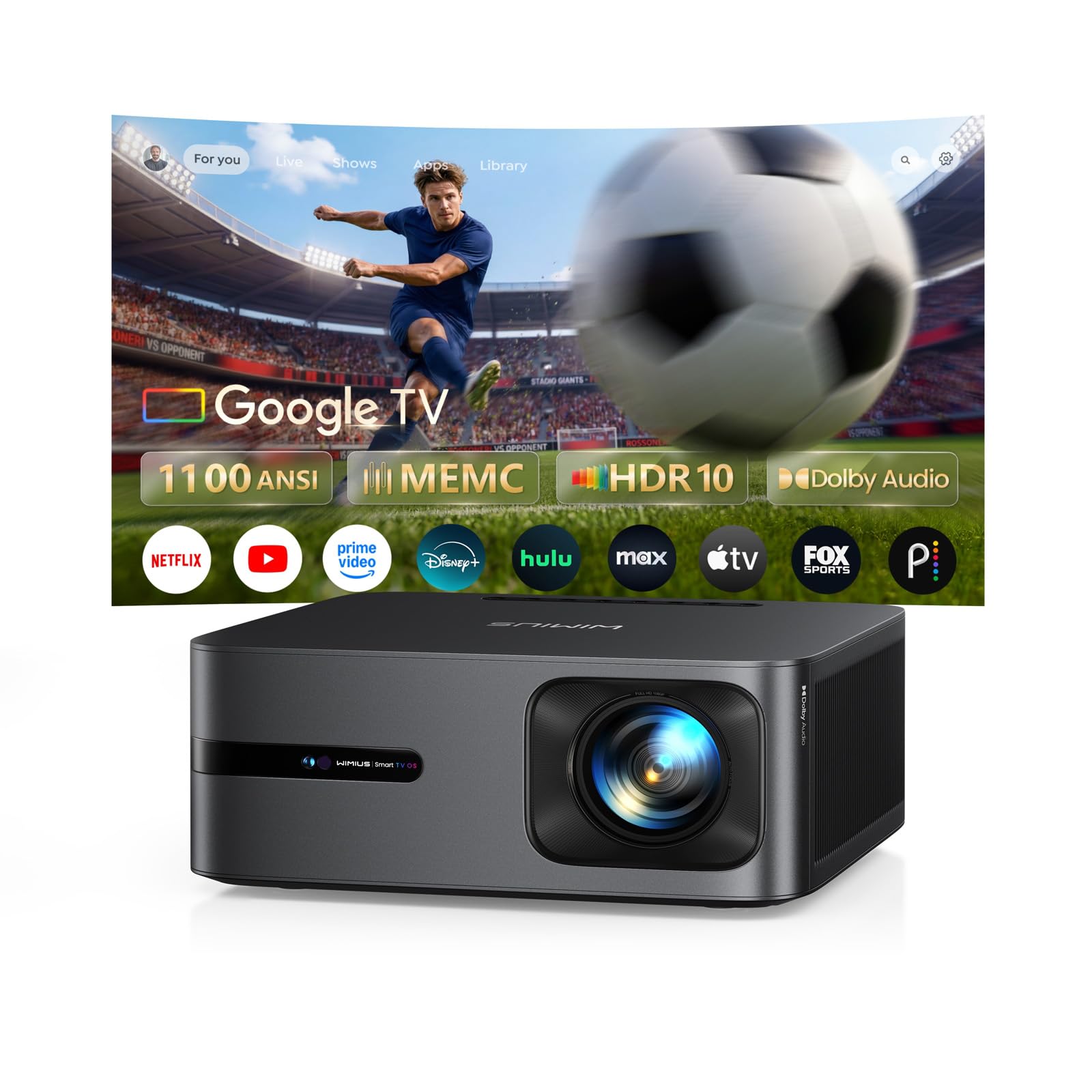
The WiMiUS G2 strikes the most balanced compromise between brightness, smart features, and price. Its real 1100 ANSI lumens mean it handles a living room with curtains drawn significantly better than budget projectors, and the native 1080p resolution with 4K decoding produces a sharp 120-inch image. The integrated Google TV 14.0 system with a MT9660 processor and 2GB of RAM is genuinely responsive, eliminating the need for an external streaming stick.
MEMC motion smoothing is a real differentiator here — it noticeably reduces judder during fast-moving sports and action sequences, which is rare at this price tier. The 30W Dolby Audio speakers are loud enough for a mid-sized room, though purists will still want to use the HDMI ARC port to connect a soundbar. The automatic obstacle avoidance and screen alignment work reliably, getting you a perfectly squared image within seconds of powering on.
The one-click dust removal feature is a thoughtful long-term maintenance addition, and the 3-year warranty provides genuine peace of mind. For the vast majority of buyers looking to replace a TV with a projector, the WiMiUS G2 is the most complete package available right now.
Why it’s great
- True 1100 ANSI lumens for usable daytime viewing
- Responsive Google TV OS with 32GB storage
- MEMC motion smoothing for sports and action
- One-click dust removal and 3-year warranty
Good to know
- Auto keystone can be hit-or-miss in extreme off-axis positions
- Built-in speakers lack deep bass for a true theater experience
2. HAPPRUN 2000 ANSI Google TV Projector
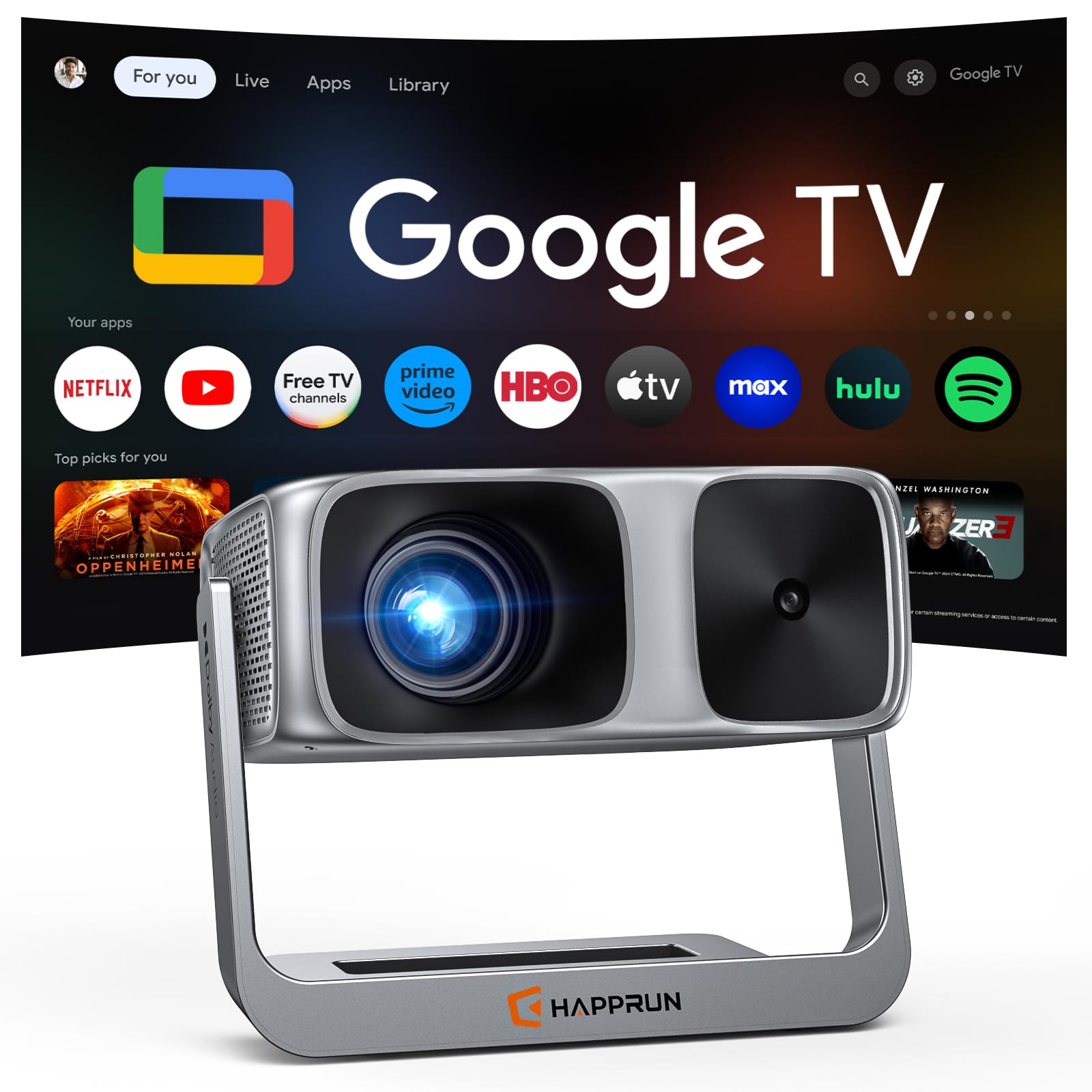
At 2000 ANSI lumens, the HAPPRUN is genuinely bright enough to maintain a watchable image with soft ambient light — a rare feat at its price point. The 4K decoding resolution delivers a crisp 1080p native image, and the 20,000:1 contrast ratio provides decent depth for dark scenes. The integrated 270° stand is a clever design choice: it eliminates the need for a separate tripod and lets you project onto ceilings or walls with minimal effort.
The built-in Google TV ecosystem is fully licensed, giving you direct access to Netflix, Prime Video, YouTube, and Hulu without any extra dongles. Wi-Fi 6 ensures smooth streaming even in congested network environments, and Bluetooth 5.2 allows you to connect external speakers or headphones with reliable, low-latency performance.
The dual 10W speakers with Dolby Audio are serviceable for casual viewing but lack the dynamic range needed for serious movie immersion. Auto focus and 6D auto-keystone work within three seconds of startup, making this one of the easiest projectors to set up for a first-time buyer.
Why it’s great
- Exceptional 2000 ANSI brightness for the price
- Built-in 270° stand for flexible placement
- Full Google TV with Netflix license included
- Wi-Fi 6 and Bluetooth 5.2 connectivity
Good to know
- Built-in speakers are adequate but not cinematic
- Native resolution is 1080p, not true 4K
3. HAPPRUN 2000 ANSI 4K Decoding Projector

This HAPPRUN variant shares the same 2000 ANSI lumen brightness as its Google TV sibling but emphasizes maximum screen size, supporting up to a 300-inch display. The AI-powered smart screen adjustment suite — auto focus, 6D auto-keystone, auto obstacle avoidance, and auto screen alignment — is comprehensive. It handles the complexities of outdoor placement well, automatically squaring the image even on uneven surfaces or walls with obstacles.
The bidirectional Bluetooth 5.2 is a useful feature: you can connect external speakers for movies or use the projector itself as a Bluetooth speaker for music from your phone. The dual HDMI inputs offer flexibility for connecting both a streaming stick and a gaming console simultaneously.
Keep in mind that the massive 300-inch claim requires very dark conditions and a quality screen to look good — at that size, even 2000 ANSI lumens will struggle in anything but a pitch-black environment. The autofocus can also fail if the projector is tilted beyond 15 degrees, so level placement is important for reliable setup.
Why it’s great
- Massive 300-inch projection capability
- AI-driven auto adjustments for hassle-free setup
- Bidirectional Bluetooth for speaker or source use
- Dual HDMI inputs for multiple devices
Good to know
- Autofocus requires level placement within 15°
- Native resolution is 1080p, not true 4K
4. TCL A1s Smart Projector
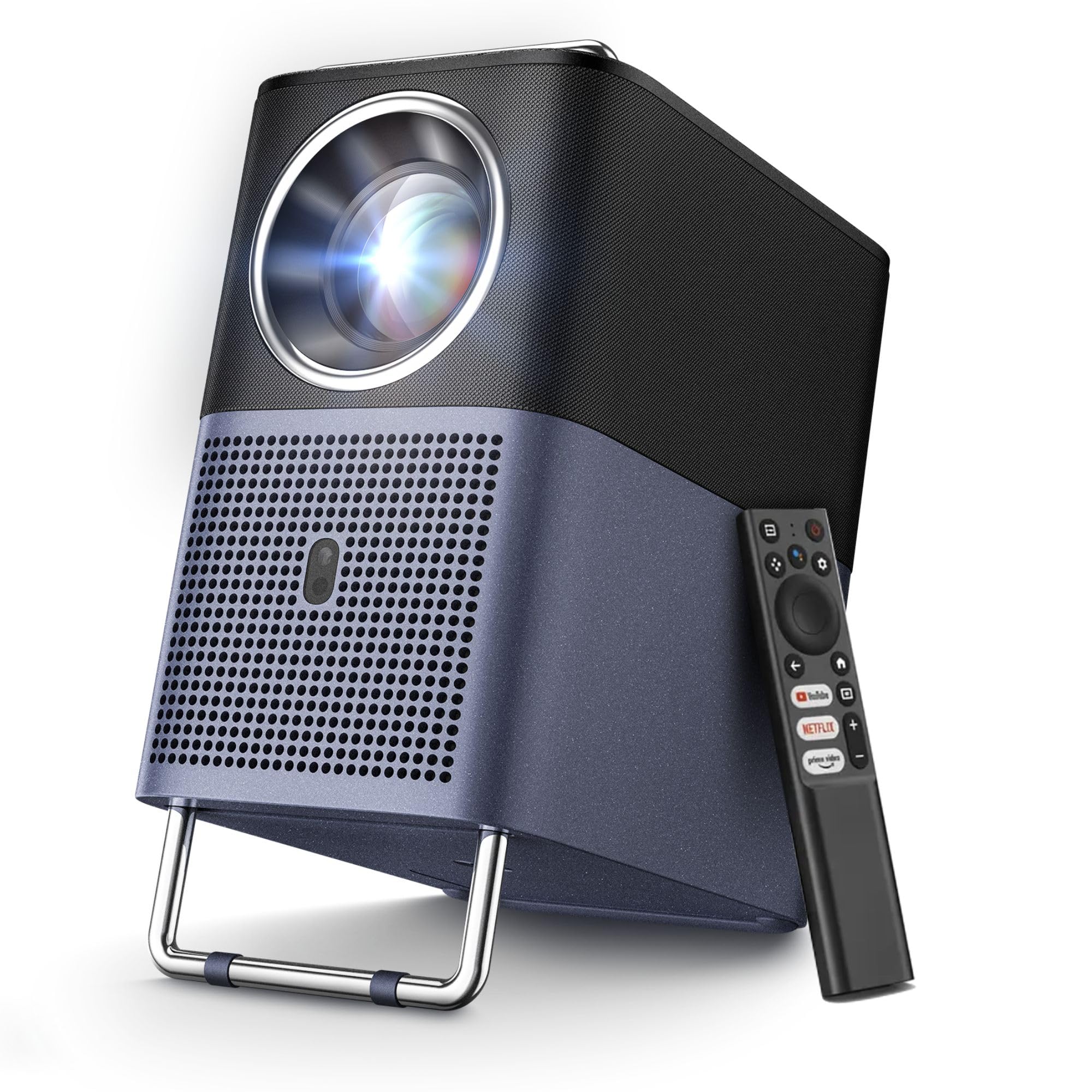
TCL brings its TV engineering pedigree to the projector space with the A1s, which prioritizes build quality and long-term reliability over raw brightness. The fully sealed optical engine prevents dust and humidity from degrading the image over time, a common issue with cheaper projectors. At 600 ISO lumens, it is a dedicated dark-room performer, but the image quality — with native 1080p, HDR10 support, and 4 professional visual modes — is exceptionally color-accurate and well-calibrated out of the box.
The 16W Dolby Audio system with dual 8W speakers delivers sound that is genuinely impressive for the size, with fan noise kept below 30 dB. The adjustable carrying handle doubles as a 15-degree tilt stand, adding to the portability. Bluetooth 5.1 is bidirectional, and the projector includes a standard 1/4-inch mount for tripod or ceiling installation.
The 30,000-hour lamp life means this projector could last over a decade with typical use. However, the 600 lumen brightness means it cannot compete with the HAPPRUN or WiMiUS models in any room with ambient light — this is strictly a dark-room or night-time device.
Why it’s great
- Fully sealed optical engine prevents dust damage
- Exceptionally quiet fan noise below 30 dB
- Color-accurate image with HDR10 support
- Portable design with carrying handle stand
Good to know
- 600 ISO lumens requires a completely dark room
- HDMI 1.4 limits 4K 60Hz input
5. TOPTRO A2 VIDAA 4K Projector
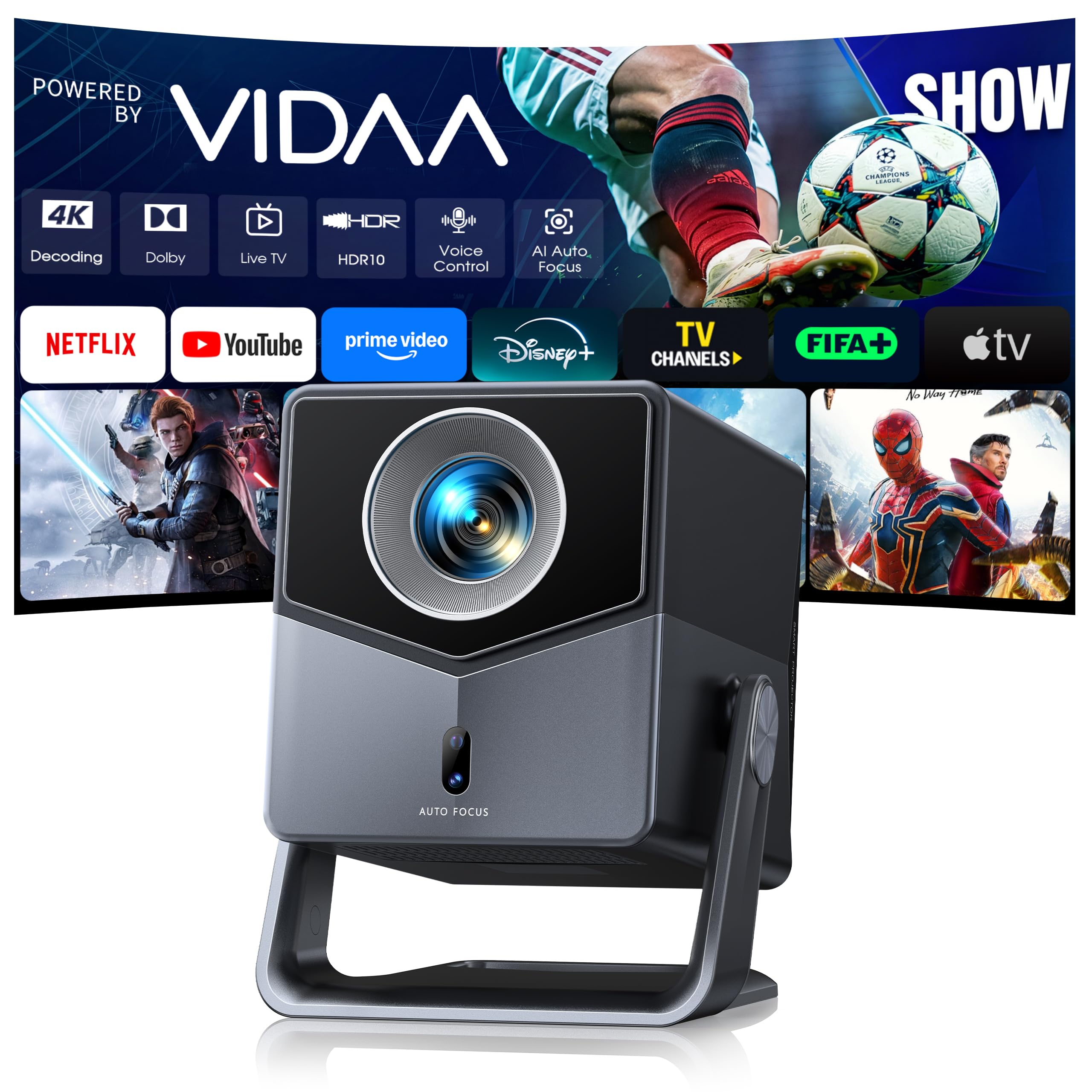
The TOPTRO A2’s 1.0:1 short throw ratio is its defining feature — it can project a 100-inch screen from just 2.2 meters away, making it ideal for bedrooms and apartments where space is tight. The VIDAA Smart OS is a mature, ad-light platform built on years of smart TV development, offering a snappier feel than many Android-based projectors in its class. With 1,000+ built-in live TV channels and support for Netflix, YouTube, Prime Video, and Hulu via the built-in apps, it covers all the essentials without needing an external streaming stick.
The 36W Dolby Audio system with dual exposed 18W speakers is genuinely room-filling, handling movies and music with authority. The 200° rotatable stand is versatile, and the inclusion of official AirPlay 2 support makes casting from iPhones simple and reliable. The real 650 ISO ANSI brightness (which the manufacturer correctly notes is brighter than many projectors falsely claiming 1500 ANSI lumens) delivers a solid image in dark rooms.
At 100% DCI-P3 color gamut, colors are vibrant and natural. The main constraint is the 1080p native resolution with 4K decoding, which is standard at this price point. The auto obstacle avoidance and auto screen alignment work smoothly, though the digital zoom can reduce perceived sharpness.
Why it’s great
- 1.0:1 short throw fits small rooms easily
- 36W Dolby Audio provides robust built-in sound
- VIDAA OS is fast and ad-light
- Official AirPlay 2 and 200° rotatable stand
Good to know
- Native 1080p resolution, not true 4K
- Brightness is adequate but not daylight-ready
6. Samsung The Freestyle 2nd Gen

The Samsung Freestyle 2nd Gen is less about raw specs and more about a lifestyle experience. At only 230 lumens, it is strictly a dark-room or night-time device, but its DLP engine delivers a sharp, colorful 1080p image on surfaces up to 100 inches. The 180° cradle stand and auto leveling, auto focus, and auto keystone make it the most effortlessly portable projector in this list — you can set it up on a nightstand, coffee table, or even outdoors with a portable USB-C battery.
The built-in Samsung Gaming Hub is a genuine bonus, allowing you to stream games from Xbox Cloud Gaming and other services without a console. The 360° sound is surprisingly wide for such a small unit, though it lacks bass and volume for anything beyond a bedroom or small living room. The Smart Calibration feature works with your phone to optimize color and exposure in under 12 minutes.
There are significant trade-offs. The brightness limitation means it is utterly unsuitable for any room with ambient light. The price is also high for the specs; you are paying a premium for the Samsung branding, the compact design, and the ease of use. Multiple user reviews also report units bricking after several months, so a warranty extension is strongly advised.
Why it’s great
- Ultra-portable with 180° cradle and USB-C power
- Auto-everything setup is genuinely effortless
- Samsung Gaming Hub for cloud gaming
- 360° sound is impressive for the size
Good to know
- Very low 230 lumens, dark room only
- Reports of long-term reliability issues
7. BenQ TH671ST Short Throw Gaming Projector

The BenQ TH671ST is a proven workhorse that focuses on two things: low input lag and a short throw ratio. With a measured input lag around 16ms in gaming mode, it is one of the fastest projectors for console gaming, and the 3000 ANSI lumens deliver a bright, punchy image that holds up well even with some ambient light. The short throw means you can get a 100-inch image from just 5 feet away, making it ideal for smaller gaming rooms or golf simulators.
The DLP engine produces a native 1080p image with 92% Rec. 709 color accuracy, which may not cover the wider gamuts of modern HDR content but provides excellent color accuracy for SDR gaming. The auto vertical keystone helps with quick setup, though there is no horizontal keystone or lens shift, so placement needs to be fairly centered.
Built-in speakers are present but underwhelming — you will absolutely want an external audio system for any serious gaming or movie watching. The lack of integrated smart features means you need an external streaming device. This is a pure display machine for someone who prioritizes gaming performance above all else.
Why it’s great
- Extremely low 16ms input lag for competitive gaming
- 3000 ANSI lumens for bright, bold images
- Short throw (100″ from 5 feet)
- Proven long-term reliability
Good to know
- No smart OS; requires external streaming device
- Built-in speakers are weak and tinny
8. NEBULA Cosmos 4K SE

The NEBULA Cosmos 4K SE is a significant step up because it delivers true 4K UHD resolution with Dolby Vision support, not just 4K decoding. The HybridBeam technology combines LED and laser light sources to achieve 1,800 ANSI lumens with 1.07 billion colors, producing a genuinely impressive image that competes with much more expensive projectors. The NebulaMaster image engine further enhances contrast and grayscale for a refined picture.
Google TV with native 4K Netflix support means you get full 4K HDR streaming from the built-in apps without needing any external device. The IEA 4.0 intelligent setup system handles auto focus, keystone, obstacle avoidance, and wall color adaptation in real time, making installation as simple as any lifestyle projector on the market.
The built-in speakers from Anker are notably better than most projector audio, with clear vocals and decent bass for a single-unit solution. However, the single HDMI port is a limitation for setups with multiple sources. The contrast ratio of 400:1 is also low compared to true laser projectors or OLED TVs, meaning black levels are merely adequate rather than impressive.
Why it’s great
- True 4K UHD resolution with Dolby Vision
- HybridBeam LED+laser for 1800 ANSI lumens
- Google TV with native 4K Netflix
- Excellent Anker-branded built-in speakers
Good to know
- Only one HDMI port limits connectivity
- Contrast ratio is average at 400:1
9. JMGO N1S Ultimate Triple Laser 4K Projector

The JMGO N1S Ultimate represents a genuine breakthrough in portable home projection. Its 3300 ISO lumens, driven by a pure triple RGB laser engine, produce images that are usable even with significant ambient light — something very few projectors can claim. The color performance is extraordinary: 110% Rec. 2020 color gamut coverage with a ΔE of less than 1, meaning colors are accurate enough for professional reference work. The 1600:1 native contrast ratio, combined with the laser’s ability to turn off completely, delivers black levels that approach entry-level OLED quality.
The 360° horizontal and 135° vertical rotation gimbal is transformative for placement flexibility; you can project onto the ceiling from a nightstand or angle the image onto a wall without moving the base. The FlexiSmart 2.0 system with 3D-TOF sensor provides real-time auto focus and keystone correction that adapts to wall color and ambient lighting automatically.
The 20W subwoofer with Dolby Digital Plus and DTS-HD Master Audio support provides built-in sound that is genuinely good enough for most viewers, though dedicated audio will extract the full potential. The certified Netflix on Google TV 3.0 is seamless. The main barrier is the price, but for those who can afford it, the N1S Ultimate is the closest a projector has come to replacing a TV as a primary display.
Why it’s great
- 3300 ISO lumens with usable daytime brightness
- Triple laser delivers 110% Rec. 2020 color gamut
- 360° gimbal provides unparalleled placement freedom
- Near-black levels from laser off-state
Good to know
- Premium pricing places it above most budgets
- Built-in sound is good but not reference-level
10. XGIMI HORIZON 20 RGB Triple Laser
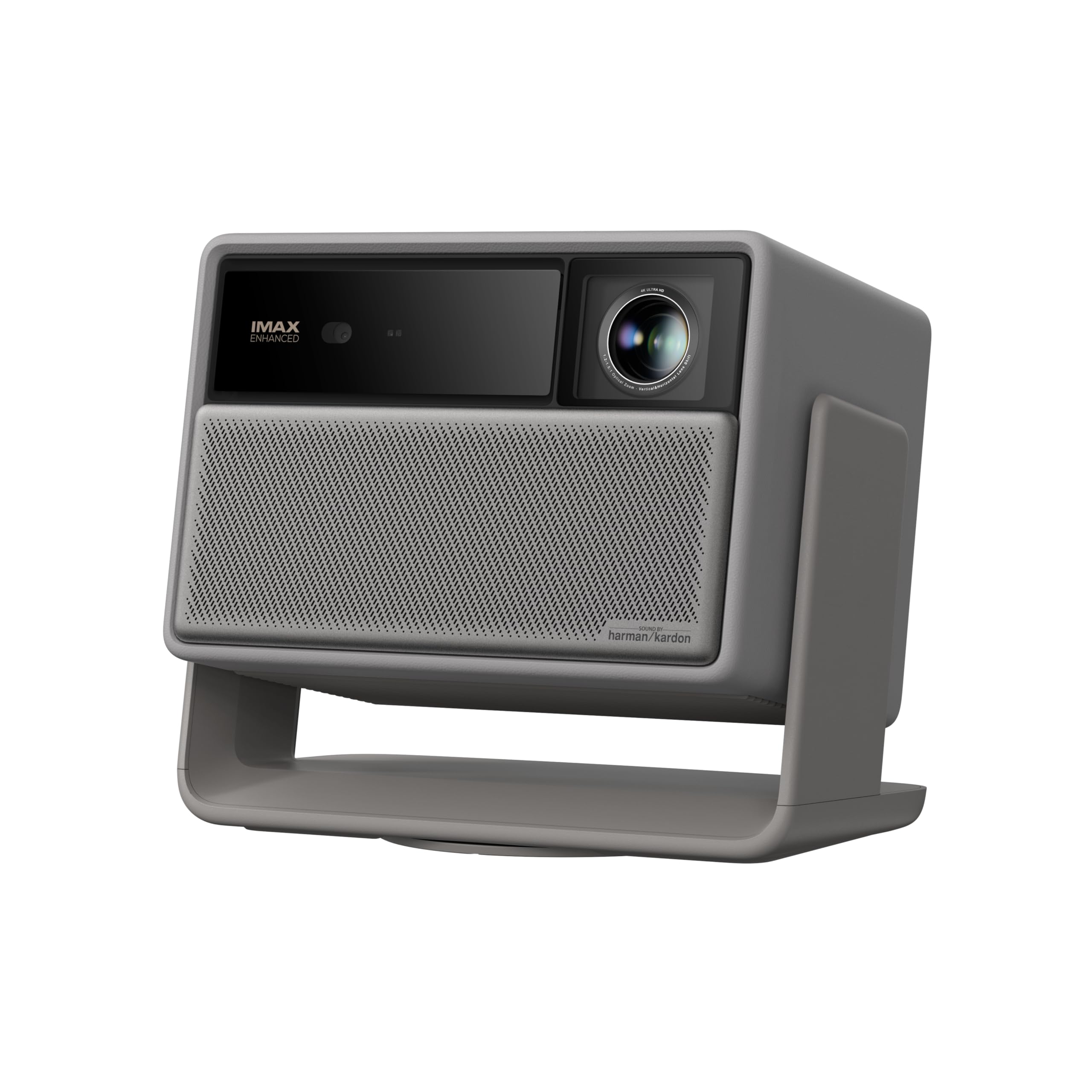
The XGIMI HORIZON 20 is the first projector in this list that can genuinely challenge a premium TV across multiple metrics. Its 3200 ISO lumens of RGB triple laser brightness, combined with a 100,000:1 contrast ratio, produces an image with depth, punch, and color volume that rivals high-end televisions. The inclusion of IMAX Enhanced and Dolby Vision certification means it reproduces HDR content faithfully, with 10-bit color processing that eliminates banding in gradient-rich scenes.
The optical lens shift and lossless optical zoom are standout features for serious home theater installations. They allow precise image placement without any digital degredation, which is rare even at this price point. For gamers, the 240Hz refresh rate at 1080p with a 1ms response time and VRR/ALLM support makes it the most gaming-capable projector on the market, easily competing with fast TVs.
The Harman Kardon speakers are the best built-in audio of any projector in this list, offering clear mids and respectable bass. The integrated Google TV is responsive. The only real criticism is the price, but for someone building a dedicated theater or high-end living room setup, the HORIZON 20 delivers performance that makes the “projector vs TV” debate genuinely close.
Why it’s great
- 3200 ISO lumens with 100,000:1 contrast ratio
- IMAX Enhanced and Dolby Vision certified
- 240Hz gaming mode with 1ms input lag
- Optical lens shift for lossless image positioning
Good to know
- Premium price limits accessibility
- Auto-keystone can struggle initially, manual is better
11. Epson Home Cinema 3800 4K PRO-UHD

The Epson Home Cinema 3800 uses a completely different technology — 3LCD — which gives it a distinct advantage over DLP projectors: no rainbow effect. For viewers sensitive to the color flashes DLP projectors can produce, the 3LCD system delivers pure, artifact-free color at full brightness. The 3000 lumens of equal color and white brightness ensures vivid, saturated images even with some ambient light, and the 100,000:1 dynamic contrast ratio produces rich black levels for an LCD projector.
The pixel-shifting 4K PRO-UHD technology precisely controls three high-definition LCD chips to produce 4K-like sharpness. While it is not native 4K like the NEBULA or XGIMI, the upscaling is excellent, and the 18 Gbps HDMI 2.0 ports support full 4K HDR at 60Hz. The precision glass lens with lens shift provides excellent edge-to-edge focus uniformity, crucial for large screens.
The built-in 10W stereo speakers are adequate for casual use, and the apt Bluetooth allows easy wireless connection to a soundbar. At 5+ years on the market, it is a mature, reliable design with a proven track record. The main trade-off is the size: this is a large, traditional projector form factor, not a sleek lifestyle device. But for color-critical viewing in a dedicated theater, the 3LCD engine remains a compelling choice.
Why it’s great
- 3LCD technology eliminates DLP rainbow effect
- 3000 lumens color brightness for vivid HDR
- Precision glass lens with lens shift
- Proven long-term reliability over 5+ years
Good to know
- Pixel-shifted 4K, not native 4K resolution
- Large, traditional form factor, not ultra-portable
FAQ
Can a projector replace a TV for everyday living room use?
Do I need a special screen for a projector or can I use a wall?
Is the rainbow effect still a problem with modern DLP projectors?
How long do projector bulbs and laser engines last?
Final Thoughts: The Verdict
For most users, the answer to are projectors better than tvs is: it depends entirely on your room and your viewing habits. The winner for the majority is the WiMiUS G2 because it combines real 1100 ANSI brightness with a fully integrated Google TV experience and MEMC motion smoothing, making it the most versatile TV replacement in a controlled-light room. If you want the ultimate sports and gaming experience with near-zero input lag, grab the BenQ TH671ST. And for the buyer who wants a projector that genuinely competes with premium TVs in all conditions, nothing beats the XGIMI HORIZON 20 with its bright RGB triple laser and Dolby Vision certification.