
Staring at a protein shake label, you might wonder if it can truly replace a meal. The difference between a quick protein boost and a nutritionally complete meal replacement comes down to specific ratios of protein, fiber, fats, and a full spectrum of vitamins and minerals. This guide cuts through the marketing to help you identify the shakes that actually deliver complete nutrition—and those that are better suited as a supplement.
I’m Min — the co-founder and writer behind Gadgets Feed. I spent dozens of hours analyzing nutritional panels, ingredient sourcing, and real-world reviews to determine which shakes truly function as meal replacements versus simple protein supplements.
This guide answers the question of are protein shakes meal replacements by examining seven leading options across organic, plant-based, premium, and budget-friendly categories.
How To Choose The Best Meal Replacement Shake
Not every shake labeled as “meal replacement” meets the nutritional standard your body needs to sustain energy for 4-5 hours. You must inspect the full macro and micro profile, not just the protein gram count.
Calories and Protein Density
A legitimate meal replacement should deliver at least 250-400 calories and 20-30 grams of protein per serving. Shakes below this calorie threshold function as snacks or supplements—you will feel hungry within two hours. Check the protein-to-calorie ratio: a 160-calorie shake with 30 grams of protein is excellent for post-workout recovery but insufficient as a meal because the body burns through pure protein too quickly without balanced carbs and fats.
Fiber and Fat for Satiety
Meals keep you full because they contain fiber and dietary fat that slow digestion. The best meal replacement shakes provide at least 5-7 grams of fiber and 5-10 grams of healthy fat per serving. Shakes advertising zero fiber or fat are optimized for quick absorption—the opposite of what a meal replacement should deliver. Look for prebiotic fiber blends, plant-based oils, or nut-based fat sources.
Vitamin and Mineral Completeness
A true meal replacement should cover at least 20-25% of your daily value for key micronutrients including calcium, iron, vitamin D, B12, zinc, and magnesium. The presence of 27 vitamins and minerals, as seen in products like Kate Farms, signals genuine meal-level engineering. If the label lists only protein, sugar, and a few B-vitamins, it is a supplement, not a replacement.
Quick Comparison
On smaller screens, swipe sideways to see the full table.
| Model | Category | Best For | Key Spec | Amazon |
|---|---|---|---|---|
| Premier Protein Shake | Ready-to-Drink | High protein, low sugar breakfast | 30g protein / 160 cal | Amazon |
| Quest Nutrition Shake | Ultra-High Protein | Muscle maintenance and satiety | 45g protein / 2g sugar | Amazon |
| Soylent Complete Protein | Vegan Complete | Plant-based meal replacement | 30g soy protein / 250 cal | Amazon |
| OWYN High Protein | Allergen-Free | Sensitive stomachs and top-9 allergen free | 26g protein / 3g fiber | Amazon |
| Kate Farms Organic | Medical-Grade Organic | Complete sole-source nutrition | 16g protein / 27 vitamins | Amazon |
| Orgain Organic Powder | Plant Powder | Customizable shakes and smoothies | 21g protein / 6g fiber | Amazon |
| Premier Protein Powder + Fiber | Whey Powder + Fiber | Gut health and protein synergy | 25g protein / 7g fiber | Amazon |
In‑Depth Reviews
1. Premier Protein Shake, Chocolate

Premier Protein Chocolate delivers 30 grams of protein and 160 calories with only 1 gram of sugar and 5 grams of carbs, making it one of the most efficient protein-to-calorie ratios in the ready-to-drink segment. The whey protein base provides a complete amino acid profile, and the addition of 24 essential vitamins and minerals pushes it towards meal-replacement territory despite the relatively modest 160-calorie total.
Users consistently report that the chocolate flavor approaches the taste of actual chocolate milk without the chalky or metallic aftertaste common in competing shakes. The texture is smooth when shaken vigorously, though a few reviewers noted a stringy or sandy residue at the bottom if not shaken thoroughly enough. The gluten-free formulation and zero added sugar make it suitable for keto and low-carb dietary patterns.
Where Premier Protein falls short of a full meal replacement is the absence of dietary fiber—zero grams per serving. You will need to pair it with a fiber source to achieve the satiety and digestive regularity that a real meal provides. It functions best as a high-protein breakfast or post-workout anchor rather than a standalone lunch or dinner replacement.
Why it’s great
- Excellent 30g protein per 160 calorie profile
- 24 vitamins and minerals with no added sugar
- Ready-to-drink convenience and great chocolate taste
Good to know
- Zero fiber requires pairing with other foods for full meal status
- Requires vigorous shaking to avoid sediment
2. Quest Nutrition Chocolate Protein Shake

Quest Chocolate delivers a staggering 45 grams of protein per 14-ounce bottle with only 2 grams of sugar and 4 grams of net carbs, making it the undisputed protein-density champion in this lineup. The ultrafiltered nonfat milk base provides a high-bioavailability protein source that supports muscle synthesis and long-lasting satiety far beyond what lower-protein shakes can achieve.
Reviewers describe the taste as remarkably close to a milkshake, with the thick consistency masking the typical protein powder aftertaste. The sucralose-based sweetness is well-hidden, though purists may detect a faint artificial note. Best served cold and shaken before drinking, the texture becomes creamy rather than chalky—a common complaint with ultra-high-protein formulations.
The trade-off for 45 grams of protein is a relatively low calorie count and minimal fiber or fat. As a meal replacement, it is incomplete without additional calorie-dense add-ins. Its primary strength is for individuals prioritizing protein intake above all else—post-surgery recovery, intense training periods, or high-protein dietary protocols—rather than balanced meal substitution.
Why it’s great
- Industry-leading 45g protein per serving
- Excellent taste profile resembling a milkshake
- Ultra-low sugar and net carb count
Good to know
- Requires extra calories and fiber to function as a full meal
- Thick consistency may be off-putting for some users
3. Soylent Complete Protein Shake, Vanilla

Soylent Complete Protein provides 30 grams of soy-based protein with 250 calories, 28 vitamins and minerals, and 1000 mg of omega-3 and omega-6 fatty acids per 11-ounce bottle. The soy protein isolate delivers all nine essential amino acids and 5 grams of BCAAs, supporting muscle maintenance and recovery while the healthy fats and fiber (small amounts) contribute to a more meal-like satiety profile than the purer protein shakes in this comparison.
The vanilla flavor has a thick, creamy body that reviewers describe as more satisfying than many competing plant-based shakes. Users switching from dairy-based protein shakes note that the soy base has a distinct, slightly beany character that takes some getting used to. The formula is gluten-free, dairy-free, nut-free, and kosher, making it one of the most inclusive options for dietary restrictions.
Soylent is a strong candidate for a true meal replacement if you are comfortable with soy as your primary protein source. Some reviewers confused this product with the original Soylent Meal Shake, noting that the Complete Protein version is formulated for higher protein needs and has a thicker, less palatable consistency when consumed plain. Blending with fruit juice or plant milk dramatically improves the flavor profile.
Why it’s great
- Complete vitamin and mineral profile with omega fats
- High-quality soy protein with all BCAAs
- Free from top-9 allergens and dairy
Good to know
- Distinct soy taste may require flavor customization
- Thicker consistency not universally preferred
4. OWYN Only What You Need High Protein Shake, Chocolate
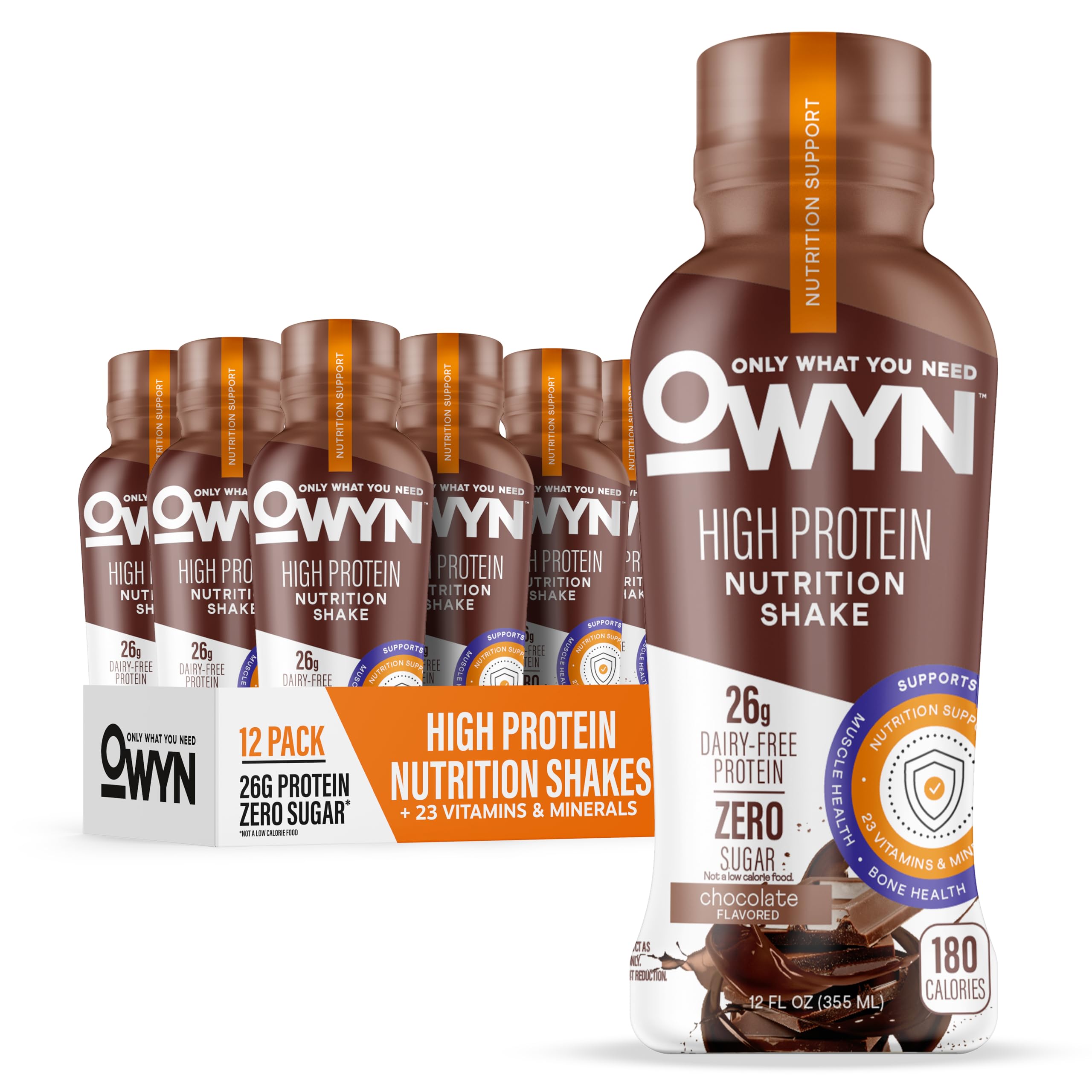
OWYN delivers 26 grams of pea and pumpkin seed protein with 180 calories, 3 grams of fiber, and 23 vitamins and minerals meeting 20% of your daily value requirements. The shake is free from the top nine allergens including soy, dairy, nuts, and gluten, making it the safest choice for individuals with severe food allergies or autoimmune conditions requiring elimination diets.
Reviewers praise the chocolate flavor for avoiding the chalky texture that plagues many plant-based shakes, though the vanilla variant drew consistent complaints about sediment and a marshmallow-like sweetness. The 18-month shelf life eliminates the need for refrigeration, giving it a practical edge for travel, emergency kits, or pantry stocking. The 5 grams of organic cane sugar per serving is modest compared to competitor shakes that rely on sugar alcohols or stevia.
At 180 calories per bottle, OWYN functions as a substantial snack or a lightweight meal rather than a full replacement. The fiber content is higher than most ready-to-drink protein shakes, which improves satiety and digestive health, but the overall calorie density is too low to replace a standard 400-600 calorie lunch. Users with high caloric needs should pair it with whole foods.
Why it’s great
- 100% free from top-9 allergens and artificial ingredients
- Clean plant-based protein with good fiber content
- Long 18-month shelf life without refrigeration
Good to know
- 180 calories insufficient for a full meal replacement
- Vanilla flavor has texture issues with sediment
5. Kate Farms Organic Nutrition Shake, Chocolate
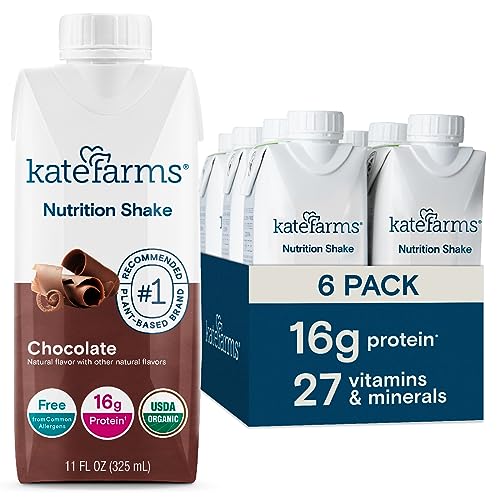
Kate Farms Nutrition Shake is a certified USDA Organic, Non-GMO, Kosher, and gluten-free plant-based shake delivering 16 grams of organic pea protein alongside phytonutrient extracts from broccoli, kale, berries, and turmeric. The 27 essential vitamins and minerals per serving, combined with the complete absence of artificial flavors or sweeteners, make it the most authentically “whole food” option in this comparison.
Reviewers repeatedly mention that the chocolate flavor tastes remarkably clean and non-medicinal compared to hospital-grade meal replacements. Multiple verified purchases highlight the shake’s role in helping patients with “failure to thrive” regain healthy weight under medical supervision. The clean ingredient panel is especially relevant for individuals with compromised digestive systems or those undergoing chemotherapy.
The protein content—16 grams per serving—is significantly lower than the 30-45 gram competitors, which limits its utility for muscle building or post-workout recovery. The 11-ounce serving size also provides fewer total calories than many users need for a complete meal. Kate Farms is best understood as an organic, high-quality nutritional foundation that may need supplementation for athletes or individuals with elevated protein requirements.
Why it’s great
- Certified organic with clean, whole-food ingredients
- Comprehensive 27-vitamin and mineral profile
- Clinically proven for medical nutrition therapy
Good to know
- 16g protein per serving is lower than standard protein shakes
- Higher cost per serving compared to non-organic alternatives
6. Orgain Organic Vegan Protein Powder, Creamy Chocolate Fudge
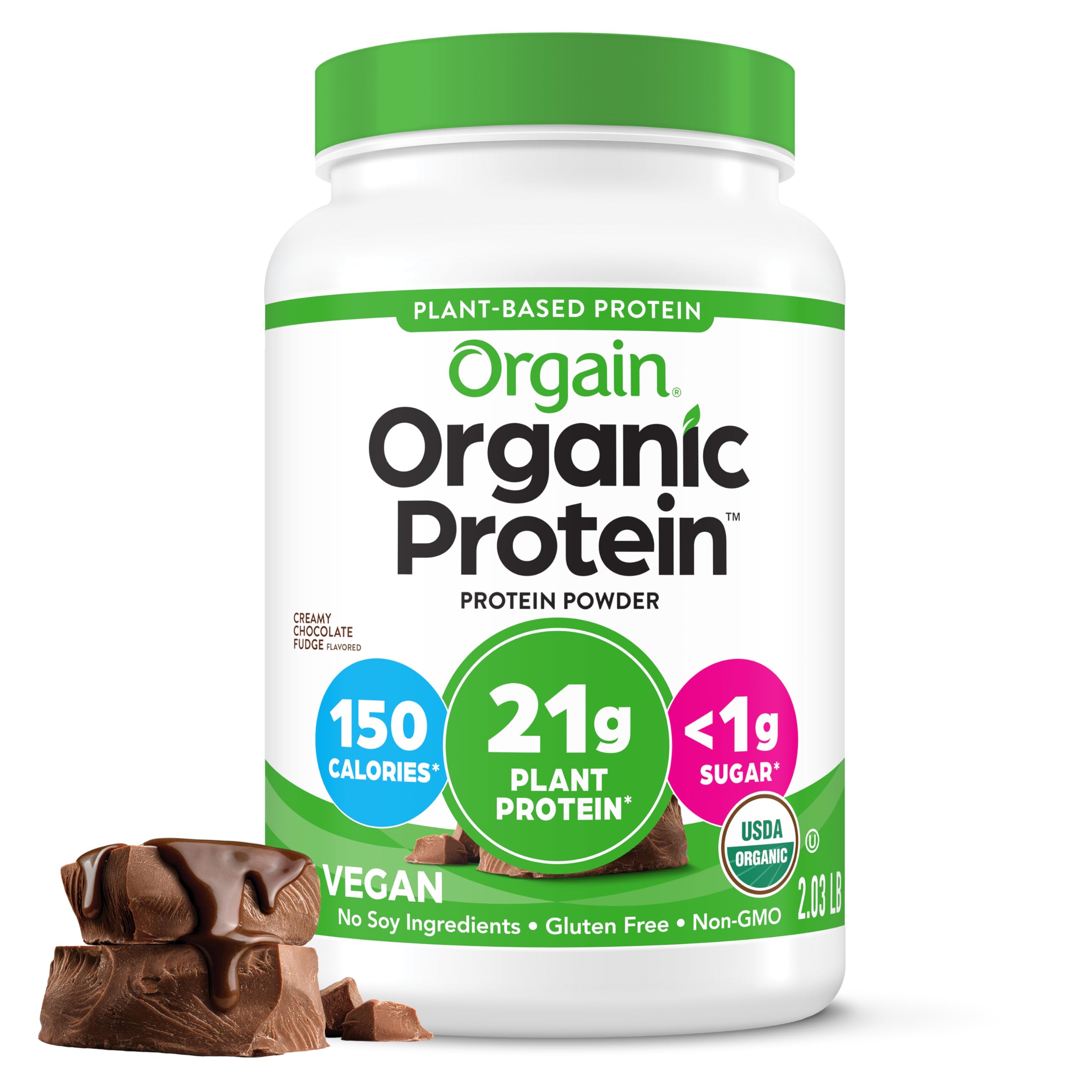
Orgain Organic delivers 21 grams of plant protein from organic peas, brown rice, and chia seeds with 6 grams of prebiotic fiber and 0 grams of added sugar per 2-scoop serving. The organic certification and absence of erythritol, carrageenan, artificial flavors, and preservatives set a high bar for clean ingredient sourcing. The 2.03-pound container provides 20 servings, offering the lowest per-serving cost among the powder options.
Reviewers highlight the smooth blending performance—minimal grit compared to other plant-based powders—and the versatile flavor profile that works well in shakes, smoothies, overnight oats, and baked goods. The Creamy Chocolate Fudge flavor is consistently described as rich rather than artificially sweet. Users with lactose intolerance report zero digestive issues, a significant advantage over whey-based powders.
As a meal replacement, Orgain requires intentional pairing with calorie-dense ingredients. The 150-calorie serving is insufficient on its own, but the powder format allows you to add oat milk, nut butter, banana, or avocado to build a customized 400-500 calorie meal. It excels as a flexible base ingredient for users who prefer to control their macros rather than consuming a fixed ready-to-drink formulation.
Why it’s great
- Certified organic with clean, allergen-friendly ingredients
- 6g prebiotic fiber supports gut health and satiety
- Excellent mixing consistency with versatile use cases
Good to know
- 150 calories per serving requires calorie-dense additions for full meal
- Chalky taste noted by some users despite smooth texture
7. Premier Protein Powder Plus Fiber, Chocolate
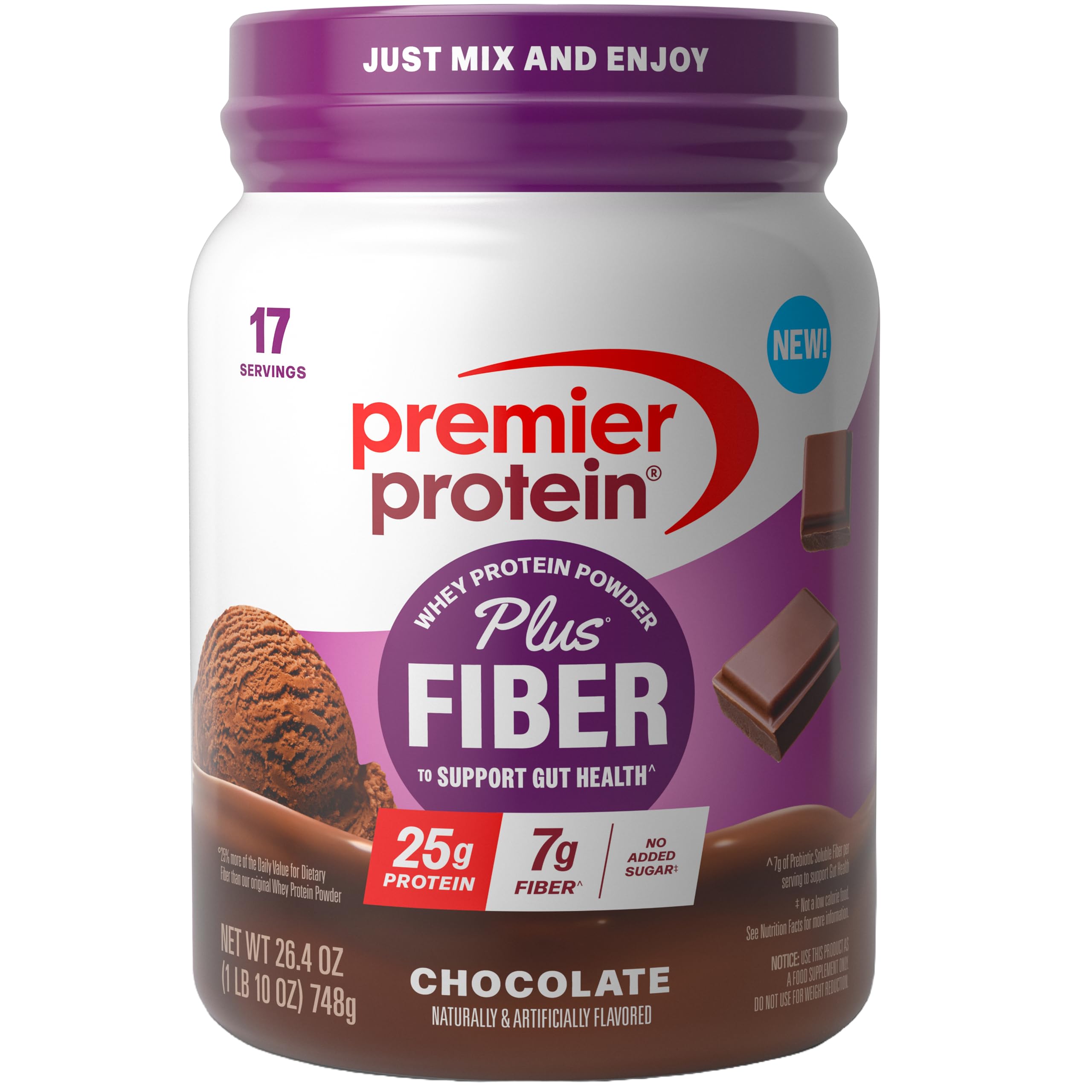
Premier Protein Powder Plus Fiber is a 2-in-1 formulation delivering 25 grams of whey protein and 7 grams of prebiotic fiber per serving, with no added sugar. The three-type prebiotic fiber blend—providing 25% of your daily fiber value—directly addresses the fiber deficiency that makes most protein shakes inadequate as meal replacements. The 1.65-pound container offers a practical middle ground between ready-to-drink convenience and bulk powder value.
Reviewers praise the chocolate flavor as “like a soda fountain drink” when mixed with milk or added to smoothies. The American Masters of Taste Gold Medal award reflects the flavor engineering that masks the earthy notes typical of fiber-supplemented products. Users combining it with cold brew or iced coffee report excellent foam integration without the grittiness associated with psyllium husk-based fiber supplements.
The whey protein base contains lactose, which may cause digestive discomfort for lactose-intolerant users despite the added prebiotic fiber. The 25-gram protein content per serving with the 7-gram fiber boost creates a meal-replacement-adjacent profile that requires only modest additions—such as a tablespoon of nut butter or a handful of berries—to reach full meal status. The powder format gives you control over final calorie density.
Why it’s great
- Combines 25g protein with 7g prebiotic fiber for satiety
- Award-winning taste with no artificial aftertaste
- Versatile for shakes, smoothies, and coffee recipes
Good to know
- Whey-based, unsuitable for vegan or lactose-intolerant users
- Requires additional calorie sources to function as a full meal
FAQ
Can I use a protein shake as a sole replacement for all three meals?
How do I distinguish a meal replacement shake from a protein supplement shake?
Are plant-based protein shakes as effective as whey-based shakes for meal replacement?
Do protein shakes with 45 grams of protein make better meal replacements than 30-gram options?
Final Thoughts: The Verdict
For most users, the are protein shakes meal replacements question comes down to the shake’s nutritional density and fiber content. The overall winner is the Premier Protein Shake because it combines 30 grams of high-quality whey protein with 24 vitamins and minerals at just 160 calories and 1 gram of sugar—striking the best balance between protein efficiency and micronutrient density for a ready-to-drink format. If you prioritize the highest protein content per bottle, grab the Quest Nutrition Shake for its market-leading 45 grams. And for allergen-free, plant-based complete nutrition with certified organic ingredients, nothing beats the Kate Farms Organic Shake.