
For decades, the water heater in a home was a large, cylindrical tank constantly burning energy to keep 40 to 50 gallons hot, even while you slept. The electric tankless water heater flips that model entirely, using high-wattage heating elements to raise water temperature on demand — only when a faucet opens. The core promise is endless hot water, zero standby energy loss, and a box that fits inside a cabinet rather than stealing floor space in a utility closet.
I’m Min — the co-founder and writer behind Gadgets Feed. I’ve spent hundreds of hours researching the electrical demands, flow rate math, and real-world installation requirements of electric tankless heaters to understand exactly what separates a successful install from a frustrating underpowered trickle.
This guide lays out the essential specs, the critical electrical prerequisites, and nine real-world models to help you decide if the switch makes sense for your home. If you have been wondering “are there electric tankless water heaters” that can actually replace a traditional tank, the answer is yes — but the details matter enormously.
How To Choose The Best Electric Tankless Water Heaters
Selecting the right unit starts with your home’s electrical service panel and the number of hot water outlets you expect to run at once. The biggest mistake buyers make is choosing a unit with too low a kilowatt rating for their climate, then wondering why they only get warm water at a trickle.
Kilowatt Rating and Flow Rate
The wattage (measured in kW) determines how much heat the unit can transfer to incoming water per second. A 3.5 kW unit raises water temperature roughly 22°F at 1 GPM, making it suitable for a single sink in a warm climate. An 18 kW to 29 kW unit can support multiple showers, a dishwasher, and a washing machine simultaneously, but it will require two or three dedicated 240V breakers and 8 AWG or 6 AWG copper wire. Match the kW to your groundwater temperature and desired output temperature — colder northern climates need more power.
Voltage: 120V vs 240V
A 120V unit plugs into or wires into a standard 15-20 amp circuit and is strictly a point-of-use appliance for a single sink or RV. A 240V unit delivers 8 kW to 29 kW and is required for whole-house applications. If your home only has 100-amp service, a high-wattage 240V tankless may require a service upgrade to 200 amps, which is a cost that must be factored into the decision.
Self-Modulating Technology
Self-modulating heaters adjust their power draw based on the incoming water temperature and flow rate. This prevents the unit from overheating small flows and reduces the chance of scalding while improving overall efficiency. Units without this feature may produce very hot water at a trickle and barely warm water at full flow.
Quick Comparison
On smaller screens, swipe sideways to see the full table.
| Model | Category | Best For | Key Spec | Amazon |
|---|---|---|---|---|
| Stiebel Eltron Tempra 29 Plus | Premium | Whole-house high-demand | 28.8 kW / 3 GPM | Amazon |
| Ranein 18kW | Mid-Range | Medium households | 18 kW / 4.3 GPM | Amazon |
| ThermoMate 27kW | Premium | High-flow whole-house | 27 kW / 5.27 GPM | Amazon |
| EcoSmart ECO 8 | Mid-Range | Point-of-use or small home | 8 kW / 2 GPM | Amazon |
| SIVUATEK 14kW | Mid-Range | Point-of-use for shower + sink | 14 kW / 2.3 GPM | Amazon |
| ThermoMate 8kW | Mid-Range | Small point-of-use | 8 kW / 1.9 GPM | Amazon |
| Titan N-120 | Mid-Range | Small whole-house | 120V / 54 A max | Amazon |
| Camplux 3.5kW | Budget | Single sink point-of-use | 3.5 kW / 0.66 GPM | Amazon |
| ThermoMate 3.5kW | Budget | Single sink point-of-use | 3.5 kW / 0.66 GPM | Amazon |
In‑Depth Reviews
1. Stiebel Eltron Tempra 29 Plus
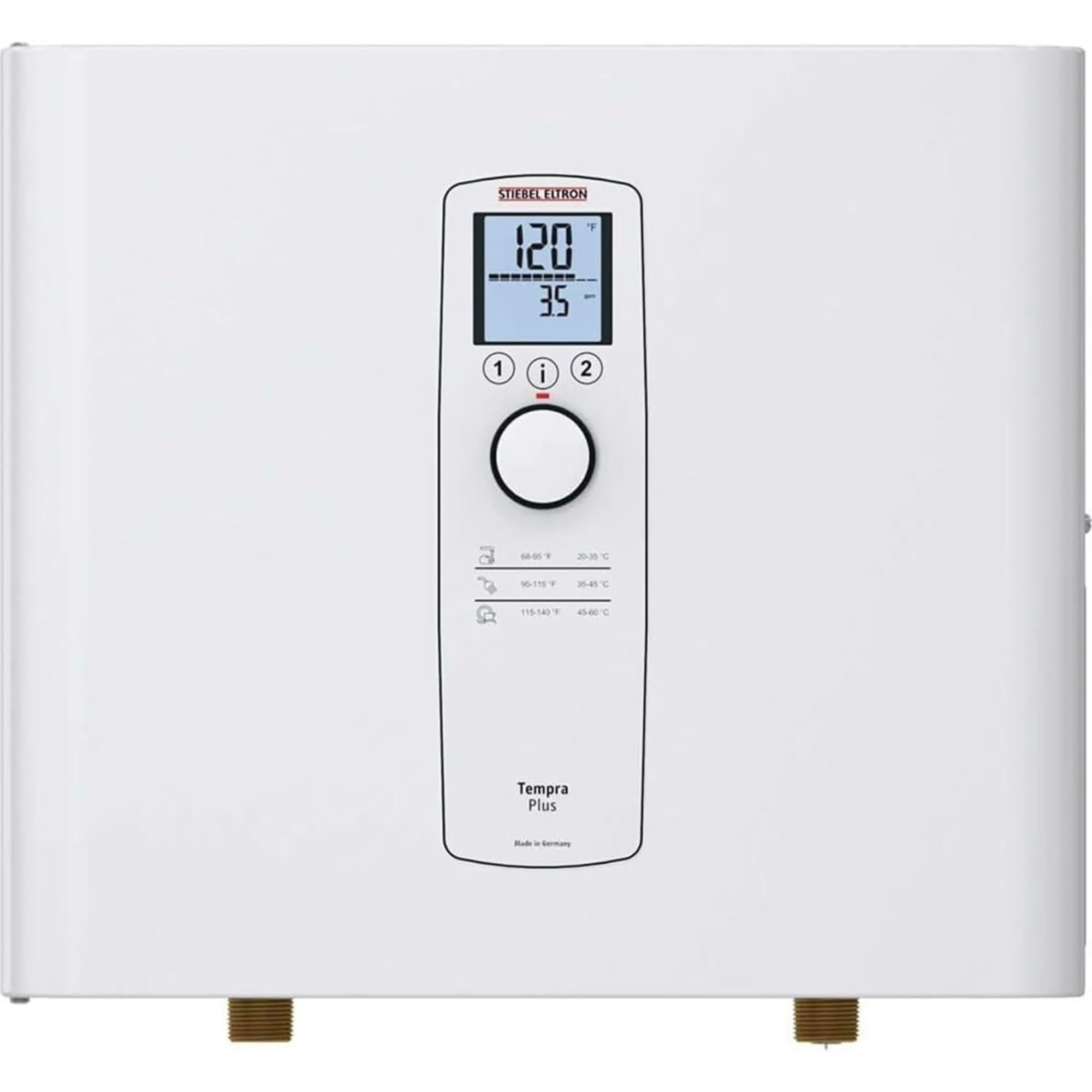
The Tempra 29 Plus delivers 28.8 kW of heating power, making it one of the most capable residential electric tankless units available. Its flow rate of 3 GPM is enough to supply two showers running simultaneously, though some users report a pressure drop when filling a large bathtub at the same time. The unit comes with two temperature memory presets, which owners find useful for switching between shower settings and sink settings without dialing in the temperature each time.
Built in Germany, the Stiebel Eltron uses a copper heating system and a self-modulating design that adjusts power input based on water flow and inlet temperature. The result is minimal temperature fluctuation once the hot water reaches the tap. Users replacing 38- to 50-gallon tanks consistently report energy savings and freed-up closet space, with several noting annual savings of around on electricity.
The installation requirements are substantial: three dedicated 40-amp double-pole breakers, 8 AWG copper wire, and a minimum 200-amp residential service. Professional installation often runs above . Some users also note the mounting holes are spaced 15 inches apart, which does not match standard US stud spacing, so an additional mounting plate may be needed.
Why it’s great
- German build quality with copper heating elements
- Two programmable temperature presets
- Self-modulating for stable output temperature
Good to know
- Requires three 40A breakers and 200A service
- Mounting holes conflict with standard US stud spacing
- Professional installation can exceed
2. Ranein 18kW
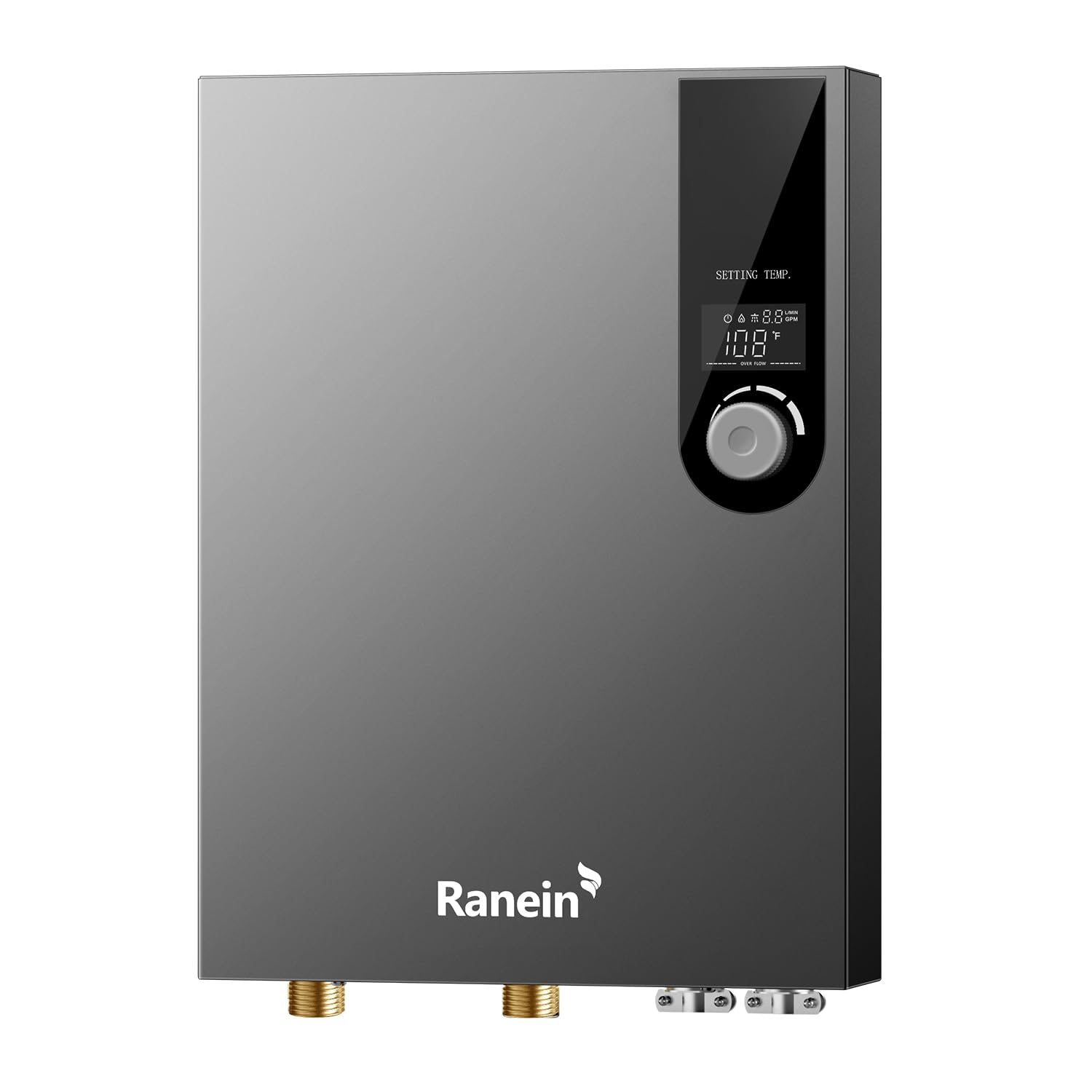
The Ranein 18kW offers a strong balance of power and price for a 2-3 bedroom home. With a maximum flow rate of 4.3 GPM and 99% thermal efficiency, it can handle two simultaneous water outlets — a shower and a kitchen sink — without noticeable temperature drop. The unit uses a control knob with an LED display allowing adjustment from 86°F to 131°F in 1°F increments, a feature that owners appreciate for fine-tuning comfort.
CSA certification and stainless steel heating elements are built into a compact metal housing that measures 13.8 by 18.7 inches. Cold-weather performance reports are mixed; some users in northern states note the unit struggles to hit temperatures above 110°F during winter when groundwater drops below 50°F. This is a limitation of the 18 kW power level that applies to any unit in this wattage range, not just the Ranein.
Electrical requirements are two dedicated 40-amp double-pole breakers with 8 AWG wiring. The inconsistency suggests quality control varies, so checking the manufacturing date before installation is advisable.
Why it’s great
- Strong 4.3 GPM flow rate for its class
- Compact footprint for wall mounting
- 99% thermal efficiency rating
Good to know
- Struggles in cold groundwater climates
- Mixed reliability reports from users
- Customer support reputation is inconsistent
3. ThermoMate 27kW
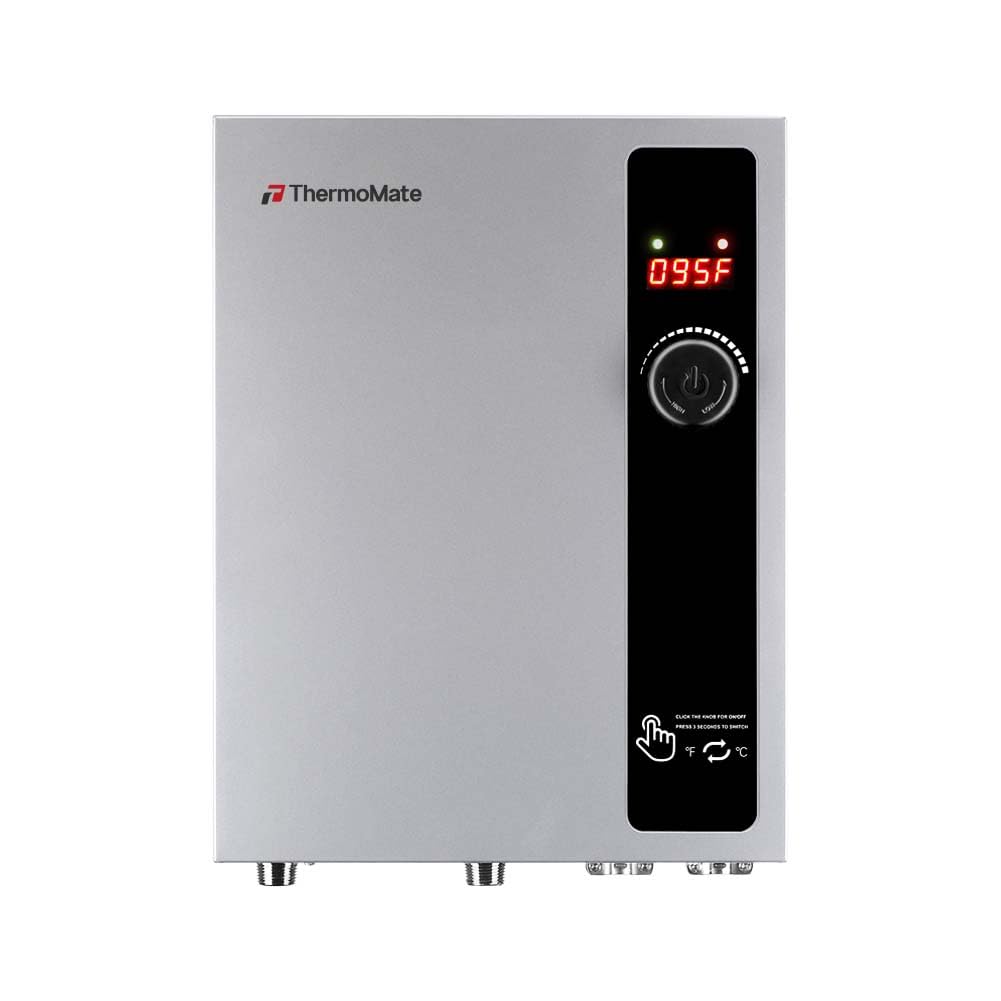
The ThermoMate 27kW is a serious contender for whole-house applications in moderate to warm climates. It delivers up to 5.27 GPM at a 35°F temperature rise, sufficient to run two showers, a dishwasher, and a washing machine concurrently. The self-modulating system adjusts power based on real-time flow and inlet temperature, and users who upgraded from older tank heaters report seeing electricity bills drop by roughly per month.
The unit uses a cast aluminum heating chamber where the element is physically separated from the water line, which the manufacturer claims reduces scale buildup and corrosion. The digital display allows 1°F increments between 80°F and 140°F. Build quality stands out in user feedback, with several owners noting the unit feels dense and well-constructed for its price tier.
The electrical requirement is the most demanding of any unit reviewed: three dedicated 40-amp double-pole breakers with three runs of 8 AWG wire, pulling a maximum of 114 amps. The manufacturer strongly recommends a 200-amp household service for stable operation. Some users report difficulty finding electricians willing to run three separate high-amperage circuits, so pre-installation quotes are essential.
Why it’s great
- High 5.27 GPM flow rate
- Self-modulating with digital controls
- Separated heating element reduces scale
Good to know
- Requires three 40A breakers and 200A service
- Heavy 114A current draw
- Can be difficult to find willing electricians
4. Titan N-120

The Titan N-120 is an enduring entry in the electric tankless category, with users reporting units lasting over a decade of regular use. It runs on 120V with a maximum draw of 54 amps, placing it between a standard point-of-use unit and a full 240V whole-house system. For a small home or cabin with moderate hot water needs, it can provide a reliable supply without requiring a panel upgrade.
The unit features dual heating chambers and claims 99.5% efficiency. Owners report that setting the temperature dial to the medium range (three lights) avoids the need for excessive cold water mixing, and that it works well for a single shower and sink combo. Space savings are significant compared to a 45-gallon tank, and several users mention reduced electric bills due to the elimination of standby heat loss.
Installation requires a 60-amp double-pole breaker and 6-gauge wire, which is a heavier gauge than most other units in this price range. Some reviewers note the instructions are vague and the internal ground screw is hidden under the thermostat. Users with well water report temperature fluctuations due to pressure swings between 40 and 60 psi, and a sediment filter is recommended.
Why it’s great
- Long lifespan — many report 10+ years
- Compact size for small homes
- Dual heating chambers improve efficiency
Good to know
- Vague installation instructions
- Requires 6 AWG wire and 60A breaker
- Well water pressure fluctuations affect temperature
5. SIVUATEK 14kW

The SIVUATEK 14kW is designed as a point-of-use unit but packs enough power to feed a shower plus one sink in a small home or apartment. Its 2.3 GPM flow rate at a 35°F rise is adequate for Southern climates, and users in Florida and the Southwest report it handles two sinks and a shower with consistent results. The digital touch control panel provides real-time temperature readouts and allows adjustments in 1° increments.
ETL certification and multiple protection devices — leakage protection, overheat protection, and auto shut-off when no water flows — give it a safety profile that matches units costing significantly more. The manufacturer claims 98% thermal efficiency, and the self-modulating design adjusts power input based on flow rate and temperature setting. Owners describe installation as straightforward with basic DIY skills, requiring a 60-amp double-pole breaker and 6 AWG wiring.
Some users note that the temperature drops noticeably during a longer shower, and that the first electricity bill after installation can be a shock compared to a gas tank system. The unit measures about the size of a shoebox, making it easy to locate near the point of use to minimize heat loss through long pipe runs.
Why it’s great
- Compact shoebox-size design
- 98% thermal efficiency rating
- Touch control with digital display
Good to know
- Temperature drops during long showers
- Requires 60A breaker and 6 AWG wire
- Electric bill may be higher than gas
6. EcoSmart ECO 8

The EcoSmart ECO 8 has been a reliable workhorse in the electric tankless space for years. With 8 kW of power and a flow rate of 2 GPM, it is best suited as a point-of-use heater for a single sink or a low-flow shower head in warm climates. Users in Florida and Texas report it delivers consistent 100°F to 105°F water for one person without any light flickering, thanks to its smooth continuous power draw.
The self-modulating thermostat is a standout feature, maintaining stable output temperature even when well pump pressure swings between 40 and 60 psi. Noiseless operation and instant shut-off when the faucet closes add convenience. One reviewer used the ECO 8 as a radiant floor heating source for over 15,000 hours in a shop building, maintaining 65°F in sub-zero winters — a testament to its durability.
A significant warning from users: the unit ships with no visible manufacturing date, and several buyers received units that were already five years old, voiding the warranty. Because the warranty starts from the date of manufacture, not purchase, verifying the manufacturing date before installation is critical. The unit also requires 1/2-inch NPT connectors (not 3/4-inch) and a mixing valve to prevent temperature fluctuations.
Why it’s great
- Proven long-term reliability in real installs
- Noiseless operation with instant on/off
- Self-modulating thermostat handles pressure swings
Good to know
- Warranty starts from manufacture date, not purchase
- Older stock may void warranty immediately
- Requires mixing valve for stable temperature
7. ThermoMate 8kW
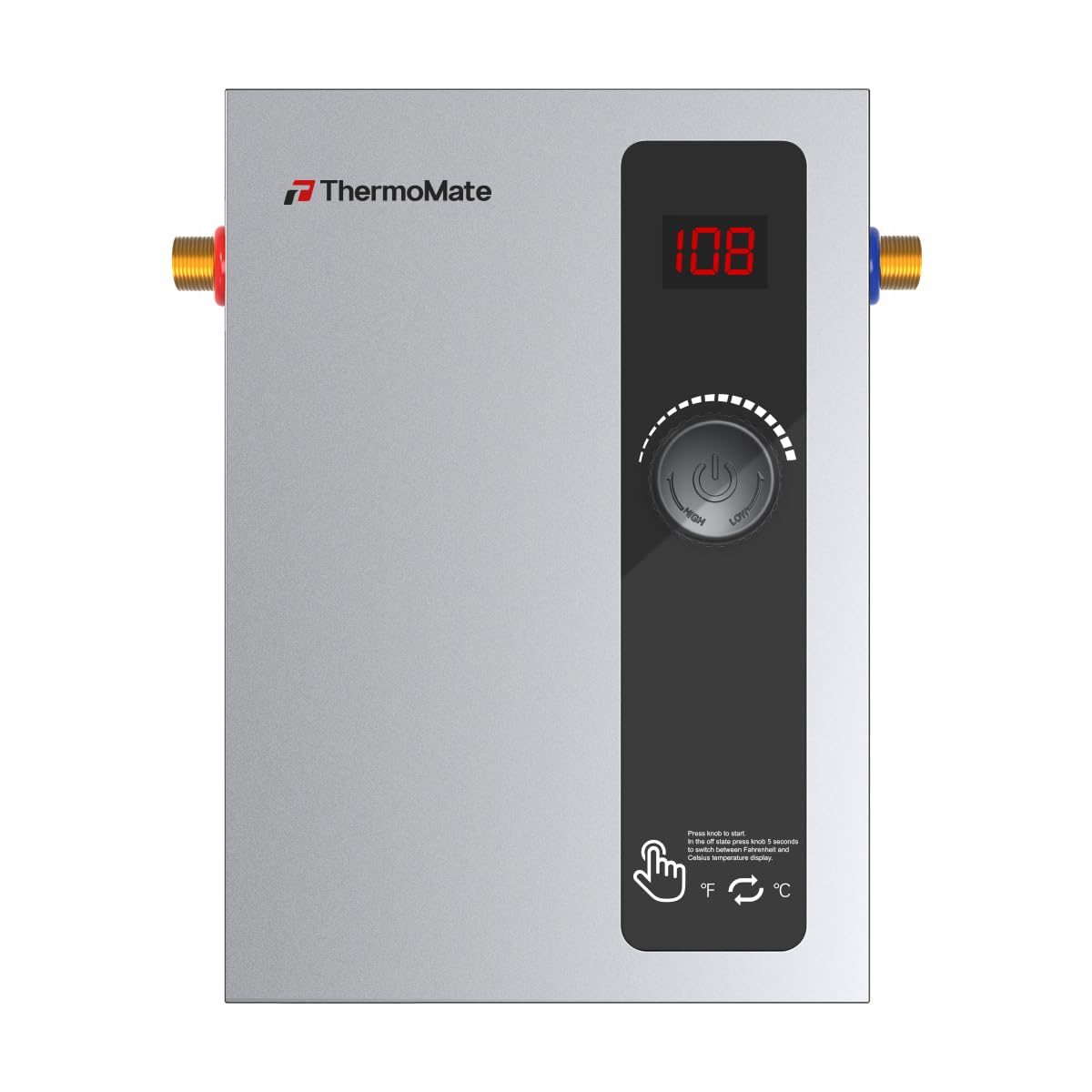
The ThermoMate 8kW is designed to support up to two faucets or a single low-flow shower at a 35°F temperature rise, making it a solid option for a small apartment or a dedicated point-of-use installation. It uses a cast aluminum heating chamber that separates the element from the water line, a design intended to reduce leak risk and scale buildup. The unit is ETL certified with overheating protection and an auto-stop function when flow ceases.
Side water connections (1/2-inch NPT) and a compact 8.6 by 12.2-inch footprint allow installation in tight spaces under sinks or in small utility closets. Users who replaced larger tank units note the space savings are dramatic, and the elimination of standby heat loss is noticeable on electricity bills. One reviewer reported a reduction from to per month after switching to an 18 kW unit from the same brand.
The electrical requirement is a 40-amp double-pole breaker with 8 AWG wiring. Several users caution that professional electrician installation is mandatory under local codes, and the cost of running a dedicated 240V circuit can approach the cost of the heater itself. A few reviewers report that the unit only produces hot water at a trickle flow rate, concluding that 8 kW is insufficient for any meaningful flow in cold climates.
Why it’s great
- Cast aluminum heating chamber reduces scale
- Compact size for tight spaces
- Side water connections for flexible mounting
Good to know
- 8 kW is underpowered for cold climates
- Requires 40A breaker and 8 AWG wire
- Installation cost can rival unit price
8. Camplux 3.5kW
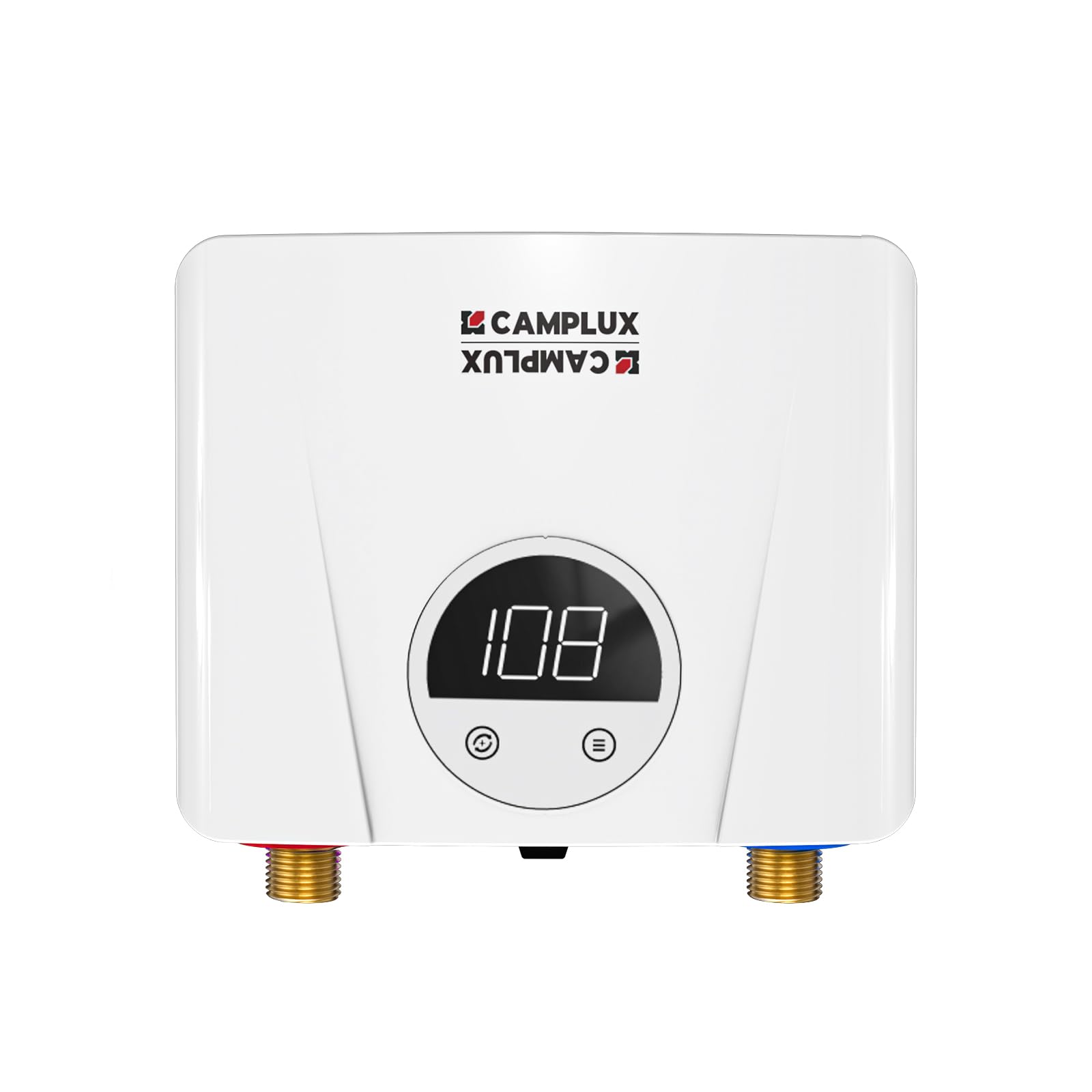
The Camplux 3.5kW is a dedicated point-of-use heater for a single sink, drawing 29.2 amps at 120V. It provides hot water in approximately three seconds with a temperature rise of 22°F at 1.0 GPM, meaning it can deliver 73°F or warmer water depending on the inlet temperature. This unit is not designed for showers or whole-house use — it is explicitly for one sink in a kitchen, wet bar, salon, or boat.
Weighing just 3 pounds and measuring 7 by 6 inches, it mounts multi-angled on a wall, under a cabinet, or in an RV. The touch control panel with LED digital display allows temperature setting from 86°F to 131°F. The self-modulating design adjusts power in real-time based on flow rate and temperature, and the manufacturer claims up to 98% energy savings compared to a traditional tank heater.
Installation must be hardwired — there is no plug. It requires a 32-amp circuit breaker with 10 AWG wire and a 1/2-inch NPT water connection. Several users report that the unit only makes water “warm” rather than hot, and that flow must be very low to achieve higher temperatures. One reviewer had a unit with flaking inlet/outlet threads and brown water on first use, indicating possible quality control issues.
Why it’s great
- Ultra-compact 3-pound design
- Instant hot water in about 3 seconds
- Self-modulating for efficient operation
Good to know
- Only suitable for one sink
- Output is warm, not hot, at usable flow
- Some units have reported quality defects
9. ThermoMate 3.5kW

The ThermoMate 3.5kW is functionally similar to the Camplux unit above, offering the same 3.5 kW at 120V and 0.66 GPM flow rate. It provides on-demand hot water for a single sink faucet with a touch control panel and digital temperature display adjustable in 1°F increments from 86°F to 131°F. The unit is ETL certified and uses a cast aluminum heating element separated from the water line to reduce scale and corrosion.
The SUS 304 stainless steel water tube and compact 7.9 by 6.4 by 2.5-inch dimensions make it easy to install under cabinets, sinks, or in commercial settings like hair salons and bar counters. One reviewer with hard water reports it performs well and gets water “nice and hot,” though it takes a couple seconds longer than a larger Rheem counterpart. The unit requires a 32-amp double-pole breaker with 10 AWG wire and 1/2-inch NPT connections.
Users consistently note the same limitation: hot water output drops dramatically at any flow rate above a trickle. Several reviewers describe it as adequate for hand washing but insufficient for filling a pot or cleaning dishes with hot water. The ThermoMate brand has a reputation for solid build quality at the budget end, but the 3.5 kW rating imposes a hard ceiling on what can be accomplished.
Why it’s great
- Compact and lightweight for easy mounting
- Cast aluminum element reduces maintenance
- 1°F temperature adjustment increments
Good to know
- Limited to one sink at low flow
- Cannot fill pots or run full faucet
- Hardwired installation requires electrician
FAQ
Can an electric tankless water heater replace my existing 50-gallon tank?
How much does it cost to install an electric tankless water heater?
Do electric tankless water heaters work in cold climates?
How long do electric tankless water heaters typically last?
Final Thoughts: The Verdict
For most users, the answer to “Are There Electric Tankless Water Heaters” that can truly replace a tank is the Stiebel Eltron Tempra 29 Plus, because its German build quality, dual temperature presets, and 28.8 kW output provide the most reliable whole-house performance. If you want a more budget-conscious unit for a 2-3 bedroom home, the Ranein 18kW offers solid value with its 4.3 GPM flow rate and compact footprint. And for a single-sink point-of-use install where tankless makes the most sense, the Camplux 3.5kW is the most affordable entry into the category.