
A 0-degree temperature rating printed on a tag is a promise—but one that’s broken the moment a cold draft seeps through a poorly designed zipper draft tube or the insulation settles into a thin, uneven layer. Getting the selection wrong means a long, shivering night that can ruin an entire trip.
I’m Min — the co-founder and writer behind Gadgets Feed. This guide is the result of systematically analyzing the fill weights, denier ratings, temperature certifications, and customer-verified performance data of nine models to separate the truly warm from the merely labeled.
I’ve read through hundreds of verified owner accounts that detail real-world use in tent sites, hot tents, and backcountry bivouacs to bring you a definitive breakdown of the best 0 degree synthetic sleeping bag for your specific camping style.
How To Choose The Best 0 Degree Synthetic Sleeping Bag
Selecting a 0 degree synthetic sleeping bag is a decision that balances warmth retention, packed size, weight, and durability. Three factors dominate the choice: the insulation material, the bag’s shape and fit, and the quality of its heat-sealing features. Ignoring any one of these can mean the difference between a cozy night at the trailhead and a miserable struggle to stay warm.
Insulation Type and Fill Weight
For a 0-degree synthetic bag, the fill material must be thick enough to trap body heat. Hollow-fiber fill (like 250g/㎡ 7D or similar) offers excellent warmth for its weight but reduces in loft over time. Micro-insulation (like PolarLite or Cirroloft) mimics down more closely, offering a better warmth-to-weight ratio and superior packability. Pay attention to the fill weight in grams per square meter—a higher number generally means more insulation and better performance near the bag’s lower-limit rating.
Shape, Fit, and Draft Management
Mummy shapes are standard for 0-degree bags because the tapered cut reduces dead air space that the body must heat. However, a bag that is too tight can compress the insulation against your body, reducing its effectiveness. Look for a design with an adjustable hood, a zipper draft tube, and a neck collar—these three features close the critical gaps where heat escapes. Some bags also incorporate a differential cut (more insulation on top, less underneath where the sleeping pad provides warmth) to maximize thermal efficiency.
Shell Fabric and Packed Size
A 40D to 20D nylon shell offers a trade-off between durability and weight. A higher denier (40D) is tougher against abrasion from tent floors and comes at a weight penalty. A lower denier (20D) is lighter and packs smaller but may be less resistant to sharp objects. Since a 0-degree synthetic bag typically weighs between 3.5 and 5 pounds, the packed size matters a great deal if you’re backpacking—a bag that cinches down to 11-13 inches in a compression sack is far more manageable than one that stays bulky.
Quick Comparison
On smaller screens, swipe sideways to see the full table.
| Model | Category | Best For | Key Spec | Amazon |
|---|---|---|---|---|
| Kelty Cosmic Synthetic | Premium | Certified cold-weather backpacking | ISO comfort: 18°F | Amazon |
| Big Agnes Echo Park | Premium | Roomier car camping comfort | Padlock pad attachment system | Amazon |
| QEZER Down 0°F Bag | Premium | Ultralight down performance for cold | 3.3lb 650FP down fill | Amazon |
| OMVMO 0°F Wearable Bag | Premium | Versatile 4-season use / convertible | 800FP goose down / wearable | Amazon |
| Naturehike Snowbird Down | Mid-Range | Lightweight down value for 3-season | 29°F comfort / 650FP RDS down | Amazon |
| Sea to Summit Boab Synthetic | Mid-Range | Side-sleepers and camp comfort | 30°F rating / 3.42 lbs | Amazon |
| TETON Sports ALTOS | Mid-Range | Backpackers wanting low weight | ~2.5 lbs / 20°-0° option | Amazon |
| TETON Sports LEEF | Mid-Range | Budget-friendly cold-weather entry | 4.2 lbs / PolarLite Micro fill | Amazon |
| 1TG Tactical 25-36°F Bag | Budget | Entry-level mild-weather camping | 250g/㎡ 7D hollow fiber fill | Amazon |
In‑Depth Reviews
1. Kelty Cosmic Synthetic Fill 0 Degree Backpacking Sleeping Bag
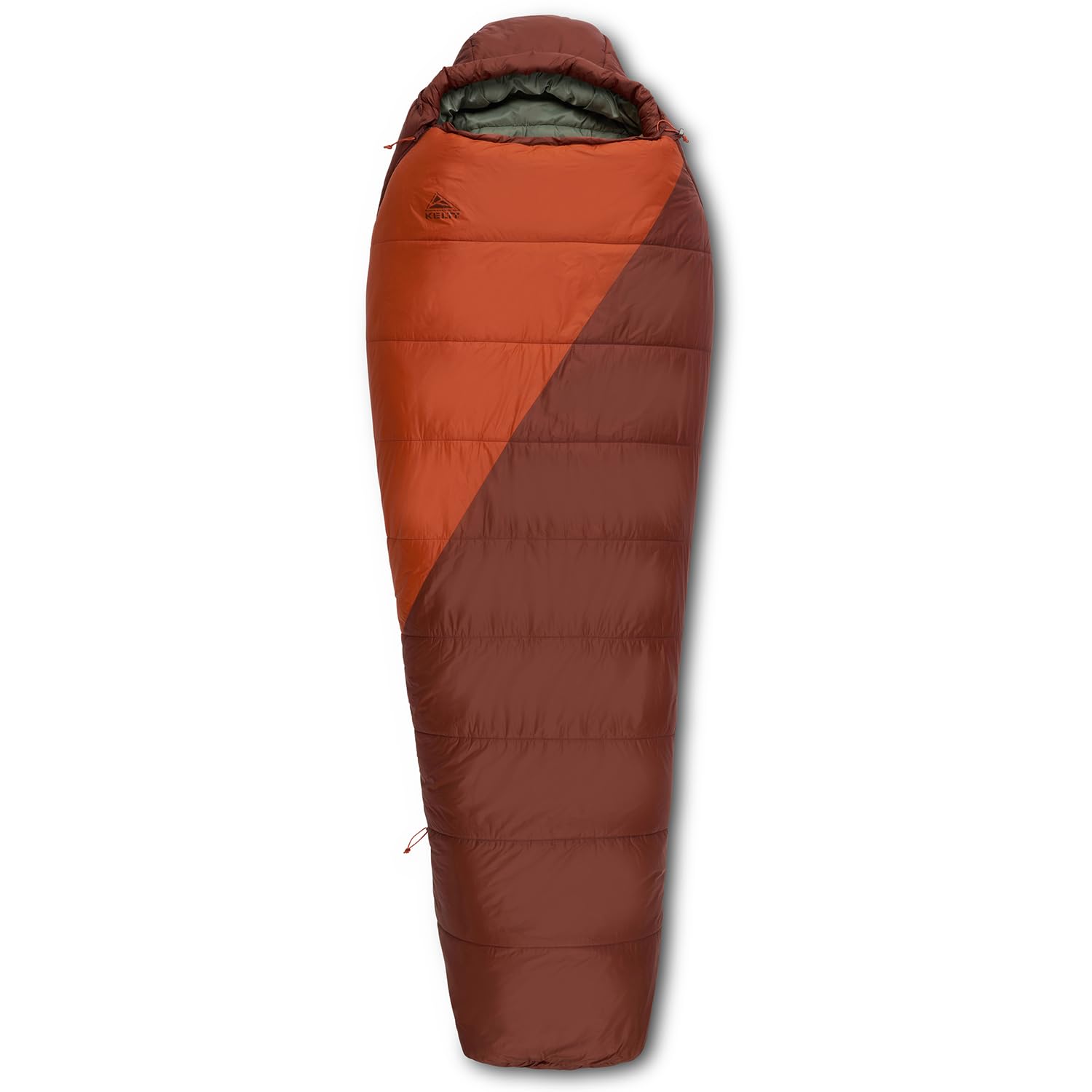
The Kelty Cosmic Synthetic is the most trustworthy 0-degree synthetic bag in this lineup because it actually carries an ISO-tested comfort rating of 18°F, meaning its 0-degree lower limit is grounded in real lab data rather than marketing optimism. With 60 ounces of Cirroloft synthetic insulation stuffed into a 20D recycled nylon shell finished with a PFAS-free DWR, this bag delivers reliable warmth in damp conditions where down would fail. The regular length fits sleepers up to 6’6″ and the natural fit footbox gives toes enough freedom to wiggle without creating cold pockets.
On the trail, the integrated compression stuff sack helps the Cosmic achieve a packed size of roughly 17×11 inches when not fully compressed, which is respectable for a synthetic 0-degree bag. The exterior stash pocket is a smart touch for stashing a headlamp or phone within reach. Owners consistently report staying warm in the teens after pairing the bag with a proper insulated pad, and the 20D shell feels adequately durable for weekend backpacking trips and car camping alike.
One recurring note is that the zipper can snag near the bicep area, and some users find the lack of a Velcro closure at the top means the bag may unzip slightly during restless sleep. Still, for its ISO-verified rating, reasonable weight of 4 lbs 11 oz, and Kelty’s established quality, the Cosmic Synthetic is the most dependable choice for anyone who needs a true 0-degree synthetic bag.
Why it’s great
- ISO comfort rating of 18°F provides trustworthy cold-weather performance
- Cirroloft synthetic insulation retains warmth even when damp
- Integrated compression stuff sack improves packability
Good to know
- Zipper may snag near the bicep area
- No top Velcro closure can let the bag unzip during movement
2. Big Agnes Echo Park Sleeping Bag 0°
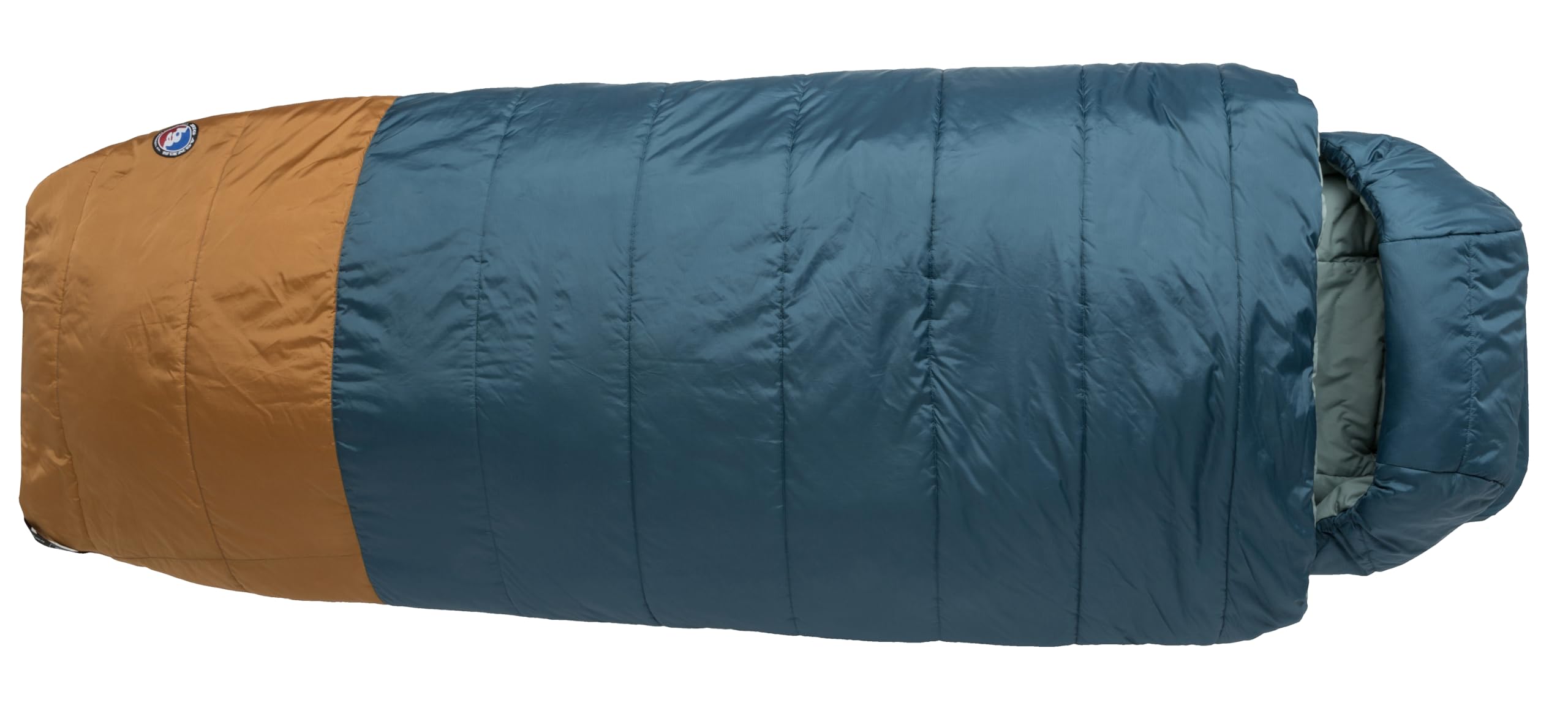
The Big Agnes Echo Park redefines the 0-degree sleeping bag experience by prioritizing roomy comfort and luxurious features over minimal pack weight. Its 40D nylon ripstop shell contains FireLine Max Eco—100% post-consumer recycled polyester insulation that keeps you warm without the environmental guilt. The bag’s stand-out feature is the Padlock design: it cinches your sleeping bag to a compatible pad (25-30″ wide x 78″ long), preventing that dreaded roll-off that ruins a good night’s sleep.
This is a wide and long bag—accommodating sleepers up to 6’6″ with ease—making it ideal for those who feel claustrophobic in mummy wraps. The “Pillow Barn” slot on the pad sleeve keeps your pillow in place, and the double side zippers let you vent heat or unzip the whole thing into a quilt. The cotton-poly blend lining feels soft and quiet against the skin, a stark contrast to the crinkly nylon of many ultralight bags.
At over 5 pounds, the Echo Park is clearly built for car camping, basecamp setups, and back-of-the-truck sleep systems rather than multi-day backpacking. Some users find that even at 50°F they begin to sweat, but the ability to unzip both sides for ventilation effectively turns it into a blanket. If your definition of camping includes a cot and a lantern, this is the most comfortable 0-degree synthetic bag you can buy.
Why it’s great
- Padlock system securely attaches to sleeping pad
- Extremely roomy interior with double side zippers for ventilation
- Soft cotton-poly lining is quiet and comfortable
Good to know
- Very bulky and heavy for backpacking
- Overly warm for mild nights above 50°F without venting
3. QEZER 0 Degree Down Sleeping Bag
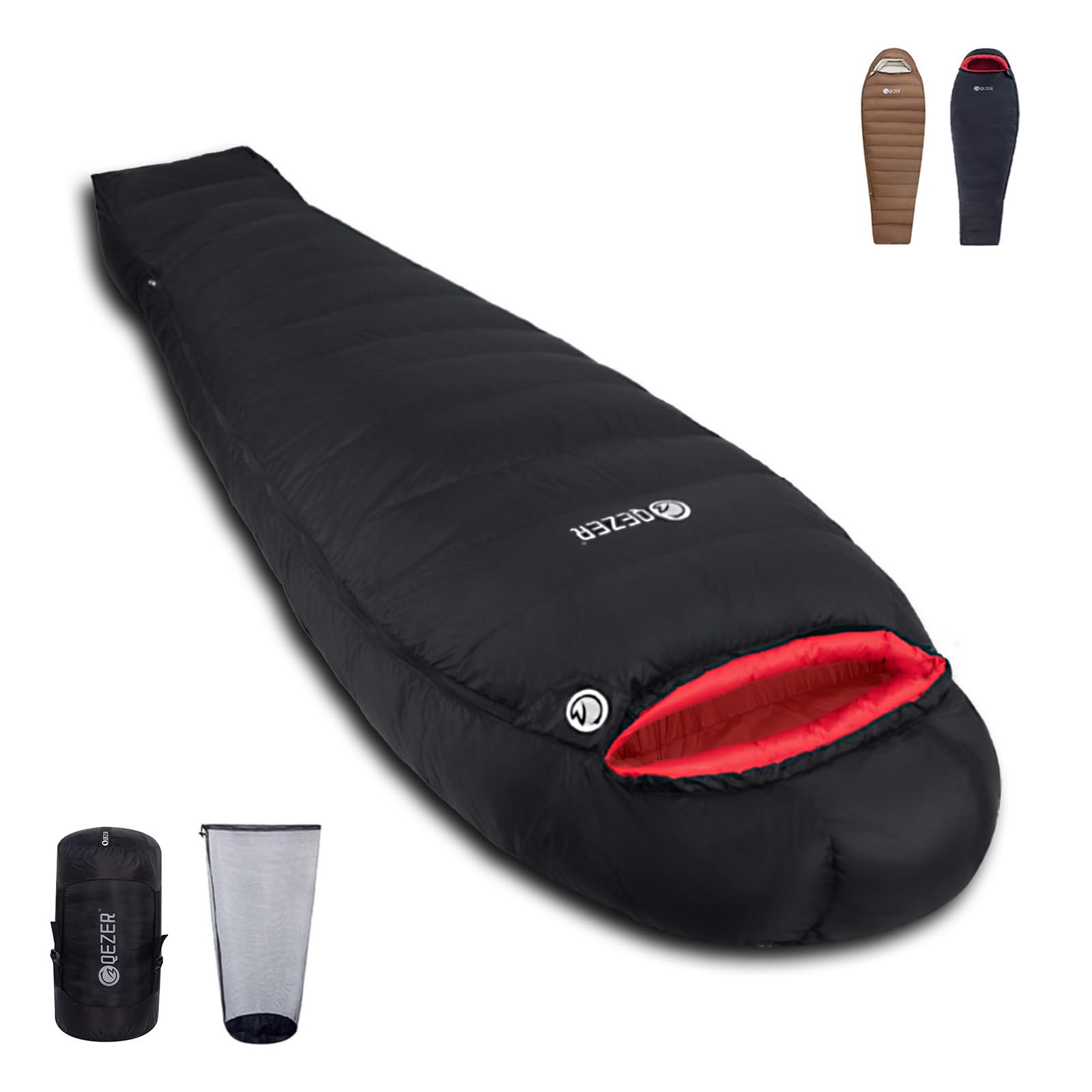
While this is technically a down bag, the QEZER 0°F model deserves mention because its 650-fill-power premium white duck down offers superior loft and compressibility compared to synthetic fills, making it a serious contender for cold-weather backpacking. The bag is filled with 3.3 pounds of down and uses vertical baffles to minimize shifting, while the 400T nylon shell (both inner and outer) resists moisture. The saddle-shaped neck collar and ergonomic footbox design target the two most common heat-loss points.
Packed size is a standout at 17.32 x 10.24 inches—considerably smaller than any synthetic 0-degree bag in this guide. Travel weight of 3.4 pounds makes it backpackable. Owners confirm the bag keeps them warm into the teens, with one reviewer reporting comfort at lows of 14°F without additional clothing. The material does have a crinkly feel that some find noisy, and a few users noted the zipper catching, though QEZER’s customer service seems responsive to exchanged units.
The concern with down is always moisture: if the bag gets wet, its insulating properties plummet. For trips where dry conditions are guaranteed or you’re using a top-tier shelter, this bag offers an unbeatable warmth-to-weight ratio. But for damp coastal camping or unpredictable rain, a true synthetic remains the safer bet. The QEZER 0°F is the top choice for the weight-conscious camper who accepts the down trade-off.
Why it’s great
- 650-fill-power down provides excellent warmth-to-weight ratio
- Very compressible for backpacking
- Ergonomic footbox and neck collar prevent heat loss
Good to know
- Down loses insulation when wet
- Crinkly nylon fabric and occasional zipper snag
4. OMVMO 0°F Down Sleeping Bag (Wearable)

The OMVMO 0°F sleeping bag is engineered with over 80 independent rectangular 3D baffles filled with 800-fill-power goose down, which effectively eliminates cold spots by keeping insulation evenly distributed. The 3D stereoscopic cutting technology means the bag has more than double the number of lofts compared to standard down bags, resulting in superior thermal stability. The 400T 20D nylon shell is soft, DWR-treated, and designed to resist down leakage.
What truly sets this bag apart is its 4-season versatility: it can be fully unzipped into a down blanket, converted into a wearable cloak via shoulder buttons, or combined with a left-zip partner bag to create a double sleeping bag. The neck and shoulder drawstrings, draft tubes, and a detachable half-circle hood provide comprehensive draft sealing. At 4.2 pounds, it’s heavier than a pure ultralight quilt but provides far more warmth for deep winter use.
One reviewer at 5’10” found the draft collar sits too low for their neck, suggesting that taller users should consider the Long version if available. The pad straps (only one included) and the bulk when fully compressed are minor trade-offs for the exceptional warmth and configuration options. This bag excels for campers who want one sleeping system that works for summer backyard hangs, fall backpacking, and winter car camping.
Why it’s great
- 80+ 3D baffles with 800FP goose down eliminate cold spots
- Converts into a wearable cloak, blanket, or double bag
- Draft tubes, detachable hood, and dual drawstrings seal heat well
Good to know
- Draft collar may sit too low for shorter users
- Heavier and bulkier than pure backpacking quilts
5. Naturehike 0 Degree RDS Down Mummy Sleeping Bag SP550
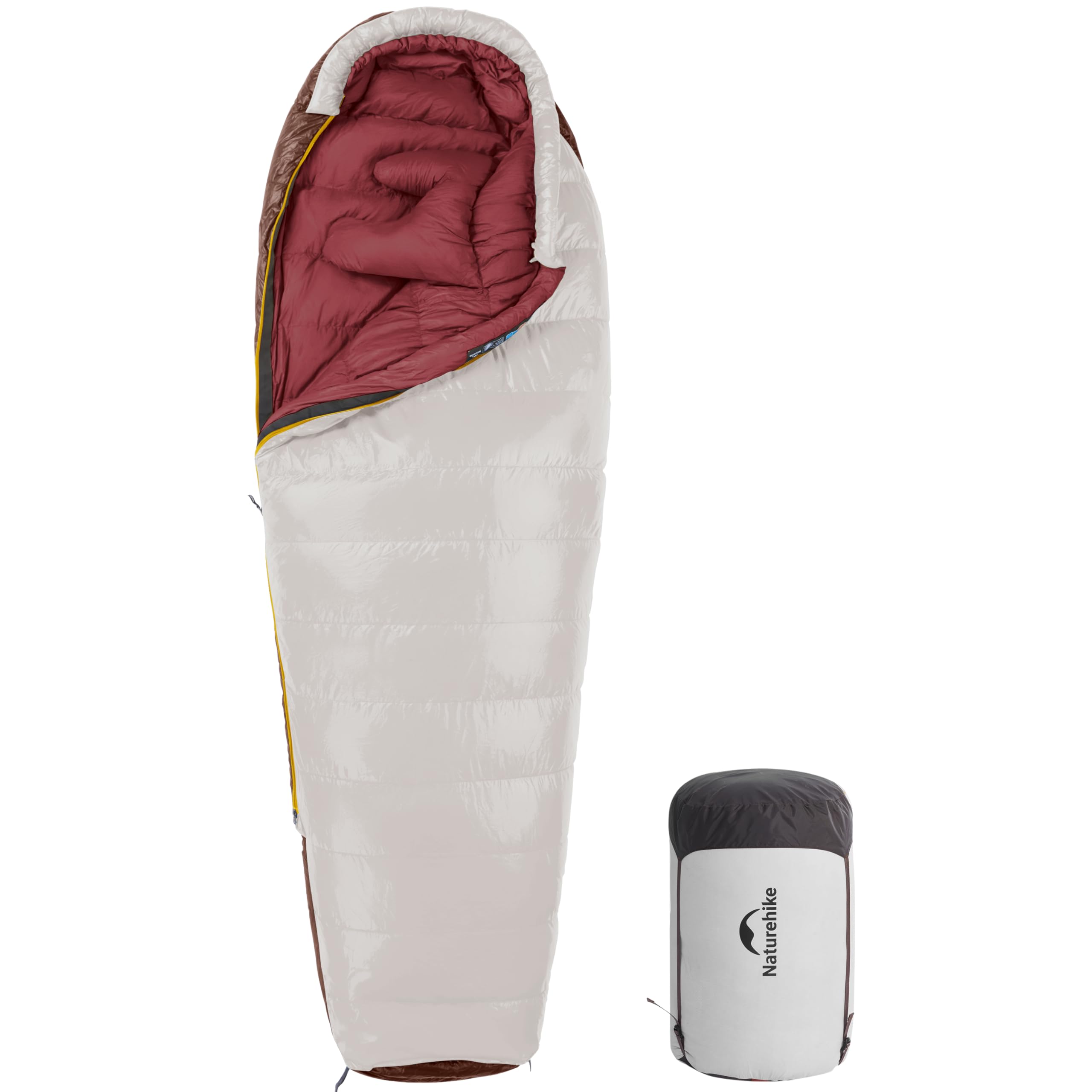
The Naturehike Snowbird SP550 combines RDS-certified 650-fill-power duck down with thoughtful cold-weather design at a price that undercuts most premium down bags. Its comfort rating of 29°F and limit rating of 18°F mean it’s a 3-season bag that handles cold snaps rather than a true 0-degree winter warrior, but the down quality and construction details like the U-shaped neck collar and dual wind baffles punch well above the price point. The 400/550/1000-gram fill weight options allow you to match insulation to your expected conditions.
The C-shaped wrapped design ensures 60% of the down sits on top of your body, where it matters most, while the 3D footbox allows natural feet movement without compressing insulation. Owners have tested the SP550 down to 25°F with good results, and the YKK two-way zippers operate smoothly without snagging. The bag packs down impressively small for its warmth, and the included mesh storage sack helps maintain loft between trips.
This bag’s main limitation is its temperature range: it’s not safe for sustained 0-degree use unless you’re a very warm sleeper pairing it with a high-R-value pad and supplemental clothing. For 3-season backpacking with occasional cold nights, it’s an excellent value. But if you specifically need to survive 0°F nights, you should select the SP1000 model or look at fully synthetic options.
Why it’s great
- RDS-certified 650FP down offers good warmth at a low price
- C-shaped wrap puts more down on top of your body
- U-neck collar and dual wind baffles prevent drafts
Good to know
- Comfort rating is 29°F—not a true 0-degree bag
- Down loses performance if it gets wet
6. Sea to Summit Boab Synthetic 2-Season Sleeping Bag

The Sea to Summit Boab is a tapered rectangular synthetic bag designed specifically for side sleepers who feel trapped in traditional mummy wraps. Its 30°F temperature rating makes it a 2-season bag for mild conditions, but its roomy cut (33.9 inches wide) and full-length side zipper that converts the bag into a blanket offer unmatched comfort for campers who move during sleep. The double zipper sliders and shoulder snap let you dial in ventilation precisely.
Crafted from RCS-certified recycled polyester with a bluesign APPROVED DWR finish (free of intentionally added PFAS), the Boab appeals to eco-conscious campers. The YKK #5 zippers with a zipper plough prevent snags, and the 50-denier shell strikes a balance between durability and weight. At just 3.42 pounds, it’s among the lightest bags in this price range, and the included compression sack keeps it manageable for car camping or short hikes.
Several owners note that the bag is noticeably warmer than its 30°F rating suggests, with one verifying comfort below freezing. However, the rectangular cut means there’s more air to heat, so this is not a bag for deep winter. It’s best suited for spring-through-fall base camping for those who prioritize a spacious, comfortable sleep over the mummy’s thermal efficiency.
Why it’s great
- Roomy tapered rectangular cut great for side sleepers
- Full side zipper converts to blanket for venting
- Eco-friendly materials with recycled and bluesign-certified fabrics
Good to know
- 30°F rating limits use to mild weather
- Slightly heavier than stated by a few ounces
7. TETON Sports ALTOS 0 Degree & 20 Degree Sleeping Bag

The TETON Sports ALTOS is a lightweight mummy bag that offers both 20-degree and 0-degree temperature options, emphasizing compressibility and a roomier cut than typical mummy bags. Weighing approximately 2.5 pounds, it is one of the lightest synthetic bags in this review, making it a strong candidate for backpackers who need dependable warmth without a huge weight penalty. The polyester ripstop shell is treated with a water-resistant finish, and the built-out footbox provides generous space for toe movement.
User testing confirms the bag performs well into the 20s °F, with one reviewer reporting a comfortable night at 28°F when paired with a 4.4 R-value pad. The bright orange color is a safety bonus for visibility in the backcountry. The ALTOS packs down to roughly 11 x 8.5 x 8.5 inches when compressed, which is impressive for a synthetic bag at this price.
The main caveat is that the 0-degree rating is optimistic—most users agree the bag is comfortable down to around 20°F, not 0°F. The draft collar and zipper tube are effective, but the thin profile means cold spots can develop at pressure points if you move during sleep. For 3-season backpacking with the occasional cold night, the ALTOS delivers excellent value. For true 0-degree winter camping, look to the Kelty Cosmic.
Why it’s great
- Very lightweight for a synthetic bag (~2.5 lbs)
- Packs down small with included compression sack
- Bright orange color improves visibility
Good to know
- Real-world comfort is closer to 20°F than 0°F
- Thin profile may develop cold spots at pressure points
8. TETON Sports LEEF Lightweight Mummy Sleeping Bag (0° Option)
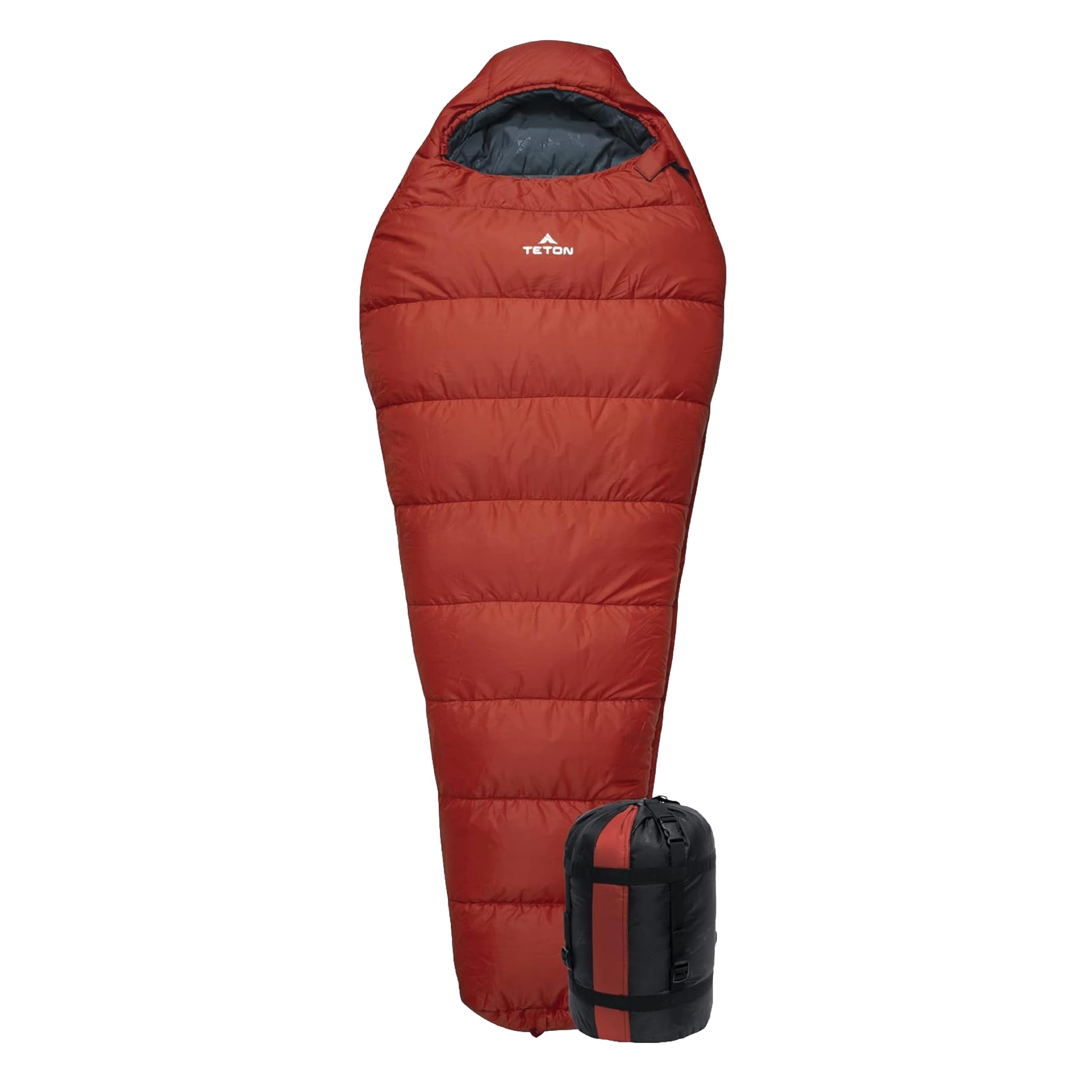
The TETON Sports LEEF is a no-frills mummy sleeping bag that offers a PolarLite Micro synthetic fill in a 0-degree-rated version, specifically designed for backpackers and hikers who need warmth at an accessible price. Weighing 4.2 pounds, it is on the heavier side, but the trade-off is a durable polyester shell that survives rough tent floors and dense bush camps. The roomier mummy cut allows more movement than a standard tight mummy, which some side sleepers prefer.
User reviews consistently praise the bag’s warmth, with one reviewer testing it to -5°F in a hot tent scenario. However, the general consensus is that the true comfort limit is around 15-20°F, meaning it’s best for spring-to-fall camping supplemented with proper layering near its rated limit. The included compression sack helps tame the bulk, though it remains larger than the Kelty or ALTOS when packed.
The biggest complaint is that the left-hand zipper orientation can be disorienting for right-handed users, and the shoulder width can feel snug for broad-shouldered individuals. The 0-degree version is a solid budget entry point for those who don’t want to invest in a premium bag but still need reliable warmth for car camping or occasional winter treks.
Why it’s great
- Durable polyester shell survives rough conditions
- Warm enough for spring-to-fall camping with proper layering
- Roomier mummy cut allows some freedom of movement
Good to know
- Heavier than premium synthetic options
- Left-hand zipper may feel awkward for right-handed users
9. 1TG Tactical Mummy Sleeping Bag (25-36°F)
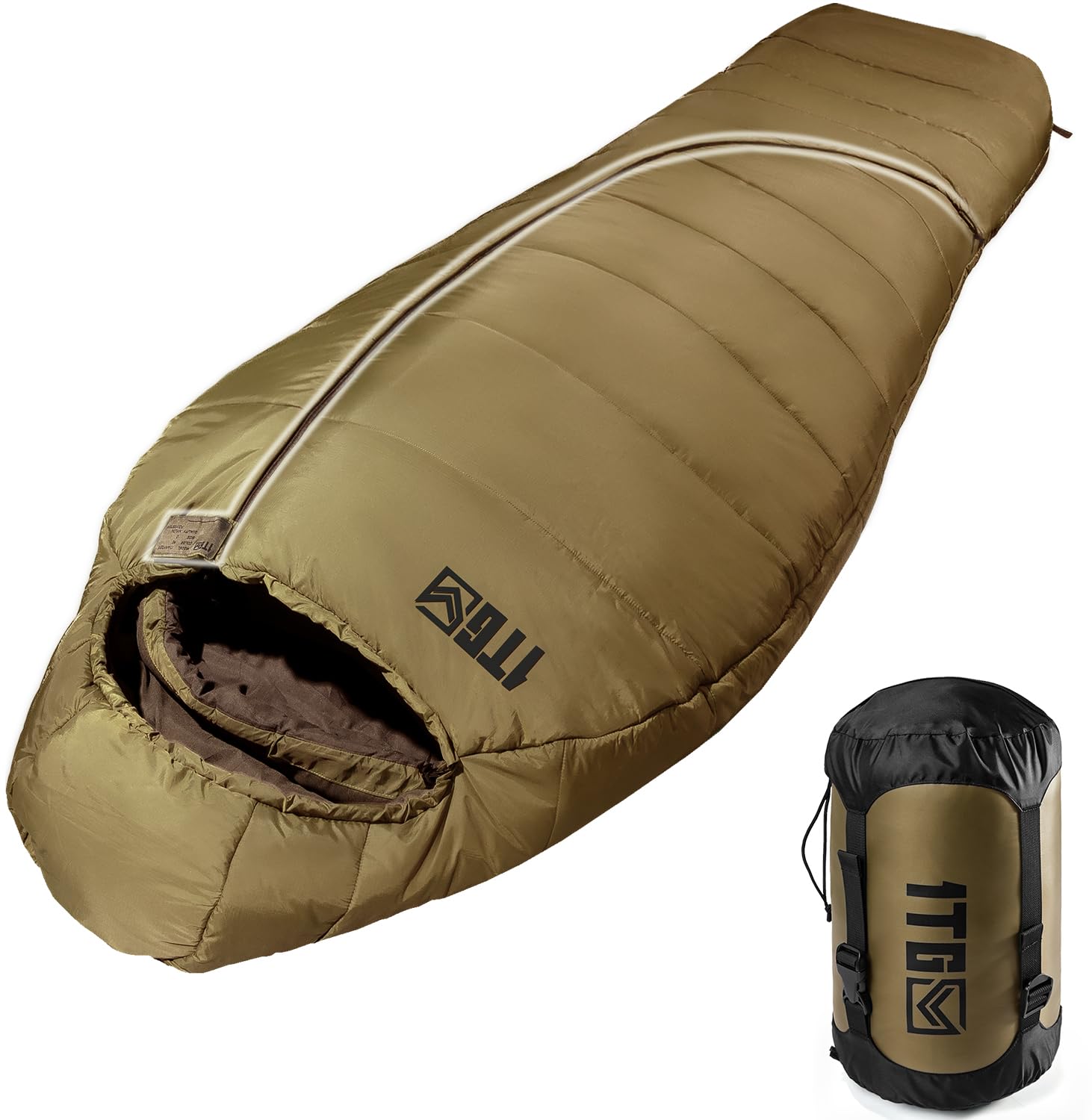
The 1TG Tactical sleeping bag is a budget-friendly entry-level mummy bag rated for 25-36°F, making it a 3-season option for mild to cool weather rather than a true 0-degree bag. It uses 250g/㎡ 7D hollow-fiber synthetic fill inside a 40D nylon shell, which provides decent warmth for fall camping and light winter excursions when paired with thermal layers. The adjustable drawstring hood, insulated collar, and zipper draft tube work together to block wind, and the 3D ergonomic footbox gives feet natural space.
At 3.88 pounds, the 1TG is average in weight for its price bracket but packs down to a compact 13 inches using the included heavy-duty compression sack. The unique diagonal zipper design is a notable plus—it offers snag-free operation and easier arm movement than traditional side zippers. Owners have used it successfully for scout trips and elk hunts, with one parent reporting it kept an 11-year-old warm to 30°F without a liner.
The primary limitation is its temperature rating: this is not a bag for 0-degree conditions. Several reviews note that the bag is comfortable around 30-40°F but may require a liner and thicker clothing near its 25°F lower limit. For a new camper on a tight budget looking for a general-use synthetic bag that can handle cool (not extreme) nights, the 1TG Tactical is a solid, no-regrets purchase.
Why it’s great
- Affordable entry point for 3-season camping
- Diagonal zipper is smooth and snag-free
- Machine washable for easy maintenance
Good to know
- 25-36°F rating is not suitable for 0-degree camping
- May require a liner and extra layers near its lower limit
FAQ
Can I use a 0-degree synthetic sleeping bag in the summer?
How do I wash a 0-degree synthetic sleeping bag?
Should I buy a down or synthetic 0-degree sleeping bag for wet weather?
Final Thoughts: The Verdict
For most users, the best 0 degree synthetic sleeping bag is the Kelty Cosmic Synthetic because its ISO comfort rating of 18°F, reliable Cirroloft insulation, and reasonable weight make it the most trustworthy cold-weather synthetic bag on the market. If you prefer a roomier sleep experience for car camping, grab the Big Agnes Echo Park. And for an ultralight down alternative that packs smaller than anything synthetic, nothing beats the QEZER 0°F Down Bag.