
Our readers keep the lights on and my morning glass full of iced black tea. As an Amazon Associate, I earn from qualifying purchases.
Specs are compiled from manufacturer listings and verified buyer reviews and can change over time — please confirm the key details on the product page before buying.
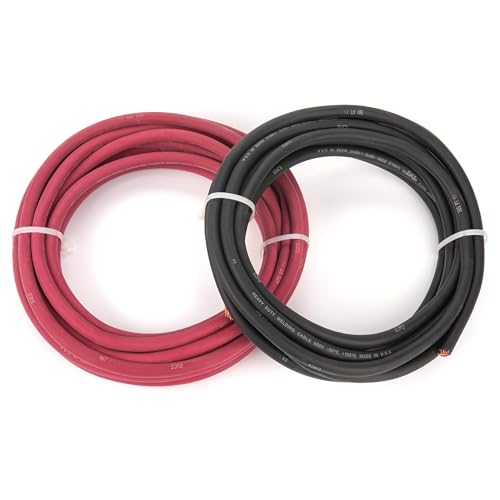
Buying 1/0 welding cable can be confusing because every listing claims “pure copper” and “ultra flexible,” but the real difference is in the strand count and jacket material — not the gauge alone. You need a cable that bends easily so you can route it around tight engine bays or solar battery banks, resists heat and oil so it keeps working deep inside a truck chassis, and uses solid copper conductor rather than copper-clad aluminum (which can overheat and fail under heavy load). This guide breaks down the eight top-rated 1/0 AWG cables by their real specs and real owner experiences, so you can match the right one to your project — whether that is a trunk battery relocation, a high-amp car audio system, or a campervan inverter install.
I’m Min — the founder and writer behind Gadgets Feed. This guide is built by comparing the manufacturers’ published specifications and the patterns across verified customer reviews, so you get each pick’s real strengths and trade-offs instead of marketing spin.
The deciding factor in any high-current build is the cable’s purity and strand flexibility, and 1/0 welding cable in pure copper handles 600 volts and keeps resistance low in tight automotive and solar DC circuits.
Our Picks at a Glance


How To Choose The Best 1/0 Welding Cable
Your project demands more than just matching the gauge number. You need a wire that fits through your planned path, resists the heat and abrasion under your hood or in your solar compartment, and carries the full current draw without voltage drop. These three factors decide everything.
Strand Count and Flexibility
A 1/0 cable is about the same thickness as your thumb, so flexibility is the first thing you feel when you uncoil it. A low strand count (around 65) makes the wire stiff and hard to bend around tight corners, while a high strand count (above 900) lets it drape and flex like a thick rope. For engine bay work or trunk battery relocation, pick a cable with at least 975 strands — every extra strand makes the run easier.
Jacket Material — EPDM vs PVC
The outer layer protects the copper from the environment. EPDM rubber is tough, resists cuts and tears, handles oil and gasoline, and stays flexible in subzero cold — the best choice for automotive and marine use. PVC is cheaper and has a slick, shiny surface that looks clean, but it stiffens in the cold and is less resistant to solvents and abrasion. If your cable runs near an engine, exhaust, battery acid, or road grit, EPDM is the safer bet.
Pure Copper vs Copper-Clad Aluminum
Only pure annealed copper (labeled OFC or 100% copper) should carry high amperage. Copper-clad aluminum (CCA) has a thin copper coating over an aluminum core — it can handle lower current loads, but for anything above roughly 200 amps on a 1/0 cable, CCA risks overheating and dangerous failure. The extra cost of OFC ensures your fuse or breaker is the weakest link, not the wire itself.
Quick Comparison
| Model | Best For | Strand Count | Jacket Material | Length | Amazon |
|---|---|---|---|---|---|
| Kimbluth 1/0 Gauge★ Best Overall | Budget DIY / Golf Cart | Multi-strand | PVC | 6 Feet (total) | Amazon |
| Spartan PowerAlso Great | Heavy Duty / Professional | 1026 strands | EPDM | 20 Feet | Amazon |
| EWCS Combo PackTop Performer | Alternator / Starter Repair | 30 gauge stranding | EPDM | 20 Feet (total) | Amazon |
| Crimp Supply Ultra-Flexible | Battery Relocation / Auto Racing | High strand | EPDM | 5 Feet | Amazon |
| WINDYNATION 1/0 AWG | Inverter / Solar Bank | 1004 strands | EPDM | 10 Feet | Amazon |
| WNI Power Flex | Complete Kit / Solar DIY | 65 strands | EPDM | 10 Feet (total) | Amazon |
| WindyNation Power-Flex | Long Run / RV Solar | High strand | EPDM | 20 Feet (total) | Amazon |
| TEMCo Easy-Flex | Farm / Long Lead | 975 strands | EPDM | 50 Feet (total) | Amazon |
In‑Depth Reviews
1. Kimbluth 1/0 Gauge Battery Cable Copper Wire, 3FT Red+3FT Black
Our pick — over 4.5★ from 800+ verified ratings; the strongest balance of quality and price.
The budget-friendly 6-foot pair that brings true OFC copper to short DIY jobs without the premium price.
Kimbluth uses 99% pure oxygen-free copper (OFC) with a 90-mil PVC jacket, which gives it a slick, shiny surface that one owner compares favorably to the flex of welding cable — “a pretty good option” if you like the PVC feel but need the maneuverability of a stranded wire. The 3-foot red plus 3-foot black (6 feet total) is short, so this is strictly for small-scale tasks like upgrading a golf cart’s battery cables, wiring a winch solenoid a few inches away, or replacing corroded leads on a generator. It handles up to 600 volts and operates from -40°C to 105°C.
Quality is the most frequently praised aspect — 64 owners single it out — and the PVC jacket is thick enough to resist battery acid and abrasion in a clean environment. The downside is that while the cable is marketed as 1/0 gauge, some owners find it not as thick in outer diameter as other brands’ 1/0. For most short-run applications this will not matter, but if you are filling a large 1/0 lug and want a tight fit, the slightly reduced diameter might leave a gap. Multiple owners confirm the copper is real and passes a magnet test.
What Owners Rave About
- Genuine OFC copper at an entry-level price point
- PVC jacket is slick and easy to route in short, clean runs
- Makes solid crimps with standard 1/0 lugs
The Realistic Trade-Off
- Only 6 feet total — not enough for most vehicle battery relocations
- Outer diameter runs slightly smaller than true 1/0 from premium brands
- PVC jacket, while flexible, is less durable than EPDM in hot or oily environments
Best for: A short, low-budget fix like golf cart battery cables, generator leads, or small solar charge controller connections where you value genuine copper over bulk.
skip it if: You need a long run (over 6 feet), are working in an engine bay with heat and oil, or want the thickest possible 1/0 jacket to fill oversized lugs.
2. Spartan Power Welding Lead & Car Battery Cable – 1/0 AWG, 20 Foot, Red
The 20-foot heavy lifter for professional-grade builds that need ultra-high strand count and rugged EPDM protection.
Spartan Power brings the highest strand count here — 1026 strands of pure copper — and pairs it with an EPDM jacket that handles temperatures from -58°F to +221°F. That stack of specs means you can bend a 1/0 cable into a tight engine bay corner without using a bender, and the jacket stays pliable and crack-free even in deep winter cold. The paper separators inside the jacket make stripping cleanly a fast job, which owners appreciate when they are terminating a dozen lugs on a inverter install. At 20 feet, you get enough length for most trunk-to-engine battery relocations or a mid-size solar battery bank, and the copper is fully annealed per ASTM standards so it holds its crimp tight.
The recurring compliment is the sheer flexibility — owners compare the feel to “wet noodles,” which is the highest praise you can give a 1/0 wire that needs to snake around fenders and bulkheads. Some note that the cable measures slightly smaller in outer diameter than bigger-name brands, but for running inside a loom or conduit, that can actually ease the feed-through job. The few mix-ups on color (red shipped as black) were resolved fast, which matters when your build day is on the clock.
Buyers report using this for high-amp alternator upgrades, solar inverter feeds, and truck starter circuits with no voltage drop complaints and clean crimp results.
The Flexibility Edge
- 1026 copper strands make it remarkably easy to route around tight corners
- EPDM jacket resists oil, heat, moisture, and abrasion
- 20-foot length gives flexibility for longer runs in trucks and solar setups
Know Before You Buy
- Outer diameter is slightly smaller than some competing brands — check fitment for large-diameter lugs
- Sold only in single-color rolls; to get red and black together you need two orders
Best suited for: Professional installers and serious DIYers who need a reliable, ultra-flexible 1/0 cable for high-amp DC circuits and can benefit from the highest strand count available.
A realistic note: If you prefer a bulkier, thicker jacket to fill large lugs, or need matched red-and-black pair in one box, you might prefer the WindyNation Power-Flex instead.
3. EWCS 1/0 Gauge Premium Extra Flexible Welding Cable – Combo Pack – Black+Red – 10 Feet of Each
The 20-foot combo that pairs premium fine-strand flexibility with a jacket rated for harsh outdoor and under-hood exposure.
EWCS uses a 30-gauge copper stranding (very fine individual wires) inside a 0.53-inch diameter EPDM jacket that resists sunlight, water, and general abrasion. That fine stranding is what gives this cable its famous limp flexibility: the bundle bends around a fist-sized radius without fighting you, which makes it a favorite for alternator wiring upgrades and starter repairs in tight engine compartments. The combo pack gives you 10 feet of red and 10 feet of black in one spool, which eliminates the headache of ordering two separate cables for a standard positive-and-negative run.
Quality is the most-discussed trait — owners routinely note that the cable looks and feels like OEM-grade wire, with no aluminum cladding and consistent copper color through the cut. The fine strands also mean you need a sharp knife or a dedicated cable cutter to avoid splaying the wires when stripping, but the trade-off is a wire that tucks into corners that stiffer cables cannot reach. A few owners mention a thin paper layer between the jacket and the copper strands; that layer is there to ease stripping, not a defect.
The slim profile of the cable (despite being true 1/0 gauge) is a recurring highlight for those routing wire through OEM grommets and plastic loom channels.
Why it wins: The combination of fine 30-gauge stranding, EPDM durability, and the convenience of a ready-to-use red-and-black pair at 20 feet total is tough to top for a trunk battery relocation or a Big 3 upgrade.
Who it fits: The enthusiast who wants professional-grade feel without buying separate red and black rolls, and needs the cable to slide through tight body channels.
Who might prefer another pick: If you are running over 20 feet of cable and want a single 25-foot-plus length, the TEMCo Easy-Flex gives you more distance at a nearly identical build quality.
4. WNI 1/0 AWG 5 Feet Black + 5 Feet Red Battery Welding Pure Copper Ultra Flexible Cable + Lugs + Heat Shrink

The all-in-one kit that gets you a full battery cable project — wire, lugs, and heat shrink — in one box.
With 65 strands in a tough EPDM jacket, the WNI cable is on the stiffer side compared to the high-strand-count options above, but the whole package is where this wins. You get 5 feet each black and red (10 feet total) plus five 5/16-inch lugs, five 3/8-inch lugs, and 3 feet of black heat shrink tubing. For a first-time DIYer running a short inverter-to-battery connection or making up a set of solar battery bank cables, having the lugs and tubing included saves a separate trip to the hardware store and ensures the tin-coated copper lugs match the cable’s gauge.
Quality is the top compliment here, with owners consistently confirming the copper is real and not aluminized — a critical point for anyone feeding high-amp DC circuits. The cable is rated at 600 volts and operates from -50°C to +105°C, which covers most automotive and marine environments. The silicone-like feel of the EPDM is noted as thick and reassuring. On the practical side, the lug count (five of each stud size) is slightly odd if you are wiring a single positive-and-negative run, but that leaves spares for expansion or a second project.
Owners building small solar battery-to-inverter connections and car audio systems consistently report clean crimps and no heating at the terminals.
Kit convenience: If you are tackling a battery cable replacement or solar connection and do not want to buy lugs and shrink tubing separately, this is the most time-efficient bundle on the list.
Pick this for: A short-run job (10 feet or less) where you want a complete kit with matching hardware and do not need extreme ultra-flexibility.
Look elsewhere if: Your run is longer than 10 feet or you need the cable to snake through very tight bends — the 65-strand construction is more resistant to tight-radius routing than the 975-strand options.
5. WindyNation Power-Flex 1/0 AWG – 10 Feet Black + 10 Feet Red
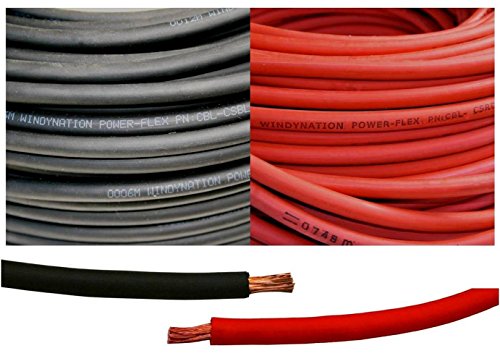
The long-run specialist with verified pure copper that maintains full amperage over distance for RV and solar systems.
The WindyNation Power-Flex cable uses fully annealed pure copper with a high strand count for flexibility, wrapped in a solvent-resistant EPDM jacket that handles -58°F to +221°F. It is SAE J1127 approved, which means it meets the automotive industry standard for low-tension primary cable — a solid verification for use in vehicles. The 10-foot black plus 10-foot red gives you a 20-foot total run, which is the balance for wiring a solar charge controller to a battery bank in a camper van or connecting an inverter in an RV compartment.
Quality and flexibility are the two most-praised aspects — owners find the cable easy to strip, easy to solder or crimp, and report no measurable voltage drop over months of use in high-draw circuits. The cable cuts cleanly and does not fray badly at the cut end, which is a common frustration with looser-strand cables. The jacket has a noticeable rubber smell when new (a few owners let it air out before installation), and the overall diameter is true 1/0 — larger than some competing “1/0” cables that run slightly undersized. One owner specifically notes it is “thick, meaty, awesome” for a solar battery bank.
The compatibility of this cable with standard hydraulic crimpers and pure-copper ring terminals is widely reported as trouble-free.
The standout stat: With 20 feet of usable cable in matched colors and a pure-copper core that complies with SAE J1127, this is the straightforward pick for anyone installing a mid-size DC system without needing to splice two separate spools together.
Reach for this if: You are wiring a solar battery bank, inverter, or RV system and want a tested, compliant cable that arrives with enough length to measure once and cut cleanly.
Consider the alternative: If your project is under 10 feet total and you prefer a kit with lugs included, the WNI bundle (Product 3) saves you hardware hunting.
6. Crimp Supply Ultra-Flexible Car Battery/Welding Cable – 1/0 Gauge, Red – 5 Feet – and 5 Copper Lugs

The USA-made, EPDM-jacketed cable that delivers bomb-proof durability for fleet maintenance, auto racing, and heavy electrical upgrades.
Made in the USA with a highly flexible EPDM jacket, the Crimp Supply cable weighs 5.68 pounds per 5-foot length — markedly heavier than the WNI cable’s 3.8 pounds for a 10-foot set, which tells you the copper density and jacket thickness are generous. It includes 5 smooth copper lugs with a 3/8-inch stud, so you can terminate both ends right from the start. The EPDM jacket resists cuts, tears, grease, oil, and water, making it a natural fit for auto racing battery relocations and commercial fleet maintenance where the cable lives in a harsh environment.
Owners describe the cable as “true-sized” 1/0, unlike some flexible welding cables that run small. One owner used it to route battery positive wire from the trunk to an insulated firewall bulkhead and called it “very easy to work with.” The cable is praised for being extremely flexible despite its heavy build — not something you always get with thick EPDM. The included lugs are smooth and tin-coated for corrosion resistance, which is important in marine or outdoor applications. A few note that for a 1/0 gauge, the outer diameter appears slightly small, but most confirm it fits standard 1/0 lugs fine.
Why it stands out: The combination of USA manufacturing, a heavy-duty EPDM jacket, and pre-included lugs makes this a no-surprises cable for a one-job purchase where you want everything in the box.
Reach for this if: You are doing a single battery relocation or auto racing electrical install and want a US-made cable with matching lugs, ready to crimp.
Think twice if: You need more than 5 feet of cable, or you want both red and black wires in one purchase — this is sold as a single 5-foot red piece.
7. TEMCo 1/0 Gauge AWG 25 Ft Black + 25 Ft Red Flexible Pure Copper Made in USA Welding Cable

The bulk spool for big projects — 50 feet of pure copper with 975 strands, built to withstand farm, fleet, and full-scale solar installations.
TEMCo’s Easy-Flex cable gives you 25 feet each of black and red (50 feet total) with a rated maximum current of 285 amps for runs up to 50 feet. The conductor uses 975 strands of 30-gauge OFC (oxygen-free copper), with a nominal outer diameter of 0.526 inches. The EPDM jacket is rated to resist cuts, tears, abrasion, water, oil, grease, and flame, and the cable operates from -58°F to +221°F. For a large solar array interconnect, a workshop welding lead replacement, or a campervan with a long DC feed from the battery to the inverter, this is enough copper to do the whole job off a single box.
Quality and flexibility are the two most-cited strengths — the 50 owners who mention flexibility describe a cable that feeds easily through conduit, bends around framing members, and works well with hydraulic crimpers for clean, professional lugs. Owners using it as welding lead on farms report the insulation does not crack under prolonged Texas sun exposure. The included 1-year warranty is frequently called out as a sign of confidence. Some note that at 50 feet, the weight adds up for transport, and the cable coil ships in a relatively compact box that can leave it with a bit of memory (coil bend).
The distance advantage: With 50 feet of matched 1/0 cable at a clean 975-strand count, this is the right choice for anyone whose project spans an entire vehicle length, a large solar bank, or a long welding lead run.
Best for: Large-scale installations where a single purchase eliminates the need to splice shorter lengths, and durability under weather exposure is a must.
Consider carefully if: You only need 10-20 feet — the Spartan Power or WindyNation Power-Flex give you comparable quality with slightly higher strand counts and less leftover coil to store.
8. WINDYNATION 1/0 AWG Red and Black Welding Lead & Car Battery Copper Cable Wire – 10 Feet
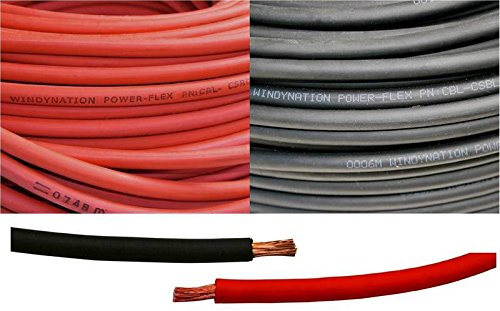
The 1004-strand workhorse that wraps EPDM tough insulation around a pure copper core for inverter and battery bank wiring.
Sitting one step below the Spartan Power in strand count but at a lower price point, the WindyNation 1/0 AWG cable packs 1004 strands of pure copper inside a high-grade EPDM jacket that resists tears, cuts, moisture, and oil-based solvents. The cable is IEC and RoHS compliant, and the copper is fully annealed per ASTM standards — which means the strands are soft and hold their crimp shape well. The single 10-foot length (available in either black or red per unit) is a practical size for connecting a pair of 24-volt batteries, wiring an inverter in a small RV, or running a winch power line from the battery box to the front bumper.
One owner notes the cable “works good” and praises its quality after wiring 2x 24V batteries and an inverter. The cable is easy to cut and strip, and the EPDM jacket has enough grip to stay seated inside a cable lug without slipping during crimp. The packaging is a soft point — a few buyers received the cable with damaged or open packaging in transit, though the cable itself was unharmed. The manufacturer charges an 18% restocking fee for returns, so measure twice before ordering.
Where it fits: If your project needs a single 10-foot run of ultra-flexible 1/0 with a tough jacket but does not require a matched red-and-black pair in one box, this delivers the highest strand count in the WindyNation family at a mid-range price.
Pick this for: A straightforward single-wire install where 10 feet is the right length and you want 1004-strand flexibility without paying for a premium-brand premium.
Choose the WNI kit instead if: You need both red and black wires plus lugs and heat shrink in one shipment, and can give up the extreme strand count for convenience.
Understanding the Specs
Strand Count and Flexibility
The number of individual copper wires twisted together inside a 1/0 cable determines how easily it bends. A cable with 65 strands feels stiff and may require effort to route around tight corners in an engine bay or solar compartment. A cable with 975 to 1026 strands drapes almost like a rope, making it much easier to work with in confined spaces. For battery relocation, trunk-to-front wiring, or any run with several 90-degree turns, a strand count of 900+ is worth the extra cost. For a simple straight-line connection between two batteries, lower strand counts are perfectly fine and cheaper.
Jacket Material — EPDM vs PVC
The jacket is the cable’s armor. EPDM (ethylene propylene diene monomer) rubber is thick, stays flexible in cold down to -50°C, and resists oil, gasoline, battery acid, and abrasion. It is the standard for automotive, marine, and welding applications. PVC (polyvinyl chloride) is less expensive, has a slick shiny surface that looks clean, and is flexible at room temperature, but it stiffens significantly in cold weather and breaks down faster when exposed to engine heat or solvents. If your cable runs inside a clean, climate-controlled space (like a golf cart body or solar shed), PVC works fine. For under-hood or outdoor use, choose EPDM.
FAQ
What is the difference between 1/0 and 1 AWG welding cable?
Can I use 1/0 welding cable for car audio?
How do I know if a 1/0 cable is pure copper or copper-clad aluminum?
What is the maximum amperage for 1/0 welding cable?
Can I solder 1/0 welding cable lugs?
Is 1/0 welding cable flexible enough for a trunk battery relocation?
What size lugs do I need for 1/0 cable?
Can 1/0 welding cable be used in solar battery bank connections?
Final Thoughts: The Verdict
Across the board, the 1/0 welding cable winner is the Spartan Power because its 1026-strand pure copper core gives you the best balance of extreme flexibility, thick EPDM protection, and a 20-foot length that covers the majority of automotive, solar, and inverter projects. If you want a complete ready-to-crimp kit with lugs and heat shrink, grab the WNI Power Flex. And for a bulk run of 50 feet at a price that works for whole-system builds, the TEMCo Easy-Flex is the one to reach for. Every cable here uses real copper and carries a 600-volt rating — match your choice to your run length, the tightness of your routing path, and if you need a kit or a spool.
How We Picked
We do not accept paid placement. Every pick is matched to a real buyer and a real use-case; we do not hands-on test units.
Sources & Methodology
Specifications: manufacturer listings and product documentation. Review insights: verified customer reviews, as of July 2026. Pricing: not shown on this page (it changes often); check the current price via the retailer link.
As an Amazon Associate, Gadgets Feed earns from qualifying purchases. This does not affect which products we feature.