
Our readers keep the lights on and my morning glass full of iced black tea. As an Amazon Associate, I earn from qualifying purchases.
Specs are compiled from manufacturer listings and verified buyer reviews and can change over time — please confirm the key details on the product page before buying.
I’m Min — the founder and writer behind Gadgets Feed. This guide is built by comparing the manufacturers’ published specifications and the patterns across verified customer reviews, so you get each pick’s real strengths and trade-offs instead of marketing spin.
To stop a sump pump from chattering or prevent irrigation backflow, you need a 1 1/2 pvc check valve that seals tight, lasts, and stays quiet.
Our Picks at a Glance
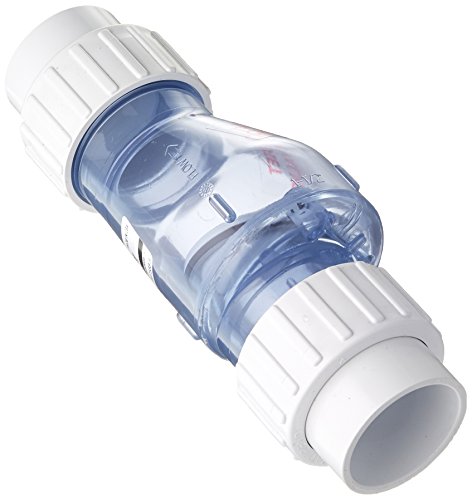


How To Choose The Best 1 1/2 PVC Check Valve
Buying the wrong check valve is loud, messy, and means cutting pipe again. Focus on these three things first: the connection type your existing pipe uses, the pressure your system puts out, and whether a spring inside matters for noise control. Here is the short version of what to look for.
Connection Type — Solvent, Threaded, or Compression
Solvent-weld (slip) valves glue directly to PVC pipe and make a permanent, leak-free bond. Threaded valves screw on, which is handy for replacing without glue but needs a clean thread match. Compression valves use rubber couplings and stainless steel clamps — great for sump pump lines where you want to swap a valve in ten minutes without drying out the pipe.
Pressure Rating — Where Your System Lives
A valve rated for 50 psi works fine on a residential sump pump or drainage line. Higher ratings like 150 psi or 200 psi handle well pump discharge, irrigation backflow, or commercial plumbing where the water hits harder. If you exceed the valve’s rating, you risk leaks or a burst body. Match the rating to your system, not the other way around.
Spring-Loaded vs. Swing Flapper
A spring-loaded flapper closes the instant flow stops, which kills the water-hammer slam that echoes through your pipes. Swing-type valves (no spring) rely on gravity and flow direction to close — they are simpler and less prone to clogging, but they can bang shut. For bedroom-adjacent sump pumps, go spring-loaded. For pond or pool lines where debris is common, a swing valve may be the smarter move.
Quick Comparison
| Model | Best For | Max Pressure | Connection Type | Body Material | Amazon |
|---|---|---|---|---|---|
| Zoeller 30-0041★ Best Overall | Quiet sump pump / drainage | 50 psi | Compression | PVC | Amazon |
| Valterra 200-C15WHigh‑Pressure Champ | Pool / pond / high-pressure lines | 150 psi | Slip | Clear PVC | Amazon |
| MIDLINE VALVE InlineBudget‑Minded Workhorse | Backflow prevention on sprinklers | 150 psi | Solvent | PVC | Amazon |
| Homewerks VCKP40B7B | Threaded irrigation / sump lines | — | Threaded | PVC Schedule 40 | Amazon |
| Edovaf Silent Check Valve | Silent sump pump upgrade | — | Compression | Clear PVC | Amazon |
| Homewerks VCK-P40-E7B | Pond circulation / solvent-weld lines | — | Solvent | PVC Schedule 40 | Amazon |
| Green living Silent Valve | Bedroom-adjacent sump pump | — | Compression | Plastic / PVC / Steel | Amazon |
| Zoeller 30-0040 | Full-flow sump / DIY installation | 50 psi | Solvent-weld with unions | PVC | Amazon |
| HYDROSEAL Sharkfellow | High-pressure commercial / well systems | 200 psi | Socket (solvent) | PVC | Amazon |
In‑Depth Reviews
1. Zoeller 30-0041 50 psi PVC 2-Port Check Valve, 1-1/2″
Our pick — over 4.5★ from 650+ verified ratings; the strongest balance of quality and price.
The crowd-chosen silent-workhorse that makes the loudest sump pump line go whisper-quiet.
You install this and the first thing you notice is the silence. The spring-loaded design kills the water-hammer clunk that old flapper valves make, and buyers report even their plumber was impressed. It handles both horizontal and vertical mounting, so you are not fighting pipe orientation. Rated at 50 psi, it covers standard residential sump and drainage duty without breaking a sweat.
Compression fittings let you install without glue or primer — just tighten the nuts and you are done. The transparent body lets you watch the flapper move with every pump cycle, so you can spot a stuck valve instantly. What wins owners over is the quiet operation, which buyers consistently call the standout feature. One long-term reviewer sums it up: “It’s quieter than I expected” — and it stays that way for years.
It beats the Valterra below on noise-control decisively, and it beats the Homewerks on sheer owner satisfaction — but it also costs more upfront. If your system is a straightforward sump pump in the basement, this is the one to reach for.
What Owners Celebrate
- Quiet operation is the most-praised feature — far more than any other quality
- Compression fittings install fast without PVC cement
- Clear body lets you confirm the flapper is sealing every cycle
Honest Trade-Offs
- 50 psi max pressure means it does not belong on high-pressure well systems without checking specs
- Rubber compression couplings can be a weak point if over-tightened
Reach for this if: Your sump pump or drainage line lives near a bedroom and you want it silent.
Look elsewhere if: Your system pushes more than 50 psi or your pipe run is full of debris that could jam a spring flapper.
2. Valterra 200-C15W PVC Swing Check Valve, Clear, 1-1/2″ Slip
A high-pressure swing valve that handles 150 psi without the spring — simple, visual, and proven in pools for a decade.
This is the valve you pick when the water is pushing hard and debris might clog a spring-loaded design. The 150 psi rating is three times the 50 psi of the Zoeller 30-0041, making it the right choice for well systems, high-head irrigation, or any line where pressure is serious. The swing flapper relies on gravity, so there is no spring to corrode or fatigue over time.
The clear PVC body is a real advantage — one buyer reports using it to visually inspect the flapper on a pool backflow system, writing: “Replaced pool backflow valve after 10+ years.” You attach it to pipe with solvent cement, creating a permanent bond. At only 8.96 ounces, it is lighter than the Homewerks in-line model, which helps on long horizontal runs where every ounce of weight matters. The trade-off: the swing flapper can be noisier than a spring-loaded valve, and some owners note the flap occasionally catches debris and needs a quick water jet to free it.
Who It Fits: A pond, pool, or irrigation setup where pressure is high and you want to see the valve working. The crowd-favorite aspect is its consistent functionality, and buyers call it solid value.
The One Catch: Orientation is critical — install it level so the swing flapper falls correctly, and budget for union fittings so you can service it without cutting pipe.
Best for: High-pressure lines where a spring would fail or where visual monitoring of the flapper is a priority.
Not ideal if: You need whisper-quiet operation right under a bedroom — the swing flapper announces itself.
3. MIDLINE VALVE PVC Inline Check Valve 1-1/2″ Solvent Connections
A spring-loaded inline valve that delivers 150 psi performance at a price that leaves room in your budget.
The midline (pun intended) between cost and capability, this valve hits 150 psi just like the Valterra but uses a stainless steel spring-loaded mechanism instead of a swing flapper. The cracking pressure is only 0.5 psi, which means it responds to the slightest flow reversal and stops backflow before it starts. It is not recommended for potable water, so keep it on landscaping sprinklers, pools, and aquarium circuits.
What buyers consistently praise is the build quality — the top positive aspect — and the value for money, which is the second-most discussed trait. It works both vertically and horizontally, matching the Zoeller’s flexibility. The honest note: the reliability feedback is mixed, and the valve can clog if solids are in the line (one owner found it jammed on the intake side of a pond pump). Install it where the water is clean and it earns its keep.
Why People Buy It
- 150 psi max pressure matches the Valterra at a lower investment
- 0.5 psi cracking pressure catches backflow fast
- Quality construction is the most-praised feature among owners
Where to Be Careful
- Not recommended for potable water — stick to irrigation and pond use
- Mixed reliability feedback means inspect the seal after installation
Grab this for: A sprinkler system, waterfall pump, or aquarium where clean water flows and you want a spring-loaded seal on a budget.
skip it if: Your line carries any solids or you need the valve for drinking water plumbing.
4. Homewerks VCKP40B7B In-Line Check Valve, 1-1/2″ Female Thread x Female Thread

A threaded check valve that screws into place without glue — ideal for sprinkler backs and irrigation valve rebuilds.
Most PVC check valves are solvent-weld, which means once they are in, they are in for good. The Homewerks VCKP40B7B uses female pipe threads (FIPS) on both ends, so you can thread it onto existing male adapters and still be able to unscrew it later. That makes it a favorite for drip irrigation zones, slope irrigation inlets, and sump pump lines where future replacement is expected. It is also noticeably heavier than the Valterra swing valve at 12.16 ounces, which owners attribute to solid Schedule 40 construction.
The honest reality: one owner bought two for new sump pumps and one of them failed. That is a genuine durability concern, though others report the valve works perfectly for backflow prevention on irrigation slopes and plan to swap it when needed. The threaded connection means you need to match threads properly — one buyer confirmed it is FIPS threaded and installed without leaks. If you want the convenience of a threaded valve, this is your best option on the list.
The Selling Point: Threaded installation means you can replace it without cutting pipe — a real time-saver on irrigation systems.
The Honest Note: The failure rate in reviews is non-zero; buy one for a single application and test it before closing up the line.
Reach for this if: You are connecting to threaded FIPS fittings and want a check valve you can swap in five minutes.
Think twice if: A single point of failure is unacceptable on a critical sump pump — order two and keep a spare.
5. Edovaf Silent PVC Check Valve 1-1/2″ with Buna-N Couplings

A spring-loaded flapper valve with stainless clamps and a clear body — built for the noise‑sensitive homeowner.
This valve is the newest contender on the list and it aims squarely at the bedroom-adjacent sump pump problem. The spring-loaded baffle is designed to control water flow enough to reduce hammering, and early owners confirm it works: “very quiet” and “silent” are the recurring words. It comes with stainless steel clamps and rubber Buna-N couplings, which means you slide it onto existing Schedule 40 pipe and tighten in about ten minutes. The transparent PVC body gives you a view of the flapper movement, just like the Zoeller and Valterra.
The less-covered truth from a four-star review: the included rubber couplings and clamps feel less sturdy than the valve itself, and one buyer replaced those accessories with sturdier ones. The valve body, though, gets consistent praise for quiet operation and no-leak sealing. It fits within a 5-1/8″ gap, so measure your pipe clearance before buying. With fewer than 20 ratings, this is a promising buy but the track record is short — pass on it if you need a proven long-term solution.
Strong Points
- Spring-loaded flapper and upgraded baffle design produce noticeably quiet operation
- Clear body lets you monitor the valve’s internal movement
- Stainless steel clamps and rubber couplings allow fast, glue-free install
Weak Spots
- Supplied rubber couplings and clamps feel less durable than valve itself
- Fewer than 20 reviews means long-term reliability is still unproven
Buy it if: You want a modern silent valve with quick-install clamps and do not mind swapping the rubber boots for heavier-duty ones.
Pass if: You need a proven product with thousands of owner-hours of history — the Zoeller 30-0041 is the safer bet.
6. Homewerks VCK-P40-E7B In-Line Check Valve, Solvent x Solvent, 1.5-Inch

A solvent-weld inline valve that disappears into the pipe — reliable backflow prevention with no threaded joints to leak.
Sometimes you want a valve that is not a removable part but a permanent piece of the pipe. This Homewerks model glues in on both ends with solvent cement, forming a monolithic bond that will not leak at the threads (since there are none). It is the same Schedule 40 build as the threaded version above but slightly lighter at 11.52 ounces. One owner installed it on a pond circulation system to prevent backflow during power outages and reported it “works like a charm.”
The aspects buyers praise most are reliability and fit. The caveat: a few owners mention debris (straw, leaves) getting caught in the plunger, which keeps the valve open and defeats its purpose. The solution is to install it with couplings on both sides so you can pull the valve out for cleaning. Mixed feedback on leakage and pressure retention means you should test it after the cement cures. Overall, a solid no-thread option for clean-water applications.
It Excels At: Permanent, leak-free backflow prevention in clean pond or circulation lines where you expect zero debris.
The Thing to Plan For: Install unions or couplings for future cleaning — debris can wedge the plunger open and you will need access.
Choose this for: A new PVC run where you plan to glue everything and never touch it again.
Not for: Lines that carry leaves, gravel, or solid debris — the plunger may stick open.
7. Green living Silent Check Valve 1-1/2″ with Spring-Loaded Flapper

A spring-loaded silent valve that claims 90% less water hammer noise and backs it up with industrial-grade hardware.
The “Green living” valve takes the noise-reduction concept a step further with a stated claim: claims 90% water hammer reduction. It uses an improved spring-loaded baffle to control flow size, which slows the closing impact. The body is made from industrial-grade plastic with 304 stainless steel clamps and elastic rubber joints, and each unit is pressure-tested before shipping. At 10.2 inches long, it fits into a 5-1/8″ clearance gap — check that before ordering.
Buyers confirm the noise improvement is real, especially for sump pumps located directly below bedrooms. One owner said: “I wish I found this years ago! My sump pump is directly below my bedroom, and now I don’t even hear it!” The top positive aspects are functionality and ease of installation. However, durability and occasional leakage are also noted in the feedback — the most-mentioned negative themes. With 89 reviews, the sample is decent, and the consensus is a strong 4.3 out of 5.
Why It Stands Out
- Claimed owner reports confirm near-silent operation
- 304 stainless steel clamps and pressure-tested body feel overbuilt for residential use
- Transparent body shows the baffle movement for easy troubleshooting
Things to Watch
- Durability and leakage are the two most-flagged downsides in owner feedback
- 10.2-inch length requires more clearance than shorter inline valves
Best for: A basement sump pump below a bedroom where every decibel of hammer noise matters.
Hold off if: Your pipe run is tight on space or you want a longer track record before committing.
8. Zoeller 30-0040 Quiet Check Valve 1-1/2″ PVC Full Flow with Unions
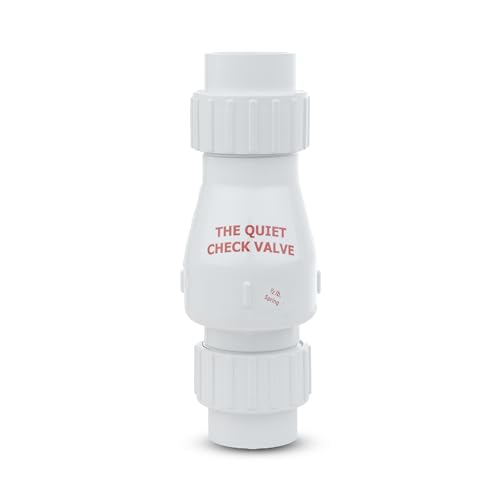
A solvent-weld valve with unions that let you unthread the body without cutting the pipe — genius for maintenance.
This is the big brother to the Zoeller 30-0041, and it uses a spring-loaded flapper with a 1/2 lb spring to close the valve rapidly and stop water hammer. The key difference: the unions. You glue the union halves to your PVC pipe, then the main body threads onto them. That means you can spin the entire valve off to clean or replace it without sawing into the pipe. It is rated for 50 psi and works in both vertical and horizontal positions.
Noise elimination is the most-praised aspect by a huge margin. One owner who replaced a standard check valve reported: “Removed the clunking sound completely.” Another noted a plumber was impressed enough to order one for his own house. It requires solvent cement and basic cutting skills, but owners say the installation takes about 15 minutes. The only downside is the higher price — and a small percentage of owners mention the union threads can be tricky to seal perfectly.
Why It Is Worth It: The union design turns a once-permanent install into a serviceable setup — no pipe cutting when you need to clean the spring flapper.
The Catch: At 50 psi it is not for high-pressure systems, and the union threads need a careful hand with Teflon tape or paste.
Reach for this if: You value the ability to disassemble your check valve for cleaning or replacement without cutting your PVC line.
Not for: Systems above 50 psi — the limits are the same as the 30-0041.
9. HYDROSEAL Sharkfellow 1 1/2″ PVC True Union Ball Check Valve

A true-union ball check valve rated for 200 psi — the highest pressure rating on this list by a meaningful margin.
When you need a valve that handles serious pressure, the HYDROSEAL Sharkfellow delivers 200 psi at 72°F, which is 50 psi higher than the Valterra and MIDLINE valves and quadruple the 50 psi Zoeller models. It uses a free-moving ball instead of a spring or flapper — the ball seats against the seal when flow reverses, and the design is “service free” with no adjustments needed. The true-union connection means you can remove the entire center section for inspection or replacement without breaking the pipe ends.
Buyers praise the build quality and solid engineering — it is noticeably better constructed than standard hardware-store valves. One owner who installed it in a shallow well reports “no problems yet” after a couple months. But the honest note: the valve is noisy when installed vertically; the plastic ball bounces inside the chamber and creates a rattling sound. The fix, per owners, is to install it horizontally, which quiets it right down. Functionality gets mixed reviews, with some owners reporting leakage, so careful installation is required.
Where It Excels
- 200 psi max pressure is the highest of any valve on this list — handles well systems and commercial plumbing
- True-union design allows full valve removal without cutting pipe
- Construction quality is the most-praised feature — owners say it outbuilds hardware-store alternatives
Where It Struggles
- Loud in vertical orientation — the ball bounces against the chamber walls
- Functionality feedback is mixed; some customers note leakage
Pick it for: A high-pressure well system, commercial plumbing, or any line where 200 psi is the operating reality.
it’s not for you if: Your install is vertical and you cannot mount it horizontally — the ball noise is hard to ignore.
Understanding the Specs
Maximum Pressure Rating (psi)
This is the highest water pressure the valve can handle before it risks leaking or bursting. A 50 psi valve covers standard residential sump pumps and drainage lines. Jump to 150 psi or 200 psi for well pumps, irrigation systems, or commercial plumbing. If your system’s pressure could exceed the valve’s rating, step up to a higher-rated model — the price difference is usually small compared to the cost of a flooded basement.
Connection Type — Solvent, Threaded, or Compression
Solvent-weld (slip) connections use PVC cement for a permanent, leak-free bond — you cannot remove the valve without cutting the pipe. Threaded connections let you screw the valve onto matching FIPS (female iron pipe) or MIPS (male iron pipe) threads, making future replacement easy. Compression connections use rubber couplings and stainless steel clamps, so you can install and remove the valve in minutes without glue. Choose based on if you want a permanent install or future serviceability.
Spring-Loaded vs. Swing vs. Ball Check
A spring-loaded valve uses a spring to push the flapper shut the instant flow stops, which kills water hammer noise. A swing valve (no spring) relies on gravity and flow to close the flapper — it is simpler and handles debris better but can be loud. A ball check valve uses a free-moving ball that seals against the seat when water reverses — it is very durable but can rattle in vertical pipe. Pick your valve type by listening to whether noise matters in your installation location.
Clear Body Visibility
A transparent PVC body lets you see the flapper, ball, or spring move inside the valve. That means you can confirm the valve is sealing after every pump cycle, spot debris that is blocking the closure, and visually verify backflow prevention. It is a diagnostic feature that costs almost nothing extra but saves you from pulling a working valve apart to check internals.
FAQ
Will a 1 1/2 PVC check valve work with Schedule 40 pipe?
Can I install a 1 1/2 inch check valve horizontally?
What is the difference between 50 psi and 200 psi check valves?
How do I know if my pipe needs a solvent-weld or threaded check valve?
Will a spring-loaded check valve stop water hammer?
How often should I replace a check valve?
Can I use a 1.5-inch check valve on a sump pump discharge line?
What does “cracking pressure” mean?
Is a clear PVC check valve better than an opaque one?
Can I use these check valves for potable (drinking) water?
Final Thoughts: The Verdict
For most people, the 1 1/2 pvc check valve winner is the Zoeller 30-0041 because it combines proven quiet operation, easy compression installation, and exceptional owner satisfaction across a huge number of buyers. If you need a higher pressure rating for a well or irrigation system, grab the Valterra 200-C15W. And for the best serviceable design — where you can remove the valve without cutting pipe — the Zoeller 30-0040 with its built-in unions is the one to reach for.
How We Picked
We do not accept paid placement. Every pick is matched to a real buyer and a real use-case; we do not hands-on test units.
Sources & Methodology
Specifications: manufacturer listings and product documentation. Review insights: verified customer reviews, as of July 2026. Pricing: not shown on this page (it changes often); check the current price via the retailer link.
As an Amazon Associate, Gadgets Feed earns from qualifying purchases. This does not affect which products we feature.