
Our readers keep the lights on and my morning glass full of iced black tea. As an Amazon Associate, I earn from qualifying purchases.
Specs are compiled from manufacturer listings and verified buyer reviews and can change over time — please confirm the key details on the product page before buying.
Before you buy a 1-1/4 inch ball valve, ask yourself one question: what is your pipe made of and what flows through it? Match the material—brass for metal lines and high pressure, PVC for plastic piping and water—and the valve lasts for decades. Choose wrong, and you will be back at the hardware store within a year, fighting a seized handle or a leaking seal.
I’m Min — the founder and writer behind Gadgets Feed. This guide is built by comparing the manufacturers’ published specifications and the patterns across verified customer reviews, so you get each pick’s real strengths and trade-offs instead of marketing spin.
Every valve here fits a true 1-1/4 inch connection, but they divide into two groups: threaded metal and solvent-weld plastic. Your pipe type, pressure needs, and whether you plan to disassemble it for cleaning decide which 1 1/4 ball valve fits your project.
Our Picks at a Glance

How To Choose The Best 1 1/4 Ball Valve
The most common mistake is buying a valve that matches the size number but not the connection method your pipe uses. A 1-1/4 inch threaded valve screws onto male threads, while a 1-1/4 inch socket valve glues over the outside of a pipe—they are not interchangeable. Check your pipe’s end before you shop.
Match the Metal to the Job
Stainless steel handles far higher pressures and resists corrosion better than brass, but costs more and is harder to work with. Brass is the classic plumbing choice, easy to thread and safe for drinking water when it is lead-free. For outdoor sprinkler or pool lines where pressure stays under 150 PSI, heavy-duty PVC is cheaper and never corrodes.
Quick Comparison
| Model | Best For | Max Pressure | Material | Connection | Amazon |
|---|---|---|---|---|---|
| DERNORD Full Port 304★ Best Overall | Heavy-duty water, oil, gas | 1000 psi | Stainless 304 | Threaded NPT | Amazon |
| AIPOR PVC 2-PackBest Value | Sprinkler & pool lines | 150 psi | PVC | Solvent Socket | Amazon |
| Boltigen True UnionMost Serviceable | Systems needing removal | 150 psi | PVC | Slip Socket | Amazon |
| DERNORD Male/Female | Mixed thread hookups | 1000 psi | Stainless 304 | Male x Female NPT | Amazon |
| Eastman Brass 20051LF | Residential potable water | 600 psi | Brass | Threaded IPS | Amazon |
| MIDLINE 822T336 | Steam lines & well tanks | 600 psi WOG | Forged Brass | Female Threaded | Amazon |
| VALFLUIDS Forged LF | Natural gas & kilns | 600 psi WOG | Lead-Free Brass | Female NPT | Amazon |
| inruwo Heavy Duty | Industrial equipment | 600 psi WOG | Forged Brass | Female NPT | Amazon |
| REVALVED Chrome | Residential water & air | 600 psi WOG | Forged Brass | Female NPT | Amazon |
In‑Depth Reviews
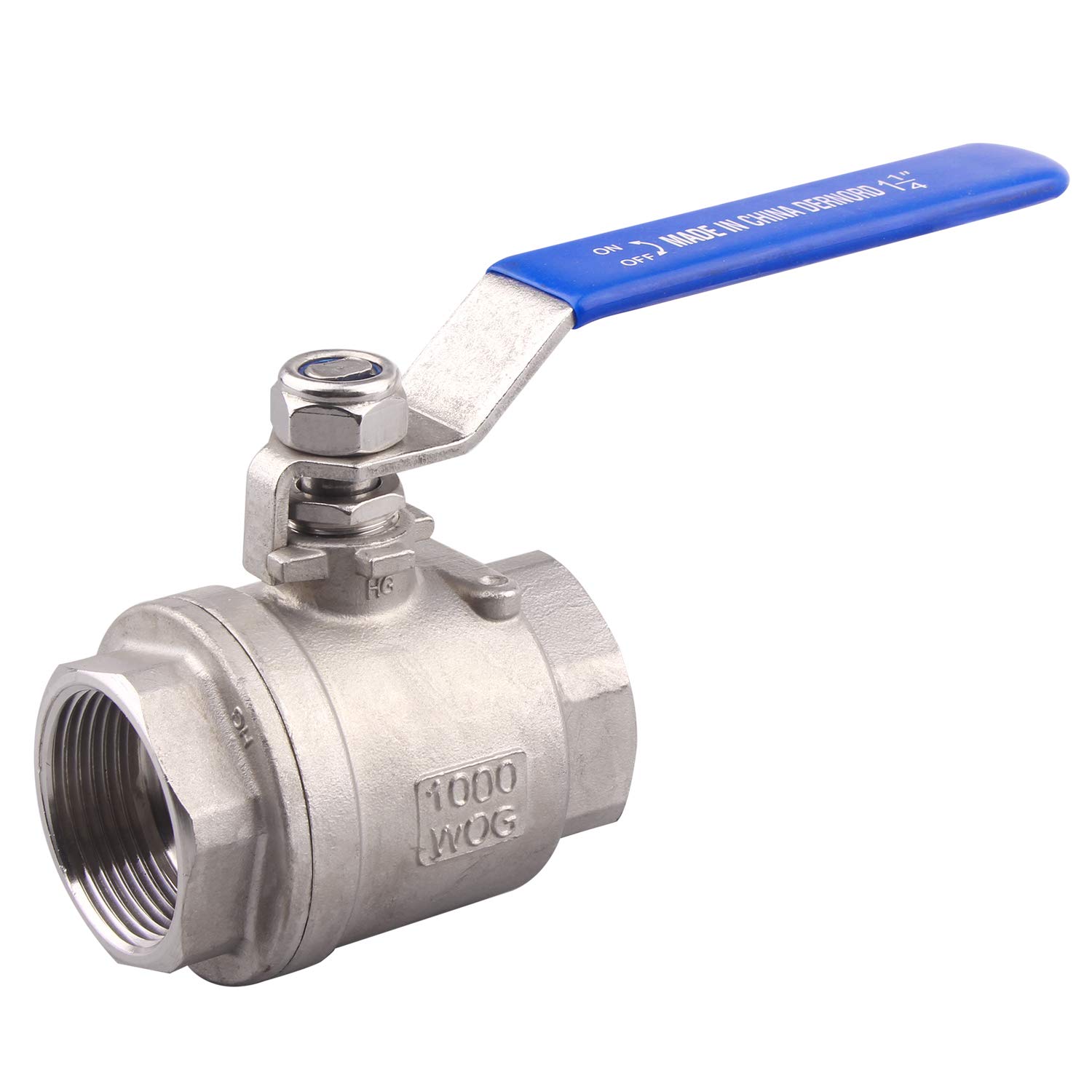
1. DERNORD Full Port Ball Valve Stainless Steel 304
Our pick — over 4.5★ from 700+ verified ratings; the strongest balance of quality and price.
The stainless workhorse that shrugs off a 6.7x higher pressure load than any plastic rival here.
This valve is rated for 1000 psi, a massive margin over the 150 psi ceiling of the PVC options in this lineup, so it belongs on metal lines carrying water, oil, or gas. The 304 stainless body resists corrosion far longer than brass in tough service, which is why buyers report it outliving their old brass fittings by years. It is a full-port design, meaning the ball opens the entire bore for maximum flow with minimal pressure drop.
The threaded NPT connections are serviceable—you can unscrew the body to replace the seal—and the blue vinyl-coated handle in the data gives you a comfortable grip. The price-to-value ratio is what wins people over here; owners are consistently surprised at how much metal they get for the money. The handle is a touch shorter and thinner than on some rivals, and one buyer found it stiff after a week submerged in seawater, so heavier marine duty may warrant a thicker handle swap.
Buyers sum it up plainly: “This is the valve that I wish I bought the first time,” a comment repeated by owners who burned money on cheaper units before landing here. This is the crowd favorite in the category, holding a 4.6-star average across hundreds of owners who praise the build and the long-term durability.
Why it leads the list
- 1000 psi rating dwarfs every plastic valve on this page
- 304 stainless resists corrosion for years of hard service
- Serviceable body unscrews for seal replacement
- Full port keeps flow strong with no bottleneck
Honest trade-offs
- Handle feels shorter and thinner than some rivals
- Seawater exposure made one handle stiff
Reach for it when: you need one valve to handle high pressure and corrosive media across water, oil, or gas lines.
Look elsewhere if: you are gluing into PVC pipe—this threads on, it does not solvent-weld.
2. AIPOR 1-1/4″ PVC Ball Valve 2-Pack
The two-pack that turns one socket-weld job into two with handles old hands can actually turn.
If your system is Schedule 40 PVC pipe, this is the valve to grab—you get two units for about the price of one premium brass fitting. The solvent-weld socket connections glue right onto 1-1/4 inch Schedule 40 pipe, and the working pressure of 150 psi with a 140 °F maximum covers standard sprinkler, irrigation, and pool duties. What owners praise most is the ease of use, with the longer handle design making quarter-turn operation genuinely comfortable even for older hands.
This one-piece body has no extra joints to leak, a feature buyers appreciate on high-pressure irrigation lines, where they report it “works great.” It also isolates specific zones—one owner shuts off a garden area locally instead of walking to the main shutoff. The design meets ASME B16.34 (a recognized piping standard) and RoHS (a restriction on hazardous substances), so it is built to a known spec.
The honest caveat: one buyer had a valve stiffen up and fail after about six months of pool duty, replacing it with the same model in hopes the issue was a fluke. Size feedback is split too, so measure your pipe’s outside diameter before gluing. For the money, two solidly built PVC valves is a hard deal to beat for low-pressure water work.
Best for the budget: this is the value king for PVC sprinkler and pool systems, delivering two easy-turn valves for less than many single brass units cost.
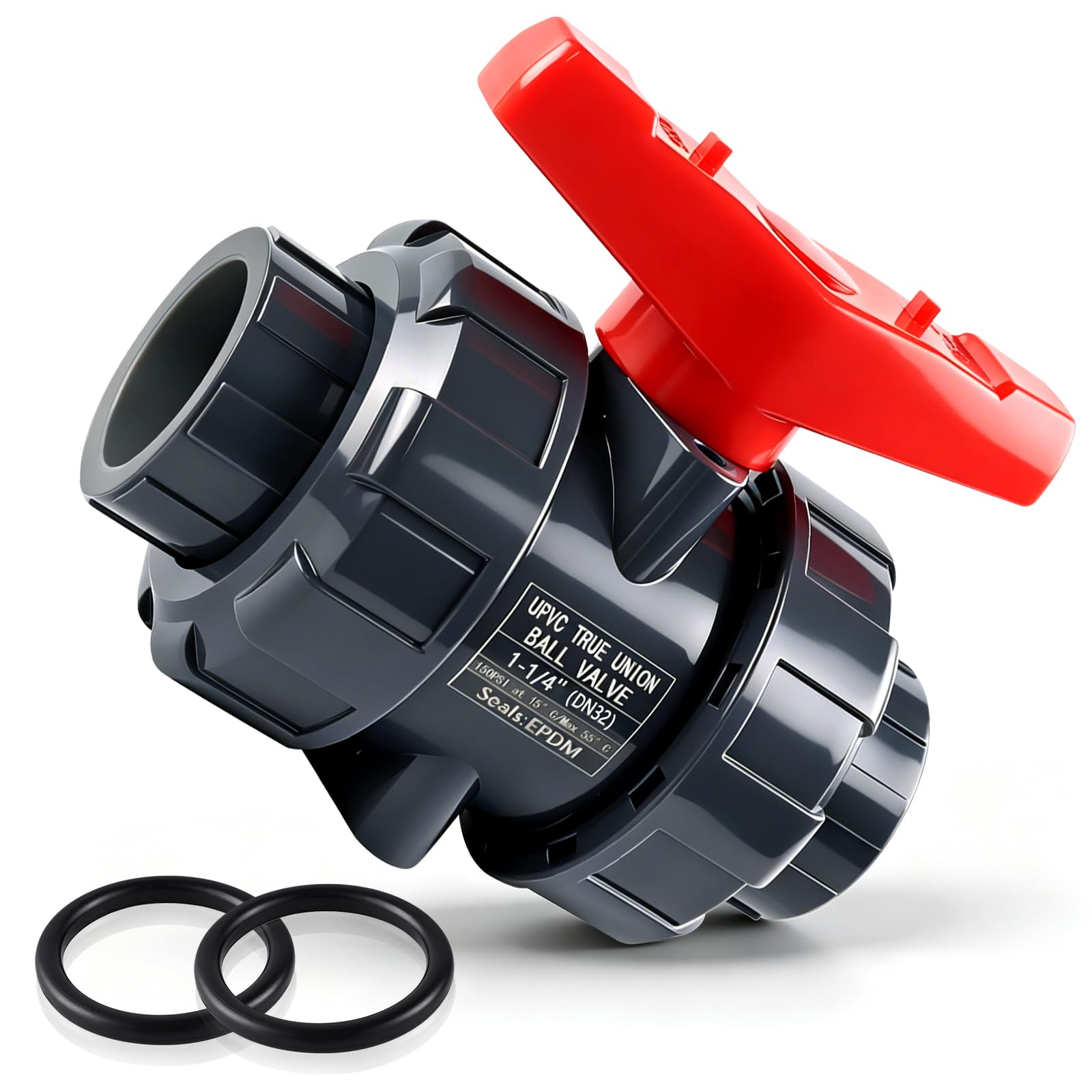
3. Boltigen PVC Union Ball Valve 1-1/4″ (DN32)
The true union design that unscrews for cleaning without breaking apart your entire pipe run.
This is the valve you want when future maintenance matters—each side carries a union, so you can spin the valve body out for cleaning or replacement while leaving the glued pipe connections untouched. Owners building automatic irrigation systems bought four at a time specifically for this flexibility, letting them isolate individual zones easily. It is a full-flow DN32 (1-1/4 inch) slip-socket valve rated at 150 psi, and the feedback is that it is solidly built with no leak complaints after months of service.
The materials are engineered for corrosion resistance: a PVC body with an EPDM O-ring and a PTFE seat, which also makes it suitable for acid and alkali service beyond plain water. One buyer installed it on a main water line and passed the water department’s required inspection for a shutoff within 3 feet of the meter, confirming it seals properly under real scrutiny. The “true union” quality is what wins people over—buyers love that it doubles as both a valve and a union connector.
The mixed feedback lands on ease of operation rather than build quality, so if you want the smoothest possible turn, the AIPOR above may edge it out. But if removability is your priority—and the data shows that is a real draw for this one—the Boltigen is the standout. It is priced at a solid mid-range point for a valve that can be serviced rather than replaced.
The maintenance pick: owners mostly praise the leak-free seal and the union design that “doubles as a union also” — a two-birds-one-stone buy for systems you plan to service.
4. DERNORD Full Port Ball Valve 1-1/4 Inch Male x Female
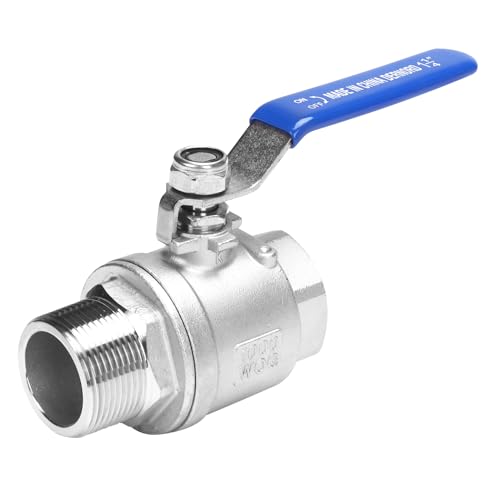
A 1000 psi stainless valve with mixed male and female threads to bridge two different pipe ends.
This DERNORD variant trades the double-female setup of the top pick for a male-on-one-side, female-on-the-other configuration, which solves the awkward problem of connecting two female-threaded fittings. The 304 stainless body carries the same 1000 psi rating as the flagship, so it is equally at home on water, oil, or gas lines. What wins owners over is the construction quality and the sheer beefiness — one buyer ran 600 lbs of abrasive media through a sand blaster pot and found the valve “still perfect inside.”
Serviceability is a real feature here: the valve comes apart via threads, and the two-piece design means you can reach the internal ball for cleaning. Buyers have pressed it into rough duty from DEF (diesel exhaust fluid) tanks to compressor drain duty for years without issues. The heavy-duty handle wears blue vinyl insulation for grip, and the temperature range of -60 °F to 450 °F covers hot and cold service extremes.
Quality and construction are the most-praised aspects by a wide margin. The recurring caution involves sealing: a few owners note inconsistent shutoff, and leakage feedback is genuinely split, so this is one to tighten carefully with thread sealant and test before burying it in a wall. For a high-pressure stainless valve at a value price that also adapts thread styles, it is a strong mid-range buy.
Choose it for: connecting a male pipe to a female fitting at high pressure without extra adapters.
Test before final install: sealing feedback is mixed, so verify the shutoff seats fully before permanent concealment.
5. Eastman 1-1/4 Inch IPS Heavy Duty Full Port Brass Ball Valve 20051LF

The brass reference standard for residential water, with a polished interior finish owners actually mention.
When your hot water heater shutoff starts leaking, this is the upgrade buyers reach for—a lead-free brass valve rated to 600 WOG and 150 PSIG for saturated steam, with UPC approval and CSA certification for potable water lines. The full-port IPS design on both ends supports maximum flow with minimal pressure drop, which is exactly what you want on a main line. Quality is the most-praised aspect by a landslide, with owners calling it a “decent quality valve” that opens and closes easily and has not leaked since installation.
The stamped steel handle wears a vinyl coating for a comfortable, smooth turn, and the Teflon seal handles high-temperature and high-pressure conditions reliably. Buyers have run it for years as a main shutoff and report it works smoothly and lasts. The polished interior finish even drew positive comments on appearance, which is rare praise for a plumbing part.
The one recurring gripe is the fastening nut, which one outdoor user found rusting within a year on the brass body — an annoying but replaceable part. Ease of use feedback is mixed, with a note that a valve can be hard to get unstuck if left closed for a long time. This is a premium-tier brass valve that earns its mid-premium price for residential water service where lead-free certification matters.
What owners rave about
- Quality is the #1 praise — “very clean looking, very easy”
- Lead-free and CSA certified for drinking water
- Teflon seal handles high heat and pressure
- Full port means strong flow, low pressure drop
What to watch
- Fastening nut rusted on one outdoor install
- Can be hard to turn if left shut for long stretches
6. MIDLINE VALVE 822T336 Full Port Forged Brass Ball Valve

A compact forged-brass unit rated for 150 PSI steam that empties a well tank in about a minute.
This valve punches above its compact size—the forged brass body holds a chrome-plated brass ball and is rated for 150 PSI steam and 600 PSI WOG (water, oil, gas), which is why buyers use it to purge well water tanks fast. One owner emptied a well tank in about a minute, calling it a “great time saver.” It is a lead-free full-port valve with 1-1/4 inch female threaded IPS (iron pipe size) connections, so it threads straight onto standard male IPS pipe.
The forged construction is denser and stronger than cast brass, which is why the valve seals tight even under demanding service. At 16 ounces it feels substantial in the hand, and the chrome-plated ball keeps the quarter-turn operation smooth. Buyers consistently rate it great value, noting it “seals tight” and works exactly as expected.
This is a premium-tier option positioned for steam and high-temperature service where a PVC valve cannot go. It is shorter than some rivals by a small margin, which can be an advantage in tight spaces, and one reviewer noted it ran “3/8 in shorter” than their previous valve. If you need steam-rated brass at a fair price for a well or boiler system, this is a top-tier choice.
The steam specialist: forged brass at a premium tier with a steam rating most PVC and even some brass rivals do not offer in this size.
7. VALFLUIDS Full Port Forged LF Brass Ball Valve

The CSA-certified brass valve natural gas users trust, with a blowout-proof stem for safety.
This VALFLUIDS valve is built for gas lines, where surprises are not an option. It carries CSA and CUPC approval (certifications for gas and plumbing safety), and buyers have used it in natural gas service and to control gas supply for a ceramic kiln, praising the “nice quality with smooth operation.” The two-piece forged body is full-port with a blowout-proof stem and PTFE (a non-stick plastic) seats, so the ball cannot shoot out under pressure and the seal stays leak-free.
Rated for 150 PSI WSP and 600 PSI WOG, it handles drinking water service per the datasheet, with lead-free brass meeting federal and state standards. Functionality is the most-praised aspect, with owners noting it works great as a drain valve for an air compressor and handles 150+ psi easily. The handle offers easy flow control, preferred over standard bibs by buyers who want precision.
The honest caution is a quality-control outlier: an occasional unit has arrived with no internal ball installed, making the handle immovable—a known defect reported in some older reviews that still appears rarely. It is a premium-tier valve at a fair price for gas and high-pressure water, but check the ball rotates before you install it. For gas-certified, lead-free brass at this level, it is a top-tier pick.
Made for gas and kilns: the CSA approval and smooth quarter-turn make it a favorite for natural gas lines and ceramic kiln controls.
Inspect on arrival: a rare defective unit ships with no internal ball, so test the handle turns before plumbing it in.
8. inruwo 1-1/4″ Heavy Duty Full Port Brass Ball Valve

A solid forged-brass valve with a 600 psi WOG rating that earns its keep on a well line.
The 1-1/4 inch FNPT threads on both ends connect straight to male NPT or IPS pipe, and the temperature range of -60 °F to 450 °F covers most real-world service. Owners mention it “has been working beautifully on my well” and praise the strong valve body.
The plastic-covered lever handle gives a comfortable 1/4-turn operation with low torque, and the leak-proof shutoff is bidirectional. It even ships with a roll of leak-proof tape, a small touch that shows attention to the install. The corrosion-resistant forged brass and chrome-plated ball make it durable for mechanical and industrial equipment applications.
This is a lighter choice in terms of owner volume—fewer reviews than the big names—but the feedback is uniformly positive, with no recurring complaints in the data. It is the budget-friendly way into a genuine 600 WOG forged brass valve, ideal if you need the metal but want to spend less.
The smart spend: forged-brass build at a budget-friendly price, with buyers confirming it works flawlessly on wells and tire bead tanks.
9. REVALVED Full Port 1-1/4″ Brass Ball Valve

The chrome-plated brass valve with a 90-degree safety grip handle that offers fingertip control.
This REVALVED valve closes out the list as a premium-tier brass option for residential water, air, or gas piping. The corrosion-resistant forged brass is lead-free, and the chrome-plated finish gives it a polished look that stands out on an exposed line. Owners praise the “finger-tip control” of the 90-degree safety-grip coated handle, which makes the quarter-turn operation notably smooth, and quality is the most-praised aspect by a wide margin.
Installed properly with seal tape and plumber’s sealant, customers note no leaks across multiple units—one owner bought six and had clean water-line installation every time. The female threaded NPT connector is built for secure, leak-free connections, and the 600 PSI WOG rating covers standard residential pressure with room to spare. High-quality materials and smooth operation dominate the positive feedback.
The honest mixed notes: closure feedback is split, with some units reported not fully closing, and installation is occasionally tricky if the threads are not perfectly cut for a particular application. Value for money is also a point of disagreement—some feel the single-valve price runs high, so it is the premium pick for buyers who value fit and finish over budget. With a 30-day money-back guarantee, there is a safety net if it does not suit your threads.
Grab it for: a polished, smooth-turning brass valve on a visible residential line where appearance and feel matter.
Weigh the cost: some buyers find the single-valve price steep, and closure is occasionally imperfect, so verify the shutoff seats fully before final torque.
Understanding the Specs
WOG and PSI Ratings
You will see two pressure numbers on brass and steel valves. WOG stands for Water, Oil, Gas—the cold working pressure the valve can hold continuously, like 600 WOG. WSP is the lower working steam pressure, such as 150 PSI, because steam is hotter and harsher on seals. Always match the WOG number to your system’s peak pressure, and never exceed the WSP on steam lines.
Full Port vs Standard Port
A full-port valve has a ball with a bore the same size as the pipe, so water flows through with almost no restriction and minimal pressure drop. Standard-port valves use a smaller ball opening, which saves cost but chokes flow. For a main shutoff or a line where you need full pressure downstream, always choose full port.
Threaded NPT vs Solvent-Weld Socket
Threaded NPT connections screw onto male pipe threads with seal tape or pipe dope, and they are removable for service. Solvent-weld socket connections glue permanently onto the outside of plastic pipe. You cannot mix them—a threaded valve will not glue onto pipe, and a socket valve will not screw on. Match the valve end to your pipe’s end style.
True Union Design
A true union valve has a collar on each side that lets you unscrew the entire valve body from the glued pipe without cutting the line. This is ideal for systems you will service, clean, or replace the valve on later. Standard socket valves have no union, so removing one means cutting the pipe and adding a coupling.
FAQ
Will a 1-1/4 inch threaded valve fit my 1-1/4 inch PVC pipe?
What is the difference between 150 PSI and 1000 WOG ratings?
Can I use a brass ball valve for drinking water?
How do I know if I need a full-port or standard-port valve?
What does WSP mean on a brass ball valve?
Why would I want a true union ball valve over a standard one?
Can I use a PVC ball valve on a hot water line?
How do I stop a ball valve handle from getting hard to turn?
Is a stainless steel valve better than a brass valve?
What does it mean if a valve will not fully close?
Final Thoughts: The Verdict
If you want one dependable pick, the 1 1/4 ball valve winner is the DERNORD Stainless Steel 304 because its 1000 psi rating and corrosion-resistant build give you one valve that handles water, oil, and gas with years of headroom. If you are gluing into a PVC sprinkler or pool system, grab the AIPOR 2-Pack for the best value and the easiest handles to turn. And for a residential main water line where lead-free certification and a polished brass finish matter, the Eastman 20051LF is the one to reach for.
How We Picked
We do not accept paid placement. Every pick is matched to a real buyer and a real use-case; we do not hands-on test units.
Sources & Methodology
Specifications: manufacturer listings and product documentation. Review insights: verified customer reviews, as of August 2026. Pricing: not shown on this page (it changes often); check the current price via the retailer link.
As an Amazon Associate, Gadgets Feed earns from qualifying purchases. This does not affect which products we feature.