
Metal fabrication and repair work live or die by the tube you choose. The wrong 1/2 inch stainless steel tubing buckles under a bender, corrodes at the first salt spray, or forces extra welds because the lengths are too short for your run. A proper tube disappears into your project — straight, weldable, and precisely dimensioned to spec.
I’m Min — the co-founder and writer behind Gadgets Feed. I’ve spent hundreds of hours cross-referencing metallurgical specs, wall thickness measurements, and real-world customer feedback to separate the straight shooters from the wobbly rejects in this narrow category.
This guide walks you through the specific dimensions, material grades, and weldability traits that matter most. Whether you need a short bundle for framing or a long continuous piece to minimize joints, the following analysis will help you find the right 1/2 inch stainless steel tubing for your exact application.
How To Choose The Best 1/2 Inch Stainless Steel Tubing
The term “1/2 inch tubing” hides a handful of critical variables. The outside diameter (OD) is almost always 0.5 inches or 12.7mm, but the inner diameter shifts depending on wall thickness. A 0.035-inch wall gives you an ID of 0.43 inches, while a 1mm wall produces an ID near 10.5mm. That difference matters when you’re sleeving over a shaft or flowing fluid through the center.
304 vs. 316 Stainless Steel Grade
304 stainless is the default for indoor structures, automotive brackets, and general fabrication. It offers strong corrosion resistance and excellent weldability. 316 stainless adds molybdenum to the alloy, which dramatically improves resistance to chlorides and acidic environments. If your tube goes near salt water, chemical baths, or food processing wash-down stations, step up to 316. The added cost is small compared to replacing a rust-pitted railing.
Wall Thickness and Weldability
Thin-wall tubing (around 0.035″ or 0.9mm) is easier to bend with a manual bender and lighter for long runs, but it requires careful heat control during welding to avoid burn-through. Thicker walls (1mm and above) take more heat and filler rod but produce stronger joints that withstand vibration and pressure. For threaded connections, a thicker wall provides more thread engagement and resists stripping.
Straight Length vs. Coiled Tubing
Straight 12-inch to 40-inch sections are ideal for frames, handrails, and structural builds where straightness is non-negotiable. Coiled tubing is sold in 10-foot continuous lengths, which is a lifesaver for fluid transfer lines and pneumatic systems that snake around obstacles. The trade-off is that coiled tubing retains a memory curve and requires effort to straighten — using a drilled 2×4 block or a straightening tool is standard practice.
Quick Comparison
On smaller screens, swipe sideways to see the full table.
| Model | Category | Best For | Key Spec | Amazon |
|---|---|---|---|---|
| Tynulox 4-Pack | Mid-Range | Multi-piece framing & crafts | 1mm wall, 12-inch length | Amazon |
| Yluvaok 4-Pack | Mid-Range | Longer straight sections | 14-inch length, 304 SS | Amazon |
| MOKOVI Solid Rods | Mid-Range | Shafts & axles | Solid round rod, 16-inch length | Amazon |
| VALVENTO 316 Tube | Premium | Marine & chemical runs | 316 SS, 40-inch, 0.035″ wall | Amazon |
| FITOK Seamless Tube | Premium | High-pressure fluid systems | 316/316L seamless, 40-inch | Amazon |
| Vigorous Coil | Premium | Bendable fuel & plumbing lines | 10-ft coil, 304 SS | Amazon |
| uxcell Coil | Premium | Pneumatic & gas systems | 10-ft coil, 304 SS, 1mm wall | Amazon |
In‑Depth Reviews
1. VALVENTO 316 Stainless Steel Tubing
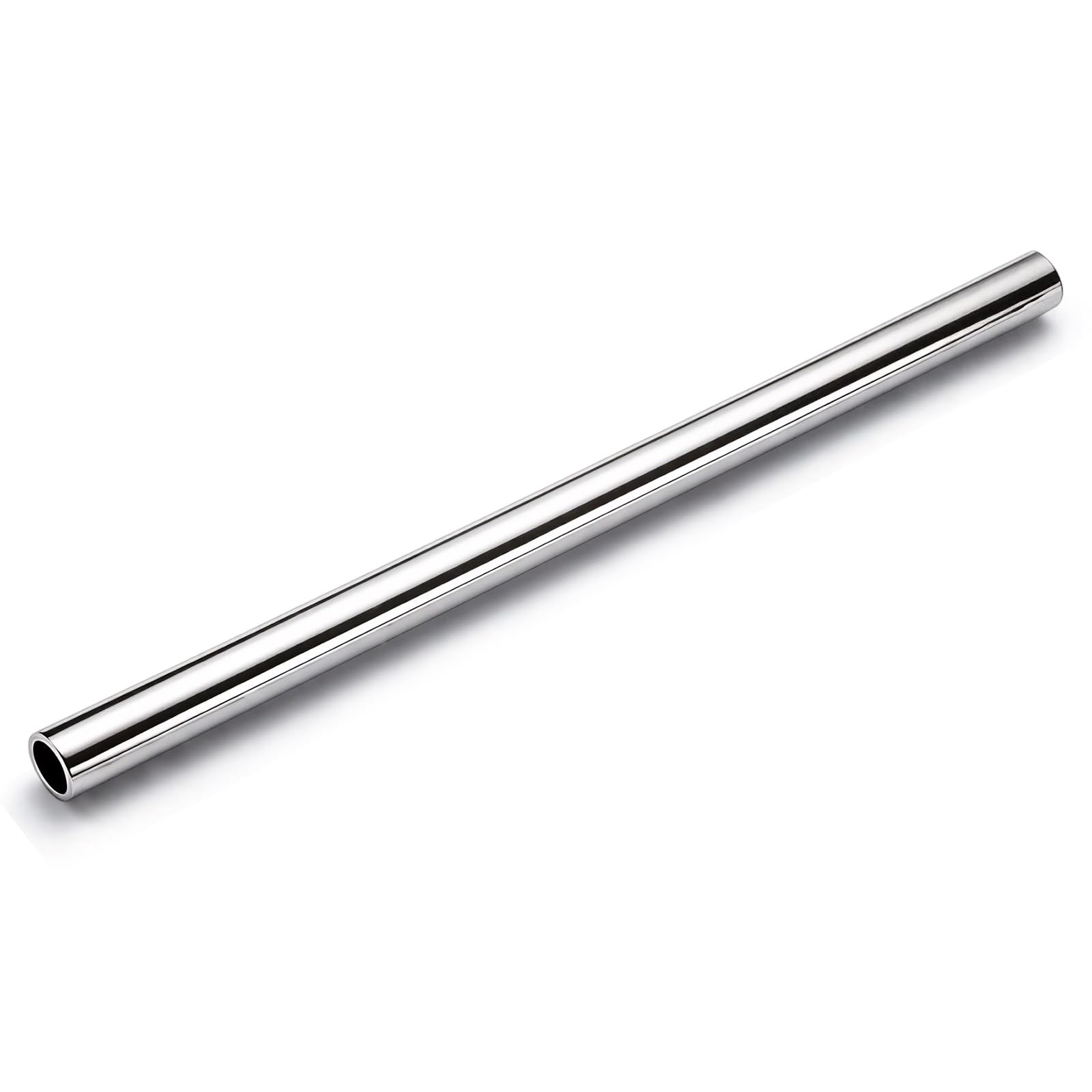
The VALVENTO hits the sweet spot for serious fabrication because it combines 316 stainless with a full 40-inch length. That extra-long single piece means fewer welds on a handrail or fluid line, which saves cleanup time and reduces leak paths. The 0.035-inch wall makes it light enough to bend with a standard tube bender yet stiff enough to hold its shape under reasonable load.
Buyers report that the OD measures exactly 0.5 inches and the brushed finish resists contaminant buildup in food-grade or chemical environments. The added molybdenum in 316 grade gives you genuine protection against chloride pitting — essential if the tubing lives near a marine dock or in a processing plant with frequent sanitizer rinses.
One user noted the ID runs slightly large at about 0.525 inches, which works fine for bushing adapters but may not grip a 0.5-inch shaft as tightly as a solid rod would. For most structural and fluid-transfer jobs, this is the most balanced pick in the lineup.
Why it’s great
- 316 stainless provides superior corrosion resistance for marine and chemical use.
- 40-inch length reduces weld joints compared to standard 12-inch tubes.
- Consistent OD and smooth finish simplify cutting and flaring.
Good to know
- Thin 0.035″ wall requires careful heat management during welding.
- Only 1 piece per pack — higher per-unit cost for large projects.
2. FITOK 316/316L Seamless Tubing

The FITOK tube is the choice when your system cannot tolerate a welded seam failure. It is 316/316L dual-certified stainless steel produced as seamless tubing, which means there is no longitudinal weld bead to crack under high pressure or repeated thermal cycling. The annealing and mechanical polish give it a controlled maximum hardness of 80 HRB, making it compatible with compression fittings for leak-tight connections.
At 40 inches long with a 0.035-inch wall, this tube is designed specifically for fluid systems in oil and gas, petrochemical, and power generation equipment. Users confirm the OD and ovality tolerances are tight enough to seal with Swagelok-style fittings without leaks. The smooth inner bore keeps fluid friction low and prevents particulate entrapment.
One reviewer pointed out the price is noticeably higher than welded alternatives, and a local supplier may match the cost for shorter lengths. But for critical applications where a seam failure would mean a system shutdown or safety hazard, the FITOK seamless construction justifies the premium.
Why it’s great
- Seamless construction handles higher pressure than welded tubing.
- 316/316L dual-certified for enhanced corrosion resistance.
- Controlled hardness ensures reliable compression fitting seals.
Good to know
- Premium pricing compared to welded 304 alternatives.
- Not ideal for decorative projects — matte mechanical polish, not mirror.
3. Tynulox 304 Stainless Steel Tube 4-Pack

The Tynulox 4-pack delivers four 12-inch tubes with a 1mm wall thickness, giving you enough material for small frames, jigs, or decorative brackets without buying a bulk bundle. The 304 grade polishes to a bright silver finish that looks clean on furniture or garden structures, and the wall thickness provides enough meat for threading or welding without burn-through.
Buyers consistently note that the tubes cut cleanly with standard pipe cutters or a hacksaw, and the material resists rust outdoors. One user repurposed short sections as fishing rod bell holders by cutting 1.5-inch pieces — the 1mm wall held threads from set screws without stripping. The polished surface also accepts paint or clear coat if you want to match a specific color scheme.
The primary limitation is the 12-inch length per piece. For any run longer than a foot, you will need to weld or sleeve joints, which adds time and potential weak points. The tubes are straight and true to size according to customer measurements, but the 12-inch max is a hard constraint for larger builds.
Why it’s great
- Four tubes per pack — cost-effective for multi-point projects.
- 1mm wall is thick enough for threading and secure welding.
- 304 grade holds up well against outdoor moisture and rust.
Good to know
- 12-inch length forces joints on any long run.
- Occasional sizing variance — one buyer reported wrong diameter.
4. Yluvaok 304 Stainless Steel Tube 4-Pack
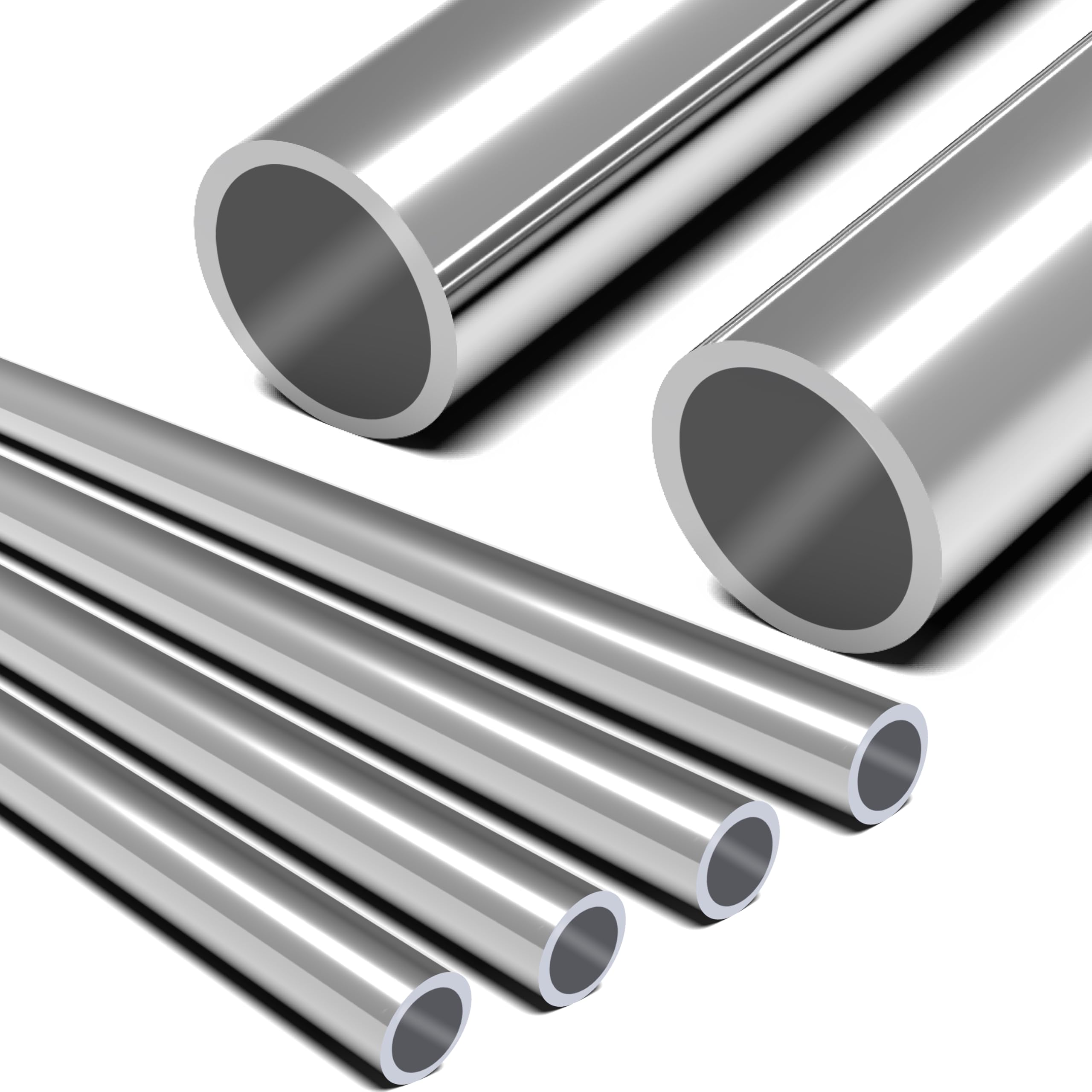
The Yluvaok pack steps the length up to 14 inches per tube while keeping the same 4-count and 304 stainless construction. That extra two inches per piece matters when you are spacing uprights on a railing section or extending a routed lift table — it reduces the total number of tubes needed to cover a given span.
Users have put these tubes to work in fence tensioning systems and furniture frames, noting that the seamless surface takes a weld bead cleanly with minimal filler rod required. The metric-origin sizing means the OD measures 12.7mm, which is dead-on for 1/2 inch nominal. The polished silvery finish resists fingerprints and smudges during handling.
One buyer flagged that the diameters are not perfectly consistent between tubes — a few pieces measured 8.05mm to 8.13mm ID instead of 8mm. That variance required filing to fit 608 ball bearings. If your project demands tight slip-fit tolerances on the inner diameter, plan to verify each tube individually before committing to assembly.
Why it’s great
- 14-inch length gives better coverage than standard 12-inch tubes.
- 304 stainless provides strong corrosion resistance for outdoor use.
- Seamless surface welds and finishes cleanly.
Good to know
- ID tolerances vary between tubes — may need adjustment for bearing fits.
- Not suitable for high-pressure applications — thin wall.
5. MOKOVI 304 Solid Round Rods
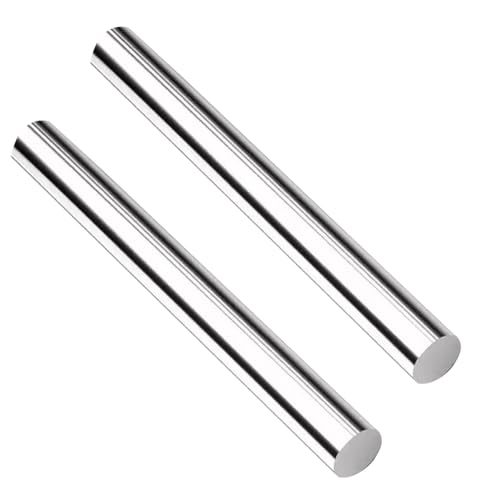
This is not a hollow tube — it is a solid 0.5-inch diameter 304 stainless rod designed for shafts, axles, and pins that carry load through the full cross-section. With a 16-inch length per rod and a 2-pack, you have enough material for motor shafts, pivot dowels, or structural tie bars where a hollow tube would collapse under point loading.
Buyers confirm the rods arrive straight with square-cut ends, which eliminates facing work before chucking into a lathe or welding onto a bracket. The 304 grade handles outdoor exposure without surface rust, as one user verified after building a rust-resistant boat hook combined with ball bearings and graphite golf club sections. The surface finish is smooth enough for bearing sleeve applications with minimal runout.
Because it is a solid rod, you cannot run fluid or wiring through the center. It also adds weight compared to an equivalent-length tube. For shaft applications, double-check that your bearing inner diameter matches 0.5 inches exactly — any tolerance mismatch requires sanding or shimming.
Why it’s great
- Solid cross-section handles higher shear loads than hollow tubing.
- 16-inch length reduces joints for medium-span shafts.
- Straight, square-cut ends save prep time for machining.
Good to know
- Cannot pass fluid or wiring through a solid rod.
- Heavier per foot than hollow tubing of the same OD.
6. Vigorous 304 Stainless Steel Tubing Coil

When your routing path snakes around engine components or through tight wall cavities, a 10-foot coil is far more practical than coupling multiple straight sections. The Vigorous coil is made from 304 stainless welded tubing with enough flexibility to be shaped without a bender for gentle curves, yet stiff enough to resist vibration-induced fatigue.
Users have deployed it for replacing fuel lines and running pneumatic air supply, reporting that it holds its shape after bending and resists kinking as long as you use a proper tube bender for tight radii. The welded construction keeps costs lower than seamless equivalents while still providing reliable performance for non-critical pressure lines.
The trade-off is that flaring the end is difficult with this thin-wall material — one reviewer noted it does not like flaring and prefers compression fittings instead. The coil memory also means you must straighten the tube before cutting precise lengths. A drilled 2×4 block or a manual straightener handles the job, but it adds a prep step that straight-tube buyers can skip.
Why it’s great
- 10-foot continuous length eliminates joints in long runs.
- Flexible enough for routing around obstacles.
- Affordable welded construction for non-critical applications.
Good to know
- Thin wall does not flare reliably — use compression fittings.
- Coil memory requires straightening before precise cutting.
7. uxcell 304 Stainless Steel Tubing Coil
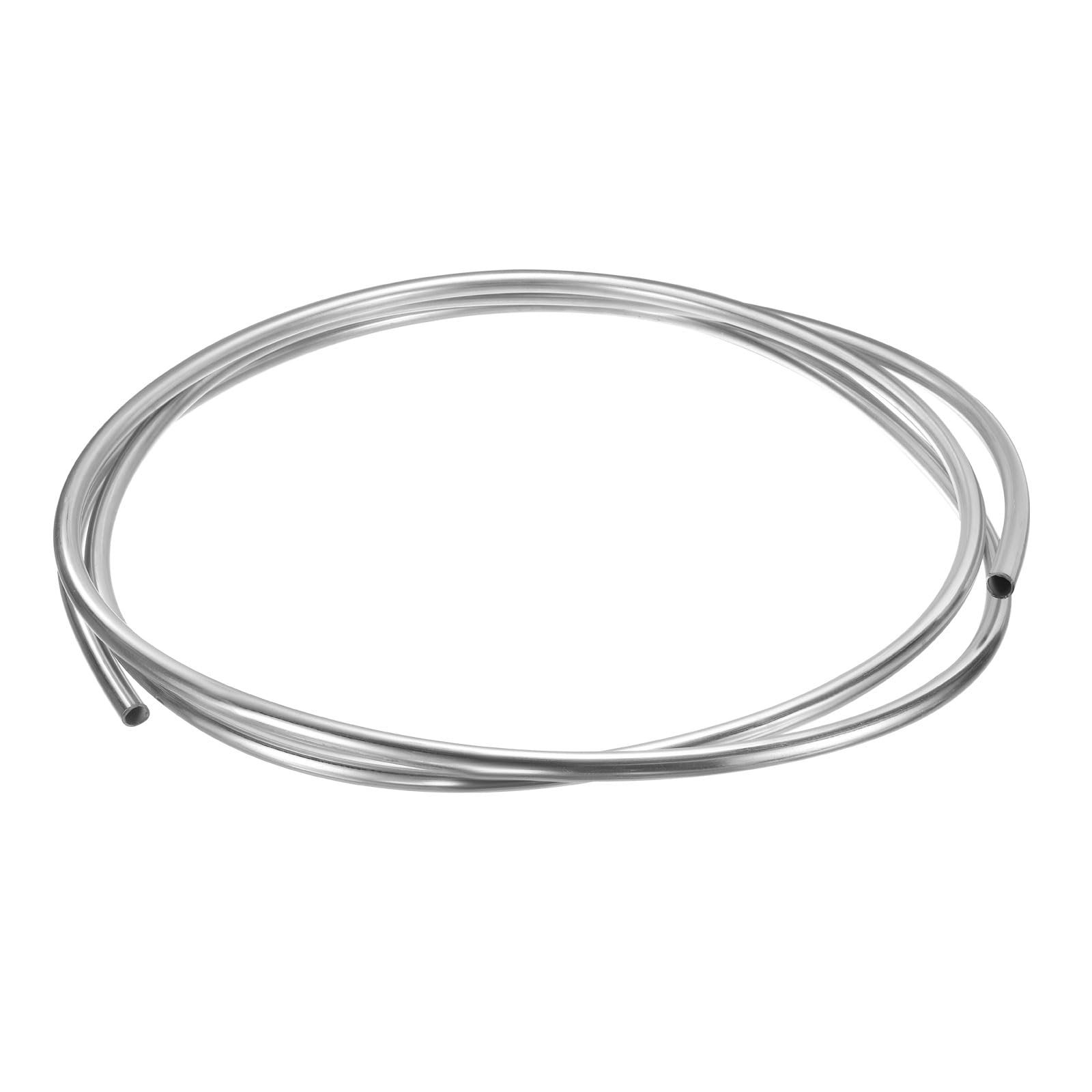
The uxcell coil differentiates itself with a 1mm nominal wall thickness — noticeably thicker than the 0.035-inch wall found on most coiled options. That extra metal gives you more leeway for threading, welding, or creating threaded connections without collapsing the tube. The 304 welded construction is corrosion-resistant and suitable for pneumatic systems, laboratory gas lines, and automotive fluid routing.
Customers confirm the tube bends without kinking when used with a proper bender and holds its shape reliably after bending. One user built a pop-up fertilizer application system on a John Deere 750 drill using this tubing, noting that it resisted chemical corrosion from agricultural fertilizers and maintained a leak-free connection at the fittings. The smooth inner wall keeps fluid resistance low.
Straightening the coil requires effort — reviewers recommend using a drilled 2×4 to force the tube straight before cutting. The 3-meter total length (approximately 10 feet) gives you plenty of material for one long run or multiple shorter segments, but the welded seam means it is not rated for the highest pressure classes. Check your system pressure requirements before committing to this coil for critical gas lines.
Why it’s great
- 1mm wall thickness supports threading and stronger connections.
- 10-foot coil allows continuous routing without couplers.
- Chemical resistance holds up in agricultural and lab environments.
Good to know
- Coil memory requires active straightening before use.
- Welded seam may be a weak point under high pressure.
FAQ
Can 1/2 inch stainless steel tubing be bent without a tube bender?
What is the difference between 304 and 316 for 1/2 inch tubing?
How do I cut 1/2 inch stainless steel tubing cleanly?
Final Thoughts: The Verdict
For most users, the 1/2 inch stainless steel tubing winner is the VALVENTO 316 Tube because it pairs marine-grade 316 stainless with a 40-inch continuous length, reducing weld joints while offering real corrosion protection. If you need seamless construction for high-pressure fluid systems, grab the FITOK Seamless Tube. And for flexible routing in automotive or pneumatic applications, nothing beats the uxcell 1mm Wall Coil.