
Our readers keep the lights on and my morning glass full of iced black tea. As an Amazon Associate, I earn from qualifying purchases.
Specs are compiled from manufacturer listings and verified buyer reviews and can change over time — please confirm the key details on the product page before buying.
If you want a half-carat diamond ring that still looks like a serious piece of jewelry, the good news is that you do not have to spend a fortune. The catch most shoppers never hear about is that “half carat” describes the total weight of the diamonds, not one big stone, and that single detail changes everything about how a ring looks on your hand. Some of the picks below spread that weight across a slim band of small stones, while others concentrate it into one center solitaire — and both can be the right answer depending on if you want everyday sparkle or one showy focal point.
I’m Min — the founder and writer behind Gadgets Feed. This guide is built by comparing the manufacturers’ published specifications and the patterns across verified customer reviews, so you get each pick’s real strengths and trade-offs instead of marketing spin.
A half carat can mean a single solitaire stone or a full band of smaller diamonds, and reading the certificate tells you which you are actually buying. That one habit makes every 1/2 kt diamond ring decision clearer.
Our Picks at a Glance
How To Choose The Best 1/2 Kt Diamond Ring
Start with the number on the tag: the “1/2 kt” or “0.50 cttw” figure is the combined weight of every diamond in the ring. That is why two rings with the same total weight can look completely different — a channel band spreads it across ten or twelve tiny stones, while a solitaire puts it all into one center stone you can see from across the room. Knowing which look you want is the first real decision.
Lab-grown or natural: the two diamond sources
Lab-grown diamonds are diamonds grown in a controlled process rather than dug from the earth, and they share the same basic makeup and hardness as natural stones. Natural diamonds come out of the ground and carry a different resale story. The honest trade-off: lab-grown usually stretches your half carat into a bigger, cleaner-looking stone for the same money, while natural diamonds carry the traditional mined-diamond status. Neither is a wrong answer — it depends on what matters more to you.
The certificate tells you what you actually own
A certificate (sometimes called a grading report) is a document from a gem lab stating the diamond’s color, clarity, and a unique serial number. That number can be looked up on the lab’s website to confirm the stone matches the paperwork. If a listing promises a certificate, check that it actually arrives in the box — buyers who did not receive one have valued the confidence it carries.
Color, clarity, and why the setting matters
Color grades run from near-colorless down toward warmer, yellow-toned stones, and clarity grades describe how many tiny internal marks a diamond has. A well-placed setting can hide some of those marks and boost how bright the stone looks. That is why a ring with slightly lower grades set in a bright gold mount can out-sparkle a technically better stone in a dull one.
Sizing and resizing: get it right first
A pave or channel band full of small stones is harder and riskier to resize than a simple single-stone ring, because the jeweler has to work around the diamonds. A traditional solitaire generally resizes more easily. Measure your finger with a strip of paper or a flexible tape, compare that length in millimeters to a standard ring-size chart, and if you plan to stack rings, size up.
Quick Comparison
| Model | Best For | Diamond Source | Metal | Setting / Cut | Amazon |
|---|---|---|---|---|---|
| 1-4 Carat Lab Grown Diamond 14K White Gold Engagement Ring (CRITI RORA)★ Best Overall | All-around pick for a certified solitaire | Lab-grown, IGI certified | 14K white gold | Four-prong solitaire, round cut | Amazon |
| 1/10 – 1 1/2 CTTW Lab Grown Diamond Ring (Nuance Jewels)Best Value | Matching a petite engagement ring | Lab-grown, GH color | 10K white, yellow, or rose gold | Pave band, approx. 1.50 mm wide | Amazon |
| Amazon Essentials IGI Certified Lab Grown Eternity BandPremium Pick | Stacking with a plain band | Lab-grown, IGI certified | Solid 14K gold | Eternity band, VS1-VS2 clarity | Amazon |
| 1/6 – 1/2 CTTW Women’s Lab Diamond Wedding Band (Nuance Jewels) | A curved band that sits with a solitaire | Lab-grown, GH color | 10K white or yellow gold | Curved chevron band, SI clarity | Amazon |
| VIR JEWELS 1/2 ctw Princess Cut Channel Band in 14K Yellow Gold | Square-cut sparkle in yellow gold | Natural, I-J color | 14K yellow gold | Channel set, princess (square) cut | Amazon |
| VIR JEWELS 1/2 ctw Round Diamond Pave Band in 14K White Gold | A clean round-cut wedding band | Natural, I-J color | 14K white gold | Shared prong pave, round brilliant | Amazon |
| 1/2 Carat Channel Set Diamond Wedding Band in 14K Gold (FINEROCK) | Flush-set stones that never catch | Natural | 14K gold (white, yellow, rose) | Channel set | Amazon |
| MauliJewels 0.50 Carat Lab Grown Halo Ring (MauliJewels) | A bigger-looking center stone | Lab-grown, H-I color, SI1 clarity | 14K rose gold (white/yellow available) | Halo with accent diamonds, prong set | Amazon |
| 1/2 Carat Double Halo Diamond Ring in 10K Gold (FINEROCK) | Maximum sparkle on a modest budget | Natural | 10K gold | Double halo, prong set | Amazon |
| 0.5 Carat Round Solitaire 6-Prong Ring (Houston Diamond District) | One classic single stone | Natural, K color, I2 clarity | 14K yellow gold | Six-prong solitaire, very good cut | Amazon |
| 0.5 Carat Twisting Infinity Split Shank Ring (Houston Diamond District) | A statement split-shank design | Natural, J-K color, I2 center | 14K gold | Split shank, pave set | Amazon |
In‑Depth Reviews
1. 1-4 Carat Lab Grown Diamond 14K White Gold Engagement Ring, IGI Certified (CRITI RORA)
Our pick — over 4.5★ from 70+ verified ratings; the strongest balance of quality and price.
The certified solitaire that turns one stone into the whole show
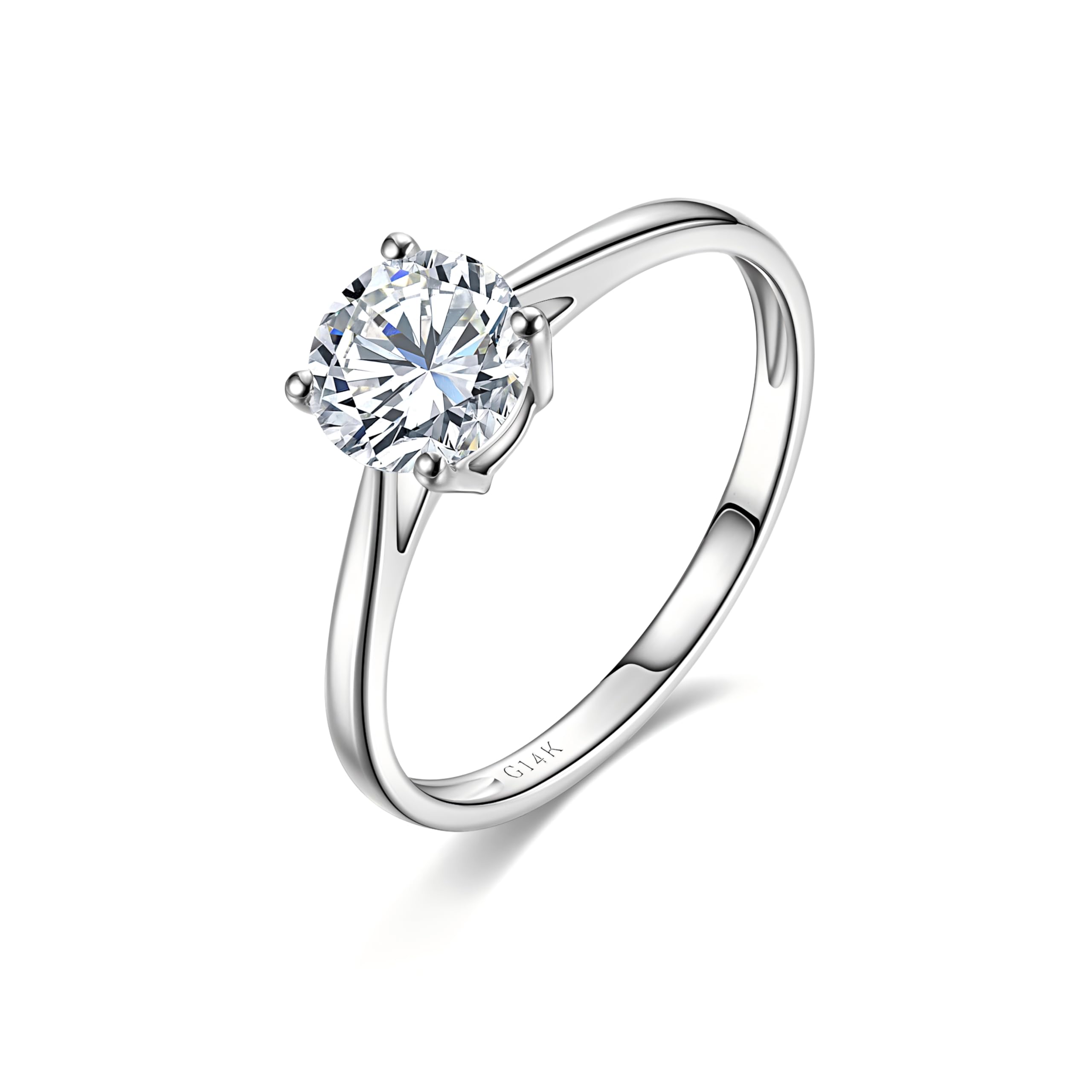
This is the ring you reach for when you want a proper engagement-style solitaire without mined-diamond money. IGI, the GIA’s sister lab, grades it E color (near colorless) and VS1 clarity (very slightly included). Translation: a stone that reads bright and clean to the naked eye rather than yellow or hazy across a candlelit table.
What wins people over is the appearance itself — sparkle and eye-catch are the mentions that dominate its feedback, far ahead of anything else owners talk about. The four-prong tapered setting is the quiet hero here: it lifts the diamond so light passes through and comes back out as flashes of white and fire. And it sits low, which is exactly what you want if the ring is going to be worn while typing, cooking, or working with your hands all day. Each diamond ships with its own IGI certificate and a unique report number you can look up on the IGI site to verify the exact stone you received.
Here is the honest catch: the four-prong setting leaves more of the diamond edge exposed than a bezel or halo mount, so it asks for a little care — that is simply the trade for the open, light-catching look. Nobody is losing stones routinely, but a solitaire like this rewards you for taking it off before you dig in the garden. Sizing runs true, and the numbers check out beyond appearance too — across thousands of owner experiences the value story is what keeps coming up. E color with VS1-VS2 clarity is a strong spec at this price, and the IGI report number lets you verify the exact stone online.
Four-carat center stone
- IGI-certified lab-grown diamond with E color and VS1-VS2 clarity — bright and near colorless to the eye
- Four-prong tapered solitaire setting lifts the stone for bold, eye-catching sparkle
- Low-profile design sits close to the finger for comfortable everyday wear
- Each diamond has its own IGI certificate with a unique report number you can verify online
White gold upkeep
- An open four-prong solitaire exposes the diamond edges more than a closed setting
- A matching wedding band is a separate purchase, not included
Proposal-ready pick: a buyer who wants a certified, near-colorless solitaire with an open setting that catches light from every angle.
Budget stretcher: you want a diamond ring you never have to think about protecting — a channel or halo setting handles daily knocks better.
2. 1/10 – 1 1/2 CTTW Lab Grown Diamond Ring, 10K White, Yellow or Rose Gold (Nuance Jewels)
The slim band built to slide right up against a petite engagement ring
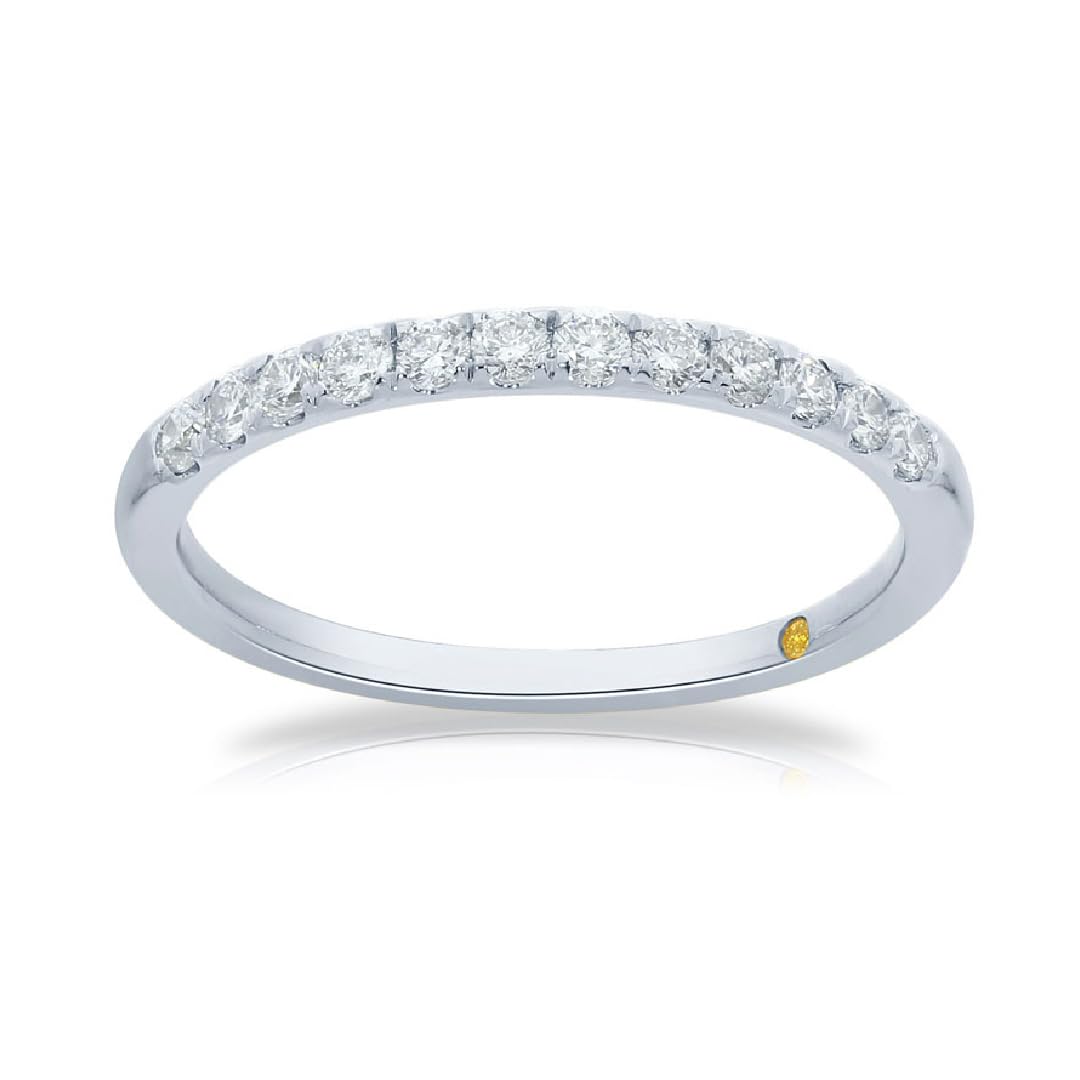
If your engagement ring already has a delicate profile, a chunky band squeezed next to it looks wrong. This pave band is the opposite of that problem — the diamonds sit in a continuous row in a band roughly 1.50 mm wide at the diamond section, so it disappears into the stack instead of fighting it. Its strong suit is the look itself: appearance is what owners bring up far more than anything else, and the single most common thread is that it matches a petite engagement ring cleanly.
The stacking flexibility is the real selling point. The band comes in 10K white, yellow, or rose gold, and it is designed to sit flush and flush-stack with other rings. It arrives in a velvet pouch with a Certificate of Authenticity that lists the diamonds and can be checked online. Here is the part a lot of shoppers get wrong: this listing spans a big range of total carat weights, so the stone coverage you actually get depends on the size and weight you pick — a size 5.5 with full pavé looks different from a larger band where more plain gold shows on the sides.
The honest trade-off is durability. A slim 1.50 mm band with tiny pave stones is a daintier build, and the recurring gripe across feedback is stones working loose over time, plus the band running larger than expected for a given size. That is not a reason to skip it — it is a reason to treat it as a band you wear carefully and have checked periodically, exactly as the maker itself suggests. If you want a low-maintenance everyday band, look at a channel-set ring instead; if you want a sliver of sparkle that pairs perfectly with your engagement ring, this is the value play.
Stackable slender band: a low-profile 1.50 mm pave band in 10K white, yellow, or rose gold with a verifiable online certificate — the whole point is how it blends into an existing set.
Thin shank wear: narrow pave bands with small stones ask for gentle wear; the fit also runs generous, so measure before you order.
Layered ring set: the buyer adding a matching sparkle band to a slim engagement ring in any gold tone.
Daily heavy use: you want a sturdy band you can wear to the gym and forget about.
3. Amazon Essentials IGI Certified Lab Grown Diamond Eternity Band in Solid 14k Gold
A full circle of certified sparkle that plays well with any stack
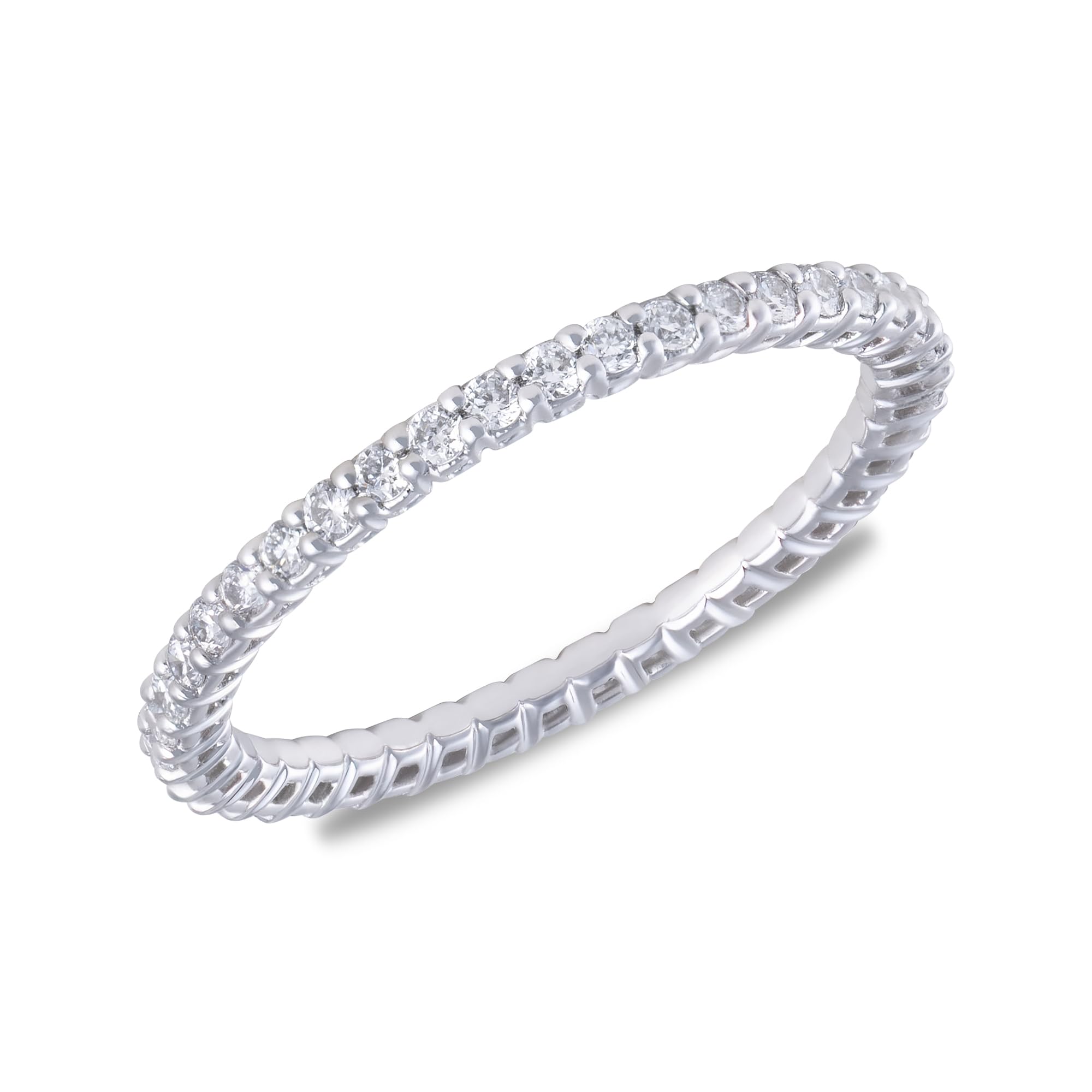
This is the one to grab if your plan is layering — a plain band on one side, a solitaire on the other, and this in the middle pulling it together. It is built as a true eternity band in solid 14K gold, which is a step up in gold purity from the 10K pieces here, and it comes IGI certified with VS1-VS2 clarity and G-H color grades written right into the listing. That G-H color and VS1-VS2 clarity is why it reads brighter than lower-grade bands side by side.
What people respond to first is simply how it looks in the hand — appearance is the thing that comes up most in its feedback, and the consensus is that the stones are clean and straight with no visible gaps. Speed matters too: owners talk about wearing it nearly every day and having it hold up and stay shiny. The IGI certification is the quiet reassurance — your diamonds arrive with independent, checkable grading rather than a handshake promise from the seller.
The one straight answer to give you: this is an eternity band, which by design circles the whole finger, so it cannot be resized the way a plain open band can. Get the size right on the first order. There is also a design caveat worth knowing — if your other ring is a raised solitaire, the stones on an eternity band can rub against it, so some buyers prefer it stacked between two simpler bands. Everything else about it, from the 14K solid gold to the certified clarity grade, lines up with buyers who wanted one band to do all the work.
Anniversary gift: a certified 14K gold eternity band you can stack with a plain band or wear on its own.
Sizing uncertain: you are unsure of your size — a full circle of stones leaves no resizing room.
4. 1/6 – 1/2 CTTW Women’s Lab Diamond Wedding Band, 10K White & Yellow Gold (Nuance Jewels)
The curved band that bends to hug your solitaire instead of gaping around it
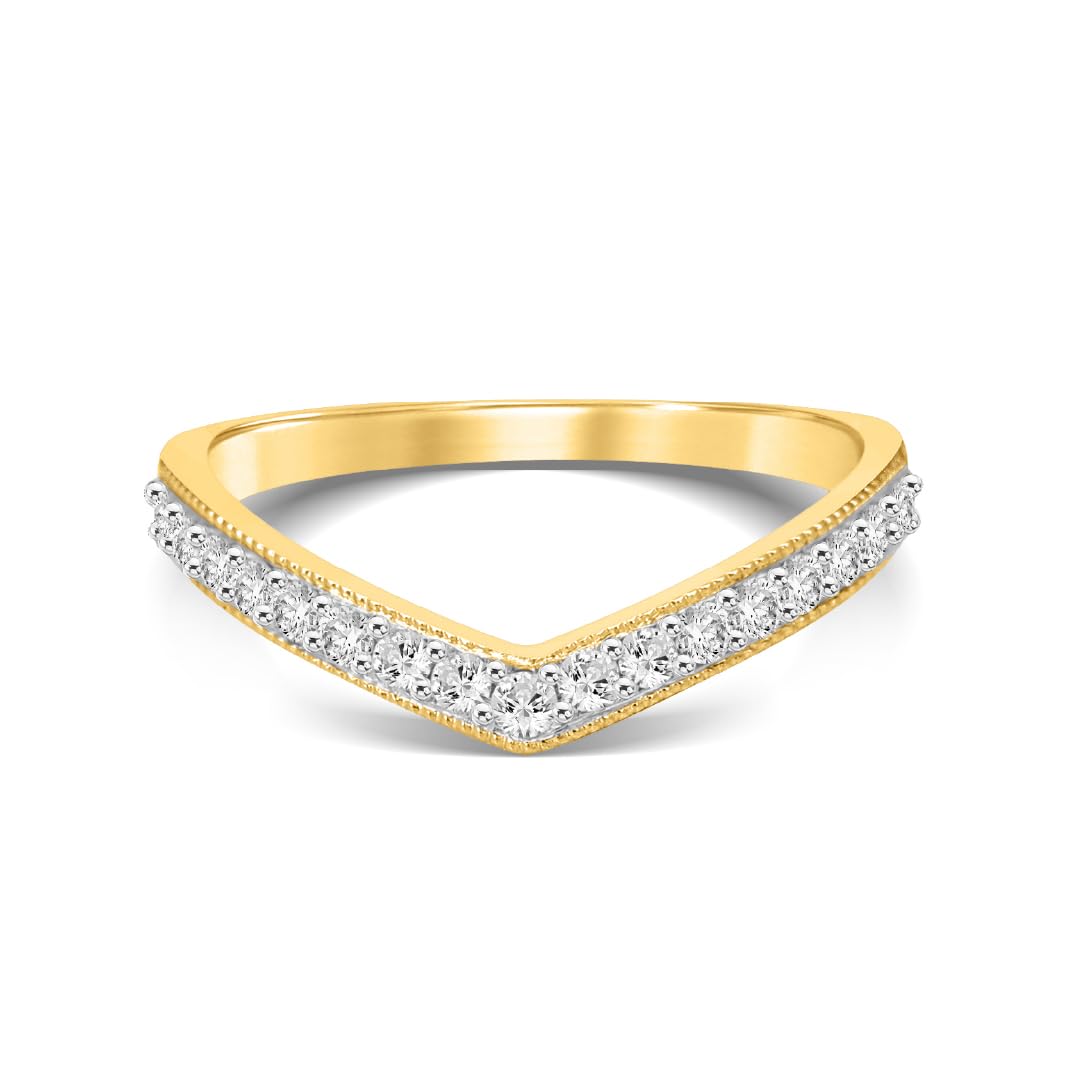
A straight wedding band next to a raised engagement ring often leaves an awkward gap. This one solves that with a curved chevron silhouette — the band dips and arches so it wraps the base of your solitaire. That is the whole reason to pick it, and it is exactly what owners point to when they say it made their engagement ring “pop.” Its lab-grown diamonds are graded GH color (near colorless) and SI clarity or better — a higher spec than the budget bands that grade lower.
Quality is the second thing that carries this pick. Its verifiable online certificate backs up the grades on the listing, so you are not taking the color and clarity description on faith.
One honest note: the exact look depends on the carat weight you choose across the listing’s range, so a lighter option shows less sparkle spread than a heavier one. And because it is a shaped band rather than a plain circle, it works best when it is paired with the ring it was designed to curve around — worn solo, the chevron shape reads as a deliberate design choice rather than a plain band. For a stack, though, the curve is the entire point. If you want a wedding band that visually upgrades the ring you already own, this is the design play.
Gentle curved fit: the chevron shape is engineered to fit flush against a solitaire, so the two rings read as one set rather than two strangers.
Narrow width: the sparkle spread tracks the carat weight you pick, and the shaped band shines brightest when stacked with the ring it complements.
Contour match: you have a solitaire with a raised center and want a band that fills the gap and adds near-colorless sparkle.
Wide band pair: you want a plain, do-everything band — the chevron curve is a deliberate, stack-first design.
5. VIR JEWELS 1/2 ctw Princess Cut Channel Band, 14K Yellow Gold
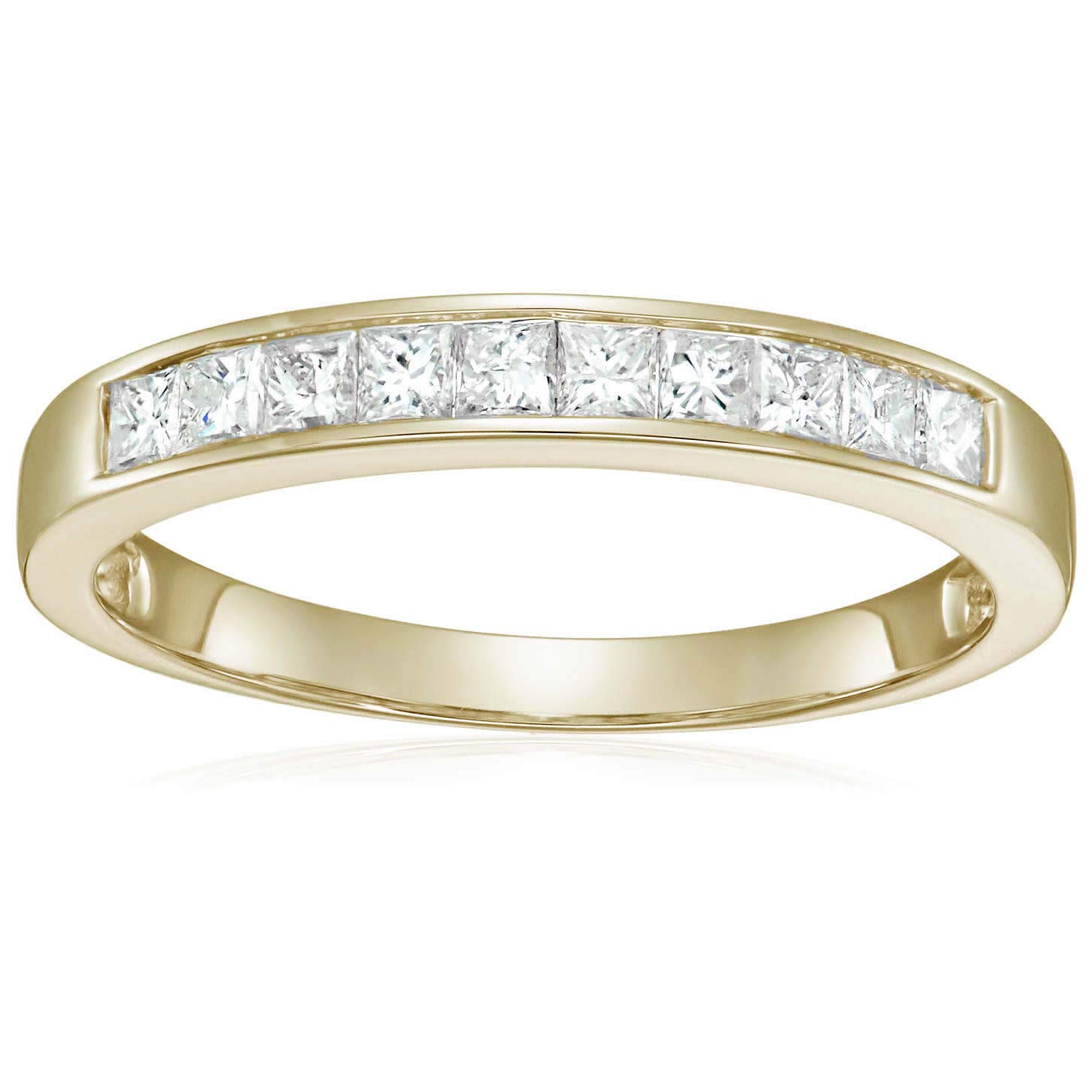
Square-cut stones tucked safely in yellow gold — sparkle with zero snag
This is the pick for anyone who wants real, earth-mined diamonds and a band that simply does not catch on sweater sleeves. The half carat is split across roughly ten to twelve princess-cut diamonds (square stones with sharp corners) set in a channel in 14K yellow gold. Because the diamonds sit nestled within two strips of gold rather than poking up on prongs, there is nothing to snag — a genuine everyday advantage if you are active with your hands.
Despite that conservative build, the ring delivers on looks. Owners describe sparkle that photographs poorly but reads far better in person, on a band that feels weighty without being bulky. That is the earmark of a channel band done right: it sits flat and smooth on the finger but still throws plenty of light. You also get a gift box included, and the style can be customized or made in additional sizes and metal.
The two things to weigh honestly. First, a channel setting is harder to clean — the gold strips shield the diamond edges, so grime builds up behind the stones and needs a soft brush and gentle soap to reach. Second, one owner reported the ring arrived without the advertised certificate of authenticity, so if the paperwork matters to you, confirm it ships in the box. On sizing, it runs true and looks substantial in a size 6. For a natural-diamond band that wears like jewelry you can forget about, the channel design is the reason to choose it.
Princess channel security: a smooth, prong-free surface where the diamonds sit between two rails of 14K yellow gold — nothing to catch, and real sparkle from genuine princess-cut stones.
Square edge snag: grime hides behind channel-set stones, so it needs a soft-brush clean now and then, and reaching the diamonds all the way around is not possible.
Yellow gold warmth: you want natural diamonds, square-cut sparkle, and a band that stays flush and snag-free in daily wear.
Round stone taste: you were expecting sparkle wrapped all the way around the finger — this is a half-eternity design.
6. VIR JEWELS 1/2 ctw Round Diamond Pave Band, 14K White Gold

Thirteen round brilliants lined up for a band that glitters edge to edge
Where the channel band hides its stones behind gold, this one does the opposite — thirteen natural round brilliant diamonds set in a shared-prong pave row in 14K white gold, so the stones sit proud and throw light every which way. Round brilliants are cut to boost brightness, and lining them head to tail is what gives this band its continuous, twinkling look. If you want a traditional wedding band that reads as “diamond band” from across the room, this is the shape to buy.
The feedback tracks two things hard: how gorgeous it looks and how well made it feels, with value not far behind. Owners specifically praise the sparkle and how neatly it complements an existing diamond ring, and one account of wearing it daily for two weeks found every stone still in place. Buyers who compared it against jeweler-store bands report it felt noticeably higher quality for the money. Sizing runs true, and the ring is built for simple, comfortable daily wear that stays out of the way at home or at the gym.
The trade-off you should go in expecting is that shared-prong pave leaves more of each diamond edge exposed than a channel setting does, and the honest gripe in the feedback is that stones can work loose with hard wear. Two owners reported a diamond coming free over time. That does not make it a bad ring — it makes it a ring that rewards a little care and a periodic check by a jeweler. One buyer also noted the stones look smaller than expected, so set your expectation on the specified stone count rather than the zoomed product photos. Round-cut sparkle and a clean white-gold band are what you are buying here.
White gold classic: a buyer who wants a classic shared-prong pave band with round brilliants that sparkle from every angle.
Rough hand wear: prong-set pave exposes diamond edges more than a channel band, so plan on treating it gently.
7. 1/2 Carat Channel Set Diamond Wedding Band in 14K Gold (FINEROCK)
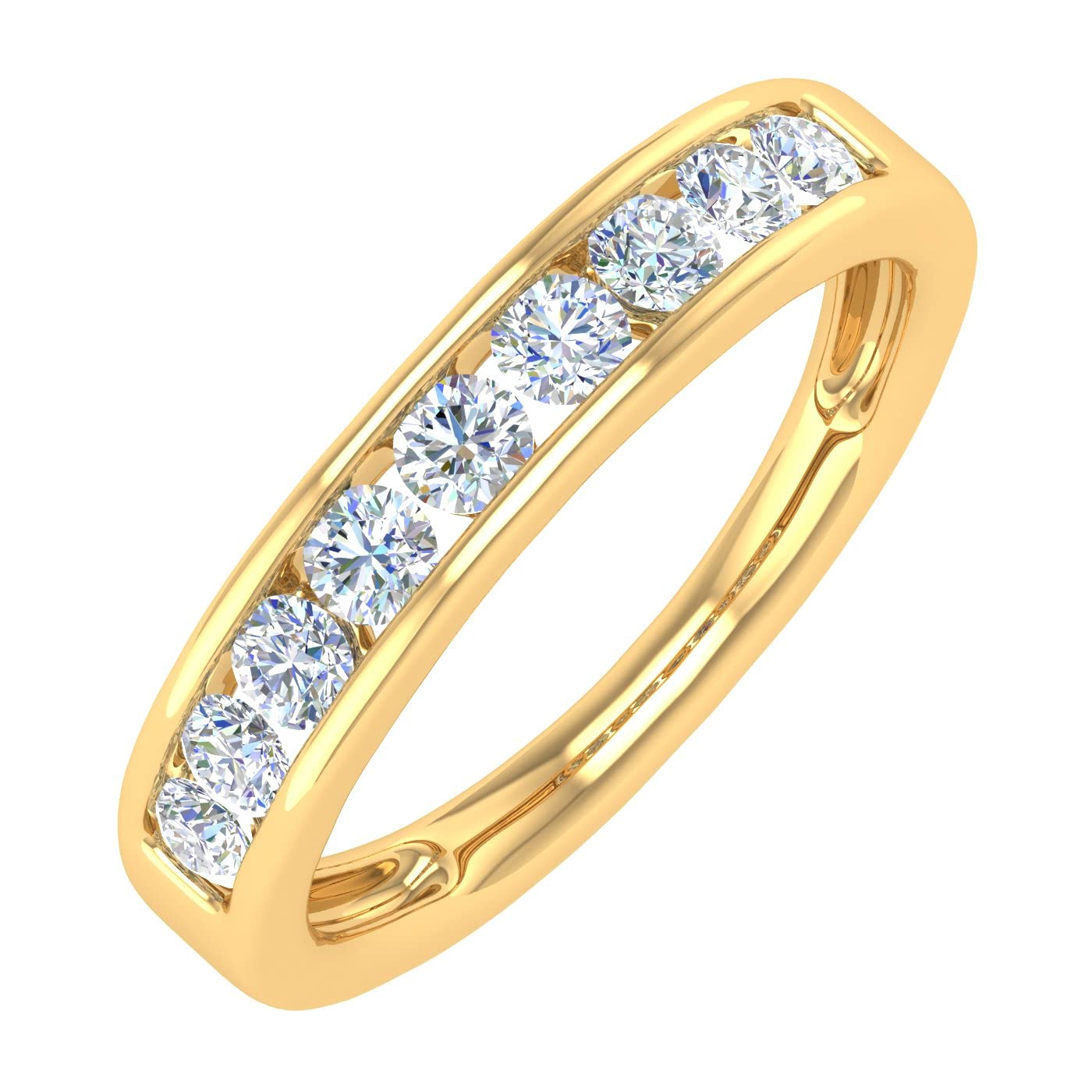
Stones set flush between two gold rails — smooth, safe, and endlessly stackable
If you want the sparkle of diamonds with the sleek profile of a plain band, a channel set is the answer. Here the natural diamonds sit in a continuous row between two strips of 14K gold, giving a smooth, snag-free surface with no prongs sticking up to catch on anything. It comes in 14K white, yellow, or rose gold, and it is built to be stacked with other bands — so it blends into a set rather than demanding to be the star.
What owners consistently land on is the look: several describe the diamonds as near flawless, with sparkle that rivals far pricier stones. The 14K gold has real thickness, which gives it the heft of a substantial ring. It arrives in a gift-ready package and is designed as a symbol piece for birthdays, anniversaries, or weddings, so it works whether you are buying for a milestone or adding to an existing ring.
One thing worth knowing before you commit: a few owners noticed the gold scratches more easily than they expected, usually only visible when the ring flips over, and one reported the band slowly warping out of round after a couple of years of daily wear. A channel band has no prongs to snag or catch — that is the point — but it is still a fine-gold ring that appreciates being stored separately and gently cared for. Sizing runs true-to-slightly-large, so if you plan to stack, go up rather than down. For a versatile everyday band you can wear with anything, the clean channel line delivers.
Channel set protection
- Channel setting keeps diamonds flush and snag-free — no prongs to catch on clothing
- Available in 14K white, yellow, or rose gold for easy matching
- Buyers report diamonds that read near flawless with high sparkle
- Designed for stacking with other bands and rings
Gold color choice
- Fine gold can show scratches and, with heavy wear, drift out of round over time
- Sizing runs a touch large — size up if you plan to stack
Flush stone look: you want a smooth, snag-free channel band you can stack or wear solo in white, yellow, or rose gold.
High profile want: like any fine-gold everyday ring, it shows wear over the years and is best stored and cleaned with care.
8. MauliJewels 0.50 Carat Lab Grown Diamond Halo Engagement Ring, 14K Rose Gold
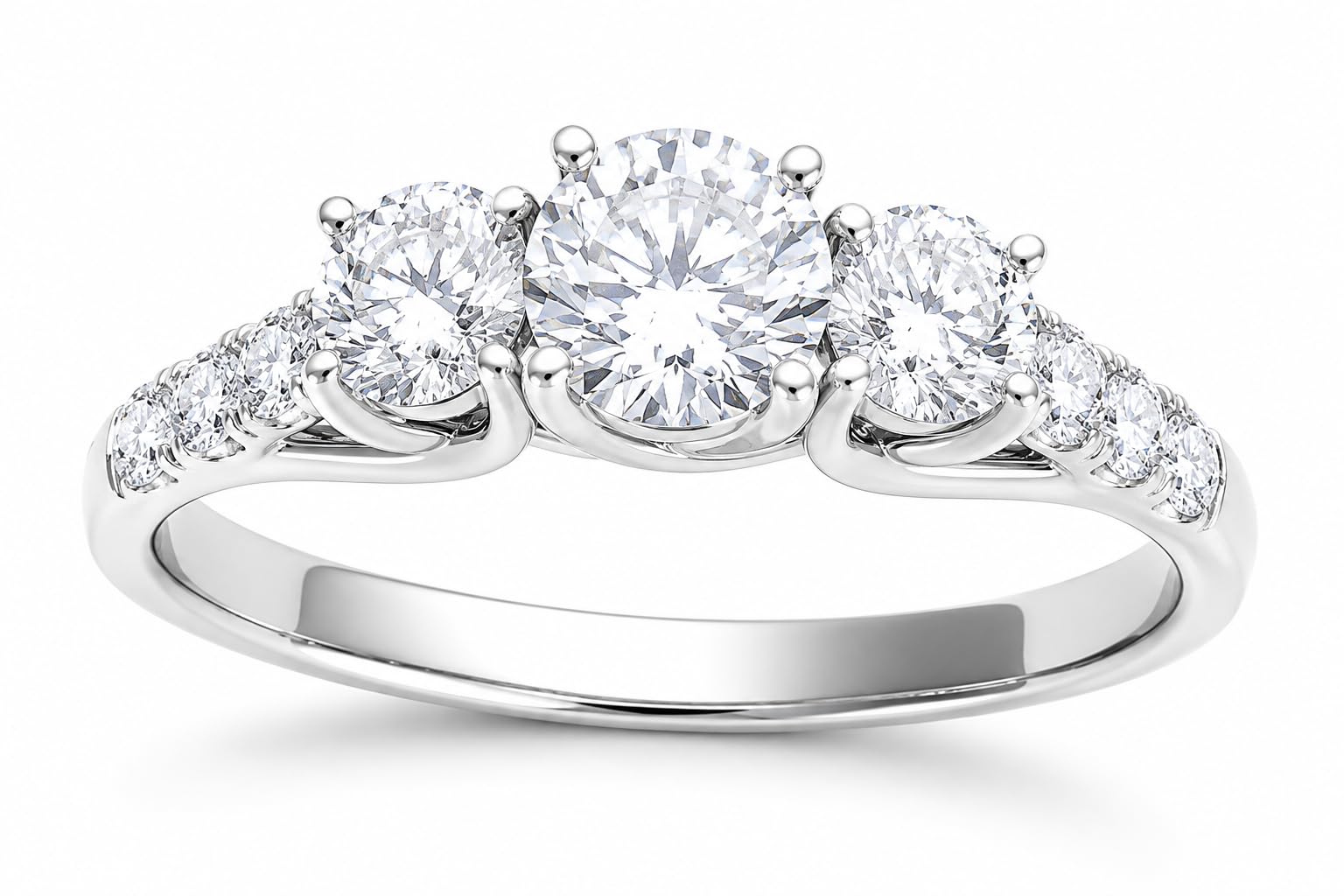
A ring of accent stones that makes the center diamond look bigger than it is
The whole trick of a halo ring is visual arithmetic: a circle of small accent diamonds surrounds the center stone, making the main diamond read larger than its actual carat weight. Here the center is a 0.50 carat round brilliant lab-grown stone graded H-I color (near colorless) and SI1 clarity (slightly included, meaning small marks under magnification). Set in 14K rose gold with the halo sparkling around it, the ring gives you the look of a bigger diamond without the weight — which is exactly why halo designs stay popular.
What lands with buyers is how it looks under light — appearance comes up more than anything else in its feedback, and the rose gold tone draws out a warm shimmer across the top of the ring. The ring also runs easy on sizing complaints: fit is the second-most-praised quality, and owners describe it as comfortable and true to the finger once you have the size right. It is resizable, and the maker notes professional resizing is available if you need an adjustment.
Two honest points to set expectations. First, the ring is petite in person — some buyers who wanted a bold center stone found it smaller than the listing photos suggest, so judge it by the 0.50 carat center rather than the close-up images. Second, sizing runs a little generous for some fingers; a size 6 measuring closer to a 6.5 has been reported, so measure carefully. Those who want maximum sparkle from a compact halo design, however, keep coming back to how eye-catching it is for the money.
Halo size boost: the accent-stone ring around the center magnifies its visual size, giving you a 0.50 carat lab-grown stone that looks like a larger one.
Prong maintenance: it is a petite, dainty piece in person, and sizing can run a half-size large, so order with a careful measurement.
Center stone pop: the buyer who wants an eye-catching halo sparkle in warm rose gold with a smaller-hand-friendly profile.
Minimalist taste: you have a larger hand or want a bold, large-stone look — check the fit before the sparkle.
9. 1/2 Carat Double Halo Diamond Ring in 10K Gold (FINEROCK)
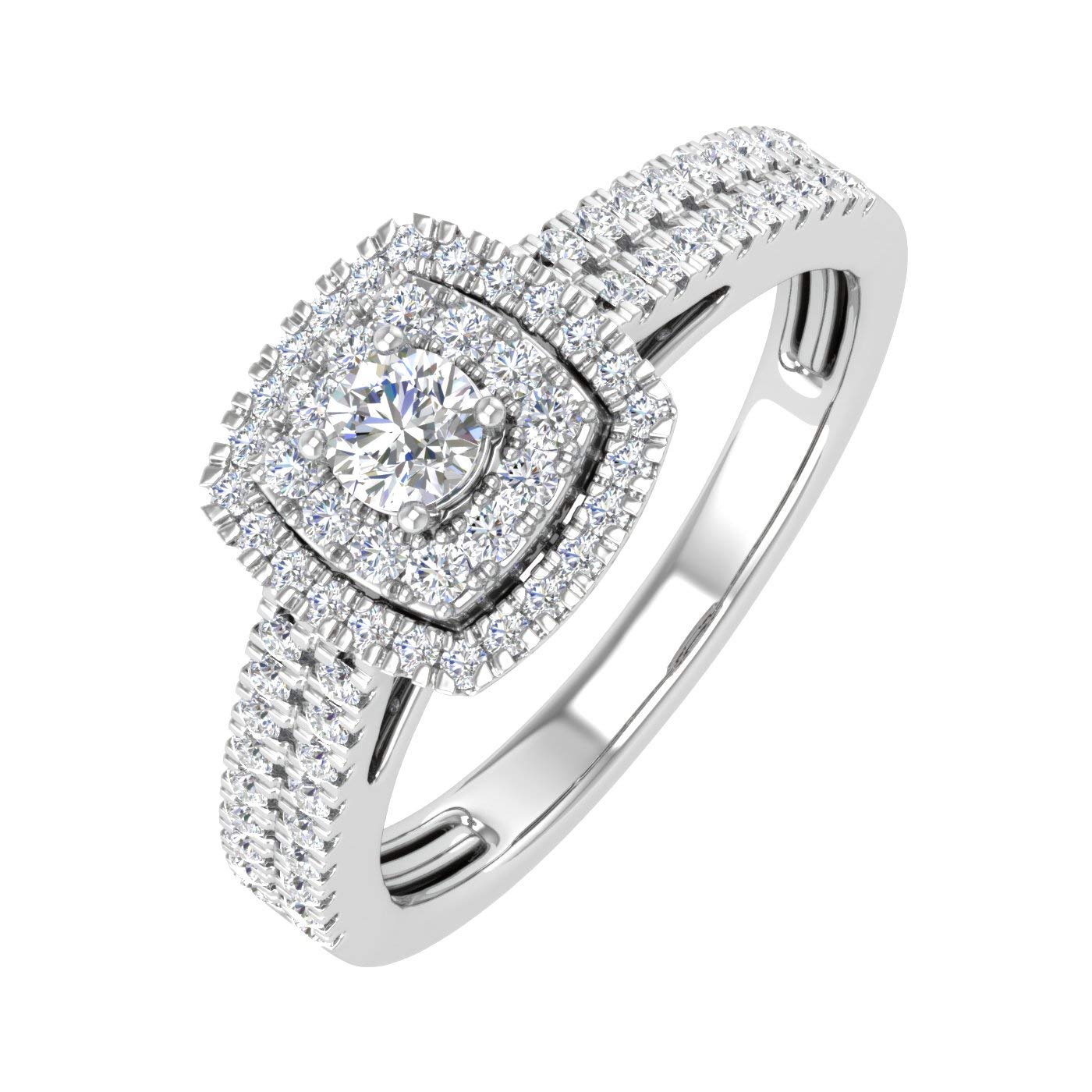
Two rows of halo diamonds stacked into one very showy silhouette
If you want the ring to do the talking, a double halo is the design that delivers. Two rings of accent diamonds circle the center stone instead of one, so the sparkle area is larger and the whole thing reads bigger on the hand. The build is 10K gold with the center stone prong-set and raised, throwing light down onto those halo rings for extra flash. Owners describe it as looking larger than expected, with a certain elegance to it.
The single most-praised quality is the ring’s craftsmanship — how the piece is made comes up more than any other topic, with sparkle and value close behind. Setting aside the showy factor, that is the real story: this is a ring that feels finely put together, arrives with a jewelry report as pictured, and matches its photos closely. A size note that keeps coming up: the fit runs true, so there is no need to guess. One account describes the wearer unable to stop looking at it.
The honest counterpart is stone security. With more small diamonds packed into the halo, there is more chance for one to work loose, and the recurring concern across feedback is exactly that — a stone coming free with wear. That is the standard trade with an intricate multi-stone setting: all those tiny stones need regular checking and careful handling. The value and the sparkle are genuinely there; a little upkeep keeps them on your finger where they belong.
Statement sparkle: you want maximum sparkle and a bolder, larger-reading silhouette on a modest budget.
Low-key style: you prefer fewer small stones and less need for periodic setting checks.
10. Houston Diamond District 0.5 Carat Round Solitaire 6-Prong Ring, 14K Yellow Gold

One natural diamond, six prongs, and a setting built to hold what matters
This is a no-nonsense solitaire: a single 0.5 carat round-cut natural diamond, held by six prongs in 14K yellow gold, with a very good cut grade and a K color (faintly warm) and I2 clarity (small visible inclusions). The six-prong head is the security feature — more prongs across the diamond’s edge than the classic four-prong design, so the center stone is fenced in from more angles. It is the pick for someone who wants one real diamond to be the whole ring.
What buyers respond to is the sparkle and the buying confidence. Owners describe the stone as bright and very sparkly, and one buyer’s habit of sizing up a half step paid off. The presentation is straightforward: it works as an engagement ring or a meaningful anniversary piece, and the response has been enthusiastic across the board.
Two honest things to know. First, natural diamonds with a K color and I2 clarity grade trade color and sparkle for budget — the stone will read warmer and less flawless than the near-colorless, higher-clarity stones further up this list, which is the standard trade at lower natural-diamond grades. Second, if a prong is ever off, this trusted seller stands behind the ring; one reviewer noted a broken prong that was repaired and cleaned quickly and returned looking brand new. For a classic one-stone solitaire with a six-prong safety net, this is a clean, disciplined choice.
Six prong security: holding the center diamond from six points instead of four spreads the grip around the stone’s edge for a reassuring, secure feel.
Warmer color: a K color and I2 clarity natural stone reads warmer and less flawless than pricier near-colorless stones — that is the honest cost of buying a single real diamond on a tighter budget.
Classic solitaire: you want one natural solitaire diamond in a secure six-prong yellow gold setting.
Color purist: you want a colorless, high-clarity look — that steps up with the lab-grown picks on this list.
11. Houston Diamond District 0.5 Carat Twisting Infinity Split Shank Pave Ring

A twisting split shank that turns the band itself into the design
Most rings put all the interest in the center stone. This one builds the drama into the shank — it splits and twists as it climbs toward a 0.5 carat center stone with a J-K color and I2 clarity, sitting on a pave-set band. That twisting split-shank shape spreads the finger visually, so close-up the ring reads as an involved, modern piece rather than a plain solitaire. The accent stones around the design are the part owners notice most; they are described as gorgeous and sparkly, working alongside a solitaire that reads larger than expected.
The ring’s staying power shows in its owner history: one account describes the wearer having it for five years, sized twice along the way, still intact with no breakage and looking new again after a professional cleaning. That is the story of a ring built to beworn rather than a delicate piece you are afraid to touch. It arrives with a certificate and gift-ready packaging, and the seller has a track record of fast shipping when timing matters.
The honest notes to weigh. First, a prong catching on fabric is a known thing with a solitaire this raised — one owner sent it back for a repair and it came home fixed, so factor that in rather than worry about it. Second, the presentation extras are modest: the box and paperwork feel basic compared to the ring itself, and white gold is where the finish shows best if that is your preference. Third, the center stone carries a J-K color and I2 clarity, so it is a warmer, more included natural diamond than a colorless certified stone — the trade for buying a natural center at this build. Those who want an intricate, twisting design with a real five-year wear story behind it get exactly that here.
Modern swirl: a buyer who wants a modern twisting split-shank design with sparkly accent stones and a natural center diamond.
Straight band lover: you want a colder, more colorless stone or a simple single-stone look — this ring leads with its shank design.
Understanding the Specs
Carat Total Weight (cttw)
This is the number that names the whole category. A “0.50 cttw” figure is the combined weight of every diamond in the ring, not the size of any single stone. That is why a channel band can spread half a carat across ten to twelve tiny diamonds and look completely different from a solitaire that puts the same half carat into one center stone. Before you buy, decide which you want: a band of even sparkle, or one focal point. The total weight is the same either way — the look is not.
Color and Clarity Grades
Color grades run from near-colorless down toward warmer, yellow-toned stones. Clarity grades describe how many tiny internal marks a diamond has, with higher grades meaning fewer visible marks. A stone graded near colorless and very slightly included looks bright and clean to the naked eye. The same half-carat weight can carry very different color and clarity grades between picks, so check those grades alongside the weight — they are what separate a dull-looking half carat from a lively one.
Lab-Grown vs Natural Diamonds
Lab-grown diamonds are diamonds grown in a controlled process; natural diamonds are mined from the earth. Both share the same basic makeup and hardness. The practical difference is value: a lab-grown stone usually lets you stretch your half carat into a bigger, cleaner look, while a natural diamond carries the traditional mined-diamond status. Neither is wrong — pick based on whether the look or the origin story matters more to you.
Setting Types and Daily Wear
The setting decides how your ring behaves day to day. A channel setting tucks the diamonds between two gold rails so nothing catches, and it protects the stone edges but takes more effort to clean. A prong or pave setting lifts the diamonds so more light gets in for stronger sparkle, at the cost of more exposed edges and a bit more care. If you are active with your hands, a flush channel or a well-protected halo tends to suit you better than an open prong solitaire.
FAQ
What does 1/2 kt mean on a diamond ring?
Is a lab-grown half-carat diamond a real diamond?
How do I know the certificate is real?
Should I choose a solitaire or a diamond band?
Will a 14K gold ring stay shinier than 10K?
Can a pave or eternity band be resized?
How do I size my finger for a diamond ring?
Do diamonds fall out of pave and halo rings?
Is a half-carat diamond ring good for an engagement?
How should I clean a channel-set diamond band?
Final Thoughts: The Verdict
For most people hunting the best 1/2 kt diamond ring, the CRITI RORA IGI Certified Solitaire is the strongest overall buy — a genuinely certified lab-grown stone with E color and VS1-VS2 clarity, a light-catching four-prong setting, and a track record of buyers who found it worth the money. If your engagement ring already has a slim profile and you want a band that slides right up against it, the Nuance Jewels pave band is the match to reach for. And if you want the most sparkle for your money, the FINEROCK double halo uses two rows of accent stones to read far bigger than its carat weight suggests. Whichever you pick, check that the certificate arrives in the box and measure your finger before you order — those two habits are what turn a good deal into a ring you keep loving.
How We Picked
We do not accept paid placement. Every pick is matched to a real buyer and a real use-case; we do not hands-on test units.
Sources & Methodology
Specifications: manufacturer listings and product documentation. Review insights: verified customer reviews, as of September 2026. Pricing: not shown on this page (it changes often); check the current price via the retailer link.
As an Amazon Associate, Gadgets Feed earns from qualifying purchases. This does not affect which products we feature.