
Finding a 1/3 sheet sander that delivers a flawless finish without transferring every vibration into your forearm is the real challenge in woodworking. The market is flooded with options that shake apart after a single deck project or leave swirl marks that ruin an otherwise perfect surface.
I’m Min — the co-founder and writer behind Gadgets Feed. I’ve spent countless hours dissecting orbital speeds, pad material compositions, and dust collection efficiency data to separate the tools that actually deliver smooth, flat results from those that just look good on a shelf.
Whether you’re stripping paint from cabinetry, fine-finishing a tabletop, or smoothing drywall joints, the most capable 1/3 sheet sander balances raw material removal with the finesse needed for a swirl-free final pass.
How To Choose The Best 1/3 Sheet Sander
The ideal 1/3 sheet sander balances three competing demands: aggressive stock removal for stripping old finishes, a fine orbital stroke to avoid visible swirls, and a dust management system that keeps your work surface visible and your lungs clear. Ignoring any one of these pillars leads to frustrating rework or premature tool fatigue.
Orbits Per Minute and Pad Orbit Diameter
OPM determines how fast the pad oscillates, while the orbit diameter dictates the size of each circular motion. A higher OPM with a smaller orbit — around 1.6mm to 2.0mm — delivers a finer finish ideal for final sanding between coats. A larger orbit accelerates material removal for paint stripping but leaves deeper swirls that require coarser grit follow-ups. Variable-speed triggers let you tailor both parameters on the fly, making them essential for multi-stage projects.
Paper Attachment System: Clamp vs. Hook-and-Loop
Clamp-style retainers — found on premium corded models like the Makita BO3711 — grip full-size 1/3 sheets securely without tearing, especially under heavy side pressure. Hook-and-loop pads offer faster paper swaps and are the default for cordless sanders, but they can lose grip as the pad wears or when using aggressive grits. The best setups offer both options: a hook-and-loop base for quick changes and a clamping mechanism for high-torque work.
Dust Collection Effectiveness
A 1/3 sheet sander that fails to evacuate dust clogs the paper, generates heat, and leaves scratches from loose particles. Look for through-the-pad extraction with a locking dust port that accepts both a bag and a standard 1-1/4-inch or 35mm vacuum hose. The port should rotate or swivel to stay out of your way during flush-edge sanding. Without a good seal, even the best motor is wasted on a dirty surface.
Quick Comparison
On smaller screens, swipe sideways to see the full table.
| Model | Category | Best For | Key Spec | Amazon |
|---|---|---|---|---|
| Makita BO3711 | Corded Premium | Flawless finish at variable speed | 11,000 OPM / 93x228mm paper | Amazon |
| Bosch GSS12V-40N | Cordless Compact | Lightweight one-handed control | 12V brushless / interchangeable plates | Amazon |
| Bosch GSS18V-40N | Cordless Power | Extended runtime on large projects | 18V brushless / 5-yr warranty | Amazon |
| Milwaukee M18 2649-20 | Pro Cordless | 95% dust collection in a rugged housing | 13,000 OPM / 1.6mm orbit | Amazon |
| Makita DBO480Z | Track-Style Cordless | Dual hook-and-loop / clamp system | 18V LXT / 2-speed electronic | Amazon |
| DEWALT DWE6411K | Corded Value | Reliable everyday sanding with a foam pad | 2.3A / 14,000 OPM | Amazon |
| Ryobi S631DK | Corded Budget | Flush sanding on three sides | 1.8A / 12,000 OPM | Amazon |
In‑Depth Reviews
1. Makita BO3711 1/3-inch Sheet Orbital Sander
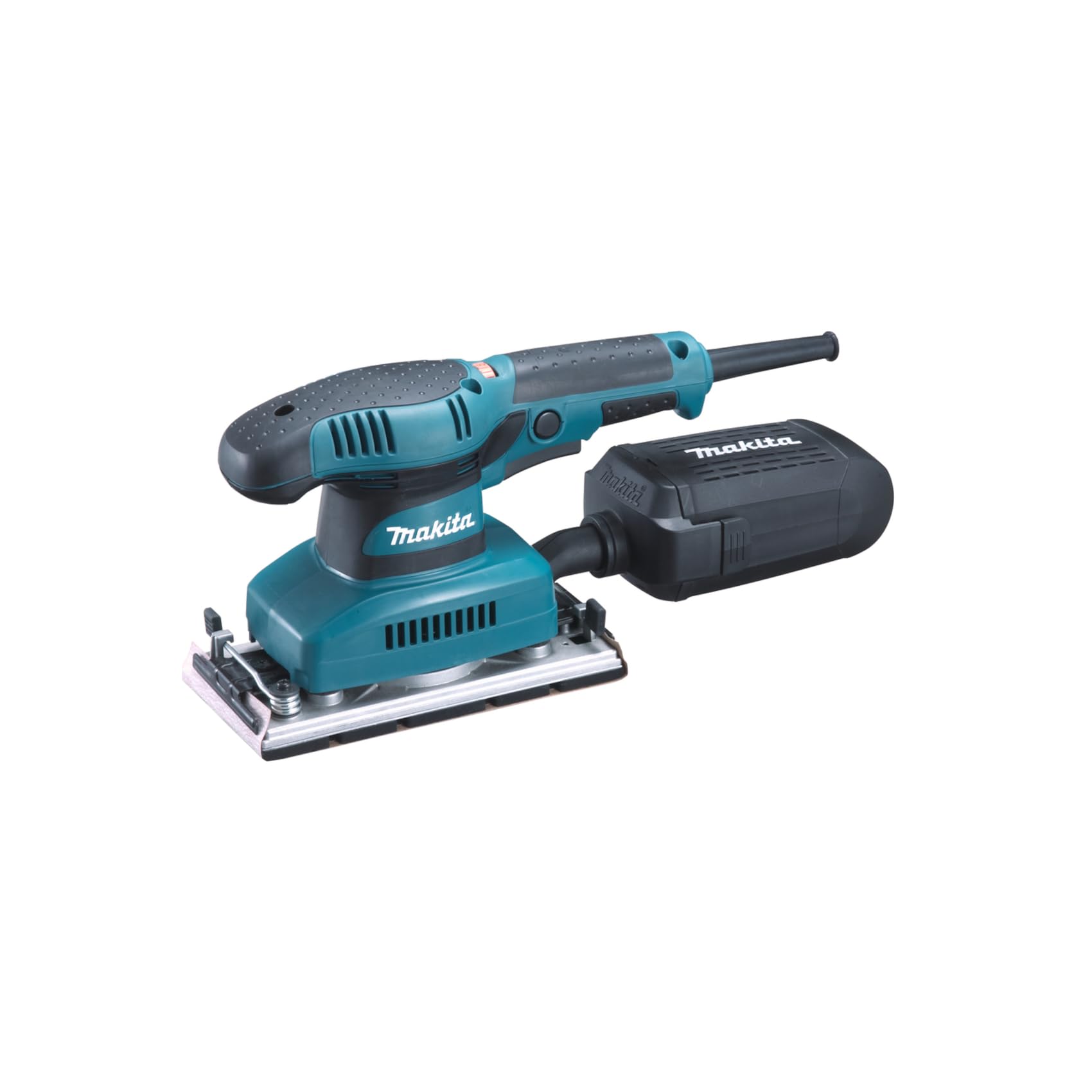
The Makita BO3711 sets the standard for what a corded 1/3 sheet sander should be. Its variable speed control dial lets you dial in exactly the right OPM for the task — from a gentle 7,000 OPM for final finishing up to 11,000 OPM for paint stripping — giving you precision that fixed-speed models can’t match. The rigid aluminum foot with sponge sleeves provides a perfectly flat sanding plane, which is critical for avoiding high spots on panel glue-ups.
At just 1.1 kg, this sander feels remarkably light and well-balanced in hand. The large two-finger trigger with a lock-on button makes extended overhead work comfortable, and the built-in dust collection system connects directly to a Makita vacuum without needing an adapter. Owners consistently praise the extremely low vibration levels and the excellent paper clamps that grip full 93x228mm sheets without tearing — even under heavy side pressure.
The included punch plate lets you create your own dust holes in plain sandpaper, saving considerable money compared to pre-punched sheets. This is a tool that rewards owners who invest in quality abrasives and take the time to dial in the speed. It’s purpose-built for committed woodworkers who value a flawless end grain finish over speed.
Why it’s great
- Variable speed dial covers a wide 7,000–11,000 OPM range
- Aluminum foot stays flat and resists warping
- Paper punch tool cuts dust holes in any plain sheet
Good to know
- Dust bag is small for large continuous sanding sessions
- Power cable is relatively short at 2.5 meters
- Not a 240V model for North American outlets without a transformer
2. Bosch GSS12V-40N 12V Max Brushless Orbital Finishing Sander

The Bosch GSS12V-40N is the most versatile form-factor sander in this lineup because it ships with interchangeable sanding plates — 1/4 sheet, 1/3 sheet, and a detail delta pad — all from a single bare tool. At 12V and brushless, it’s light enough to operate one-handed in vertical or upside-down positions without fatigue, making it ideal for cabinet interiors and furniture side panels where a corded tool would tangle.
The soft-start technology eliminates the kick that can cause a novice to gouge a workpiece on startup, and the constant-speed electronics keep the 14,000 OPM steady even when pressing into medium-grit paper. Users report the included dust bag is adequate for small projects, but the rotating dust port makes it easy to attach a vacuum hose for serious dust control. The real trick is finding the right vacuum adapter — the Bosch VAC024 hose adapter fits perfectly, while the VAC002 does not despite being listed as compatible.
Battery life hovers around 20 minutes of runtime on a 2.0Ah battery at moderate speed. For heavy sanding sessions, you’ll want a second battery in rotation, but the tool itself is so quiet and low-vibration that you’ll barely notice the swap. It uses 80x133mm hook-and-loop sheets; Serious Grit brand paper aligns well with the dust holes.
Why it’s great
- Three interchangeable sanding plates for maximum flexibility
- Soft-start prevents surface gouging
- Very quiet and low vibration at only 1.89 kg
Good to know
- Bare tool requires separate 12V battery purchase
- Dust port adapter compatibility is model-specific
- Hook-and-loop paper availability is limited for 1/3 sheet size
3. Milwaukee M18 1/4 Sheet Sander 2649-20

The Milwaukee M18 2649-20 is engineered for jobsite professionals who cannot tolerate downtime. Its 1.6mm orbit diameter strikes a strong balance between material removal rate and surface finish quality, and the variable speed dial — adjustable from 11,000 to 13,000 OPM — gives you the flexibility to switch between aggressive stripping and fine finishing without changing tools. The M18 platform’s 18V brushless motor delivers corded-like power with the convenience of a cordless form factor.
What sets this sander apart is the two-step clamp system for sandpaper changes. Unlike hook-and-loop pads that wear out, Milwaukee uses a mechanical clamp that holds the paper securely under high side pressure — critical for edge sanding where paper tear-off is common. The company claims up to 95% dust collection, and the through-the-pad extraction system works well when connected to a shop vac, though the side-mounted dust chute can be awkward for flush sanding on the left side.
The tool is rear-heavy when used with a 5.0Ah battery, but balances well with a compact 2.0Ah pack. Users report that the sander “floats” over plywood surfaces with minimal vibration, and the paper retention system is considered the best in class. It’s a single-purpose 1/4 sheet sander, not a multi-plate system, so you’re trading versatility for superior ergonomics and ruggedness.
Why it’s great
- 95% dust collection keeps the work area clean
- Two-step clamp system holds paper securely under pressure
- Variable speed from 11,000 to 13,000 OPM
Good to know
- Side dust chute can interfere with left-hand flush sanding
- Tail-heavy balance with larger M18 batteries
- Limited to 1/4 sheet size only — no 1/3 sheet
4. Bosch GSS18V-40N 18V Brushless Sheet Orbital Finishing Sander

The Bosch GSS18V-40N is essentially the big brother of the 12V model, swapping in an 18V brushless motor for longer runtime and higher sustained power on larger projects. The battery placement behind the pad — rather than on top or below — creates excellent balance that reduces wrist fatigue during extended sanding sessions. The metal shroud dissipates heat effectively, preventing motor sag when working through tough grain or paint layers.
Like its 12V sibling, this sander uses interchangeable sanding plates for 1/4 sheet, 1/3 sheet, and detail sanding. The 1/6 sheet pad is directly compatible with Festool abrasives, which is a significant advantage for users already invested in that ecosystem. The constant-speed electronics maintain steady OPM under load, and the soft-start technology prevents the tool from jumping when you pull the trigger. The dust port rotates 360 degrees and accepts both the included bag and a standard vacuum hose.
Users note that the included sandpaper punch does not align perfectly with the dust holes on generic paper, so you may need to buy pre-punched sheets from Bosch or Serious Grit. Battery life on a 4.0Ah pack is respectable — enough to sand an entire kitchen cabinet door set in one session. The 5-year limited warranty adds peace of mind for heavy daily use.
Why it’s great
- 5-year limited warranty for long-term investment
- Festool-compatible 1/6 sheet pad for fine finishing
- Excellent balance with battery behind the pad
Good to know
- Sandpaper dust holes may not align with generic sheets
- Bare tool requires separate 18V battery (sold separately)
- Side dust port can be in the way during flush sanding
5. Makita DBO480Z 18V Li-ion LXT Finishing Sander

The Makita DBO480Z takes a dual-approach to paper attachment: you can use hook-and-loop abrasive pads for quick changes or the traditional clamp system for secure retention during heavy stock removal. This flexibility makes it ideal for users who switch between fine finishing (where hook-and-loop is faster) and aggressive stripping (where clamped sheets stay put). The 112x102mm pad size is shared with many corded Makita models, so spare pads are easy to source.
The tool features a two-speed electronic control — simply push a button to toggle between low and high OPM settings. While not as granular as a variable speed dial, the two presets cover the most common use cases: a lower speed for final finishing and a higher speed for material removal. The through-the-pad dust collection system connects directly to a Makita vacuum cleaner without an adapter, keeping the workspace virtually dust-free.
One important caveat: this unit ships as a UK/EU model with a non-USA power cord and may not be eligible for Makita’s US warranty registration. Buyers in North America should verify the seller’s location and understand that parts and service support may be limited. The tool itself is well-reviewed for its useful combination of clamping and hook-and-loop systems, but the regional availability issue is a significant hurdle.
Why it’s great
- Dual paper fastening system — hook-and-loop and clamp
- Direct connection to Makita vacuum for dust collection
- Uses same pads as corded Makita models
Good to know
- Regional compatibility issues for North American buyers
- Plastic dust canister requires separate paper bags
- Only two speed presets instead of continuous variable control
6. DEWALT DWE6411K Palm Sander

The DEWALT DWE6411K is a corded 1/4 sheet finishing sander that delivers reliable performance at a compelling entry price. Powered by a 2.3 amp motor producing 14,000 OPM, it matches or exceeds the orbital speed of many mid-range competitors. The rubber overmold grip provides a comfortable hold even during long sanding sessions, and the reduced overall height gets your hand closer to the workpiece for better control on vertical surfaces.
The improved paper clamp system on this model addresses the common complaint of earlier DEWALT sanders — paper slipping during use. The locking dust port is engineered to fit DEWALT’s DWV010 or DWV012 dust collectors directly, and with the DWV9000 universal quick connector, it works with any 1-1/4-inch vacuum hose. The foam pad creates a flatter sanding plane than most budget models, reducing the risk of digging into corners.
Performance-wise, users report it’s effective for beginners tackling kitchen cabinet refinishing or furniture restoration. However, professional users note that the dust collection is only adequate — not exceptional — and the sander can leave marks if the paper isn’t perfectly aligned. The separate counterweight does reduce vibration compared to cheaper alternatives, but it’s still noticeably more buzzy than mid-range cordless options like the Bosch GSS12V-40N.
Why it’s great
- 14,000 OPM is faster than many competitors in this tier
- Foam pad helps maintain a flat sanding plane
- Locking dust port fits DEWALT dust collectors directly
Good to know
- Dust collection is not as effective as pro-grade models
- Can leave swirl marks if paper is misaligned
- Higher vibration levels than mid-range sanders
7. Ryobi 1/3 Sheet Sander S631DK

The Ryobi S631DK is one of the few corded options specifically designed as a 1/3 sheet sander rather than a multi-size convertible. Its 1.8-amp motor drives the pad at 12,000 OPM — not the fastest in this guide, but sufficient for standard sanding tasks like smoothing painted walls or prepping new wood for stain. The ergonomic overmold contoured grip does reduce hand fatigue, and the ability to perform flush sanding on three sides is genuinely useful for corner work and sanding against cabinet edges.
Ryobi’s cyclonic action dust collection is marketed as delivering maximum dust pick-up, but user reports are mixed. Several owners note that the included dust bag fills quickly and doesn’t capture fine particles well, making a shop vac connection nearly essential for indoor use. The paper clamping system is another pain point: some users report the latches don’t hold 1/3 sheets securely under pressure, particularly when working with coarser grits that create more friction.
On the positive side, this sander is notably effective at avoiding over-sanding — it removes material without digging in too aggressively, which is a common hazard with higher-speed tools. For the budget-conscious DIYer who primarily sands painted surfaces and trim, the Ryobi delivers acceptable results, but the clamping mechanism and dust collection shortfalls mean it’s best suited for light-to-medium duty rather than all-day production work.
Why it’s great
- Flush sanding on three sides for corner work
- Gentle material removal prevents over-sanding
- Low cost of entry for occasional DIY projects
Good to know
- Paper clamps may not hold sheets securely
- Dust collection is ineffective without a shop vac
- 12,000 OPM is slower than many competitors
FAQ
What is the key difference between a 1/3 sheet sander and a 1/4 sheet sander?
Can I use hook-and-loop paper on a 1/3 sheet sander designed for clamp paper?
How important is variable speed for a 1/3 sheet sander?
Final Thoughts: The Verdict
For most users, the best 1/3 sheet sander is the Makita BO3711 because its variable speed dial, low vibration levels, and excellent paper clamps deliver professional-grade results without the cordless premium. If you need a cordless sander for tight quarters and one-handed control, the Bosch GSS12V-40N with its interchangeable plates is the versatile winner. And for jobsite professionals who value dust collection and paper retention above all else, the Milwaukee M18 2649-20 is the rugged beast that will outlast your workday.