
Our readers keep the lights on and my morning glass full of iced black tea. As an Amazon Associate, I earn from qualifying purchases.
Specs are compiled from manufacturer listings and verified buyer reviews and can change over time — please confirm the key details on the product page before buying.
Finding a 1/4 size violin that actually plays in tune and sounds like a real instrument—not a squeaky toy—is the difference between a kid who loves practice and one who quits in frustration. The right 1/4 size violin fits small hands, holds tune through a lesson, and includes the essentials a beginner needs immediately. This guide cuts through the noise to show you which quarter-size models are genuinely worth your money.
I’m Min — the founder and writer behind Gadgets Feed. This guide is built by comparing the manufacturers’ published specifications and the patterns across verified customer reviews, so you get each pick’s real strengths and trade-offs instead of marketing spin.
The focus here is strictly on the 1/4 size violin, the fractional instrument built for young players around ages 5 to 7, where getting the setup right matters more than any other factor.
Our Picks at a Glance

How To Choose The Best 1/4 Size Violin
Buying a fractional violin is a different game than buying a full-size one. You are not looking for a lifetime instrument—you are looking for something that makes the first year of lessons feel easy and rewarding. A poorly fitted or hard-to-tune violin will quickly discourage a young beginner.
Check the Fit First, Not Just the Label
The 1/4 size label usually points to players aged 5 to 7, but age is a rough guide at best. A proper fit means the child can wrap their left hand around the neck with a slight bend at the elbow when the violin rests on the collarbone. If they have to stretch or strain, they need a smaller size. If their arm is cramped, they need a larger one. A teacher or a size chart based on arm length settles it faster than guessing by birthday.
Choose Solid Wood Over Plywood for the Top
The top of the violin—the soundboard—drives most of the tone. Solid spruce responds to the bow with warmth and projection, while plywood or laminated tops tend to sound dull and boxy. You will pay more for solid construction, but it is the single biggest factor in whether the instrument sounds like music or like a scratching cat. Some budget kits use basswood or plywood bodies and still sound acceptable for practice, but a solid top will support the child’s ear as it develops.
Count the Fine Tuners
Beginners cannot reliably tune with wooden pegs alone. Fine tuners—small screws at the tailpiece that make micro-adjustments—let a parent or young student dial in pitch without a struggle. The best setups put a fine tuner on all four strings. Many budget kits give you only one on the E string, which makes the lower strings a constant battle. If the spec sheet does not mention four fine tuners, plan for tuning frustration.
Look at What Is Actually in the Outfit
A complete starter kit typically bundles a bow, case, rosin, and often a shoulder rest and tuner. But not all accessories are created equal. A Brazilwood bow is a reliable entry point, while a plastic or uncurved bow will never produce a clean tone. A hard case protects the instrument on the way to lessons; a soft bag does not. The value of a kit depends on how many of these pieces you would have to upgrade right away versus how many are genuinely usable from day one.
Quick Comparison
| Model | Best For | Body Wood | Bow Count | Fine Tuners | Amazon |
|---|---|---|---|---|---|
| Kennedy Violins Bunnel Premier★ Best Overall | Serious beginners & long-term value | Solid maple & spruce | 1 Brazilwood | 4 | Amazon |
| Cecilio CVN-200Premium Kit | Complete kit with 2 bows | Solid spruce & maple | 2 Brazilwood | 4 | Amazon |
| SKY VLN201Solid Wood Value | Solid maple build on a budget | Solid maple & spruce | 2 | 4 | Amazon |
| Vangoa VA-500B | All-in-one kit for ages 4-7 | Solid wood sides | 1 | 4 | Amazon |
| Pyle PGVILN14 | Lightweight budget starter | Plywood flamed maple | 1 | — | Amazon |
| ADM Matte-Brown | DIY-enthusiast families | Plywood basswood | 1 | 4 | Amazon |
| ADM Purple Sequin | Visual appeal for young kids | Plywood basswood | 1 Brazilwood | — | Amazon |
| Doredo Pink | Color-led gift on a tight budget | Basswood w/ maple neck | 1 arbor | 4 | Amazon |
In-Depth Reviews
1. Kennedy Violins Bunnel Premier
Our pick — over 4★ from 400+ verified ratings; the strongest balance of quality and price.
The handcrafted upgrade that sounds like a much pricier fiddle, straight out of the case.
What wins people over here is the sound—the most-discussed strength by a wide margin. This Bunnel is handcrafted with solid maple and spruce tonewoods and genuine ebony fittings, then finished in a satin oil that gives it a smooth, warm character. Its solid spruce and maple construction—rare at this size—delivers a tone that seasoned players liken to far pricier violins.
The outfit is genuinely complete: a Portland carbon fiber style shoulder rest, a D’Addario Prelude string set already installed plus a backup set, Giuliani rosin, a Giuliani Brazilwood bow, and a Portland oblong case with backpack straps. It is assembled and quality-checked in the USA, not shipped raw from a factory, so it arrives ready to tune and play rather than needing a luthier’s visit first. The USA-based assembly ensures smooth tuning and a responsive neck, avoiding common peg-slipping issues.
There is a catch worth knowing: this is a clearance item, sold at a discount because of a slight cosmetic defect that does not affect playability or sound. The supplied bow is the basic point in the kit, and several owners note that upgrading the bow and strings later takes the instrument to another level. With a 4.4-star average from 400+ ratings, it’s the highest-rated and most-reviewed pick here.
best for beginners: you want a solid-wood 1/4 violin that sounds genuinely musical, arrives professionally set up, and can carry a young player through several years of lessons before an upgrade.
skip for pros: the cosmetic blemish that earns the clearance price means this is not the pick for a perfectionist who will obsess over a tiny mark in the varnish.
2. Cecilio 1/4 CVN-200
A solid-wood starter with two genuine horsehair bows and every spare part you can imagine.
Quality is the thing buyers praise most here—by a wide margin—and it is easy to see why when you open the box. The Cecilio pairs a solid spruce top with a maple back, neck, and sides, all finished with inlaid purfling. It ships strung with D’Addario Prelude strings, the same brand the premium Kennedy pick uses, and the maple fingerboard with boxwood pegs gives it a classic, durable feel that plywood kits cannot match.
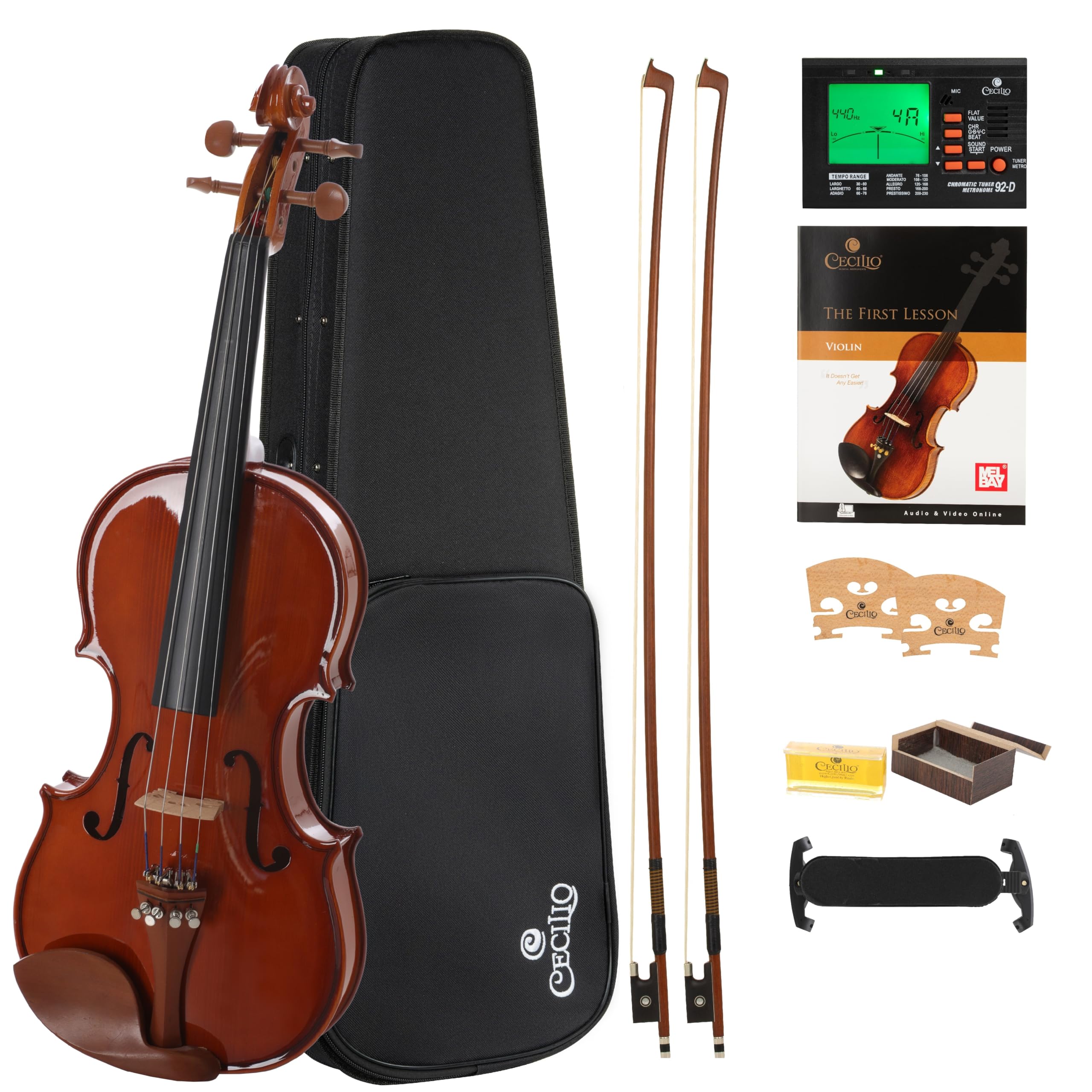
Where this kit really stands out is the sheer completeness. You get two Brazilwood bows strung with unbleached genuine Mongolian horsehair, a chromatic tuner, a lesson book, a lightweight hard case, rosin, an adjustable shoulder rest, and an extra bridge. Having a second bow matters because young players snap bow hair—a spare keeps lessons going while the first is being rehaired. The four nickel-plated fine tuners on the tailpiece make pitch corrections simple for small hands and non-musician parents alike.
You will need patience during setup. New strings stretch and pegs slip for the first week or two, and a few buyers report a string breaking early or a bow arriving slightly warped. You can fix these by pushing the pegs in firmly while tuning and applying rosin generously. A 4.3-star average from 600+ ratings makes it among the most proven starter kits available.
best for students: families who want a complete, solid-wood kit with a spare bow and spare strings so that nothing halts practice in the first few months.
skip for recitals: a little peg-and-string settling in the first two weeks; treat tuning gently and the instrument will hold pitch for the long run.
3. SKY 1/4 Acoustic Violin VLN201
A surprising amount of solid-maple instrument for the money, with two bows in the bag.
Most kits at this price point carve corners with plywood, but the SKY VLN201 goes the other direction. The oil-varnished solid spruce top sits over a solid maple back, sides, neck, and scroll—the classic orchestral construction that gives the instrument resonance and a warm, solid look. Inlaid purfling and solid wood pegs, fingerboard, and chinrest round out a build that has impressed at least one orchestra teacher with its quality-to-value ratio.
The kit is thoughtfully portable. A lightweight triangular case with a rain-resistant canvas exterior, shoulder straps, a sheet-music pocket, and an accessory compartment keeps the violin, two bows, shoulder rest, and lesson gear organized for the trip to school. The aluminum tailpiece carries four built-in fine tuners, so parents can handle pitch without mastering wooden pegs. Two bows mean a spare is always on hand, and the included tuner, spare string set, spare bridge, rosin, and mute cover the practical essentials.
Owners mention good resonance and sturdy real-horsehair bows, but the chinrest and tailpiece are plastic, not the ebony you would find on a premium instrument. One family noted the chinrest broke when the violin dropped—repairable with glue but worth handling gently. With a 4.4-star average from just over 50 ratings, it scores well, though the smaller review base makes it less proven than the Kennedy or Cecilio above. Still, the solid-wood construction gives it real staying power.
best for kids: you want solid maple and spruce tonewoods plus the security of two bows, all without jumping to the premium price tier.
skip for gigs: plastic fittings mean this is a player’s tool, not a showpiece—perfect for a kid who will knock it around.
4. Vangoa 1/4 Violin Kit VA-500B
The rare starter kit that a teacher actually recommended—and kids call their best gift ever.
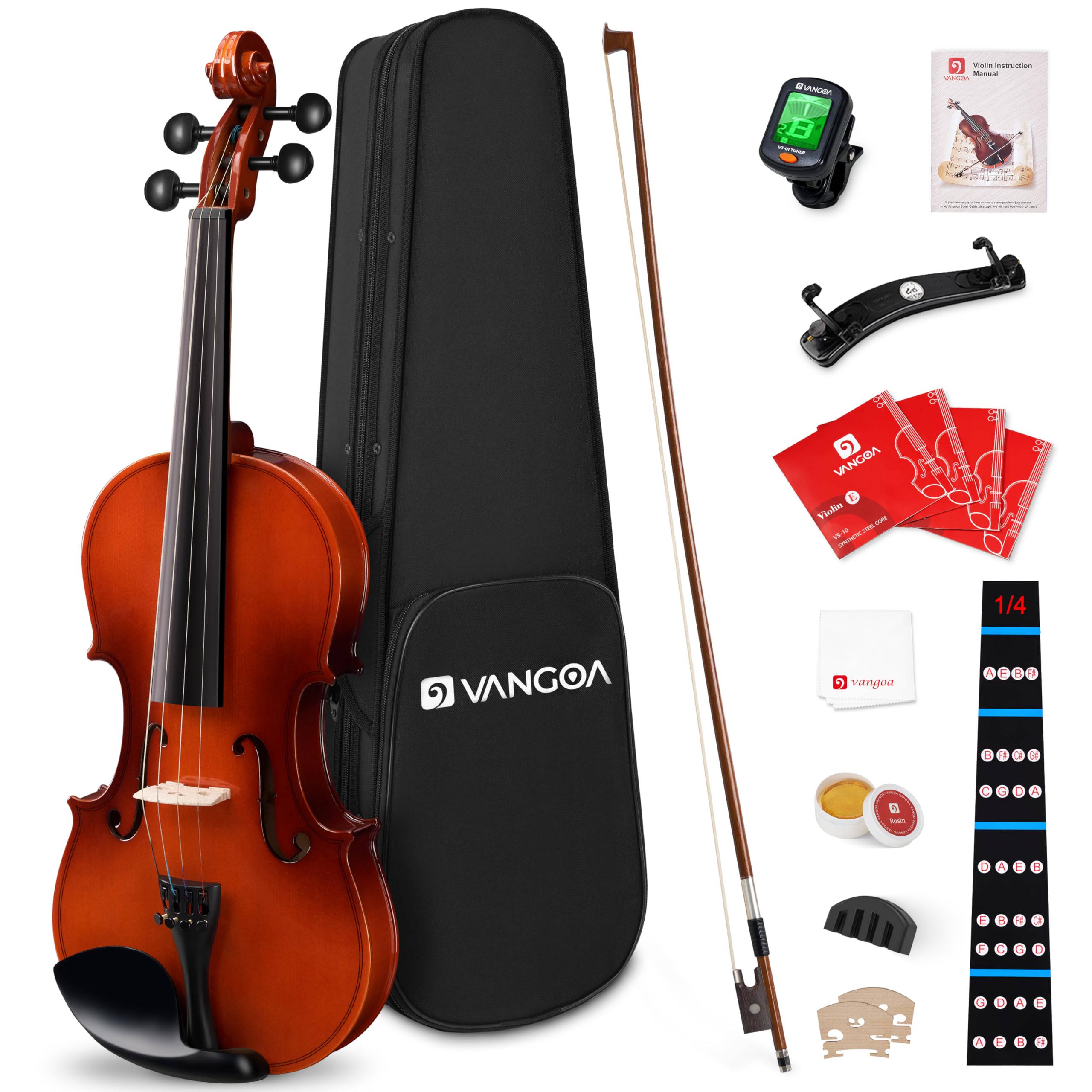
Quality is what owners single out most here, and the proof is in who bought it: at least one came on a violin instructor’s recommendation for a beginner child. The Vangoa pairs a handcrafted spruce top with a basswood back and solid wood sides, using a precut maple bridge to deliver bright, sustained tones. The gradient red varnish finish gives it visual appeal that makes a young player want to pick it up.
What sets this kit apart is how beginner-focused every piece is. A digital tuner and note guide stickers help kids find the right pitch, and a violin mute allows quiet practice without disturbing the household. The solid wood pegs and maple fingerboard keep tuning smooth, and the included two replaceable bridges, extra strings, rosin, shoulder rest, cleaning cloth, and hard case mean nothing is missing on day one. A 2-year after-sale service window backs it up, which is rare at this tier.
Buyers describe it as lightweight, well-made, and easy to tune, with kids practicing daily on their own—the strongest endorsement a children’s instrument can earn. The occasional unit arrives with a setup issue that needs attention, and new strings stretch until they stabilize, so expect some tuning frequency in the first sessions. With a 4.1-star average from 200+ ratings, its note stickers and mute make it the most kid-friendly choice for ages 4-7.
best for fun: parents of younger kids (ages 4-7) who want the most complete, beginner-oriented kit with learning aids like note stickers and a mute.
skip for concerts: give the strings a few days to stretch before judging tuning stability—that is normal for any new violin.
5. Pyle PGVILN14 Starter Kit
A featherlight quarter-size that reduces arm fatigue during those long first practice sessions.
Suitability for beginners is the thing buyers praise most here, and the lightweight design is a big part of why. At just 16 ounces, this is the lightest instrument in the lineup, and owners specifically note that the reduced weight keeps kids comfortable during longer practice sessions. The plywood body wears a flamed maple veneer on the top, back, and sides, giving it an attractive look that punches above its price tier.
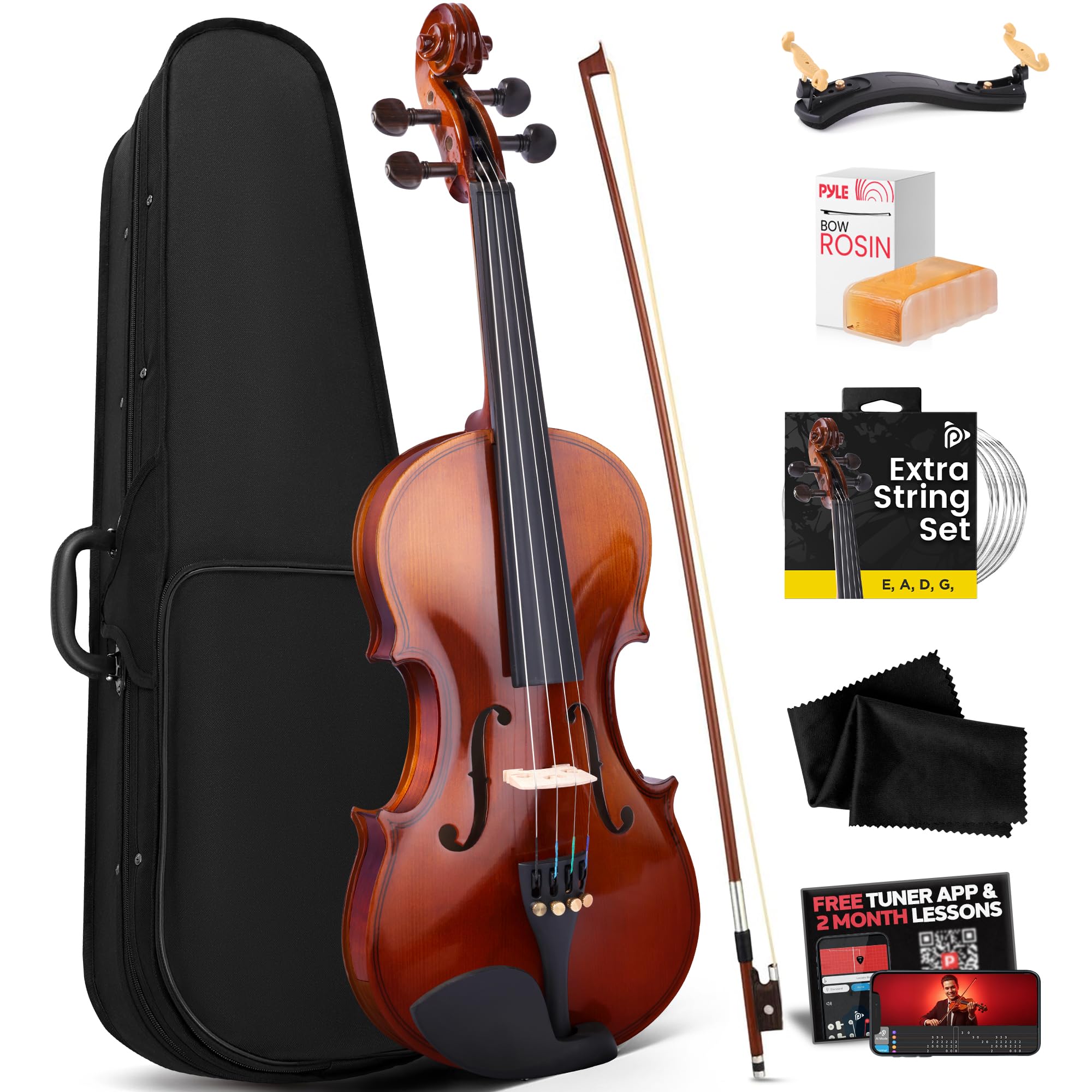
The kit is genuinely all-in-one: a bow, hard travel case with backpack straps and locks, extra strings, shoulder rest, rosin, and cleaning cloth. A pre-installed bridge and tuner mean it is playable from the start, and the dyed hardwood fingerboard with an adjustable chin rest accommodates growing kids comfortably. The package even includes 2 months of online lessons and a mobile tuner app, which removes a lot of the guesswork for parents who have never touched a violin.
The honest reality is that this is a budget-tier instrument, and the mixed durability reports reflect that—some owners describe it breaking after a few uses, while others find it perfectly adequate for a young beginner. The bridge may need a grip to keep it from sliding, and heavy rosin application is essential on a new bow. If expectations stay realistic—this is a starter to test interest, not a long-term instrument—it serves its purpose well, and the sub-4-star average from 150+ ratings tells the story of a kit that works for many but not all.
best for trials: you want the lightest possible 1/4 violin to see if a young child will stick with lessons before investing more.
skip for lessons: treat this as an entry point, not a heirloom—buyers who wanted concert-grade durability were the disappointed ones.
6. ADM 1/4 Matte-Brown Wood Violin Set

A matte-finish basswood kit that rewards families willing to learn basic setup skills.
This ADM violin is built for beginners over 6 years old, with a high-quality plywood basswood body and a matte-brown varnish finish. The kit includes a hard case, a Brazilwood bow with an ebony frog, rosin, a clip-on tuner (battery not included), a shoulder rest, an extra string, a polishing cloth, and a fingerboard sticker—a practical extra that helps young players find the right notes. The wooden tuning pegs have the right friction, so they turn easily and stay in tune once set.
The standout feature here is the customer service. Customers note helpful support that offers free strings for life, which is a meaningful safety net for a beginner instrument. The maker also frames setup honestly: this kit requires some DIY work, including reaming pegs, shaping the bridge, and moving the soundpost—tasks that a luthier would charge for individually. For families who enjoy that kind of hands-on learning, it is a genuine educational experience in how the instrument works.
The flip side is that not every buyer wants a project. Some describe it as not playable from the start, with a bridge that will not stay put and strings arriving undone from shipping. Others praise it as perfect for young children once tuned, with good sound quality when in tune. A 3.8-star average from 100+ ratings reflects mixed feedback—it suits patient families, not those wanting out-of-box simplicity.
best for display: you are comfortable learning basic violin setup—shaping a bridge, seating pegs—and want a tuner, shoulder rest, and fingerboard sticker included.
skip for orchestras: you want to open the box and play immediately; this one rewards a weekend of careful setup first.
7. ADM 1/4 Purple Sequin Violin Kit
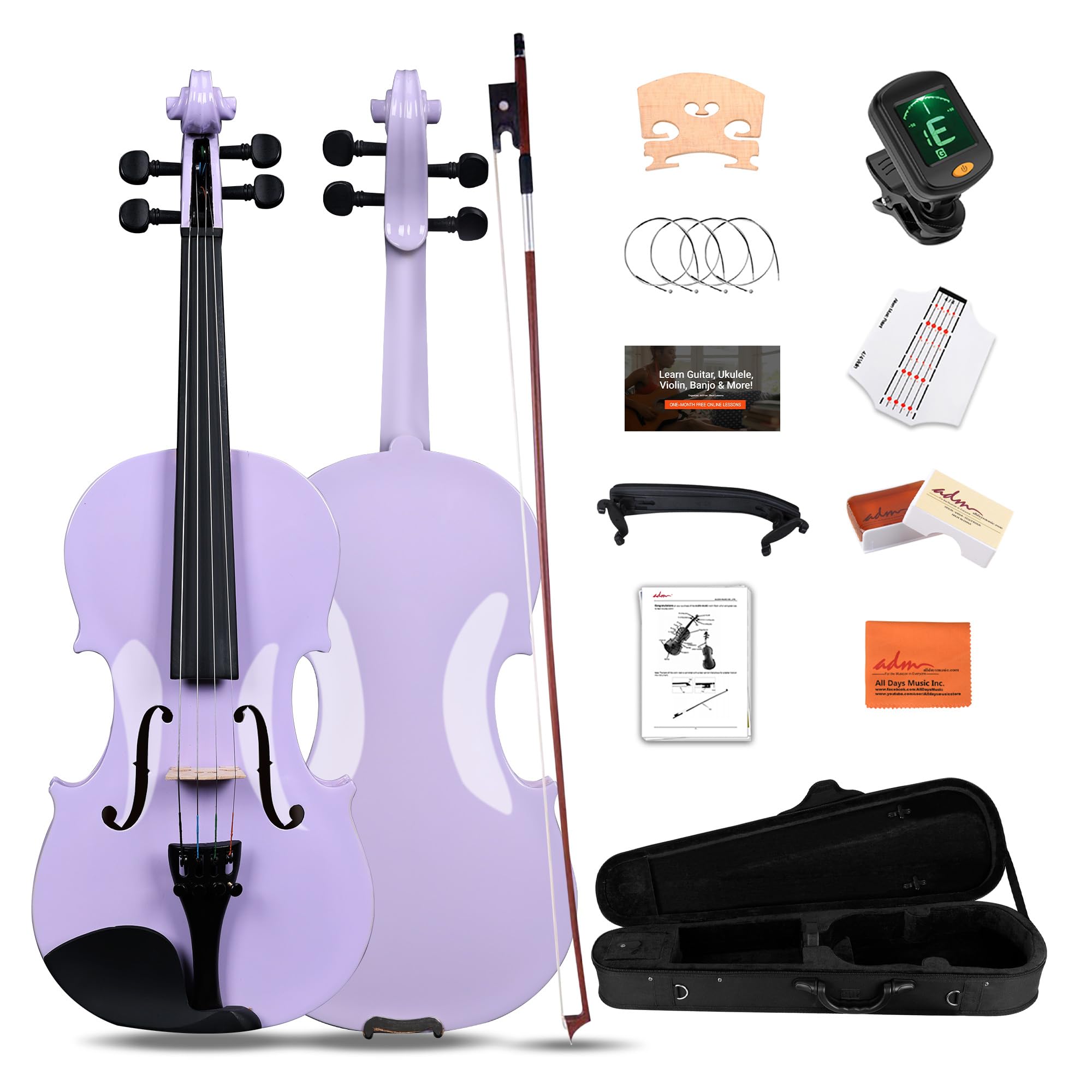
A shiny purple sequin body that makes a young kid actually want to practice.
If your child is not sure they want to play violin, the visual hook matters—this ADM delivers it with a unique sequin material and varnish finish that is pretty, shiny, and protects the wood underneath. The basswood plywood body gives a clear, bright sound suitable for starters or students over 6 years old. Owners describe kids playing “like a bird” once the instrument is properly rosined and set up, which is the outcome every parent hopes for.
The kit is practical and generous: a hard violin case, Brazilwood ebony-frog bow, a tuner (battery not included), shoulder rest, rosin, an additional string, a polishing cloth, and a free lessons card. The wooden tuning knob has good friction, so it stays in tune once set. Several owners note they upgraded the strings and shoulder rest and found the bow decent, which suggests the core instrument is worth those small investments.
The honest assessment is mixed on durability and tuning. Some report strings breaking within weeks and the instrument struggling to hold tune, while others are delighted with the sound and color. At a 3.8-star average from 170+ ratings, this is a gift-first purchase: the wow factor is real, but a parent should expect to do some setup and possibly upgrade the stock strings. If the priority is a birthday present that excites a young child, the purple sequin look is a powerful motivator.
best for show: the child who is drawn to sparkle and color—the visual appeal genuinely encourages practice sessions.
skip for practice: budget for a string upgrade and expect the bridge to need seating; this is a starter kit that benefits from a little attention.
8. Doredo 1/4 Violin (Pink)
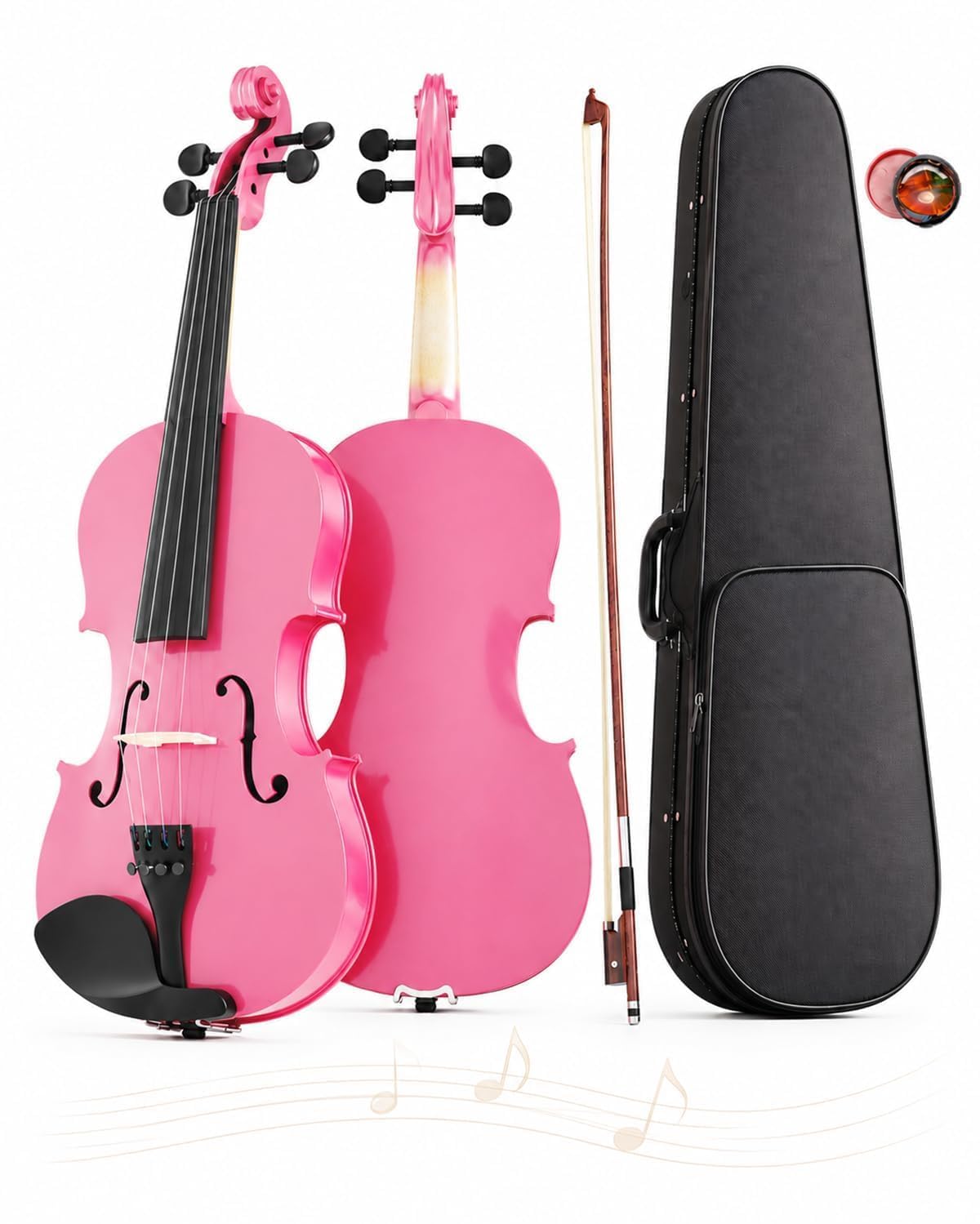
A pink 18.11-inch budget fiddle that measures well for ages 5-7 and weighs almost nothing.
Weighing just 2.38 pounds, this pink Doredo is easy for the youngest players to hold, and its 18.11-inch length fits ages 5 to 7 well. The top, back, and sides are aged basswood, with a maple scroll and neck, finished in a durable varnish. A blackwood fingerboard offers smooth playability, so small hands can press strings comfortably.
The tuning setup is genuinely better than most at this price. Four fine tuners—one on every string—let a parent make small, precise pitch corrections that many budget violins simply do not offer. This is a meaningful feature because it means the instrument stays stable for longer practice sessions. The kit includes a soft-lined protective case, a bow with white horsehair, and rosin, plus a 30-day return policy and 24/7 customer service for damage or missing parts.
The reviews reveal a split personality. Several families report beautiful quality and a great price, with one noting a 5-year-old grandson using it happily and a 3-year-old granddaughter already playing lessons on it. Others describe it as a bad product that does not work. At a 3.9-star average from just under 70 ratings, the smaller review base and mixed quality feedback make this a budget gamble—suitable when the priority is color and cost, less so when you need reliable performance.
best for gifts: budget is the deciding factor and you want four fine tuners plus a child-pleasing pink finish for a first exposure to violin.
skip for exams: quality reports are genuinely split, so treat this as a low-cost trial instrument rather than a long-term commitment.
Understanding the Specs
Solid Wood vs. Plywood
The top wood of a violin drives most of its tone. A solid spruce top vibrates freely and produces a warm, projecting sound that grows with the player. Plywood or laminated tops are cheaper and more durable against cracks, but they sound boxier and less responsive. For a 1/4 size violin, solid wood matters most if the child is serious about lessons; plywood is acceptable for a trial year.
Fine Tuners
Fine tuners are the small screws on the tailpiece that make micro-adjustments to pitch. New players and their parents cannot reliably tune with wooden pegs alone, so four fine tuners—one per string—are the gold standard for a beginner instrument. Kits that only include a single tuner on the E string force you to master the pegs for the other three strings, which is a constant frustration.
Brazilwood Bows & Horsehair
A bow’s stick material and hair quality determine how easily it produces a clean tone. Brazilwood is the standard entry-level bow wood—flexible, durable, and affordable. Genuine horsehair grips the strings far better than synthetic alternatives, and unbleached Mongolian horsehair is a quality marker. Two bows in a kit are a practical bonus, because young players snap bow hair regularly.
The Complete Outfit
A starter kit’s value depends on how many included pieces you would otherwise buy separately. A hard case protects the instrument on the way to lessons; a shoulder rest supports comfortable playing posture; a tuner removes guesswork; extra strings and a spare bridge cover the most common beginner failures. Count what is actually in the box before comparing prices—the kit with more usable accessories often wins on real value.
FAQ
What age is a 1/4 size violin actually for?
How do I know if my child needs a 1/4 or a 1/2 size violin?
Why does my new 1/4 violin keep going out of tune?
Is a solid wood 1/4 violin worth the extra cost over plywood?
How many fine tuners does a beginner 1/4 violin need?
What is the difference between a Brazilwood bow and a cheaper bow?
Why do some 1/4 violin kits include two bows?
How long does a 1/4 violin last before my child outgrows it?
Final Thoughts: The Verdict
For most families, the best 1/4 size violin is the Kennedy Violins Bunnel Premier because it pairs genuine solid maple and spruce tonewoods with a USA quality-checked setup and a complete outfit—the highest-rated pick here with over 400 owners behind it. If you want the most complete kit with two genuine horsehair bows, grab the Cecilio CVN-200. And for a solid-wood instrument that gives you two bows without the premium price, the SKY VLN201 is the one to reach for.
How We Picked
We do not accept paid placement. Every pick is matched to a real buyer and a real use-case; we do not hands-on test units.
Sources & Methodology
Specifications: manufacturer listings and product documentation. Review insights: verified customer reviews, as of September 2026. Pricing: not shown on this page (it changes often); check the current price via the retailer link.
As an Amazon Associate, Gadgets Feed earns from qualifying purchases. This does not affect which products we feature.