
Swapping out a cracked or brittle 1/8 inch fuel hose on a lawn mower, generator, or vintage motorcycle is a straightforward repair — unless the replacement tube softens, splits, or collapses under heat and vacuum. The wrong material turns a five-minute job into a recurring headache.
I’m Min — the co-founder and writer behind Gadgets Feed. I’ve spent dozens of hours cross-referencing material datasheets, pressure ratings, wall thickness measurements, and real owner reports to isolate the hoses that actually hold up in gasoline, diesel, and ethanol-blended fuels.
This guide breaks down the seven top-rated options and explains exactly how wall thickness, burst pressure, and compound chemistry determine whether a hose lasts or fails. It’s everything you need to pick the best 1/8 inch fuel hose for your small engine or automotive project.
How To Choose The Best 1/8 Inch Fuel Hose
Selecting the right 1/8 inch fuel hose means matching the material compound to the fluid type, the wall thickness to the system’s vacuum and pressure demands, and the temperature range to the engine environment. A hose that looks identical at the shelf can fail within weeks if the compound isn’t specified for fuel service.
Material Compound: NBR vs. Silicone vs. PVC
Nitrile butadiene rubber (NBR) is the most common choice for standard fuel lines because of excellent oil and gasoline resistance, good abrasion resistance, and a workable temperature ceiling around 125°C. Silicone hoses, like the EVIL ENERGY option, offer far higher heat tolerance — up to 220°C — but are less abrasion-resistant and can soften with long-term ethanol exposure. Tygon PVC compounds resist swelling and embrittlement from hydrocarbons and allow visual flow monitoring, but they typically have a lower maximum pressure rating around 50 PSI.
Wall Thickness and Pressure Ratings
For a 1/8 inch ID hose, a nominal wall thickness of 3mm is the sweet spot. Thinner walls collapse under the vacuum draw of small engine fuel pumps, while thicker walls can be too rigid to route through tight bends. Working pressure for most small engine applications is well under 50 PSI, but burst pressure gives you a safety margin — look for at least 300 PSI burst for fuel delivery systems. The MSLANE and Shineyoo kits both spec a 1200 PSI burst rating.
Realistic Length and Kit Contents
A 10-foot roll handles most single-engine replacement jobs on lawn mowers, generators, and motorcycles. Kits that include multiple sizes (1/8″ through 5/16″) and matching clamps save a second trip to the auto parts store, especially if you maintain several different machines. The included clamp quality varies — screw-type clamps generally provide a more secure seal than simple spring clips on larger diameter hoses.
Quick Comparison
On smaller screens, swipe sideways to see the full table.
| Model | Category | Best For | Key Spec | Amazon |
|---|---|---|---|---|
| Shineyoo 6PCS Kit | Premium Kit | Multi-engine shop use | 1200 PSI burst / 3mm wall | Amazon |
| MSLANE 6PCS Kit | Premium Kit | High-pressure fuel systems | 1200 PSI burst / NBR braided | Amazon |
| AloneGoer 5-Size Set | Multi-Size Kit | Versatile small engine repair | NBR rubber / braided polyester | Amazon |
| MSLANE 20FT + Clamps | Long Roll | Full machine re-line jobs | 1200 PSI burst / 20 ft length | Amazon |
| Tanbupu 5-Size Kit | Budget Kit | Emergency spares assortment | NBR rubber / 50 clamps included | Amazon |
| Tygon F-4040-A | Specialty PVC | RC planes / diesel return lines | 50 PSI max / translucent yellow | Amazon |
| EVIL ENERGY Silicone | High-Heat Silicone | Turbo vacuum / extreme heat | 220°C rated / 130 PSI burst | Amazon |
In‑Depth Reviews
1. Shineyoo 6PCS Fuel Line Hose Kit

The Shineyoo kit delivers the best balance of scope and durability. It includes six sizes from 1/8″ to 1/2″ ID, each 5 feet long, plus 30 clamps — enough to tackle multiple machines in one purchase. The 3mm wall thickness and 1200 PSI burst rating provide genuine safety margin for fuel delivery, not just vacuum lines.
Real users confirm it holds up on classic British sports cars with ethanol-blended gasoline without softening. The included squeeze clamps are functional, though some owners prefer upgrading to screw-type clamps for a more positive lock on larger diameters. Cut lengths install cleanly with standard side cutters.
At this price point for a six-size set, it undercuts buying individual rolls from auto parts stores while matching or exceeding their material quality. This is the kit to grab if you maintain a stable of small engines, motorcycles, or older cars.
Why it’s great
- Six-size assortment covers most small engines in one box
- 1200 PSI burst rating provides a real safety margin for fuel lines
- Ethanol-resistant NBR compound resists softening over time
Good to know
- Squeeze clamps may not tighten as securely as screw-type alternatives
- Kit only provides 5 feet per size, not enough for multiple long runs
2. MSLANE 6PCS Fuel Line Hose Kit
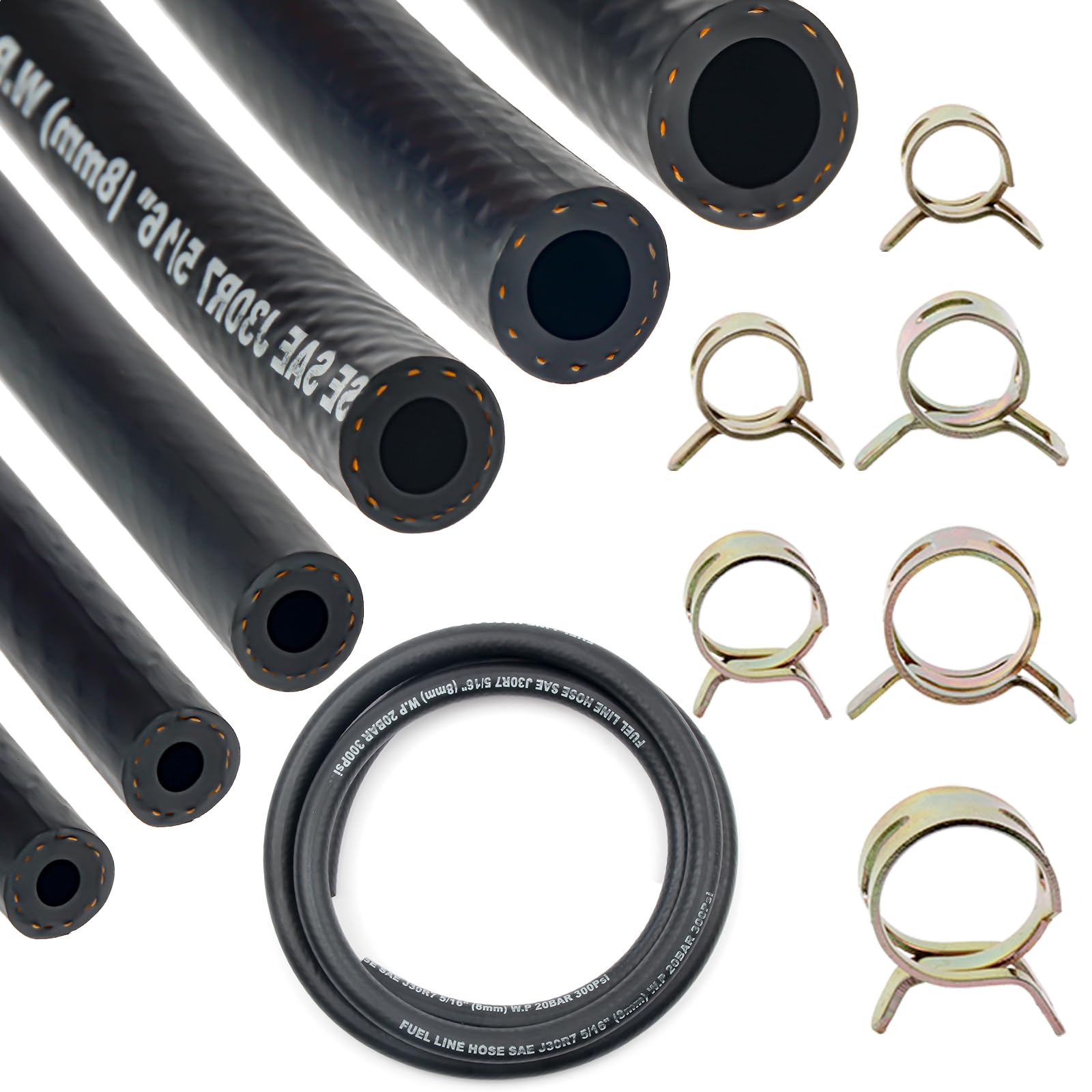
The MSLANE 6PCS kit mirrors the Shineyoo offering in size range and material, but the braided polyester reinforcement layer gives it added resistance against abrasion in high-vibration environments like riding mowers and tractors. Each of the six sizes runs 5 feet, and the 30 clamps match the hose IDs reasonably well.
User feedback highlights its effectiveness as a generator fuel line replacement. The 3mm wall prevents the line from kinking at sharp routing angles, and the 1200 PSI burst rating means you won’t worry about a split during winter storage when fuel expands. A few note that the included clamps feel slightly loose on the 1/8″ and 3/16″ sizes.
For the price, this kit competes directly with the Shineyoo set. The tiebreaker is availability and perceived reinforcement — if you want the extra braided layer assurance for a high-vibration application, this MSLANE kit edges ahead.
Why it’s great
- Braided polyester layer adds abrasion resistance for tractor/vibration use
- Six common sizes cover most small engine and motorcycle applications
- 3mm wall thickness prevents kinking on tight engine bay routes
Good to know
- Clamps may not cinch tightly enough on the smallest 1/8″ size
- Only 5 feet per size — long fuel lines may require multiple kits
3. AloneGoer 5-Size Fuel Line Set
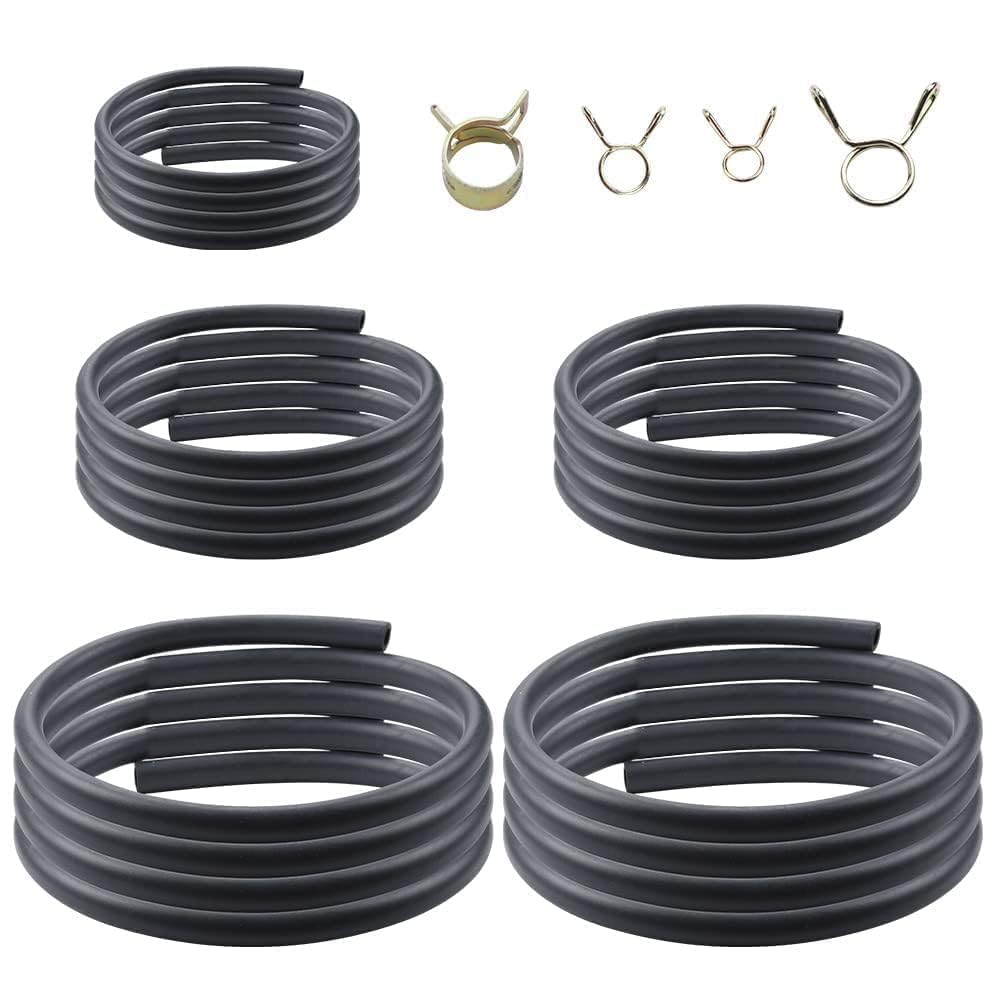
The AloneGoer set trades length for a lower entry price. Each of the five sizes — 1/8″, 3/16″, 0.22″, 1/4″, and 5/16″ — is 3 feet long, which is sufficient for one or two replacement jobs per size. The NBR rubber construction includes a braided polyester layer, and the wall thickness holds up against vacuum collapse on lawn mower fuel pumps.
Owner reviews consistently mention that this set is the best value on Amazon for home mechanics who regularly fix small engines. Six machines were repaired from a single kit in one reported case. The 40 included clamps are a mix of sizes that match the hose IDs without much extra slack.
If you don’t need the extra size options (1/2″ and 3/8″) or the longer per-size length of the premium kits, this AloneGoer set delivers solid material quality at a noticeably lower investment. Perfect for occasional repair work.
Why it’s great
- Five most common small engine sizes included in one economical set
- Braided NBR construction resists oil, heat, and aging effectively
- 40 clamps provide ample securement for most single-engine jobs
Good to know
- Only 3 feet per size — not enough for long runs or large machines
- Clamps are spring-style, not ideal for high-pressure diesel systems
4. MSLANE 20FT Fuel Line Hose + Clamps
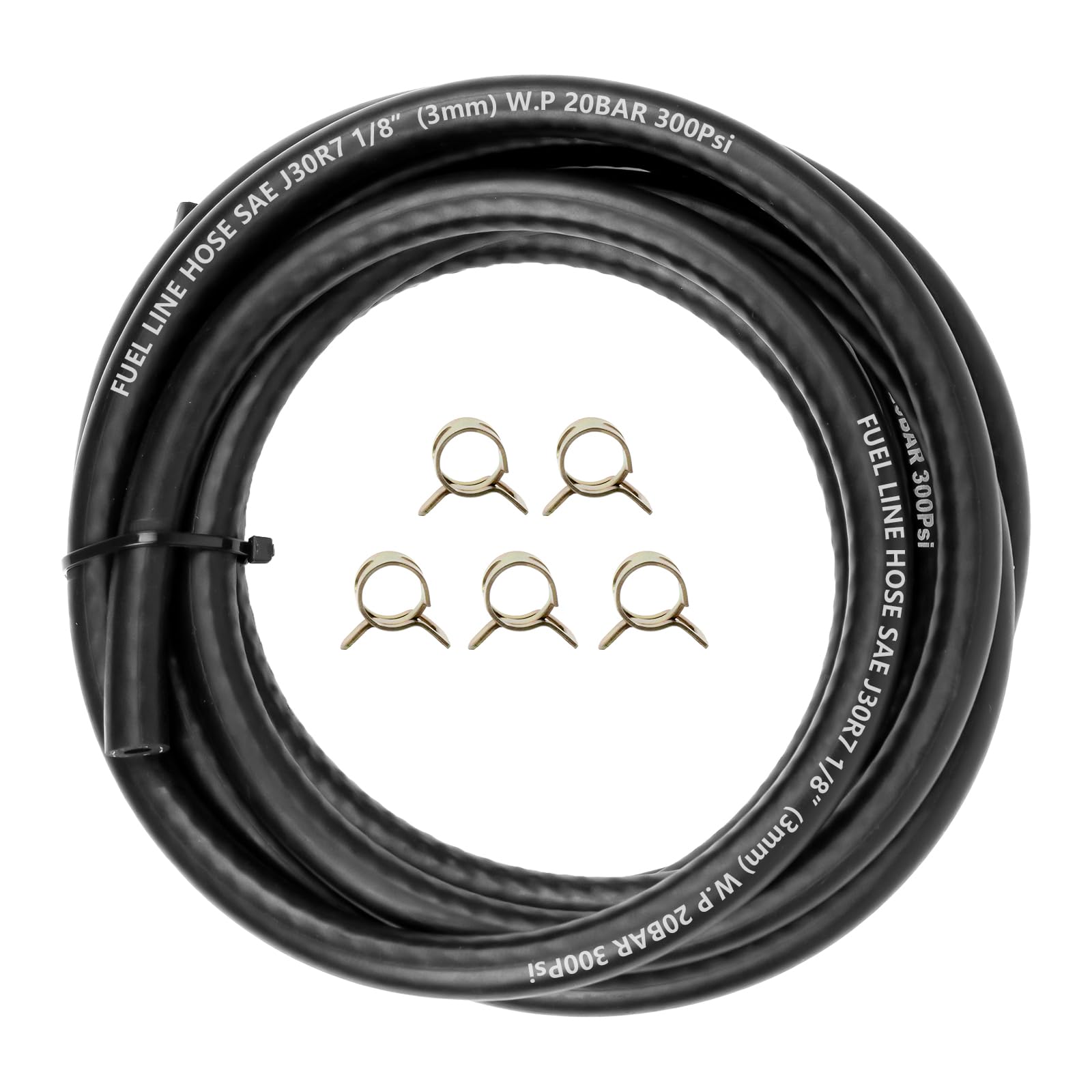
When you need a single continuous 20-foot run of 1/8″ ID fuel hose — for example, re-lining the entire fuel system on a tractor or ATV — this MSLANE roll is the practical choice. The NBR rubber with polyester reinforcement maintains a 3mm wall and a 300 PSI working pressure, which is overkill for gravity-fed systems but reassuring for any pulse-type fuel pump application.
Five clamps are included, which is a sparse count for 20 feet of line. Users who bought this for generator repairs found the clamps slightly loose and preferred to use their own screw-type units. The hose itself receives consistent praise for its cut-and-install ease and resistance to ethanol fuels.
At this length and price, the per-foot cost is among the lowest of any option here. Buy this if you have a single machine that needs a full replacement or if you want bulk material to cut custom lengths for multiple future jobs.
Why it’s great
- 20-foot continuous roll covers long runs without splicing
- 300 PSI working / 1200 PSI burst is genuinely overbuilt for small engines
- NBR compound stays flexible in sub-freezing winter starts
Good to know
- Only five clamps included — you may need to buy more separately
- Single-size roll offers no variety for multi-machine toolboxes
5. Tanbupu 5-Size Fuel Line Kit
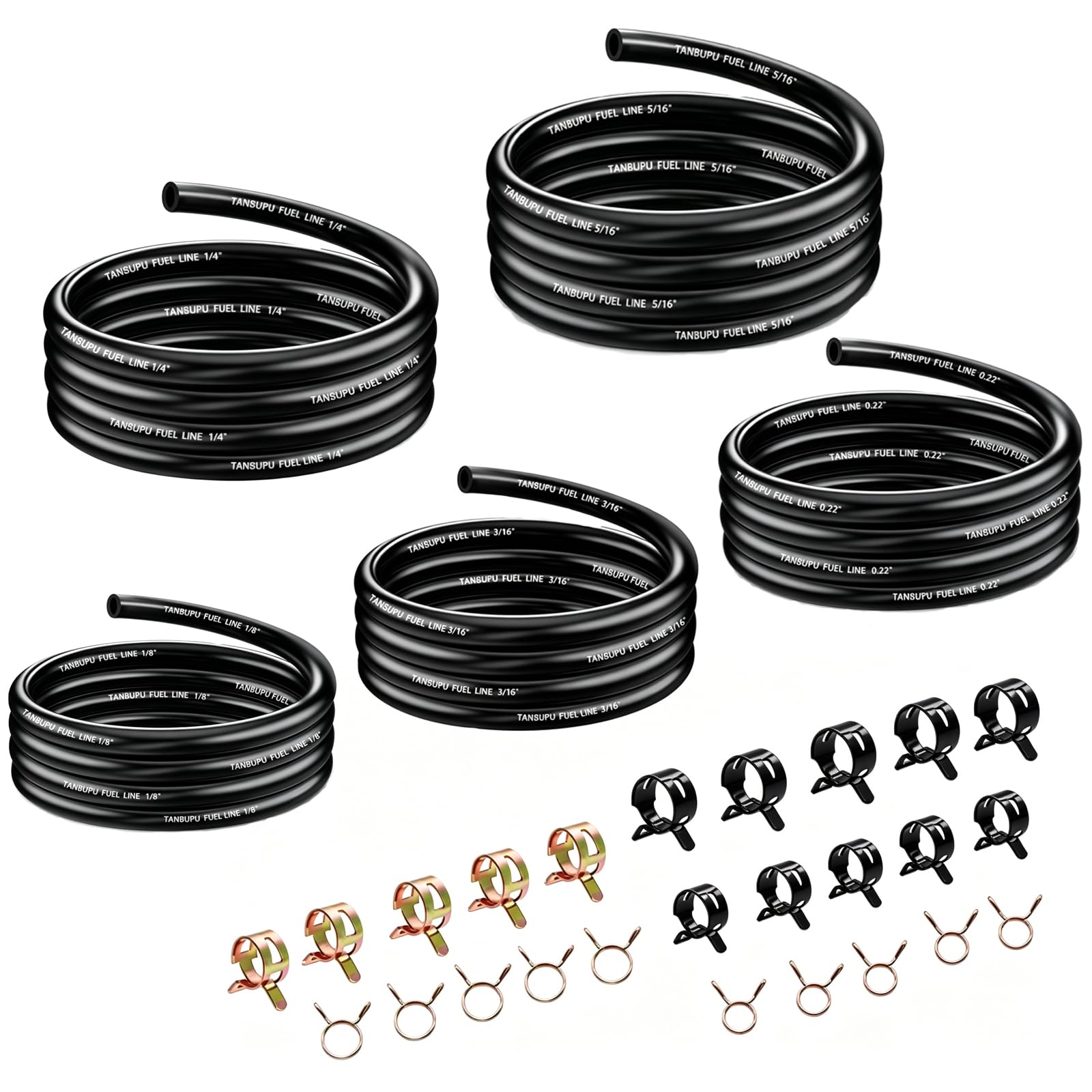
The Tanbupu kit targets budget-conscious buyers who need an assortment for emergency repairs. It includes five sizes from 1/8″ to 5/16″, each 3.3 feet long, plus a generous 50 clamps — the highest clamp count of any kit reviewed here. The NBR rubber material handles standard gasoline fine, and the surface is clearly printed with ID markings for quick identification.
Feedback from users who work on a variety of small engines confirms the line does the job, but the wall thickness is noticeably thinner than the 3mm-wall kits from MSLANE or Shineyoo. One measurement reported the 1/4″ ID hose had an outside diameter of roughly 0.312 inches, suggesting a wall thinner than 1mm. That makes it less suitable for systems with strong vacuum draw or continuous ethanol exposure.
For the price, this is a decent emergency spares kit to toss in a toolbox or trailer. For a permanent replacement on a daily-driver machine, spend a few dollars more on a thicker-walled hose.
Why it’s great
- 50 clamps included — enough to secure every connection on several machines
- Five commonly needed sizes in one small package for roadside repairs
- Clear ID markings printed on the hose surface avoid guesswork
Good to know
- Wall thickness is thinner than premium options — may collapse under vacuum
- NBR compound feels less dense; long-term ethanol resistance unverified
6. Tygon F-4040-A PVC Fuel Tubing

The Tygon F-4040-A is a different beast altogether. This translucent yellow PVC tube is formulated specifically for use with gasoline, kerosene, diesel, and glycol-based coolants. Its 1/16″ wall thickness (approximately 1.6mm) is thinner than the NBR hoses, and the maximum pressure rating is only 50 PSI — so it’s not suitable for pressurized fuel injection systems or high-vacuum pump applications.
Where this tubing excels is visual flow monitoring. The translucent material lets you see fuel movement and spot air bubbles or contamination without disconnecting anything. Real users on RC gasoline-powered planes and Mercedes diesel return lines swear by it because it won’t stiffen or crack inside the tank like generic PVC. The genuine Saint-Gobain formulation resists swelling and hardening significantly better than imitation Tygon.
If your application involves gravity-fed fuel delivery, diesel return lines, or any scenario where seeing the fuel flow is beneficial, this Tygon tube is the only correct choice among these seven products.
Why it’s great
- Translucent material allows visual confirmation of fuel flow and bubbles
- Genuine Saint-Gobain Tygon resists hardening better than knockoff PVC
- Perfect fit for RC gasoline planes and diesel injection return lines
Good to know
- Only 50 PSI maximum pressure — not for fuel injection or high vacuum
- 1/16″ wall is thinner than NBR options; can kink on tight bends
7. EVIL ENERGY 1/8″ Silicone Vacuum Tubing
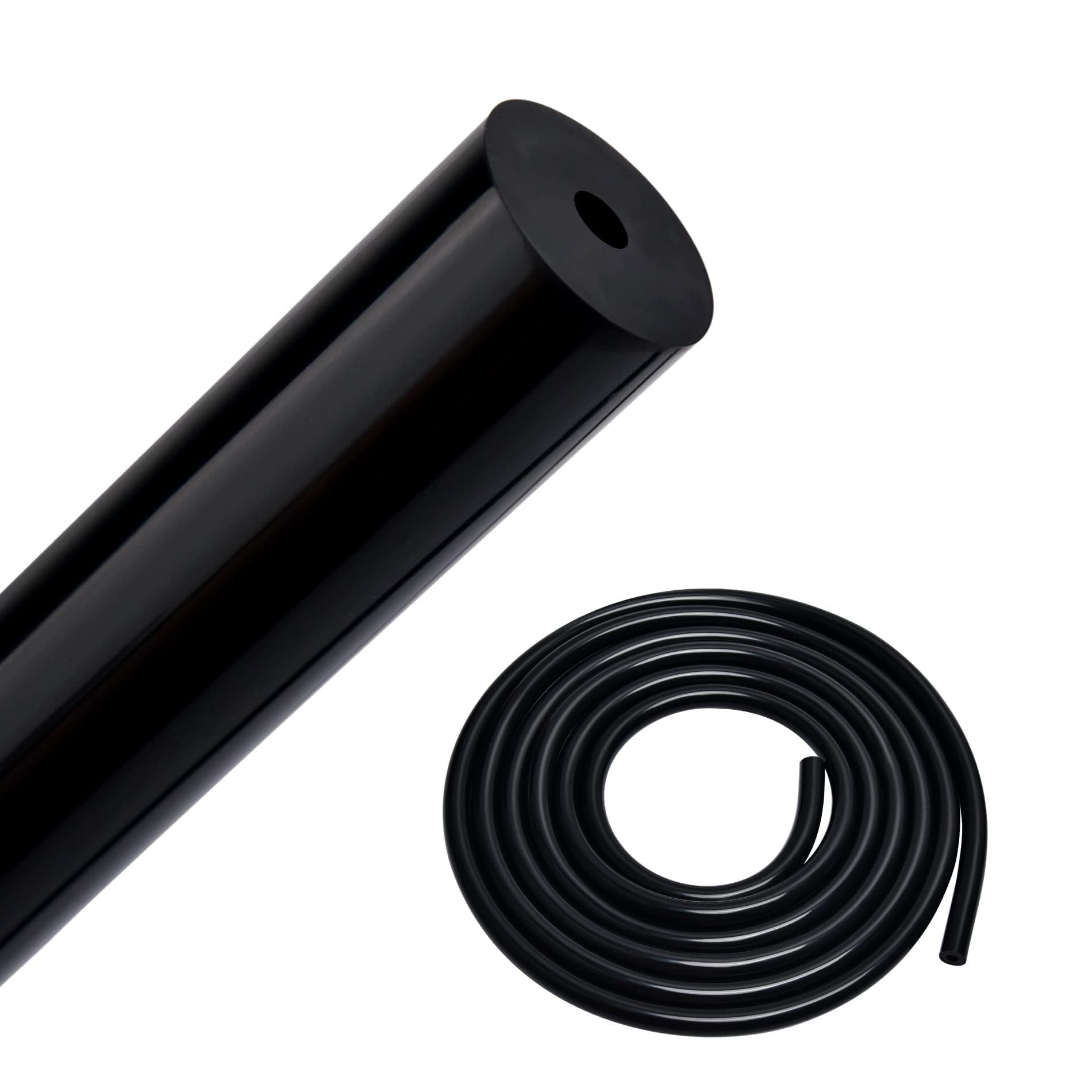
This EVIL ENERGY hose is the outlier — it’s a silicone tube, not a traditional fuel line. With a temperature range from -40°F to 428°F and a burst pressure of 130 PSI, it’s designed primarily for automotive vacuum lines, turbo boost hoses, and crankcase ventilation, not for submerged fuel delivery. The 3mm wall prevents vacuum collapse, and the FDA-compliant food-grade silicone is fully inert.
Users installing this on turbo vacuum systems and 4×4 locking hubs report that the thick wall seals tightly, though it can be slightly tough to push onto barbed fittings. The material stays flexible over years of engine bay heat cycling without turning brittle — a common failure mode for rubber.
Reserve this hose for vacuum, boost, or PCV applications on turbocharged engines, or anywhere surface temperatures exceed what standard NBR can handle. Do not use it as a submerged or continuous fuel line unless you specifically need its high-heat properties and can verify long-term fuel compatibility.
Why it’s great
- Withstands engine bay temperatures up to 428°F without degradation
- 3mm thick wall prevents collapse under vacuum on turbo systems
- FDA-grade silicone remains flexible and won’t harden with heat cycling
Good to know
- Not a dedicated fuel hose — long-term ethanol compatibility uncertain
- 130 PSI burst is low compared to NBR options; not for high-pressure fuel
FAQ
Can I use silicone vacuum tubing as a permanent fuel line?
What is the difference between NBR and Tygon PVC for fuel hose?
How do I choose the right wall thickness for my small engine fuel hose?
Final Thoughts: The Verdict
For most users, the best 1/8 inch fuel hose winner is the Shineyoo 6PCS Fuel Line Kit because it combines six common sizes, a full 3mm wall thickness, a 1200 PSI burst rating, and enough length per size for multiple repairs in one affordable package. If you need a single continuous 20-foot run for a full machine re-line, grab the MSLANE 20FT roll. And for high-heat vacuum or boost applications on turbocharged engines, nothing beats the EVIL ENERGY Silicone Tubing.