
Our readers keep the lights on and my morning glass full of iced black tea. As an Amazon Associate, I earn from qualifying purchases.
Specs are compiled from manufacturer listings and verified buyer reviews and can change over time — please confirm the key details on the product page before buying.
If your old inline-six Ford, Jeep, or Chevy truck struggles to start cold and idles rough, the single-barrel carburetor bolted to the intake is often the culprit. A fresh 1-barrel unit can make it fire up and pull strong, but the wrong pick leads to weeks of chasing vacuum leaks and flooding issues.
I’m Min — the founder and writer behind Gadgets Feed. This guide is built by comparing the manufacturers’ published specifications and the patterns across verified customer reviews, so you get each pick’s real strengths and trade-offs instead of marketing spin.
We matched the bolt patterns, choke types, and OE numbers to help you buy the right 1 barrel carburetor without a return trip, all in one clear place.
Our Picks at a Glance


How To Choose The Best 1 Barrel Carburetor
Before you order, the most important step is matching the new carburetor to your engine family. The popular Ford inline-six 240/250/300 engines use a Carter YF-style unit with specific bolt patterns, while older 170/200 Mustang engines need an Autolite 1100 and Chevrolet’s big six uses the Rochester BV. The good news is that most modern replacements are built to drop onto the stock intake manifold.
Know Your Choke: Automatic vs. Manual
An automatic choke uses a thermostatic spring and vacuum to close the butterfly when the engine is cold, which is a boon for daily drivers who want a simple start-and-go routine. A manual choke (a cable you pull from the dash) gives you total control and is often preferred on older trucks where the automatic choke wiring or heat tube is missing. If your vehicle has a manual choke cable in the cab, buying an automatic-choke carburetor means the choke will stay open and you will fight cold starts.
Check the Mounting Bolt Spacing and Intake Diameter
These carburetors are not universal across brands. For the Ford 300 six, the Carter YF-style units typically use a mounting stud center-to-center measurement of 75mm, while the Autolite 1100 for the smaller 170/200 uses a 68mm hole spacing. If you are swapping a Holley 1904 onto a Chevy or GMC, be prepared for linkage modifications. Measure your old carburetor’s base bolt distance and compare it to the listing’s published specs to avoid buying a part that will not bolt down.
Quick Comparison
| Model | Best For | Choke Type | Fitment | Mounting Specs | Amazon |
|---|---|---|---|---|---|
| Carter D5TZ9510AG (ACmango)★ Best Overall | Ford F-Series & Bronco 1965-1985 | Automatic | Ford 200/250/300 Six | Bolt-on flange | Amazon |
| NENKUTEN D5TZ9510AGMost Versatile Fit | Ford Six + Jeep CJ5 | Automatic | Ford 240/250/300 (1975-82) | Includes 3 gaskets | Amazon |
| THUNDERMINGO D5TZ9510AGPolish & Performance | Ford 300 Six (Quick Install) | Automatic | Ford 240/250/300 Six | 85mm long / 58mm short bolts | Amazon |
| AUXMART YF Carburetor | Ford Six & Off-brand swaps | Automatic | Ford 240/250/300 (1975-82) | Zinc alloy body | Amazon |
| Holley 1904 Style (NENKUTEN) | Classic 144-223 Ford / Universal | Manual | Ford 1957-62 + Chevy/GMC | 75mm bolt distance | Amazon |
| Auto Parts Prodigy 300 | Ford F-Series & Bronco | Automatic | Ford 200/250/300 Six | Bolt-on flange | Amazon |
| maXpeedingrods YFA | Ford F-Series / E-Series Vans | Automatic | Ford 200/250/300 Six | 43mm bore / 75mm studs | Amazon |
| Autolite 1100 (HENKYO) | Ford Mustang/Falcon/Comet | Hot Air | Ford 170/200 (1963-68) | 68mm 2-hole spacing | Amazon |
| Rochester BV (HENKYO) | Chevy/GMC Trucks 1963-67 | Manual | Chevy 292 (4.8L) Six | Square bore flange | Amazon |
In-Depth Reviews
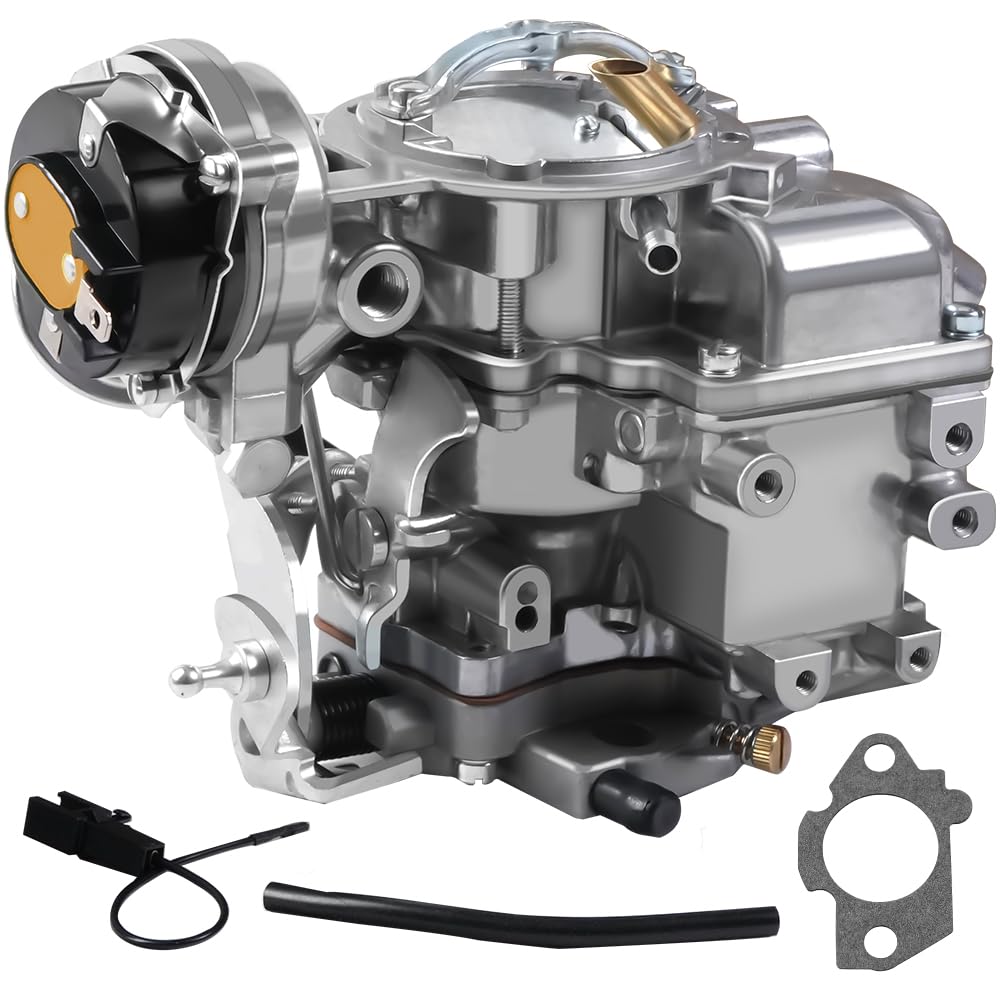
1. Carter 1 Barrel Carburetor Replaces D5TZ9510AG
Our pick — over 4★ from 100+ verified ratings; the strongest balance of quality and price.
This is the highest-rated drop-in for the 1965-1985 Ford truck six-cylinder world
You get a chrome finish that stands out, but the real value is the fitment list that reads like a Ford parts catalog. It covers the F100, F150, F250, and F350, plus the Bronco, Fairmont, Granada, and the entire Econoline E-Series through 1985, with a single bolt-on flange design for the 4.9L (300 cu in), 4.1L (250 cu in), and 3.3L (200 cu in) engines.
Buyers report a direct fit on the 1984 F-150 with the 300 straight-six, praising a noticeable performance gain. The maker claims a 5~10% horsepower bump with near-stock fuel mileage, and buyers confirm it wakes up an old engine. The package even arrives with the housing included, so you transfer nothing from your old unit.
The most-discussed trade-off here is gas leakage, which appears across several experiences, so you should check the fuel inlet and gasket surface carefully on install. The support team backs it with a 30-day money-back guarantee and a 1-year warranty, and they reply to questions within 24 working hours.
Why Owners Swap To This
- Reported flawless operation on direct-fit installs
- Bolt-on design covers the widest Ford truck range here
- Claims a 5~10% horsepower improvement
The Fitment Reality
- Some note the air filter mount threading is not standard US — reuse the old one
- Recurring complaints about gas leakage worth checking at install
Reach for it if: you own a 1965-1985 Ford truck or Bronco with the 200/250/300 six and want the least guesswork in the whole lineup.
Look elsewhere if: you have already deleted the EGR system — you will need a thick gasket or spacer to fix linkage height.
2. NENKUTEN Carburetor D5TZ9510AG for Carter YF
The Carter YF clone that spans Ford sixes and classic Jeep CJ5s
While it targets the 1975-1982 Ford 240/250/300 inline-six, this unit is also used on most Jeep CJ5 engines and old Fords running the single-barrel YF 7109S carburetor. That cross-platform reach makes it a smart option if you have a project Jeep sitting next to your Ford truck.
Owners mention it “worked right from the start” with no instructions needed and no surprise tuning required — the automatic choke fixes the cold-start headaches that plague aging YF units. A specific success story involves a 74 Jeep CJ5 that went on easily and ran fine with zero drama, which is exactly what you want from a bolt-on.
Quality feedback is genuinely split, with some calling it a cheap clone, so this is a value play rather than a restoration-grade part. It arrives with three mounting gaskets in the package, saving you a parts-store run, and the maker covers it with a 1-year warranty.
Worth noting: owners on cammed or modified engines say it needs tuning before installation — check the float drop and metering rod on a built motor, then it runs great.
Grab this for: a daily driver or weekend truck that needs a simple, working carburetor with automatic choke.
Pass if: you insist on OEM-grade internals — the mixed quality feedback points to cheaper Chinese components.
3. D5TZ9510AG Carburetor for Carter YF Type (THUNDERMINGO)
A polished Carter YF with the published dimensions to verify your fitment
This one stands out because the listing gives you real numbers to measure against: the intake inner diameter is 43mm (1.72 inches), with mounting bolt spacing of 85mm at the longest point and 58mm at the shortest. If you have a caliper and an old gasket, you can confirm the pattern before you order.
The review pages back up the quality claims — owners describe a well-packed unit that installed in about 10 minutes on a 76 F-100, fired instantly, and ran perfectly with only minor adjustments. One notable conversion saw it replace a stock Autolite 1100 on a 1964 Comet, where the owner reported “lots more power and no more stalling when hot” after making an adapter.
Fitment reaches beyond Ford, too, since it works on most Jeep CJ5 engines and old Fords with the single-barrel YF 7109S carb. The honest catch is that the metering valve and float are not adjustable, and the leakage reports are frequent enough to justify a careful install with fresh gaskets.
Strong points: published 43mm intake spec, polished looks, and a 1-year warranty.
Watch for: the non-adjustable metering valve, which frustrates owners who like to fine-tune.
Choose this if: you value detailed fitment specs and want a carburetor that works right after a quick install.
skip it if: you need to tune your mixture precisely for a heavily modified engine — this one does not allow float adjustment.
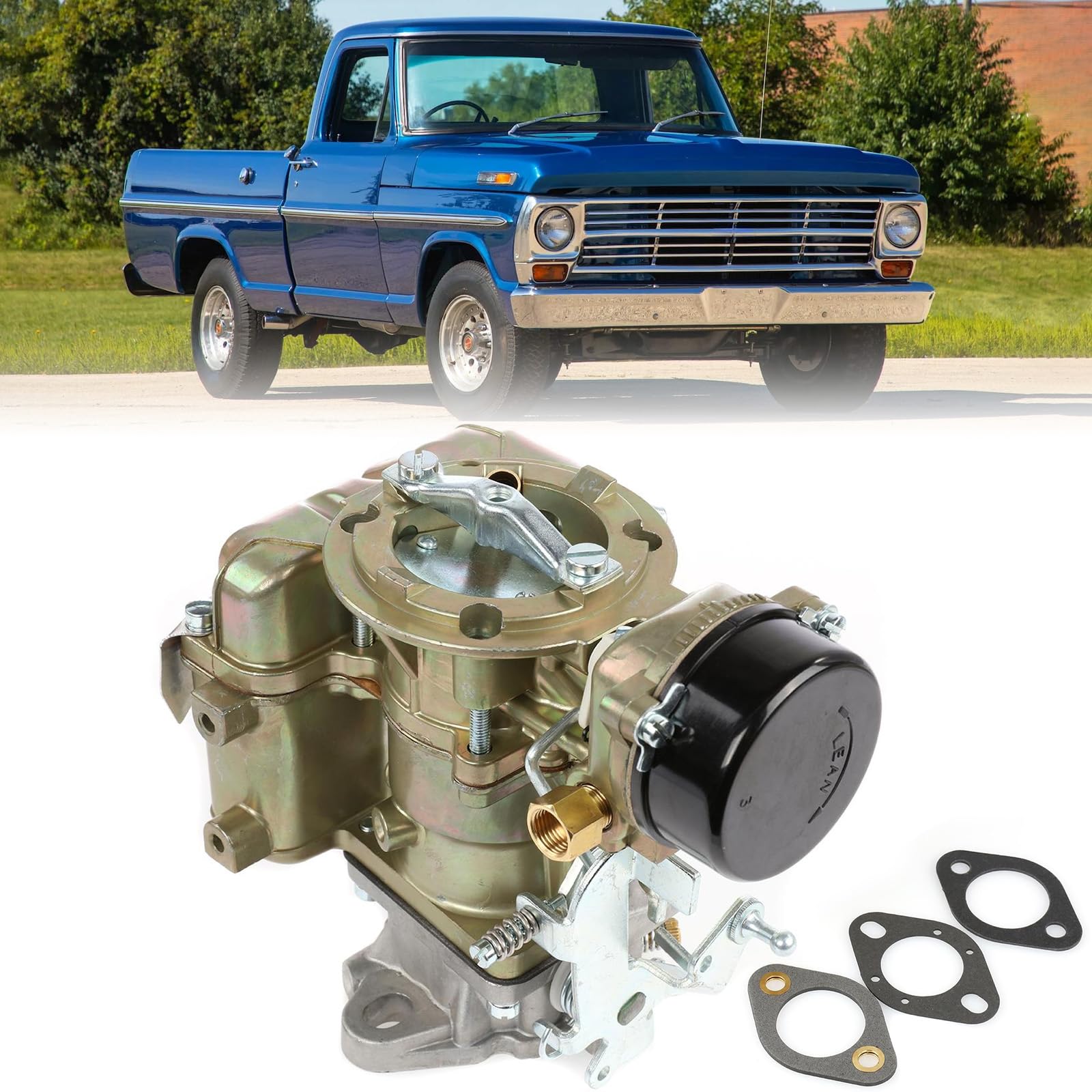
4. AUXMART YF Carburetor For Carter Type
The high-strength zinc alloy option that crosses into generator duty
AUXMART builds this YF-style unit from high-strength zinc alloy, which owners say feels durable and reliable for the long haul. It targets the 1975-1982 Ford 240/250/300 engine family with an automatic choke and a single fuel inlet, and The maker promises a 5~10% horsepower gain while holding near-stock mileage.
The install is genuinely quick — several customers note completing it in under an hour with simple hand tools. The most surprising success story came from a Cummins/Onan 45k generator running a Ford 300 I-6, which fired right up and idled perfectly with no tuning at all, proving this carburetor can handle duty beyond the truck world.
There is one important prep step the maker stresses: the oil channels and air filters must be cleaned before installation, and you need clean fuel, otherwise the carburetor’s passages can block up. A 1969 Nissan Patrol owner called it the easiest carburetor install they have ever done.
Why it wins: the zinc alloy body and the universal success across Ford trucks and even a generator swap.
Perfect for: DIY owners who want an under-one-hour install with hand tools and clean fuel.
Not for: anyone skipping the pre-install cleaning — blocked oil channels will cause problems.
5. New Carburetor for Ford 144-223 (Holley 1904 Style)

A manual-choke Holley 1904 style that also rescues Chevy and GMC sixes
This is the one for the classics — it is built as a replacement for the Holley model 1904 used on Fords from 1957 to 1962, fitting the 144, 170, 200, and 223 inline engines. The manual choke is the defining feature here, so it pairs perfectly with older trucks that have a choke cable in the cab rather than the heat-tube automatic setups.
Reviewers point out smooth throttle response and fast starts for the price. What surprises most people is the cross-brand reach — one 1955 GMC 100 with the 248ci inline-six was revived after multiple failed rebuilds, requiring only a widened throttle linkage hole to work.
Be realistic about the installation: it is not a guaranteed direct swap, and several owners needed linkage modifications to make it fit their specific manifold. The venturi measures 36mm with a 75mm mounting bolt distance, and it ships with one gasket in the box, backed by a 1-year warranty.
The Upside
- Manual choke suits old trucks with dash cables
- Fits a wide range of Ford and even Chevy/GMC sixes
- Dramatically cheaper than a professional rebuild
The Reality Check
- Likely needs linkage modification for a true fit
- One owner reported a float failure after 40 days — inspect carefully
Best for: budget-minded owners of pre-1960s trucks who are comfortable with basic fabrication.
Think twice if: you expect a perfect bolt-on with no linkage work — this one usually asks for a little adaptation.
6. Auto Parts Prodigy 1 Barrel Carburetor Ford 300

The rare 1-barrel that ships with gaskets, vacuum hose, and the wire included
Most aftermarket carbs arrive bare, but this Auto Parts Prodigy unit comes complete with the gaskets, vacuum hose, and electric wire you need for the hookup. It is a direct replacement for the Ford 3.3L, 4.1L, and 4.9L engines used across the 1965-1985 Bronco, Fairmont, Granada, Econoline, and F-Series trucks, replacing OE number D5TZ9510AG.
One owner bolted it on, connected the throttle linkage and vacuum lines, and the truck started right up with just an idle adjustment. The heavy-duty metal construction is built for the repair environment, and the included wiring simplifies the automatic choke hookup for someone replacing a tired original.
This one sees a real split in the feedback though. Many call it a great value that fits well, but a handful report fitment issues with 1966 300 engines, and there are notes about the air cleaner bail threads mismatching. Check the side fuel inlet requirement in the pictures before you buy, since that is a stated condition for this model.
The draw: a true bolt-on replacement with all the small parts included so you are not chasing hardware.
The caution: feedback is mixed on quality and fit for early 1966 engines specifically.
Reach for this if: you want everything in the box — wire, hoses, and gaskets — for a straightforward weekend swap.
Look elsewhere if: you are working on a 1966 300 engine, where fitment reports turn inconsistent.
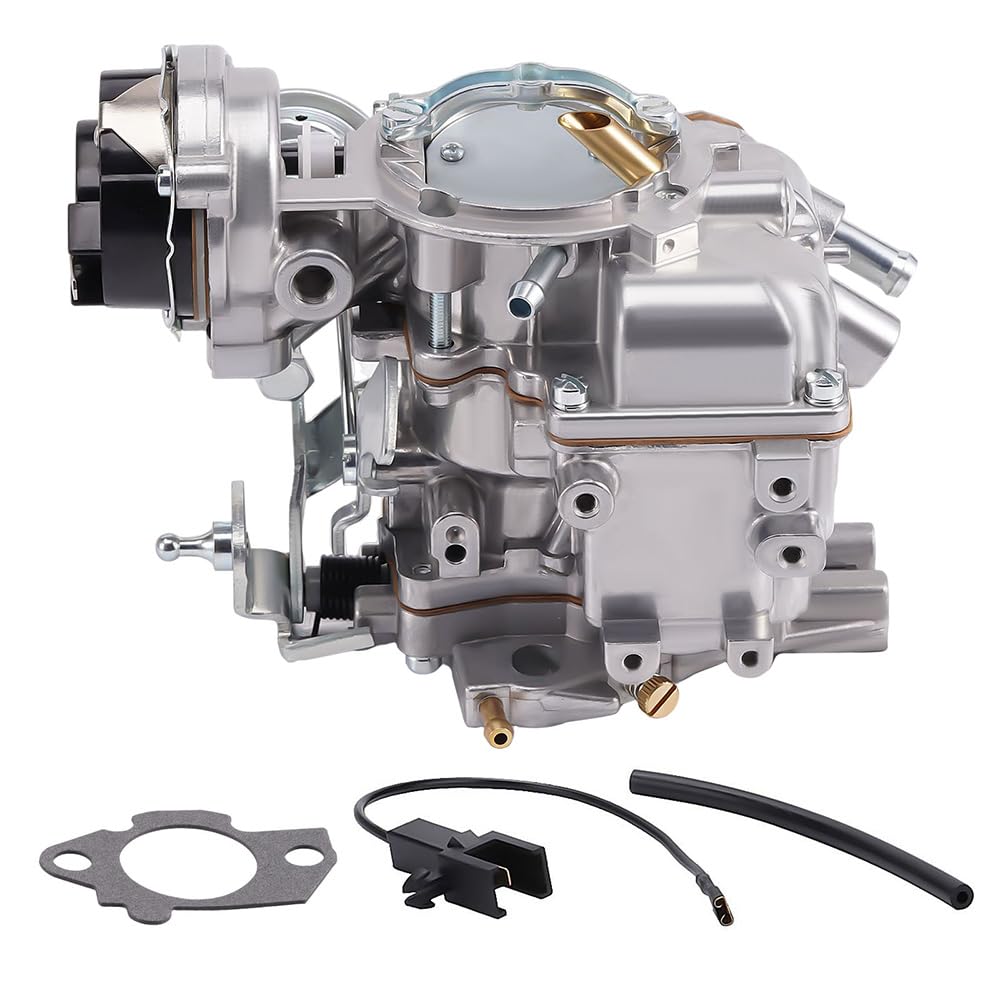
7. maXpeedingrods YFA 1 Barrel Carburetor
The polished YFA unit trusted across the full 1965-1985 Ford truck lineup
maXpeedingrods publishes the most complete dimensional data here: an air inlet bore of 43mm, a choke air horn inner diameter of 48mm, and a 75mm mounting stud measurement center-to-center. That 75mm figure is the critical one for confirming a match with your intake manifold before you commit.
This is the pick with the biggest real-world footprint — it covers Broncos, Fairmonts, Granadas, the full F100-to-F350 range, and every Econoline E-100 through E-350 from 1965 to 1985. Shoppers say it runs perfectly from the start, with one noting a 10-minute install on a 1976 F-150 with the 300 I-6.
The common thread in the review pages is that it just works, though some owners do find leakage through the accelerator pump shaft over time. The maker claims a 5-10% horsepower boost with near-stock fuel economy, backed by a 1-year warranty, and at 1650g it feels substantial.
What Owners Praise
- Perfect fitment across Ford F-Series and vans
- Starts instantly without adjustments in many cases
- Published 75mm bolt spacing for pre-measuring
What To Watch
- Recurring leakage reports through the accelerator pump shaft
- Air cleaner bolt may mismatch — reuse the original part
Ideal for: Ford truck and van owners who want the most proven aftermarket YFA with clear dimensional confirmation.
Not ideal if: you are sensitive to fuel seepage — investigate the pump shaft seal on install.
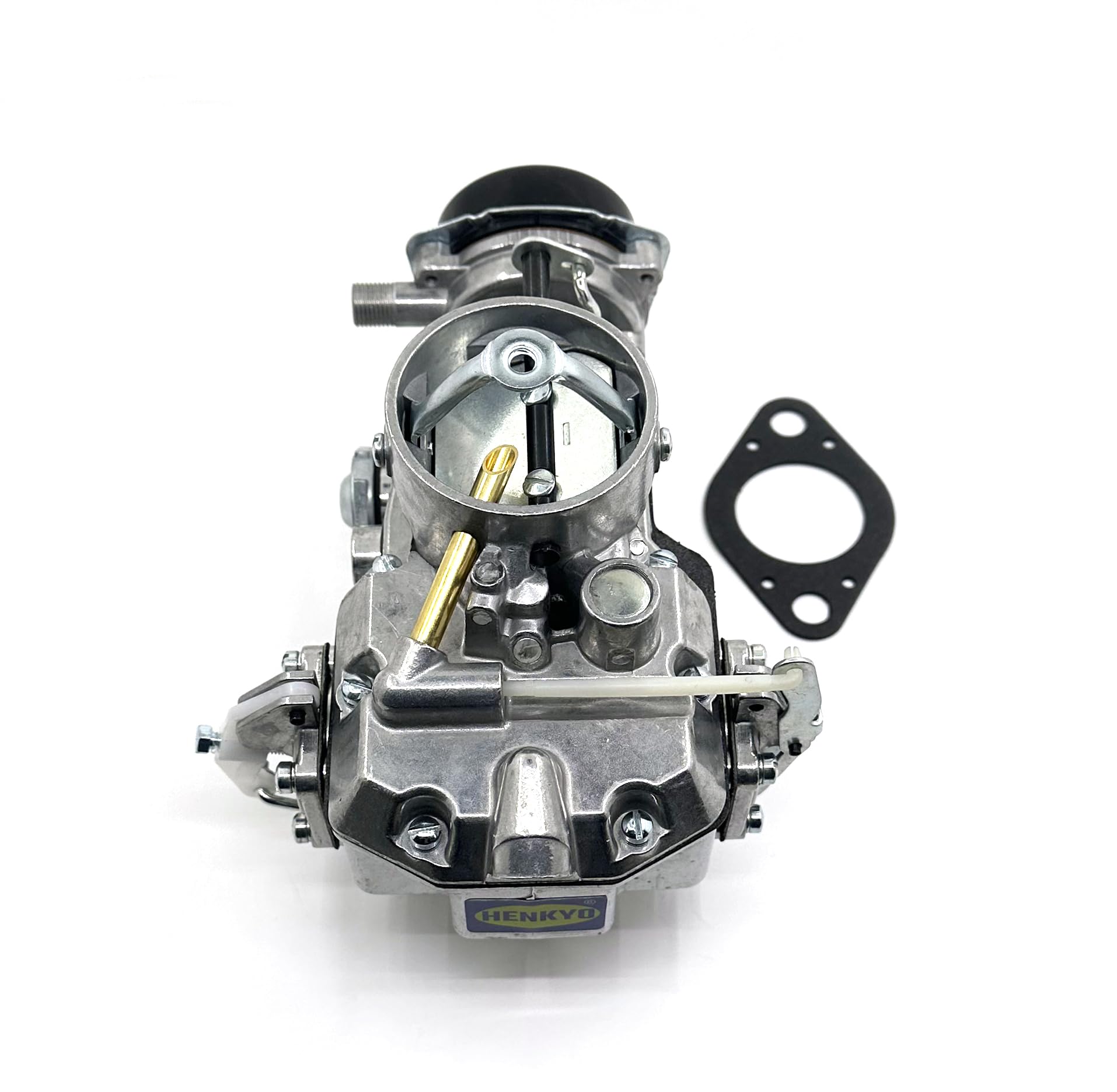
8. Autolite 1100 1 Barrel Carburetor (HENKYO)
The dedicated Autolite 1100 for classic 1963-1968 Mustang, Falcon, and Comet sixes
If you are restoring a first-generation Mustang with the 170 or 200 straight-six, this is the only pick here built exactly for you. It matches the Autolite 1100 used from 1963 to 1968 on the Falcon and Comet as well, works with both automatic and manual transmissions, and uses a hot air choke that taps into the factory heat riser.
Owners on 65 and 66 Mustangs confirm the linkages, float, and needle valve tip look correct, and after tuning the idle and mixture screws the engines start instantly, idle cleanly, and do not stall. The seller even installed one on a 64 Mustang for testing before shipping, which explains why the fit is so well dialed in.
This is the pick that demands the most hands-on care. The choke control draws the most complaints, with the needle valve getting stuck and cheap screws and a weak choke spring noted as weak points. The mounting aperture is 10.5mm with a 68mm 2-hole spacing, and you will need to supply your own air filter and fuel filter since they are not included.
The payoff: a correct-looking Autolite 1100 for your classic pony car with honest hot-air choke operation.
The price of admission: expect to fine-tune the idle screws and possibly swap the needle valve for your original.
Made for: Mustang, Falcon, and Comet owners restoring a 170/200 six who can handle tuning.
Avoid if: you want a bolt-on with zero fuss — this unit rewards experience and patience.
9. Rochester model BV 1 Barrel Carburetor (HENKYO)

The manual-choke Rochester BV that brings a 1965 C20’s 292 back to life
For Chevy and GMC truck fans, this is the one that matters. It is a brand-new Rochester BV-style carburetor with a manual choke, built strictly for the 1963-1967 Chevy and GMC trucks running the 292 cubic inch (4.8L) inline-six, replacing a long list of OE numbers from 7023013 through 741861 across the C10, C20, K10, K20, Suburban, and P-series trucks.
The aluminum construction keeps it light, and the engine test before shipping means the internals are verified to work. Owners rave about the transformation — a 1965 C20 owner said the truck runs “like new again,” while another reported no more backfiring and zero smoke after the swap, a huge quality-of-life win for an old work truck.
The vacuum line port thread is 1/8-28, and the maker offers a 1-year warranty with professional mechanics available for guidance. Since these units sit in warehouse storage, the needle valve may stick — the listing explicitly advises checking the float and needle valve before installation and freeing the needle if it is stuck.
Why it stands out: it is the only dedicated Chevy/GMC 292 carburetor here, with owners confirming it eliminates smoke and backfiring.
Prep required: check the float level and free the needle valve before bolting it on.
Reach for this if: you drive a 1963-1967 Chevy or GMC truck with the 292 six and want that factory-correct Rochester style.
pass on it if: you are working on a Ford or Jeep — this unit is strictly for the Chevy/GMC 292.
Understanding the Specs
Manual vs. Automatic Choke
The choke is what enriches the fuel mixture for a cold start. An automatic choke closes itself using a thermostatic spring warmed by engine heat or exhaust, so you just press the gas and turn the key. A manual choke requires you to pull a cable from the dashboard to close the butterfly and push it back in once the engine warms. Automatic chokes are convenient for daily drivers, but manual chokes are often easier to troubleshoot on older trucks and give you direct control.
Mounting Bolt Spacing
This is the measurement between the center of the mounting studs on the carburetor base, and it must match the holes on your intake manifold. The Ford Carter YF-style units here commonly use a 75mm stud spacing, while the smaller Autolite 1100 for the 170/200 engines uses a tighter 68mm 2-hole spacing. Measure the distance across your old carburetor’s mounting holes before ordering to confirm a physical match.
FAQ
Will a Carter D5TZ9510AG carburetor fit my 1965-1985 Ford F-150 with the 300 six?
What is the difference between a Carter YF and an Autolite 1100 1 barrel carburetor?
Do I need a fuel pressure regulator with these aftermarket carburetors?
Can I use a Ford Carter YF carburetor on a Jeep CJ5?
How do I know if the carburetor will bolt onto my intake manifold?
Is a manual choke or automatic choke better for an older truck?
Does the Rochester BV carburetor fit a 1965 Chevy C20 with the 292 engine?
Will the Holley 1904 style carburetor work on a Chevy or GMC engine?
Final Thoughts: The Verdict
For most owners of a 1965-1985 Ford truck or Bronco, the winner is the Carter D5TZ9510AG replacement because it pairs the widest bolt-on compatibility with the strongest owner satisfaction in the group. If you want the same fitment with gaskets included and Jeep CJ5 coverage at a friendlier entry point, grab the NENKUTEN D5TZ9510AG. And for the classic Chevy or GMC 292 truck owner, the Rochester BV is the one to reach for — it is the only dedicated match for that engine here, and owners confirm it erases the smoke and backfiring.
How We Picked
We do not accept paid placement. Every pick is matched to a real buyer and a real use-case; we do not hands-on test units.
Sources & Methodology
Specifications: manufacturer listings and product documentation. Review insights: verified customer reviews, as of September 2026. Pricing: not shown on this page (it changes often); check the current price via the retailer link.
As an Amazon Associate, Gadgets Feed earns from qualifying purchases. This does not affect which products we feature.