
Our readers keep the lights on and my morning glass full of iced black tea. As an Amazon Associate, I earn from qualifying purchases.
Specs are compiled from manufacturer listings and verified buyer reviews and can change over time — please confirm the key details on the product page before buying.
Buying a 1 inch backflow preventer is mostly about one thing: keeping dirty water out of your drinking supply while still passing your water authority’s inspection. A pressure vacuum breaker (a valve that opens to air so water can’t siphon backward) handles sprinkler and irrigation lines. A reduced pressure zone assembly (a heavier valve with a relief port that dumps water if pressure drops) is what most health-hazard jobs require. A double check valve is the lighter-duty option for non-health hazards. Get the type wrong and the inspector fails you no matter how much you spent.
I’m Min — the founder and writer behind Gadgets Feed. This guide is built by comparing the manufacturers’ published specifications and the patterns across verified customer reviews, so you get each pick’s real strengths and trade-offs instead of marketing spin.
Every pick below uses a true 1 inch threaded connection, so the differences come down to device type, maximum pressure rating, and how easily you can service the unit. Here is the honest breakdown of the 1 inch backflow preventer options worth your money today.
Our Picks at a Glance
How To Choose The Best 1 Inch Backflow Preventer
The device you need is decided by three things: what kind of hazard your water line carries, what your local water authority lists as approved, and how cold your winters get. Everything else — finish, handle style, serviceability — is comfort, not compliance.
Start With The Device Type, Not The Brand
A pressure vacuum breaker protects against back-siphonage (water being pulled backward when supply pressure drops). It is the standard choice for irrigation and sprinkler lines. A reduced pressure zone assembly (often shortened to RPZ) adds a relief valve that discharges water if the pressure differential drops, which is why health-hazard jobs usually demand it. A double check valve uses two spring-loaded check valves and no air opening, which suits non-health-hazard lines. The wrong type is the number one reason a unit fails inspection.
Match The Connection Size And Thread
Every unit here has a 1 inch inlet, but read the thread standard. NPT stands for National Pipe Tapered — the tapering is what creates the seal as you tighten. A FIP (Female Iron Pipe) inlet means the threads are cut inside the body. Buy the matching union or coupler before the unit arrives, because a mismatched fitting means a second trip to the hardware store and a leak you did not plan for.
Check The Pressure And Temperature Ratings
Maximum working pressure is written in psi (pounds per square inch). A higher number means more safety margin against pressure spikes in your line. Temperature range tells you where the unit is happy — most residential assemblies are built to run between freezing point and a hot summer day, and stepping outside that band is what cracks bodies.
Think About Winter Before You Dig
Freeze damage is the most common way these valves die. A unit with a plastic bonnet, a freeze-resistant body, or a freeze sensor that signals when temperatures approach freezing point gives you a fighting chance. If you live somewhere the ground actually freezes hard, this is not a nice-to-have feature — it is the difference between one winter’s service and one winter’s replacement.
Quick Comparison
| Model | Best For | Device Type | Max Pressure | Connection | Amazon |
|---|---|---|---|---|---|
| Febco 765 Bronze Pressure Vacuum Breaker 1″★ Best Overall | Sprinkler and irrigation replacement | Pressure Vacuum Breaker | 150 psi | 1 inch NPT | Amazon |
| Watts 1″ Bronze Freeze Resistant Pressure Vacuum BreakerCold-Climate Pick | Cold-climate freeze survival | Pressure Vacuum Breaker | 150 psi | 1 inch NPT | Amazon |
| Zurn Wilkins 1-720AU 1″ 720A Pressure Vacuum Breaker | High-pressure irrigation lines | Pressure Vacuum Breaker | 300 psi | 1 inch threaded | Amazon |
| Zurn Wilkins 1-350 1″ 350 Double Check Backflow Preventer | Quick-service non-health-hazard lines | Double Check Valve | — | 1 inch F | Amazon |
| Watts 1 inch 007M1QT Double Check Valve | Long-term serviceable installs | Double Check Valve | 175 psi | 1 inch NPT | Amazon |
| Febco 1313 860 Reduced Pressure Zone Assembly, 1″ | Health-hazard code compliance | Reduced Pressure Zone | 175 psi | 1 inch Female Threaded | Amazon |
| Apollo 4A-205-A2F 1 in. RPZ Backflow Preventer | Lead-free bronze retrofits | Reduced Pressure Zone | — | 1 inch FIP | Amazon |
In‑Depth Reviews
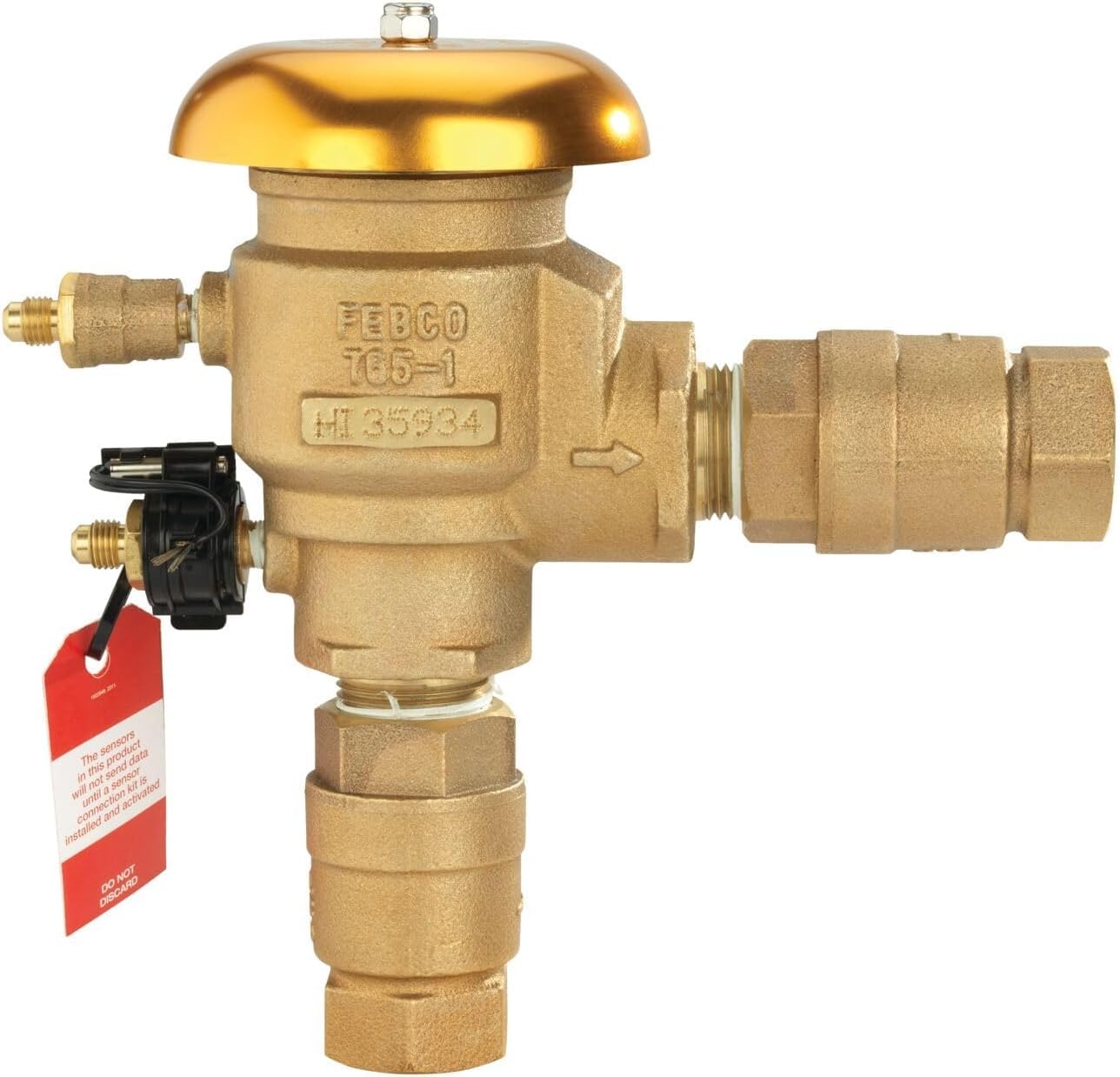
1. Febco 765 Bronze Pressure Vacuum Breaker Backflow Preventer 1″ Inlet
Our pick — over 4.5★ from 200+ verified ratings; the strongest balance of quality and price.
A bronze workhorse with a freeze sensor built in — the sprinkler-line valve most buyers end up replacing like-for-like.
If you are swapping out a dead valve on a lawn irrigation line, this is the one that feels like it was designed for exactly that job. It is a pressure vacuum breaker, so it protects against back-siphonage on continuous-pressure lines. The body is bronze with a plastic bonnet, and that plastic cap is deliberate — it gives freezing water somewhere to push instead of cracking the metal. It carries a 150 psi maximum working pressure and a temperature range of 32 degrees F to 140 degrees F, which is the normal residential band.
The detail most buyers miss is the freeze sensor. It works with SentryPlus Alert technology, which signals facility personnel when temperatures near and reach freezing point. If you are running an industrial plant, a hospital, or a morgue line, that notification is the whole point — you find out before the damage, not after. For a home sprinkler system it is a bonus you may never wire up. Either way, the assembly ships with a spring-loaded check valve, an air relief valve with opening port, two resilient seated shutoffs, test cocks, and NPT end connections already on it.
Buyers praise the bronze build quality and report it seals properly from the first test. Owners who swapped out very old units call it an exact replacement that tested fine right away. One thing to know before you buy: a small number of units weep from the handle nuts on first pressurization, and the fix is simple — pull the handle nut, tighten the interior nut, and the leak stops. Buyers compare it directly to the Febco 765 it replaces; most describe units that lasted roughly 20 years and are hoping for the same again.
Why It Earns The Top Slot
- Freeze sensor compatible with SentryPlus Alert technology signals when temperatures reach freezing point
- Bronze body with a plastic bonnet that protects against freeze damage
- 150 psi maximum working pressure with NPT end connections ready to thread on
- Complete assembly — spring-loaded check valve, air relief valve, two shutoffs and test cocks included
Where It Asks For Patience
- Handle nuts have been known to weep on first pressurization until the interior nut is tightened
- You need a union on PVC if your old setup did not already have one
- It sprays briefly while the outlet pressurizes — normal, but surprising the first time
Made for: anyone replacing an existing Febco 765 on a sprinkler or irrigation line who wants a like-for-like swap.
Think twice if: your line runs above 150 psi — step up to the Zurn Wilkins 720A instead.
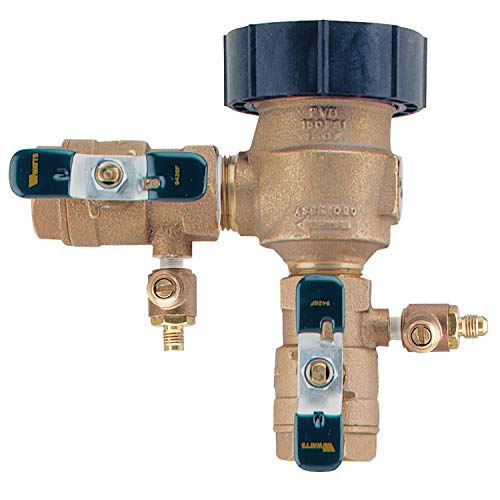
2. Watts 1″ Bronze Freeze Resistant Pressure Vacuum Breaker, Quarter Turn Shutoff, Tee Handles
Built for the states where January is a test of character, not a season.
This valve survives winter, and that is not marketing — the model number 1 800M4FR is the freeze-resistant version of Watts’ 800M4 pressure vacuum breaker, and it exists precisely because standard units crack when leftover water turns to ice. It runs a 150 psi maximum working pressure (the most pressure it can handle) with NPT threaded connections (standard screw-on pipe threads) and bronze construction, matching the Febco 765 on pressure rating. Where it pulls ahead is winter survival: this is a unit designed to be drained and left above ground in a place that genuinely freezes.
The buyers here tend to have a specific story. A Texas owner describes replacing a valve that cracked and failed during the freeze of February 2021, and notes Amazon was the only supplier with one available when the plumber needed it. A Minnesota owner installed his with the help of YouTube and admitted he would find out whether the freeze-resistant billing held up once January hit. That is the honest version of what this valve is: a hedge against the one week a year that ruins plumbing.
Quarter turn shutoff with tee handles makes the seasonal open-and-close routine quick, which matters when you are doing it in cold weather with gloves on. Installation is described as straightforward enough for a homeowner with a video guide. What it is not is a bargain — it sits above the Febco on cost, and it holds a lower maximum pressure than the Zurn Wilkins 720A’s 300 psi. If your winters are mild, you are paying for protection you will never use, and the Febco 765 above is the smarter buy.
Where it wins: the freeze-resistant body and quarter turn tee handles are the reason to choose this over a cheaper pressure vacuum breaker — it is built for climates that actually punish you.
The trade-off: you pay a premium for winter protection, and at 150 psi it matches the Febco 765 rather than beating it on pressure margin.
Reach for this if: your ground freezes hard and the unit sits above ground where ice has already cost you one valve.
Skip the upgrade if: your winters are mild — the Febco 765 delivers the same 150 psi for less.
3. Zurn Wilkins 1-720AU 1″ 720A Pressure Vacuum Breaker Assembly with Union Ball Valves

Double the pressure ceiling of the Febco and the Watts — and unions that save you a saw cut.
The number that separates this valve from everything else on this list is 300 psi. The Febco 765 and the Watts freeze-resistant unit both top out at 150 psi, so this Zurn Wilkins carries twice the pressure rating of either — a real margin if your line runs hot on pressure spikes. Hydrostatic test pressure is listed at 300 PSI as well, and the 1 inch end connections are threaded to ANSI B1.20.1, the standard that keeps your couplings compatible.
The union ball valves are what owners actually talk about. A union lets you break the assembly apart at the joint without cutting pipe, which means next time the valve fails you swap the body instead of rebuilding the line. Several buyers specifically chose this model over the version without unions for exactly that reason, and one sums up the whole install: “Working like a champ. In combination with SharkByte quick connect fittings, replacing the setup took 5 minutes.”
The honest catch is finish quality right from the start. Some units arrive weeping at the joints and need teflon tape added before they seal — one buyer put it plainly, saying he would “have preferred assembly to not leak from the start.” It is a five-minute fix, not a reason to avoid the valve, but budget the teflon tape. A minority of owners also feel the price runs high for what it is. For a sprinkler system with good pressure and a DIY installer, the unions (the threaded fittings that let you unscrew the valve) alone justify it.
What The 300 PSI Buys You
- 300 psi maximum pressure — double the ceiling of the Febco 765 and the Watts freeze-resistant valve
- Union ball valves let you remove and replace the assembly without cutting pipe
- Threaded connections meeting ANSI B1.20.1 so standard fittings mate cleanly
- Straightforward enough that DIY installers report finishing the swap in minutes
What To Have On The Bench
- Some units weep at the joints on install and need teflon tape to seal
- Priced at the top of the pressure vacuum breaker group here
Pick this one if: your irrigation line sees high pressure or you want to be able to swap the valve body without cutting pipe ever again.
Look elsewhere if: your line is standard residential pressure — the Febco 765 covers it for less.
4. Zurn Wilkins 1-350 1″ 350 Double Check Backflow Preventer
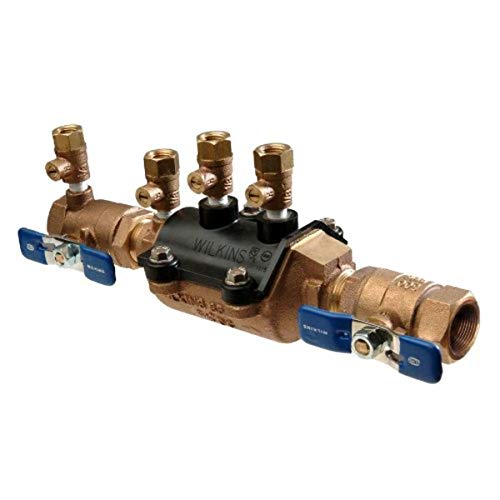
A double check valve with a removable pressure vessel — repairs happen off the line, not in the trench.
This is a different animal from the three pressure vacuum breakers above. It is a double check valve (two check valves and no air opening) — suitable for non-health-hazard lines only, so confirm your local code accepts a DCVA (double check valve assembly) before you buy. What it does brilliantly is maintenance. The EZSwap removable pressure vessel lets you pull the working parts out and service them off-line, and the built-in flush tool saves the maker-claimed 15 minutes per installation by letting you clear the line before you close it up.
The materials are worth a mention: stainless steel and UV-resistant reinforced nylon for corrosion resistance and quick winterization. That nylon is a real advantage for sprinkler boxes sitting in direct sun all summer. It carries ASSE Listed 1015, IAPMO Listed, CSA Certified B64.5 and AWWA Compliant C510 listings — the certification set that matters when your inspector asks for paperwork. Buyers report the EZSwap vessel and flush tool cut repair labor as claimed, since the working parts come out for off-line service.
The thing to weigh is longevity. One owner reported his unit started leaking from under the top plastic plate at just under three years old, while noting his previous valve from a different manufacturer made it 17 years. Treat that as a serviceable design with a replaceable vessel rather than a set-and-forget one — the whole point of the EZSwap system is that the wearable part comes out. What buyers consistently praise is the quality of construction and the savings over local supply house pricing, with one putting it simply: “Amazon saved me over hardware store price.”
Best suited to: non-health-hazard lines where you would rather service a vessel than replace a whole assembly.
Not for: health-hazard jobs that require an RPZ — check your code list first.
5. Watts 1 inch 007M1QT Double Check Valve

The valve the trade reaches for when a failed unit has already cost somebody a weekend.
The 007M1QT is Watts’ double check valve for cross-connections classified as non-health hazard. It carries a 175 psi maximum working pressure — ahead of the 150 psi on both the Febco 765 and the Watts freeze-resistant breaker, and matching the Febco 1313 RPZ. The body combines bronze and cast iron, and the outlet is a 1 inch NPT connection. Watts builds it specifically to be easy to maintain and service, which is the reason plumbers keep specifying it.
Where this valve earns its premium is credibility with the professionals. A plumbing systems owner writes that he specifies Watts products for critical applications, where long-term function matters most. Homeowners report the same thing from the other side: an exact replacement that arrived fast and matched what came out.
The catch is that this is not always a homeowner job. Some owners mention the install needed to be done by a plumber, and since it is a double check valve rather than an RPZ, it will not satisfy a health-hazard requirement. One owner priced a replacement top for a frozen valve and found a complete new valve cost about the same — on these units, replacing the whole body often beats chasing parts. Buy it when your line qualifies for a DCVA and you want the valve the trade trusts.
What Sets It Above The Rest
- 175 psi maximum working pressure, ahead of the 150 psi Febco 765
- Bronze and cast iron construction built for easy maintenance and service
- Trade-trusted — plumbing professionals specify it for critical applications
- Direct replacement for existing 007M1QT installs
Before You Order
- Some installs warrant a licensed plumber rather than a DIY attempt
- A double check valve will not satisfy health-hazard RPZ requirements
Worth it for: non-health-hazard lines where you want the valve plumbers specify by name and can service it for years.
Pass if: your code demands an RPZ — step to the Febco 1313 below instead.
6. Febco 1313 860 Quarter Turn Shutoff Reduced Pressure Zone Assembly, 1″

The RPZ built for the inspections that do not bend — health-hazard protection with a quarter turn shutoff.
When your water authority requires an RPZ, the Febco 1313 is the assembly that gets you through. It is a reduced pressure zone assembly with 175 psi maximum working pressure, 350 psi hydrostatic test pressure, and a temperature range of 32 to 140 degrees. The quarter turn shutoff handles make seasonal open-and-close quick, and the 1 inch female threaded inlet matches standard copper coupler setups. If you are working in a state with aggressive irrigation code enforcement, this is the class of valve the inspectors are looking for.
What owners repeat is that it does the one job that matters: it passes. Owners describe it as one of the cheaper RPZ assemblies available, with replacement parts on hand for annual testing. Its reputation rests on passing: customers note it does what the annual tester checks for.
Two things to plan around. First, some units ship with the valves already shut and the caps on, so you spend a minute finding them before you can purge the line — a nuisance, not a defect. Second, an occasional unit arrives with a cracked body, and since these are typically installed above ground in warm states, an RPZ whose body fails is a costly day. Set aside the extra time and money for a certified tester to come out afterward, because certification is a separate step you cannot skip.
The right call for: health-hazard irrigation jobs in strict-code jurisdictions where the assembly has to pass annual testing.
Look at a DCVA instead if: your line is non-health-hazard — you do not need the extra complexity of an RPZ.
7. Apollo – 4A-205-A2F 1 in. RPZ Backflow Preventer

A lead-free bronze RPZ with 1 inch female iron pipe connections on both ends.
Apollo’s 4A-205-A2F is a 1 inch bronze reduced pressure backflow preventer in a lead-free build, with both the inlet and outlet cut as 1 inch FIP — female iron pipe, meaning the threads are inside the body. That matched pair makes it easy to plan your couplings before the valve lands, and if you are replacing an aging RPZ on a residential line, the swap is a direct one.
Apollo’s technical support gets mentioned as a genuine bright spot. One owner called the manufacturer for technical help before tackling his replacement and came away impressed by the response. That matters on an RPZ, where you usually have at least one question — which end is inlet, what each test port does, how much clearance the relief valve needs.
Be aware that quality control on this model is less consistent than on the Febco 1313 above. The concerning pattern: a few reviewers point out units arriving defective, and one sprinkler contractor reported an entire batch leaking badly enough that he replaced them with Febco. Those are real experiences, and at this price point you should inspect the body carefully before install and keep the return window in mind. If you want the safest RPZ bet on this list, the Febco 1313 is the more predictable choice.
Why some buyers still choose it: the lead-free bronze build paired with 1 inch FIP threading on both ends makes retrofitting an older RPZ a clean, matched fit.
The thing to know: quality control is less consistent than the Febco, so inspect the body on arrival and keep the return window open.
Choose it for: a lead-free RPZ retrofit where matched 1 inch FIP ends simplify the install and Apollo’s technical support is a plus.
Better to look at the Febco 1313 if: you want the most predictable build quality on a health-hazard assembly.
Understanding the Specs
Pressure Ratings and PSI
PSI stands for pounds per square inch — the amount of pressure the valve body is built to handle. On a pressure vacuum breaker, a 150 psi rating covers standard residential water service, while a 300 psi unit carries a bigger safety margin for lines that see pressure spikes. Hydrostatic test pressure is a separate and usually higher number; it tells you what the assembly survived in the factory before it reached you. If you ever see water hammer or pressure surges on your line, the higher rating is the one worth paying for.
Freeze Protection Features
These valves die in winter because leftover water inside expands as it freezes and cracks the bronze. Manufacturers fight back in three ways. A plastic bonnet gives the ice a place to push instead of the metal. A freeze-resistant body is built specifically to survive a hard freeze. A freeze sensor wired to a monitoring system alerts you when temperatures approach freezing point, before damage happens. If your valve sits above ground in a cold climate, pick a unit with at least one of these — the Watts freeze-resistant model and the Febco 765 both address it, from different directions.
FAQ
What is the difference between a pressure vacuum breaker, a double check valve, and an RPZ?
How do I know if my backflow preventer is a 1 inch unit?
Will a double check valve pass my inspection if my city requires an RPZ?
How do I keep my backflow preventer from cracking in winter?
Can I install a 1 inch backflow preventer myself?
What pressure rating should I look for in a pressure vacuum breaker?
How long should a backflow preventer last?
Do I need a union with my 1 inch backflow preventer?
Does my backflow preventer need to be tested every year?
Can a backflow preventer freeze and crack if I drain it?
Final Thoughts: The Verdict
For most people replacing an existing sprinkler or irrigation valve, the 1 inch backflow preventer to buy is the Febco 765 Bronze Pressure Vacuum Breaker — it is the like-for-like replacement most installs were built around, it carries a built-in freeze sensor (a small device that detects freezing temperatures), and it is the pick that earns the strongest consensus for build quality. If your ground freezes hard, step to the Watts Freeze Resistant Pressure Vacuum Breaker. If your line runs high pressure, the Zurn Wilkins 720A and its 300 psi rating is the one to reach for. And if code requires an RPZ (reduced pressure zone valve, a stronger backflow assembly for health-hazard lines) for your health-hazard line, the Febco 1313 is the assembly that passes.
How We Picked
We do not accept paid placement. Every pick is matched to a real buyer and a real use-case; we do not hands-on test units.
Sources & Methodology
Specifications: manufacturer listings and product documentation. Review insights: verified customer reviews, as of September 2026. Pricing: not shown on this page (it changes often); check the current price via the retailer link.
As an Amazon Associate, Gadgets Feed earns from qualifying purchases. This does not affect which products we feature.