
The solo backpacker’s shelter dilemma is real: a tent that is light enough to carry all day, tough enough to handle a sudden mountain squall, and spacious enough that you don’t feel like you’re sleeping in a coffin. When you strip away the group gear, the margin for error shrinks — every ounce of your shelter must earn its place in your pack. The wrong choice can mean a wet, sleepless night or a backache on the trail.
I’m Min — the co-founder and writer behind Gadgets Feed. I’ve spent hundreds of hours analyzing trail weights, denier ratings, hydrostatic head numbers, and pole architectures across the solo tent market to separate the truly backcountry-ready shelters from the glorified bivvy bags.
Whether you are a thru-hiker counting grams or a weekend warrior seeking a reliable nest, this guide breaks down the best options to ensure you find the 1 person backpacking tent that perfectly balances weight, durability, and livable space for your next solo journey.
How To Choose The Best 1 Person Backpacking Tent
Solo tent selection forces you to make compromises that group tents don’t. You must prioritize what matters most to your specific style of travel — whether it’s shaving ounces for a fast and light approach, or accepting a bit more weight for the luxury of interior space and weather resilience.
Trail Weight vs. Packed Weight
Manufacturers often quote a “minimum trail weight” that excludes the rainfly, stuff sack, and stakes. For backpacking, the number you should care about is the trail weight or, even better, the total system weight you’ll carry. A difference of half a pound translates to noticeable fatigue over a 15-mile day, but shaving those ounces often comes with thinner fabrics and reduced durability.
Freestanding vs. Trekking Pole Design
Freestanding tents, using a dedicated aluminum or DAC pole frame, can be pitched on any surface — including sand, snow, or a wooden platform — and are easier to move once set up. Trekking pole tents, which require your hiking poles for support, are lighter and pack smaller, but they demand proper ground that accepts stakes and a bit more skill to pitch taut. If you already hike with poles, the weight savings are substantial.
Fabric Denier and Waterproofing
The denier rating (D) of the floor and fly fabric directly impacts durability and weight. A 70D floor will shrug off sharp rocks and repeated use, while a 10D or 15D floor is featherlight but demands a groundsheet and careful campsite selection. For waterproofing, look for a hydrostatic head rating of at least 1500mm on the rainfly and 2000mm on the floor to stay dry in sustained rain.
Quick Comparison
On smaller screens, swipe sideways to see the full table.
| Model | Category | Best For | Key Spec | Amazon |
|---|---|---|---|---|
| Big Agnes Copper Spur HV UL | Premium Freestanding | Maximum livable space with ultralight build | 29 sq ft floor area / sub-3lb trail weight | Amazon |
| The North Face Stormbreak 1 | Premium Freestanding | Durable, reliable solo shelter | 75D polyester / 3lb 7oz total weight | Amazon |
| Featherstone Backbone 1P | Trekking Pole | Ultralight with headroom and dual vestibules | 2 lb 6 oz trail weight / 85″ floor length | Amazon |
| Naturehike Star Trail 1P | Ultralight Freestanding | Low-cost entry into sub-3lb freestanding | 2.3lb total weight / 10D nylon fly | Amazon |
| ALPS Mountaineering Zephyr 1P | Freestanding Mesh | Hot weather ventilation and headroom | Pre-bent poles / 86″ floor / full mesh body | Amazon |
| ALPS Mountaineering Lynx 1 | Budget Freestanding | Rock-solid durability on a tight budget | 4lb 1oz total / 75D floor / freestanding | Amazon |
| TETON Sports Mountain Ultra 1P | Budget Freestanding | Stargazing mesh top with solid venting | Full dome mesh / 360° ventilation | Amazon |
| Night Cat Ultralight 1P | Budget Bivy Tent | Featherweight minimalist trekking shelter | 2lb total weight / bivvy sack form factor | Amazon |
| Naturehike 1P with Footprint | Entry Level | Best value waterproof shelter with included footprint | 3.63lb total / PU4000mm fly / 80.7″ floor | Amazon |
In‑Depth Reviews
1. Big Agnes Copper Spur HV UL 1P

The Big Agnes Copper Spur HV UL 1P sits at the apex of solo tent design. Its high-volume pole architecture creates remarkably steep walls that maximize interior volume — offering 29 square feet of floor area and enough headroom for a 6-foot hiker to sit upright comfortably. The entire tent, including poles and fly, weighs just under 3 pounds, making it one of the lightest fully freestanding shelters available at this level of spaciousness.
The single door and vestibule layout is a deliberate trade-off to save weight, but the dual vestibule version is available for those who want separate gear storage. The quick-stash door system is a brilliant touch — you can unzip the mesh door and tuck it away in seconds, which is a lifesaver when you’re scrambling to get inside during a rain shower. The two-tone mesh design is not just aesthetic; the lower solid panel adds privacy while the upper transparent mesh allows for stargazing without unzipping the fly.
Condensation management is strong due to the extensive mesh body, and the vestibule zippers feature storm flaps to block wind-driven rain. The DAC aluminum poles are both light and robust, and the tent has been proven in severe wind events — with users reporting it survived 60+ mph gusts with only minor sand ingress. The main compromises are the premium price point and the fact that the fabric, while durable for its weight class, still demands respect on rough terrain.
Why it’s great
- Industry-leading weight-to-space ratio for a freestanding tent
- Steep pole architecture provides genuine sit-up headroom
- Excellent wind stability and storm resistance
- Thoughtful storage pockets and gear loft included
Good to know
- High cost places it in a premium tier
- Single door and vestibule limit gear access from both sides
- Floor is relatively thin and requires careful site selection or a footprint
2. The North Face Stormbreak 1

The North Face Stormbreak 1 is a return to solo-tent fundamentals: a fully freestanding 75D polyester shelter that prioritizes durability and weather resistance over absolute gram-shaving. With a total weight of 3 pounds 7 ounces, it’s heavier than ultralight options, but the payoff is a tent that can be thrown onto rocky alpine terrain without worry. The fully seam-taped canopy and floor, combined with a non-PFC DWR finish, create a bombproof water barrier.
The 75D fabric feels substantial in the hand, and the high-low ventilation openings are positioned to maximize crossflow while minimizing condensation. The single large door and modest vestibule (18.13 square feet of floor area) mean this tent is strictly for one person and their sleeping pad — gear lives in the vestibule or under the fly. Campers over 6 feet tall may find the 34-inch peak height restrictive for sitting up, but the interior length of 87 inches accommodates most sleep systems.
Setup is as simple as it gets: clip the poles to the corners, stake out the corners, and drape the fly. The included stakes are functional but a bit heavy, and many users swap them for lightweight aluminum versions. This tent has proven itself in years of service, with owners reporting it holds up well to repeated weekend use and moderate rainstorms. It is a sensible choice for the solo camper who values reliability over the lightest possible pack weight.
Why it’s great
- Robust 75D polyester fabric stands up to rough use
- Fully freestanding design pitches quickly on any surface
- Excellent ventilation for condensation control
- Seam-taped construction and durable water repellent finish
Good to know
- Heavier than many competitors at nearly 3.5 pounds
- Low peak height limits sitting upright
- Small vestibule barely covers a single pack
3. Featherstone Backbone 1P

The Featherstone Backbone 1P is a trekking-pole shelter that punches well above its weight class in interior volume. The 40/60 pole placement creates a dramatically tapered floor that delivers more usable headroom than most single-person trekking-pole tents. At 2 pounds 6 ounces trail weight, it is a genuine ultralight option, yet it offers a floor length of 85 inches and enough width to accommodate a standard 20-inch sleeping pad with room to spare for gear stowage.
Two doors and two vestibules is a rare feature at this weight and price tier. The TPU waterproof zippers slide smoothly and resist snagging, a common failure point on budget shelters. The Sil-Nylon fly with seam-taped construction provides a solid waterproof barrier, though the single-wall design means condensation can be a real problem in wet weather — multiple users report soaked sleeping bags in persistent rain. Large mesh panels on the doors and foot end provide excellent ventilation when the weather cooperates.
Setup requires trekking poles (not included) and a bit of practice to get the pitch taut, but the included J-stakes and Y-stakes are functional. At roughly half the price of comparable cottage-industry trekking-pole tents, the Backbone represents strong value. The mesh zippers can be somewhat finicky, and the lack of printed instructions is a minor nuisance, but overall this is a well-considered shelter for the weight-conscious solo hiker who doesn’t mind a learning curve.
Why it’s great
- Very low trail weight under 2.5 pounds
- Dual doors and vestibules for easy gear access
- Generous headroom and floor length for tall campers
- TPU zippers resist snagging and water ingress
Good to know
- Trekking poles required for setup
- Single-wall design is prone to condensation
- Zippers on mesh can be fussy to operate
4. Naturehike Star Trail 1P
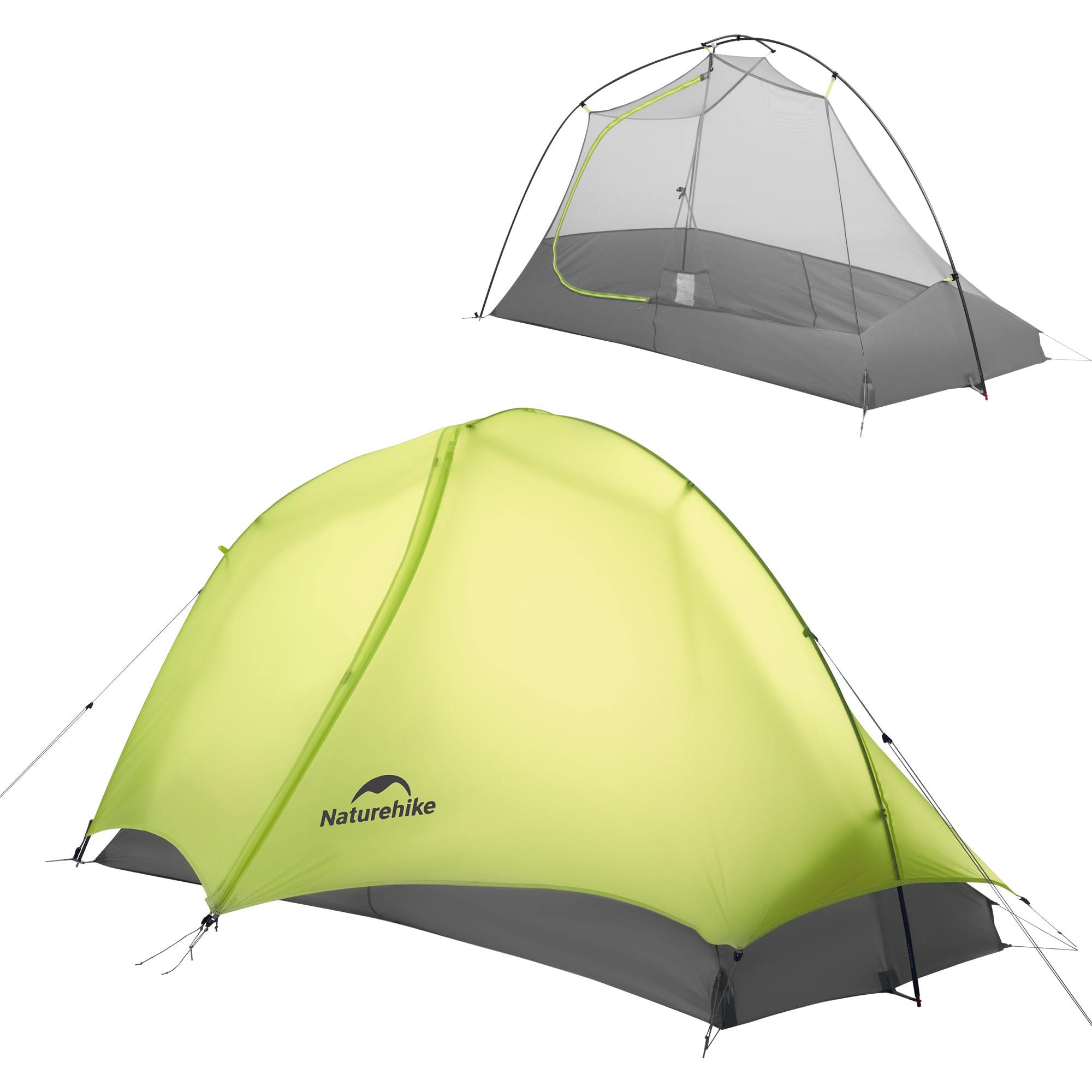
The Naturehike Star Trail 1P fundamentally challenges the assumption that entering the sub-3-pound freestanding tent club requires a significant financial outlay. Weighing in at 2.3 pounds total with the included footprint, this tent gives you the convenience of a full freestanding structure at a weight competitive with many trekking-pole shelters. The 10D nylon rainfly is impressively light, and the 20D nylon floor is backed with a PU3000mm waterproof coating that exceeds the rating of many competitors.
The interior is genuinely spacious for a solo tent: 86.6 inches of floor length and a 38-inch peak height provide enough room for a 6-foot camper to sit up without hunching. The full-coverage mesh inner tent, combined with an elevated clearance design, ensures good airflow even in humid conditions. Setup is straightforward with the two aluminum poles and clip system, taking roughly three minutes once you know the sequence.
Durability is the main trade-off at this price and weight. The 10D fly fabric is fragile and requires careful handling — branches, rough ground, and even sharp fingernails can abrade it. The included stuff sack and pole sack may wear through quickly, and some users have reported missing stakes. However, as a budget-conscious entry into lightweight freestanding backpacking, the Star Trail is remarkably competitive.
Why it’s great
- Full freestanding design at a true ultralight weight
- Low cost for a sub-2.5-pound shelter
- Spacious interior with good headroom
- Includes footprint and lightweight stakes
Good to know
- Thin 10D fly requires careful handling
- Durability concerns with stuff sack and pole sack
- Small vestibule and limited interior pockets
5. ALPS Mountaineering Zephyr 1P

The ALPS Mountaineering Zephyr 1P is engineered for the solo camper who prioritizes breathability. Its full mesh walls are a deliberate design choice — maximizing airflow to keep you cool in humid summer conditions and significantly reducing interior condensation compared to tents with solid fabric lower panels. The pre-bent 7000-series aluminum poles create a more vertical wall profile, which translates to increased headroom and a notably roomier interior than its 23-square-foot floor area suggests.
The 75D polyester rainfly with 1500mm coating is factory seam-sealed, and the fly clips on securely without requiring perfect alignment. The single door and vestibule are straightforward, with the vestibule providing enough space to stow a small to medium backpack and boots. The included gear loft and mesh pockets are a welcome touch for organization, and many users note that the tent withstands Pacific Northwest rain and wind surprisingly well given its mesh-heavy design.
At just over 4 pounds, the Zephyr is not a lightweight contender — it’s best suited for backpackers who accept the extra pound for superior climate control. Taller campers up to 6’2” report comfortable fits, and the 86-inch floor length accommodates most sleeping pads. The conventional stake-through loops are less refined than modern clip systems, but the tent is reliable and well-constructed for its mid-range price point.
Why it’s great
- Full mesh walls provide exceptional breathability
- Pre-bent poles create generous headroom
- Factory-sealed seams and rainfly hold up in wet weather
- Gear loft and mesh pockets for organization
Good to know
- Weighs over 4 pounds — heavy for backpacking
- Vestibule is small, barely covering a pack
- Footprint sold separately
6. ALPS Mountaineering Lynx 1

The ALPS Mountaineering Lynx 1 is a rugged, no-nonsense solo tent built to take abuse that would shred thinner shelters. The 75D 185T poly taffeta floor with a 2000mm coating is tough enough to withstand rocky campsites without a groundsheet, and the 75D rainfly with 1500mm coating is factory seam-sealed for immediate weather protection. At 4 pounds 1 ounce total weight, it is heavy by modern backpacking standards, but the durability is undeniable.
The freestanding two-pole construction with a single door and vestibule is simple and intuitive. The half-mesh walls strike a balance between ventilation and splash protection, and the vestibule is large enough to store a pack and boots. The interior floor area of 20 square feet (90 inches long by 32 inches wide) is tight but functional for one person, and the 36-inch peak height allows for sitting upright if you’re under 5’10”.
Users consistently praise the Lynx’s value, citing its robust zippers, solid pole clips, and overall build quality as surpassing expectations at its price point. The factory-installed stakes are universally criticized as being too light for windy conditions, and replacing them with MSR Groundhogs is a common upgrade. If you are a motorcycle camper, scout leader, or weekend warrior who doesn’t count grams, the Lynx is a shelter that will last for years.
Why it’s great
- Heavy-duty 75D floor and rainfly stand up to rough terrain
- Fully freestanding, idiot-proof setup
- Excellent value for a bombproof solo shelter
- Large vestibule for gear storage
Good to know
- Heavy — over 4 pounds total weight
- Factory stakes are too light; budget for replacements
- Limited interior space for taller users
7. TETON Sports Mountain Ultra 1P
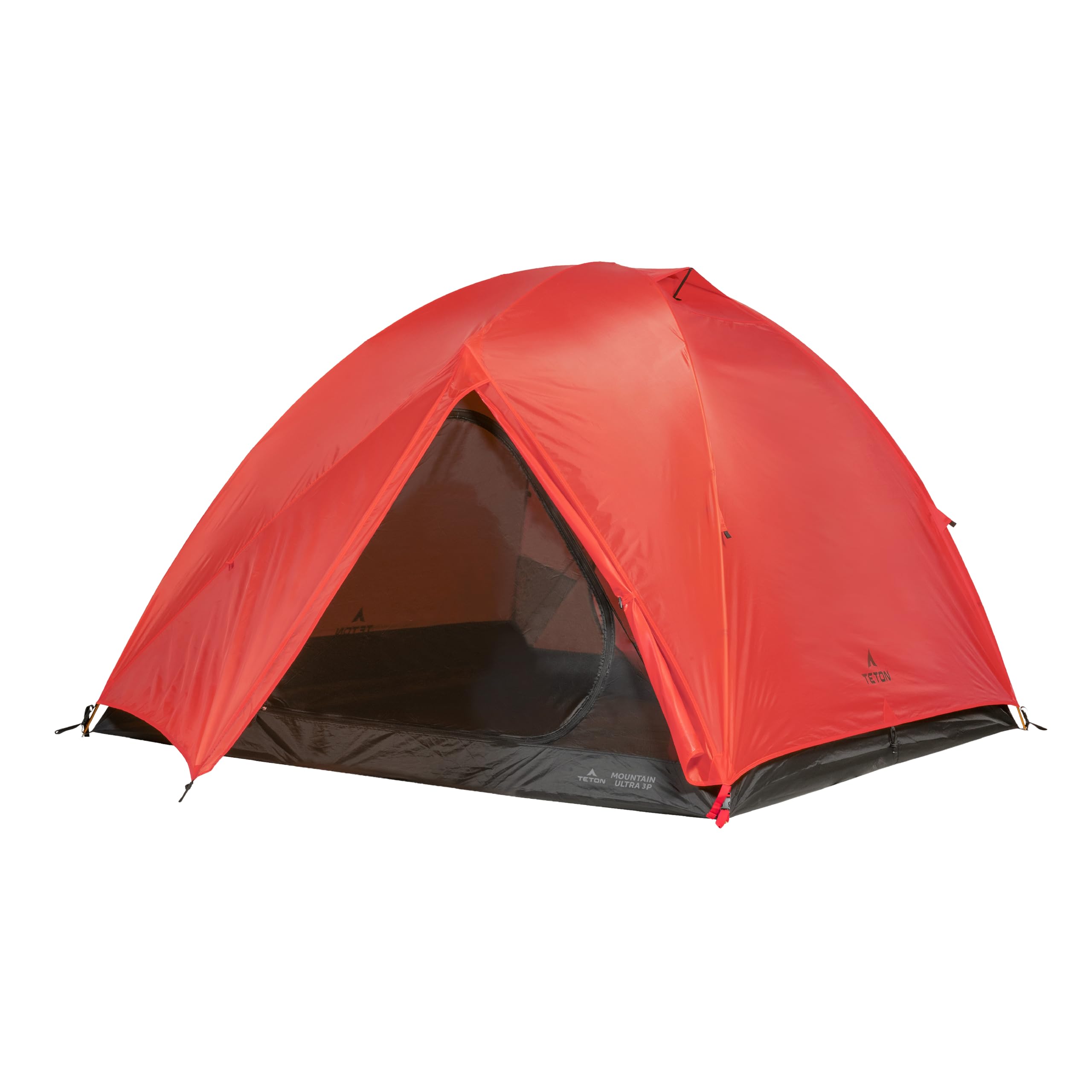
The TETON Sports Mountain Ultra 1P offers a unique value proposition: a full dome mesh top that turns the entire ceiling into a stargazing window. When the weather is clear, you can leave the rainfly off and sleep under the stars while staying protected by the bug-proof mesh inner. This design also contributes to the tent’s 360-degree ventilation system, which effectively minimizes condensation even in humid conditions.
The waterproof rainfly provides full coverage when the weather turns, and the 80-inch floor length is adequate for most solo campers under 6 feet. Setup is easy with the freestanding design, and the micro mesh inner tent fits snugly under the fly. The included ceiling hammock net and lantern hook are thoughtful additions for organizing small items and lighting your space.
At a weight that is competitive for the budget freestanding category, the Mountain Ultra is better suited for car camping and established campsites than long-distance backpacking. The included stakes are basic and users recommend upgrading them. For the solo camper who wants maximum airflow and a touch of romance under the night sky, this is a charming and functional choice.
Why it’s great
- Full dome mesh top provides excellent stargazing opportunities
- 360-degree ventilation prevents condensation buildup
- Freestanding design for easy setup
- Includes ceiling hammock and lantern hook
Good to know
- 80-inch floor is tight for taller campers
- Stakes are low-quality and need replacement
- Not as packable as true backpacking tents
8. Night Cat Ultralight 1P

The Night Cat Ultralight 1P is a bivvy-style shelter that prioritizes minimal weight and packed size above all else. At just 2 pounds total, it is one of the lightest enclosed shelters you can buy at this price point. The nylon fabric with a waterproof coating provides basic protection from rain, and the integrated bivvy sack style creates a very compact package that disappears inside a backpack.
Setup is quick with the included stakes and guylines, but the low profile means this tent is strictly for sleeping — there is no space to sit up, and storage for gear is extremely limited. The rainfly covers the top but leaves the vent area exposed, which can lead to moisture ingress if the tent is pitched in direct rain. Taller users over 5’10” may find the 125-centimeter floor length restrictive, and the 100-centimeter width is snug for a full-size sleeping pad.
This tent is best understood as a fair-weather shelter for pack-stripping minimalists or as an emergency bivvy. The build quality is decent for the price, with smooth zippers and robust stakes, but the materials are not designed to withstand heavy weather. For the budget-conscious ultra-minimalist who knows they will only use it in mild conditions, it is a functional and lightweight option.
Why it’s great
- Extremely light at just 2 pounds
- Packs down very small
- Quick and easy setup
- Good zipper quality for the price tier
Good to know
- Very cramped interior — no space for gear or sitting up
- Rainfly leaves vent area exposed to rain
- Too short for hikers over 5’10”
9. Naturehike 1P Tent with Footprint

The Naturehike 1P Tent is the entry-level champion that offers exceptional value for the solo backpacker on a budget. The standout spec is the PU4000mm waterproof rating on the 20D silicone-coated nylon rainfly — this is significantly higher than most tents in its price tier, offering real peace of mind in sustained downpours. The 7001 aluminum alloy poles provide a stable freestanding frame that handles wind surprisingly well.
The tent includes a footprint right out of the box, which saves you an additional purchase and setup step. The interior dimensions of 80.7 inches long and 37.4 inches wide (at the center) provide enough room for a standard sleeping pad and some gear, and the 43.3-inch peak height allows you to sit up comfortably — a rare luxury at this price point. The double-layer design creates effective airflow and helps separate condensation from the sleeping area.
The main limitation is interior length: campers over 5’8” will find their head or feet pressing against the ends. The tent is not ultralight at 3.63 pounds, but the included footprint and robust waterproofing make it a practical choice for bike-packers and entry-level backpackers who want a reliable shelter without spending a fortune. The smooth two-way zippers on the D-shaped door and good mesh quality further elevate the overall package.
Why it’s great
- Exceptional PU4000mm waterproof rating for its price
- Includes footprint, saving you an extra purchase
- Freestanding design with easy setup in under 5 minutes
- Good headroom for sitting up
Good to know
- Short floor length — best for campers under 5’8″
- Not ultralight at over 3.5 pounds
- Interior width narrows significantly at the ends
FAQ
Can a 6-foot-tall person fit comfortably in a 1 person backpacking tent?
Is a 4-pound tent too heavy for backpacking?
Do I really need a footprint for my solo tent?
What is the best way to manage condensation in a 1-person tent?
How do trekking pole tents compare to freestanding tents for stability?
Final Thoughts: The Verdict
For most users, the 1 person backpacking tent winner is the Big Agnes Copper Spur HV UL because it delivers the best balance of ultralight weight, generous interior space, and freestanding convenience for solo backpackers who take their gear seriously. If you want the most durable and cost-effective freestanding shelter, grab the The North Face Stormbreak 1. And for ultralight gram-counters who already hike with trekking poles, nothing beats the Featherstone Backbone 1P for its headroom and dual-vestibule layout at a fraction of the price of premium competition.