
Our readers keep the lights on and my morning glass full of iced black tea. As an Amazon Associate, I earn from qualifying purchases.
Specs are compiled from manufacturer listings and verified buyer reviews and can change over time — please confirm the key details on the product page before buying.
Before you buy a 1 person tent, ask yourself three honest questions: how much weight you will carry, how much weather you will face, and whether you would rather sleep in a room or on a mountaintop. A solo shelter is a personal purchase — your body dimensions, your hiking style, and your tolerance for fiddly setups all shift the answer. The market splits into several camps: sturdy freestanding domes that simply work, instant pop-ups that set up in seconds, and featherlight trekking-pole shelters that demand a bit of skill in exchange for grams saved.
I’m Min — the founder and writer behind Gadgets Feed. This guide is built by comparing the manufacturers’ published specifications and the patterns across verified customer reviews, so you get each pick’s real strengths and trade-offs instead of marketing spin.
We have weighed the trade-offs between instant pop-ups, winter-ready four-season domes, and sub-2.5-pound backpacking shelters so you can confidently choose the best 1 person tent for your next adventure.
Our Picks at a Glance


How To Choose The Best 1 Person Tent
Buying a solo tent is a series of compromises. Every ounce you save on fabric and poles is an ounce you might feel as a flapping wall in a storm. Here is how to weigh the trade-offs before you commit.
Weight vs. Durability
A tent’s weight tells you about its fabric. A 10-denier fly is lighter but thinner; a 75-denier fly shrugs off brush but adds bulk to your pack. Decide whether your miles are on groomed trails or through rocky, overgrown terrain, then let that answer set your floor.
Freestanding vs. Trekking-Pole
Freestanding tents hold their shape without stakes, so you can pick them up and move them mid-pitch. Trekking-pole tents save a pound by using your hiking poles as the frame, but they need staking at both ends and practice to get taut. Your choice here determines where you can pitch and how stable the shelter stays.
Quick Comparison
| Model | Best For | Weight | Floor Area | Setup Style | Amazon |
|---|---|---|---|---|---|
| ALPS Lynx 1★ Best Overall | Budget Durability | 4 lbs 1 oz | 20 sq ft | Freestanding | Amazon |
| Night Cat Pop-upInstant Pick | Instant Setup | 3.3 lbs | 25.31 sq ft | Pop-up | Amazon |
| Underwood 4-SeasonFour-Season | Winter Camping | 4.4 lbs | 31.8″ x 86.6″ | Freestanding | Amazon |
| Naturehike Backpacking | Value + Footprint | 3.63 lbs | 80.7″ x 37.4″ | Freestanding | Amazon |
| KAZOO Venus | Recycled Build | 3.3 lbs | 20.75 sq ft | Freestanding | Amazon |
| ALPS Zephyr 1 | Headroom & Vent | ~4 lbs | 23 sq ft | Freestanding | Amazon |
| Featherstone 1P | Ultralight Value | 3 lbs 3 oz | 21.6 sq ft | Semi-Freestanding | Amazon |
| Naturehike Star Trail | Sub-2.5 lb Solo | 2.3 lbs | 86.6″ x 59.1″ | Freestanding | Amazon |
| LANSHAN 1P | Trekking-Pole Light | 2.1 lbs | 22.3 sq ft | Trekking-Pole | Amazon |
In‑Depth Reviews
1. ALPS Mountaineering Lynx 1
Our pick — over 4.5★ from 900+ verified ratings; the strongest balance of quality and price.
The crowd-pleasing dome that shrugs off 30+ mph wind without emptying your wallet.
Solo campers repeatedly praise this tent for its easy 60-second freestanding setup. The freestanding design uses two aluminum poles that crisscross at the center, so you can have it standing in about 60 seconds using just two stakes to hold the fly. It weighs 4 lbs. 1 oz. total, which is not ultralight, but that weight buys you a 75D 185T factory-sealed rainfly with a 1500 mm coating and a 75D 185T 2000 mm poly taffeta floor.
Buyers report it holding up through 30+ mph winds, and buyers describe the build as “rock-solid freestanding tent at 20-25% cost of Big Agnes/Nemo.” The half-mesh walls keep airflow moving on warm nights, and the vestibule plus mesh pockets and gear loft give a solo camper real places to stash gear. The trade-off shows up in reviews as a repeated note about heavy factory stakes — several recommend swapping them for aftermarket pegs before a windy trip.
What Wins People Over
- easy ~60-second setup with a freestanding two-pole frame
- Factory-sealed seams and a 2000 mm floor keep you dry
- Rugged zippers and durable build for the price
Where It Compromises
- Heavier than premium 2-person rivals at 4 lbs 1 oz
- Fly condensation can soak overnight in humid air
- Included stakes are weak and worth replacing
Reach for this if: you want a bomber, easy-pitching dome for weekend treks and thru-hikes where every dollar counts.
Look elsewhere if: you are counting ounces — the 4 lbs 1 oz weight will feel heavy on a multi-week ultralight push.
2. Night Cat Pop-up Camping Tent
Throw it on the ground and it is standing in three seconds — the ultimate no-fuss shelter.
If setup speed is your top priority, nothing here touches this one. The pop-up frame opens the tent instantly in 3 seconds, and owners mention a <20-second full deployment. It is also the roomiest shelter on this list — the 25.31 square feet of floor area beats the ALPS Lynx 1’s 20 square feet by a noticeable margin. The interior measures 7.7 x 3.3 x 2.95 ft, so there is space beside you for extra gear or even a twin air mattress.
The weatherproofing is solid on paper: 190T polyester taffeta with PU 2000mm coating and taped seams. Real-world results are more varied — customers note it staying dry through heavy rain and 15+ mph wind without stakes, but several describe getting soaked during prolonged downpours. The condensation complaint is the most-discussed negative, so this is a fair-weather-to-moderate-rain shelter rather than a storm fortress. It packs 40% smaller than traditional pop-ups by folding in four circles instead of three.
The Fast-Pitch Appeal
- Instant 3-second pop-up deployment
- Largest floor at 25.31 sq ft with room for gear
- Packs 40% smaller than standard pop-ups
The Honest Downsides
- No separate rainfly — prolonged rain can saturate it
- Condensation buildup is the recurring complaint
- Folding-back takes practice despite the easier method
Grab it if: you want festival, beach, or car-camp convenience where the tent is up before your friends finish unpacking.
Pass if: you expect to face extended storms — the lack of a true rainfly is the limiting factor.
3. Underwood Aggregator 1/2 Person 4 Season Tent
A winter-capable dome that survived Patagonia’s O-Circuit and still lands at a budget price.
This is the tent to reach for when the forecast turns ugly. It is a true four-season shelter with a rollable snow skirt, a full-coverage rainfly, and a PU5000mm coating — a waterproofing figure that doubles the rating of most three-season tents on this list. The aluminum poles are aircraft-grade, and the double-layered corners are built to take high winds. One owner took it through Patagonia’s O-Circuit and came out dry in both rain and snow.
Weighing 4.4 pounds with a floor of 31.8″ x 86.6″ and a center height of 35.8″, it is compact but not ultralight. Buyers consistently call out the quality of the poles and stakes, and the two-way zipper makes entry easy with gloves on. The recurring note is that a 6-foot-tall person fits but snugly, and the bottom has drawn mixed durability comments — several owners recommend laying a tarp underneath to protect it.
Winter-Ready Strengths
- PU5000mm fly coating handles serious rain and snow
- Rollable snow skirt keeps powder out in winter
- Aircraft-grade aluminum poles withstood brutal winds
What to Watch
- 4.4 lbs is heavy for summer backpacking
- 6-foot-tall users find the interior snug
- Floor durability is the most-mentioned uncertainty
Choose it if: you camp year-round and want a single shelter that covers snow, wind, and budget.
Think twice if: you are a summer-only hiker — the extra poundage is wasted on warm trails.
4. Naturehike Backpacking Tent 1 Person

A 3.63-pound dome that pitches in under five minutes and throws in the footprint for free.
What makes this pick a value standout is the included footprint — most tents at this level sell the groundsheet separately. The tent itself weighs 3.63 lbs and packs to 15.7 x 5.9 x 5.9 inches, so it disappears into a backpack. The 7001 aluminum alloy poles hold firm in heavy wind, and the rainfly is 20D silicone-coated nylon with a PU4000mm rating, which is a full step up from the ALPS Lynx’s 1500 mm.
Reviewers point out the vestibule is big enough for shoes and a bag, and the tent stayed dry through a full rainstorm. The honest catch is height: owner feedback points out that a 5’8″ person fits snugly on a full-size pad, and a 5’10” reviewer recommends sizing up if you are taller. The D-shaped mesh door with two-way zippers keeps ventilation flowing on warm nights.
Why It’s a Bargain
- Footprint included — saves you a separate purchase
- PU4000mm fly rating beats many pricier tents
- Sub-4-pound weight with 7001 alloy poles
The Fit Reality
- Best for campers under 5’10” — taller users feel cramped
- Snug fit on a full-size sleeping pad
- No internal corner pockets; hanging pockets only
Buy it if: you are an average-height solo hiker who wants a light, dry shelter without paying extra for the groundsheet.
skip it if: you are over 5’10” — the length will leave your toes against the mesh.
5. KAZOO Ultralight Backpacking Tent

A 3.3-pound dome built from GRS-certified recycled fabrics that still handles a heavy storm.
The environmental angle here is genuine — every fabric is made through the ECO CIRCLE recycling system and meets the Global Recycled Standards certified by Textile Exchange, with a certificate of authenticity included. It weighs 3.3 lbs, packs into a 20×6-inch bag, and uses one integrated aluminum pole with clip attachments for a genuinely fast setup. One owner tested it at 12,500 feet and reported staying dry with minimal condensation.
The full-coverage rainfly is 210T ripstop with a waterproof rating above 3000 mm, and the bathtub floor held up to standing water in one reviewer’s test. Owners who bring a large dog find it fits one adult plus a 70 lb dog and gear. The recurring note is length — a 5’8″ camper found their toes touching the mesh, so taller solo hikers may want the next size up.
Eco-Conscious Strengths
- 100% GRS-certified recycled fabrics
- Rainfly rated above 3000 mm with taped seams
- Bathtub floor survived standing water
Where It Falls Short
- Short interior — toe-touch for taller campers
- Small vestibule limits gear storage
- Fly is not attached to the mesh, slowing setup
Pick it if: you want a responsibly-made shelter that does not sacrifice storm protection for its green credentials.
Look past it if: you are taller than 5’8″ and need full-length interior space.
6. ALPS Mountaineering Zephyr 1-Person Tent

The pre-bent poles create near-vertical walls, so a 6’2″ camper can actually sit up straight.
The defining feature here is headroom. The Zephyr uses pre-bent aluminum poles to push the walls steeper and the shape more vertical, which gives you a roomier feel than the classic dome profile. The floor measures 23 square feet with an 86-inch length, and shoppers say it fitting a 6’2″ person comfortably — taller than that gets tight. The full mesh walls are the stand-out for hot, humid nights, maximizing airflow so you stay cool and dry.
Setup is quick with the freestanding design and snap-on pole clips, and the 75D 185T polyester rainfly with a 1500mm coating resists UV damage while staying taut. Buyers praise the rain protection, with one reporting two dry nights in steady rain and another a dry 1.5-month Southwest road trip through snow and wind. The vestibule is spacious enough to store boots and a small backpack, and the lightweight build comes in around 4 lbs.
Comfort-First Design
- Steep walls give real sit-up headroom
- Full mesh walls excel in hot, humid conditions
- Fits up to 6’2″ — the tallest-friendly ALPS dome
The Compromises
- Around 4 lbs — not an ultralight option
- Footprint sold separately
- Top lantern tie sits where your head can hit it
Reach for it if: you are tall or simply want a roomy, well-ventilated solo shelter that pitches fast.
Pass if: every ounce matters — the Zephyr is about space, not minimalism.
7. Featherstone Backpacking Tent 1-Person

A 3 lbs 3 oz sil-nylon shelter that packs down to the size of a two-liter water bottle.
This is the tent for the hiker who wants ultralight numbers without the ultralight price tag. The sil-nylon fabric — the same high-tenacity material used for parachutes and sails — brings real toughness to a 3 lbs 3 oz Trailweight frame. The bathtub floor and meticulously taped seams keep you dry, and the included footprint lets you do a fast-fly setup that saves both weight and time.
The Featherstone is a semi-freestanding design, which means the foot end needs staking to hold its shape — a detail to remember on rocky ground. Owners highlight the roomy interior for one person, noting it fits a 6-foot, 155-pound camper comfortably, and the double-wall construction cuts condensation. One reviewer survived five nights including torrential rain and stayed completely dry. The build is light, but the trade-off shows in the thinner fabric, so treat it with care on brushy trails.
Featherlight Strengths
- Sil-nylon is tougher than standard polyester
- Included footprint enables fast-fly setup
- Torrential-rain tested dry with good ventilation
Know Before You Go
- Semi-freestanding — the foot requires staking
- Assembly instructions are poor; expect to watch a video
- Only one of the two vestibules is accessible
Choose this if: you want a genuinely light pack load with the durability of sil-nylon and a footprint thrown in.
Reconsider if: you prefer a fully freestanding pitch — this one needs the ground to cooperate.
8. Naturehike Star Trail 2.3lb Tent
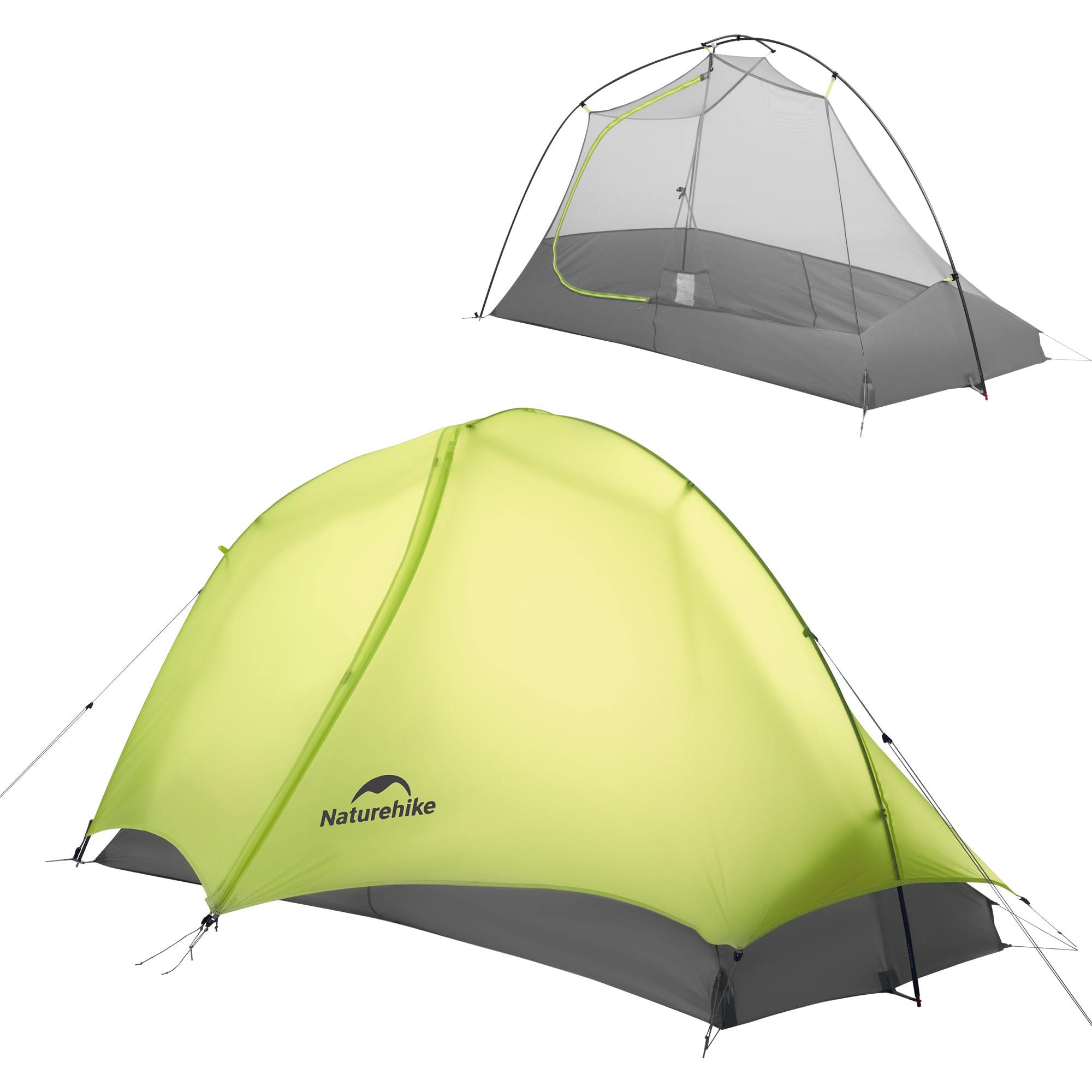
At 2.3 pounds, this dome is barely heavier than two water bottles — the ultralight crowd’s darling.
Weight is the entire story here. The Star Trail tips the scale at 2.3 lbs total, which is about 2.2 lbs for two water bottles, and it packs down to 17.7″ x 5.1″ — a package that vanishes beside your sleeping bag. The fly is ultralight 10D nylon with a 1500mm+ coating, while the 20D nylon floor bumps protection to a 3000mm+ rating. The full-coverage mesh inner tent boost airflow while keeping bugs out, making it an ideal summer shelter.
Setup takes about 3 minutes even for beginners, and a buyer noted it is roomy for a one-person design with a higher center peak that lets you sit upright. The review pages describe three rainy nights with a dry interior, and wind resistance held to about 20 MPH. The catch is the fabric itself: 10D nylon is delicate, and at least one owner reported the rainfly tearing near the zipper. This tent demands gentle handling and careful stakes.
The Weight Wins
- 2.3 lbs — the lightest freestanding pick here
- improve center peak allows comfortable sitting
- Pitches in about 3 minutes
The Fragility Cost
- 10D fly tears more easily than thicker fabrics
- Narrow peak can feel snug for broader shoulders
- Setup requires care near the zipper
Reach for it if: you are a serious bikepacker or thru-hiker chasing a sub-2.5-pound pack weight.
Pass if: you camp in brushy terrain — the thin fabric needs a gentle site.
9. LANSHAN Ultralight 1-Person Tent
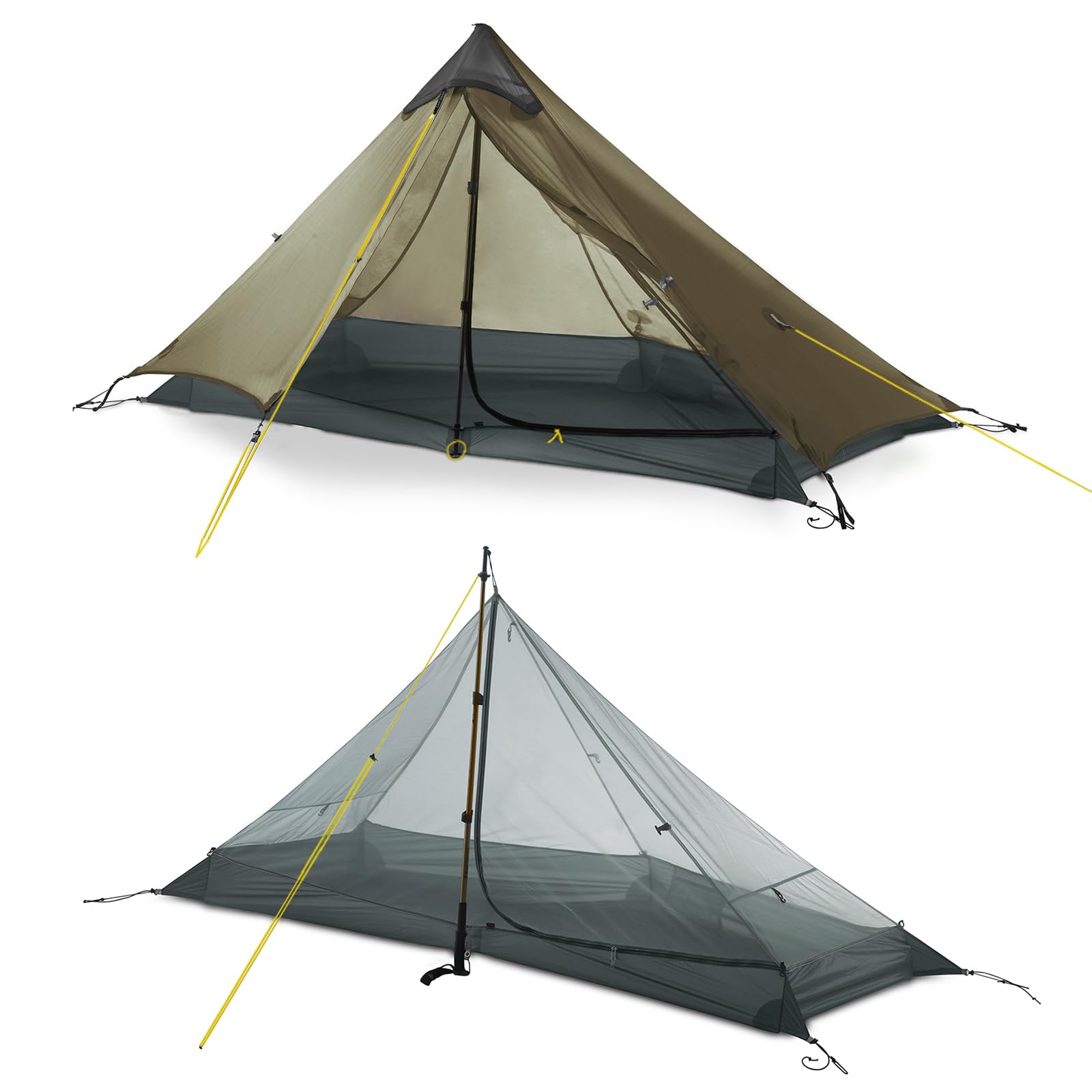
The 2.1-pound trekking-pole shelter with a 6000mm floor — the lightest, driest option in this lineup.
This is the lightest tent on the list at 2.1 lbs, and it achieves that weight by ditching poles entirely — your hiking poles become the frame. The walls are no-see-um mesh for maximum ventilation, while the 15D nylon rainfly carries a 5000mm HH waterproof rating and the bathtub floor steps up to a 6000mm HH rating. Those are the highest waterproof numbers in this entire roundup, so it is the shelter to trust when the weather turns serious.
Setup takes 5-10 minutes once you learn the hook system, and owners describe an easy 10-minute pitch with a single trekking pole. The versatility is a bonus: you can configure it as a tarp-tent without the floor or as an inner mesh tent without the rainfly. The trade-offs are real — the trekking-pole design needs staking at both ends, and the review pages note the tie-out points can leak in hard rain unless you seam-seal them. It also fits best for campers under 6 feet tall.
Ultralight Excellence
- 2.1 lbs — lightest tent in this guide
- 6000mm floor rating beats every other pick
- Configurable as tarp-tent, mesh tent, or full shelter
The Skill Required
- Needs your hiking poles — and practice to pitch taut
- Tie-out points may need seam sealing for hard rain
- Best under 6 feet tall with a single trekking pole
Go for it if: you already hike with poles and want the absolute lightest, driest solo shelter money can buy.
Look away if: you want a free-standing tent — this one lives and dies by its stakes.
Understanding the Specs
Waterproof Rating (mm)
This number tells you how tall a column of water the fabric can hold back before leaking. A 1500mm rating handles light rain, while 3000mm-plus handles steady downpours, and 5000-6000mm is serious storm territory. The floor usually gets a higher rating than the fly because it sits in puddles all night.
Freestanding vs. Trekking-Pole
Freestanding tents hold their shape with poles alone, so you can pitch them on rock or move them mid-setup. Trekking-pole tents swap the frame for your hiking poles, saving a pound but requiring stakes at both ends and a taut pitch. Your campsite type decides which one frustrates you less.
Trail Weight vs. Total Weight
Trail weight counts the tent body, fly, and poles — the minimum you carry. Total weight adds stakes, guylines, and the stuff sack. A tent’s listed weight can differ by half a pound between the two, so check which figure you are comparing.
Denier and Fabric
Denier measures fabric thickness — lower numbers like 10D are featherlight but delicate, while 75D is tougher and heavier. Sil-nylon resists tearing well, polyester holds its shape, and ripstop weaves stop small tears from spreading.
FAQ
What is the best 1 person tent for a beginner?
How much should a 1 person tent weigh?
Is a freestanding or trekking-pole tent better for solo camping?
What waterproof rating do I need for a 1 person tent?
Will a 6-foot-tall person fit in a 1 person tent?
What is the difference between a 3-season and 4-season tent?
Do I need a footprint for a 1 person tent?
How do I reduce condensation inside a solo tent?
Final Thoughts: The Verdict
For most solo campers, the 1 person tent winner is the ALPS Lynx 1 because it pairs a 60-second freestanding setup with a 2000 mm floor and proven 30+ mph wind performance at a price that leaves room in your gear budget. If you want the lightest possible load, the LANSHAN at 2.1 lbs is the ultralight choice, and for storm-proof year-round camping the Underwood 4-Season brings a PU5000mm coating and snow skirt. The ALPS Lynx 1 is the crowd favorite, earning a 4.7-star rating across 900+ owners for its reliable performance and packable design.
How We Picked
We do not accept paid placement. Every pick is matched to a real buyer and a real use-case; we do not hands-on test units.
Sources & Methodology
Specifications: manufacturer listings and product documentation. Review insights: verified customer reviews, as of August 2026. Pricing: not shown on this page (it changes often); check the current price via the retailer link.
As an Amazon Associate, Gadgets Feed earns from qualifying purchases. This does not affect which products we feature.