
That thin layer of condensation on your cold water pipe isn’t just a nuisance — it’s the first sign of a slow-motion disaster. Moisture drips onto drywall, seeps into basement insulation, and creates the perfect breeding ground for mold, all while your water heater works overtime to compensate for heat lost along the line. The fix is straightforward, but only if you choose the right material and thickness for your 1-inch pipes.
I’m Min — the co-founder and writer behind Gadgets Feed. After combing through hundreds of verified buyer reports and cross-referencing material specifications, R-values, and temperature tolerances, I’ve separated the insulation that actually seals from the stuff that just looks the part.
Whether you’re protecting exposed lines in an unheated crawlspace or tackling a DIY plumbing refresh in your utility room, this guide covers the top contenders for best 1 pipe insulation to keep your system efficient and your walls dry all season.
How To Choose The Best 1 Pipe Insulation
The wrong insulation is worse than no insulation — it traps moisture against the pipe, accelerates corrosion, and wastes your money. Here’s what actually matters when you’re shopping for a 1-inch inner diameter sleeve.
Material Density and Closed-Cell Structure
Not all foam is equal. Closed-cell rubber or neoprene foam creates a vapor barrier that stops moisture from wicking into the insulation itself. Open-cell foam, by contrast, acts like a sponge: once it gets wet, it loses all thermal resistance and promotes rust. For a 1-inch pipe in any unconditioned space, your baseline should be a closed-cell material rated for both hot and cold lines.
Wall Thickness and R-Value
The thickness of the foam wall directly determines how much heat transfers through it. A 3/8-inch (9 mm) wall delivers a modest R-value around 2.0 — enough for moderate climates — while a 1-inch wall pushes the R-value closer to 4.0 and provides serious freeze protection. Match the thickness to your local winter severity; thin sleeves won’t save a pipe when the thermometer dips into single digits.
Pre-Slit Design and Adhesive Seal
A factory pre-slit seam saves hours of frustration, especially when retrofitting onto existing pipes that can’t be disconnected. Look for a self-adhesive strip that bonds the slit closed without tape. Some budget-friendly options arrive as solid tubes, requiring you to cut a straight slit yourself — doable, but a major inconvenience when you’re working 20 inches off the ground in a cramped crawlspace.
Quick Comparison
On smaller screens, swipe sideways to see the full table.
| Model | Category | Best For | Key Spec | Amazon |
|---|---|---|---|---|
| Foam King 12-Pack | Pre-slit Tubes | All-season freeze & condensation protection | R-value 2.2, wall thickness 1 inch | Amazon |
| YIBOBO 10-Pack Self-Adhesive | Pre-slit + Aluminum | Outdoor spigots & irrigation lines | Neoprene + aluminum foil, 1.3 ft each | Amazon |
| Pangda 4-Pack 6 ft | Solid Tube | Long straight runs & DIY padding | 6 ft length, 1 inch ID, solid (no slit) | Amazon |
| PATIKIL 6 ft Single Tube | Solid Tube | HVAC lines & gentle bends | Rubber foam, 0.35 inch wall | Amazon |
| Amylove 12-Pack 3.3 ft | Pre-slit Pool Noodle | High-quantity coverage on copper pipes | PEP foam, 7.5 mm wall, pre-slit | Amazon |
In-Depth Reviews
1. Foam King Insulating Foam Pipe Covers – 12 Pack (1 inch)
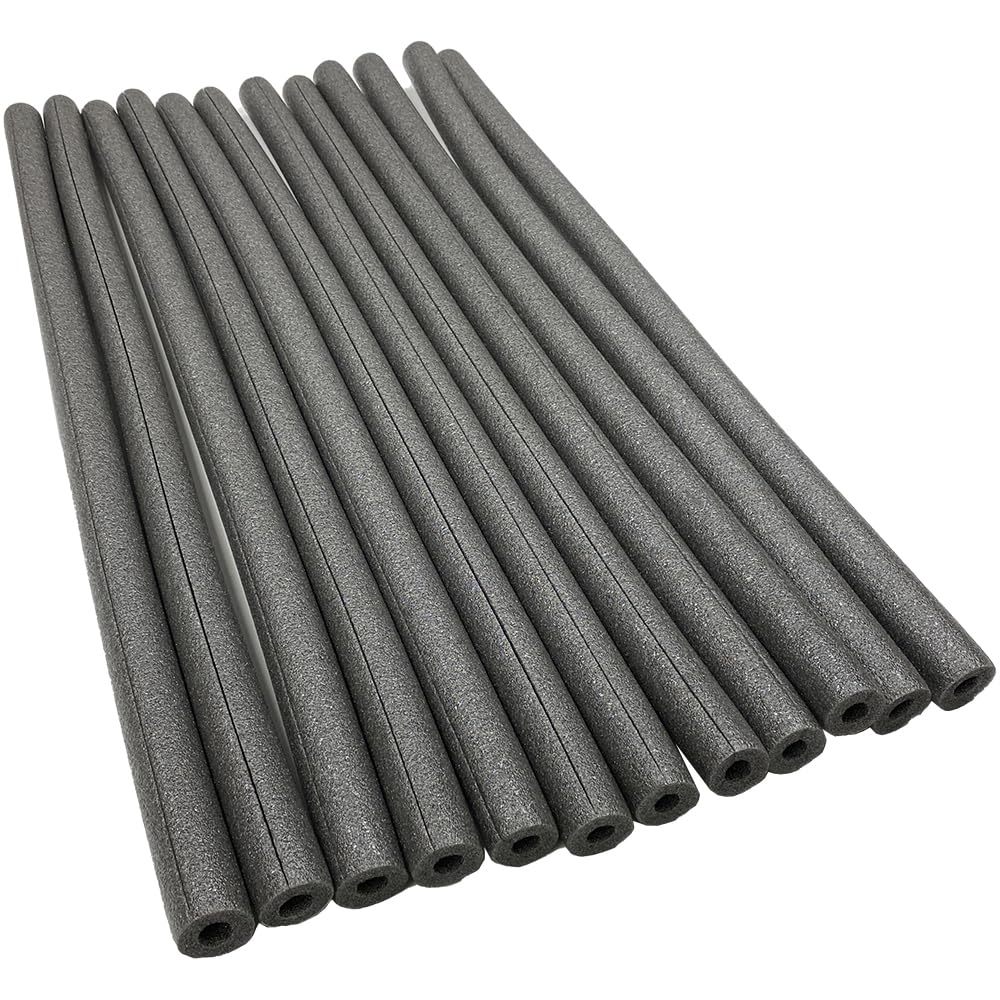
Each 3-foot cover arrives pre-slit with a factory-cut seam that opens cleanly and snaps back into place, making installation on existing copper, iron, or PVC pipes a matter of seconds per section. The 1-inch wall thickness delivers an R-value of 2.2, which translates to meaningful freeze protection down to -90°F and condensation control even on humid summer mornings. Buyers consistently praise the snug fit around standard pipe diameters, with no gapping at the seam — a common failure point in thinner sleeves.
The closed-cell foam carries a Class A flame spread rating under ASTM E84, a critical safety spec when insulation runs near water heaters or furnace flues. At 12 pieces per pack, the total line coverage reaches roughly 36 linear feet, enough to wrap an entire basement manifold or a full run of outdoor spigot lines. Customer reviews highlight the effortless installation on 1/2-inch, 3/4-inch, and 1-inch pipes, noting that the pre-cut seam eliminates the need for tape or adhesive.
One recurring note from users is that the foam self-heals minor punctures, which helps when threading the sleeve around tight elbows or securing it with zip ties for non-standard applications like fence post padding. The temperature ceiling of 180°F keeps the material stable on hot water recirculation lines without softening or deforming.
Why it’s great
- Pre-slit seam on every tube for instant retrofit installation
- R-value 2.2 with 1-inch wall thickness for serious freeze protection
- Class A fire rating meets building code requirements
Good to know
- Each tube is only 3 feet long, requiring more joints on long straight runs
- Foam density is slightly lower than premium rubber alternatives
2. YIBOBO 10 Pack Self-Adhesive Pipe Insulation Sleeve (1 inch)
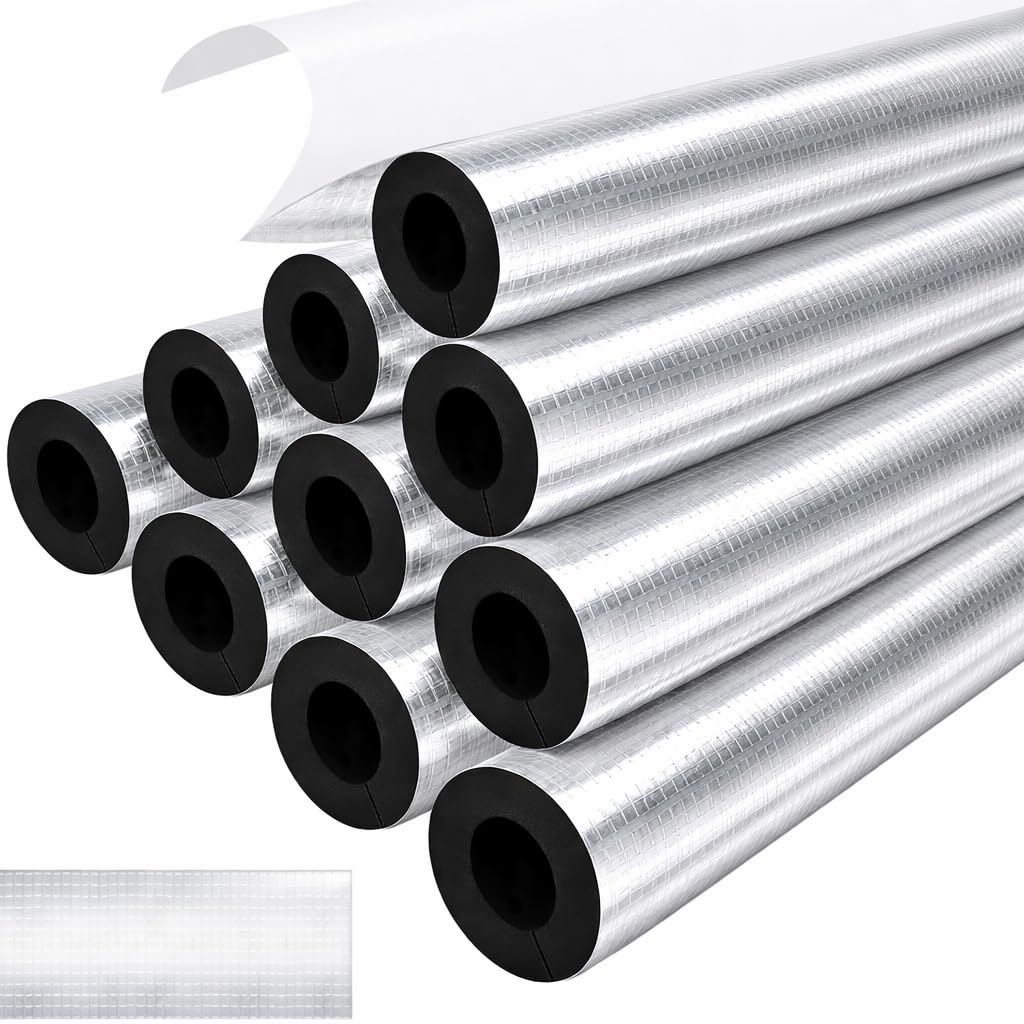
What sets this set apart is the integrated aluminum foil facing bonded directly to the neoprene foam. That reflective layer serves two functions: it radiates heat back into hot water pipes, reducing standby losses, and it acts as a scratch-proof vapor barrier that blocks moisture from penetrating the foam core. Each of the ten sleeves measures 1.31 feet long — shorter than standard 3-foot tubes, but the trade-off is faster handling on complex plumbing with multiple bends and valves.
The self-stick adhesive strip runs the full length of the pre-slit seam. Peel the protective liner, press the flap closed, and the bond holds through temperature swings without creeping open. Customer reports confirm the adhesive grip is strong enough that you need to align the seam perfectly on the first try — repositioning is difficult once the strip makes contact. The neoprene material introduces no airborne fibers during cutting, unlike fiberglass wrap, keeping the workspace clean.
Buyers using these sleeves on outdoor spigots and sprinkler risers report success through freezing nights, with the foil layer resisting UV degradation better than bare black foam. The 1-inch inner diameter fits standard copper and PEX pipes snugly, and the 1-inch thickness provides adequate insulation for moderate-winter climates. A small minority of users note that the foam feels relatively pliable and can compress under zip ties, so avoid over-tightening.
Why it’s great
- Aluminum foil facing boosts heat reflection and blocks UV damage
- Strong self-adhesive seam eliminates need for tape or clamps
- No fiber shedding during cutting or installation
Good to know
- Short 1.3-foot sleeves mean more seams on long pipe runs
- Adhesive requires precise alignment on first application
3. Pangda 4 Pcs 6 ft 1 Inch ID Foam Pipe Insulation Tubing
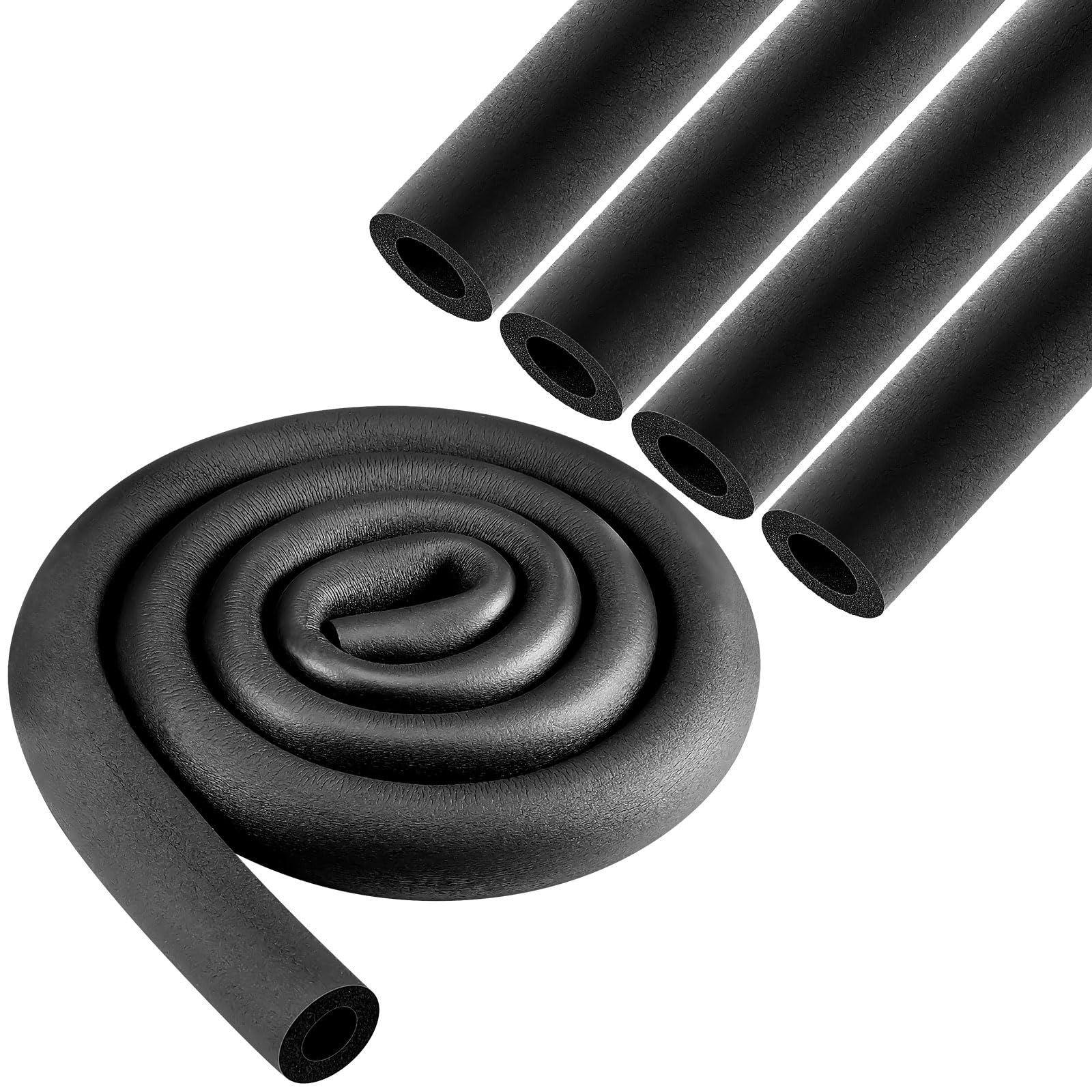
The Pangda pack delivers four 6-foot noodles, giving you 24 total feet of foam in a single order — ideal for covering long uninterrupted runs of AC line sets or exposed basement water lines without multiple splice joints. Each tube has a 1-inch inner diameter and a 0.38-inch wall thickness, striking a balance between insulation value and flexibility for bending around gentle-radius corners. The foam is made from lightweight rubber material that floats, which opens up secondary uses like pool noodle flotation or handle padding.
A critical detail that surfaces in the reviews: these tubes are solid — there is no factory pre-slit. Every buyer must manually cut a lengthwise slit using a sharp knife before installation, which adds time and requires a steady hand to keep the cut straight. Once slit, the foam wraps around the pipe effectively, but without a self-sealing adhesive strip, the seam must be secured with tape or zip ties. Several users note that the foam is flexible and easy to cut, but it also tears more readily than denser closed-cell options.
Owners who used this product for HVAC line-set insulation report acceptable thermal performance in moderate conditions, though the 0.38-inch wall thickness is on the thinner side for extreme freeze events. The material’s lightweight nature also means it compresses noticeably under clamp pressure. If you’re willing to invest the cutting effort and plan on taping every seam, the per-foot cost is competitive, and the six-foot segments reduce the number of joints on straight runs.
Why it’s great
- Long 6-foot sections minimize splice points on straight pipe runs
- Flexible rubber foam bends around gentle curves without kinking
- Versatile enough for gym handle padding and pool flotation
Good to know
- No pre-slit seam — you must cut every tube manually
- 0.38-inch wall is thinner than premium options, reducing R-value
4. PATIKIL 1″ (25mm) ID x 6Ft x 0.35″ Pipe Insulation Foam Tube

PATIKIL uses a dense rubber foam with a closed-cell structure that resists water vapor permeability far better than polyethelene alternatives. The single 6-foot tube has a 1-inch inner diameter and a 0.35-inch wall thickness, making it one of the slimmer options in this roundup. With a rated temperature range from -40°C to 120°C, the material handles both HVAC refrigerant lines and hot water recirculation loops without degrading. The closed-cell design means it doubles as a moisture barrier without requiring a separate vapor wrap.
This tube also arrives as a solid piece with no pre-slit, so installation on existing pipes requires a DIY lengthwise cut. The rubber compound is more resistant to tearing than polyethylene foam, which helps when you’re carving a slit with a utility knife — it’s less likely to rip off course. Customer reviews mention the tube’s usefulness for HVAC, furniture leg padding, and even roof rack cushioning, reflecting the material’s general durability. However, the 0.35-inch wall delivers a relatively low R-value, so it’s best suited for light freeze protection in mild climates or for indoor use where the ambient temperature stays above freezing.
A consistent note from users is that the foam degrades under prolonged direct sun exposure. PATIKIL’s rubber foam starts to crack and become brittle after a few months in UV light unless painted or wrapped with a protective tape. For outdoor applications, plan to cover the tube with a UV-resistant coating or aluminum tape. The single-tube packaging keeps the per-unit cost low, but you’ll need to order multiple units for anything beyond a short 6-foot span.
Why it’s great
- Dense closed-cell rubber foam with excellent vapor resistance
- Broad temperature range suitable for HVAC and hot water lines
- Resists tearing during cutting compared to softer polyethylene
Good to know
- No pre-slit seam — must cut for retrofit installation
- 0.35-inch wall is thin; low R-value for extreme cold
5. Amylove 12 Pcs 3.3 Feet Pipe Insulation Foam Tube (1 Inch)
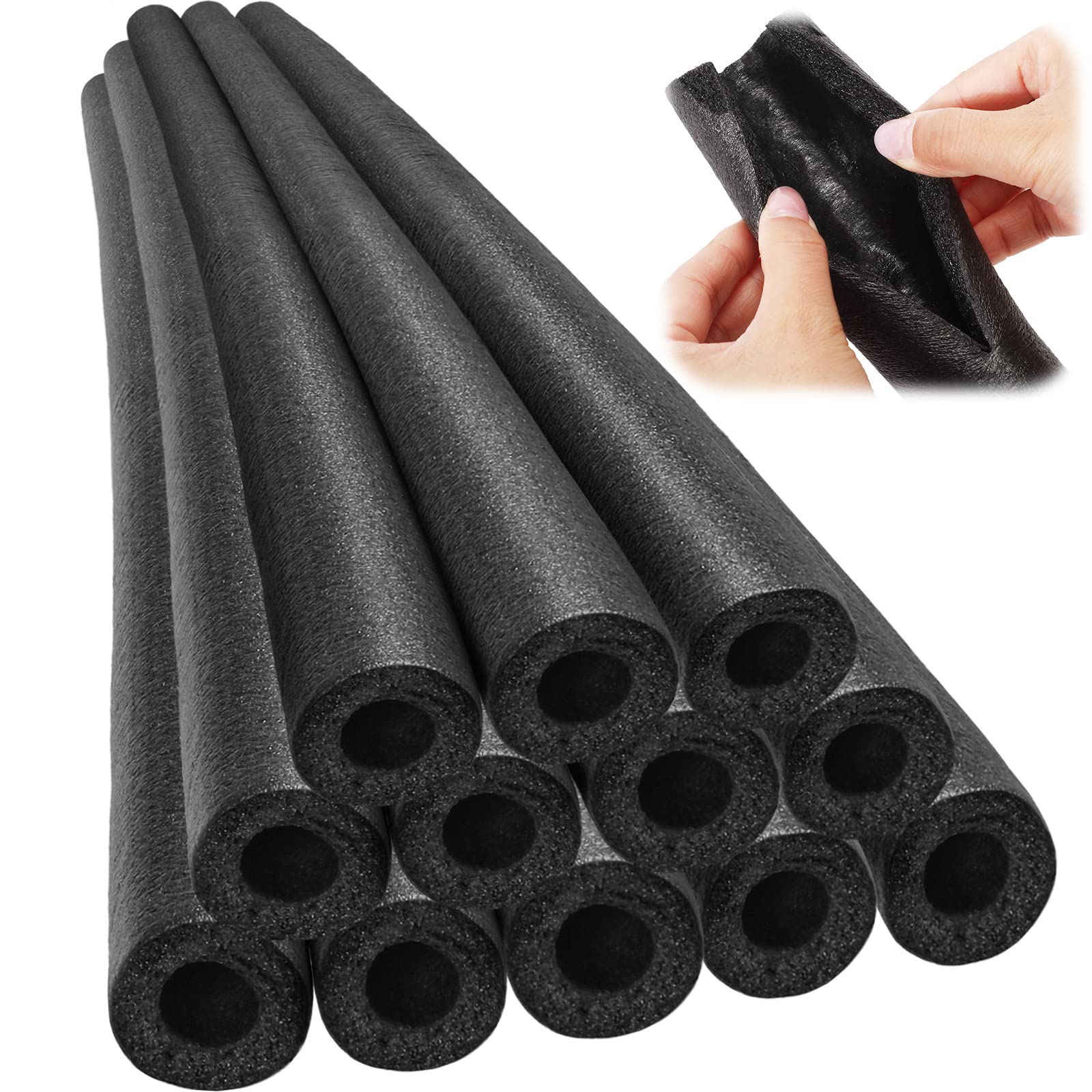
The Amylove pack delivers twelve 3.3-foot tubes, totaling nearly 40 linear feet of coverage — the highest quantity in this lineup. Each tube uses PEP (polyethylene foam with enhanced properties) and arrives factory pre-slit, so installation on a 1-inch copper pipe is as simple as snapping the foam open and pressing it around the line. The 7.5 mm wall thickness is the thinnest in this guide, which translates to a lower R-value, but the pre-slit design and generous count make it a practical choice for insulating a large number of short pipe segments or sprinkler risers.
The foam has good elasticity and bends easily around gentle curves, but buyers note that the material compresses more readily than denser rubber foam. This softness is beneficial for scenarios where the tube needs to conform to irregular pipe fittings, but it also means the insulation provides less thermal resistance per millimeter of wall. The pre-slit seam fits securely without tape on straight sections, though the thinner walls can gap slightly at tight corners. Customer reviews frequently highlight the product’s secondary use as child-safety padding on furniture edges and table legs, indicating the foam’s impact-absorbing character.
For cold-weather freeze protection, the 7.5 mm wall is on the borderline — adequate for mild frost events in protected locations, but insufficient for exposed pipes in deep-freeze conditions. The PEP material does have good fire-retardant properties, which adds a safety margin for installations near water heaters. The value proposition is clear: if you need to insulate a large area on a tight budget and the climate is moderate, the Amylove pack gives you the most pre-slit sleeves per dollar.
Why it’s great
- 12 pre-slit tubes provide massive coverage straight out of the box
- Soft, flexible foam conforms to irregular pipe shapes easily
- Fire-retardant material adds safety near heat sources
Good to know
- 7.5 mm wall is the thinnest here; lower freeze protection
- Soft foam compresses more than denser rubber alternatives
FAQ
Can I use 1-inch pipe insulation on a pipe that measures 7/8-inch outside diameter?
Is it safe to leave pipe insulation exposed to direct sunlight?
Final Thoughts: The Verdict
For most users, the best 1 pipe insulation winner is the Foam King 12-Pack because it combines a pre-slit seam, 1-inch wall thickness, R-value 2.2, and Class A fire rating in a single affordable bundle. If you need a reflective vapor barrier for outdoor spigots and irrigation lines, grab the YIBOBO Self-Adhesive 10-Pack. And for long uninterrupted runs where minimizing splice joints matters most, nothing beats the Pangda 6-Foot Tubes.