
A 1 TB drive is the modern capacity sweet spot for anyone balancing cost, space, and performance. Whether you’re upgrading a sluggish laptop, expanding a desktop’s storage pool, or backing up irreplaceable photos, the right 1 TB hard drive can either save you hours or become a bottleneck you regret daily. The gap between a slow, rattling spinner and a near-instantaneous flash drive is massive, and the wrong choice can leave you staring at progress bars.
I’m Min — the co-founder and writer behind Gadgets Feed. I’ve spent countless hours analyzing read/write benchmarks, cache sizes, data transfer rates, and enclosure durability to separate the real performers from the marketing fluff in this crowded storage category.
After combing through thousands of verified buyer reports and technical datasheets, I’ve narrowed the field to the models that actually deliver. This guide to the best 1 tb hard drive for your setup focuses on real-world speed, reliability, and the right form factor for your specific workflow.
How To Choose The Best 1 TB Hard Drive
The main fork in the road is whether you need a classic spinning hard disk drive (HDD) or a modern solid-state drive (SSD). HDDs offer massive capacity at budget-friendly prices, while SSDs deliver dramatically faster load times, silence, and shock resistance. A 7200 RPM HDD is still a solid choice for a bulk media library or game storage where you prioritize capacity per dollar. An SSD, even a SATA model, will make your operating system and applications feel radically more responsive.
Form Factor and Interface
Internal drives come in 3.5-inch (desktop) and 2.5-inch (laptop) sizes. Most external portable drives use the 2.5-inch form factor and connect via USB 3.0 or faster. For internal installs, a SATA III interface (6 Gb/s) is standard. For external use, USB 3.2 Gen 2 (10 Gb/s) unlocks the full speed of an NVMe-based portable SSD. Always check that your device supports the interface speed you’re paying for.
Quick Comparison
On smaller screens, swipe sideways to see the full table.
| Model | Category | Best For | Key Spec | Amazon |
|---|---|---|---|---|
| Samsung T7 Portable SSD | SSD | Speed & Durability | 1,050 MB/s Read | Amazon |
| SanDisk Extreme Portable SSD | SSD | Rugged Outdoor Use | IP65 Dust/Water Resistance | Amazon |
| Crucial BX500 | SSD | OS & App Upgrade | 540 MB/s SATA III | Amazon |
| WD 1TB Elements | HDD | Reliable Portable Backup | USB 3.0 Interface | Amazon |
| Seagate Portable 1TB | HDD | Student Portability | 2.5-inch, 20 Gb/s Bus | Amazon |
| Toshiba Canvio Basics 1TB | HDD | Budget Media Archiving | 5 Gb/s USB 3.0 | Amazon |
| WD Blue 1TB | HDD | Desktop OS Drive | 7200 RPM, 64 MB Cache | Amazon |
In‑Depth Reviews
1. Samsung T7 Portable SSD

The Samsung T7 sets the standard for a portable 1 TB drive. Its PCIe NVMe interface delivers sequential read speeds up to 1,050 MB/s and writes up to 1,000 MB/s, making it roughly ten times faster than any spinning HDD. This speed is transformative for video editors offloading 4K 60fps footage or creators who need to edit large files directly from the drive without stuttering.
The aluminum unibody construction not only feels premium but also acts as a heat sink, keeping the internal NAND cool under sustained loads. Thermal testing shows it peaks around 42°C during heavy transfers, well below the 70°C throttle threshold. The inclusion of both USB-C and USB-A cables ensures broad compatibility across modern laptops and older desktops out of the box.
On the security front, the T7 offers 256-bit AES hardware encryption, which is handled at the drive controller level rather than through software, meaning no performance penalty for encrypted volumes. Users report consistent real-world speeds matching the spec sheet when connected to a USB 3.2 Gen 2 port, and the compact footprint makes it easy to slip into a pocket or camera bag.
Why it’s great
- NVMe speeds eliminate waiting on large file transfers
- Aluminum body dissipates heat and survives 6-foot drops
- Hardware encryption with no impact on performance
Good to know
- Included USB-C cable is only 1.5 feet; longer cable recommended for desktop use
- Ships in MBR format; must reformat to GPT for full performance on modern systems
2. SanDisk Extreme Portable SSD

If you work or play in environments where dust, water splashes, or accidental drops are a real risk, the SanDisk Extreme is the drive to beat. It carries an IP65 rating, meaning it is fully dust-tight and can withstand low-pressure water jets from any direction. Combined with a 3-meter drop protection rating, this drive survives conditions that would instantly kill a standard HDD or a plastic-encased SSD.
Under the hood, it matches the T7’s read speed at up to 1,050 MB/s, with write speeds reaching 1,000 MB/s thanks to its NVMe controller. The embedded 256-bit AES hardware encryption keeps your data private without requiring third-party software. Several reviews note it runs slightly warm during sustained 100GB+ transfers, but this is normal for the performance level and the sealed, rugged enclosure.
The carabiner loop is a thoughtful addition for field work — photographers and videographers can clip it to a backpack strap. It ships with a USB-C cable and a USB-A adapter, making it compatible with nearly any host device. Over a year of use, users report no slowdown or degradation, and the compact form factor is smaller than most smartphones.
Why it’s great
- True IP65 dust and water resistance for outdoor gear
- NVMe speeds up to 1,050 MB/s for fast editing and transfers
- Rubber bumper and carabiner loop add physical security
Good to know
- Enclosure can get warm during extended write sessions
- Older model; ensure you’re getting the updated firmware version
3. Crucial BX500 1TB SATA SSD

The Crucial BX500 is the upgrade your aging desktop or laptop has been waiting for. It uses Micron 3D NAND and a SATA III interface to deliver sequential reads up to 540 MB/s — about 300% faster than a typical 7200 RPM HDD. This makes a night-and-day difference in boot times (users report under 15 seconds from cold start) and application loading.
One undervalued benefit is energy efficiency. The BX500 draws significantly less power than a spinning drive, which can extend battery life in older laptops by a noticeable margin. The 2.5-inch, 7mm form factor fits almost any standard drive bay, and the 3-year warranty from a brand backed by Micron’s 40 years of NAND manufacturing adds peace of mind.
It is not a speed demon like the NVMe portable options above, but for an internal OS drive, the SATA limit is rarely the bottleneck — your CPU and RAM matter more once you’re past the 500 MB/s mark. One common user note: the bundled Acronis cloning software can be finicky, but using a utility like DiskGenius provides a trouble-free migration path. This drive is the entry-level SSD king for breath-of-life upgrades.
Why it’s great
- Massive speed improvement over any HDD for OS and apps
- Silent operation and much lower power draw
- Reliable 3D NAND from a top-tier memory manufacturer
Good to know
- Bundled cloning software has inconsistent results
- No DRAM cache; sustained write speeds drop after the SLC cache fills
4. WD 1TB Elements Portable External Hard Drive

For those who need external bulk storage without the premium of an SSD, the WD Elements is a proven workhorse. It is whisper-quiet during operation and runs only slightly warm, even during extended file shuffling. The 2.5-inch portable design slips easily into a laptop bag, and the USB 3.0 interface (backward compatible with USB 2.0) offers read/write speeds typical of a modern 5400 RPM portable drive.
Setup is genuinely plug-and-play on Windows machines, though Mac users will need to reformat it (Time Machine on Monterey will automatically reformat to APFS, locking the drive for backup exclusively — users recommend creating a second volume to retain file storage functionality). The enclosure is simple plastic but feels dense and durable for daily commutes.
While it is not designed for heavy gaming or video editing workloads due to its slower random access times, it excels as a backup drive for photos, documents, and music libraries. Several long-term users report years of trouble-free service, and the WD brand’s reputation for reliability is reinforced by the absence of common failure patterns like the click-of-death. The included cable is functional but short; a longer replacement cable is a worthwhile investment.
Why it’s great
- Rock-solid reliability for archival backups
- Plug-and-play on Windows with no software required
- Compact and lightweight for portable storage
Good to know
- 5400 RPM spindle speed means slower than 7200 RPM for large transfers
- Included cable is prone to failure; budget for a replacement
5. Seagate Portable 1TB External Hard Drive
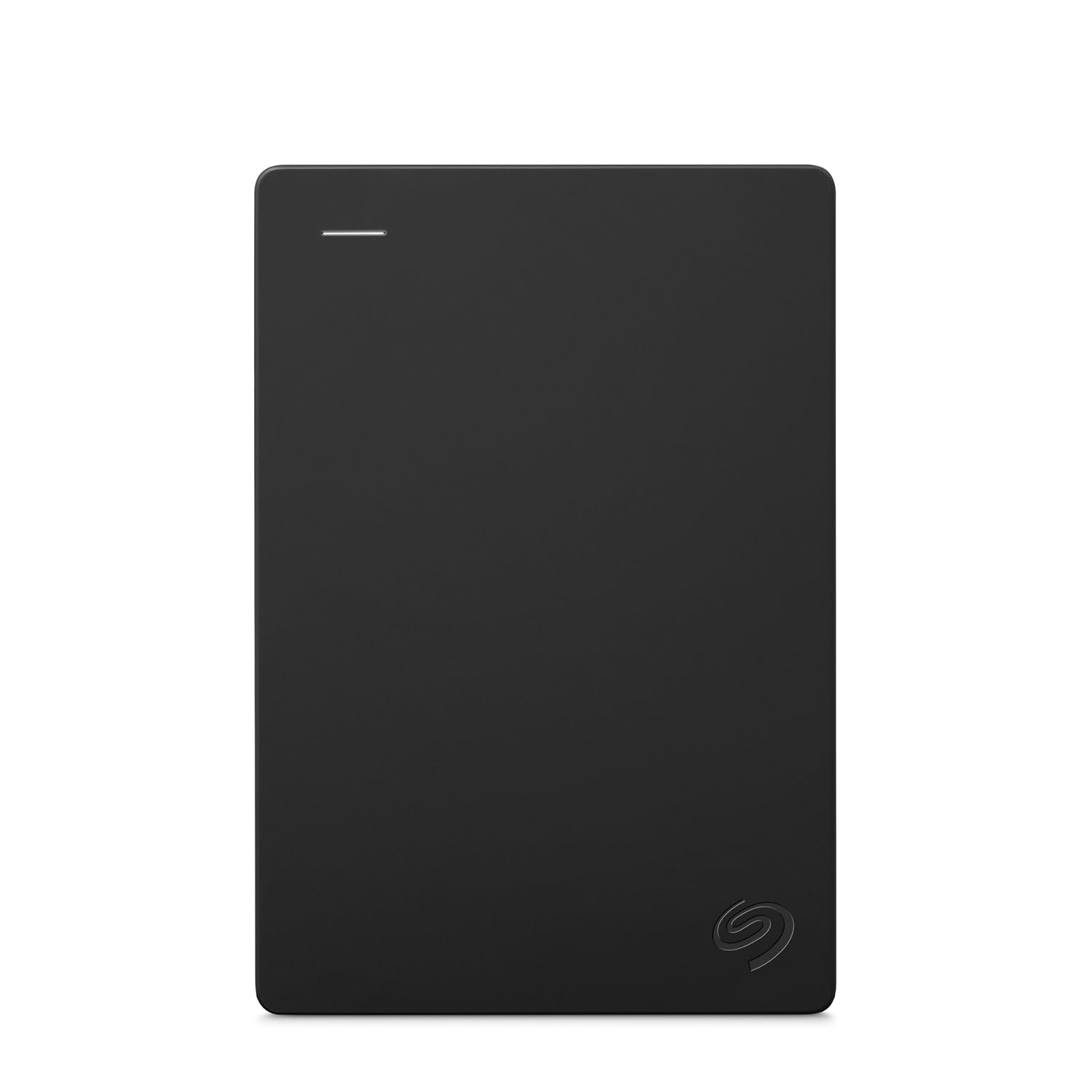
The Seagate Portable 1TB is a straightforward, no-fuss external drive that targets the student and casual user market effectively. Its lightweight, slim chassis is easy to toss in a backpack with a laptop and charger, and the USB 3.0 bus provides adequate speed for backing up homework, photos, and media projects. Multiple verified reviews from college students praise its quiet operation and reliability for daily class and work use.
A standout feature in this price tier is the included 1-year Rescue Service — a data recovery plan that covers one successful recovery attempt within the first year. For a student storing an entire semester’s thesis or project files, this safety net adds genuine value. The drive is pre-formatted NTFS for Windows, but Mac users can easily reformat it with Disk Utility for APFS or ExFAT.
There are trade-offs: some users report erratic throughput and high power draw that can cause issues on certain PC USB ports. This drive also lacks SMART attribute monitoring, meaning you won’t get advanced health warnings. For its target audience — budget-conscious students and casual home users — the combination of low weight, quiet acoustics, and built-in data recovery option make it a sensible pick.
Why it’s great
- Lightweight and genuinely portable for daily carry
- Includes 1-year Rescue Service data recovery plan
- Plug-and-play simplicity on both PC and Mac (after reformat)
Good to know
- High power draw may not work with every USB port
- No SMART support for proactive health monitoring
6. Toshiba Canvio Basics 1TB Portable External Hard Drive

The Toshiba Canvio Basics is the entry-level champion for those who need a simple, functional external drive without any extra frills. It comes with a matte, smudge-resistant finish that looks cleaner over time compared to glossy alternatives. Setup is genuinely plug-and-play on Windows, with no software to install — just connect the USB 3.0 cable and start dragging files.
Transfer speeds are competitive for a 5400 RPM portable drive, with users reporting backup operations finishing much faster than expected — often under an hour for large media libraries. The drive is bus-powered, so it works without a wall outlet, and its small footprint (2.5-inch form factor) makes it ideal for travel. An LED blinks slowly during operation to indicate the drive is active.
The main drawbacks are the 1-year standard limited warranty (shorter than some competitors) and the need to reformat for Mac compatibility. Some users also note the polycarbonate enclosure can feel a bit light, but it holds up well to normal handling. For a pure budget-tier pick that focuses on essential functionality and zero bloatware, the Canvio Basics is hard to beat.
Why it’s great
- No bloatware or setup hassles on Windows
- Compact and lightweight for travel with a matte finish
- Solid transfer speeds for the class
Good to know
- 1-year warranty is below the industry average
- Polycarbonate shell feels less robust than metal equivalents
7. Western Digital 1TB WD Blue PC Internal Hard Drive

The WD Blue 1TB is what you install when you need a dependable internal drive for your desktop without spending on an SSD. It spins at 7200 RPM and packs a 64 MB cache, which gives it a noticeable speed advantage over the 5400 RPM drives common in this price tier. Linear read performance measures between 170 to 178 MB/s, and random access averages around 15.7 ms — perfectly adequate for an OS drive or game library on a budget desktop build.
This model uses a single 1 TB platter, which keeps the mechanism simple and reduces latency compared to multi-platter designs. It also supports the ATA-8 command set with 4KB sector alignment, though older operating systems may require manual alignment for peak performance. The included free Acronis True Image WD Edition software lets you clone your existing drive before swapping it in.
The main drawback is purely auditory: at 7200 RPM, this drive is not silent. It produces a low hum and occasional seek chatter during heavy use, which may be distracting in a quiet room. Additionally, some verified buyers noted Amazon’s packaging for this drive was subpar, with the drive sliding around inside the box. If you’re building a near-silent HTPC or media server, a 5400 RPM WD Red might be a better fit.
Why it’s great
- 7200 RPM performance at a price near 5400 RPM drives
- Single 1TB platter improves reliability and speed consistency
- Includes Acronis cloning software for easy OS migration
Good to know
- Not silent; produces noticeable drive hum and seek noise
- Amazon’s shipping packaging can be inadequate; inspect on arrival
FAQ
Can I use a 1 TB external HDD to play games on PS5 or Xbox?
Why does my 1 TB drive show less than 931 GB available space?
Should I get an SSD or HDD for a 1 TB backup drive?
Final Thoughts: The Verdict
For most users, the best 1 tb hard drive winner is the Samsung T7 Portable SSD because it combines blazing NVMe speeds, a durable metal enclosure, and hardware encryption in a truly pocketable size. If you want maximum durability for outdoor or field work, grab the SanDisk Extreme Portable SSD for its IP65 resistance and drop protection. And for a budget-conscious internal upgrade that breathes new life into an old computer, nothing beats the Crucial BX500.