
Our readers keep the lights on and my morning glass full of iced black tea. As an Amazon Associate, I earn from qualifying purchases.
Specs are compiled from manufacturer listings and verified buyer reviews and can change over time — please confirm the key details on the product page before buying.
You need sheet metal that hits exactly 0.1 inches or thicker, but the wrong alloy turns a quick repair into a rusted headache or a scratched disappointment. The 10 gauge (a standard thickness that measures slightly different per metal — about 0.14 inches for steel, 0.1 inches for aluminum and brass) label only tells part of the story. Picking brass for a boat patch or unpainted carbon steel for a kitchen backsplash wastes your time and money. This guide sorts the four main types — brass, stainless steel, aluminum, and carbon steel — so you buy the right material for outdoor, decorative, lightweight, or structural work without paying for a finish you will grind off anyway.
I’m Min — the founder and writer behind Gadgets Feed. This guide is built by comparing the manufacturers’ published specifications and the patterns across verified customer reviews, so you get each pick’s real strengths and trade-offs instead of marketing spin.
You need a corrosion-proof plate for marine use or a low-cost sheet for fabrication. These picks for the best 10 gauge sheet metal match you to the right metal for your specific job.
Quick Picks
- 12 x 12 x 1/8 Inch 304 Stainless Steel Sheet — Tough & Corrosion-Free
- 6061 Aluminum Sheet, Unpolished (Mill) Finish, T6 Temper — Lightweight & Weldable
- 10 Gauge Brass Sheet, H62 Brass, 5.9″ x 5.9″ — Craft-Ready Brass
- A569/ASTM A1011 Carbon Steel Sheet, Hot Rolled, 36″ Length — Big Sheet, Low Cost
How To Choose The Best 10 Gauge Sheet Metal
Matching the gauge number is only the start of picking the right sheet. The label “10 gauge” on a carbon steel, brass, aluminum, or stainless steel sheet can mean a different actual thickness in inches — because the gauge system comes from how many times a material passed through a die, and harder metals land at a different measurement than softer ones.
Match the Material to the Environment
Corrosion resistance is your biggest choice. Use 304 stainless steel or aluminum outdoors, near salt water, or in a kitchen — cheap carbon steel rusts quickly there. Choose brass for a decorative piece such as a jewelry backing or knob plate, because it has a rich gold look that polishes well. Pick carbon steel for welding or structural fabrication where strength matters and you plan to paint it, because it is the most budget-friendly and weldable option.
Size and Finish Matter in Real Use
Sheet metal comes in precise dimensions and different surface finishes — either a scaled, unpolished “mill” finish (rough from the rolling mill) or a smooth, polished surface, sometimes with a protective film. Choose the brass or stainless sheet with a protective film if your project needs a cosmetic look right from the start. Pick the mill finish on carbon steel or aluminum for hidden parts — it saves you money but needs extra sanding if you want a clean surface.
Quick Comparison
On smaller screens, swipe sideways to see the full table.
| Model | Best For | Material | Thickness | Dimensions | Amazon |
|---|---|---|---|---|---|
| 12 x 12 x 1/8 Inch 304 Stainless Steel | Corrosion resistance outdoors | 304 Stainless Steel | 0.12 Inches | 12″ x 12″ | $29.99Amazon |
| 6061 Aluminum Sheet, T6 Temper | Lightweight builds & welding | 6061 Aluminum | 0.098 Inches | 12″ x 12″ | $45.99Amazon |
| H62 Brass Sheet, 5.9″ x 5.9″ | Decorative & craft projects | H62 Brass | 0.1 Inches | 5.9″ x 5.9″ | $20.99Amazon |
| A569/ASTM A1011 Hot Rolled Carbon Steel | Large-scale fabrication | Carbon Steel | 0.14 Inches | 12″ x 36″ | $55.99Amazon |
In‑Depth Reviews
1. 12 x 12 x 1/8 Inch 304 Stainless Steel Sheet

Stays flat and rust-free even after grill heat and salt spray — the stainless sheet for outdoor duty.
You grab this 10 gauge sheet when your project lives outside, near moisture, or under a grill. Measuring 12 x 12 x 0.12 inches, it is made of 304 stainless steel (a common chromium-nickel stainless alloy) which resists corrosion, heat, and low temperatures well. One reviewer noted they “used to cover hole in grill burner heat spreader plate” and after heat cycles it “discolored but flat, zero rust.” That is the real-world test: a protective film on both sides (peel it off before use) keeps it clean until you cut it.
At 0.12 inches, this sheet is slightly thinner than the carbon steel option (0.14 inches), but the stainless alloy means you never need paint or coating. The edges come sharp — typical for any metal sheet — so wear gloves when handling. Buyers report it is “exactly as described” and held up in a saltwater boat environment with “no signs of corrosion,” making it the pick for anyone who wants a durable flat plate without rust worries.
Compared to the 6061 aluminum sheet (0.1-inch thick), this stainless sheet is about 20% thicker at 0.12 inches and significantly heavier, but it trades weight for better corrosion resistance in extreme environments like marine or high-heat use. The 12 x 12 size gives you a good working area for brackets, covers, and patches.
Why it leads
- 304 stainless resists rust in saltwater and high-heat settings — one owner confirmed zero corrosion on a boat after extended use
- Includes a protective film on both sides to prevent scratches during handling
- 12 x 12 inch size is generous for most cover plates, brackets, and repairs
The trade-offs
- Not magnetic, so magnets or magnetic racks will not stick
- 0.12-inch thickness is slightly thinner than the 0.14-inch carbon steel sheet; less mass for heavy structural loads
Pick this if: your project lives outdoors, on a grill, on a boat, or anywhere moisture or heat threatens rust — this stainless sheet handles it all without paint, and the 12-inch square is roomy for most jobs.
skip it if: you need a non-ferrous, lightweight metal for welding or electronics — the aluminum or brass options below are lighter and easier to machine.
2. 6061 Aluminum Sheet, Unpolished (Mill) Finish, T6 Temper
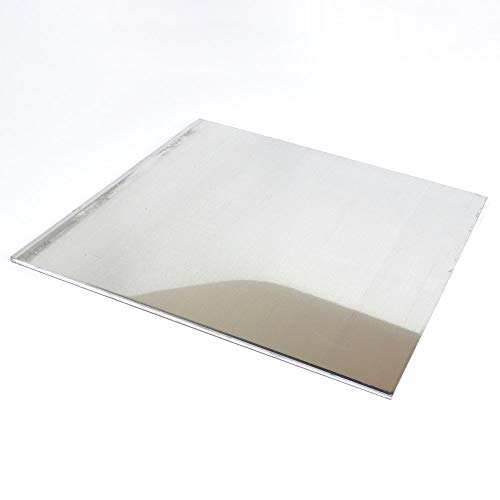
The aerospace-grade aluminum that welds clean and stays light — only if you can live with surface marks.
You reach for the 6061 aluminum sheet for welding projects, model building, or any project you carry from bench to installation. At 0.1-inch thick (the official 10 gauge spec for aluminum), with a 12 x 12 inch working area, this T6 temper (a heat-treated hardness level) sheet offers a good strength-to-weight ratio, above-average corrosion resistance, and excellent machinability. One buyer mentioned it “welded well with slight feathering” and another used it as a “perfect for custom PS3 mod mounting plates” because of its conductive heat transfer.
The catch is the unpolished mill finish. Multiple owners mention the sheet “arrived in perfect, undamaged packaging but was heavily scratched and gouged” with “deep, non-cosmetic gouges” — a real problem if you need a perfectly flat surface. Unlike the stainless steel pick above which includes a protective film, this 6061 sheet comes with only a minimal wrap, so surface imperfections from manufacturing are common. One owner reported black product printing on the surface is avoidable when cutting, but the scratches are a known pattern.
Compared to the 0.12-inch stainless sheet, this aluminum is 0.1-inch thick (17% thinner) but dramatically lighter, making it the right choice for structural brackets, custom plates, or any project where weight matters more than surface hardness. The T6 temper gives it good strength, but the mill finish means you will need to sand or polish if you want a blemish-free look.
Best features
- Excellent weldability for a lightweight metal — one reviewer confirmed it “welded well with slight feathering”
- Very light compared to steel or stainless; easy to carry and machine
- T6 temper gives it aerospace-grade strength for structural applications, brakes, and pistons
Downsides
- Common reports of deep gouges and scratching from the factory — not a cosmetic sheet
- Black product printing on the surface; you must cut around it or sand it off
Ideal for: welding projects, lightweight structural brackets, electronics mounting plates, or any build where weight savings matter more than a perfect surface.
pass on it if: you need a blemish-free decorative finish right out of the package — the scratches are a known issue seen across reviews.
3. 10 Gauge Brass Sheet, H62 Brass, 5.9″ x 5.9″
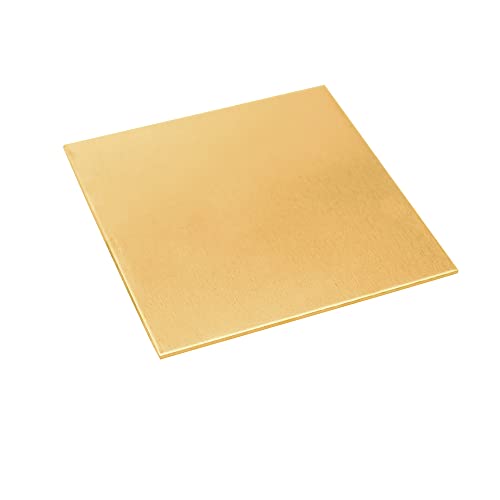
The gold-toned plate for DIY crafts and restorations where appearance is the whole point — if the small size fits your template.
You pick this H62 brass sheet from Tynulox when your project is about looks — a dresser knob plate, a jewelry backing, or a decorative inlay. At 0.098 inches thick and 5.9 x 5.9 inches, it is the smallest physical size in this roundup, but the gold color and machinability make it the go-to for craft work. Customers note they “used for DIY antique dresser knob plate” and “measured, transferred dimensions to brass sheet, cut with bandsaw, ground to size with belt sander.” The 62% copper content gives it that warm brass tone and good electrical conductivity for electronics projects.
The thickness here is 0.098 inches, while the aluminum sheet is 0.1 inches and the carbon steel sheet is 0.14 inches. Despite being smaller and thinner than the other picks, the brass is not economical for large structural jobs — one reviewer pointed out “not economical but necessary when replacement unavailable.” The major real-world trade-off is that some reviewers point out scratches on both sides of the plate, so expect to do a light buffing if you need a mirror finish.
Compared to the 304 stainless sheet at 12 x 12 inches, this brass sheet measures 5.9 x 5.9 inches. This is a small precision plate, not a large cover piece, so pick it only for decorative or electrical applications where the brass look matters and the small size fits your template.
Why pick it
- H62 brass with 62% copper content gives a genuine gold tone for decorative projects
- Good electrical conductivity for electronics, models, and repair work
- Multiple verified buyers confirm it cuts and sands cleanly with standard tools
Limitations
- Small 5.9 x 5.9 inch size limits its use to small craft and restoration projects
- Scratches on both sides reported by multiple buyers; expect to buff the surface
Best suited for: jewelry makers, antique restorers, model builders, and electrical hobbyists who need a genuine brass sheet in a small, precision size — the gold tone is the real draw here.
Not for: large structural panels, outdoor corrosion-prone environments, or any job where a bigger sheet is needed — go with the stainless or carbon steel picks above for size and durability.
4. A569/ASTM A1011 Carbon Steel Sheet, Hot Rolled, 36″ Length

The 36-inch carbon slab gives you the most metal for your money — but you will work hard for the finish.
You choose this A569/ASTM A1011 carbon steel sheet when you need to cover a large area, build a chassis, or fabricate a structural part. One customer observed “it was exactly what I ordered” and noted “clean cut edges” — the hot-rolled finish means the edges are clean and the material is easy to weld or fabricate.
The catch is the mill scale (the dark, flaky oxide layer formed during hot rolling). Multiple shoppers say the “mill scale extremely hard” and that a “40 grit flap disc won’t touch it.” That oxide layer is notoriously tough to remove — expect to spend extra time with aggressive abrasives if you need a bare metal surface for painting or welding. Unlike the polished stainless sheet, this is a raw industrial material, not a decorative piece. One reviewer also noted “two deep scratches about half of 1/16 deep” on the surface, though for a temporary man hole cover it “works great.”
Compared to the 12 x 12 stainless sheet, this carbon steel sheet offers a massive 36-inch length (3x longer) at a slightly thicker 0.14 inches vs 0.12 inches, making it the clear winner for large fabrication projects. However, it will rust if left uncoated outdoors, so plan to paint or seal it if it will see moisture — the stainless pick handles that right from the start without any coating.
What stands out
- 12 x 36 inch sheet gives you the largest working area — three times longer than the other picks
- At 0.14 inches thick, it is the thickest 10-gauge sheet in this group, versus the brass piece at 0.098 inches
- Low carbon steel is easy to weld, cut, and fabricate for structural builds
What to know
- Mill scale is extremely hard to remove — one user highlighted a 40-grit flap disc “won’t touch it”
- Not corrosion-resistant; must paint or seal for outdoor use
- Deep scratches and gouges reported on some sheets, though function remains fine for hidden structures
Grab this for: large structural fabrication, frames, brackets, temporary covers, or any project where size and thickness matter more than surface finish — the 36-inch length is unbeatable for coverage.
it’s not for you if: you need a smooth, paintable surface right away — plan for extra sanding labor due to the hard mill scale, or choose the stainless steel sheet for a ready-to-use finish.
Understanding the Specs
10 Gauge – Actual Thickness
10 gauge is a standard thickness, but the actual measurement in inches varies by metal type because the gauge system comes from how many times a material passes through a rolling die. For steel, 10 gauge typically measures 0.135 to 0.14 inches. For aluminum it is often 0.1 inches, and this brass sheet is listed at 0.098 inches. Always check the exact “Item Thickness” spec — not just the gauge label — to know if the sheet is thick enough for your project. The hot-rolled carbon steel in this list is the thickest at 0.14 inches, while the aluminum sheet is 0.1 inches and the brass sheet is 0.098 inches.
Finish: Mill vs. Polished vs. Film-Coated
The finish determines whether you can use the sheet as-is or need to prep it first. A “mill finish” (like the 6061 aluminum and the hot-rolled carbon steel) is the cheapest but comes with a rough, scaled, or scratched surface — plan to sand or grind it clean. A polished or film-coated sheet (like the 304 stainless or the brass) is ready for cosmetic use, but you pay a premium for that convenience. If your project will be painted or hidden, the mill finish saves money. If it is a visible decorative piece, the polished options are worth the extra cost.
FAQ
Is 10 gauge the same thickness for steel, brass, and aluminum?
Can I weld 10 gauge sheet metal with a standard welder?
Will 10 gauge stainless steel rust in a saltwater environment?
How do I cut 10 gauge sheet metal at home?
What is mill scale and why does it matter?
Can I use 10 gauge brass sheet for electrical projects?
Why does the brass sheet cost more per square inch than the carbon steel sheet?
Which 10 gauge sheet is best for a barbecue or grill heat shield?
Will the 6061 aluminum sheet have scratches when it arrives?
Can I bend 10 gauge sheet metal by hand?
Final Thoughts: The Verdict
For most buyers, the best 10 gauge sheet metal winner is the 12 x 12 x 1/8 Inch 304 Stainless Steel Sheet because it balances corrosion resistance, a clean protective film, and a generous 12-inch square size that works for grills, boats, brackets, and kitchen repairs. If you want the lightweight, weldable performer for custom plates and structural builds, grab the 6061 Aluminum Sheet. And for the largest working area at the lowest cost-per-inch, the standout is the A569/ASTM A1011 Carbon Steel Sheet — just be ready to grind through the mill scale.
How We Picked
We do not accept paid placement, and we did not hands-on test every unit. Instead, we match each pick to a real buyer and use-case by comparing the manufacturers’ published specifications against the patterns in verified customer reviews — so you get each pick’s real strengths and trade-offs instead of marketing copy.
Sources & Methodology
Specifications: manufacturer listings and product documentation. Review insights: verified customer reviews, as of July 2026. Pricing: not shown on this page (it changes often); check the current price via the retailer link.
As an Amazon Associate, Gadgets Feed earns from qualifying purchases. This does not affect which products we feature.
Product prices and availability are accurate as of the date/time indicated and are subject to change. Any price and availability information displayed on Amazon at the time of purchase will apply to the purchase of this product. As an Amazon Associate I earn from qualifying purchases.
CERTAIN CONTENT THAT APPEARS ON THIS SITE COMES FROM AMAZON. THIS CONTENT IS PROVIDED "AS IS" AND IS SUBJECT TO CHANGE OR REMOVAL AT ANY TIME.
Amazon and the Amazon logo are trademarks of Amazon.com, Inc. or its affiliates.