
Choosing a toy that holds a child’s attention for more than ten minutes is a rare victory these days. The best options combine open-ended play with genuine learning, turning a simple afternoon into a workshop of creativity and discovery. You want something that sparks that “let me try that again” mindset — not a flashy gadget that ends up in the closet by the weekend.
I’m Min — the co-founder and writer behind Gadgets Feed. I’ve spent countless hours analyzing the specs, reading through real parent reviews, and comparing the construction quality of hundreds of kits, from building blocks to science labs, to find the sets that actually deliver on their promise of skill-building and fun.
After extensive research into design, durability, and developmental value, this guide identifies the top contenders for the best 10 toys, focusing on hands-on kits that encourage problem-solving and imaginative play over passive entertainment.
How To Choose The Best 10 Toys
Not every box on the shelf deserves a spot in your cart. The real winners in this category share a few core traits that separate a week-long obsession from a one-day wonder. Focus on these three pillars before you click “add to cart.”
Prioritize Open-Ended Play Potential
A toy that can be assembled one way and then rebuilt into something completely different offers vastly more replay value. Building sets with a high brick-to-model ratio or magnetic tiles with varied geometric shapes allow a child’s imagination to dictate the play, not a single pre-determined outcome. Look for sets that encourage “what if” thinking over strict instruction-following.
Check the Physical Specs for Safety and Grip
Small parts are a choking hazard for children under three, but even for older kids, the material matters. Non-toxic, BPA-free plastics are non-negotiable. The heft of a piece is also a signal of quality; lightweight, flimsy plastic bends under pressure, while a denser, food-grade material like MABS used in premium magnetic tiles resists cracking and holds up to repetitive assembly and disassembly.
Match the Kit to a Child’s Developmental Stage
A science kit with 50 experiments sounds impressive, but if the manual requires reading-level skills a four-year-old doesn’t have, it becomes a parent’s project, not a child’s. Kits that offer clear, illustrated instructions and use common household items (like baking soda and vinegar) are better suited for younger kids, while sets with gear mechanisms or electric drills better serve the fine-motor development of a 5-to-8-year-old.
Quick Comparison
On smaller screens, swipe sideways to see the full table.
| Model | Category | Best For | Key Spec | Amazon |
|---|---|---|---|---|
| MAGNA-TILES Combo 46-Piece | Magnetic Building | Open‑Ended Creative Play | 46 Pieces / Food‑Grade MABS | Amazon |
| LEGO Classic Medium Creative Brick Box | Building Bricks | Classic Brick Variety | 484 Pieces / 35 Colors | Amazon |
| iPlay, iLearn Rocket Outer Space | Take‑Apart Playset | Interactive Assembly | Electric Drill / Lights & Sounds | Amazon |
| Doctor Jupiter My First Science Kit | Science Kit | 50+ Hands‑On Experiments | 50+ Experiments / 4‑8 Years | Amazon |
| National Geographic Junior Chemistry Set | Chemistry Lab | Early STEM Learning | 50 Experiments / 20+ Tools | Amazon |
| Qirptey STEM Building Toys 125 Pcs | Building Blocks | Creative Construction | 125 Pieces / Gear Mechanisms | Amazon |
| COOLDUCK Solar System Planets Toys | Sensory Kit | Space Education & Sensory Play | 10 Planets / 17 Flash Cards | Amazon |
In‑Depth Reviews
1. MAGNA-TILES Combo 46-Piece Magnetic Construction Set
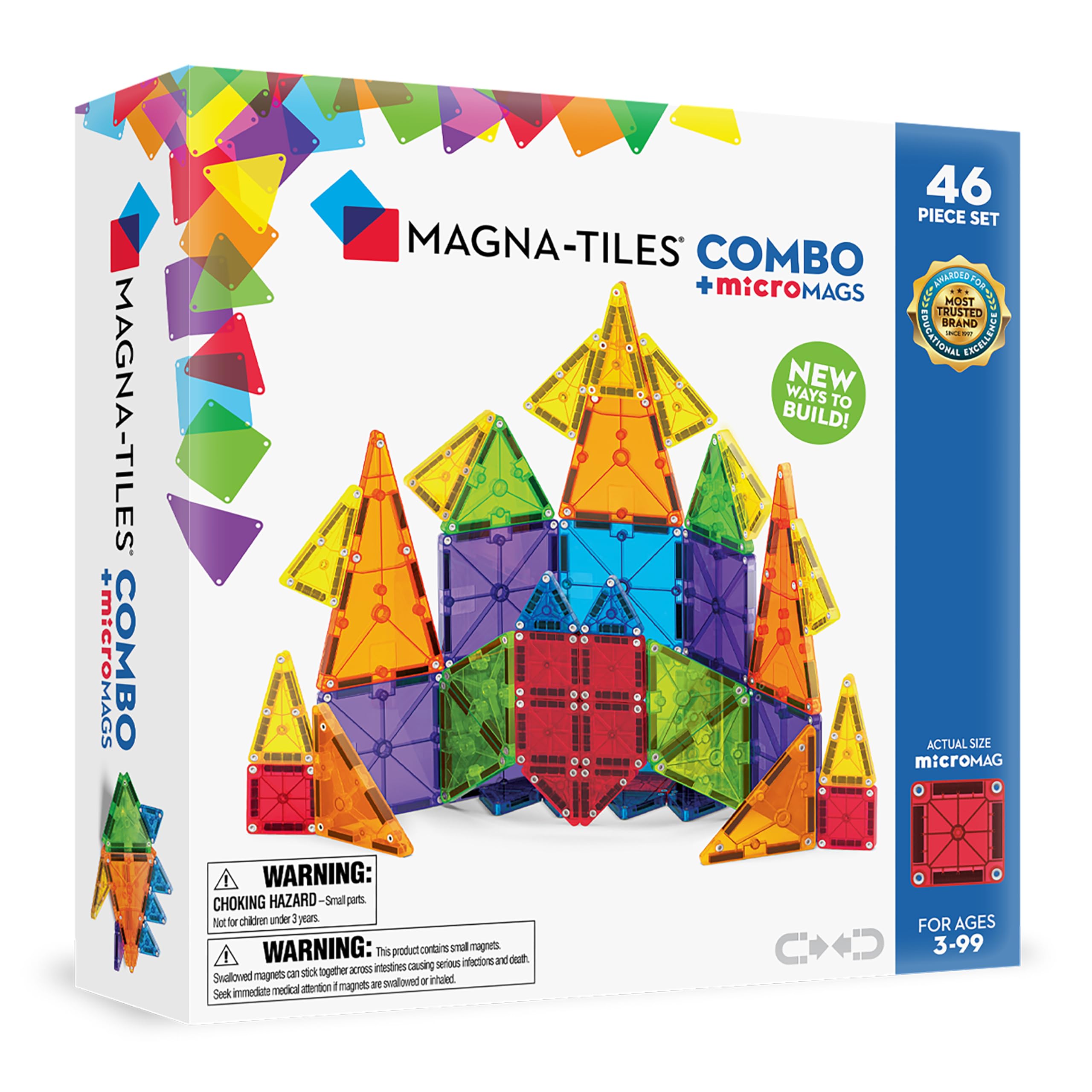
This set includes four microMAGS right triangles and six microMAGS equilateral triangles that are 75% smaller than standard MAGNA-TILES, which opens up intricate building possibilities you simply can’t achieve with full-size tiles alone. The food-grade MABS plastic resists the cracking and chipping that cheaper magnetic tiles suffer from after repeated drops. The signature lattice structure distributes stress across the tile, so even the microMAGS pieces maintain their structural integrity under the weight of larger builds.
At 46 pieces with a balanced ratio of squares, isosceles triangles, and equilateral triangles, this combo set hits the sweet spot for spatial reasoning development. Kids learn that a diamond shape is just two triangles joined at the base, and a cube requires six squares—concepts they absorb through muscle memory, not a textbook. The magnets are strong enough to hold a multi-story tower but require just enough pull force that small hands don’t get frustrated separating pieces.
Parents report that this set travels well, with the pieces packing flat into a bag, and that the colors remain vibrant even after months of play. The lack of a themed build instruction is actually a strength here—every session is child-led, which keeps the toy fresh years after purchase. If you’re buying only one magnetic tile set, this should be it.
Why it’s great
- Food-grade MABS plastic is BPA-free, phthalate-free, and latex-free for total safety.
- The microMAGS tiles enable detailed builds that standard tiles can’t replicate.
Good to know
- Premium materials mean a higher price per piece compared to generic magnetic tile brands.
2. LEGO Classic Medium Creative Brick Box 10696

With 484 pieces spread across 35 colors, this is the definitive starter brick box for any household. The assortment includes specialty elements like 18 tires and wheel rims, windows, and eyes, which immediately unlock vehicle builds and character creation without needing a themed set. The green baseplate at 6 inches wide provides a stable foundation for early builders to anchor their creations, and the included storage box keeps the chaos contained between play sessions.
Unlike themed LEGO sets that funnel a child toward a single model, this brick box forces creative problem-solving. If a 4-year-old wants to build a tiger but doesn’t have a tiger-specific piece, they learn to substitute a yellow 2×4 brick for the body and a pair of eyes for the face. That flexibility is the entire point of open-ended play. The color variety also introduces basic pattern recognition—sorting bricks by hue becomes a game in itself.
Experienced LEGO builders will appreciate that the Classic line uses the same high-impact ABS plastic as the themed sets, so the clutch power is identical. The 484-piece count is ideal because it’s large enough to build multiple small models simultaneously but not so overwhelming that cleanup becomes a chore for a young child. This set earns its reputation as the gateway to lifelong building habits.
Why it’s great
- 35 different colors provide unmatched variety for creative builds without a specific theme.
- Includes a storage box, wheels, windows, and eyes for immediate vehicle and character play.
Good to know
- No themed instructions or licensed characters; purely brick-based creativity.
3. iPlay, iLearn Rocket Outer Space Playset

This take-apart rocket stands out because the assembly tool is an actual battery-powered electric drill that spins with a motor sound, not a plastic screwdriver that requires adult-level hand strength. The rocket breaks down into four main stages—command module, instrument cabin, turbine engine, and tail engine—each with authentic visual detailing. The turbine engine features spinnable rotor blades, and the command module triggers simulated cockpit sounds and lights when the screws are fully seated.
The drill’s clutch mechanism is tuned so a 3-year-old can depress the trigger and drive the screws, but the friction is high enough that the screws don’t strip under repeated use. This builds hand-eye coordination and sequencing skills because kids must align the holes before drilling. The play value extends beyond assembly: once built, the rocket is a durable playset that stands 14.5 inches tall and accommodates the included two astronaut figures for role-playing missions.
Parents note that the auto-off feature on the sound effects prevents battery drain, and the plastic is smooth with no sharp edges. The set encourages revisiting the assembly process again and again—kids disassemble, rebuild, and reconfigure the stages in different orders, which reinforces the engineering cycle of build-test-iterate. For a child interested in space or tools, this delivers on both fronts.
Why it’s great
- Battery-powered electric drill provides realistic assembly feedback for fine motor development.
- Detachable stages with lights and sounds encourage repeated assembly and imaginative role-play.
Good to know
- Limited to four main build configurations without additional pieces for free-form creation.
4. Doctor Jupiter My First Science Kit

This kit packs over 50 experiments into a single box, and the standout feature is the ingredient list: you get dedicated food essences (mango and rose), jelly powder, corn starch, and a lemongrass aroma bag alongside the standard baking soda and vinegar. This variety means the experiments go beyond the typical volcano, including making dinosaur squishies, creating perfumes, and even crafting a face mask. The inclusion of actual lab tools like a beaker, test tube, and mini volcano adds a sense of authenticity for young scientists.
The instruction manual is fully illustrated in a step-by-step format that a 4-year-old can follow with minimal adult intervention. Each experiment is labeled with a difficulty level, so parents can pick the right challenge. The “walking water” experiment, which uses capillary action through paper towels, is a particular favorite for teaching absorption and color mixing. The kit meets ASTM F963-17 safety standards, so the food coloring and essences are non-toxic and safe for incidental contact.
Real-world feedback highlights that the kit provides over a month of daily screen-free activities if rotated properly. The materials are split into experiments that require prep and those that are grab-and-go, which is useful for varying energy levels. The foam and plastic tools are reusable, meaning after the consumables run out, you can source replacements from the kitchen and continue experimenting indefinitely.
Why it’s great
- Over 50 unique experiments including non-standard ones like making perfume and dinosaur squishies.
- Includes two food essences, jelly powder, and lemongrass aroma bag for sensory variety.
Good to know
- Some experiments require adult supervision and setup for younger children (age 4-5).
5. National Geographic Junior Chemistry Set

From the Toy of the Year Award-winning Blue Marble brand, this chemistry set focuses on using common household items like baking soda and vinegar to demonstrate core chemical reactions, which eliminates the barrier of specialized consumables. The 20+ included lab tools—test tubes, goggles, beakers, and a funnel—are made from thick, child-safe plastic that feels durable in hand. The oversized goggles are a nice touch, fitting comfortably over prescription glasses and making the user feel like a real scientist.
The 50 experiments are structured to introduce basic concepts like acids and bases, density, and color change through cause-and-effect demonstrations. Each experiment card is fully illustrated and written for a 4+ reading level, with icons that indicate preparation time and mess level. The set uses three primary food colors (red, yellow, blue) to teach color mixing theory, and the included pipettes and measuring cups reinforce early math skills through volume measurement and counting drops.
Parents appreciate that the non-consumable tools—test tube rack, pipettes, and mixing tray—are dishwasher-safe and can be reused for years. The set’s focus on “real” lab equipment rather than toy-like pieces means kids treat the experiments with more seriousness and care. If you’re looking for a dedicated chemistry starter that grows with the child, this set’s durable toolset and well-sequenced experiments make it a superior long-term investment.
Why it’s great
- Durable, reusable lab tools include test tubes, goggles, and beakers made from thick safety plastic.
- Experiments use common household items, reducing ongoing cost for replenishment.
Good to know
- Some experiments require household items not included in the box, such as vinegar and baking soda.
6. Qirptey STEM Building Toys 125 Pcs

Unlike traditional brick sets that only stack vertically, this 125-piece kit includes gear mechanisms that introduce cause-and-effect through rotational motion. The pieces snap together with a firm click that provides satisfying tactile feedback, and the included idea booklet shows how to build moving models like a race car with spinning wheels or a dinosaur with a rotating tail. The gears are color-coded to their size, which helps younger builders identify which gear meshes with which.
The rounded-edge design on every block eliminates sharp corners, making this set safe for the 3+ age range. The plastic is non-toxic and odorless, and the pieces fit together with consistent tension—not so tight that a 4-year-old can’t separate them, but tight enough that a finished model doesn’t collapse when bumped. The included storage box has a snap-lock lid that keeps the 125 pieces organized, which is a standout feature for parents who value easy cleanup.
The open-ended nature of the set means a single child can build 2-3 small vehicles at once, or a group of children can collaborate on a larger structure. The combination of static bricks and moving gears teaches the basic physics of motion transfer—when you turn one gear, connected gears spin in the opposite direction. This mechanical reasoning is exactly the kind of thinking that prepares kids for more advanced engineering concepts later on.
Why it’s great
- Gear mechanisms introduce rotational movement and cause-and-effect learning to building play.
- Rounded-edge, non-toxic blocks are safe for younger builders ages 3 and up.
Good to know
- Small pieces may require supervision for children under 3 to prevent choking hazard.
7. COOLDUCK Solar System Planets Toys

This set combines tactile sensory play with astronomy education through a collection of 10 planet foam balls, 6 space-themed bouncing balls, 2 astronaut figures, and 17 educational flashcards. The foam planets are non-toxic and lightweight, making them safe for throwing, squishing, and stacking without causing injury or damage. The included mesh storage bag keeps the set together and makes it portable for travel or outdoor play.
The 17 flashcards are where the educational value really shines—each card features a planet or celestial body with a fun fact and a visual aid that reinforces the size and color differences. Kids learn that Saturn’s rings are made of ice and rock, and that Jupiter is the largest planet—all through play. Pediatric occupational therapists have specifically recommended this set for children with autism because the soft balls provide deep pressure input when squeezed, while the astronaut figures encourage pretend play scenarios that build social skills.
The bouncing balls add a second play modality: kids can bounce them for gross motor activity and then transition to the flashcards for quiet learning. The durability of the foam balls is impressive—they hold their shape after repeated squeezing and don’t peel or flake. This is a rare kit that successfully bridges sensory regulation, fine motor development, and academic content in a single, mess-free package.
Why it’s great
- Non-toxic foam planets provide safe sensory input through squeezing, stacking, and throwing.
- 17 illustrated flashcards turn unstructured play into structured astronomy lessons.
Good to know
- Foam balls are soft and durable but may not withstand aggressive chewing by toddlers.
FAQ
What piece count is best for a 4-year-old building toy?
Are magnetic tiles safe for toddlers under 3?
How do I store a 50+ experiment science kit without losing components?
Final Thoughts: The Verdict
For most users, the best 10 toys winner is the MAGNA-TILES Combo 46-Piece Set because its microMAGS tiles and food-grade MABS plastic deliver unmatched build variety and durability for open-ended play. If you want a classic brick experience with maximum color variety, grab the LEGO Classic Medium Creative Brick Box. And for a child who loves space and tools, nothing beats the interactive assembly experience of the iPlay, iLearn Rocket Outer Space Playset.