
Our readers keep the lights on and my morning glass full of iced black tea. As an Amazon Associate, I earn from qualifying purchases.
Specs are compiled from manufacturer listings and verified buyer reviews and can change over time — please confirm the key details on the product page before buying.
Buying cotton by the yard is where most sewing projects quietly fail — you cut in, and the fabric turns out thinner, stiffer, or more synthetic than the listing promised. The fix is simple: match the weight and width to the job first, then worry about the print. This guide does that matching for you, so you know which bolt suits quilting, which one suits bags, and which one is really a lightweight muslin.
I’m Min — the founder and writer behind Gadgets Feed. This guide is built by comparing the manufacturers’ published specifications and the patterns across verified customer reviews, so you get each pick’s real strengths and trade-offs instead of marketing spin.
Every pick here is verified all-cotton and sold as a continuous cut, not a fat-quarter bundle. Below you’ll find the weight, width, and yardage laid out plainly, so you can shop the 100% cotton fabric by the yard that fits your next project without a return.
Our Picks at a Glance


How To Choose The Best 100% Cotton Fabric By The Yard
The first decision is not color or pattern — it is weight. A cotton that’s heavy enough for a tote bag will drag a summer dress down, and a cotton thin enough for a flowing skirt will sag under a quilt backing. Read the ounces or GSM first, then match the width and the yardage to the pattern.
Match the weight to the job
Weight is listed two ways: ounces per square yard (oz) and GSM (grams per square meter). A light 4 oz cotton muslin is soft and drapey, so it suits quilt backing, linings, and doll clothing. A 9.5 oz or 10 oz canvas duck is firm and closely woven, so it holds shape for bags, aprons, table coverings, and floor protection. Double gauze sits light and airy for baby clothes and summer wear.
If the listing gives both, treat the oz figure as your anchor. A 10 oz canvas and a 9.5 oz canvas are close enough that the difference is a feel preference, not a performance gap.
Width and yardage — the hidden cost
Fabric comes in different bolt widths, most commonly 44 inches and 59 to 64 inches. A wider bolt means fewer running yards for a wide project like a quilt backing or a tablecloth. Always check whether the listing is a continuous cut or a precut piece — a “2 yard” listing often ships as a fixed 2-yard length, and buying two gets you two separate pieces, not one 4-yard run.
Quick Comparison
| Model | Best For | Weight | Width | Yardage | Amazon |
|---|---|---|---|---|---|
| Simple&Opulence 100% Cotton Canvas Fabric 10oz★ Best Overall | Bags, aprons, and heavy home décor | 10 oz / 280 GSM | 59 in | 2 yards | Amazon |
| LaSilk Double Gauze Cotton FabricSoftest Feel | Baby clothes and summer wear | — | 53 in | 1 yard | Amazon |
| Threadart Vintage Blue Flower Cotton Quilting FabricBest Print | Quilting and patchwork prints | 145 g/m² | 44 in | 1 yard | Amazon |
| Cotton Quilting Fabric by The Yard Width 64″ Red 2 Yard | Wide quilt backing and crafts | 4 oz | 64 in | 2 yards | Amazon |
| 2 Yard White Twill Cotton Canvas Fabric | Costumes, décor, and embroidery | 9.5 oz | 59 in | 2 yards | Amazon |
| 100% Cotton Muslin Fabric 63 Inch X 5 Yards | Bulk muslin for sewing and dyeing | — | 63 in | 5 yards | Amazon |
| 100% White Cotton Fabric 5 Yards 59 Inches Wide | Quilters wanting bulk white cotton | — | 59 in | 5 yards | Amazon |
| Roc-lon 100% Cotton Woven Ticking Fabric | Pillows, café curtains, and period décor | 245 GSM | 44/45 in | 3 yards precut | Amazon |
| 100% Natural Cotton 7 oz Canvas Fabric (Duck) | Big canvas runs for painting and crafts | 7 oz | 63 in | 3 yards | Amazon |
In‑Depth Reviews
1. Simple&Opulence 100% Cotton Canvas Fabric 10oz. 59 Inch by the Yard
Our pick — 4.5+★ from 500+ verified ratings; the strongest balance of quality and price.
The canvas that holds its shape through a tote bag, an apron, and a tablecloth without turning floppy.
Weight is the whole story here. This is a 10 oz (280 GSM) closely woven cotton canvas duck — a heavier, denser weave than everyday quilting cotton — measured 59 inches wide across a 2-yard piece. In real terms, that firmness means a bag you build stands up on the counter instead of sagging, and a floor drop cloth stays put rather than rucking up under a paint tray. Fifteen colorways run from White, Beige, and Khaki through Navy, Forest Green, and Dusty Blue, so matching a room palette is a realistic option.
Against the closest 2-yard canvas in this list, the 9.5 oz twill, this one carries slightly more weight per square yard — 10 oz versus 9.5 oz — which translates to a touch more body in structured pieces. Where it clearly differs is width convenience: the 59-inch bolt cuts wide pieces in fewer running yards than a 44-inch quilting bolt would.
What keeps this at the top of the list is consistency across buyer feedback. Buyers consistently land on the quality of the weave, and the feel of the 10 oz weight, and the pre-finished edges that keep the cut ends from fraying the moment you unfold it. It sews easily and is good value for a canvas this substantial. The catch: this is a cut piece per 2 yards, so ordering more than one does not give you a continuous run — plan for joins if your project needs a long single length. Wash cold under 30°C, skip bleach, and do not tumble dry.
heavy 10oz canvas
- 10 oz / 280 GSM weight — dense enough to hold shape in bags and curtains
- 59-inch width cuts wide panels with less running yardage
- 15 colors, so matching a room is realistic
- Pre-finished edges cut down fraying before you even start
bulky for drapes
- Sold in fixed 2-yard pieces — multiple orders are not one continuous length
- No tumble drying; low-heat iron only
upholstery and totes: your projects need a firm, structured canvas — totes, aprons, sofa covers, painted drop cloths.
light garment sewing: you need a flowing drape for apparel; that firmness is a feature for bags and a drag for skirts.
2. LaSilk Double Gauze Cotton Fabric by the Yard
Two loose layers of cotton gauze, and the one here that keeps getting softer instead of stiffer.
For summer skirts, baby clothes, and cheesecloth-style draping, you want a cotton that breathes and moves. This is a double gauze muslin — two thin gauze layers woven together — in a 53-inch width across a 1-yard length. The two-layer build is why it feels airy on the skin yet still has enough body to hold a soft ruffle, and the pre-washed finish means the biggest shrink happens before it reaches you. It cuts cleanly with plain scissors, which matters if you’re draping a photo backdrop or a boho table runner.
Buyers lead with the gauze texture, with softness right behind it. Cotton picking up softness wash after wash is exactly what double gauze is supposed to do, and this one delivers that. If you’re used to a stiff quilting cotton, the change in hand feel is immediate — this is fabric for bare skin, not for structured pieces.
breathable double gauze: the ultra-soft, layered gauze texture and the pre-washed state that takes the guesswork out of shrinking before you sew.
wrinkles easily: that option in this guide is a crisper single-layer quilting cotton — good for patchwork, not for next-to-skin wear. Two different jobs, two different cottons.
summer swaddles: the project touches skin — baby clothes, summer skirts, lightweight bedding, cloth napkins.
crisp tailored pieces: you need a firm edge for structured sewing; put down a canvas instead, and plan to hand wash only.
3. Threadart Vintage Blue Flower Cotton Quilting Fabric – By the Yard
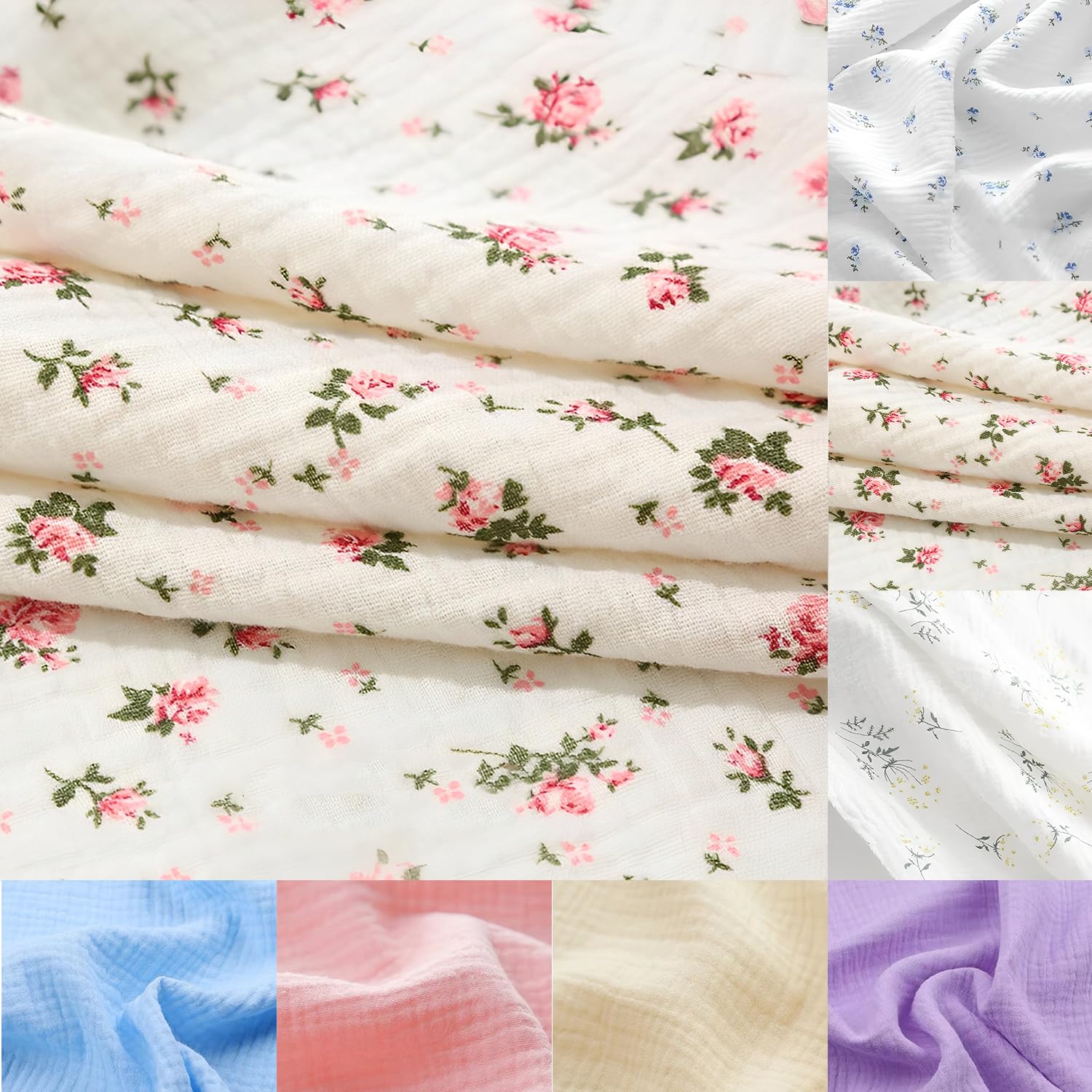
The print-first pick: a vintage blue floral on a 145 g/m² plain-weave cotton cut at 44 inches.
Some projects start with the fabric and some start with the pattern — this one is built for the second kind. It’s a 100% pure cotton plain weave at 145 grams per square meter, a medium-fine weight that presses flat and folds crisply for piecing. The yard is 36 inches long and 44 inches wide, the standard quilting- bolt width, so most quilt patterns are already drafted around it. Iron it, wash it, glue it, fold it — this is a cotton designed to take all of it without shifting.
This one runs 44 inches wide, against 59 inches on the 2-yard white twill canvas in this guide. That narrower width matters when you’re backing a large quilt in one pass and would rather not seam two panels together. On the other hand, a print like this is the reason quilts stop looking like a stack of solids.
It’s the print and the fabric quality that carry this pick — colors that hold through washing and coordinate with the wider Threadart range of thread and embellishments. For anyone assembling a patchwork with lots of different prints, that coordinated color family takes the guesswork out of matching. Just plan around the 44-inch bolt if your project runs wide, and expect to buy a yard per pattern piece rather than a bulk length.
patchwork quilts: patchwork, pillow panels, and hand embroidery where a focal print does the design work.
solid-color projects: wide quilt backings and tablecloths — the 44-inch bolt will force seams a 59-inch canvas would have avoided.
4. Cotton Quilting Fabric by The Yard for Sewing Width 64″ Red 2 Yard

At 64 inches, this is the widest cut in this guide — your best odds of backing a big quilt without a center seam.
Here’s the number that earns this its slot: 64 inches of width. Measured against the Threadart quilting print at 44 inches, that’s a noticeably wider bolt — which means a 72-inch length of this red cotton muslin backs more of a quilt in a single pass. It’s a 4 oz per square yard muslin, so it’s light and soft rather than firm, and it suits quilt backing, doll clothing, cushion covers, and machine embroidery where a smooth surface matters more than body.
Color is where this one wins people over. The red reads clean, with no gray or yellow undertone bleeding through, and there’s a subtle sheen on the right side that gives finished pieces a lift. Fabric quality is the most consistent note across its feedback, followed by the red shade itself.
The honest caveat: texture splits opinion. Some find it very soft, others describe it as scratchy, so if next-to-skin comfort is the whole point, order a single yard and feel it first. Also expect slight shrinkage after washing — machine wash cold and tumble dry low to keep it in check.
large backing panels: wide quilt backings, tablecloths, and embroidery projects that want a smooth, light muslin.
small scrap sewing: you want a plush, brushed-soft hand feel — this is a crisp muslin, and it arrives unprepared for that.
5. 2 Yard White Twill Cotton Canvas Fabric, 59 Inches Wide

A 9.5 oz twill that irons flat and cuts cleanly — the costume-and-décor workhorse of the group.
Twill is the weave here, and it’s the reason this canvas behaves differently from a plain-weave duck. The diagonal interlacing gives it a smooth face that takes an iron beautifully and holds a cut shape for costumes and decorations. At 9.5 oz it sits just under the 10 oz Simple&Opulence canvas — a difference you’d feel more than measure, and one that makes this slightly easier to manipulate into curved seams. The piece runs 72 inches long by 59 inches wide.
Where it falls short of the top pick is bulk and color range: two yards in a single color, versus a 15-color canvas. But for white base fabric that takes embroidery or gets painted over, that’s rarely the limiting factor. Its sturdiness is why it keeps showing up in craft and DIY projects that need to survive handling.
One honest wrinkle to know before you cut: the color read is mixed. Some buyers get a true white, others find it leans toward cream. If exact white matters — say, for a costume that must match a specific palette — order a swatch feel first. Machine wash cold and tumble dry low.
aprons and bags: embroidered wall pieces, costume shapes, home décor accents, and anything that needs a stiff, iron-friendly cotton.
big upholstery jobs: the shade has to be a precise white — the color varies between true white and cream.
6. 100% Cotton Muslin Fabric, 63 Inch X 5 Yards Unbleached

Five continuous yards of unbleached muslin — the one to buy when a project eats fabric fast.
When the yardage itself is the headline, this is your pick: 5 yards at 63 inches wide in a single cut. That’s a lot of running length to work with, and it’s why the value angle comes up so often in its feedback. It’s 100% cotton muslin in a natural unbleached state, which means it keeps the raw cotton character — including, on some pieces, fine cotton seed particles. That’s normal for unbleached fabric, not a flaw, and it dyes and prints well for crafters who plan to color it themselves.
Versatility is the big draw, with value right behind it — crafts, hand embroidery, curtains, bags, aprons, tablecloths, and cushion covers all come up as real uses. Bulk yardage like this makes test pieces and mockups painless, because you aren’t rationing every inch.
What to weigh honestly: thickness and softness both divide opinion. Some call the thickness great, others call it super thin; some find it softens beautifully after washing, others describe it as stiff and coarse out of the bag. Plan on pre-washing for softness and be ready for some wrinkling. Wash cool and dry naturally to keep it at its best.
dyeing and backing: you’re cutting lots of pieces — toiles, mockups, embroidery backing, dyeing experiments, and cheap table coverings.
structured garments: it’s a natural-finish muslin, so expect a few seed flecks and a stiff hand until the first wash.
7. 100% White Cotton Fabric 5 Yards 59 Inches Wide

Five yards of white combed cotton, cut for quilters who work in big backings and long runs.
Combed cotton is the detail that separates this from plain muslin — the fibers are combed before spinning, which is the usual route to a smoother, stronger yarn. Here it’s a medium-thickness 100% combed cotton, 59 inches wide across 5 yards, described as not easy to shrink and good on durability. For a quilter working through a large white project, the smooth surface means less lint and fewer stray fibers under the needle.
This one matches the 5 yards of the 63-inch unbleached muslin in this guide, but swaps the raw natural finish for a white, combed-cotton one. Need a blank white surface for patchwork, embroidery, or curtains? That’s a cleaner starting point. Plan to dye it yourself? The unbleached version may suit better.
A fair heads-up: the fiber content is where feedback splits. Some buyers report it behaves more like a synthetic blend than pure cotton. For most projects that won’t show — it quilts, sews, and drapes as expected — but if the all-cotton guarantee is the whole reason you’re buying, order one piece and confirm the hand feel before committing to a large set. Note that this listing is pre-cut, so two or more pieces are not continuous. Machine wash, or hand wash to keep the feel at its best.
everyday practice sewing: you need a big white cotton run for quilt backing or curtains and prefer combed cotton’s smoother hand.
printed designs: the listing’s synthetic-lean texture reports would bother you — sample one piece first.
8. Roc-lon 100% Cotton 44/45″ Wide Woven Ticking Fabric
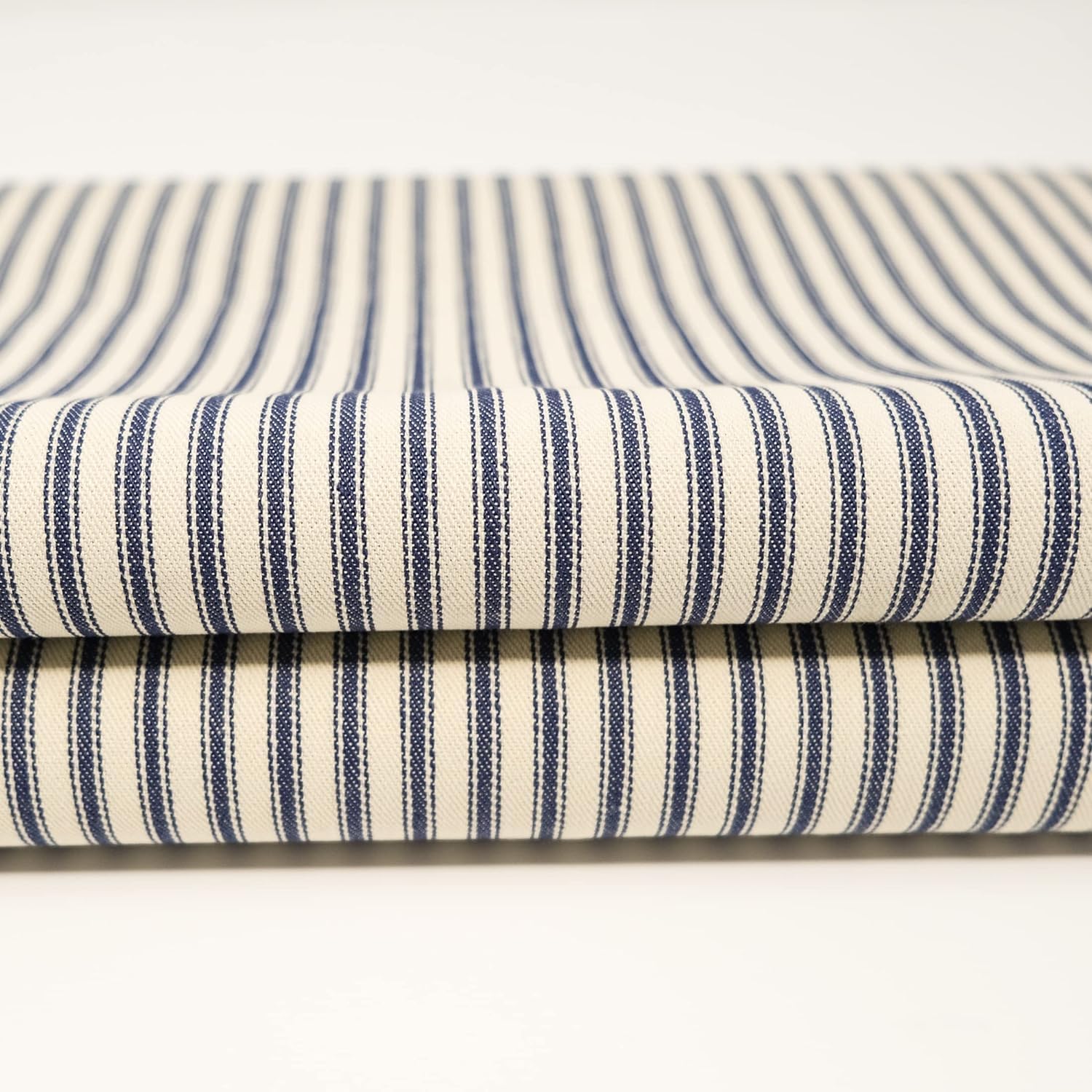
A 245 GSM ticking stripe with a crease-resistant finish — built for pillows and café curtains.
Ticking fabric gets its name from upholstery and bedding use, and this one carries the density for it. It’s a firm-hand 100% cotton at 245 GSM (grams per square meter — a measure of how heavy and dense the cloth is), 44/45 inches wide, arriving as a 3-yard precut. The CRF (crease-resistant finish — a treatment that helps the cloth resist wrinkling) is the practical detail: a pillow cover or curtain that gets handled stays smoother, which is why this pick keeps showing up for home décor pieces rather than garments.
The firm hand is exactly what a café curtain or a seat cover needs to sit straight and hold a pleat. Durability shows up in its feedback backed by real projects, including frequent laundering and use on seat covers and pet beds. The ticking stripe reads true to its listed shade in person.
The trade-off is stiffness. Ticking is meant to be firm, and some find the stiffness and thickness more than they expected for softer projects. That’s a fit question, not a defect — this is not a draping cotton. Shrinkage of 3-5% residual is listed, so account for that if you’re making fitted covers.
pillows and cushions: pillow covers, café curtains, period apparel, seat covers, and heavy-duty décor that needs to sit straight.
wide quilt backs: soft apparel or flowing pieces — 245 GSM ticking is deliberately firm.
9. 100% Natural Cotton 7 oz Canvas Fabric (Duck), 63 Inches Wide X 3 Yards

A 63-inch-wide duck canvas that gives painters and crafters room to work without seams.
Seven ounces of duck canvas, 63 inches wide across 3 yards — that’s a generous footprint for a canvas that’s lighter than a 10 oz duck and easier to work on a big surface. Duck is a plain-woven canvas with a dense structure, and at 7 oz it’s firm enough for painted projects and ironing-table pads but more forgiving to cut than the heaviest ducks. If you’re stretching a canvas or cutting a large protective cloth, the width saves you from piecing panels.
Owning a natural duck like this puts you in the home, business, and arts-and-craft slot without stepping up to the top canvas. Against the Simple&Opulence 10 oz, the weight difference is real — 7 oz here versus 10 oz there — so this one is more pliable and less likely to fight a fold on a big run. The natural cotton finish keeps it environmentally friendly and dye-ready.
Two honest caveats before you buy: it’s hand-wash only with mild soap and water, so it’s not a machine-wash-every-week fabric, and wrinkle resistance comes up as a friction point — plan to press it. One owner used it as an ironing table pad and it functioned as expected, which tells you the durable side holds up. Washing by hand and air-drying will keep the fibers honest.
heavy-duty bags: you need a wide, natural duck canvas for canvas painting, drop cloths, or a pressed-and-stretched project.
soft drapey tops: you want machine-wash simplicity — this duck asks for hand washing.
Understanding the Specs
Weight (oz and GSM)
Weight tells you how a cotton behaves. Ounces per square yard and GSM (grams per square meter) both measure density, so a 4 oz muslin is light and drapey while a 10 oz or 245 GSM fabric is firm and structured. Match the number to the job: light for apparel and backing, heavier for bags and décor. Heavier does not mean better — it means stiffer.
Width and Yardage
Width is the fixed dimension of the bolt, and it changes how much running length you buy. A 44-inch quilting bolt is standard for pieced work; 59 to 64-inch canvases cover wide projects in fewer yards. Always check whether the listing is continuous yardage or a fixed precut — some 2-yard and 3-yard listings are fixed pieces, so two orders are not one long run.
FAQ
What does GSM mean on a cotton fabric listing?
Why do two orders of the same fabric arrive as separate pieces?
Which cotton should I use for bag making?
Is double gauze safe for baby clothes?
How much should I allow for shrinkage?
Can I machine wash cotton canvas fabric?
What is the difference between duck canvas and muslin?
Is unbleached cotton the same as white cotton?
How wide are cotton fabrics sold by the yard?
What is a crease-resistant finish on ticking fabric?
Final Thoughts: The Verdict
For most projects, the 100% cotton fabric by the yard winner is the Simple&Opulence 10 oz Canvas. Its dense 280 GSM weave holds shape for bags, aprons, and décor, it comes 59 inches wide, and it ships in 15 colors. If your project touches skin, grab the LaSilk Double Gauze for its soft two-layer cotton. And for quilt backings that need width without a seam, reach for the 64-inch Cotton Quilting Fabric. The Simple&Opulence canvas holds 4.5+ stars across 500+ owners, a strong signal that the 10 oz pick is a safe one.
How We Picked
We do not accept paid placement. Every pick is matched to a real buyer and a real use-case; we do not hands-on test units.
Sources & Methodology
Specifications: manufacturer listings and product documentation. Review insights: verified customer reviews, as of November 2026. Pricing: not shown on this page (it changes often); check the current price via the retailer link.
As an Amazon Associate, Gadgets Feed earns from qualifying purchases. This does not affect which products we feature.