
Our readers keep the lights on and my morning glass full of iced black tea. As an Amazon Associate, I earn from qualifying purchases.
Specs are compiled from manufacturer listings and verified buyer reviews and can change over time — please confirm the key details on the product page before buying.
If you have a hundred dollars to spend on a gaming headset, you can walk away with something genuinely good — you just have to know which specs actually matter and which ones are decoration. The short answer: spend your money on driver size, mic clarity, and comfort materials, and you will hear the difference the moment you load into a match. This guide breaks down the seven wired and wireless headsets worth your attention right now.
I’m Min — the founder and writer behind Gadgets Feed. This guide is built by comparing the manufacturers’ published specifications and the patterns across verified customer reviews, so you get each pick’s real strengths and trade-offs instead of marketing spin.
Wired sets still dominate on latency and price, while wireless models have closed the gap on battery and connection stability. Here is the honest rundown of the best $100 headset options for gaming, calls, and everything between.
Our Picks at a Glance

How To Choose The Best $100 Headset
At this price point you are not buying compromise. You are buying a headset that nails two or three things extremely well and skips the flagship extras. Knowing which two or three things matter to you is the whole game.
Driver Size Sets The Ceiling
Bigger drivers move more air, so you get stronger bass and more precise directional cues (the ability to tell which side a sound comes from). That matters most in shooters, where hearing a footstep to your left is worth more than any equalizer preset. A 50mm driver (the speaker unit that turns the audio signal into sound) is the balance at this price; anything smaller will feel thinner in the low end.
Connection Type Changes Everything About Daily Use
A 3.5mm jack (the standard headphone plug) works with almost anything and adds zero lag, but ties you to a cable. USB headsets open up software features like surround sound but lock you to PC or PlayStation. A 2.4GHz wireless dongle gives you console-grade freedom with near-wired latency, and Bluetooth is best for phone calls and casual listening.
Comfort Is Not Optional
You will wear this for hours, sometimes with glasses on. Memory foam cushions and a lightweight frame are worth more than any RGB lighting. If you plan on marathon sessions, prioritize a headset with a lightweight build and a headband that spreads pressure evenly instead of pinching at the top.
Quick Comparison
| Model | Best For | Driver Size | Connection | Weight | Amazon |
|---|---|---|---|---|---|
| HyperX Cloud III★ Best Overall | All-around gaming | 53mm | USB-C, USB-A, 3.5mm | — | Amazon |
| Razer BlackShark V2 XBest Value Wired | Positional audio on a budget | 50mm | 3.5mm wired | 240g | Amazon |
| Turtle Beach Recon 70 | Budget console play | 40mm | 3.5mm wired | — | Amazon |
| FIFINE H13BP | Streamers and RGB fans | 50mm | USB-A wired | — | Amazon |
| Corsair HS80 RGB | High-fidelity PC audio | 50mm | USB wired | — | Amazon |
| Razer BlackShark V3 X HyperSpeed | Wireless marathon sessions | 50mm | 2.4GHz / Bluetooth 5.3 / USB | 270g | Amazon |
| HyperX Cloud Flight 2 | Long-haul wireless play | 50mm | 2.4GHz / Bluetooth 5.3 | — | Amazon |
In‑Depth Reviews
1. HyperX Cloud III – Wired Gaming Headset
Our pick — over 4.5★ from 700+ verified ratings; the strongest balance of quality and price.
The 53mm angled drivers are the largest in this roundup, and they make every other pick here sound a size too small
The headline number here is the 53mm angled driver — the largest speaker in this entire roundup. Those drivers, tuned by HyperX audio engineers, fire sound slightly toward your ear canal rather than straight across it, which adds a touch of spatial realism to the mix. The frame is built with aluminum, so it survives the kind of abuse that comes with a bad ranked session.
The 10mm mic is noise-cancelling with a built-in mesh filter and an LED indicator that glows when you are muted. You get three connection options in the box: USB-C, USB-A, and 3.5mm, so the same headset works whether you are on a desktop, console, or tablet. That kind of cross-compatibility is rare under the hundred-dollar line.
Comfort is where this headset earns its keep. The memory foam cushions keep pressure low for hours, and the detachable cable means you can unplug and walk away without dragging your desk with you. What wins people over most is the sound quality — crisp directional audio that makes FPS footsteps readable. Reliability runs a close second. The one honest catch: the detachable mic is a small part that can go missing, and replacements are not sold separately, so keep it somewhere safe when it is not attached.
What earns it first place
- 53mm angled drivers — the biggest in this comparison, beating the Turtle Beach Recon 70’s 40mm by a wide margin
- Triple connectivity: USB-C, USB-A, and 3.5mm all in the box
- Memory foam cushions and aluminum frame for genuine multi-hour comfort
- Noise-cancelling 10mm mic with built-in mesh filter and LED mute light
- 4.6 stars across 700+ ratings — the highest-rated pick on this list
Worth knowing before you buy
- The detachable mic can be lost, and HyperX does not sell standalone replacements
- Ears can get sore after very long sessions despite the comfortable cushions
- Wired only — no wireless option at this tier
Grab this if: you want the best-sounding, most comfortable wired headset here, with the flexibility to jump between PC, PS5, and Xbox without changing gear.
Think twice if: you need a wireless connection or you know you will misplace a detachable mic.
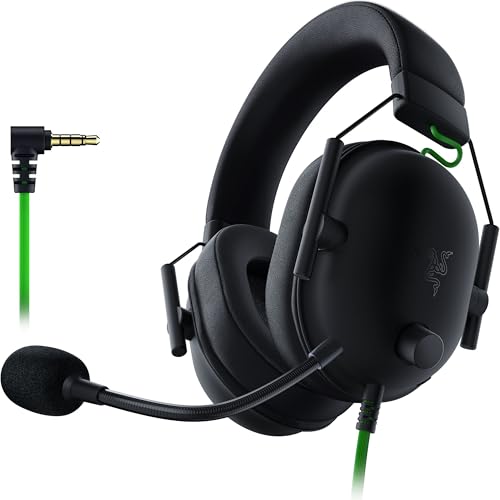
2. Razer BlackShark V2 X Gaming Headset
At 240g with titanium-coated 50mm TriForce drivers and 7.1 surround on PC, this is the value wired pick for players who notice every gram
The BlackShark V2 X is built around 50mm TriForce titanium drivers — a three-part design that tunes highs, mids, and lows separately, which produces brighter audio with richer highs and more powerful lows. It runs software-enabled 7.1 surround sound on Windows 10 64-bit, so if you are a PC player you can open up positional audio without paying for a premium upgrade. On PC, PS4, PS5, and Switch it connects through a standard 3.5mm jack.
Weighing 240g, this lands among the lightest in this group, and the breathable foam ear cushions keep things cool during long sessions. The HyperClear cardioid mic — shaped to pick up more of your voice and less of the room — handles voice chat cleanly. The closed earcups do provide passive noise isolation, blocking a fair amount of outside sound, though not all of it.
What holds up across the review pages is the raw audio quality and the sheer value for a wired budget headset — buyers regularly compare it favorably to more expensive options. The honest caveat is fit: some players with larger heads find the clamping force tight, and a small number report ear fatigue on very long sessions. If that describes you, loosen the headband and give it a week to settle. For everyone else, this is the best positional-audio value here.
Positional audio standout: The 7.1 surround sound and 50mm drivers make directional cues — footsteps, gunfire, footsteps behind you — genuinely readable, which is exactly the reason this headset exists.
Comfort caveat: The 240g build is light, but the clamp can feel tight for larger heads and the cushions can warm up during very long play.
Best for PC and console players who want strong directional audio on a strict budget and do not mind a cable.
Look elsewhere if you have a large head and hate even slight clamping pressure, or you need a wireless connection.
3. FIFINE H13BP Wired USB Gaming Headset
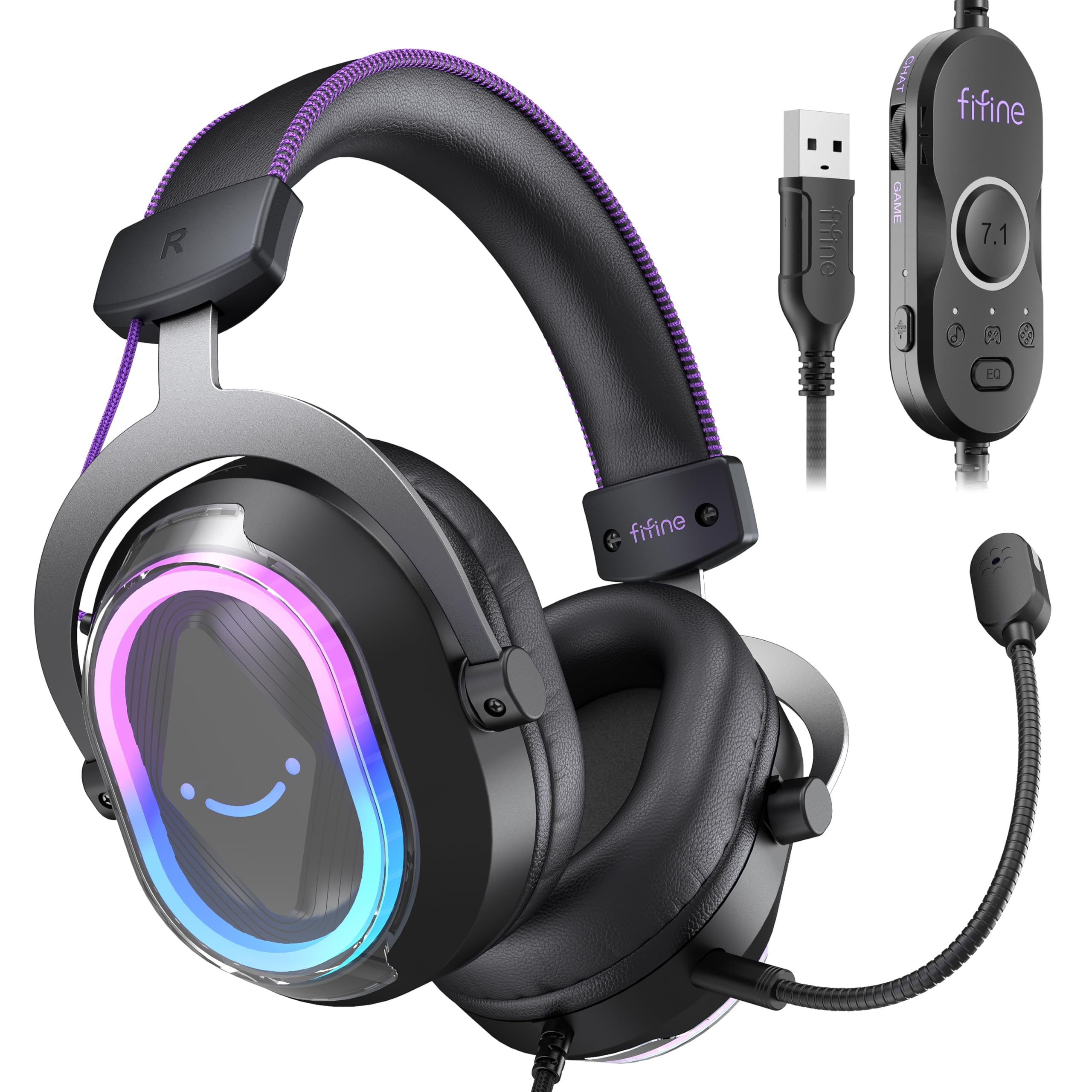
A rhombus-shell USB headset with 11 RGB lighting modes and transparent earcups, built to look good on camera before the match starts
The H13BP is the headset you buy when your setup is on camera. It pairs 50mm dynamic drivers with 7.1 surround sound, and the transparent earcups light up with RGB across 11 modes you can cycle with a single click. The clear audio reaches across high, mid, and low frequencies, so game audio and voice chat come through well. Build quality leans on a futuristic rhombus shell with protein skin ear pads and memory foam.
You plug in with USB-A only (the standard rectangular USB plug), and it works on PC, Mac, and PS5/PS4 without extra software. The 7.55ft braided cable gives you a real range of movement, so you can lean back or grab a drink without yanking the headset off. The in-line control box lets you toggle surround sound, adjust volume, switch EQ modes (sound presets), and balance game versus chat audio — plus a one-click mic mute with noise cancelling. A red glow tells you when the mic is muted.
The catch worth knowing: the fit runs loose for small and medium heads, and the closed-back design warms your ears up after long sessions. The sound quality is what carries this product’s reputation, with the RGB and controls behind it. If you are a PS5 controller player, note this headset uses USB-A and is not compatible with Xbox or PlayStation controllers — it is a plug-into-the-console unit, not a controller accessory.
Where it shines
- 11 RGB modes with transparent earcups — a genuine centerpiece for stream setups
- In-line USB control box handles surround, EQ, and game/chat balance in one place
- 50mm drivers with 7.1 surround sound for accurate positional audio
- 7.55ft braided cable — long enough to reach across a desk without an extension
Before you commit
- USB-A only — not compatible with Xbox or PlayStation controllers
- The fit runs loose for smaller heads and the closed-back design warms your ears
- No wireless option
Reach for this if: you stream and want a headset that looks as good on camera as it sounds in your ears.
skip it if: you game on Xbox, need a wireless connection, or have a small head that needs a snug fit.
4. Razer BlackShark V3 X HyperSpeed Wireless
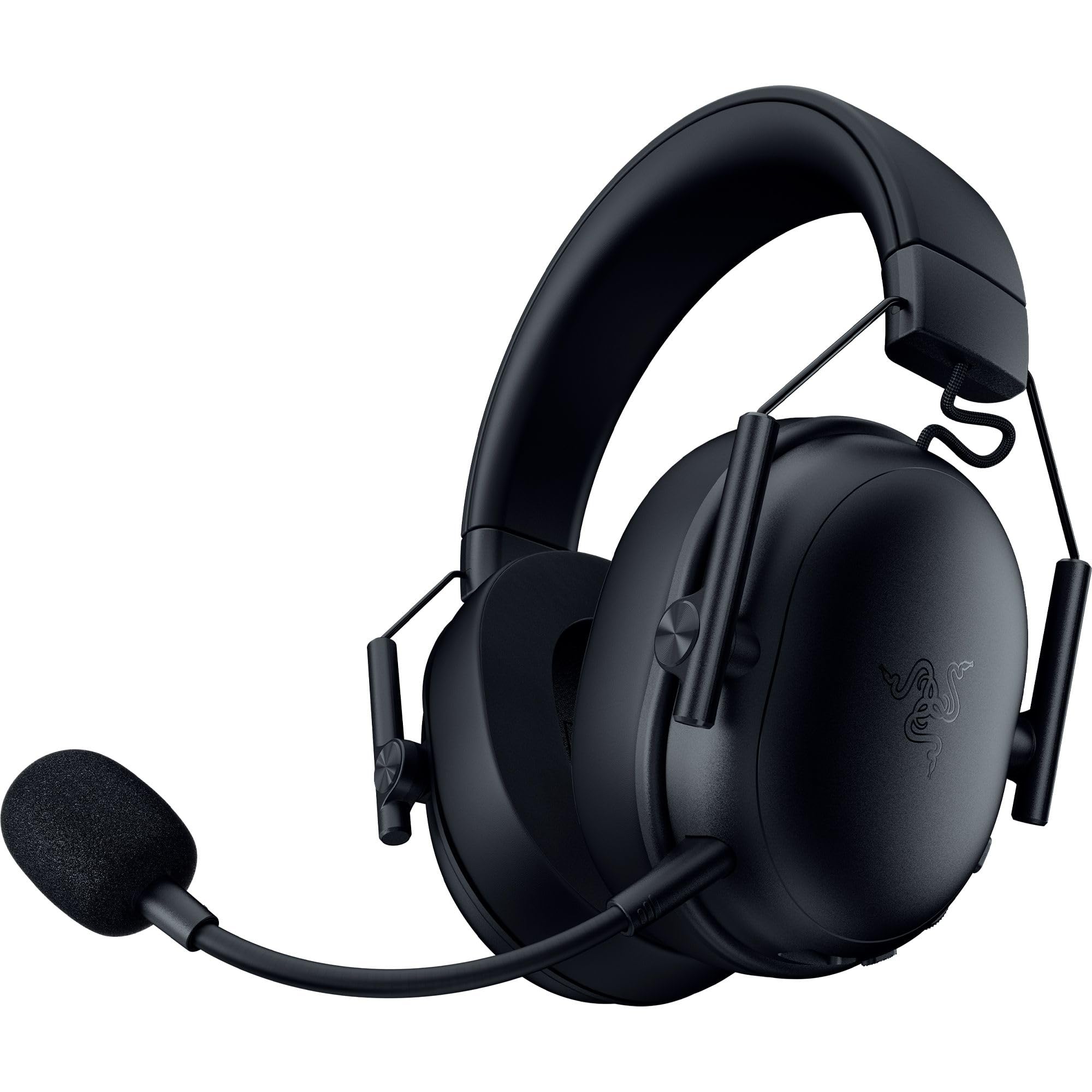
Seventy hours of battery and three connection modes — 2.4GHz dongle, Bluetooth 5.3, and USB — make this the cord-cutter’s pick
For players who want to ditch the cable without dropping below the hundred-dollar line, the V3 X HyperSpeed is the strongest wireless value here. It runs Gen-2 50mm TriForce drivers with a wider soundstage than before, plus 7.1 surround sound, and it weights 270g — light enough for long sessions. The detachable HyperClear cardioid 9.9mm mic uses a unidirectional pickup pattern to focus on your voice and cut room noise.
Wireless flexibility is where it pulls ahead of the wired picks. You get three ways to connect: a 2.4GHz HyperSpeed dongle for lag-free competitive play, Bluetooth 5.3 for phone and mobile use, and USB for a wired session. The same set works on PC, console, mobile, Steam Deck, and Mac. That is the most connectivity options in this entire roundup.
The 70-hour battery estimate is the number to remember — the second-longest advertised figure here, behind only the HyperX Cloud Flight 2’s 100-hour claim. On the sound side, a few players find the gaming EQ aggressively tuned and note there is no active noise cancellation, which matters if you play in a noisy room. The mic also runs quiet for some. Neither flaw stops this from being the best wireless value, but know what you are getting.
Why wireless buyers love it: Near-zero latency over 2.4GHz, a real 70-hour battery, and the ability to switch between dongle and Bluetooth without re-pairing.
Honest trade-off: Some find the gaming EQ too aggressive, the mic runs quiet for a handful of players, and there is no active noise cancellation for noisy environments.
Go with this if: you want wireless freedom, a 70-hour battery, and three ways to connect — dongle, Bluetooth, or USB — all in one headset.
Reconsider if: you need active noise cancellation for loud environments or you are a stickler for flat, neutral sound.
5. Corsair HS80 RGB USB Wired PC Gaming Headset

Dolby Audio 7.1 and a 20Hz–40,000Hz range — the widest here — make this the USB wired pick for PC players who want detail over drama
The HS80 is built for people who sit at a desk and want every whisper and every blast reproduced with detail. Its 50mm high-density neodymium drivers cover an unusually wide 20Hz–40,000Hz frequency range — the broadest in this comparison — and Dolby Audio 7.1 surround sound places you in the middle of the action. Over USB you also get 24-bit/96kHz high-fidelity playback, which is the sort of spec a headphone-first buyer will actually notice.
The floating headband design and breathable microfiber earcups with memory foam make it easy to wear for hours, and the adjustable strap keeps it from slipping. The omni-directional mic captures your voice clearly, with a flip-up mute function and a built-in LED indicator so you know when you are live. Plug-and-play with Cisco Jabber and similar tools makes this as much a work headset as a gaming one.
Two honest notes. The fit runs snug, and a portion of owners find it too tight — if you have a large head or wear glasses, try the headband adjustment carefully. A handful also report earpad wear over time. But the sound is the reliable part: a huge frequency range, a clean mic, and Dolby Audio 7.1 put this near the top for PC fidelity in this bracket. It is also loud — you will rarely push the volume past a low setting.
Why PC players pick it
- 20Hz–40,000Hz frequency range — the widest on this list
- Dolby Audio 7.1 and 24-bit/96kHz USB playback for high-fidelity detail
- Flip-up mic mute with LED indicator for quick on/off voice control
- Breathable microfiber earcups and floating headband for long work or play sessions
Fit and durability notes
- Snug fit — a portion of owners with larger heads find it too tight
- A few reports of earpad wear over months of use
- No inline volume control on the cable
Pick this for: PC and PS5 players who want wide-range, detailed sound and a clean mic for both gaming and calls.
Pass on it if: you have a large head or wear glasses and need a loose, roomy fit, or you want wireless.
6. HyperX Cloud Flight 2 Wireless Gaming Headset
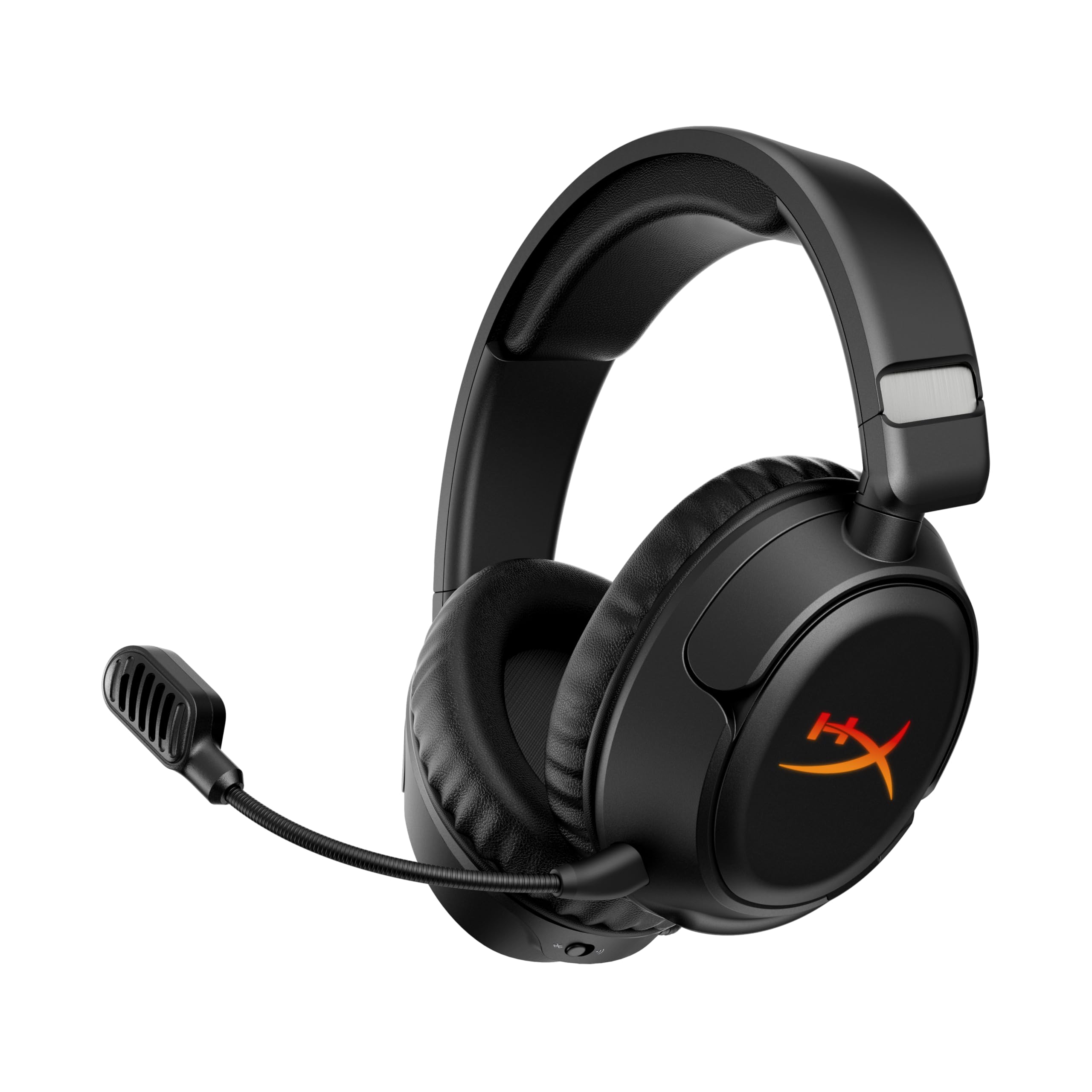
Up to 100 hours on 2.4GHz with lighting off and removable magnetic RGB earcup plates make this the longest-lasting wireless pick here
The Cloud Flight 2 is the wireless headset you can forget to charge. HyperX rates it for up to 100 hours on 2.4GHz or 150 hours over Bluetooth with lighting off, and up to 23 hours with full RGB glow. Play 4 hours a day and you are looking at roughly 25 days between charges. A quick lighting toggle on the earcup conserves battery when you need it.
Angled 50mm drivers tuned by HyperX push sound straight at your ears, so footsteps and gunfire land where they should. The removable magnetic earcup plates let you swap out the look without any tools — a small styling detail that also means you can refresh the headset instead of replacing it. The 10mm detachable boom mic (a mic on a bendable arm) handles pro comms, and an internal mic takes over for a cleaner look, with an LED signaling mute status. You get 2.4GHz wireless (a low-latency radio link), Bluetooth 5.3, and Instant Pair with select OMEN laptops for a dongle-free connection.
Build quality is what holds up best across the review pages, with 90° rotating earcups, steel sliders, and soft memory foam pads that make multi-hour sessions bearable. The genuine catch is the auto-off setting: it shuts the headset down after inactivity on a fixed timer that cannot be disabled, and that timing has cut meetings short for some users. The earcups also run small and firm for a subset of listeners, marked by some discomfort past an hour. If you take long voice calls, be aware of the inactivity shutoff.
The endurance story: Up to 100 hours on 2.4GHz or 150 on Bluetooth with lighting off is the longest advertised battery here, matched only by the V3 X HyperSpeed’s 70-hour figure at a lower rating.
Know before you buy: The auto-off timer cannot be disabled and can interrupt long voice calls; a portion of buyers also find the earcups small and firm for extended wear.
Suits you if: you want the longest battery life in this bracket and love being able to swap earcup plates to match your setup.
Think again if: you take long work calls and cannot have an inactivity shutdown cutting you off, or you need roomy earcups.
7. Turtle Beach Recon 70 Wired Multiplatform Gaming Headset
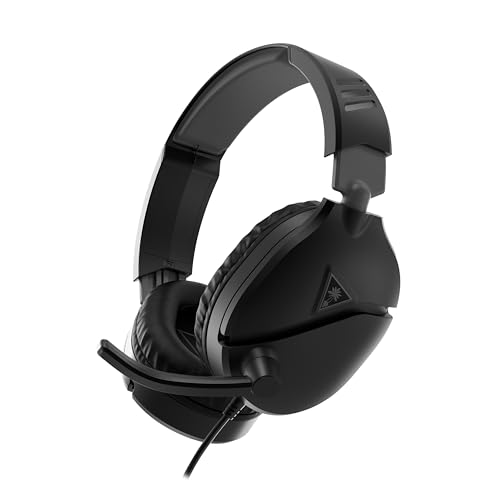
A 40mm wired console headset light enough to wear for hours, with a flip-to-mute mic and on-ear volume control
The Recon 70 is the budget wired pick here, and it works hard for the money. Its 40mm speakers are the smallest in this comparison — well below the 50mm and 53mm drivers elsewhere — but Turtle Beach’s tuning extracts clear audio for games and movies anyway. The flip-to-mute mic swings up and out of the way, and on-ear volume control keeps things simple. Compatible with spatial audio technologies across platforms, it plays on PS5, PC, Xbox, and more.
Comfort is a genuine strength here. The noise-isolating ear cushions fit snugly around your ears without squishing them, and the lightweight adjustable headband stays comfortable for hours — even with glasses on, per buyers who wear them. The whole set is light plastic, which you will feel the moment you pick it up, but that same lightness is why it never causes ear or head pain over long sessions. The camo finish holds up well in person too.
Durability is where the story splits. Some owners have run this daily on PS5 for over three years without issue, while a few report it breaking after short use — the classic budget-headset variable. If you treat it gently and this is your casual-gaming set, it is the best budget console value in this roundup. If you want a build that shrugs off abuse, step up to the HyperX Cloud III’s aluminum frame instead.
What the budget buys
- Flip-to-mute mic and on-ear volume control — the simplest controls here
- Lightweight build with noise-isolating cushions that stay comfortable for hours
- Multiplatform: PS5, PC, Xbox, and mobile via a single cable
- Compatible with spatial audio technologies
Where it falls short
- 40mm speakers — the smallest drivers on this list, so bass is lighter than the 50mm picks
- Light plastic build feels less premium in hand
- A few reports of breakage after short use, though many owners get years out of it
This is your set if: you want a light, comfortable, plug-and-play headset for console gaming on a tight budget.
Spend more if: you need bigger drivers for deeper bass or a sturdier build that survives daily abuse.
Understanding the Specs
Driver Size (Millimeters)
Drivers are the speakers inside each earcup, measured across in millimeters. A bigger driver moves more air, which usually means stronger bass and clearer directional cues — the split-second feedback that tells you a footstep came from the left. The picks here range from 40mm up to 53mm, and the difference in low end is audible on the same track. You do not need the biggest number to enjoy a headset, but if positional audio in shooters is your priority, aim for 50mm or above.
Impedance and Sensitivity
These two specs decide how loud your headset gets on a given device. Sensitivity measures how efficiently the drivers convert power into sound, and impedance measures how much electrical resistance they present. Low-impedance sets work fine plugged straight into a controller, while higher-impedance sets may benefit from a dedicated amp. A wired headset that is very loud at low volume is a sign of high sensitivity — great for controller use, but it can also pick up background hiss on some ports.
Wired vs Wireless Latency
Latency is the delay between the game emitting a sound and you hearing it in the headset. A 3.5mm wired connection adds effectively none, which is why competitive players still favor cables. A 2.4GHz wireless dongle sits close behind and is generally considered low-latency enough for competitive play. Bluetooth adds noticeably more delay, so it is best reserved for music, calls, and casual listening rather than twitchy multiplayer. If you play shooters at a high level, wired or 2.4GHz is the safer bet.
Microphone Pattern and Mute
The mic’s pickup pattern determines what it hears and what it ignores. A cardioid mic (shaped to favor sound directly in front of it) captures more of your voice and less of the room, while an omni-directional mic picks up sound from all sides and can catch more background noise. A flip-up or detachable mic is convenient for muting without diving into settings — just check whether the mute is reflected with an indicator light so you never broadcast a private moment by accident.
FAQ
Is a wired or wireless headset better under $100?
Will a 3.5mm headset work with a PS5 controller?
How many hours of battery do wireless gaming headsets actually get?
Do I need surround sound for competitive gaming?
Can I use a gaming headset for work calls and meetings?
What is the difference between 40mm and 50mm drivers?
Are detachable microphones a problem?
Can I use a PC gaming headset on a phone or Steam Deck?
How long should a budget gaming headset last?
Does RGB lighting drain wireless battery?
Final Thoughts: The Verdict
If you want the safest pick for a $100 headset, the HyperX Cloud III is the strongest choice — it holds the highest rating here at 4.6 stars across 700+ ratings, and its 53mm drivers are the biggest in the group. If wireless freedom matters more than raw driver size, the Razer BlackShark V3 X HyperSpeed is the best wireless value with 70 hours of battery and three connection modes. And for a light, comfortable console set on a tight budget, the Turtle Beach Recon 70 is the one to reach for. The wired Razer BlackShark V2 X remains the positional-audio bargain if you play on PC and want to save some of that budget for games.
How We Picked
We do not accept paid placement. Every pick is matched to a real buyer and a real use-case; we do not hands-on test units.
Sources & Methodology
Specifications: manufacturer listings and product documentation. Review insights: verified customer reviews, as of September 2026. Pricing: not shown on this page (it changes often); check the current price via the retailer link.
As an Amazon Associate, Gadgets Feed earns from qualifying purchases. This does not affect which products we feature.