
Our readers keep the lights on and my morning glass full of iced black tea. As an Amazon Associate, I earn from qualifying purchases.
Specs are compiled from manufacturer listings and verified buyer reviews and can change over time — please confirm the key details on the product page before buying.
The 100-watt class is the magic zone. Loud enough to hang with a drummer in a live room, quiet enough for a home setup when the wattage is scaled back. But in 2025, power alone is table stakes — the real differentiator is how smart, flexible, and playable the amp feels at any volume. This list focuses on combos and heads that genuinely sit in the 80-to-120-watt range, skipping the pure practice models and the back-breaking full stacks, so you land on a rig that moves air without needing a roadie.
I’m Min — the founder and writer behind Gadgets Feed. This guide is built by comparing the manufacturers’ published specifications and the patterns across verified customer reviews, so you get each pick’s real strengths and trade-offs instead of marketing spin.
The top choices for a 100 watt guitar amp today blend classic tube feel with modern digital convenience, giving you a backline of tones without the weight or cost of a vintage collection.
Our Picks at a Glance
How To Choose The Best 100 Watt Guitar Amp
The right 100-watt amp for you depends on where you play, how you get your tone, and how much weight you want to carry. Think of it as matching three variables: the sounds you need (built-in effects vs. pedalboard), the venues you play (bedroom to bar to stage), and how loud your band gets.
Modeling vs. Analog/Solid-State
Modeling amps use digital processing to replicate dozens of classic heads, cabs, and effects in one box. They are incredibly versatile — one amp in the – range can cover everything from a pristine Fender clean to a high-gain metal crunch. The trade-off is that the sheer number of knobs and app menus can be overwhelming if you just want to plug in and play. Pure analog solid-state amps like the Peavey Bandit have a simpler signal path, usually one or two voices, and a proven reliability that working musicians trust.
Speaker and Cabinet Construction
A 12-inch speaker is the standard for this power class because it moves enough air to fill a room without being muddy. The specific speaker model matters: a Celestion G12FSD-100 (found in the Fender Mustang GTX100) is voiced for high-power handling and a tight low-end, while a BOSS Waza speaker is designed to feel more dynamic and responsive like a vintage British cab. Pay attention to whether the cabinet is plywood or particle board — plywood is heavier but resonates better at stage volume.
Connectivity and Performance Features
The best amps for the modern player offer USB-C or USB-B recording output, a balanced XLR line out with cab simulation, a headphone jack for silent practice, and Bluetooth for streaming backing tracks. A built-in effects loop is critical if you plan to use time-based pedals (delay, reverb) in front of the amp’s preamp section. If you gig regularly, a footswitch that controls channel switching and the built-in looper is a huge live-performance advantage.
Quick Comparison
| Model | Best For | Type | Speaker | Weight | Amazon |
|---|---|---|---|---|---|
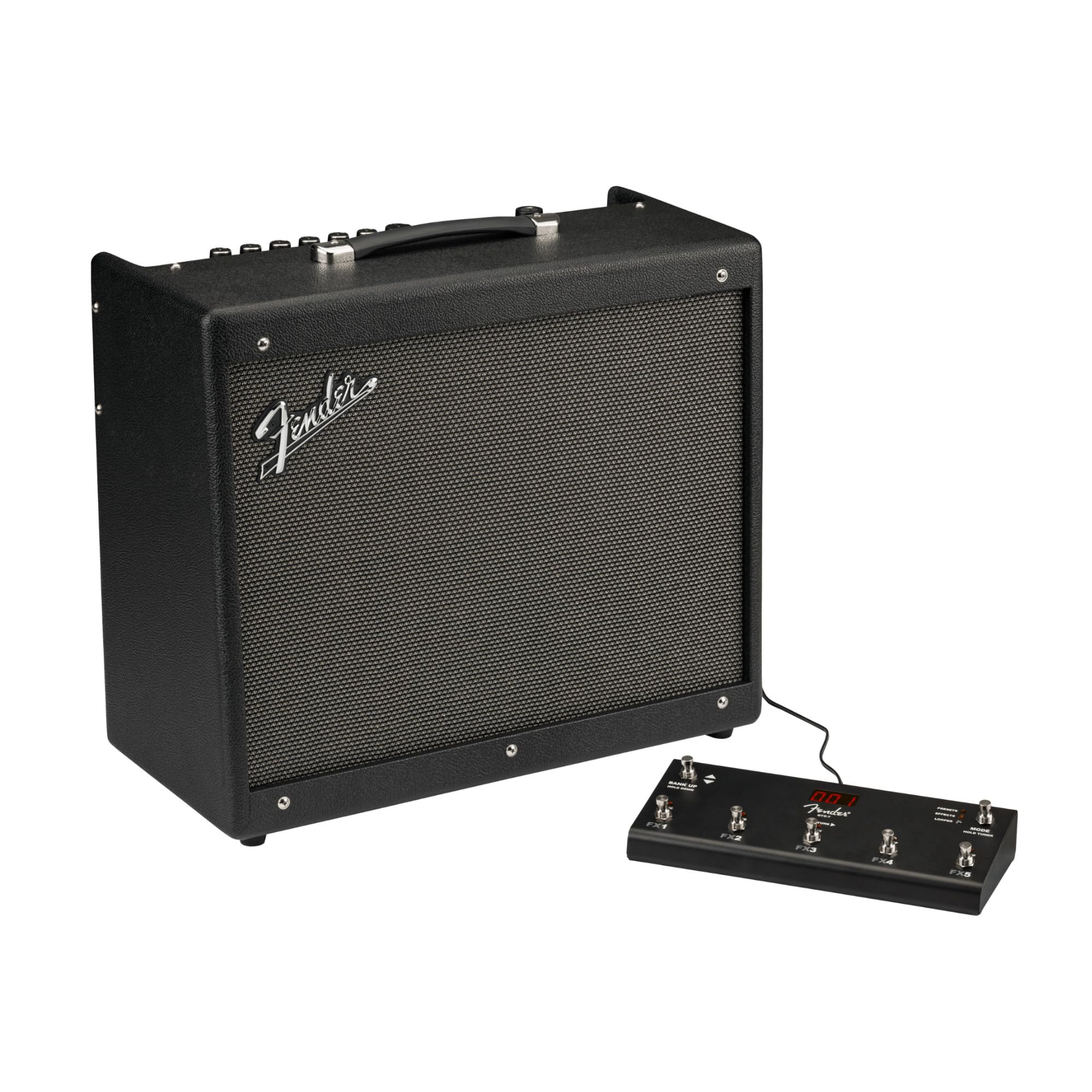
| Fender Mustang GTX100★ Best Overall | Versatile all-in-one performer | Digital Modeling | 12″ Celestion G12FSD-100 | 28.5 lbs | Amazon |
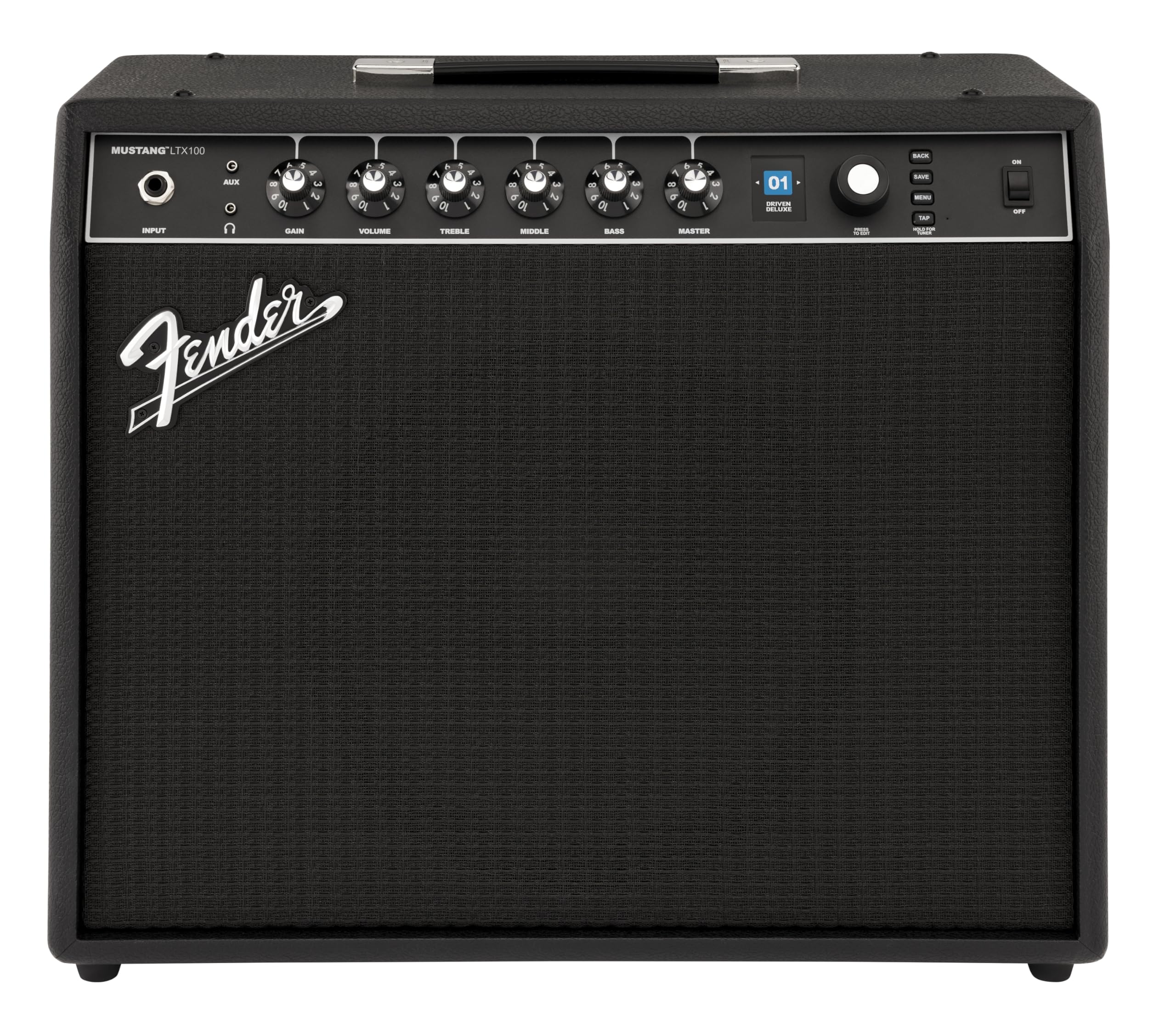
| Fender Mustang LTX100Streamlined Value | Straightforward Fender tones | Digital Modeling | 12″ Celestion G12FSD-100 | 28.1 lbs | Amazon |
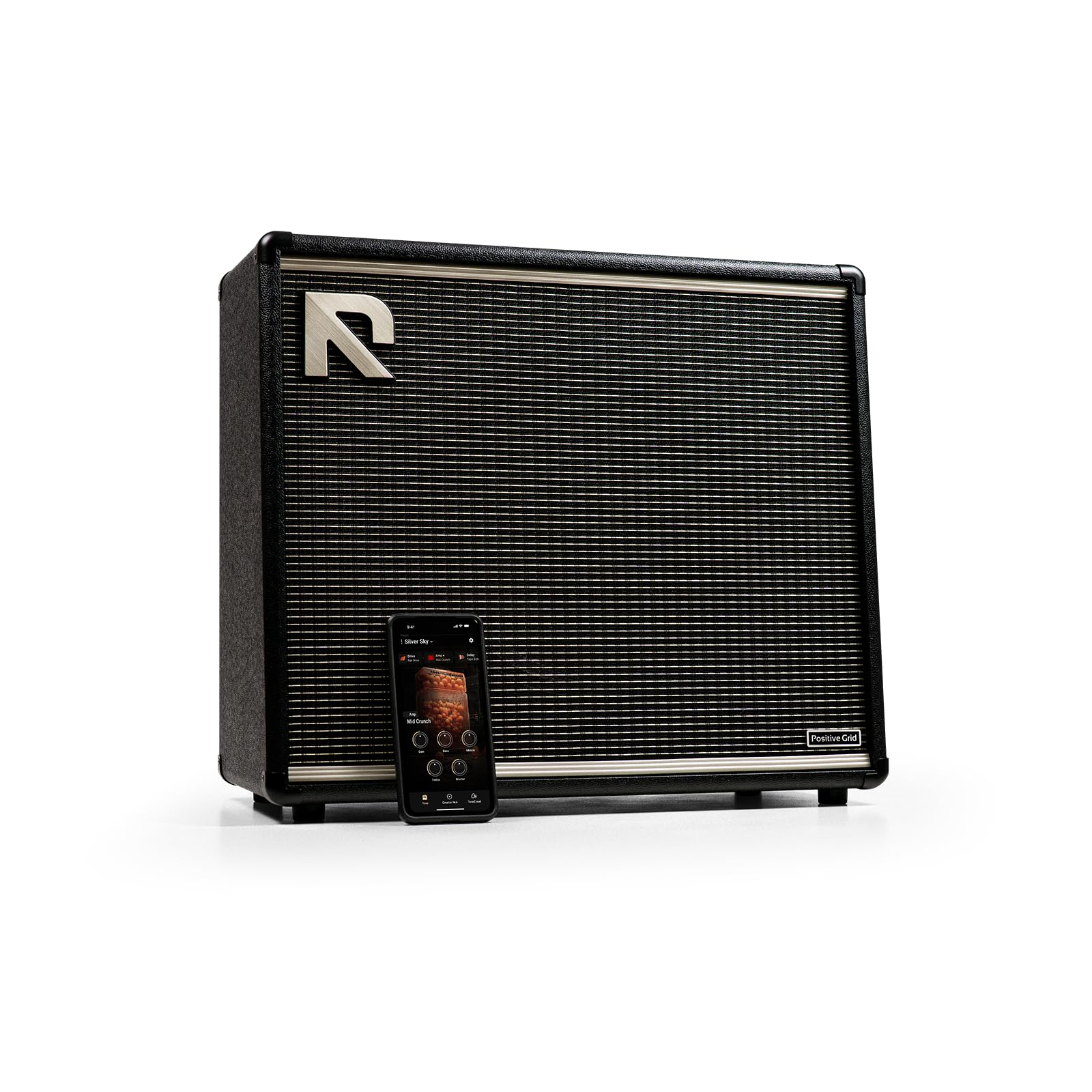
| Positive Grid Reactor 100AI Tone Craft | AI-driven tone creation | Digital Modeling | Custom 12″ | 30.6 lbs | Amazon |
| BOSS Katana-100 Gen 3 | Pro gigging reliability | Digital Modeling | Custom 12″ | 32.6 lbs | Amazon |
| Fender Champion II 100 | Dual 12″ stereo spread | Solid State | Dual 12″ Fender Special Design | 44.8 lbs | Amazon |
| Fender Acoustic Junior 100 | Acoustic guitar and vocals | Solid State | 12″ | — | Amazon |
| Peavey Bandit 112 | No-nonsense gigging workhorse | TransTube Analog | 12″ Blue Marvel | 21.8 lbs | Amazon |
| Orange Super Crush 100 Head | Pure analog amp head power | Solid State | Head (requires cab) | 32.1 lbs | Amazon |
| BOSS Katana Artist Gen 3 | Premium flagship tone | Digital Modeling | 12″ Waza Speaker | 41.8 lbs | Amazon |
| Vox VT100X | Hybrid tube-modeling feel | Hybrid (Valvetronix) | 12″ | 47.7 lbs | Amazon |
In‑Depth Reviews
1. Fender Mustang GTX100
Our pick — over 4.5★ from 300+ verified ratings; the strongest balance of quality and price.
The all-in-one powerhouse that rewards deep exploration without punishing simplicity.
This amp is the crowd favorite at just over 4.6 stars across 300+ owners for a reason. The 12-inch Celestion G12FSD-100 speaker handles the full 100-watt load with punchy low-end and clear highs, while the Fender Tone app lets you edit signal chains, browse community presets, and stream backing tracks via Bluetooth. You get 200 onboard presets covering everything from a Blues Jr shimmer to a Silver Jubilee roar, all displayed on a crisp full-color screen that makes tweaking on the fly intuitive.
The included 7-button footswitch with a 60-second looper turns the GTX100 into a true live-performance rig — tap tempo, looper control, and preset scrolling without touching the amp. At 28.5 pounds, it is surprisingly manageable compared to other 1×12 combos. The catch, as buyers report, is that the factory presets sometimes lean bass-heavy and you only get about 10 empty slots for your own creations unless you overwrite them. That minor friction aside, the sound quality and performance are what win people over — owners consistently call it incredible value for money.
Why It Wins
- 200 presets and ~40 amp/cab models cover every genre from blues to modern metal
- Bluetooth and Wi-Fi for wireless audio streaming and over-the-air updates
- Sturdy 7-button footswitch and looper included in the box
- Lightweight for its class at 28.5 lbs, easy to carry to rehearsals
Where to be Honest
- Limited empty preset slots — you’ll need to overwrite factory patches
- The Tone app is mobile-only; no direct PC connection for editing
Best for: The guitarist who wants one versatile amp for practice, recording, and small gigs without buying extra pedals or a separate footswitch.
Think twice if: You prefer a pure analog signal path — this is a digital modeling amp through and through, and you will need to navigate menus to dial your sound.
2. Fender Mustang LTX100
A refined take on Fender modeling with a classic look and 50 essential sounds.
Builders report that this is the most up-to-date Mustang amp as of late 2025, with USB-C for firmware and Bluetooth for the Fender Tone app. It shares the same 12-inch Celestion G12FSD-100 speaker as the GTX100, but streamlines the experience to 50 amp and effect models across 100 preset slots — enough to find your voice without drowning in menus. The 100-watt output delivers plenty of power for stages and rehearsals, while the integrated chromatic tuner keeps things practical.
Where the LTX100 differs from its sibling is in simplicity. There is no looper, and the 2/5-star review flags a concern about long-term software support. One buyer sums it up as “first modeling amp… aging guitarist” — they needed headphone practice for a quiet condo plus stage capability, and the LTX100 delivers both with classic Fender amp simulations. At 28.1 pounds, it is 0.4 pounds lighter than the GTX100 and feels just as portable. It lacks the full signal-chain customization of the GTX, but for players who just want great Fender cleans and a handful of rock-ready models, this is the simpler, more affordable entry point.
the balance: A direct, no-fuss modeling amp with Bluetooth streaming, USB-C, and 50 Fender-voiced models — perfect for the player who wants modern connectivity without building complex presets.
The honest trade-off: No onboard looper and no guarantee of continued firmware updates, so treat it as a reliable snapshot of Fender’s current Mustang line rather than a platform you can expand forever.
Reach for this if: You want Fender’s best clean tones in a modern package with headphone out and Bluetooth, and you do not need a looper or deep sound design.
Look elsewhere if: You plan to build complex multi-effect chains or rely on a large community of user presets — the GTX100 gives you more room to grow.
3. Positive Grid Reactor 100
The amp that builds your dream tone from a text prompt, photo, or audio clip.
Positive Grid’s “Amp Intelligence” is the headline feature here: use the Creator Hub mobile app to describe a sound, snap a photo of a rig you like, or upload a reference recording, and the Reactor generates a custom preset that matches the vibe. You start with 24 amp models and 27 effects, but the real power is in building your own unique amps and signal chains with no limits in the software. On the amp itself, the Gain, EQ, Master, and a unique “AMP” knob let you scroll through models in real time. The HEAT and PUSH/SMOOTH controls are two parameters you will not find on any other amp — they adjust the feel and compression of the preamp.
The selectable wattage (1W, 25W, or full 100W) means you get the same full-throated tone at bedroom volume as you do on stage. Owners mention it is “very loud even at 1W,” so it is not an amp you can truly whisper with. The custom 12-inch speaker in a wood cabinet delivers warmth and presence, and the USB-C output is great for silent recording. The trade-off, as a few point out, is that the AI-generated tones can have large volume differences between presets, so you will want to level-match your patches before a gig. At 4.4 stars and customizability being the aspect owners praise most, this is the pick for the tone-tinkerer who loves experimentation.
Standout feature: The AI-powered tone generation is unlike anything else in this list — a real time-saver if you struggle to dial in sounds from scratch.
Who this is not for: Players who want a simple plug-and-play experience without a smartphone app. The Reactor rewards engagement; its depth can feel like homework if you just want a few great sounds.
Best for: The curious guitarist who enjoys sound design and wants an amp that can replicate any tone they hear — including sounds that do not come from a traditional tube head.
Think twice if: You hate fiddling with apps or need a consistent volume across all presets for live use — the volume-nudging between AI patches is a real workflow hiccup.
4. BOSS Katana-100 Gen 3
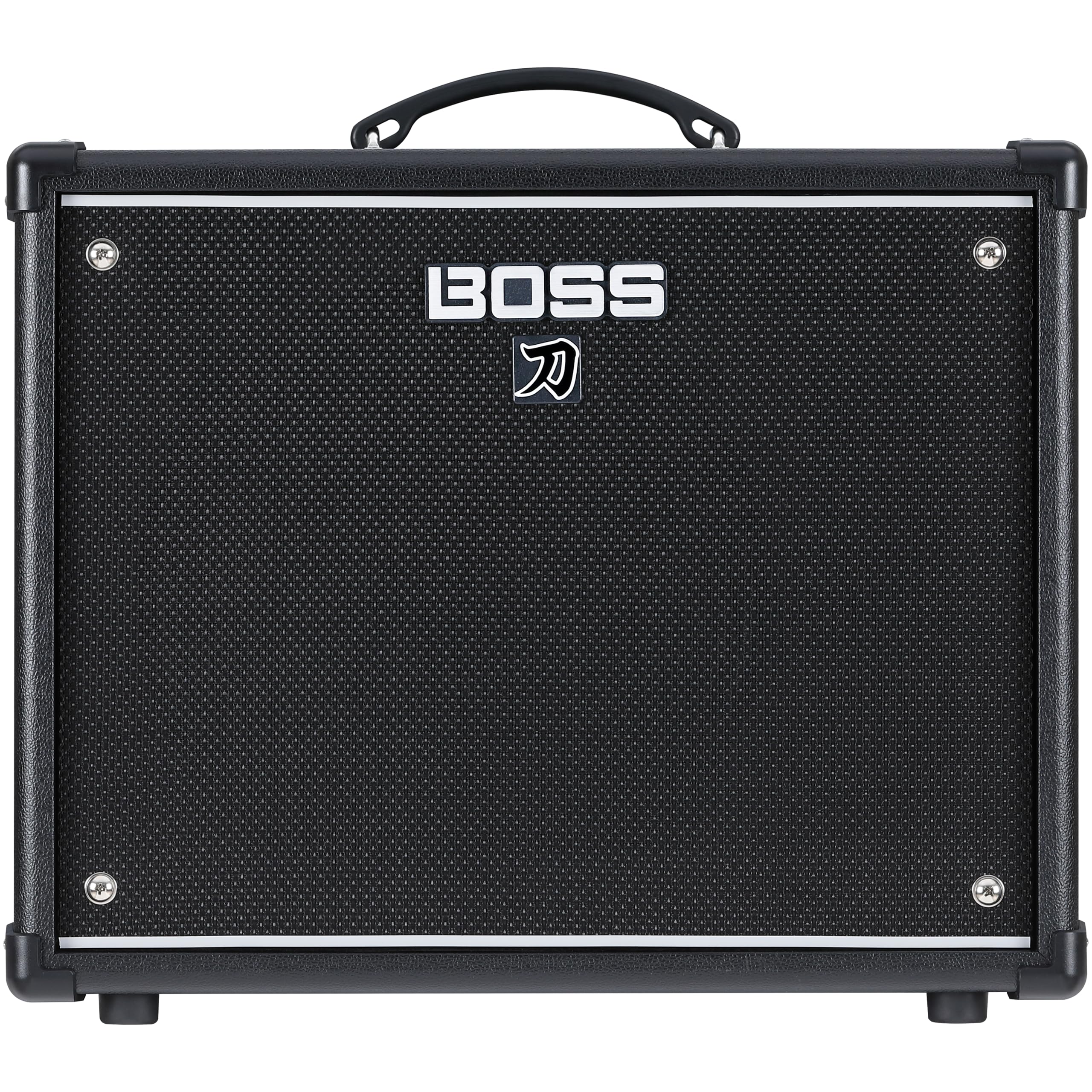
The third-generation Katana refines its famous Tube Logic into a stage-compact 32.6-pound combo.
The BOSS Katana has become the standard against which other modeling combos are measured, and Gen 3 brings a new “Pushed” amp character — an edge-of-breakup voice that fans of classic rock and blues will love. Alongside that, you get six amp characters (each with a selectable variation, so 12 total) and five independent effects sections: Booster, Mod, FX, Delay, and Reverb. The custom 12-inch speaker is voiced to handle the 100-watt Class-AB power stage with authority, and the build quality is what working musicians trust — 4.6 stars across nearly 150 owners, with quality and reliability as the most-discussed positives.
The sound quality is where the Katana shines brightest. Owners describe the tone as “warm and silky, nearly as good as a tube amp,” and note that it handles pedal steel and single-coil guitars beautifully. It has plenty of power for any venue. The headphone jack works well for silent practice, and the USB-C connection lets you dive into Boss Tone Studio for deep editing. The recurring trade-off is that the GA-FC EX foot controller is sold separately, and the amp itself does not include Bluetooth — you will need a separately sold adapter to stream audio. If you want the full gig-ready package, factor those accessories into your budget.
What Makes it Gig-Ready
- New Pushed amp character delivers authentic edge-of-breakup tube warmth
- 12 amp characters cover everything from pristine clean to high gain
- Five independent effects sections — Booster, Mod, FX, Delay, Reverb
- USB-C recording and headphone out for quiet practice and studio use
Where It Cuts Corners
- No built-in Bluetooth — requires a separate adapter for wireless streaming
- Foot controller sold separately, adding to the total cost for live players
Best for: The guitarist who needs a reliable, great-sounding combo for regular gigging and rehearsals, and values build quality and a deep effects ecosystem.
Think twice if: You need Bluetooth from the start or an included footswitch — you will have to spend extra to match the GTX100’s all-in value.
5. Fender Champion II 100
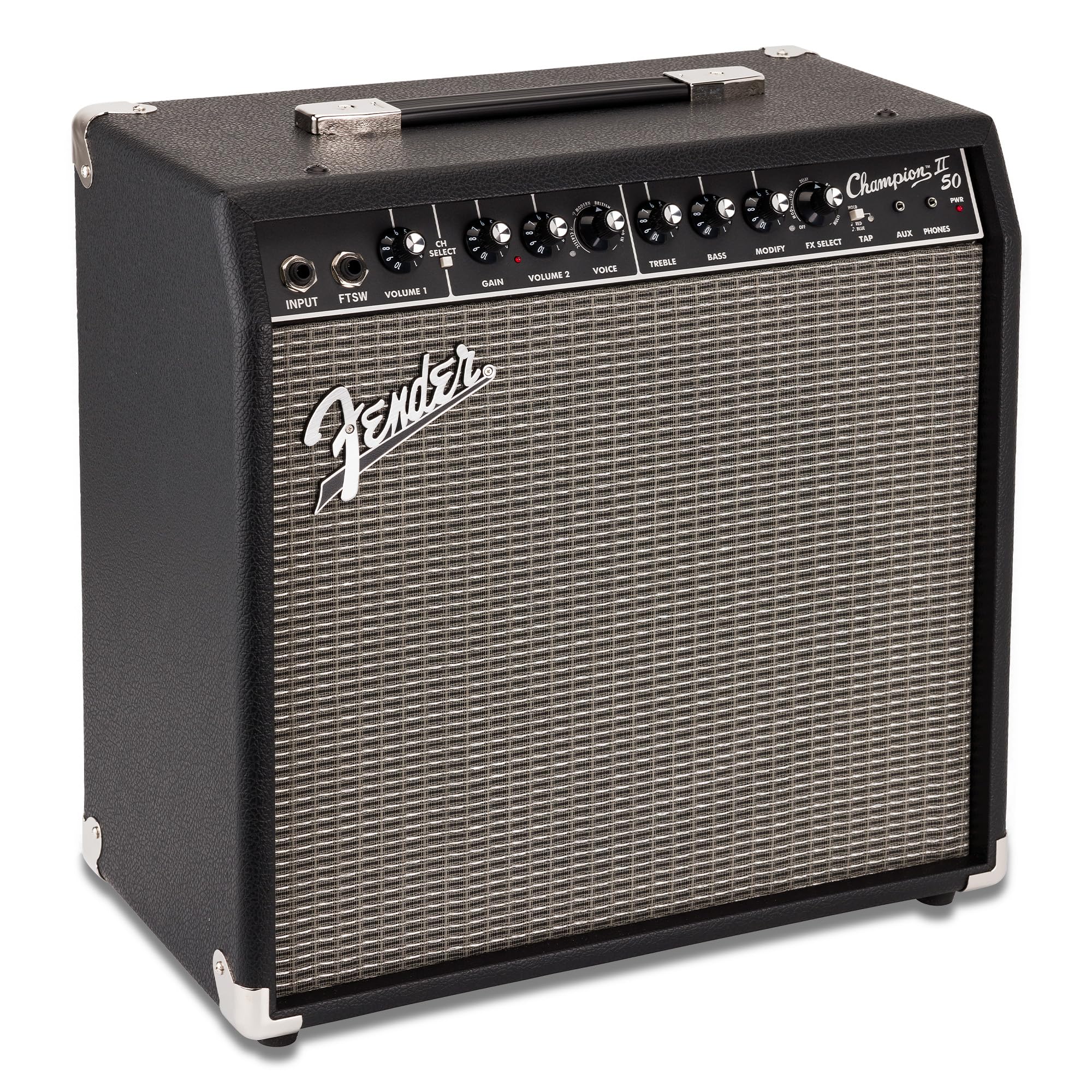
Two 12-inch speakers and 100 watts of straightforward Fender tone.
Most 100-watt combos use a single 12-inch speaker, but the Champion II 100 goes big with dual 12-inch Fender Special Design speakers. The result is a wider stereo spread and more air movement — great for clean tones that fill a room without a PA. It has two channels (clean and overdrive) with built-in reverb, delay/echo, chorus, tremolo, and Vibratone effects, plus a TAP button that syncs the delay and tremolo to your song’s tempo. The included 2-button footswitch gives you channel switching and effects control right from the start, which is a welcome inclusion.
At 44.8 pounds, this is a heavy combo — expect to feel it after one trip up a flight of stairs. But owners consistently rate it 5 out of 5, calling it “a solid amp” and “awesome for the money.” The dual-12 configuration and straightforward interface make it ideal for players who want classic Fender clean and overdrive tones without navigating complex menus. The 2-year warranty adds confidence. It is not a modeling amp — you get the sounds on the dial, not a library of virtual cabs — but for pure, honest Fender tone, this combo delivers in spades.
The big advantage: Dual 12-inch speakers provide a stereo width and punch that single-speaker combos cannot match — especially noticeable for clean arpeggios and spacious reverb.
The honest cost: Weight. At nearly 45 pounds, it is the heaviest combo in this lineup and less portable than the GTX100 or the Katana Gen 3.
Reach for this if: You love big, spacious clean tones and want a simple, knob-per-function amp that sounds great without an app or a computer.
Look elsewhere if: You need a wide range of high-gain metal tones or plan to carry your amp to gigs regularly — the weight and the straightforward voicing may limit you.
6. Fender Acoustic Junior 100
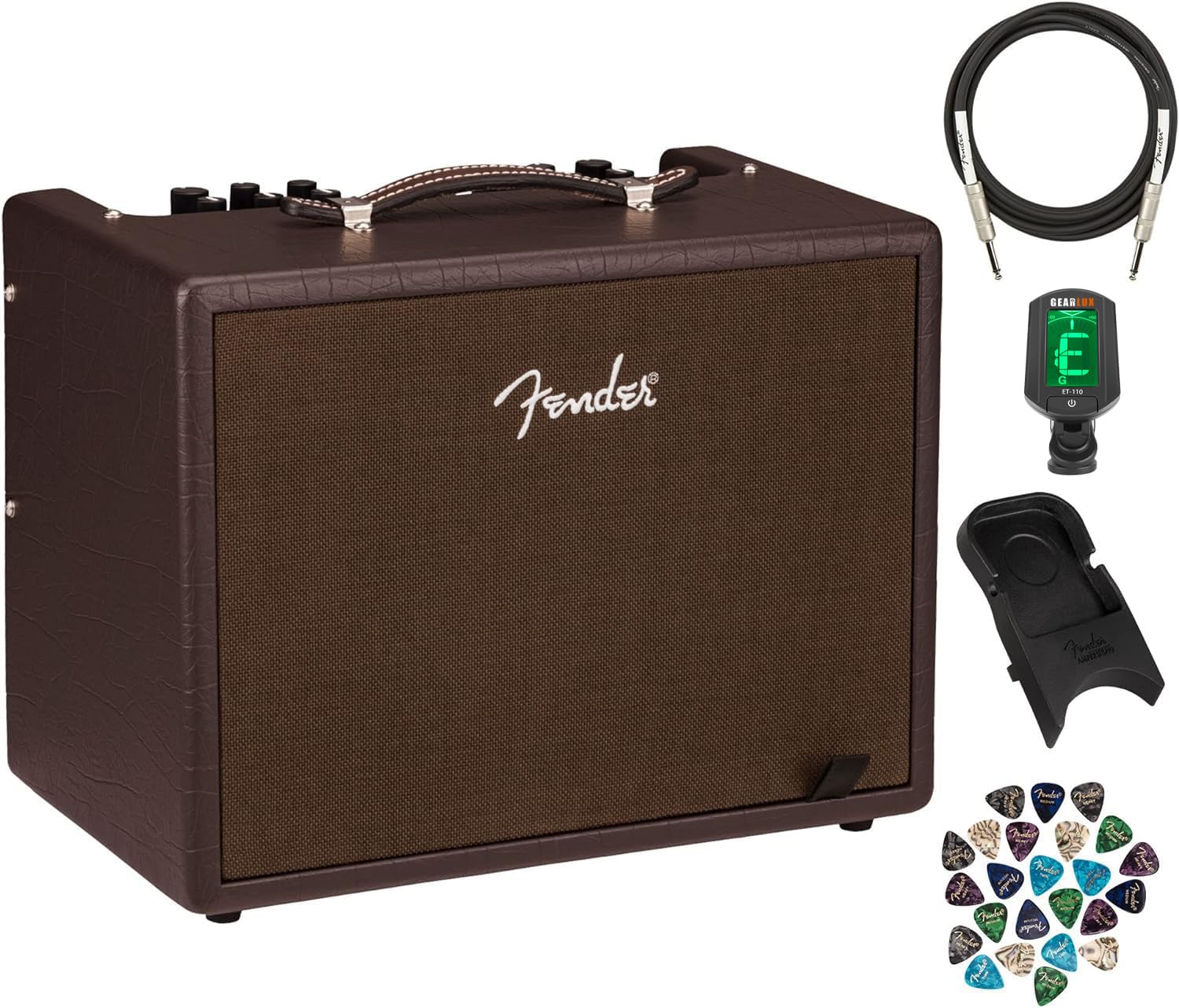
A 100-watt amp built specifically for acoustic guitars and vocal mics.
This is a different beast from the electric-focused amps on this list. The Acoustic Junior 100 is a two-channel solid-state combo designed for acoustic-electric guitars and microphones — each channel has its own 3-band EQ and eight studio-quality effects, so you can dial in a crisp piezo tone and a warm vocal reverb independently. The built-in Bluetooth audio streaming lets you play backing tracks from your phone without a cable, and the 90-second looper with Record/Dub and Undo controls is a creative tool for singer-songwriters.
The bundle includes a Fender instrument cable, a clip-on tuner, an Amperstand cradle (a micro-suction holder for your phone or picks), and a 24-pack of picks, making it a turnkey solution for acoustic performers. Owners praise its size (great for house use), sound quality, and portability for small venues. The volume performance gets mixed feedback — some find it loud enough for coffee shops and small rooms, while others want more headroom. If you mostly play acoustic and sing, this is the most purpose-built choice in the roundup. If you play electric 90% of the time, stick with one of the electric-specific options above.
The perfect fit: An all-in-one acoustic performance system with effects, looper, and Bluetooth — ideal for solo artists or duos who want to keep their gear list short.
The honest limitation: This is not a do-it-all electric amp. The voicing is tune for acoustic frequencies, and it lacks the high-gain punch and pedal-friendly architecture of the Katana or the GTX100.
Best for: The acoustic guitarist or singer-songwriter who wants a dedicated amp with vocal support, effects, and a built-in looper for one-person performances.
Think twice if: You are an electric player first — the Acoustic Junior is specialized for the acoustic domain and will not replace a proper electric amp for rock or metal.
7. Peavey Bandit 112

The legendary solid-state workhorse that has been a backline secret for decades.
The Peavey Bandit 112 is an analog amp that uses TransTube circuitry to emulate the compression and sag of a tube amp without glass bottles or bias adjustments. It delivers 80 watts RMS into 8 ohms (100 watts RMS into 4 ohms with an external speaker) through a single 12-inch Blue Marvel speaker. The power attenuation switch lets you cut down to 25W or 50W for home practice while keeping the same core tone — a feature that was rare when this amp was designed.
At 21.8 pounds, the Bandit is the lightest 100-watt-class combo in this list, making it a favorite for gigging musicians who need to move their own gear. Owners describe the tone as “sharp, cutting, and clear” and call it a go-to for gigs. The built-in reverb with level control is functional but not luxurious — one owner notes it is not very good. The sound quality is what praise is built on, and the value for money is strong. If you want a simple, tough amp that just works with pedals and sounds good at any volume, the Bandit is a classic choice.
The defining quality: Rock-solid reliability. Owner reports mention these things surviving drops and loans and still working 5+ years later. The sound may not be the most nuanced, but it is always ready.
The honest trade-off: The reverb is basic, and the TransTube voice, while impressive for solid-state, will not fool a tube purist in an A/B test. This is a tool, not a luxury item.
Best for: The no-frills gigging player who needs a lightweight, durable amp that can cover everything from blues to hard rock and take pedals beautifully.
Think twice if: You want lush built-in reverb, a wide variety of amp models, or the most refined tube-like feel — the Bandit is a straightforward analog machine, not a digital Swiss Army knife.
8. Orange Super Crush 100 Head

An all-analogue amp head that gives you Orange’s signature bite in a portable package.
The Super Crush 100 is a two-channel amp head (clean and dirty) that runs an all-analogue, single-ended preamp into a 100-watt Class A/B power amp. It is a head only, so you need a separate speaker cabinet — but that also means you can pair it with any cab (Orange recommends their own 2×12 or 4×12 for the full experience). The built-in digital reverb is footswitchable, and the balanced XLR output with CabSim is a godsend for direct recording without micing a cab. The controls are minimal: gain, bass, middle, treble, volume, and reverb — refreshingly simple compared to the modeling behemoths.
Owners rave about the sound quality, calling it “the best amp head in its price range by miles” and noting that it sounds as good as amps costing 2–4 times more. The clean channel ranges from pristine to edge of breakup, and the dirty channel covers blues through alt-rock distortion. It responds beautifully to your guitar’s volume knob and pick attack. The catch, as a few owners mention, is that the gain channel can feel fuzz-like with the mids cut, and the overall voice is unmistakably solid-state — it does not have the bloom of a true tube head. At 32.1 pounds, it is a compact head that pairs easily with a lightweight cab.
The standout feature: The XLR CabSim output lets you go direct to a mixer or audio interface with a convincing speaker-simulated tone, no extra gear required.
Who this is not for: Guitarists who want a wide variety of built-in effects or amp modeling — the Super Crush is a raw, focused analog tool that expects you to bring your own pedals.
Best for: The player who already owns a cabinet and wants a lightweight, high-quality amp head with simple controls, a great clean channel, and a direct recording output.
Think twice if: You are just starting out and do not have a speaker cabinet — this is a head-only unit, so the total cost will be higher once you add a cab.
9. BOSS Katana Artist Gen 3

The Artist series takes the Katana platform and upgrades every touch point for the serious player.
If the standard Katana-100 Gen 3 is the workhorse, the Artist Gen 3 is the thoroughbred. It shares the same digital modeling engine and six amp characters with variations, but the speaker is a custom 12-inch Waza — BOSS’s premium driver that delivers British-stack speaker tone with higher power handling and more dynamic response. The cabinet is stiffer and the build quality is improve, with a distinctive gray and black matrix grille that separates it visually. It still runs 100 watts of Class AB power and includes five independent effects sections.
Owners call it “worth it” for the versatility — “enough to cure my amp GAS,” as one put it. The Artist Gen 3 is designed for players who want the Katana’s flexibility but find the standard version lacking in feel and headroom. It weighs 41.8 pounds, noticeably heavier than the standard Gen 3 (32.6 lbs) due to the upgraded speaker and cabinet construction. The firmware update process is described as a headache, and the footswitch and Bluetooth module are still sold separately. For home or gigging players who want the absolute best Katana experience and are willing to pay for it, the Artist delivers.
The upgrade that matters: The Waza speaker is a legitimate improvement in dynamic response and power handling — it sounds more like a real cabinet at stage volume than the standard Katana’s custom 12″.
The honest cost: At 41.8 pounds and the highest price in the lineup, this is a premium commitment. The firmware update process is also a genuine friction point — set aside an hour for it.
Reach for this if: You are a serious gigging musician who values every nuance in feel and response, and you want the best version of the Katana platform.
Look elsewhere if: You are budget-conscious or need a lighter amp — the standard Katana-100 Gen 3 (32.6 lbs) offers 90% of the features at a lower price and weight.
10. Vox VT100X

Blends a multi-stage tube preamp with digital modeling for authentic, touch-responsive tube tones.
The Vox VT100X uses a hybrid design: a Valvetronix tube preamp (an actual analog tube stage in the preamp) combines with digital modeling via VET (Virtual Element Technology) to deliver 11 amp models — 20 when you connect the Vox Tone Room software. The single 12-inch speaker handles the 100-watt output, and the amp includes a built-in tuner, aux input, and headphone jack. The hybrid approach means it reacts to your picking dynamics more naturally than a pure modeling amp, and the tube warmth is real.
Owners are emphatic: one calls it “superior modeling to the BOSS Katana MKII” and says the tone is indistinguishable from a real tube amp. Another notes that “Fender settings sound better than a real Fender” — high praise. The VT100X takes pedals well, offers crisp headroom, and is loud enough for any room without needing a microphone. At 47.7 pounds, it is the heaviest combo here, and the lack of an included app cable (you need adapters for the USB connection) is a minor but recurring gripe. The volume jumps when switching presets can be a live-show nuisance. If tube-like feel is your top priority and you are okay with the weight, this is the most organic-sounding modeling amp on the list.
The hybrid advantage: The Valvetronix preamp stage introduces real tube compression and harmonic richness that pure digital models rarely nail — it feels alive under your fingers.
The honest limitation: Weight (47.7 lbs) and the need for adapters to use the Vox Tone Room software. This is a stationary studio or stage amp, not a grab-and-go practice combo.
Best for: The player who loves tube tone and feel but needs the convenience of modeling for versatility — the VT100X gets closer to organic tube response than any other digital amp in this roundup.
Think twice if: Portability is a priority — at nearly 48 pounds, this is the heaviest amp in the guide, and the app-cable situation is a genuine annoyance if you plan to deep-edit presets.
Understanding the Specs
Modeling vs. Tube vs. Hybrid
Modeling amps (like the Fender Mustang GTX100 and BOSS Katana Gen 3) use digital processors to replicate dozens of classic amplifiers and effects. They offer the most versatility for the least money. Tube amps use glass bottles (valves) to amplify the signal; they are prized for their dynamic compression and harmonic richness. Hybrid amps like the Vox VT100X combine a tube preamp stage with a solid-state power section or digital modeling to get the best of both worlds. For a 100-watt amp, the choice often depends on if you want a huge library of sounds or a single, refined voice that changes with your picking.
Speaker Quality and Cabinet Resonance
The speaker is arguably more important than the amp’s power stage. A good 12-inch speaker (like the Celestion G12FSD-100 or the BOSS Waza) can make a digital amp sound like a tube rig. The cabinet material matters too: plywood cabinets resonate better and sound more lively at stage volume, while particle-board cabinets are heavier and can sound boxy. Always check the specific speaker model in the specs — “custom 12-inch speaker” is a promise every company makes, but a named driver like an Eminence or Celestion is a sign of quality.
FAQ
Is 100 watts too loud for a bedroom?
Do I need a separate speaker cabinet for an amp head?
Can I use a 100-watt amp for small gigs?
What is the difference between a combo and a stack?
How important is an effects loop?
Can I record directly from a modeling amp?
What does “power attenuation” actually do?
How do I know if a 100W amp will fit in my car?
Will a solid-state amp last as long as a tube amp?
What is the best speaker size for a 100-watt amp?
Final Thoughts: The Verdict
For most guitarists looking for a 100 watt guitar amp, the winner is the Fender Mustang GTX100 because it delivers the best blend of versatility, sound quality, and included features (200 presets, 7-button footswitch, looper, and Bluetooth) at a mid-range price that undercuts the competition. If you need pure gigging reliability and the deepest effects ecosystem, grab the BOSS Katana-100 Gen 3. And for the tone tinkerer who wants AI-powered preset generation and selectable wattage from 1W to 100W, the Positive Grid Reactor 100 is the most innovative choice on the list. Whichever you pick, you are getting an amp that will sound great from the bedroom to the stage — just match your choice to how you actually play and what features you truly need.
How We Picked
We do not accept paid placement. Every pick is matched to a real buyer and a real use-case; we do not hands-on test units.
Sources & Methodology
Specifications: manufacturer listings and product documentation. Review insights: verified customer reviews, as of July 2026. Pricing: not shown on this page (it changes often); check the current price via the retailer link.
As an Amazon Associate, Gadgets Feed earns from qualifying purchases. This does not affect which products we feature.